Bonjour, je voudrais savoir quels vaccins il faut pour partir en Inde : fièvre jaune, palu, etc... Et les consignes élémentaires à tenir compte là bas.
Pour les vaccins, tu as les conseils de l'institut pasteur ici : http://cmip.pasteur.fr/cmed/voy/frame-zasinde.html#vacc
Pour un séjour de 6 semaines, en plus du rappel DTP, j'avais fait typhoïde et hépatite (et si c'était à refaire, je ne ferai pas l'hépatite...). Pour le reste (rage et encéphalite), ils ne sont vraiment pas nécessaire si tu ne fais pas de séjour prolongé en zone rurale. On dit sur le site de pasteur que le certificat de vaccination contre la fièvre jaune peut être exigé en entrant en Inde, mais on ne me l'a pas demandé, ni à moi ni à personne que je connais...
Pour le palu, il n'y a pas de vaccin : selon où tu vas en Inde, et de la saison, pas besoin de traitement préventif (perso je n'en ai pas pris)
Précautions à prendre : les mêmes qu'ailleurs ! Boire de l'eau purifiée uniquement (on trouve de l'eau en bouteille partout), se laver les mains et le visage avant de manger, et souvent dans la journée.
Bonjour
le vaccin Fièvre Jaune est demandé aux voyageurs en provenance de zone où le risque existe ou qui y ont transité ou séjourné dans un délai de 6 jours.
salut
selon la region où tu vas et selon ton mode de voyage
les deux Hepatite quasi obligatoire
Savarine pour le palu (comprimé) car c'est la saison des moustiques, mais bcp n'en prenne pas et se contente d'utiliser de l'anti moustique sur eux et se couvrir.
Apres en supplement:
Typhoide
eventuellement la Rage
et pkoi pas l'encephalite japonaise
mais ces 3 derniers c'est si tu comptes rester longtemps et te baigner dans le gange à la fin de son parcours à travers l'inde et dormir à la belle etoile à coté d'une décharge et des egouts à ciel ouvert
Mais de toute maniere, le medecin est le seul à savoir (contre indication...)
pour le vaccin préventif rage, l'Inde est vraiment le pays où il faut y réfléchir. La maladie animale y est extrêmement répandue. Tout dépend des lieux et conditions de voyage.
Boisson : du thé, ou de l'eau en bouteille, plus un paquet de pastilles Micropur pour dépanner (si on va dans des endroits très reculés, sinon on vend de l'eau en bouteille partout).
Moustiques : des mosquitoe coils (les tablettes pour prises électriques sont peu efficaces + coupures de courant), et surtout ne pas oublier des vêtements à manches et jambes longues + chaussettes pour les périodes où les endroits où il y a beaucoup de moustiques (en période ou en région humide le soir avant la tombée de la nuit). Plus crème Odomo à acheter sur place pour les quelques cm2 de peau qui restent à l'air quand on a mis ses manches et jambes longues et que les mosquitoes deviennent vraiment agaçants.
Soleil : casquette et lunettes de soleil (c'est bête, mais une fois sur place on est content de ne pas les avoir oubliées);
Medicos : surtout pas d'aspirine (mortel en cas de dengue) mais du paracétamol. Pour les problèmes d'estomac : un peu de Ercéfuryl et d'Immodium ou équivalent, ensuite on se fournit dans les pharmacie indiennes et on a défini ses stratégies pour éviter les problèmes (beaucoup de riz, écarter les épices et les sauces épicées, bien se laver les mains et la figure avant de manger, etc.). Un peu de désinfectant et une bande à découper pour les petits bobos. Etre à jour de sont rappel tétanos / polio (le reste est facultatif sauf le tiphym à conseiller).
Traitement préventif anti-moustiques : bof, bof, mieux vaut prendre les autres précautions (voir ci-dessus). Les voyageurs qui vont en Inde pour la première fois en prennent, ça les rassurent, au bout d'un certain temps ils se rendent à l'évidence --> comment font les indiens qui ne prennent pas ces drogues ? et puis on ne se drogue pas impunément sur une longue période.
pendant 20 ans j'ai fait des séjours dans le sud de l'inde en tant que bénévole dans une asso d'aide à l'enfance.
Vérifier si on est à jour de ses rappel de vaccins en général, surtout pour le tétanos,
au fébut je me faisait vacciner contre le choléra et puis au bout de quelques temps j'ai cessé de le faire.
Selon la région et la période le traitement anti paludéen n'est pas, à mon avis indispensable : une bonne crème achetée sur place dans une pharmacie suffit.
Et puis, ne pas faire faire tous les vaccins en même temps juste avant de partir, cela fatigue l'organisme.
bon voyage et belle découverte.😉
Merci STALINGRAD pour tes conseils.Petite question : qu'est-ce que le "tiphym"? Tu as l'air d'être un habitué de l'Inde....pourrais-tu me donner ton avis sur le circuit que j'ai concocté? Kailash35 me conseille de rester plus de temps à Bénarès : quel est ton avis ? Qu'y a t-il à ne manquer sous aucun prétexte?
Mille mercis pour tes suggestions .
Quel genre de bagage serait, à ton avis, le mieux adapté sachant que je ne vais pas faire de longues marches et que j'irai d'un point à un autre en train et en taxi?
JOSICA
personnellement, pour mes voyages privés, j'utilise une valise souple noire (Delsey, je crois) avec des bretelles que l'on peut rentrer dans une poche. Utilisable comme sac à dos, mais très présentable dans les hôtels, important en Inde, même je n'ai plus l'âge et le look routard.
Pour les voyages professionnels, une valise à roulettes rigide.
les versions que j'utilise peuvent en plus passer comme bagage cabine en avion.
Ne pas oublier, en train ou à l'hôtel, la chaine et le cadenas pour arrimer la valise sur un point fixe -prévu dans le train, plus bien sûr les petits cadenas sur la valise elle-même pour empêcher son ouverture.
Le tiphym est un vaccin contre la fièvre typhoïde.
Le circuit que tu as concocté en vaut un autre, il n'est pas mal à mon avis. Tu balances à rester moins à Agra qu'à Varanasi : à mon avis ce que tu prévoies est bien car bien qu'à Agra il n'y ait que deux points d'attraction - le Taj et le Lal Quilla - et même si l'entrée est un peu chère on peut revenir une deuxième fois s'imprégner de l'atmosphère du Taj. Benarès : j'y suis passé deux fois mais n'y suis pas resté suffisamment pour apprécier cette ville mythique - je dois dire que la rapacité des brahmanes des temples pour l'argent m'a un peu abasourdi, mais je ne dois pas me fier à cette première impression. Dommage que tu ne restes pas plus longtemps à Delhi, la Old Delhi est vraiment interessante entre la Jama Masjid, le dédale des rues autour avec ses bazars, le chandini chowk, le Lal Quila (moins beau qu'à Agra), et même les alentours de Connaugh place, Humayun's tumb, la petite mosquée soufi de Nizzamudin, etc. Ensuite, tu vas au Kerala : changement d'univers et à mon avis un avant-goût du paradis.
Bagages : je te conseilles un sac à dos ou mieux un sac à dos qui se transforme en valise (formule valise pour le train ou le bus ou l'avion, formule sac à dos quand il faut le transporter). Et puis, pour les ballades quotidiennes un petit sac à dos style Eastpak (ou Millet ou autre) mais juste pour la bouteille d'eau, un bouquin, et quelques bricoles, un sac que tu puisses porter aussi à la main (quand l'autre est sur ton dos) --> très pratique pour le quotidien, passe en bagage à main dans les avions.
Bonsoir!
je te suis reconnaissante d'avoir su répondre si vite à mon message.
En ce qui concerne Delhi, tu as parfaitement raison; Lors d'un trek.au Laddak voici trois ans avec une amie, je suis restée deux jours à Delhi avant de reprendre l'avion pour Paris.J'ai eu l'occasion de visiter un peu, mais il est évident que ce ne fut qu'une visite embryonnaire.Malheureusement, je ne disposerai pas d'assez de temps pour approfondir la découverte de Delhi qui demande à elle seule une semaine.Ce n'est que partie remise!
En ce qui concerne Bénarès, je vais effectivement essayer de rester un ou deux jours de plus mais je dois tenir compte des trains qui ne partent pas tous les jours pour Gaya.
Salut, je sais que la décision m'incombe, mais j'ai du mal à me décider en matière de vaccination. Je ne suis pas pour la vaccination systématique ; seulement voila je pars seule avec mon fils de 6 ans. Se sera notre première fois en Inde. Nous allons rester 3 mois dans le radjashan (jusqu'à Diu et bénarés, et peut être vers Almora et rishikesh, tout dépendra du climat), nous partons de mi-janvier à mi-avril, en sac à dos, et transport en commun. Nous avons, le DTT polio, et je me demande si l'hépatite A est vraiment nécessaire (sachant que mon fils met toujours ses mains à la bouche!), et que meme au Maroc je trouve le moyen de me choper des intoxications alimentaires!! Cependant, j'ai peur des effets secondaires de tous ces vaccins. L'encéphalite japonaise j'ai lu que le vaccin pouvait etre dangereux, et il y à t'il vraiment beaucoup de cas en inde du nord?
Merci pour tes conseils
Chloé
En plus du rappel ténanos-polio dont il faut être à jour (comme en France d'ailleurs), je me fais piquer uniquement contre la fièvre typhoïde (l'hépathite A est parfois faite en même temps). Je pense que l'hépathite A est surtout utile pour les gens qui n'ont jamais voyagé et qui ont vécu dans un milieu aseptisé. Si toi et ton fils avez déjà voyagé au Maroc, il y a de fortes chances que vous soyez immunisés (ce n'est pas comme l'hépatite B et C qui sont beaucoup plus sérieuses mais qu'on attrape autrement que par des aliments mal lavés). L'encéphalite japonaise peut être dangereuse pour les enfants mais elle est véhiculée par un moustique, et à la saison de ton voyage les moustiques seront rares (voire inexistants). De plus le vaccin contre l'encéphalite n'est utile que si l'on séjourne dans des endroits reculés à la campagne.
Tout ceci étant dit, en Inde l'hygiène élémentaire est encore plus importante que chez nous, en particulier bien se laver les mains (voire le visage) avant de manger, comme le font les indiens d'ailleurs. Donc il vaut mieux éviter que les enfants ne mettent leurs doigts à la bouche (mais on ne va pas leur attacher les mains non plus 😉).
bonsoir
nous avons visité pas mal de pays d'Asie et sans aucun vaccin
seulement l'année dernière à notre retour du LAOS CAMBODGE, mon fils et mon mari ont déclarés une salmonèle C à fièvre typhoide, donc hospitalisation
j'y ai échapé !
cet été nous allons en Inde, Rajasthan , Varanasi et le Ladack
pourriez vous me dire si le fait d'avoir eu la typhoide ils sont imunisés ou s'il est préférable de tous se faire vacciné ?
merci
corinne
Désolé mais je n'ai pas les compétences pour répondre à cette question, je pense que vous pouvez la poser sur un site médical (institut Pasteur ou CHU-Rouen par exemple).
http://www3.chu-rouen.fr/Internet/services/sante_voyages/
Hi, My family and I (2 kids and 2 adults) are planning to travel to Kerala, India, in February. What vaccines should we get for this region? Thanks, Have a…
Hi there,
Do you know of any good travel insurance? Usually, I go with the one from the agency. But this time, I want to travel independently, and I'm a bit lost.
Some people told me that when you pay with a credit card, you get the bank's insurance. But after checking with the bank, that's not true. Or else, you have to add an extra option and pay for it monthly.
So, I'm looking for insurance that covers cancellation, repatriation, lost luggage, etc.
Thanks for your tips!
Hi there,
A friend has osteoarthritis in the knee and a meniscus problem, treated with regular injections.
Do you know of any insurance companies that cover pre-existing conditions in case their knee locks up in Africa?
Thanks a bunch!
A one-month trip to Australia and New Zealand.
We’re bringing our current medications (for blood pressure, cholesterol, diabetes, and antibiotics if needed) along with the corresponding prescription.
Do we need to have it translated into English, or do translations only apply to medications we’d need to refill locally during a long stay?
Hi,
I’m planning a trip to Namibia for 3 weeks in November: should I take malaria prophylaxis, which medication, when to take it, and are there any side effects?
At the end of my trip, I’ll spend 5 days up north near the Angolan border and in Etosha National Park.
Thanks for sharing your travel tips and advice!
Martine
I’m planning a trip to Japan next year and I have asthma...
I wanted to know about the regulations regarding Ventolin (Salbutamol) in Japan—is it considered a drug? Can I bring my inhaler with me, or do I need to buy a similar product in Japan?
I have two American cousins. The older one was born in Paris, and his sister was born in California. The latter is planning a trip to Paris this summer, but she recently fell ill, and American doctors don’t know what’s wrong. I had the idea of letting her take advantage of her trip to get treated here, avoiding the high healthcare costs of the American system in the process. The problem is, I can’t find anything online about this—just testimonials from French people who used to be American, but nothing for a simple tourist.
I’m traveling to Portugal with my family and I have a treatment that requires injections. How can I take a flight with these? They look like injectable pens.
Thanks
We’re planning a trip to the Philippines from April 22 to May 8, 2026. Flight from Geneva with a layover in Turkey and Manila. Our itinerary: Angeles – Busuanga – Palawan…
The Philippines are a dream destination, but is it possible to travel there safely? I’ve heard that checked luggage often gets lost, tap water isn’t safe to drink, and mosquitoes are everywhere.
For water, what’s the best solution to carry in a backpack? Is a filtering water bottle 100% reliable?
For mosquitoes, should we treat our clothes with repellent? Are you vaccinated against hepatitis A, malaria, or dengue? Or is there an oral treatment to take?
Hi there,
Does anyone know if there’s travel insurance for someone who’s had a heart attack?
I can’t find an insurer that covers a pre-existing condition, even if it’s stable.
Thanks so much!
Hi everyone, next month my wife, our 6-year-old daughter, and I are flying to Thailand. It’ll be a great chance to soak up some sun—something we’ve been missing lately here in France! But speaking of sun, I burn easily, and our daughter even more so. I was wondering what SPF to get for sunscreen and whether it’s better to buy it there or before we leave? Thanks for your tips!
Hello,
We’re planning to spend 3 months in Madagascar starting in mid-February.
Areas: Mahajanga, Tulear, Diego Suarez, and Sainte Marie—the order isn’t set yet. We’ll either drive for part of the trip or take flights.
We’ve heard all sorts of things about required vaccines and medications (is anti-malarial mandatory?). What’s the exact situation for travelers?
I’ll come back to you for other topics (like finding a reliable driver, among others).
Thank you.
Best wishes to you all,
Nicole
We're about to go on an organized trip to South Africa, including Kruger Park. We were told that Malarone should preferably be taken in the evening at the same time during a meal. But it's hard to know what time we'll have dinner, especially since I've read that in South Africa, dinner is usually around 6 PM.
I'd love to hear from people who've been on organized trips to this destination and could share their experience. We were thinking of taking Malarone around 7:30 PM, assuming dinner would be closer to 7 PM than 6 PM. Also, if the meal ends up being earlier or later than when we take the pill, would a cookie or a piece of bread be enough to take with Malarone?
I’m planning to set off on a "round-the-world" trip/long journey at the start of next year, lasting between 4.5 and 6 months. For now, the itinerary looks like this: South Korea (2 weeks) -> Japan (1 month) -> New Zealand (1 month) -> Argentina (1 month) -> United States (1 month).
I’m on medication (paroxetine 20 mg/day) and was hoping to bring enough for the entire trip so I wouldn’t have to find a doctor on the spot, deal with a molecule that might be slightly different from what’s available in France, or wonder if that’s even a possibility. Basically, it seemed simpler on paper...
But after looking into the regulations for each country, it’s suddenly way less simple . Many seem to only allow the amount corresponding to the length of your "stay" in the country... Which is a problem if I arrive in Korea with 4.5 months’ worth of medication, for example.
After all that, and even though I’ll obviously contact the relevant authorities in each country (fingers crossed for a response 😛), here’s my question:
Has anyone here had any experience with this? (Even if it’s a different medication or different countries, any input would be helpful!)
I’m trying to plan a trip to Dubai with my mom. I’ve seen that some of our medications require prior authorization (sleeping pills, codeine, anti-anxiety meds, etc.).
I’d love to hear from anyone who’s been in our situation. A friend of mine applied to bring her tramadol, but it was denied—though she needed high doses!
Has anyone here gone through this process? Do we *really* need a prescription in English?
We just found out my wife is pregnant, and we’ve planned a trip to the Barlavento Islands in Cape Verde this November.
We’d like to know if there’s a real risk of Zika contamination on those islands, because from what we’ve found online, the recorded cases are old and come from the Sotavento Islands.
We’re thinking about canceling our trip.
If you’ve recently traveled to Cape Verde or live there, do you have any thoughts on this?
hi, I’m looking for information about the possibility of returning to Thailand with a portable liquid oxygen system and whether it’s possible to recharge it in Thailand, especially in Chiang Mai. thanks
I’m starting a new discussion on this topic since there doesn’t seem to be a recent one.
I have several chronic conditions (including asthma and related ones), and I’m planning to travel for a year across different countries.
Generally, I understand it’s possible to travel with approved medications (which should be my case), but often with a limit of 3 months’ worth of treatment.
Since I’m going for 12 months, that means for three-quarters of my trip, I’d have more than 3 months’ worth of medication.
I plan to bring my prescriptions with the INN (International Nonproprietary Name), as well as the original packaging (even though it’s a nightmare, but from what I understand, it’s necessary). But I’m not sure if that’s enough...
Have any of you been in this situation before? How does it work at customs—do I need to declare everything that exceeds the 3-month limit? Do I need a letter from my doctors?
I'm currently in Bangkok: How can I find a good doctor for a consultation? It's for a friend who'd like a second medical opinion compared to what they got in their country of residence.
Any professionals you'd recommend? How much does it cost?
I’ve already visited quite a few countries across several continents, but I’m pretty new to Asia.
I’m planning a trip to Thailand in October or November, and I wanted to check about health precautions: malaria treatment, vaccinations (hepatitis A or others...).
I’ll mostly be in the northern region, around Chiang Mai, where I’ll spend a lot of time in nature and the mountains. Then I’ll head south to Phuket or Krabi and visit Khao Sok National Park. I’ll finish up in Bangkok, with a likely detour to Kanchanaburi.
From what I understand, for a stay of less than 60 days, I don’t need a visa (I’m a French national)? I just need to fill out the TDAC form 3 to 5 days before arrival?
Hi there,
I was wondering if anyone is heading to Cuba soon and could bring me some over-the-counter Sildenafil (viagra) tablets—available at Varadero Airport, among other places.
Hi there! So, I'm hesitating about taking a long trip. I'd like to go away for 2 to 3 months and travel across several continents. I’d love some advice. I often have unexplained allergies and need to follow a daily treatment for my diabetes (insulin). I think I can get authorization from my doctor to travel for 6 months with the treatment—is that correct? After those 6 months, is it possible (instead of bothering a relative to send the medication) to see a foreign doctor to get another 6-month travel authorization? How does it work at the airport? Do I need just one medication transport authorization, or do I have to request a new one in each country (once the treatment runs out) for both the flight and a DCI? Also, travel insurance doesn’t cover chronic illnesses, so will I have to pay for foreign consultations out of pocket? I’m not sure if I explained myself clearly. Oh, and just to repeat—travel insurance doesn’t cover chronic illnesses, so foreign consultations will be at my own expense? Thanks in advance for your help!
Hi everyone.
After years of traveling to the USA without any medical insurance subscriptions—and luckily never having any major health issues (though I did get a scorpion sting buried in the sand at CBSouth, 😇)—life has caught up with us, and we’re now being forced into "wisdom" and leaving our carefree days behind.
So, I’m looking for the best compromise for a 2-month health insurance plan.
I’ve read the discussions on this topic, but the most recent one is from last year, and I’d love your take on the current situation.
I’m familiar with the usual options like Europ Assistance and AXA, but I’ve just discovered Chapka and Heymondo (the latter seems interesting in terms of both price and coverage).
What do you think of these last two? How do they compare in terms of value for money against the bigger companies?
Hi,
We’ve planned a 3-week trip to Bali this summer with our 7-year-old daughter. The itinerary includes Sanur, Nusa Lembongan, Sidemen, Amed, and Ubud. The more time passes, the more we read about people getting sick—some with mild to severe traveler’s diarrhea, and many ending up in the hospital. We, as parents, have been through it in Egypt with pretty bad cases, but we’d really like to avoid that for our daughter. Even though there’s no zero risk, and we’ll be careful, can any of you reassure me? Not everyone got sick, right? I’d love to hear positive feedback from parents, but not just them 😊. Thanks in advance!
Hi there...
I’m traveling with a friend for a month in November.
We booked our round-trip tickets from Paris to Phnom Penh, and yes, I know—it was a mistake. We should’ve flown out of Laos, but here we are.
But is it doable to backpack through both countries in a relaxed way?
I’ve seen that the transport takes a while...
Thanks so much for your replies.
Hi there,
I’ve started looking into getting dental implants, possibly in Costa Rica or Mexico.
Do you have any clinics to recommend or ones I should avoid?
For the next steps, I need to choose between Cuba Medika or Medigo—these are agencies that help with medical procedures. Do you have any info on either of them?
Hi everyone, a question for those who’ve been lucky enough to visit Raja Ampat—should you consider preventive malaria treatment given its proximity to Papua? And how was the food hygiene situation?
Thanks for your feedback! !
For several years now, increased aggression has been observed in Cape fur seals.
At least 70 unprovoked attacks on humans.
It was recently confirmed that this is due to rabies.
The suspected origin is contamination in Namibia by jackals.
The contagion seems to be spreading.
Preventive vaccination (of the animals) is being considered.
Just a reminder:
Rabies affects all mammals.
Once symptoms appear—sometimes weeks or even months later—death is inevitable.
It’s the bite that transmits the disease.
There are so-called "furious" forms with aggression, but also forms without aggression.
In case of a bite, in addition to standard wound care, tetanus prevention… rabies prevention is essential.
Stay careful out there…
Seeing seals from a boat along the coast isn’t rare in these parts…
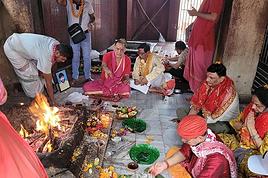 Discovering Assam and Nagaland 2025
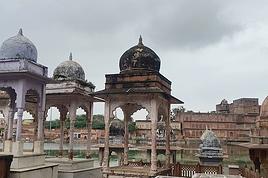 7-week trip feedback: Rajasthan and Varanasi, October-November-December 2025
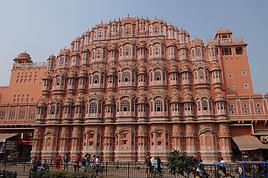 Rajasthan: Incredible India?
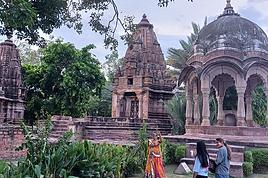 Yet Another Travel Journal in this (Too) Familiar Rajasthan, But with Family and Kids
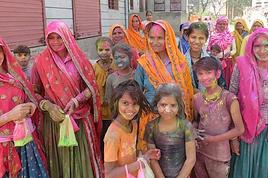 A lovely wander at the mercy of the wind in this amazing Rajasthan
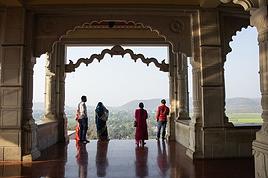 4 friends discover a piece of North India
 The Pearl of Africa - July-August 2026
 A little piece of Sulawesi with the family: Rantepao and Selayar