Pour les jours 1 et 2 c'est très bien, tu peux ajouter la visite du Beng Mealea ainsi que l'emplacement où a été incinéré Pol Pot et la maison de Ta Mok (prés d'Along Veng).
Voici le prix en 2011 : Beng Mealea, Kohker, et Preah Vihear dans la même journée : environ 160 $.
Prés du Preah Vihear il y a un village avec une guesthouse, le prix ne doit pas être excessif.
Il faudra ajouter au prix mentionné le logement du chauffeur et ses repas (qui sont beaucoup moins cher qu'à Siem Reap).
Voir http://voyageforum.com/v.f?post=5406508#5406508 (et les autres posts de cette page).
Le programme n'est pas trop chargé.
Le deuxième jour comme tu vas commencer très tôt (au lever du soleil) tu pourras prendre ton temps pour la visite du Preah Vihear ainsi que du Beng Mealea au retour.
A lire vos différents messages sur VF depuis votre inscription toute récente, je m'aperçois qu'ils n'ont pour objet que de vous permettre de faire votre propre pub pour votre guesthouse et les taxis avec lesquels vous travaillez. Je retire donc mon commentaire précédent; c'était trop beau pour être correct!
nous revenons aujourd'hui du Cambodge, magique! nous sommes allés à Preah Vihear (plus de 2000 marches assez raides): mais cela en vaut la peine! la vue est imprenable! et pas de touriste! par contre, pas d'hôtel non plus : quelques guest houses assez rustique!
ne pas manquer ben melea qui reste l'un de nos préférés. pas mal de route pour rejoindre Siem Reap
bon séjour au Cambodge
Bonjour.
Comment avez-vous organisé votre tour ? Sur 2 jours ?
Quels sont les temps approximatifs de route et cela vous a coûté combien ?
Est-ce facile à organiser depuis Siem Reap ?
Merci pour tout.
Jean Michel.
bonjour Jacques,
oui bien sur tu peux monter avec les 4x4 ou la moto
nous avons préféré les marches histoire d'éliminer quelques angkor beer! et puis aussiquleques beaux points de vue
cordialement
ecoute, j'aimerais retenter l'experience de Preah Vihear (cote Thailandais) apres m'etre fait recale il y a quelques annees.Je suis actuellement en Thailande en pense y aller dans 1 semaine je pense.
Sais-tu si l'on peut acceder donc au site actuellement ? Je vois que ton post est recent, mais je sais que la situation a la frontiere peut se degrader rapidement.
Peut-etre as-tu un telephone d'un contact local et/ou etranger (ambassade etc...) a me communiquer car tout les e-mails que j'envoie, reviennent en failure ! ?
Merci d'avance.
Cordialement.
Alain
bonjour Alain,
effectivement nous sommes allés à preah vihear sans aucun problème, nous y étions vendredi 16 novembre dernier mais par le Cambodge, du côté Thailande je ne sais pas, mais pour le moment c'est calme!
comme nous étions passé par une agence je n'ai pas de contact là-bas, désolée
bon séjour et profites car ici il géle!
coridalement
mama
Salut Mama,
et merci pour ta reponse.Je vais tacher alors de trouver le telephone de l'office du tourisme en Isaan et pourquoi pas envoyer un mail en Suisse a un de mes potes, pour qu'il contacte un de ses potes qui vit a Si Saket.
et merci pour l'info precise (acces Thai donc).
Effectivement, je te confirme que l'acces Thai est encore ferme.
J'ai appele l'office du tourisme de SiSaket, qui me l'a aussi dit.
Maigre consolation pour moi, mon Thai parle au telephone s'est ameliore, car j'ai bien tout compris, apres avoir fait retelephoner par la receptionniste de mon hotel.
Telephone de l'office, pour ceux que ça peut interesser : 04.56.11.283
Bonjour,
De Sisaket il vous reste la solution de passer la frontière pour rejoindre Along Veng. De là, la route pour Preah Vihear est excellente. En taxi, c'est assez rapide et facile.
Mais bon, c'est tout de même moins aisé que de descendre une escalier😉
nous sommes allés à Preah Vihear (plus de 2000 marches assez raides): mais cela en vaut la peine! la vue est imprenable! et pas de touriste! par contre, pas d'hôtel non plus : quelques guest houses assez rustique!
Bonjour,
Comme je compte visiter Preah Vihear en janvier 2013 en partant depuis Sra Em, je suis intéressé par votre récent retour d'expérience :
- quid des guesthouses (que j'imagine à Sra Em) ? Laquelle avez-vous pratiqué ?
- moyens de transport collectifs (autocar, songthaew, taxi collectif) pour accéder jusqu'au pied de Preah Vihear ? Horaire le matin, fréquence, prix ?
bonjour Fabrice,
nous sommes partis le matin de Kompong Thom et nous sommes arrivés pour le déjeuner aux alentours de Preah Vihear, une partie du groupe ( les plus courageux sont montés par les marches environ 2500, dur, dur surtout sous la pluie de mousson), les autres en 4x4 et cela vaut la peine!
nous sommes tous redescendus en 4x4 et nous avons descendus pas mal de villageois avec nous. l'endroit est vraiment isolé.
nous avions prévu de dormir à Tbeng Meanchey à la guesthouse Heng Heng mais c'était complet: il y a très peu d'hébergement dans ce secteur
(je crois qu'un super 5* vient d'ouvrir à proximité, à vérifier si cela te tente)
Nous avons donc repris la route et nous sommes arrivés à la nuit au village d'Anlong Veng (fief de Ta Mok et Pol Pot, objet de notre visite du lendemain)arrêt au New Lucky Star Guest House, si tu passes devant ne t'arrètes surtout pas! c'est vraiment en dépannage, sale, lugubre, mal accueillis, la totale!
quant au moyen de transport, nous avions réservé pour tout notre séjour via une agence Amica Travel, un minibus avec chauffeur que je salue au passage "KAN", l'entrée était comprise dans notre forfait
bon voyage au Cambodge, tu vas te régaler (enfin la bouffe : bof)
annick😎
Pour ma part, je quitterai Koh Ker / Srayong en milieu de journée pour rejoindre Sra Em en transport collectif, via Kulen et le cas échéant Tbaeng Meanchey.
A Sra Em, il me faudra trouver une guesthouse correcte, puis le lendemain aux aurores un transport collectif pour Preah Vihear. En final, moto-dop pour rejoindre le temple.
Toutes informations d'ici le 15 janvier seront les bienvenues ;-)
BonjourUne question : est-ce qu'on peut passer en thailande ou faut-il faire demi-tour.
Ou est exactement le poste frontière thailandais. Au nord, après les mille marches ??
Merci
Les "mille marches" (deux mille selon Mama2 😉 ) conduisent au sommet de la montagne où se trouve le temple. De là tu aperçois la Thaïlande mais le passage dans ce pays est impossible la frontière est fermée.
La réponse à ta question est déjà plus haut avec le post de Maddy ainsi qu'à la page précédente…
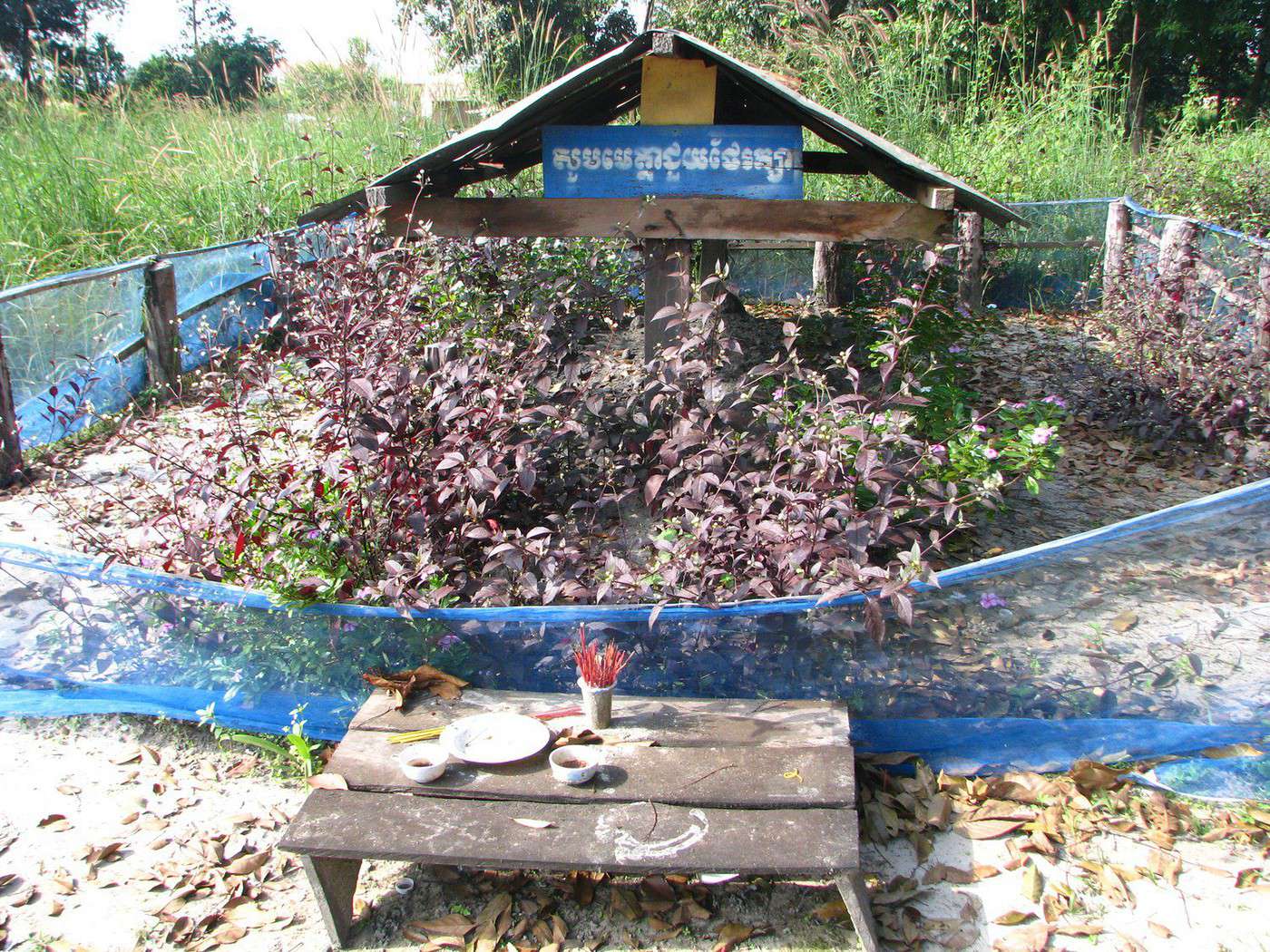
A Along Veng tu peux voir la maison de l'ancien khmer rouge Ta Mok (dit le "boucher") ainsi que l'emplacement où a été incinéré Pol Pot curieusement devant cet emplacement il y a encore des offrandes qui sont déposées (voir photo et Retour du Cambodge fin 2011: Angkor, Preah Vihear…
http://voyageforum.com/v.f?post=4778372#4778372).
bonjour Jacques
je te confirme qu'il y a un escalier en bois de 1950 marches (elles sont d'ailleurs numérotées comme à la tour eiffel, d'ailleurs nous n'aurions pas pu les compter tellement il y en a!), sur ce, tu n'es toujours pas arrivé au temple, cette fois ce sont les marches en pierre!!!
en tout état de cause, cela vaut la peine et la vue là-haut est magnifique!
mama 2
Bonjour Armand
Les "mille marches" (deux mille selon Mama2 😉 ) conduisent au sommet de la montagne où se trouve le temple. De là tu aperçois la Thaïlande mais le passage dans ce pays est impossible la frontière est fermée.
La réponse à ta question est déjà plus haut avec le post de Maddy ainsi qu'à la page précédente…
A Along Veng tu peux voir la maison de l'ancien khmer rouge Ta Mok (dit le "boucher") ainsi que l'emplacement où a été incinéré Pol Pot curieusement devant cet emplacement il y a encore des offrandes qui sont déposées (voir photo et Retour du Cambodge fin 2011: Angkor, Preah Vihear…
http://voyageforum.com/v.f?post=4778372#4778372).
Je reviens de Preah Vihear depuis 2 jours. Nous avons logé à Sok San Guesthouse. La guesthouse était propre propriétaire très sympathique chambre ventilo à 13$. Dans le centre ville, il y avait d'autres guesthouses mais les chambres étaient très petites et sale.
Si je ne me trompe pas, j'avais lu quelques part sur un forum que la compagnie de bus Rithmony allait jusqu'à Sra Em en partant tôt le matin. Mais je ne connais pas le coût. J'ai du laisser mes notes à ce sujet à la maison.
Le temple de Preah Vihear est vraiment magnifique je te conseille d'y aller très tôt le matin pour admirer le lever du soleil.
Par contre les paysages pour aller jusqu'à Preah Vihear ne sont pas jolie (nouvelle route). Il y a eu beaucoup de déforestation notamment pour faire la route). C'est vraiment dommage.
Bonjour Fabrice
Il me semble que tu vas au Cambodge pour la première fois et que tu as l'intention de voir les temples suivants : Sambor Prei Kuk - Banteay Chhmar - Koh Ker… Ces temples sont parmi les moins intéressants que j'ai vus. Je ne sais pas comment tu as procédé pour sélectionner ces temples, une documentation peut-être, la consultation d'ouvrages (qui ne sont plus édités) à la bibliothèque de l'E.F.EO., les bulletins de l'E.F.E.O (que l'on trouve sur le site http://www.persee.fr/web/revues/home/prescript/revue/befeo) le livre de Claude Jacques et Philippe Lafond : "L'Empire khmer : Cités et sanctuaires Ve-XIIIe siècles", ou des photos ?…
Tu as peut-être l'intention de faire un guide des temples à éviter ? 😉
Si c'est cela je peux t'en citer d'autres qui se trouvent sur le site d'Angkor : Ak Yum - Thma Bay Kaek – Kutiçvara…
Je te donne mon avis qui bien sûr n'engage que moi :
Sambor Prei Kuk : c'est un ensemble de monuments de la période préangkorienne (Empire du Tchen-La). Ces temples ont été construits aux environs de 620. Il n'en reste pas grand-chose. Sans grand intérêt si ce n'est que deux lions monolithiques.
Banteay Chhmar : style du "bayon" (1181 - 1243). En ruine, on peut (quand même) voir quelques mètres d'un mur avec des bas-reliefs, mais on trouve ce même genre sur une surface beaucoup plus importante sur les bas-reliefs extérieurs du Bayon…
On peut y voir également la représentation d'un "Lokeçvara à bras multiples". Malheureusement en 1999, 11,50 mètres de ce mur composé de 117 blocs ont été volés. Ces blocs ont été retrouvés en Thaïlande et restitués au Cambodge, ils n'ont pas été remontés sur place. Dans le bouddhisme du Mahâyana le "Lokeçvara" (ou Avalokiteçvara) est le Bodhisattva le plus connu au Cambodge – c'est un être qui a volontairement renoncé à entrer immédiatement dans le nirvana pour pouvoir aider les humains – Il n'a pas de "bras multiples", cette représentation est une symbolique qui le montre en train d'agiter ses bras. A mon avis "ne mérite pas le détour" car d'un intérêt limité et situé assez loin de Siem Reap. En 2010 de Sisophon au Banteay Chhmar nous avons mis 2h00 (en 4x4) sur une piste défoncée mais cela a peut-être changé.
Koh Ker : c'est un ensemble de monuments construits entre 928 et 941 (environ…). J'y suis allé principalement pour voir le Trapeang Khna qui est composé de plusieurs bancs rocheux qui émergent du sol à 1 mètre au maximum. La paroi verticale est ornée de sculptures de divinités diverses… Très difficile à trouver…
Je ne garde pas un souvenir particulier de ce site.
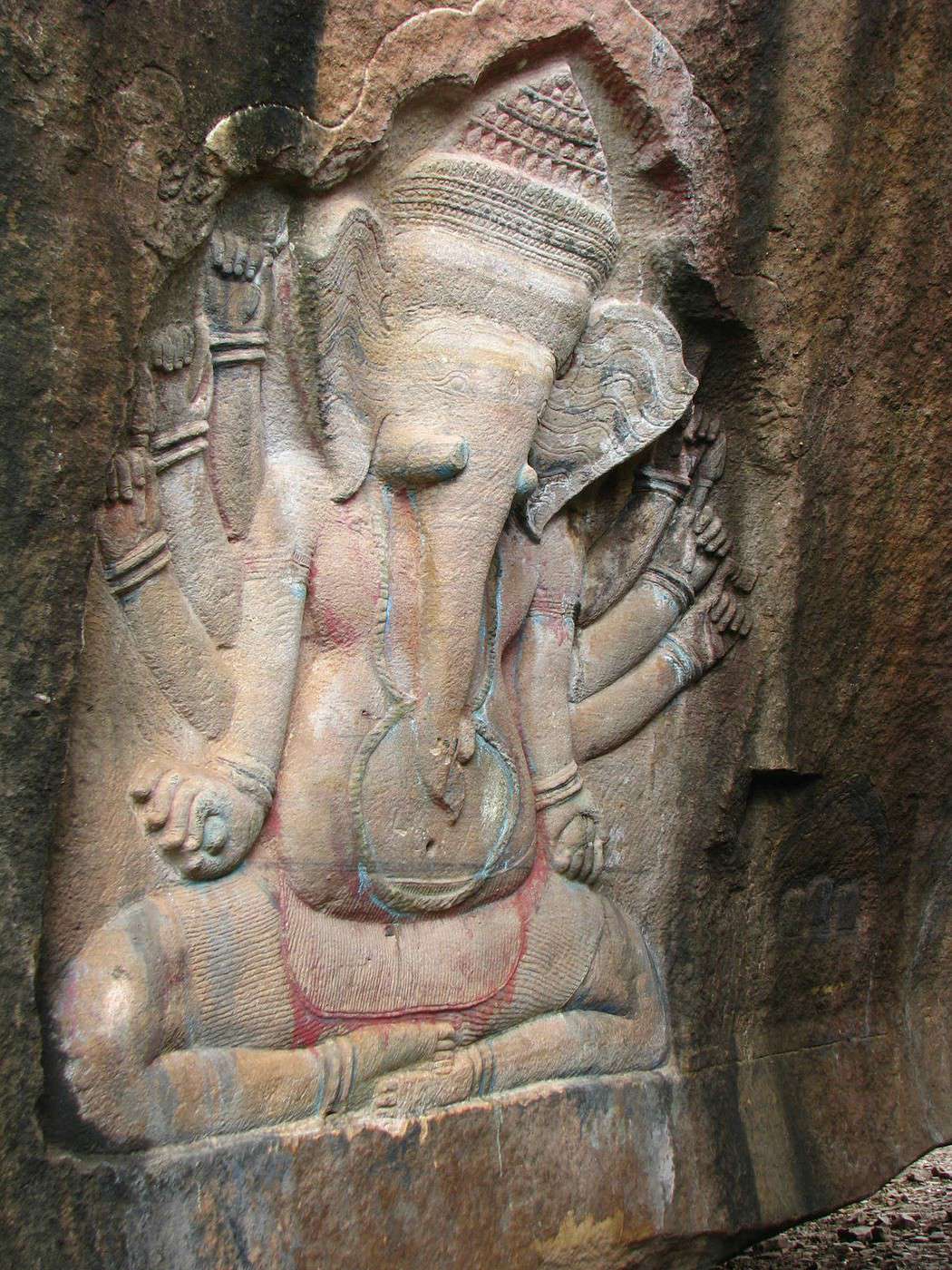
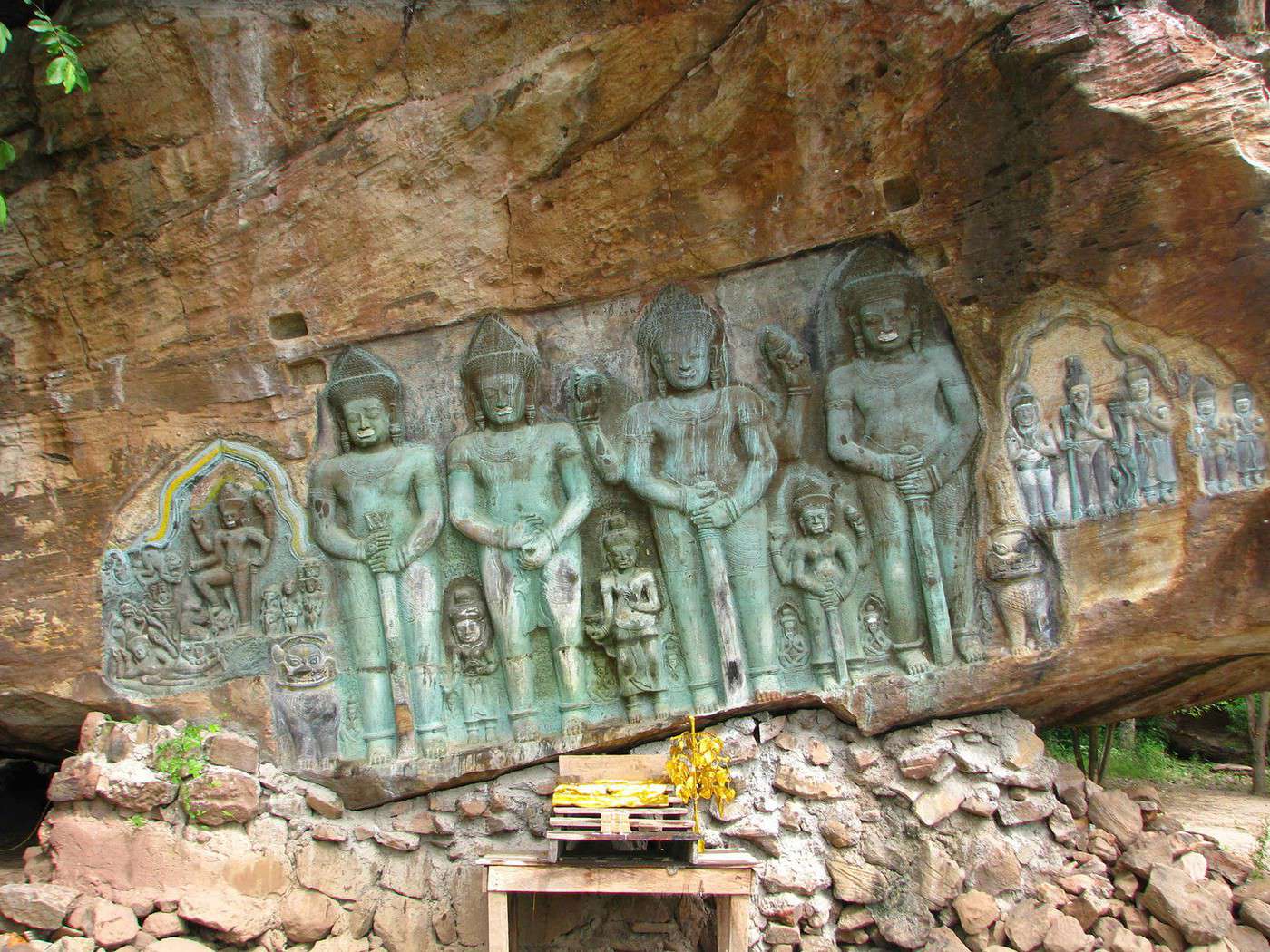
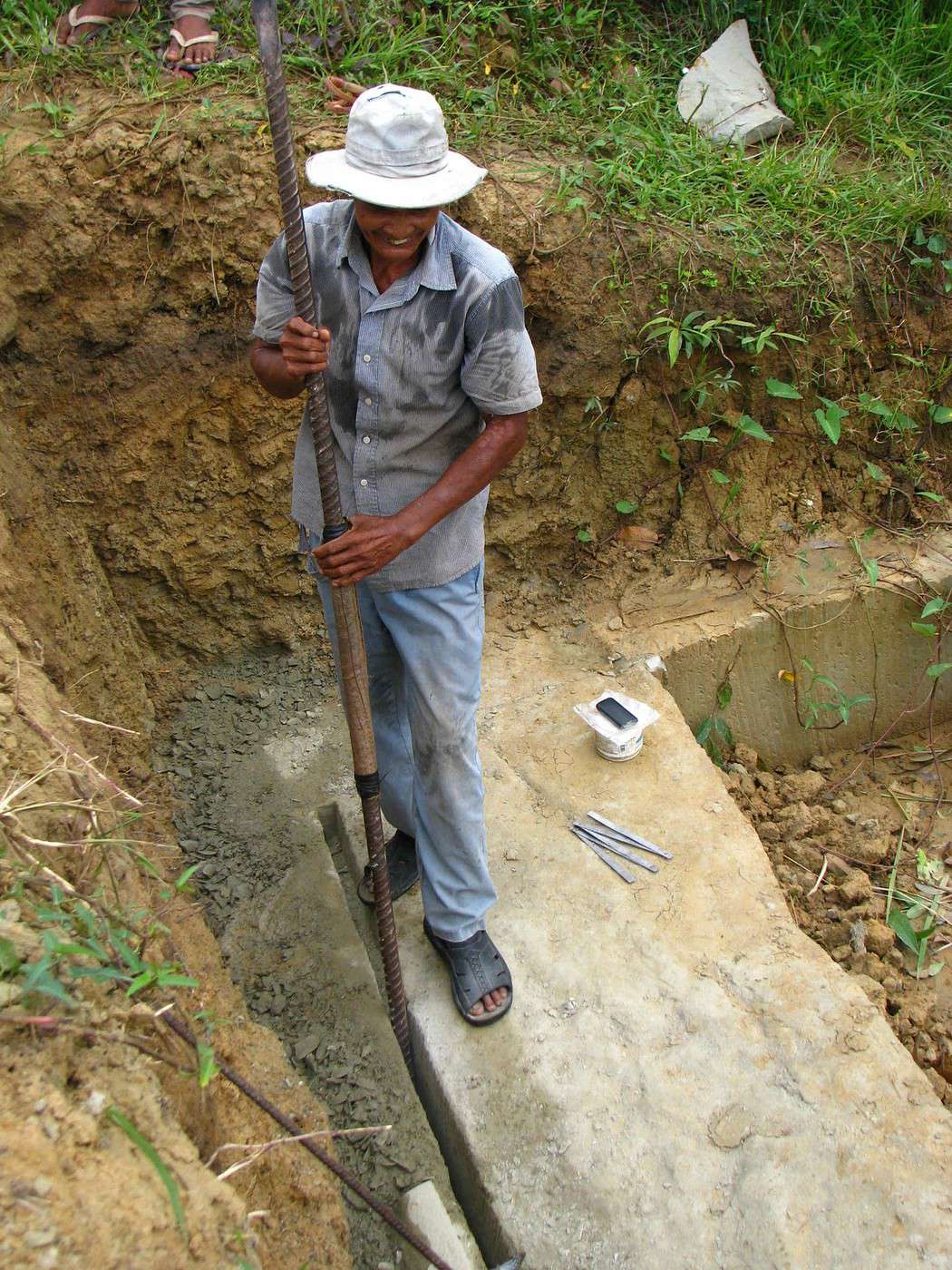
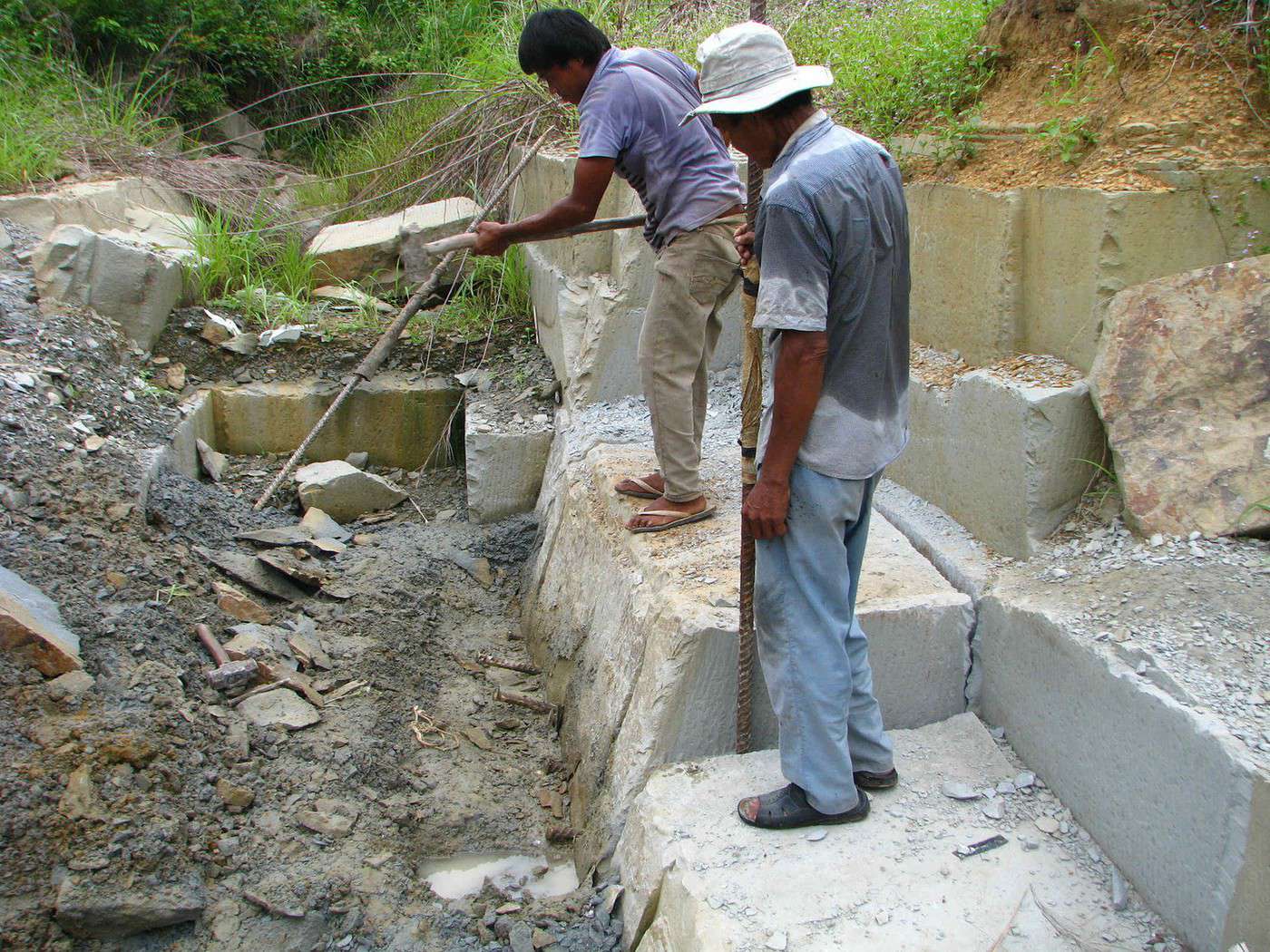
J'avais fait cette visite en une journée depuis Siem Reap en voiture. En cours de route j'ai été beaucoup plus intéressé en voyant peu avant d'arriver à Koh Ker (après avoir marché une trentaine de minutes) des rochers sculptés et peints représentant diverses divinités ainsi que des tailleurs de pierres. Ces pierres servent à la restauration des temples d'Angkor, il s'agit d'un travail très bien payé mais très pénible. Pour ces rochers sculptés et les tailleurs de pierres je ne pense pas que l'on puisse les trouver sans guide. (voir photos).
De l'avis (probablement) général les temples les plus intéressants sont situés sur le site d'Angkor avec également quelques uns aux alentours :
Le groupe de Roluos
Le Banteay Srei : ne pas oublier de voir – après les boutiques – un petit hall d'exposition avec des photos prises entre 1931 à 1936 lors de la restauration de ce monument.
Le Kbal Spean (rivière aux "Mille Linga")
Le Banteay Samre qui a été très bien restauré par anastylose en 1936 par Maurice Glaize.
Le Beng Mealea (non compris dans le pass).
Pour les temples plus éloignés je ne retiens que le Preah Vihear.
Pour un premier séjour (en prenant le pass de sept jours) cela fait quand même un grand nombre de temples à visiter…
Inutile de perdre son temps (et de l'argent) pour voir d'autres temples d'un intérêt limité.
A voir également à Siem Reap le très beau musée. On peut y voir l'évolution des divers styles (colonnettes et linteaux) ainsi que plusieurs stèles et des Linga entiers (habituellement on ne voit que la partie supérieure). Une grande partie de des objets proviennent de la Conservation d'Angkor (qui en principe ne se visite pas 😉 )
Le site d'Angkor est extraordinaire mais au Cambodge il n'y a pas que les temples…
En fait, je voulais devenir archeologue qund j'etais en sixieme, et j'en garde quelques trqces, meme si j'ai une formation d'ingenieur IT.
En fait, j'irai voir ces temples "en passant". Par exemple, pour Banteay Chhmar, je viendrai de Prasat en Thailande / Isaan, avaqnt de rejoindre Battambang le lendemain. Donc pas le souci d'un accces long, car sur le chemin.
Je prends tres bonne note de tes suggestions que je soumettrai au guide qui me pilotera entre Kompong Thom et Beng Mealea.
Ces temples viennent en sus de ceux d'Angkor pour lesquels je reserve 3 jours entiers a la fin de mon periple.
Nuit passée à Sra Em en guesthouse (une des 2-3 situées sur la route pour Anlong Vieng), parti de bon matin en moto-dop (5 $), montée au site en moto (4 $ A/R), entrée sur le site de Preah Vihear à 07h30 alors qu'il n'y avait que quelques rares visiteurs cambodgiens.
Le site est vaste, et, conquis par la beauté des lieux et des bâtiments, j'y suis resté jusqu'à 13h00 (brunch inclus). Pas mal de militaires cambodgiens, même si les uniformes mentionnent "Tourist Police". Aussi des uniformes mentionnant UNESCO. Observation permanente du côté thaïlandais. Alors que je me restaurais dans l'un des boui-bouis près du site, a soudain retenti un bruit ressemblant à une explosion. Peut-être un plaisantin qui avait fait éclater un sac en plastique. En tout cas, l'inquiétude a figé tous les présents quelques secondes.
Retour à Sra Em par le même moto-dop (5 $), un jeune travaillant comme policier au pied de la montée et qui a tenté sans succès d'augmenter le montant entériné.
A ce jour, pas de billet d'entrée, mais cela va vite changé : la billetterie et la guérite de contrôle des billets sont déjà construites au pied de la montagne.
Reparti pour Siem Reap en taxi partagé, 5 $ mais le tarif local est de 4 $. Mais à 8 dans le véhicule, 4 devant, 4 derrière.
Merci Fabrice.
Quelques précisions :
- quelle est la durée pour rejoindre Preah Vihear de Sra Em
- à quelle GH vous êtes vous arrêté et comment était-elle ? une idée du prix ?
Merci pour tout et bonne journée.
Jean Michel.
Merci Fabrice.
Quelques précisions :
- quelle est la durée pour rejoindre Preah Vihear de Sra Em
- à quelle GH vous êtes vous arrêté et comment était-elle ? une idée du prix ?
Jean Michel.
Temps de transport en moto-dop : environ 45 mn de Sra Em jusqu'au pied de Prasat Preah Vihear (le moto-dop roulait très prudemment), puis quelques 15 mn pour l'ascension jusqu'au site. Route en parfait état sur tout le trajet, tout particulièrement pour l'ascension finale. Comme la plupart des jours observés, le soleil n'apparaît que vers 07h00, le temps pour lui de sortir de la couche nuageuse. Je n'ai pas identifié de transport collectif à destination de Prasat Preah Vihear.
Guesthouse Toul Monysophon, très basique, une vingtaine de chambres alignées de part et d'autre du couloir central. 8 $ demandés pour une chambre simple avec ventilateur, moustiquaire, TV (bloquée sur 1 seule chaîne), sol en planches, salle de bain privée, douche froide, ne méritant que 3-4 $ dans le reste du Cambodge, mais je n'ai pu rabaisser qu'à 7 $. Peut-être aussi appelée Tbeng Meanchey Guesthouse (affichage en bord de route). Fournit serviette de bain et petite bouteille d'eau comme c'est l'usage au Cambodge.
Située à 1 km du rond-point central de Sra Em, sur la route vers Along Veng, juste après une autre guesthouse de meilleur standing, avec restaurant, demandant 11 $ pour une chambre simple. Mais il n'y a pas trop l'embarras du choix à Sra Em. J'ai rencontré 2 jeunes russes qui avaient réussies à se faire héberger à bon marché dans l'un des restaurants près du marché. Le patron les avaient auparavant véhiculées jusqu'à Preah Vihear.
Si c'est le cas comment y es-tu allé (durée du trajet) et quels sont tes impressions sur ce temple.
Oui. Atteint à partir de Kompong Thom.
Départ en moto-dop à 05h30, visite de Sambor Prei Kuk de 06h30 à 08h15. Après une pause involontaire de 20 mn, départ pour Ta Seng par de bonnes pistes de terre en évitant Phnom Dek. Repas vers 10h30 à Ta Seng. Les sites de Preah Khan sont à 5-10 mn de Ta Seng.
Preah Khan de Kompong Svay : visite des sites de 11h30 à 13h45.
- Prasat Damrei de 11h30 à 11h45, modeste, quelques apsaras le long du mur d'enceinte, un éléphant encore révéré. Vue large sur le Baray bien en eau.
- Prasat Preah Stung de 11h55 à 12h25, style Bayon avec une tour à 4 visages, 1 beau garuda en angle.
- Preah Khan à proprement dit, de 11h40 à 13h20, entrée majestueuse avec un belle passerelle d'accès à la belle frise d'oiseaux. Site vaste, encore très sauvage, avec végétation bien présente, quelques décorations préservées (frises surtout, peu de linteaux ou pédiments d'intérêt). Je n'y ai rencontré qu'un couple de jeunes locaux étonnés de ma visite. La veille, une unique visiteuse, une jeune belge que j'ai croisée par la suite.
Billetterie seulement à l'entrée du Preah Khan proprement dit. Les sites périphériques sont en accès libre.
Rien d'inoubliable, mais c'était sur mon chemin vers Beng Melea. Charme de son côté sauvage, luxe d'être seul sur ces sites. Tout de même, mieux vaut découvrir ce site avant les sites majeurs d'Angkor et celui de Preah Vihear, ce que j'ai fait (en connaissance de cause). Sinon, il paraîtrait sans doute un peu fade. Même avis pour les sites de Banteay Chhmar, Sambor Prei Kuk, comme ceux autour de Battambang (Prasat Banan, Wat Ek Phnom) et de Phnom Penh (Phnom Da, Phnom Chisor).
Suite de journée via la redoutable route 66, dont les 38 km entre Preah Khan et Khvau exigèrent plus de 2 h en moto. 3 fois, mon moto-dop m'a demandé de descendre pour franchir un passage un peu délicat. Enormes ornières. Itinéraire très peu fréquenté, seulement quelques motoculteurs. Usage essentiellement agricole dont les engins creusent énormément les 2 bords de la route, tant que le passage en motocyclette est très juste. Plusieurs passages sont devenus impraticables et font l'objet de déviations. Des passages sableux, mais les plus dangereux sont les passages avec graviers de latérite. Une dizaine de feux actifs en bord de route lors de mon passage. Peu de vestiges khmers dans la proximité de la route 66, 1 dharamsala et 1 petit pont (ne rivalisant aucunement avec le Spean Ta Ong à l'Ouest de Khvau où la route est devenue correcte).
Arrivé à Beng Melea à 16h45, j'ai libéré mon moto-dop et l'ai payé (négocié 58 $ jusqu'à Svay Leu, payé 60 $ car la route 66 n'était vraiment pas une partie de plaisir). J'ai pu poursuivre par la visite de Beng Melea déserté par les touristes, jusqu'à 18h00, puis j'ai intercepté un véhicule qui m'a conduit pour 10 000 riels jusqu'à Srayong où j'ai couché dans l'unique guesthouse (Srayong Ko Ke Guesthouse, payé 4 $ versus 5 $ demandés, mais cela ne vaut pas plus de 3 $ en ville).
Photos disponibles sur Picasa pour les intéressés (me contacter par messagerie privée).
Fabrice
P.S. : dans mon exploration des temples khmers, j'avais vu quelques jours plus tôt certains temples côté thaïlandais, dont les très beaux Prasat Phimai et Prasat Phanom Rung, même si abondamment restaurés. Ainsi que le Wat Phou Champassak situé au Sud Laos.
Merci Fabrice pour toutes ces infos, cela va m'aider dans ma préparation.
Les moto-dops de Kompong Thom proposent en standard le circuit suivant :
J1 : Kompong Thom -> Sambor Prei Kuk -> Preah Khan (Kompong Svay), nuitée à Ta Seng ou Tbeng Meanchey
J2 : Ta Seng -> Preah Vihear -> Koh Ker, nuitée à Srayong
J3 : Beng Melea, puis dépose à Siem Reap.
En général, coût de 50 à 60 $ par jour, soit un total de 150 à 180 $.
Je recommande de conclure plutôt par le Prasat Preah Vihear, très largement plus beau que les précédents. C'est le seul à pouvoir rivaliser avec les beaux temples du parc d'Angkor.
Mon itinéraire a donc été le suivant à partir de Kompong Thom :
J1 : Kompong Thom -> Sambor Prei Kuk -> Preah Khan (Kompong Svay) -> Beng Melea -> Srayong.
J2 : Srayong -> Koh Ker -> Kulen -> Tbeng Meanchey -> Sra Em.
J3 : Sra Em -> Prasat Preah Vihear -> Sra Em -> Siem Reap.
Coûts de transport :
J1 : 60 $ (moto-dop) + 10 000 riels (van).
J2 : autostop gratuit jusqu'à Koh Ker, 5 000 riels en van jusqu'à Kulen, 7 $ en moto-dop jusqu'à Tbeng Meanchey, 8 $ en taxi partagé jusqu'à Sra Em (tarif normal sans doute plutôt de 5 $).
J3 : 14 $ pour l'A/R Sra Em <-> Prasat Preah Vihear, puis 10 $ pour Siem Reap (tarif normal de 7 $).
Soit un total de 103 $ en transport pour ces 3 jours. Coût bien plus abordable que les excursions proposées à partir de Siem Reap, et laissant amplement le temps pour les visites (7 heures à Koh Ker car intégralement à pied, 5h30 à Preah Vihear). Evidemment, il faut se donner un peu de mal et le J1 fut très long (et pénible pour les 38 km entre Preah Khan et Khvau).
A noter que la route entre Beng Melea et Tbeng Meanchey est en parfait état, hormis les chemins de contournement du péage. Idem pour la route entre Tbeng Meanchey et Sra Em, et se prolongeant jusqu'à Prasat Preah Vihear.
Prés du Preah Vihear il y a un village avec une guesthouse, le prix ne doit pas être excessif.
Je n'ai pas souvenir d'avoir traversé le moindre village entre Sra Em et le Prasat Preah Vihear.
S'il s'agissait du village de Kor Muy, il a été évacué en juin 2009, puis rasé. Dans le cadre de la militarisation de la zone face à la Thaïlande.
Le bon côté de la militarisation de la zone, c'est que la route d'accès est désormais excellente, et ce depuis Kompong Thom.
Dans les villages, les guesthouses ont des prix modiques pour des portefeuilles occidentaux, mais les prix demandés sont très largement surévalués par rapport aux prix normaux en ville au Cambodge (pour 5 $, chambre correcte, ventilateur, TV, salle de bain privée, Internet souvent inclus). Le summum semblant atteint à Koh Ker, dont la guesthouse demande 10 $ (voire plus) pour une chambre simple, ventilateur, salle de bain collective, électricité coupée la nuit... Les moto-dops se rabattent sur celle de Srayong où j'ai atterri par hasard et dont les 5 $ demandés me paraissaient déjà bien excessifs.
Je n'ai jamais visité le Preah Khan de Kompong Svay, j'avais uniquement trouvé des photographies et des commentaires sur ce temple dans le livre de Claude Jacques et Philippe Lafond "L'Empire khmer : Cités et sanctuaires Ve-XIIIe siècles".
Le 30 Décembre je t'avais donné mon avis sur Sambor Prei Kuk, Banteay Chmat et Koh Ker, je constate que tu partages cet avis, et comme tu as écrit 'Rien d'inoubliable" et "fade" après avoir vu les temples principaux du site d'Angkor.
Je suis également de ton avis concernant le Preah Vihear, j'y suis allé deux fois, j'ai beaucoup aimé ce site, je pense retourner (pour la septième fois) à Siem Reap en Juin et probablement que je retournerai voir ce temple.
Voir l'excellent site de Mady "Cambodge post" (http://www.cambodge-post.com/ ) dans balade puis "Nord Ouest" puis "Le temple de Preah Vihear"
Le 30 Décembre je t'avais donné mon avis sur Sambor Prei Kuk, Banteay Chmat et Koh Ker, je constate que tu partages cet avis, et comme tu as écrit 'Rien d'inoubliable" et "fade" après avoir vu les temples principaux du site d'Angkor.
Avant ton avertissement, j'étais déjà bien conscient que ces vestiges de temples n'étaient pas de première grandeur en terme de beauté dans leur état présent. Raison pour laquelle j'avais veillé à ce que mon itinéraire les place avant Preah Vihear et Angkor. Si je l'avais pu, je les aurai aussi placé avant les temples khmers de l'Isaan (Thaïlande), surtout Prasat Phimai, Prasat Phanom Rung, et Prasat Muang Tam.
Ceci dit, je suis très content d'avoir séjourné à Banteay Chhmar, ma première étape après être entré au Cambodge par le poste frontière de O'Smach (très aisé à franchir, aucune attente, pas d'entourloupe). Découverte en douceur du monde cambodgien en commençant par un petit village assoupi, à la vie simple, où le contact avec les habitants reste sincère et sans arrière-pensée. On est très loin de la surpopulation touristique, même si le hasard a fait qu'une jeune française y séjourne le même soir que moi.
Le temple principal de Banteay Chhmar est vraiment très vaste, mais aussi très détruit. Reste principalement 2 galeries avec sculpture, dont celle des Avalokiteshvara. Les temples périphériques ne présentent pas d'intérêt particulier si ce n'est qu'ils sont disséminés dans la nature, pas faciles à trouver car les indications sont rares et ils sont bien camouflés dans la végétation.
Par contre, les routes d'accès sont difficiles, car en pleine reconstruction. Une fois ces routes rénovées, Banteay Chhmar apparaîtra sur la carte touristique, même si le site ne rivalisera jamais avec les vedettes déjà établies.
L'offre d'hébergement de visitbanteaychhmar laisse espérer faire une bonne action, car les prix sont nettement supérieurs aux tarifs pratiqués au Cambodge. Le visiteur économe s'alimentera sur les stands du marché. Change de bahts possible dans une boutique du marché, à un taux décent (1 baht = 128 riels, alors que le taux interbancaire était à 132).
bonjour,
j'arrive au Cambodge le 23/01/2014.
Je compte rester 2 ou 3 jours à PP (avec 1 journée sur l'ile de la Soie ?)
puis 5 jours à Siem Reap (3 jours Angkor et un peu de Tonlé Sap)
ensuite j'envisageai de remonter vers Koh Ker et Prasat Préah Vihéar. La suite de mon voyage sera au Sud Laos, Centrer et sud Vietnam (je repars de Ho Chi Minh le 22/02).
Je m'interroge notamment sur le moyen de rejoindre assez rapidement le sud Laos (Si phan do, puis Champassak et plateau des Bolovens avant de rejoindre Hué à partir de Paksé (à moins que je ne pousse jusque Thakket, mais je pense que le temps va me manquer). Du coup sais-tu si l'on peut relier Préah Vihéar à Stung Reng par exemple, il me semble qu'une nouvelle route facilite le trajet dans le coin ?) ou faut-il envisager un autre trajet ?
Merci d'avance
sais-tu si l'on peut relier Préah Vihéar à Stung Reng par exemple, il me semble qu'une nouvelle route facilite le trajet dans le coin ?)
Ce dont je peux témoigner, c'est que la route de Tbeng Meanchey à Preah Vihear était excellente en janvier 2013, l'asphalte paraissant neuf.
Par contre, je n'ai pas emprunté le segment Tbeng Meanchey -> Stung Treng et ne peux donc t'en rendre compte.
Avant mon voyage de janvier 2013, il me semble avoir lu un témoignage (VF? blog de voyage ?) couvrant le trajet Stung Treng -> Tbeng Meanchey en moto-dop, à moins que cela n'ait été des cyclistes. A mon souvenir, cela avait été ardu pour eux. Mais des travaux récents peuvent avoir complètement changé la donne.
Bien que tu l'aie fait en moto drop, as tu vu des transports publics à Tbeng Meanchey allant vers des villages proches de Preah Vihear ?
Depuis Tbeng Meanchey, j'ai rejoint Sra Em en fin de journée via un taxi collectif, arrivant la nuit tombée. Pas connaissance d'autocar à cet horaire, en tout cas jamais évoqué lors de mon bref passage à Tbeng Meanchey. J'avais lu en 2012 qu'il y a un autocar tous les matins au départ de Sra Em en direction de Phnom Penh. Sans doute la même chose dans l'autre sens. Encore faut-il qu'il y ait de la place lorsque l'autocar passe à Tbeng Meanchey.
Depuis Sra Em, tôt le matin, un militaire allant prendre son service m'a servi de moto-dop pour me confier à un local du coin au pied de Preah Vihear. Idem pour le retour. La veille au soir à Sra Em, je n'avais pas identifié le moindre transport collectif.
Le lendemain, en début d'après-midi, j'ai pris un taxi collectif pour Siem Reap via Anlong Vieng.
Au temps pour moi, ma lecture de ton CR m'avait laissé penser que tu avais loué les services d'un motodop de Kompong Thom à Siem Reap via Kohker et Preah Vihear.
Je re regarde donc ton post, mais il m'avait semblé que ta virée avait eu un coût significatif.
Vu que nous voyagerons sur 6 mois avec un budget assez réduit (laos, cambodge, myanmar, nepal, ladakh), je pense que nous nous limiterons aux coins facilement accessibles...
Je re regarde donc ton post, mais il m'avait semblé que ta virée avait eu un coût significatif.
Ce qui a eu un coût vraiment significatif, c'est le J1, et essentiellement du fait de la visite de Preak Khan Kompong Svay. Et de la dépose à Beng Mealea, ce qui oblige le moto-dop à revenir à son point de départ probablement à vide (du fait de l'horaire et des zones traversées). Une journée particulièrement longue (départ à 05h30 de Kompong Thom, dépose à 16h45 à Beng Mealea), où nous avons roulé la plupart du temps (donc conso essence élevée), avec un segment très difficilement carrossable sur la RN66, donc à risque pour sa moto.
Le reste de mon escapade (J2 et J3) n'était pas trop onéreux, même si plus cher que ma moyenne journalière, du fait du transport.
J2 : 16,50 $ en transports
J3 : 14,75 $ en transports
Il est possible de concevoir un circuit plus économique dès lors que l'on évite Preah Khan Kompong Svay et la Voie Royale sur la RN66.
Mais de mon point de vue, Preah Vihear est incontournable, un "must" comme disent les anglophones.
Il semble que des taxi collectifs circulent depuis quelques mois entre la rive ouest du Mekong (en face de Stung Treng) et Tbeng Meanchey en 2-3h pour 10$ (route refaite), d'où il est facile de rejoindre Preah Vihear puis Siem Reap.
Je pense donc que nous passerons directement du sud du Laos à Preah Vihear via Stung Treng, éventuellement en coupant le trajet en deux.
Cela nous ferait par contre louper Kratie Kompong Cham et Kompong Thom. A voir si c'est immanquable...
Hello everyone! I’m heading off solo in February and wanted to share my rough itinerary with you. Does this sound doable?
PS: I’m not really into beaches.
D1 Departure on February 17, 2027
D2 Arrival in Kuala Lumpur – stroll through Chinatown and visit the Petronas Towers
D3: Kuala Lumpur – Chow Kit Market, Batu Caves, Little India, Bukit Bintang downtown area
D4: Early morning bus to Malacca. Explore Malacca in the afternoon and evening
D5: Another 2–3 hours in Malacca in the morning, then bus back to Kuala Lumpur. Merdeka Square area. Stay in Chinatown
D6: Bus trip to Kuala Tahan. Night tour
D7: Morning – canopy walk and Bukit Terisek hike. Afternoon – off to Lata Berkoh
D8 & D9: 2-day jungle trek in Taman Negara National Park
D10: Head to Cameron Highlands
D11: Morning hike through the plantations. Afternoon still to be decided
D12: Morning – excursion to Mossy Forest and Sungei Plantation. Afternoon bus to Ipoh
D13: Morning – Mirror Lake / Sam Poh Temple area. Afternoon – explore downtown Ipoh
D14: Morning train to Penang. Afternoon – wander around Georgetown
D15: Morning – Penang Hill and Keh Loh Temple. Afternoon – Georgetown
D16: Bus to Butterfly Garden and Spice Garden. Late afternoon – Burmese and Thai temples
D17: Morning flight to Singapore. Afternoon – Chinatown and Marina Bay tour
D18: Morning – Gardens by the Bay area. Afternoon – Boat Quay, Clarke Quay, Kampong Glam
D19: Morning – The Ridges area and Botanical Garden. Afternoon – Little India, then back to Chinatown before 11:15 PM return flight
D20: Morning arrival
Hi everyone,
I’ll be in western Malaysia for 20 days in January and February.
I’m coming from southern Thailand to Ipoh for the Thaipusam festivities.
Then it’s off to Pangkor Island.
I’ll finish up in Malacca for the Chinese New Year celebrations before heading to Singapore.
I’ve got a 6-day gap.
I was thinking of going to K.Lipis for the jungle train and heading to Dabong, but the caves might not be open.
Any suggestions around K.L.?
Day treks?
A stopover between K.L. and Malacca?
Thanks
Hi, I’ve read that these two volcanoes are super popular and that there are *tons* of people for sunrise, especially in July. I’m looking for firsthand accounts from anyone who’s done it later, around 9–10 a.m.
Thanks for your help!
Laëtitia
I’m heading to Cambodia at the end of December 2026 – January 2027 for 3-4 weeks. Since I’ve already visited Cambodia twice, my itinerary is a bit different this time—I’d love to explore Botum Sakor Park, Chi Pat, the Tatai region, and the Cardamom Mountains. I’m traveling solo. If you have any tips on transportation, excursions, treks, sights, or accommodations in the area, I’d really appreciate it. Thanks for your feedback!
Has anyone traveled with the Laos travel agency ADV ?
I’m planning a trip to Laos and have received several quotes. Among them, this agency’s seem very reasonable, and so far, the interactions have been positive.
I’ve found a few positive reviews online, but I’d love to hear from travelers who’ve actually booked with them: how’s the organization, guide quality, accommodations, on-the-ground responsiveness, etc.
Thanks for sharing your experiences!
First stop on our discovery of the peninsula: Amphawa. It’s our first night in Thailand (we arrived at Suvarnabhumi at 8:50 AM).
Our initial plan was to explore the area before heading further south. The Mae Klong Railway Market is tempting... but what else is there to do????
We’ll be there on a Wednesday, and from what I’ve read on the forum, some say there’s absolutely nothing to do during the week—no floating market, barely any shops open, no restaurants, etc.
Others, though, say the place is actually more charming without the weekend crowds.
Could you share your thoughts? Missing the floating market is one thing, but if it’s really a ghost town on Wednesdays, I might just drop our bags somewhere else.
Amphawa seemed like a good first stop, just 1.5 hours from the airport, but I’d still like to settle somewhere a bit lively for our first evening.
We’ll be there at the end of October.
Thanks!
Hi,
I wanted to visit the plantations in the morning with GetYourGuide or by just showing up.
How much time should I really plan for?
I’d like to catch either the 3 PM or 5 PM bus back to KL.
Thanks
Hi,
I wanted to get some info about the cable car and the bridge—I see lots of different options...
How much time should we allow for these two activities? If we arrive around 4 PM, will we have enough time to visit without rushing?
Thanks
Hi there,
I didn’t plan to return to Thailand this year, but my health conditions mean it’ll be the best place for me to stay between two trips to India. The tourism setup there is so well-organized that it’s the most "comfortable" country for a short visit. Thailand feels too sanitized for my taste, and there’s too much religion, Buddha, and the King, but it’s still the best option given how my health has been evolving. I’d considered two weeks in ThaTon for hiking, but I got too sick from the burn-offs during my trips to the mountains around Chiang Rai. So I’m not sure where to go this year. Definitely not the sea, touristy spots, or the mountains with burn-offs...
Hi,
On September 1st, we're heading to Kalimantan for six weeks, probably from Pontianak to the Derawan Islands.
I've scoured this site, which is usually my go-to 😉, and others like VoyageForum, but recent info is pretty scarce.
I'd love any tips on places you've visited—our itinerary is still a work in progress.
We're two couples traveling with backpacks, using buses, boats, guesthouses, and homestays.
Thanks in advance!
Hi fellow travelers,
First trip to Vietnam.
We’ll be arriving in Ho Chi Minh City during Tet.
Is it complicated to find accommodation and get around during this period?
Any tips would be welcome.
Thanks for your replies.
Hi! I’d like to split my trip into two parts: 15 days in Phuket and 15 days in Krabi. Do you know if I can rent a car and drop it off in Krabi when I fly back to France?
Thanks for your feedback!
Have a great Sunday!
Martine
Hello,
After 1 night in Khao Sok, I’d like to find a 2 Days 1 Night package on the lake.
After reading a lot, I decided to "break the bank" and treat ourselves to a private tour—mainly to avoid the crowds.
But after contacting several operators, they offer "private tours" that are very expensive (around 700 €), yet in the details, the boats can only leave from the pier at 10 AM like everyone else. (I was hoping to leave much earlier.) The morning program is the same for everyone too (private or not). They drop us off at noon at our floating hotel (I’d chosen Phupha Waree). Free afternoon (swimming or kayaking in front of the hotel). We head back by boat for a 1-hour sunset ride. And the next morning, we leave the hotel at 8 AM to be at the pier by 9:30 AM at the latest—end of the trip.
So basically, we’re paying a lot for a private tour just to do the same thing as everyone else at the same time.
Or maybe I just had bad luck in my search.
I contacted Panida Ladi, who’s very popular on forums. We’d agreed on a private tour that matched my request (departure from the pier at 8 AM, very personalized itinerary). We settled on the itinerary and price, she asked for a Wise transfer for a 30% deposit, confirmed receipt of the deposit. Then 30 minutes later, she messaged me to say she was canceling everything because it was impossible to do the requested tour—and promised a quick refund of my deposit.
So here’s my question: Who’s done a *real* private tour on this lake? Who can recommend a reliable agency? Is it even really possible to do a private tour here?
I’m searching for a real gem for my 3rd stay in Koh Lanta: a lovely, high-quality hotel right by an easily accessible beach in a lively spot.
If you know of anything that fits what I’m looking for and want to share, don’t hesitate!
Hi, is anyone there in Flores right now? According to some websites, everything is closed and the situation is tough. But our guide says it's fine. Who should we believe? We're supposed to leave on September 2nd. Thanks to anyone in Flores at the moment!
Hi dear community,
I'm planning to visit Cambodia this winter, right after Christmas, for my first solo trip and my first trip to Asia. For two weeks (yes, I know it's short, but I really can't do more...). I have two main desires: Siem Reap and the countryside, the villages, the Mekong...
What do you think of this itinerary? Arrival in Siem Reap, departure from Phnom Penh.
SR: 5 days (1 day for arrival, 3 for the temples, 1 for the lake and its villages)
Kratie (stop on the way to Mondolkiri): 3 days (1 day of travel, 2 days there)
Mondolkiri/Sen Monorom: 4 days (1 day of travel, 1 day there, 2 days of treks)
PP: 3 days (1 day of travel, 2 days of sightseeing)
I think I need to cut one day somewhere if I travel from Saturday to Saturday or Sunday to Sunday. In Kratie, maybe? Or in PP? And I'll miss the boat trip that everyone recommends (SR-Battambang), but I don't see where to fit it in. Unless I do a PP-PP loop starting in the east, skip Kratie or just stay one night, then SR, then PP.
In my timing, Mondolkiri seems closer than Ratanakiri, which also tempted me a lot! Will it be too complicated alone? I'm thinking of using local guides or a small local agency for a nature and village getaway.
I've read that Siem Reap is very crowded between Christmas and New Year's. I could also do the circuit in the opposite direction. But I thought it would be easier to get familiar with the country by arriving in a touristy area—I might be wrong...
Thanks for your advice and opinions!
Hi everyone.
I’m planning my trip, and based on all the posts I’ve read, this country is amazing.
Of course, I’ve got a ton of questions for you.
Here’s a possible itinerary: Vientiane - Vang Vieng - Phonsavan - Sam Neua - Nong Khiaw + villages - Phongsali - Luang Namtha and the area - Udomxai - Huay Xai - Luang Prabang and back to Vientiane.
What do you think?
We’re planning to prioritize local transport—is it possible to do this loop?
We’d also love to go kayaking, but I’m not sure if the season’s right or where the best spot is.
For trekking—I read that Phongsali is the most authentic spot to visit villages and see wildlife. Do you know of a reliable agency and a guesthouse with reasonable prices?
Is it worth taking a slow boat for a stretch on the Mekong, and if so, which route?
For accommodations, is it better to book through Booking.com and Agoda or look when we arrive?
Are mosquitoes bad in Laos, and should we take malaria prophylaxis?
What’s the average daily budget (accommodation, food, visits)?
Is renting scooters a good option for exploring towns, and if so, which ones?
From what I’ve read, it’s best to carry cash—euros or dollars? Is it risky to walk around with that much cash?
I’ve still got tons of questions. Thanks to anyone who can help, and I’m open to all tips, info, etc.
Thanks again
Hi there,
I’m planning a family trip (my wife and I, both 47, and our two sons, aged 5 and 12) to Malaysia for the last week of June and the first two weeks of July 2027.
We used to love road trips as a couple, then as a trio, but since our second child arrived, we’ve taken a break with "camping village" style trips.
Now feels like the right time to get back to our old habits, while adjusting the pace for the kids.
We’re craving Asia. We’ve been lucky enough to visit Thailand, Indonesia (Bali and Lombok), and Sri Lanka before.
Friends have raved about Malaysia, so we’re definitely tempted.
For those who know and love Malaysia, what would be a good itinerary starting from Kuala Lumpur, with a maximum of 3-4 stops? We’d like a mix of culture, nature, and relaxation (just to clarify, we’re not big beach fans). All of this without rushing, of course.
Hello,
We’re a family of four with two teens aged 16 and 18. We’re heading to Thailand this summer. We’ll arrive in Bangkok and plan to take a flight to Luang Prabang.
I’ve seen there are some great visits and excursions to do (temples, markets, waterfalls) and maybe even venture a bit north to places like Nong Khiaw, Muang Xay, Muang Ngoy, or Oudom Xay.
But I’ve also heard about the Bokeo region with the Gibbon Experience.
Since we won’t be able to do everything, I’d love to hear about your experiences, impressions, and advice on the two options I’m considering, especially since we’ll be meeting family in Chiang Mai, Thailand, afterward.
Option 1: A loop from Luang Prabang heading slightly north, then a flight from Luang Prabang to Chiang Mai.
Option 2: A few days in Luang Prabang, exploring within a few dozen kilometers around, then heading to Bokeo province for the 2-day/1-night Gibbon Experience. For this option, I saw on Rome2Rio that it’s possible to book a ferry trip on the Mekong from Luang Prabang to Huay Xay—they mention about 8 hours. But is that realistic? What type of boat is it?
Then, to get to Chiang Mai, there aren’t many options—bus or minivan—but how does crossing the border work?
Finally, for those of you who’ve been to Laos in August, what was the weather like?
We’ve already visited Thailand, Vietnam, and Cambodia during the same period over the past four years and weren’t really bothered by bad weather.
I’m starting a discussion about guides in the Mekong Delta because we’ve just finished our trip in this region and had a hard time finding a French-speaking guide. We had Thanh—she speaks French really well and travels all over the delta region, including Ho Chi Minh City. She’s super friendly and flexible. I recommend her wholeheartedly. If it can help someone...
Feel free to contact us for her number.
Hi everyone,
I couldn’t find any recent info on Kuching.
Can anyone recommend a hotel or guesthouse for under 100 RM that’s nice and affordable? No dorms, please.
Also, does it rain a lot in November, and is it still worth visiting Semenggoh or Bako?
We’ll be arriving in Phnom Penh this coming January and we’re thinking of starting our trip with a stop in Kampong Cham, then Kratie.
After Kratie, we’re considering heading toward Siem Reap with a stop in Kampong Thom.
That said, I’m not really sure how long the Kratie–Kampong Thom journey might take or how complicated it is.
Does this stop on the way to Siem Reap seem like a good idea to you?
If we don’t visit the Sambor Prei Kuk site, are there still any walks or sights worth checking out in Kampong Thom?
Silly question—backpack or hard-shell suitcase for the Sepilok, Kinabatangan, Tioman, KL trip?
I’m struggling to fit all my son’s and my stuff into the 70L backpack... and I’m thinking a suitcase would be easier, but I’m not sure if it’ll work for getting around.
After a stay on Koh Phayam this coming November, I’d like to spend 2 or 3 days on Koh Phra Thong before heading further south.
Do you think it’s doable to leave Koh Phayam early enough to catch the 10 AM boat from Khura Buri to Koh Phra Thong? The next one isn’t until 4 PM, which would cost me a whole day.
I’m planning a trip to Indonesia, specifically Sulawesi and Java, in September for 10 days.
I don’t know this part of the world at all—any advice is welcome!
I’ll be traveling solo and would also love tips on meeting other travelers or locals.
Hello everyone,
Not long ago, I used to travel as a couple, but my husband has since passed away, and I’ve decided to set off again. The trip I took to Cambodia in January 2025 did me a world of good.
I’m now considering Thailand, a destination we never included in our plans because even 15 years ago, people said it was too touristy. Still, I’m thinking about the itinerary below, but I don’t feel up to arranging buses, trains, or guides on my own while I’m there. I’m looking for one or more drivers and have been in touch with an agency, but their offers are just copy-paste group tours that I don’t want.
So, if you have any contacts, experiences, or advice, I’d be so grateful if you’d share them with me. Here’s my rough plan:
Arrival in Bangkok
Ayutthaya (2 nights)
Kanchanaburi (2 or 3 nights)
Sangkhlaburi/Sai Yok (3 nights)
Sukhothai (2 nights)
Lampang (I’ve planned 3 nights, but that might be a bit much—it depends on what time I arrive in the city)
Chiang Mai
Chiang Dao
Pai
Chiang Rai
I was thinking about the Mae Hong Son loop—thoughts?
What do you think about staying overnight at the Golden Triangle?
When I look online, of course, I can find agencies that organize tours to national parks, etc.
I’m retired but in great physical shape. I’d rather go hiking than sit in hot springs with crowds of tourists who’ve all arranged meet-ups. I don’t want to spend a day at an elephant camp, and I don’t want to visit Karen villages.
I’d love to hear your advice.
Thank you all,
Hi everyone,
Could you share your thoughts on my 3-week itinerary?
We’re a small group (family + friends) of 12 people, planning to leave around January 21, 2027.
Here’s my itinerary:
3 nights in Bangkok
4 nights in Chiang Mai
3 nights on Koh Samui
3 nights on Koh Phangan
4 nights in Krabi
4 nights in Phuket
I’m also open to any great tips you might have...
Thanks, everyone! Alain.
Hi there,
We’re planning a 3-week family trip next summer with our three kids, who’ll be 8, 8, and 7 years old.
After some research, we’re leaning toward Malaysia to combine nature/forests and paradise beaches. The idea is to introduce our kids to the country’s culture, nature, and wildlife.
We want a great trip but without splurging on luxury options like high-end lodges and resorts. We’re looking for comfort with a touch of authenticity—basically, a good middle ground.
I’ve started putting together an itinerary and would love your expert advice and tips to help us build this amazing trip with our little ones.
Day 1: Departure from France
Day 2: Kuala Lumpur
Stay at a hotel near the airport or KL Sentral.
Just one night.
Day 3: Morning flight to Sandakan (Borneo).
Stay in Sepilok
Day 4: Sepilok:
* Orangutan Center
* Malayan Sun Bear Center
* Rainforest Discovery Centre
Day 5: Depart for Kinabatangan.
Boat safari in the late afternoon.
Day 6: Sunrise safari.
Jungle walk.
Evening safari.
Day 7: Final safari.
Return to Sandakan.
Flight to Kuala Lumpur, then to Kota Bharu (or overnight transit depending on schedules).
Day 8: Transfer to the port.
Boat to the Perhentian Islands.
Days 9 to 13: Perhentian Besar
5 full days.
* Snorkeling
* Hiking
* Turtle watching
* Wild beaches
* Relaxation
Day 14: Return to the mainland.
Bus or private car to Taman Negara.