Hello,
I’d like to head to Mauritania between November 15th and the end of December.
I’m looking for a crew or group we could join for this adventure.
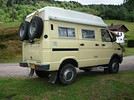
I’ll already be in Morocco, and my wife will meet me there. We’re traveling in an HDJ80 equipped for camping.
Dates and organization are flexible—we’re easygoing.
Mauritania
Showing 1–15 of 15 discussions in English.
Hi everyone,
In February 2027, with a two-wheel-drive vehicle, I plan to leave France and head to Senegal.
I’d love to get some info about crossing Mauritania, or if there are people interested in doing it as a convoy from Morocco to Senegal.
I plan to stick to the N2 and not stray too far from that route. I’ll only travel during the day and stop at guesthouses or stay with locals for the night.
If anyone’s interested, let me know. Thanks for your feedback!
Hi there,
Last February, I made a trip using "public transport" from France to southern Senegal via Spain, Morocco, Western Sahara, and Mauritania.
It’s a journey of about 5,000 km, where I took trains (as far as Marrakech), ferries (to cross Gibraltar and then to reach Casamance from Dakar), and mostly buses on the long desert straightaways. I hadn’t planned any stops in advance or booked any hotels, except for the very first train to Spain, which left plenty of room for the unexpected. Why travel by land and sea? In recent years, flight-free travel has been gaining popularity. On social media, posts explaining how to cross Europe by train as quickly as possible go viral. Traveling without flying—and making sure people know about it—has become a great way to earn a badge of eco-responsibility: an essential totem for anyone wanting to prove both their dedication to the ecological cause and the wisdom of slow travel. I haven’t flown in years, and this journey to West Africa could easily be filed under "responsible travel." But it wouldn’t be honest to say that: in reality, it wasn’t really my aversion to flying that motivated this long trek. I see overland travel primarily as a way to experience the world’s geography at a grounded, earthly pace—the pace of the locals. Besides, I’ll be flying back, which disqualifies any claim to being a model of sustainability. So no eco-badge, and no adventurer’s badge either: you won’t find any heroic tales of camel rides in lost lands or mineral train wagons in this account (popular with influencers, the Mauritania iron ore train now attracts tourists from all over the world, turning "the experience" into something you "have to do at least once in your life"). This five-part story, written on the road, has no other ambition than to recount a journey through places and people, and to share the thoughts they inspire in me. As simply and, I hope, as humbly as possible.
I’m posting the episodes here, which you can also find on my blog (with more photos) at the following links:
Episode 1: Spain, from Avignon to Algeciras
Episode 2: Morocco, from Tangier to Tarfaya
Episode 3: Western Sahara, from Tarfaya to Guerguerat
Episode 4: Mauritania, from Guerguerat to Nouakchott
Episode 5: Senegal, from Rosso to Saloulou
To help those who might want to make the same trip, I’ve also put together a summary of the route with recommendations—you can read it at the end of the story and on the blog: From France to Senegal Without Flying: Route and Itinerary Recommendations
Happy reading, and safe travels!
hello to all travelers with their eyes wide open to the desert...
I’ve always wondered what I was "doing" on this earth. And why my father, who died a few months after I was born—a former youngest French resistance fighter—joined the First Saharan Motorized Company in Atar and spent the rest of his life repairing army engines in Algeria, Mauritania, Senegal, Mali (which didn’t exist under that name back then), Morocco, and finally Algeria, where my mother was born and raised. (Believe me, it’s not "cool" being the child of a soldier in a country occupied by France, and even less so the child of a "pied-noir.") Of course, I never got an answer: the dead don’t talk, and the army doesn’t either. But here’s the thing—I had photos... So naturally, one day I hit the road. I wanted to see, to understand. It’s thanks to VF that I was able to do a little research on crossing the Morocco-Mauritania border, and I’m grateful to its members, just as I’m grateful to all those who welcomed me on the road for 14 years. For the past few weeks, I’ve been wondering if I should talk about this or not... It turns out the Mauritanians changed my life by asking for my help... And that started as early as February 2012... (Did I owe them something? No answer to that question.) Ah, the irony—they saw me coming. But when you’re handed sick children and begged to do something, what would you have done? I’d worked in a hospital, so I knew a bit about the rules to follow. I didn’t hesitate. And well, over all these years, I met doctors, surgeons, and together we organized care, evacuations of children, training for surgeons—even trying to stop children from having to travel outside their country. It was never easy. I’d like to thank those who supported us, as well as *La Chaîne de l’Espoir*, *La Fondation Face au Monde*, and everyone who built bridges between our two countries. Unfortunately, despite the constant efforts of Mauritanian doctors and surgeons, some children couldn’t be helped in time. Today, I want to talk about four siblings—orphans of their mother—suffering from congenital glaucoma causing irreversible blindness. Their case was entrusted to me in 2020, just weeks before the big lockdown. We couldn’t do anything for them then, but when their father asked me for a gift, I rushed to my computer and wrote a story. Through a tale, the children take a great journey, explore their country, and fulfill a dream. I never thought this book would be published—it was, in 2023. This book pays tribute to Mauritania. It’s a message for those who know nothing about the hardships of life there, carrying both the harshness and beauty of an immense desert where you can travel by 4x4, bike, on foot, or by camel in complete safety. It bears witness to the kindness of Mauritanians toward travelers. As a woman traveling alone in my vehicle—a now-rusted old Mercedes that no longer runs—I had the most beautiful encounters of my life there (I’ve seen other parts of the world...). The blind children of Choum, Atar, Nouadhibou, and Nouakchott will forever be in my heart. Volunteer readers transcribed the book into a free audio version for the visually impaired. It’s available in sound libraries in France, the *Fondation Valentin Haüy*, and the Swiss Romande library. I made my last trip to Mauritania in my old 4x4 to distribute the book everywhere, especially to its heroes and the school for the visually impaired in Nouakchott. After that, I thought it was time to close the chapter because I no longer have the means or the strength to travel. My publishers chose this title for it: *The Blue Eyes of the Desert*. This publication helped a mission of Swiss volunteer ophthalmologists come to operate on glaucomas in Mauritania. I’m thrilled because they come back every year! This adventure is ending, yes—everything must come to an end—but ultimately, it was born here, on the VF site!! So yes, I had to say it: THANK YOU!!!!!
I’ve always wondered what I was "doing" on this earth. And why my father, who died a few months after I was born—a former youngest French resistance fighter—joined the First Saharan Motorized Company in Atar and spent the rest of his life repairing army engines in Algeria, Mauritania, Senegal, Mali (which didn’t exist under that name back then), Morocco, and finally Algeria, where my mother was born and raised. (Believe me, it’s not "cool" being the child of a soldier in a country occupied by France, and even less so the child of a "pied-noir.") Of course, I never got an answer: the dead don’t talk, and the army doesn’t either. But here’s the thing—I had photos... So naturally, one day I hit the road. I wanted to see, to understand. It’s thanks to VF that I was able to do a little research on crossing the Morocco-Mauritania border, and I’m grateful to its members, just as I’m grateful to all those who welcomed me on the road for 14 years. For the past few weeks, I’ve been wondering if I should talk about this or not... It turns out the Mauritanians changed my life by asking for my help... And that started as early as February 2012... (Did I owe them something? No answer to that question.) Ah, the irony—they saw me coming. But when you’re handed sick children and begged to do something, what would you have done? I’d worked in a hospital, so I knew a bit about the rules to follow. I didn’t hesitate. And well, over all these years, I met doctors, surgeons, and together we organized care, evacuations of children, training for surgeons—even trying to stop children from having to travel outside their country. It was never easy. I’d like to thank those who supported us, as well as *La Chaîne de l’Espoir*, *La Fondation Face au Monde*, and everyone who built bridges between our two countries. Unfortunately, despite the constant efforts of Mauritanian doctors and surgeons, some children couldn’t be helped in time. Today, I want to talk about four siblings—orphans of their mother—suffering from congenital glaucoma causing irreversible blindness. Their case was entrusted to me in 2020, just weeks before the big lockdown. We couldn’t do anything for them then, but when their father asked me for a gift, I rushed to my computer and wrote a story. Through a tale, the children take a great journey, explore their country, and fulfill a dream. I never thought this book would be published—it was, in 2023. This book pays tribute to Mauritania. It’s a message for those who know nothing about the hardships of life there, carrying both the harshness and beauty of an immense desert where you can travel by 4x4, bike, on foot, or by camel in complete safety. It bears witness to the kindness of Mauritanians toward travelers. As a woman traveling alone in my vehicle—a now-rusted old Mercedes that no longer runs—I had the most beautiful encounters of my life there (I’ve seen other parts of the world...). The blind children of Choum, Atar, Nouadhibou, and Nouakchott will forever be in my heart. Volunteer readers transcribed the book into a free audio version for the visually impaired. It’s available in sound libraries in France, the *Fondation Valentin Haüy*, and the Swiss Romande library. I made my last trip to Mauritania in my old 4x4 to distribute the book everywhere, especially to its heroes and the school for the visually impaired in Nouakchott. After that, I thought it was time to close the chapter because I no longer have the means or the strength to travel. My publishers chose this title for it: *The Blue Eyes of the Desert*. This publication helped a mission of Swiss volunteer ophthalmologists come to operate on glaucomas in Mauritania. I’m thrilled because they come back every year! This adventure is ending, yes—everything must come to an end—but ultimately, it was born here, on the VF site!! So yes, I had to say it: THANK YOU!!!!!
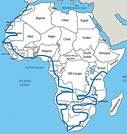
Hi everyone,
A well-prepped 4x4, a travel plan across Africa in stages since I’ve got kids to see regularly and work to earn a living.
I’m leaving in November for about a month with the goal of reaching Senegal via Mauritania. I’d love to share this trip with someone who wants to discover Mauritania and a bit of Senegal... and also experience life on board a 4x4 in the desert or bush, sometimes sleeping in the vehicle or in hostels/small hotels for comfort. I want to share this rediscovery because two’s better than one!
Just traveling, exploring, and living! !
Hello everyone! 👋
First of all, thank you for accepting us into the group. 😊
My name is Gérard, I’m a 77-year-old retiree, and I have a charming young wife of 70 and a sweet little Biewer dog celebrating his first birthday. 🎂🎉
The three of us are planning to leave from Cannes in our motorhome and head to Dakar.
Personally, I know this route very well, having done it three times in a 4x4, the last trip being in 2016.
Regarding Western Sahara, I know it’s not particularly recommended to cross it right now, but I haven’t heard any bad news about it yet.
As for crossing the "no man’s land," I remember it being a very difficult track, impassable with a motorhome. I’ve heard that they’ve recently improved the track and that it might now be possible to cross those 4 km with a motorhome (?)
Actually, I’m reaching out to experienced travelers who could give me their thoughts on crossing at the end of 2025. 🙏
By the way, if other motorhome travelers have the same plan, maybe we could discuss it together? 🤝
As for Mauritania, I know it’s a long stretch of tarmac, and from what I remember—aside from the "Gare du Nord" stop to refuel and enjoy a good tea—you have to switch to "survival mode."
That’s all for my little chat! I hope to gather some useful information.
Thank you all for taking the time to read this, and I wish you a great 14th of July.
Gérard, Martine, and Bahia 🐾
Hi everyone...
Looking for travel companions to ride from France to Senegal by motorcycle.
I’m Paul, 37, and I’ve already done a bit of riding in Morocco.
For now, I’m solo, riding a 1998 SUZUKI DR 650 with some basic gear to keep things smooth. I’ll have a tent so we can do a few nights under the stars. We’ll need to coordinate departure dates—"ideally in November."
I’m currently checking out routes to take. Any tips would be welcome! :)
Have a great day, everyone!!!!!
Hi,
With a camper van that's less than 3 years old, we're heading from France to Senegal via Mauritania.
Our comprehensive insurance covers us for Morocco. However:
For Mauritania:
- How can we get insurance for 1 week in Mauritania?
- Where and which reliable agency should we contact in Morocco? (Not the "guide" at the border) - Darkhla or elsewhere? Please, do you have any contact details?
- Is it possible to take out comprehensive insurance, not just third-party liability?
- Please, do you have any idea of the rates?
For Senegal:
- Can we take out comprehensive insurance in Diama or St Louis for 3 weeks or 1 month?
- Which reliable agency or company? Please, do you have any contact details?
- Please, do you have any idea of the rates?
Thanks so much
Hi there,
We’re planning to drive to Senegal by car. We’re a little nervous because it’ll be our first time making the trip with a car that isn’t ours. We’re doing the trip to deliver it to its owner. Has anyone here done this before? What documents will we need?
Thanks in advance for your tips!
We’re planning to drive to Senegal by car. We’re a little nervous because it’ll be our first time making the trip with a car that isn’t ours. We’re doing the trip to deliver it to its owner. Has anyone here done this before? What documents will we need?
Thanks in advance for your tips!

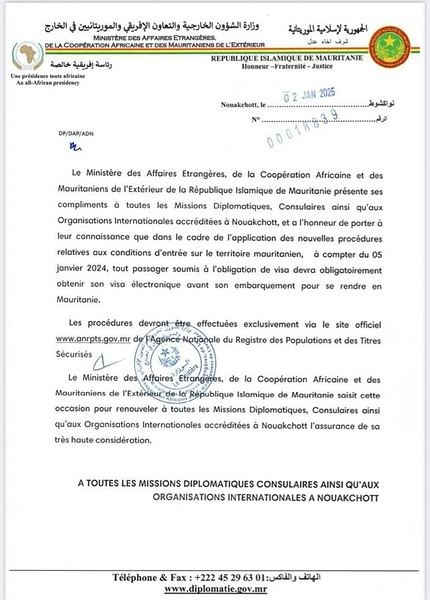
Heads up for anyone planning to cross the Mauritanian border at Guerguerat! From now on, the Mauritanian visa is only available via E-VISA on the internet, and processing times can be long—sometimes very long—and unpredictable.
André
Short stay in Mauritania (one week), then back to Morocco (Dakhla) for a few days before heading to Agadir and flying back to Brussels. Looking for great spots and sights to visit, as well as nice, moderately priced accommodation. What do you recommend? Thanks in advance
Come on, let’s give a little shout-out to this stunning country that desperately needs more tourists...
Soon, the Medayin Festival of Ancient Cities in December. It happens every year... It rotates between Ouadane, Tichitt, Oualata, and Chinguetti, where it’ll be this year...
Access is easy by vehicle, and it’s a gorgeous area... Don’t hesitate to ask if you’ve got questions about the region...
Soon, the Medayin Festival of Ancient Cities in December. It happens every year... It rotates between Ouadane, Tichitt, Oualata, and Chinguetti, where it’ll be this year...
Access is easy by vehicle, and it’s a gorgeous area... Don’t hesitate to ask if you’ve got questions about the region...
I'm arriving in Agadir from Brussels tomorrow and plan to travel by road to Mauritania. What are the best spots and accommodation options along the way? Thanks to all members for any tips and answers
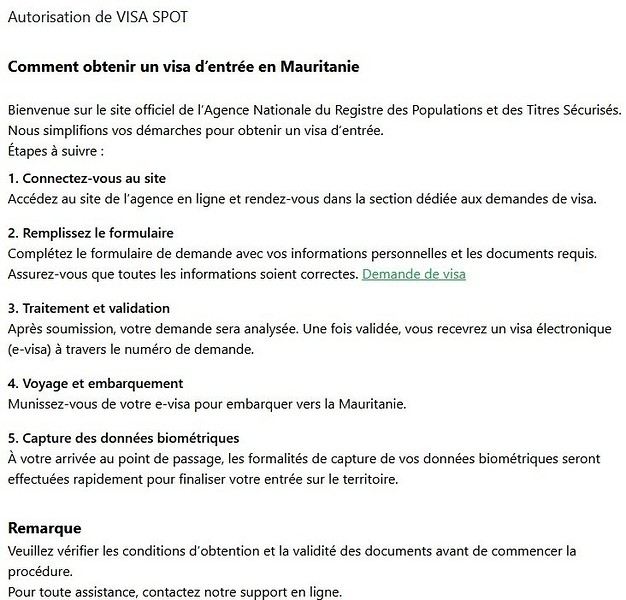
Starting January 5, you’ll need to arrive at the Mauritanian border with an E.Visa.
To get it, you’ll have to go to the Mauritanian website:
https://anrpts.gov.mr/fr
Hi there,
For the Dakhla - Nouadhibou route, everyone only talks about taxis costing 350 - 400 MAD. But the bus only costs 260 MAD (Supratours). I’ve been searching in vain for info or testimonials from people who’ve taken the bus to Nouadhibou.
So, how’s the bus? And why does no one seem to take it?? Am I about to make a mistake or what?
Thanks!
Recommended for you
 From Avignon to Casamance Without Flying
 Under Ghana, "the beach..."
 In the land... of Senegambia
 Sao Tomé, the forgotten island
 CAPE VERDE 2025: 3 weeks, 4 islands.
 The Pearl of Africa - July-August 2026
 A little piece of Sulawesi with the family: Rantepao and Selayar
 Tanzania Classics (Safari & Zanzibar)
Previous
Page 1 of 1
Next