last edited Dec 11, 2019
What to See in the Azores
Contributionsversion #1created Dec 11, 2019Report this pageLatest contributions in this guideContributors to this guide
Location Map of Azores
 Azores
Open the interactive map
UNESCO World Heritage Sites
The Azores have two sites listed as UNESCO World Heritage Sites:
Pico Island
Madalena (2004)
On the west coast of Pico and connected to Faial by ferries, the town lies at the heart of the "vineyard landscape of Pico Island," a UNESCO World Heritage site. From here, you can explore the island’s charming, often historic villages.
On the west coast of Pico and connected to Faial by ferries, the town lies at the heart of the "vineyard landscape of Pico Island," a UNESCO World Heritage site. From here, you can explore the island’s charming, often historic villages.
Terceira Island
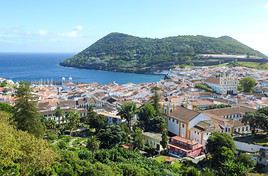
Angra do Heroísmo (1983)
The historic capital of the Azores, known for its stunning 16th- and 17th-century colonial architecture, which earned it a UNESCO World Heritage designation. Local culture and traditions, such as bullfighting, remain very much alive here.
The historic capital of the Azores, known for its stunning 16th- and 17th-century colonial architecture, which earned it a UNESCO World Heritage designation. Local culture and traditions, such as bullfighting, remain very much alive here.
Western Islands
Corvo
This is the smallest, least populated, and wildest island in the archipelago. From Vila do Corvo, the island’s only village, you can hike to the central crater or toward the towering cliffs that surround the coast.
This is the smallest, least populated, and wildest island in the archipelago. From Vila do Corvo, the island’s only village, you can hike to the central crater or toward the towering cliffs that surround the coast.
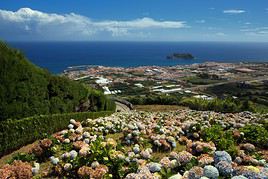
Flores
Lush with its hydrangeas, Flores offers a mix of forests, waterfalls and small lakes, peaks nearly 1,000 m high, towering cliffs, and impressive basalt formations—all best explored on foot. Fajazinha is a "typical" small village on the west coast.
Lush with its hydrangeas, Flores offers a mix of forests, waterfalls and small lakes, peaks nearly 1,000 m high, towering cliffs, and impressive basalt formations—all best explored on foot. Fajazinha is a "typical" small village on the west coast.
Central Islands
Pico **
Lajes do Pico
The main town on Pico Island. Once focused on whaling (now a museum), it has now turned to diving and whale and dolphin watching during boat trips.
The main town on Pico Island. Once focused on whaling (now a museum), it has now turned to diving and whale and dolphin watching during boat trips.
Madalena
On the west coast of Pico and connected to Faial by ferries, the town lies at the heart of the "vineyard landscape of Pico Island," a UNESCO World Heritage site. From here, you can explore the island’s charming, often historic villages.
On the west coast of Pico and connected to Faial by ferries, the town lies at the heart of the "vineyard landscape of Pico Island," a UNESCO World Heritage site. From here, you can explore the island’s charming, often historic villages.
Ponta do Pico
At the centre of Pico, this magnificent volcano, peaking at 2,351 m, is the highest summit in the Azores (and in Portugal). It can be climbed.
At the centre of Pico, this magnificent volcano, peaking at 2,351 m, is the highest summit in the Azores (and in Portugal). It can be climbed.
Terceira **
Angra do Heroísmo
The historic capital of the Azores, known for its stunning 16th- and 17th-century colonial architecture, which earned it a UNESCO World Heritage designation. Local culture and traditions, such as bullfighting, remain very much alive here.
The historic capital of the Azores, known for its stunning 16th- and 17th-century colonial architecture, which earned it a UNESCO World Heritage designation. Local culture and traditions, such as bullfighting, remain very much alive here.
Biscoitos
This municipality’s coastline offers several "natural pools" formed by unique underwater geological formations.
This municipality’s coastline offers several "natural pools" formed by unique underwater geological formations.
Praia da Vitória
It’s the second-largest town on Terceira Island, located right next to a US military base. It’s also home to the island’s airport.
It’s the second-largest town on Terceira Island, located right next to a US military base. It’s also home to the island’s airport.
Other Islands
Faial
Opposite Pico, the island with its crater rising over 1,000 metres is known for its stunning landscapes, hikes, and countless hydrangeas, but above all for its marina in Horta, the main town, which remains a key stop for many sailors crossing the Atlantic. You can go whale watching on boat trips from the island.
Opposite Pico, the island with its crater rising over 1,000 metres is known for its stunning landscapes, hikes, and countless hydrangeas, but above all for its marina in Horta, the main town, which remains a key stop for many sailors crossing the Atlantic. You can go whale watching on boat trips from the island.
Graciosa
A small island with quite beautiful landscapes, a few villages, and its impressive Furna do Enxofre chasm.
A small island with quite beautiful landscapes, a few villages, and its impressive Furna do Enxofre chasm.
São Jorge
Long and narrow, this island in the Azores is known for its towering cliffs, stunning views, and unique basaltic plateaus that make it exceptionally fertile. Hiking can start from the two main towns on the southern coast.
Long and narrow, this island in the Azores is known for its towering cliffs, stunning views, and unique basaltic plateaus that make it exceptionally fertile. Hiking can start from the two main towns on the southern coast.
Eastern Islands
São Miguel ***
Furnas
You can discover several volcanic phenomena (hot springs, fumaroles, geysers) all around this village.
You can discover several volcanic phenomena (hot springs, fumaroles, geysers) all around this village.
Ponta Delgada
It is the capital and main gateway to the archipelago. The city offers a charming old town and a lively marina.
It is the capital and main gateway to the archipelago. The city offers a charming old town and a lively marina.
Ribeira Grande
Second largest town on São Miguel, with beaches by the sea and hiking opportunities toward the caldeira do Fogo inland.
Second largest town on São Miguel, with beaches by the sea and hiking opportunities toward the caldeira do Fogo inland.
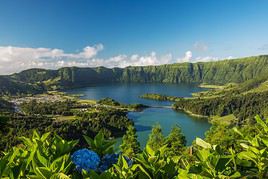
Sete Cidades
This stunning volcano dominating the western part of the island is home to several small lakes within its caldera. Numerous hiking trails are available on the site and its surroundings.
This stunning volcano dominating the western part of the island is home to several small lakes within its caldera. Numerous hiking trails are available on the site and its surroundings.
Other Island
Santa Maria
A small island south of São Miguel, dominated by Pico Alto at 587 m. It still retains many traces of its colonial architecture (civil and military buildings, chapels). It’s also a destination for beaches and swimming in "natural pools.".
A small island south of São Miguel, dominated by Pico Alto at 587 m. It still retains many traces of its colonial architecture (civil and military buildings, chapels). It’s also a destination for beaches and swimming in "natural pools.".
Recommended
Angra do Heroísmo
★★★ The historic capital of the Azores, known for its stunning 16th- and 17th-century colonial architecture, which earned it a UNESCO World…
Flores (Azores)
★★★ Lush with its hydrangeas, Flores offers a mix of forests, waterfalls and small lakes, peaks nearly 1,000 m high, towering cliffs, and…
Sete Cidades
★★★ This stunning volcano dominating the western part of the island is home to several small lakes within its caldera. Numerous hiking trails…
Worth a look / Other
Algar do Carvão
★★ This is a cave originally formed by a large volcanic tube.
Biscoitos
★★ This municipality’s coastline offers several "natural pools" formed by unique underwater geological formations.
Corvo
★★ This is the smallest, least populated, and wildest island in the archipelago. From Vila do Corvo, the island’s only village, you can…
Faial
★★ Opposite Pico, the island with its crater rising over 1,000 metres is known for its stunning landscapes, hikes, and countless hydrangeas…
Furnas
★★ You can discover several volcanic phenomena (hot springs, fumaroles, geysers) all around this village.
Ponta Delgada
★★ It is the capital and main gateway to the archipelago. The city offers a charming old town and a lively marina.
Ponta do Pico
★★ At the centre of Pico, this magnificent volcano, peaking at 2,351 m, is the highest summit in the Azores (and in Portugal). It can be…
Santa Maria (Azores)
★★ A small island south of São Miguel, dominated by Pico Alto at 587 m. It still retains many traces of its colonial architecture (civil and…
São Jorge (Azores)
★★ Long and narrow, this island in the Azores is known for its towering cliffs, stunning views, and unique basaltic plateaus that make it…
Graciosa
★ A small island with quite beautiful landscapes, a few villages, and its impressive Furna do Enxofre chasm.
Lajes do Pico
★ The main town on Pico Island. Once focused on whaling (now a museum), it has now turned to diving and whale and dolphin watching during…
Madalena
★ On the west coast of Pico and connected to Faial by ferries, the town lies at the heart of the "vineyard landscape of Pico Island," a…
Praia da Vitória
★ It’s the second-largest town on Terceira Island, located right next to a US military base. It’s also home to the island’s…
Ribeira Grande
★ Second largest town on São Miguel, with beaches by the sea and hiking opportunities toward the caldeira do Fogo inland.