Mediterranean at heart, even though the country only opens onto the Atlantic, Portugal is a well-rounded destination suited to all types of travellers and trips. No wonder nearly 15 million visitors flock here every year.
Portugal is the westernmost country in continental Europe. Type of place: country. Location: on the Iberian Peninsula, in southwestern Europe, on the Atlantic coast. Latitude/longitude: 38.40' N, 9.00' W. Local time: Heure : 4019 Capital: Lisbon . Nature of…
With Porto as its capital, the north offers an extremely varied environment, where you can enjoy the sea, the countryside, or even the mountains with the Serra da Estrela. For tourism, this region combines stunning natural landscapes, including the country’s only national park (Peneda-Gerês) and the Douro Valley, with historical "treasures" of Portugal, such as the cities of Porto and Guimarães, whose urban centers are UNESCO World Heritage sites.
Lisbon and Central Portugal
Sintra, Portugal
Beyond the capital’s tourist highlights, the central region also boasts a rich historical and cultural heritage to discover in several small towns. Add to that a pleasant coastline that’s far less crowded than the southern coast.
The Algarve and Southern Portugal
Lagoa, Portugal
Neighboring Andalusia, Faro and its surroundings are one of Europe’s most important summer tourist destinations. Beyond its historically interesting sites and beautiful natural setting in the southwest (Alentejo Natural Park and Costa Vicentina), it’s primarily the beaches and numerous seaside resorts that attract millions of tourists each year, mostly from the UK, Germany, or Scandinavia.
With Porto as its capital, the north offers an extremely varied environment where you can enjoy the sea, countryside, or even the mountains with the Serra da Estrela. For tourism, it’s a region where stunning natural landscapes—including the country’s only national park (Peneda-Gerês) and the Douro Valley—meet "treasures" of Portuguese history, such as the cities of Porto and Guimarães, whose urban centers are UNESCO World Heritage sites.
With Porto as its capital, the north offers an extremely varied environment where you can enjoy the sea, countryside, or even the mountains with the Serra da Estrela. For tourism, it’s a region where stunning natural landscapes—including the country’s only national park (Peneda-Gerês) and the Douro Valley—meet "treasures" of Portuguese history, such as the cities of Porto and Guimarães, whose urban centers are UNESCO World Heritage sites.
Neighbouring Andalusia, Faro and its surroundings are one of Europe's most important summer tourist regions. Beyond its historically interesting heritage and beautiful natural setting in the southwest (Alentejo Park and Costa Vicentina), it is primarily the beaches and numerous seaside resorts that attract millions of tourists each year, mostly from the United Kingdom, Germany, or Scandinavia.
Neighbouring Andalusia, Faro and its surroundings are one of Europe's most important summer tourist regions. Beyond its historically interesting heritage and beautiful natural setting in the southwest (Alentejo Park and Costa Vicentina), it is primarily the beaches and numerous seaside resorts that attract millions of tourists each year, mostly from the United Kingdom, Germany, or Scandinavia.
The former fishing village has transformed into a bustling seaside resort, lively (its main appeal) and rather upscale. The former fishing village has transformed into a bustling seaside resort, lively (its main appeal) and rather upscale. Type de lieu: small…
On the Spanish border, this ancient town boasts a medieval fortress. It is surrounded by marshes designated as a nature reserve. Several beaches nearby.
Overview of Castro Marim
On the Spanish border, this ancient town boasts a medieval fortress. It is surrounded by marshes designated as a nature reserve. Several beaches nearby.
Key facts
Type of place: small town.
Tourist interest: ★ (worth a stop if you are in the area).
Capital of the Algarve, Faro is primarily the airport gateway for millions of holidaymakers heading to southern Portugal. Nevertheless, the city also boasts some historic buildings, nearby beaches, and a nature reserve on its outskirts. Église do Carmo, Faro,…
An area of beautiful beaches (and occasional cliffs) between Albufeira and Portimão. Several churches, convents, and old forts in the surrounding area.
Overview of Lagoa
This is an area of beautiful beaches (and occasional cliffs) between Albufeira and Portimão. Several churches, convents, and old forts are worth seeing in the surrounding area.
Key Facts
Type of place: small town.
Tourist interest:★★ (worth seeing).
Location:
Distances:
Local time:Heure : 4344.
Population: 22,975 inhabitants (2012).
Area: 88.50 km².
Altitude: sea level.
Website:
History of Lagoa
What to See and Do in Lagoa
In the Surrounding Area
Climate and Weather in Lagoa
The city enjoys a Mediterranean climate influenced by the Gulf Stream. Winters are mild and humid, while summers are hot and sunny (the Algarve is the sunniest region in Portugal).
Located almost at the southwestern tip of the country, Lagos offers lovely beaches, beautiful architecture, and a rich historical heritage. You can also take scenic boat trips to explore its cliffs.
Overview of Lagos
Located almost at the southwestern tip of the country, Lagos offers lovely beaches, beautiful architecture, and a rich historical heritage. You can also take scenic boat trips to explore its cliffs.
The city enjoys a Mediterranean climate influenced by the Gulf Stream. Winters are mild and humid, while summers are hot and sunny (the Algarve is the sunniest region in Portugal).
Slightly inland from the coast, the town features several churches and a hilltop castle overlooking the area. Nearby are renowned beaches and golf courses, including Quinta do Lago.
Overview of Loulé
Slightly inland from the coast, the town features several churches and a hilltop castle overlooking the area. Nearby are renowned beaches and golf courses, including Quinta do Lago.
Key facts
Type of place: city.
Tourist interest: ★ (worth a stop if you are in the area).
In the hinterland, this large traditional village at a slightly elevated altitude serves as a starting point for hikes in the surrounding area or to the nearby thermal village of Caldas.
Overview of Monchique
In the hinterland, this large traditional village at a slightly elevated altitude serves as a starting point for hikes in the surrounding area or to the nearby thermal village of Caldas.
Key Information
Type of place: small town.
Tourist interest: ★ (worth a stop if you are in the area).
The second city of the Algarve, this traditionally fishing-oriented town is now known for its beach and sporting events (surfing, regattas, F1). Nearby, Alvor and Carvoeiro are also quite tourist-friendly.
Overview of Portimão
The second city of the Algarve, this traditionally fishing-oriented town is now known for its beach and sporting events (surfing, regattas, F1). Nearby, the towns of Alvor and Carvoeiro are also quite tourist-friendly.
Key Facts
Type of place: city.
Tourist interest: ★ (worth a stop if you are in the area).
The city enjoys a Mediterranean climate influenced by the Gulf Stream. Winters are mild and humid, while summers are hot and sunny (the Algarve is the sunniest region in Portugal).
Beyond the tourist attractions of the capital, the central region also boasts a rich historical and cultural heritage to explore in several small towns. What’s more, it offers a pleasant coastline that’s far less crowded than the southern coast.
Beyond the tourist attractions of the capital, the central region also boasts a rich historical and cultural heritage to explore in several small towns. What’s more, it offers a pleasant coastline that’s far less crowded than the southern coast.
Portugal's climate varies by region, relief, and proximity to the ocean. Additionally, a region like Faro, in the south, enjoys a milder and sunnier micro-climate in winter compared to the rest of the country.
Generally, summers in Portugal are hot and dry, especially inland, while coastal areas enjoy a more temperate summer due to maritime influence. Autumn and spring are typically mild and ideal for travel. Winters, which are rainy in many places, are coldest and windiest in the regions of Porto and the north, bordering Spain, though they remain relatively mild by European standards. Snow can occasionally fall in the Estrela massif, the highest point in mainland Portugal.
Best Time to Visit Portugal
The climate is not a major constraint for visiting Portugal, though winter can be a bit chilly and rainy, and July-August sometimes too hot. The shoulder seasons remain the most comfortable.
The sixth most spoken language in the world, Portuguese is the country's official language. However, it is not the only one, as Portuguese Sign Language and Mirandese are also recognized, even though their number of speakers is limited.
In terms of foreign languages, English is widely spoken by young people and in tourist areas, as is Spanish, especially near the borders with Spain. French is also fairly common, partly because many Portuguese people have ties to France.
Glossary
A few useful local words and expressions to know while traveling:
Festivals and Events
Public Holidays
January 1: New Year’s Day
February: Carnival
March-April: Easter and Good Friday
April 25: Carnation Revolution (anniversary of the end of the dictatorship on April 25, 1974)
May 1: Labor Day
May 13: Our Lady of Fátima
May-June: Corpus Christi
June 10: National Day (anniversary of the death of the poet Camões in 1580)
Each region has its specialties, often based on local products, including meats (lamb, pork, poultry) or fish (notably cod). Portugal also boasts several cheeses and a certain expertise in pastries, the most famous being "pastéis de nata". For drinks, Portugal produces wines (Douro, Alentejo, Vinho Verde from Minho) as well as internationally recognized products like Port and Madeira.
Other Cuisines
Specialties
Starters
Main Dishes
Desserts
Drinks
Where to Eat
While not excessively expensive, restaurants can add up if you dine out regularly. For around twelve euros, you can enjoy a simple meal at a local establishment, while 15–20 € will get you a more "touristy" restaurant. Alternatively, you can opt for snacks of all kinds. Another budget-friendly solution is to choose accommodation with kitchen facilities and pack picnics for your outings.
Mainland Portugal has 15 sites inscribed on the UNESCO World Heritage list: Historic Centre of Guimarães ★★ (2001) This is the medieval part of the city that developed around the castle and monastery. It is a UNESCO World Heritage site. Historic Centre of…
Portugal’s Atlantic coastline is renowned for surfing, which can be enjoyed year-round by both beginners and experienced surfers. Around Lisbon alone, there are several well-known spots, including Nazaré and Ericeira, which rank among the best in Europe, if not beyond.
Other Water Activities
Sea fishing:
Windsurfing and kitesurfing: Thanks to the wind and waves, Portugal’s coast is a paradise for fans of these activities. As with surfing, the areas around the capital offer internationally recognised sites, such as Praia do Guincho in the municipality of Cascais.
Diving: Portugal is not ideal for divers, as opportunities in this area are limited.
Sailing:
Thalassotherapy and Wellness
In seaside areas, major hotel complexes typically offer a range of body treatments and wellness programmes.
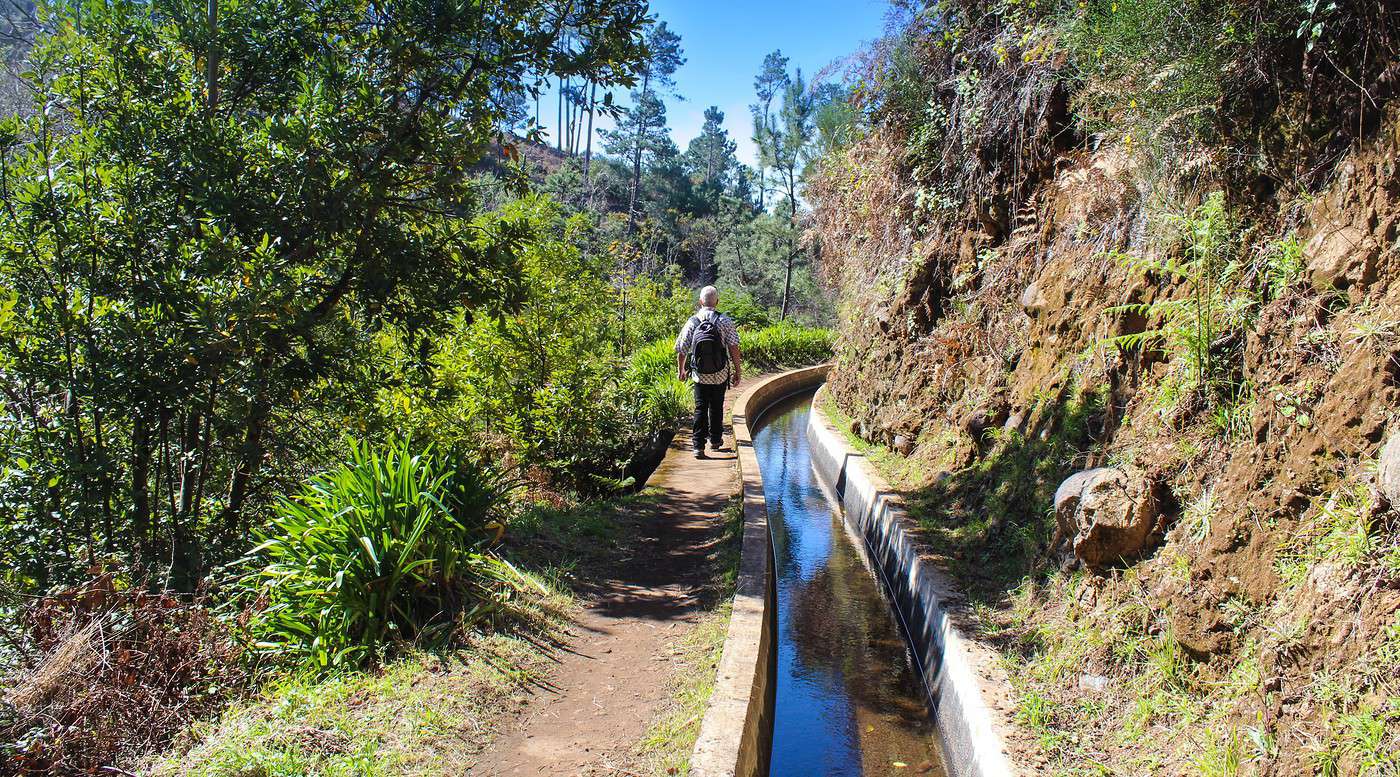
While not a top hiking destination, Portugal still offers several great opportunities in the natural parks of the north (Peneda-Gerês, Montesinho, and Serra da Estrela). Elsewhere, some coastal areas also provide pleasant walks, one of the most famous being the "Rota Vicentina," which follows the coast for over 300 km in Southwest Alentejo and Vicentine Coast Natural Park.
Cycling
Horseback Riding
Outdoor and Adventure Sports
Golf
There are around 80 golf courses across the country, many of which are located in the Algarve and along the coast near Lisbon.
Hunting and River Fishing
Whitewater Activities
Rafting, canyoning, and canoeing are all possible on Portugal’s rivers.
Other Activities
Climbing and bouldering:
Paragliding and aerial sports:
Skiing: The country’s only winter sports resort is located in Penhas da Saude, in Serra da Estrela. The Vodafone company, which sponsors it and has given it its commercial name, is gradually developing it.
Portugal offers quite varied landscapes depending on whether you explore the north or south, the coast or the interior, with a few natural parks here and there. However, apart from certain spots along the coastline, the landscapes are not "exceptional," and the country is not one of Europe’s top "nature-adventure destinations."
Culture
Like many European countries, Portugal offers visitors a rich cultural heritage to discover in its cities and villages. Museums, religious buildings, stunning structures, and monuments from different eras—along with twelve UNESCO World Heritage sites and well-preserved traditions—are all highlights that will delight cultural travelers.
Relaxation-Holidays
Sunshine, beaches, the lively atmosphere of seaside resorts, or the tranquility of the Portuguese countryside—Portugal has all the charm of a relaxation-holiday destination. While the southern coastline in summer can sometimes feel crowded, you’ll easily find quieter spots elsewhere along the coast or inland.
Independent Travel
Portugal is a very easy destination for independent travel, perfect for beginners, and presents no problems.
Organized Travel
All-Inclusive
As a highly popular beach destination, Portugal offers all-inclusive options, particularly along the southern coastline around Faro. While this format tends to attract British, German, or Scandinavian visitors, it’s worth checking out these deals, especially during promotions, as they can be very attractive.
Finding the best time to visit means balancing climate conditions with crowd levels and the most attractive prices, both on-site and for travel. Generally, the climate isn’t the main issue for enjoying a trip to Portugal—it’s the tourist pressure at certain…
Of the twenty or so airports/aerodromes in "mainland" Portugal (excluding the Azores and Madeira), only those in Porto (in the north), Lisbon (in the centre), and Faro (in the south) have regular traffic. For the others, apart from Vila Real and Bragança,…
Portugal shares a 1,215 km border with its Spanish neighbour. Road and rail crossings between the two countries are numerous and pose no problems. Additionally, both countries are members of the Schengen Area, meaning there are no border controls.
By Road
Northern Portugal is roughly 500 km from the French border. The well-developed road and motorway network makes it easy and quick to reach from France or elsewhere.
Beyond increasingly popular carpooling services, several bus companies offer numerous connections between various European cities and Portugal, the best-known being Eurolines. Expect roughly 120 €-150 for a round trip from Paris to Lisbon or Porto, with a journey time of around 24 hours. If you have some time and depending on your departure and arrival cities, the bus can actually be a good alternative to flying from France (or at least from the south).
By Train
By Sea
Ferries
There are no ferry routes to or from Portugal, including for Madeira or the Azores.
Portugal has a good road and motorway network, making it easy to get around. However, cities like Lisbon or Porto can be quite congested. Driving rules are broadly similar to those in France. Seat belts are always mandatory, the legal blood alcohol limit is…
Portugal is a highly tourist-friendly country, offering a wide range of accommodations with generally good value for money. You’ll find everything from hotels of all categories to campsites and various types of rentals. There’s a broad selection of hotels in…
A valid passport or national identity card is sufficient (officially for up to 90 days on site per 6-month period). That said, Portugal is part of the Schengen Area and is therefore theoretically border-control-free when arriving from another member country.
Other Nationalities
The same applies to Canadians, Swiss nationals, European Union citizens, and a few other nationalities. For other visitors, a Schengen visa valid for the 26 member states is required for a tourist stay of less than 3 months.
Long Stays
In Case of Offence
Vehicles
No special requirements for vehicles already circulating within the Schengen Area.
Consulates
In France
Consulate General: 6-8 rue Georges Berger, 75017 Paris. Tel.: 01 56 33 81 00.
Currency: Euro (100 cents). Banknotes: 5, 10, 20, 50, 100, 200 and 500 €. Coins: 1, 2, 5, 10, 20 and 50 cents + 1 and 2 €. Exchange: The euro replaced the escudo, which had been Portugal’s currency since 1911, on 1 January 2002. For those outside the…
In France, both for individuals and professionals, the "travel advice" from the Ministry of Foreign Affairs regarding precautions for each country has legal value. A similar online travel advice system exists in several countries: Foreign Affairs Belgium…
In summer, pack light clothing plus a sweater for inland areas, evenings, and air-conditioned spaces near the coast. In winter, while "mid-season" clothes may suffice for the coast, warmer clothing is necessary for the rest of the country, especially if visiting the mountainous regions of Portugal. Don’t forget sun protection, rain gear when needed, and proper walking shoes if you plan to hike.
Communications
Phone
International dialing code: (00 +) 351.
Internet
As in the rest of Europe, the internet is well-developed, and Wi-Fi is increasingly available in many hotels, bars, restaurants, and other public places.
Post
Post offices are open weekdays from 9:00 AM to 6:00 PM, and some larger branches may also open on Saturdays or even Sundays. Many also offer a paid internet service.
Time Difference
Local time:Heure : 4019.
Portugal is on UTC, meaning it is one hour behind France year-round. When it’s 1:00 PM in Portugal, it’s 2:00 PM in France—and the same goes for Spain, which also has a one-hour difference with its Portuguese neighbor.
Electricity
230 V (50 Hz) with "French-style" plugs (officially type F), so North American plugs will require an adapter.
Hours
Laundromats
Local Tourist Offices
Weights and Measures
Portugal uses the metric system, just like France.
French Language Use
French is widely spoken in Portugal, partly because many Portuguese people have ties to France. Additionally, the country is very tourist-friendly and welcomes many French-speaking visitors.
Portugal is a popular destination for European retirees, particularly on the coast of the Algarve. Beyond its gentle pace of life, low cost of living compared to many other EU countries, and geographical or even cultural proximity to their home countries, foreign retirees in Portugal also benefit from a 10-year tax exemption on their income (non-renewable) after settling there. While this measure is now somewhat under review, it has significantly contributed to the country’s appeal among these new populations.
For paperwork, you first need to apply for a tax identification number, a proof of residence, and register your driving licence and vehicle. For French nationals (and others under a similar principle), rights to French social security can also—after application—be transferred to their Portuguese equivalent.
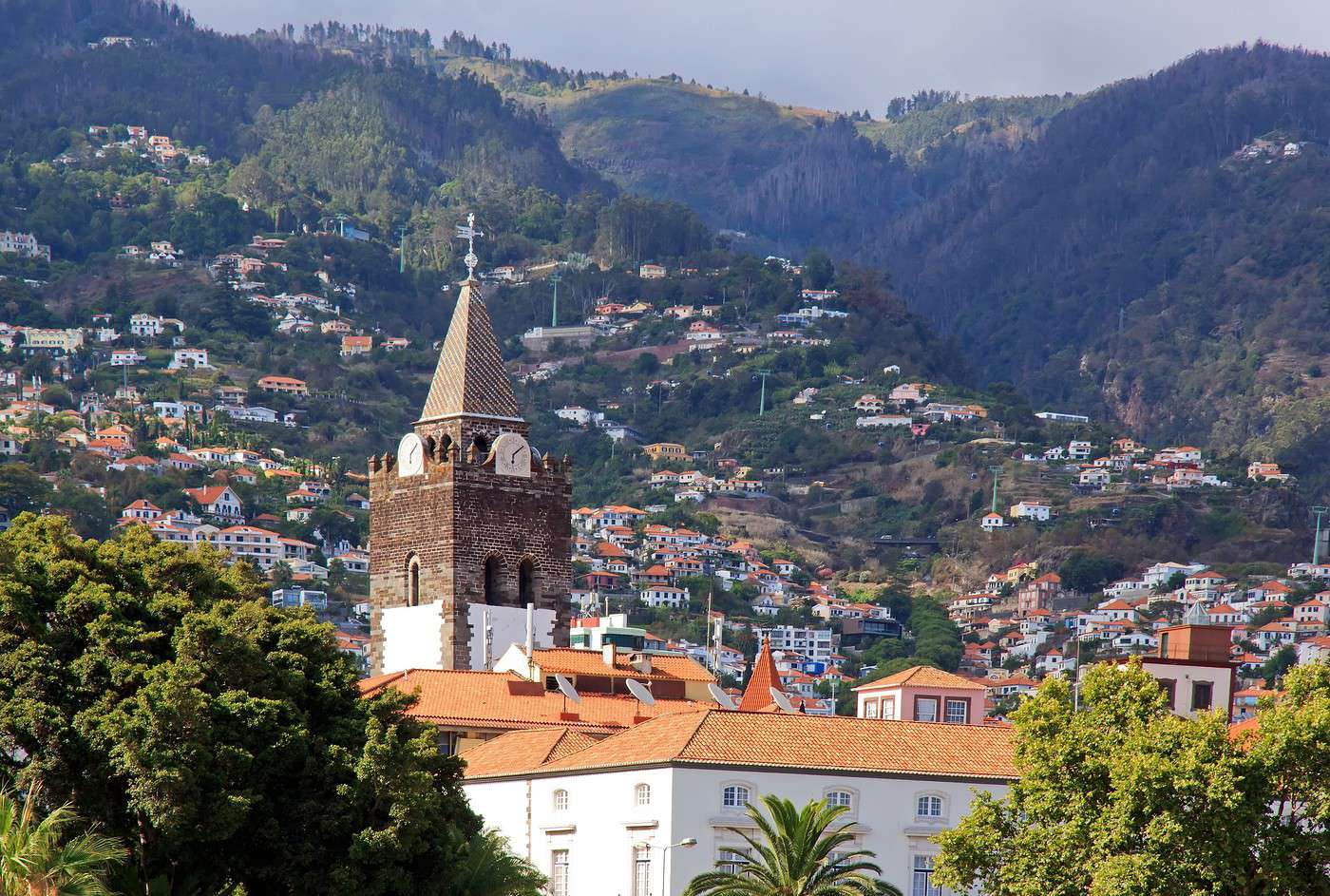
The Madeira archipelago consists of the volcanic islands of Madeira and Porto Santo, plus the Desertas and the Selvagens. The island of Madeira is the largest (741 km²) and hosts almost the entire population, particularly in its "capital" Funchal (125,000…
The entire archipelago enjoys a mild climate year-round thanks to the influence of the Gulf Stream. Along the coasts, both daily and seasonal temperature variations are small, averaging between 18°C and 25°C from winter to summer. However, this range increases as you move inland and especially as you gain altitude; above 1,000 m, be aware of potentially poor weather conditions. Rainfall also varies by region: Funchal sees little precipitation, while the mountains receive a lot. The wettest period is from October to March.
Best Time to Visit Madeira
For sightseeing, spring is ideal, if only to enjoy the lush vegetation at its peak. Summer is also a good option for sunshine, despite some crowds.
While the Atlantic waters around Madeira don’t reach the summer temperatures of the Mediterranean, they remain relatively pleasant year-round. That said, swimming isn’t always easy due to the rugged coastline in many parts of the archipelago.
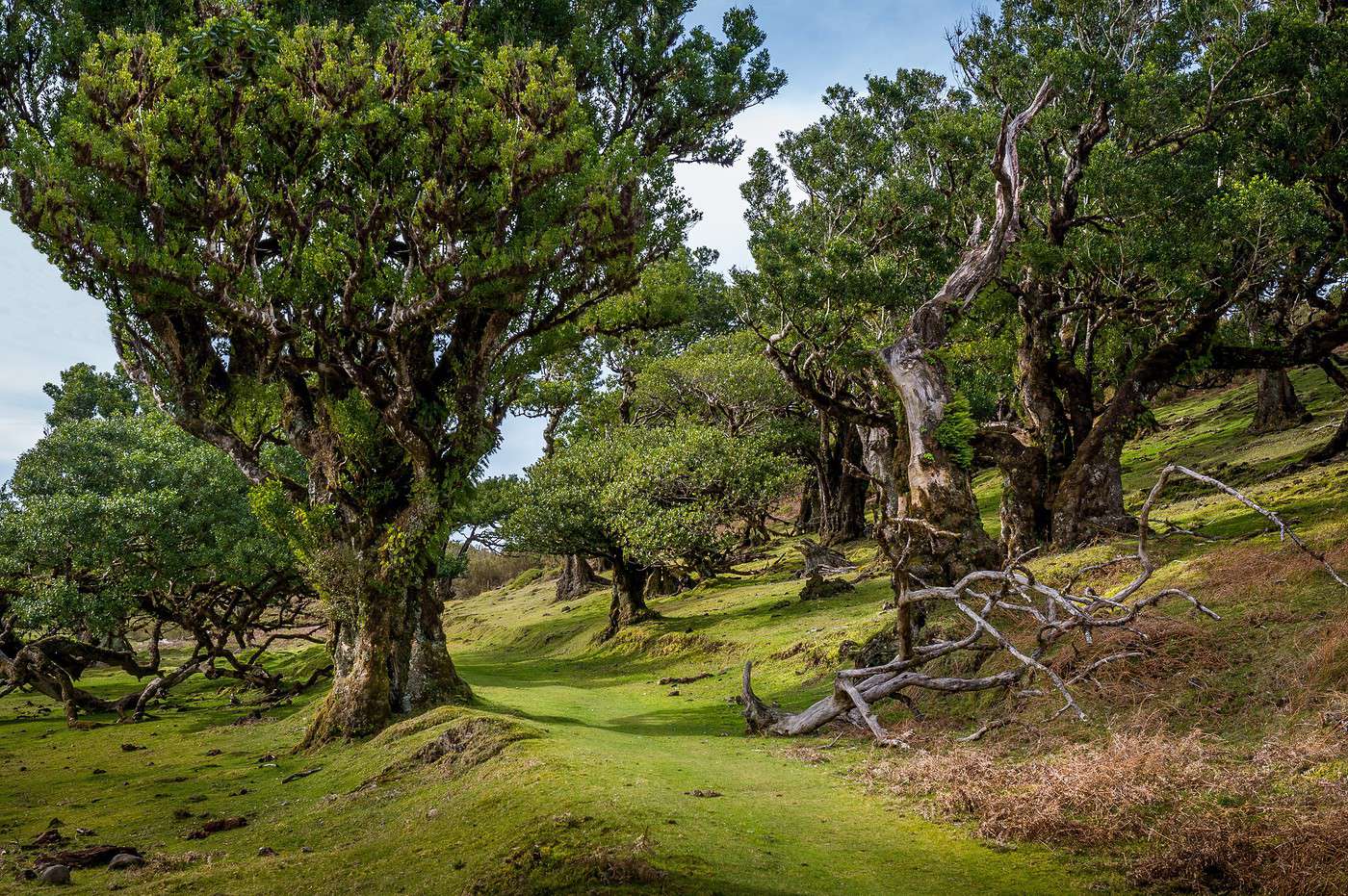
Madeira has one site inscribed on the UNESCO World Heritage list: Madeira Natural Park ★★★★ (1999) This park covers about two-thirds of the island. It offers stunning landscapes and forests, including the famous UNESCO-listed laurel forests. The area is very…
Madeira is an easy destination for independent travel, perfect for first-time travellers. It doesn’t pose any problems, though you should still take basic precautions when hiking.
For tourist travel purposes. A valid passport or national identity card is sufficient (officially for up to 90 days on-site per 6-month period). That said, Madeira, despite its status as an "Outermost Region of the E.U.", is part of the Schengen Area like its…
It was on 1 January 2002 that the euro replaced the escudo, which had been the currency of Madeira and Portugal since 1911.
Exchange
For those not in the Eurozone, banks (often open from 8:30 am to 3:00 pm on weekdays) and exchange bureaus accept the main currencies. ATMs are also widely available.
Payment methods
You can, of course, pay in cash or by card (with no fees for euro accounts), just like in France.
Budget
What can be expensive
What doesn’t have to be expensive
Price range
Double room in a budget hotel:
Double room in a mid-range hotel:
Snacks, local restaurant meal:
Meal in a tourist restaurant:
Budget car rental:
50 km by bus:
Taxi:
Bargaining and tipping
Shopping and souvenirs
What to bring back
Madeira is world-famous for its wine of the same name, so this is the perfect opportunity to buy some and sample the different varieties. You might also pick up some embroidery or basketry as island souvenirs.
In France, both for individuals and professionals, the "travel advice" from the Ministry of Foreign Affairs regarding precautions for each country has legal value. A similar online travel advice system exists in several countries:
No vaccinations are mandatory to enter the country, though it is still advisable to be up to date with your "basic vaccines."
Diseases and Hygiene
No particular issues.
Local Healthcare Facilities
Local facilities are good but limited. For medical care, nationals of European Economic Area countries must present their European Health Insurance Card (formerly E-111 form), which guarantees the same rights to everyone—otherwise, they may have to pay their medical expenses. Other visitors will need to rely on their insurance or pay the full cost of care.
Safety
Crime, Delinquency, and Socio-Political Risks
Nothing to report; the destination is peaceful, with very low crime. However, as always, it’s best to stay minimally vigilant.
Scams and "Tourist" Harassment
Climate, Nature, and Animals
Foreign Consulates on Site
If you encounter problems while traveling abroad, your country’s consular services can assist you. It’s also worth noting that if you are a national of the European Union and your country is not represented, you can contact any other EU member state’s representation.
At any time of year, pack light ("spring-like") clothing and at least one warmer layer for higher altitudes and evenings. Also bring rain gear in season, plus sturdy walking shoes.
Communications
Phone
Internet
Post
Time difference
Local time:Heure : 4362.
Madeira, like the rest of Portugal (excluding the Azores), is on UTC. This means there is one hour less difference year-round compared to France. When it is 1:00 PM in Madeira or Portugal, it is 2:00 PM in France.
Electricity
230 V (50 Hz) with "French" plugs (officially type F), which will require an adapter for North American plugs.
Opening hours
Laundries
Local tourist offices
Weights and measures
Madeira uses the metric and decimal system, like France.
The Azores are an archipelago of 9 islands stretching across the Atlantic for nearly 600 km, at the same latitude as Lisbon and over a thousand kilometres from their metropole. These islands are divided into three groups: the eastern group (São Miguel and…
Like Ireland, the climate in the Azores is quickly changing with high humidity, plenty of rain, and relatively little sunshine. The period from October to March is the wettest, though the islands of Corvo and Flores (the westernmost ones) experience frequent rain almost year-round. However, temperatures are mild throughout the year across the archipelago, averaging 16°C in winter and 24°C in summer. That said, even if the sun may shine on the coasts, the highlands can easily be covered in clouds at the same time.
Best Time to Visit the Azores
June to early September is the most suitable period for visits, if only because it rains less across the archipelago.
The Azores have two sites listed as UNESCO World Heritage Sites: Madalena ★ (2004) On the west coast of Pico and connected to Faial by ferries, the town lies at the heart of the "vineyard landscape of Pico Island," a UNESCO World Heritage site. From here, you…
The Azores are an easy independent-travel destination, perfect for beginner travellers. There are no major issues, though you should still take basic precautions when hiking, especially since the weather can change quickly.
For travel purposes. A valid passport or national identity card is sufficient (officially for up to 90 days on site per 6-month period). That said, the Azores, despite its status as an "Outermost Region of the E.U.", is part of the Schengen Area like mainland…
The euro replaced the escudo on 1 January 2002, which had been the currency of the Azores and Portugal since 1911.
Exchange
For those not in the Eurozone, banks (usually open from 8:30 am to 3:00 pm on weekdays) and exchange bureaus accept the main currencies. ATMs are also widely available.
Payment methods
You can pay in cash or by card (with no fees for euro accounts), just like in France.
Budget
What can be expensive
What doesn’t have to be expensive
Price range
Double room in a budget hotel:
Double room in a tourist hotel:
Snacks, local restaurant meal:
Tourist restaurant meal:
Budget car rental:
50 km by bus:
Taxi:
Bargaining and tipping
Shopping and souvenirs
What to bring back
There isn’t much in the way of souvenirs to bring back, just some local crafts like embroidery, wooden items, and ceramics.
In France, both for individuals and professionals, the "travel advice" from the Ministry of Foreign Affairs regarding precautions for each country has legal value. A similar online travel advice system exists in several countries:
No vaccinations are mandatory to enter the archipelago, though it is still advisable to be up to date with your "basic vaccines."
Illnesses and Hygiene
No particular issues.
Local Healthcare Facilities
Local facilities are good but limited and mainly concentrated in the capital. For medical care, nationals of European Economic Area countries must present their European Health Insurance Card (formerly E-111 form), which guarantees the same rights to everyone—otherwise, they will have to pay for their medical expenses. Other visitors must rely on their insurance or pay the full cost of care.
Safety
Crime, Delinquency, and Socio-Political Risks
Nothing to report; the archipelago is calm with low crime, though it’s always wise to stay vigilant.
Scams and "Tourist" Harassment
Climate, Nature, and Animals
Foreign Consulates on Site
If you encounter problems while traveling abroad, your country’s consular services can assist you. It’s also worth noting that if you are a European Union national and your country is not represented, you can contact any other EU member state’s representation.
Pack light clothing for summer and mid-season wear for winter, plus at least one warmer layer, especially for higher altitudes. Also bring rain gear for all seasons and proper walking shoes if you plan to hike.
Communications
Phone
Internet
Post
Time difference
Local time:Heure : 4363.
The Azores are on UTC-1. This means there is one hour less difference year-round compared to the rest of Portugal and two hours compared to France. When it is 1:00 PM in the Azores or Portugal, it is 3:00 PM in France.
Electricity
230 V (50 Hz) with mostly "French" plugs (officially types C and F), which will require an adapter for North American plugs, even though you may occasionally find US plugs (type B) in the archipelago.
Opening hours
Laundromats
Local tourist offices
Weights and measures
The archipelago uses the metric and decimal system, like France.