Not a major tourist destination, the department still offers several abbeys and religious buildings, a few old castles, and towns like Saint-Quentin and Soissons that are worth a quick visit. As elsewhere in the region, the Aisne was also the scene of important World War I battles, as shown by the Chemin des Dames.
Not a major tourist destination, the department still offers several abbeys and religious buildings, a few old castles, and towns like Saint-Quentin and Soissons that are worth a quick visit. Like the other departments in the region, the Aisne was also the site of significant battles during World War I, as evidenced by the Chemin des Dames.
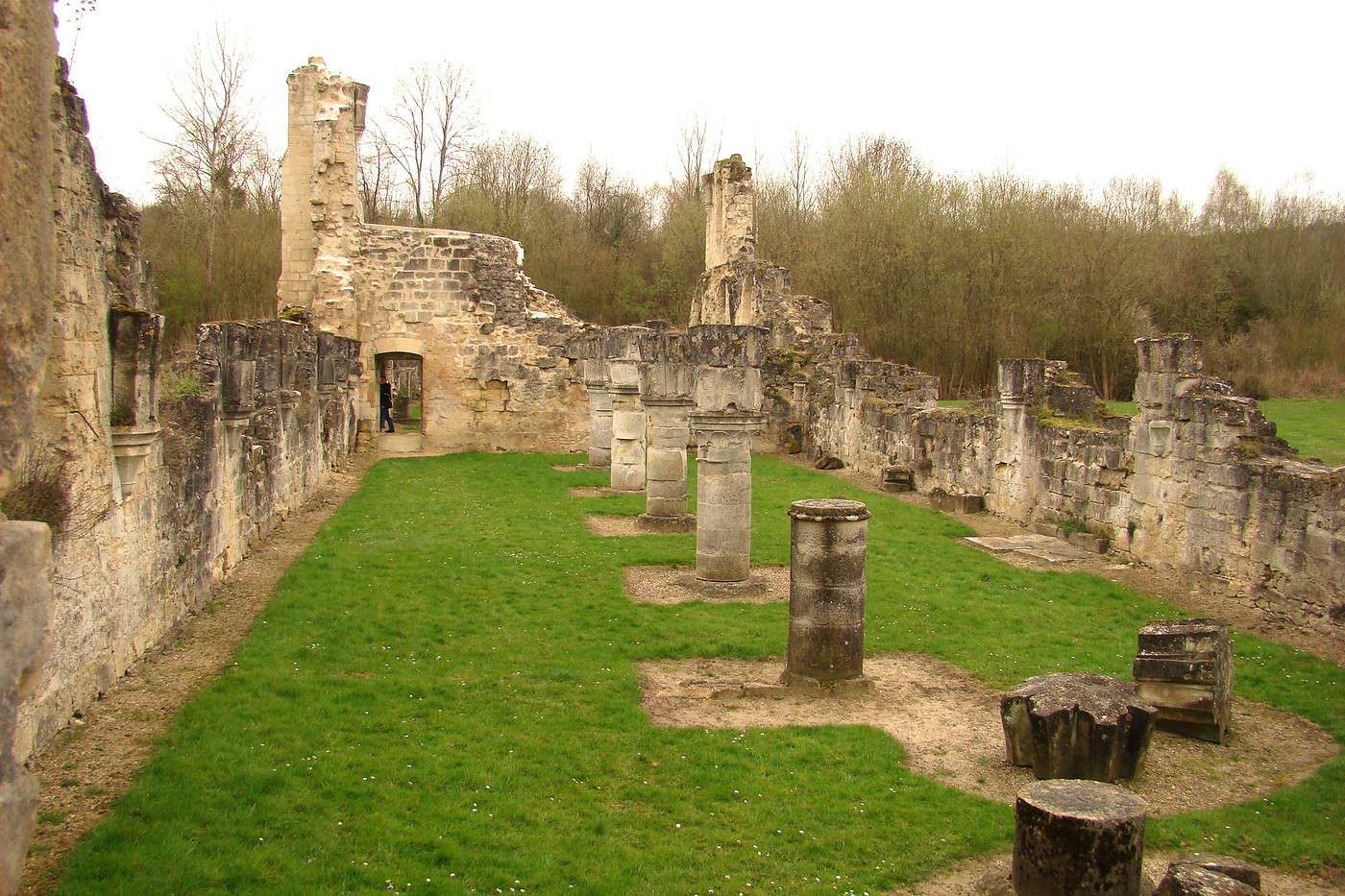
Longpont Abbey
These are the beautiful ruins of a 12th-century Cistercian abbey near Soissons.
Overview of the Abbey
These are the beautiful ruins of a 12th-century Cistercian abbey near Soissons.
Tourist interest:★ (worth a stop if you are in the area).
This is a small road in the Aisne region that follows the front lines of the First World War. Like elsewhere in the department, the area is home to numerous memorials, monuments, and other remembrance sites.
Overview of the Chemin des Dames
This is a small road in the Aisne region that follows the front lines of the First World War. Like elsewhere in the department, the area is home to numerous memorials, monuments, and other remembrance sites.
Key details
Type of place: scenic route.
Tourist interest:★★ (worth seeing).
Theme: memorial route.
Location: between Aizy-Jouy (to the west) and Corbeny (to the east).
A small town in the northern part of the department, featuring a medieval fortress and a 19th-century "familistère" (social housing complex) partly converted into a museum.
Overview of Guise
A small town in the northern part of the department, featuring a medieval fortress and a 19th-century "familistère" (social housing complex) partly converted into a museum.
Key Facts
Type of place: small town.
Tourist interest:★ (worth a stop if you are in the area).
In the northeast of Aisne, this is one of only two Picardy communes awarded the "Most Beautiful Villages of France" label for its built heritage.
Introduction to Parfondeval
In the northeast of Aisne, Parfondeval is one of only two Picardy communes awarded the "Most Beautiful Villages of France" label for its built heritage.
Key Facts
Type of place: village.
Tourist interest: ★ (worth a stop if you are in the area).
Location:
Distances:
Local time:Heure : 18966.
Population: 142 inhabitants (2014).
Area: 10.91 km².
Altitude: from 159 to 248 m.
Website:
History of Parfondeval
What to See and Do in Parfondeval
The village of Parfondeval features red-brick houses with grey slate roofs, set in a typical rural landscape of the region. Its most iconic building is the fortified Saint-Médard church.
A sub-prefecture and the second-largest urban area in Picardy, Saint-Quentin is an Art Deco city rebuilt after the First World War. It also boasts a beautiful cathedral.
Overview of Saint-Quentin
A sub-prefecture and the second-largest urban area in Picardy, Saint-Quentin is an Art Deco city rebuilt after the First World War. It also boasts a beautiful cathedral.
In the south of the department, less than 100 km from Paris, the town is home to two châteaux, including one built by Francis I in the 16th century.
Introduction to Villers-Cotterêts
In the south of the department, less than 100 kilometres from Paris, the town is home to two châteaux, including one built by Francis I in the 16th century.
Key Facts
Type of place: small town.
Tourist interest: ★ (worth a stop if you are in the area).