last edited Dec 11, 2019
Money, budget, and shopping in Uruguay
Location Map of Uruguay
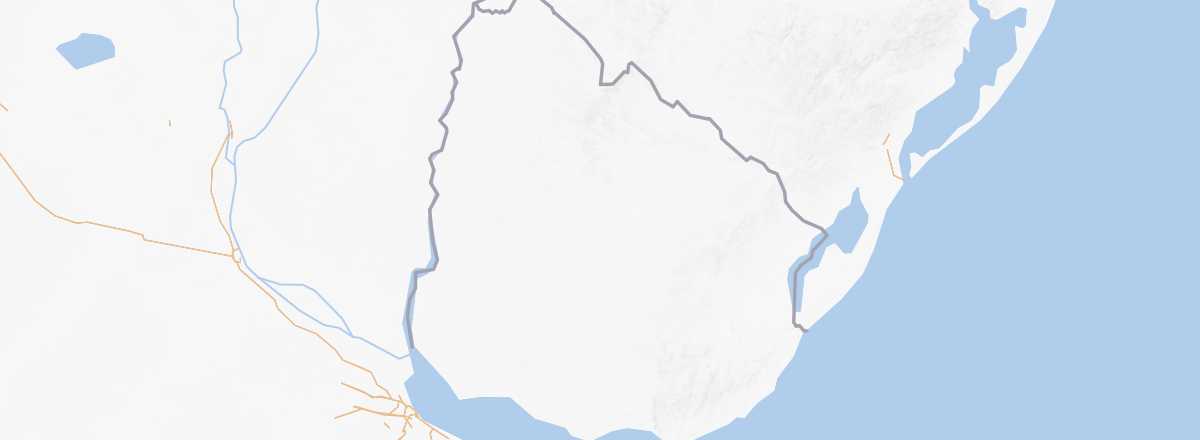 Uruguay
Open the interactive map
Money
Currency
- Currency: Uruguayan peso (100 centésimos).
- Banknotes: 20, 50, 100, 200, 500, 1,000, and $2,000.
- Coins: 1, 2, 5, and $10.
- Exchange:
Despite some "nuances" over time, the peso has always been the country’s currency. To avoid confusion with the US dollar, note that the symbol for the Uruguayan peso is $ or $U.
Exchange
You can easily exchange money upon arrival at banks (often open from 1:00 PM to 5:00 PM on weekdays), exchange bureaus (casas de cambio), or simply use the ATMs, which are widely available across the country.
Which currency to bring
While the peso is the official currency, the US dollar is widely used, especially for tourist-related expenses. It’s common for hotels, rentals, and other services to display prices directly in US dollars. Many ATMs allow withdrawals in either pesos or US dollars, so the simplest option is to bring euros if you’re coming from the eurozone and withdraw US dollars (or pesos) as needed.
Payment methods
Card payments and US dollars (with change given in pesos) are widely accepted. In some cases, European currency, as well as Brazilian and Argentine money, can even be used directly in coastal resort towns like Punta del Este.
Returning home
The easiest option is to end your trip with US dollars, which you can always use or exchange easily for future travels if you have any left.
Budget
While Uruguay may seem more expensive than other Latin American countries for certain things, it remains affordable, similar to the least expensive European countries. However, during the southern summer, coastal resort towns—especially Punta del Este—see prices rise significantly, adding about 25% to 30% to a basic budget, which can be estimated at around 50 € per person per day (for two people).
Note that until mid-2017 (with a possible extension), foreign visitors could reclaim VAT on various tourist services (accommodation, car rentals, etc.) if paid by card.
What can be expensive
- Peak season on the coast (December–February), especially in well-known resort towns.
- Car rentals.
What can be inexpensive
- The interior of the country compared to the coastal areas.
- Camping.
- Eating local.
- VAT refunds on services paid by card.
Price range
- Budget double room: around $30–40 for the cheapest options, and half that for seaside camping.
- Mid-range double room: starting at roughly $50.
- Snacks, local restaurant meals: under $10.
- Tourist restaurant meals: options from $10 to $15 per person.
- Budget car rental: around $45–50 for a basic model.
- 100 km by bus: roughly $6–7 per 100 km on average.
- Urban taxi:
- Urban bus: