
Travel guide · Uruguay
Uruguay
Though not spectacular, this small country with a European feel is one of the most visited in Latin America... primarily for its beaches and the stunning colonial city of Colonia del Sacramento.
Introduction to Uruguay
Uruguay, along with Suriname , is the smallest country in South America. Most of its territory consists of plains with vast prairies that extend from the Argentine pampas. Only the northern part, bordering Brazil , features some hills. The southern part of…
Uruguay: Climate and Weather
Climate Overview
As Uruguay is in the Southern Hemisphere, the seasons are reversed. The climate is temperate, with hot summers, mild and sunny winters (average temperatures never drop below 15°C), and light rainfall spread fairly evenly throughout the year. Although the country is not very large, there are some differences between the coast and the interior. The coastal areas are cooler with wind for much of the year, while the inland regions are warmer, with average temperatures exceeding 30°C during the southern summer—a time when the air can feel quite humid.
Best Time to Visit Uruguay
On the coast, the period from November to late April is the most pleasant (though also the busiest for tourism between December and March). For the interior, the shoulder seasons—March to May and September to November—are ideal, helping you avoid the intense summer heat or the slight "winter chill." In short, if you want to visit the whole country, March to early May or November offers a good climate compromise.
| Jan. | Feb. | Mar. | Apr. | May | Jun. | Jul. | Aug. | Sep. | Oct. | Nov. | Dec. | |
|---|---|---|---|---|---|---|---|---|---|---|---|---|
| Coastal climate | / | / | ||||||||||
| Inland climate | / |
: very favourable | : favourable | : moderately favourable | : unfavourable.
Sea Temperatures Throughout the Year
Even during the southern summer, the ocean temperature can feel a little cool, barely exceeding 20°C.
| Jan. | Feb. | Mar. | Apr. | May | Jun. | Jul. | Aug. | Sep. | Oct. | Nov. | Dec. | |
|---|---|---|---|---|---|---|---|---|---|---|---|---|
| Punta del Este | 20 | 21 | 20 | 19 | 17 | 15 | 13 | 12 | 12 | 14 | 17 | 19 |
Climate and Weather
Coast (Montevideo)
Interior (Salto)
Additional Information
History of Uruguay
History of Uruguay
Key Dates
Uruguayan Society
Population
Unlike other South American countries, Uruguay is very little mixed and resembles Europe far more than a typical Latin American country. Its population is almost 90% composed of white descendants of Spanish and Italian migrants who largely contributed to populating it in the 19th century. Moreover, immigration remains predominantly European. The rest consists of about 8% Mestizos, 3% Black, and a tiny minority of descendants of Indigenous populations.
Political Institutions
Economy
Religion
With a population largely of Spanish and Italian origin, Uruguay is, quite logically, Catholic. Nevertheless, Catholicism accounts for only 47% of Uruguayans, while 11% are Protestant. At the same time, Uruguay is also a country where atheists, agnostics, or those "without religion" are the most numerous, representing 40% of the population.
Uruguayan Culture and Customs
Arts, crafts and architecture
Arts
Crafts
Architecture
Museums
Customs and traditions
Local traditions
Etiquette
Dress and behavior
Sensitive or taboo topics
Languages
Spanish is the country’s official language and is spoken by everyone. Due to its proximity to Brazil, Portuguese/Brazilian is also widely spoken (including in its mixed form, "Portuñol", which blends Portuguese with Spanish). English, widely taught in schools, and Italian, the language of many migrants, are also common. French, while spoken by some enthusiasts, remains a "secondary" language in the country.
Glossary
A few local words and expressions useful for travelers:
Festivals and events
Major events and public holidays
Books, films and music
What to See in Uruguay
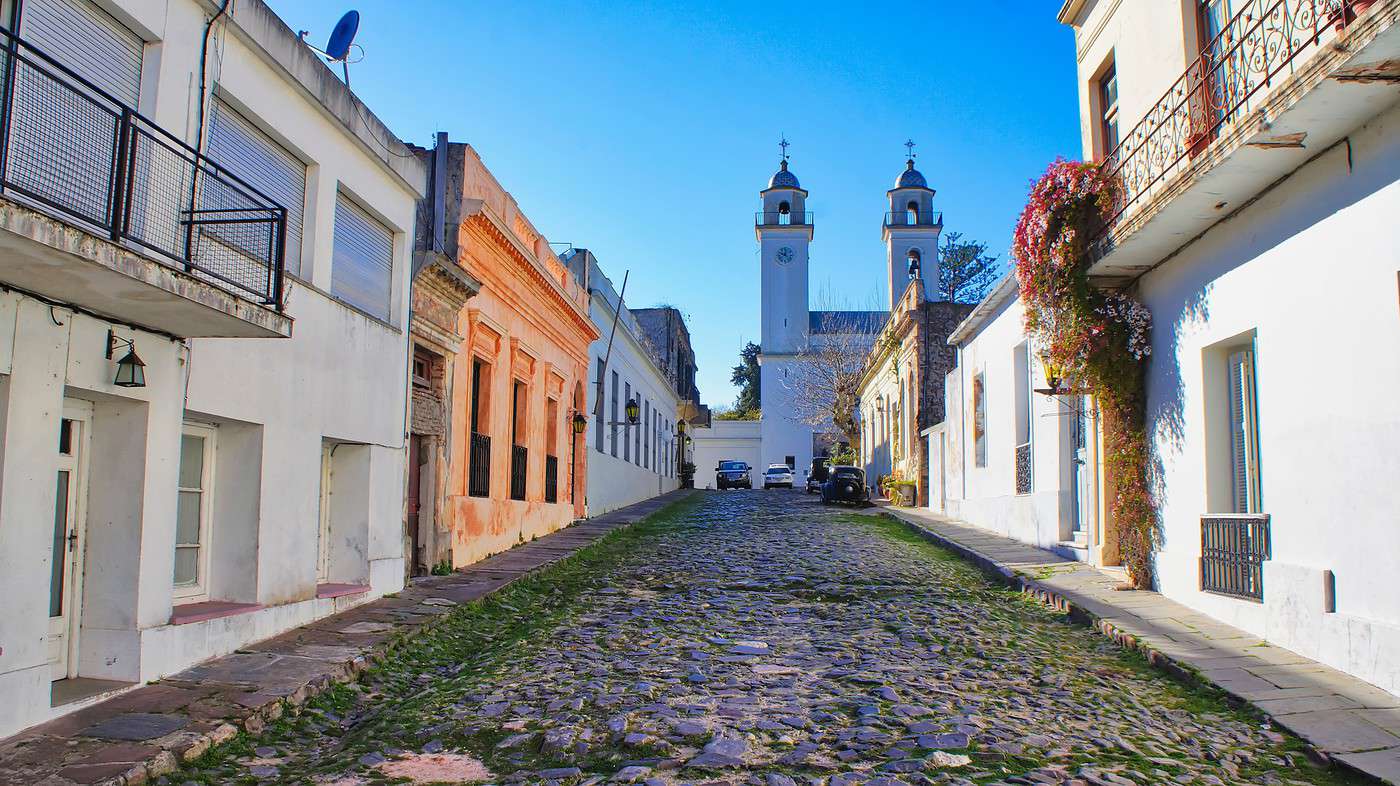
Uruguay is home to two sites inscribed on the UNESCO World Heritage list: Historic Centre of Colonia ★★★★ (1995) It’s a remarkable architectural blend of Portuguese and Spanish colonial styles. This is what earned it UNESCO World Heritage status. Fray Bentos…
Things to Do in Uruguay
Beaches and Seaside Resorts
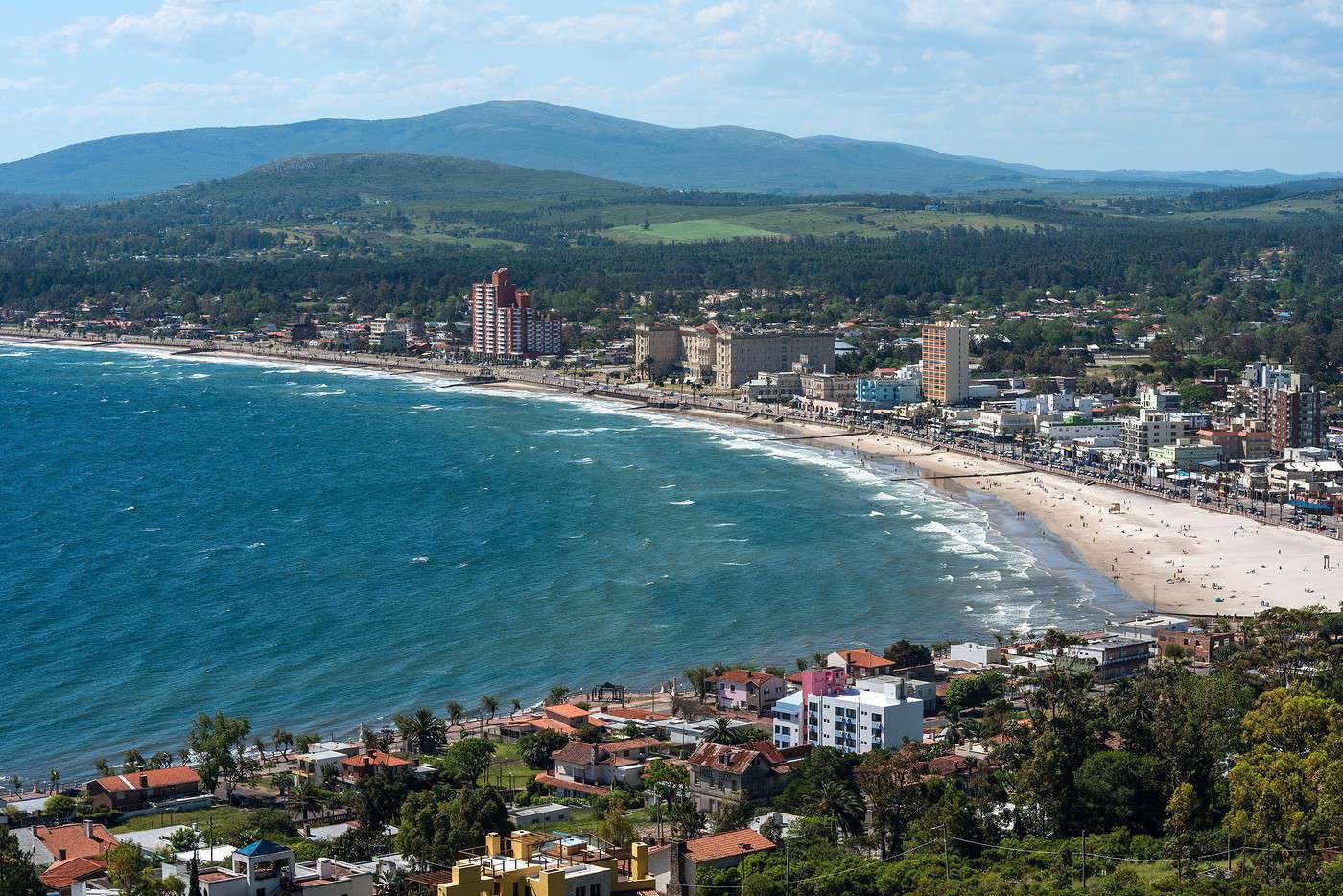
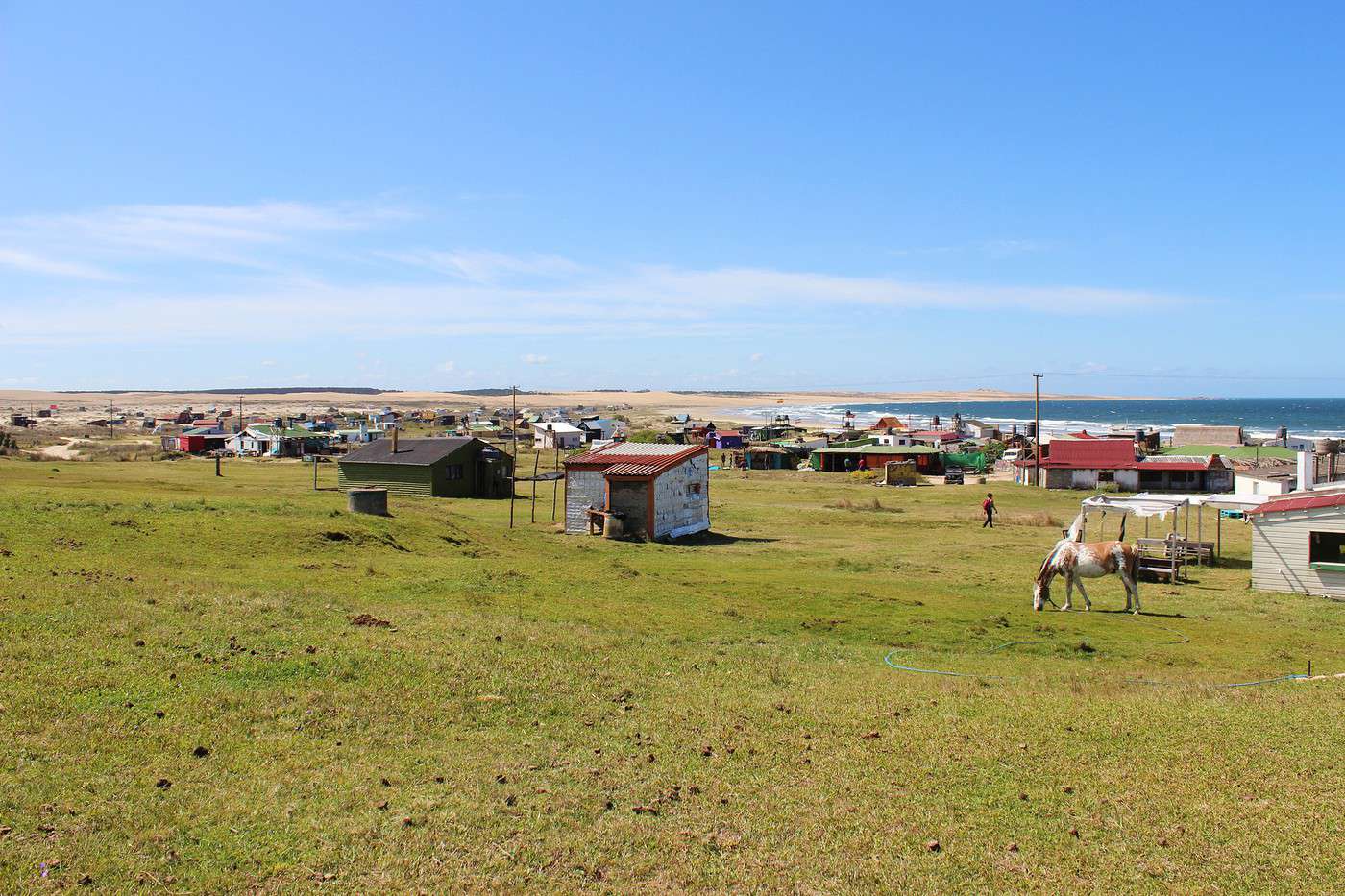
The beaches and seaside resorts along Uruguay’s coastline east of Montevideo are the country’s main tourist attraction. You’ll have plenty of options, including well-known spots like Cabo Polonio, La Paloma, Piriápolis, and especially Punta del Este, which is THE seaside resort of Uruguay.
Water Activities
Fishing:
Diving: Due to the Río de la Plata and often murky waters, Uruguay isn’t a top destination for divers, though there are a few opportunities if you move away from the river’s mouth and head up the coast toward Brazil.
Water sports:
Sailing:
Thalassotherapy and Wellness
Hiking
Hiking on Foot
Cycling
Golf
Cultural Life and Activities
Nightlife and Going Out
Types of Travel in Uruguay
Travel Themes
- Interests (out of ): Nature ; Adventure ; Culture ; Relaxation-holidays .
Nature-Adventure
Apart from a fairly pleasant stretch of coastline, Uruguay’s landscape isn’t particularly spectacular and mainly consists of vast, gently rolling grasslands.
Culture
While the small town of Colonia del Sacramento is a must-see for its UNESCO-listed colonial style, the capital Montevideo is worth a detour, and the site of Chamanga has pre-Columbian rock art, Uruguay isn’t necessarily a top "cultural destination" in Latin America.
Relaxation-Holidays
The beautiful beaches and seaside resorts along the coast east of the capital—especially Punta del Este—are the country’s main tourist draws, giving Uruguay its reputation in this area. The vast majority of visitors, mostly from neighboring countries, come solely for this.
Independent Travel
Uruguay is a very easy destination for independent travel, with no major challenges, making it ideal for first-time travelers.
Organized Travel
Family
To Do
To Avoid
Senior Travelers
Women Travelers
Gay and Lesbian Travel
Travel with Disabilities
When and Where to Go in Uruguay
Best Times to Visit Uruguay
Finding the best time to visit means balancing climate conditions with crowd levels and the most attractive prices for travel and on-site expenses.
Climatically, the coast is most pleasant from November to late April, but this is also the busiest tourist period from December to March. For the interior, the shoulder seasons—March to May and September to November—are ideal, helping you avoid the intense summer heat or the slight winter chill. In short, if you want to explore the whole country, late March to May or November offers a good compromise in terms of climate, crowds (limited to the coastal areas), and peak-season prices.
| Jan. | Feb. | Mar. | Apr. | May | Jun. | Jul. | Aug. | Sep. | Oct. | Nov. | Dec. | |
|---|---|---|---|---|---|---|---|---|---|---|---|---|
| Coastal climate | / | / | ||||||||||
| Inland climate | / | |||||||||||
| Avoid crowds | / | |||||||||||
| Low prices | / |
: very favorable | : favorable | : moderately favorable | : unfavorable.
Where to Go by Travel Style and Interest
Flying to Uruguay
Among the few airports in the country, only two have significant commercial activity: Punta del Este and Montevideo. Curbelo International Airport is the airport for Punta del Este, the country's main beach resort, primarily popular with Brazilian and…
Getting to Uruguay by Land or Sea
Uruguay has over 1,500 km of shared borders with its neighbours. That’s 541 km to the west with Argentina and 1,050 km to the north with Brazil . There’s no problem travelling between Uruguay and its neighbours, with several road crossing points available.…
Getting Around Uruguay
Road Network and Traffic
Uruguay's road network is well-developed and of good quality, at least along the coastline. Some expressways are toll roads. Inland, the network is somewhat more limited, and some roads are unpaved. Note that it is mandatory to drive with headlights on at all times, day or night, and that gas stations are not always plentiful in rural areas. As for local driving habits, they vary in terms of respect for the rules of the road, so it’s wise to stay alert behind the wheel.
Car, Camper Van
Rental
Bus
The bus network is well-developed, with various operators and different types of buses. As is often the case, you’ll find fast, frequent, and comfortable buses on main routes and long-distance trips (including to neighboring countries), while secondary routes may have slower and more basic services. In any case, fares are reasonable, and buses remain an excellent way to get around the country.
Two Wheels
Motorcycle
Bicycle
Hitchhiking
Trains
Boats
Domestic Flights
Since the local airline BQC ceased operations in 2015, there have been no regular domestic flights as before between the capital and the northern cities of Salto and Rivera. However, these routes may resume one day with the new airline Alas Uruguay.
In Town
Taxis
Other Means
What to Choose for Getting Around?
Given that the country is not very large and the bus network is quite good—especially along the coast, where many points of interest are concentrated—it makes sense to prioritize this mode of transport, which is also fairly economical.
Distances Between Cities
Distances (km) between the main cities and tourist sites in the country:
| Colonia | Monte. | Paysa. | Piria. | P.del E. | Rivera | Salto | Tacua. | |
|---|---|---|---|---|---|---|---|---|
| Colonia | 180 | |||||||
| Montevideo | 180 | 380 | 100 | 130 | 505 | 490 | 395 | |
| Paysandu | 380 | |||||||
| Piriapolis | 100 | |||||||
| Punta del Este | 130 | |||||||
| Rivera | 505 | |||||||
| Salto | 490 | |||||||
| Tacuarembo | 395 |
Accommodation in Uruguay
Overview of the offer
As a tourist destination, Uruguay has a good accommodation infrastructure, ranging from small hotels, guesthouses, youth hostels, and similar establishments to more luxurious ones or those catering to "mass tourism" along the coastline, particularly around Punta del Este. It is also along the coast that many more or less developed campsites can be found, while in the countryside, farm stays or rural accommodations are possible. In a way, accommodation in Uruguay is quite similar to what we know in Europe.
Except along the coast in summer (austral), where it is advisable to book ahead, it is fairly easy to find very affordable places with good value. In high season (late December to February), prices in the main seaside resorts can skyrocket.
Hotels of all kinds
Youth Hostel
Camping
Uruguay is well-equipped with campsites of all kinds, both public and private, well-equipped or more basic, with some also offering permanent accommodations such as bungalows. While many are located along the Atlantic coast, the interior also has its share. Many of them are only open during the austral summer. Meanwhile, camping remains an economical option, even if prices vary greatly depending on whether you are by the sea (logically the most expensive) or in the countryside. Expect to pay just a few dollars in less touristy areas and up to $15 to $20 in seaside resorts during high season.
Other options
Homestays
Guesthouses and rural accommodations
Apartments and villas
Which accommodation to choose?
Small hotels or family-run guesthouses are a good choice for accommodation. Along the coast and in season, campsites can also be a viable option.
Entry Requirements and Visa for Uruguay
People
For tourist travel purposes.
For French Citizens
No visa is required for a stay of less than three months. A valid passport is sufficient.
Other Nationalities
Long Stays
In Case of Offense
Vehicles
Consulates
In France
Consulate General: 15 rue Le Sueur, 75116 Paris. Tel: 01 45 00 81 37.
Honorary Consulates in the Provinces
- Bordeaux: Place de la Bourse, 33076 Bordeaux Cedex. Tel.: 05 56 79 44 44.
- Lyon: 50 av. du Maréchal de Saxe, 69006 Lyon. Tel.: 07 83 13 78 26.
- Toulouse: 31 rue du Printemps 31000 Toulouse. Tel.: 06 70 02 57 36.
Other Countries
Belgium:
Canada:
Switzerland:
Money, budget, and shopping in Uruguay
Currency: Uruguayan peso (100 centésimos). Banknotes: 20, 50, 100, 200, 500, 1,000, and $2,000. Coins: 1, 2, 5, and $10. Exchange: Despite some "nuances" over time, the peso has always been the country’s currency. To avoid confusion with the US dollar, note…
Health and Safety in Uruguay
In France, both for individuals and professionals, the "travel advice" from the Ministry of Foreign Affairs regarding precautions for each country has legal value. A similar online travel advice system exists in several countries: Foreign Affairs Belgium…
Other practical information for Uruguay
Baggage and equipment to bring
During the southern summer, pack light clothing plus a sweater for evenings or air conditioning. The rest of the year, mid-season or slightly warmer clothes will suffice, including on the coast where temperatures are lower than inland, especially at night. Don’t forget sun protection, mosquito repellent in some areas, and rain gear—rain falls a few days each month year-round.
Communications
Telephone
International dialing code: (00 +) 598.
Internet
Post
Time difference
Local time: .
Uruguay is on GMT-3, with daylight saving time. This means a -3 hour difference from mid-November to mid-March and -5 hours from late March to early October compared to metropolitan France. There are also a few days between these periods when the difference is -4 hours due to differing daylight saving transition dates in France and Uruguay.
Electricity
220 Volt (50 Hz) with "French-style" plugs (officially types C, F, and L), but sometimes others (type I) like in Argentina, featuring three flat pins—two arranged in a V—requiring an adapter for French systems.
Opening hours
Shops and businesses are generally open weekdays from 9:30 AM to 7:30 PM and until 1:00 PM on Saturdays. Shopping centers are open daily, including Sundays, from 10:00 AM to 10:00 PM. Banks typically serve the public from 1:00 PM to 5:00 PM all week.
Laundromats
Local tourist offices
Weights and measures
French language use
Press and media
Something wrong or out of date? Report this page