last edited Apr 20, 2026
Money, Budget, and Shopping in Brazil
Location Map of Brazil
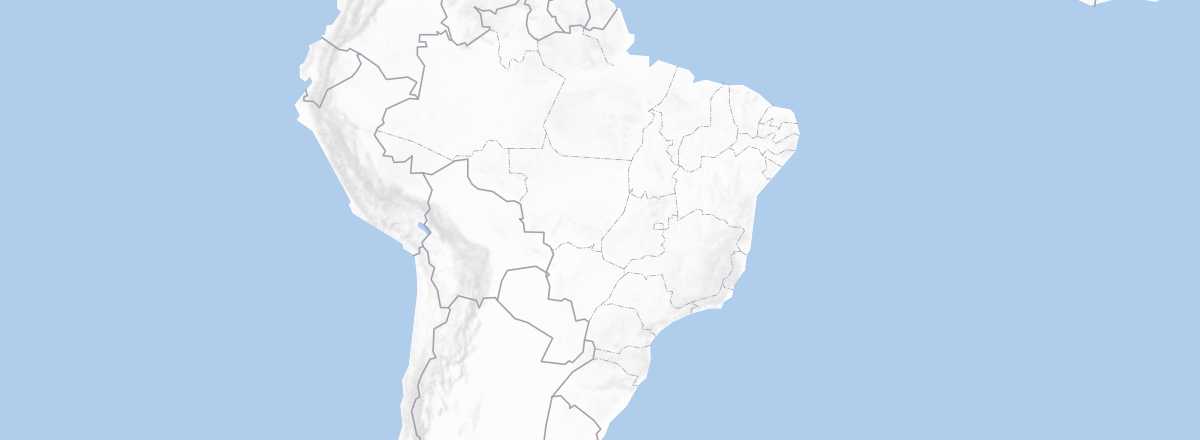 Brazil
Open the interactive map
Money
Currency
- Devise: Real, plural réis (100 centavos).
- Bills: 2, 5, 10, 20, 50, 100, and 200 R$.
- Coins: 5, 10, 25, and 50 centavos + 1 R$.
- Exchange:
Exchange
Major foreign currencies are easily exchanged in the country. You’ll find exchange counters in most large banks in cities and tourist spots, as well as exchange bureaus, and of course ATMs—though withdrawal limits vary. For security reasons, always be cautious when using an ATM, especially at night or in deserted areas.
Which currency to bring
If you’re coming from the eurozone, euros will work fine since they’re widely accepted. There’s no need to carry US dollars, which would only add an extra commission step in the exchange process.
Payment methods
Brazil is increasingly becoming a country where cash payments are giving way to card transactions and now also to banking apps that let you scan merchants’ QR codes to pay for purchases or services.
Called Pix, this system is everywhere and for everything, sometimes even offering discounts for using it. Recently, it’s also become accessible to foreign visitors without local bank accounts. To use it, just download specific apps and link them to your Visa or Mastercard to create a small rechargeable virtual wallet. This wallet will then be debited for each purchase.
Outside of Pix, card payments—including contactless—are widely accepted in the country (though watch out for fees). Cash in the local currency is still useful, mainly for tips, small purchases (and even then), or if you’re really off the beaten path.
Returning home
While you can always try to exchange Brazilian money outside the country, the rates are rarely favorable. So, spend all your reais, exchange them back into euros before leaving, or use card or Pix payments for the (end of your) stay.
Budget
Ultimately, the advantage of Brazil is that you can travel however you like: as a backpacker or in luxury. At least if you don’t stray too far off the beaten path. In backpacker mode, budget around 50 € per day per person for two, focusing on local accommodations, meals, and transport. For a bit more comfort or to enjoy activities and excursions, plan for around 80 €.
What can be expensive
- In a way, it’s the size of the country and the distances to cover if you’ve decided to explore all of Brazil, which means a significant transport budget (or time) to plan for.
- Domestic flights, which can quickly add up, especially compared to buses.
- Certain popular spots or the Carnival period in Rio.
- The Amazon Rainforest and the Pantanal, which are best explored through organized tours or various one-off services that rarely cost less than 100 € per day all-inclusive.
What doesn’t have to be expensive
- Eating (especially at a "quilo", where you pay by the weight of what you choose), sleeping, and local transport.
- The Pix system for QR code payments, which can be advantageous with possible discounts and fewer bank fees.
Price range
- Budget double room: around 20 to 25 €.
- Mid-range double room: around 30 to 40 € for a good first choice.
- Snacks, local restaurant meals: options range from street food for 1 or 2 € to small restaurants for 5 to 8 € for a set menu. Plus, there are many places—almost an institution in Brazil—where you pay by the "quilo" (kilo) after serving yourself at a buffet, allowing you to eat heartily for under 10 €.
- Mid-range restaurant meals: 15 to 20 € for establishments catering to tourists.
- Domestic flights: this can get expensive, especially if you don’t book in advance, with tickets rarely dropping below 100 € even for short flights.
- Budget car rental: you can find small city cars for around 20 to 25 € per day.
- Long-distance buses: depending on speed and comfort, roughly 2 or 3 € per hour for basic options, slightly more for standard, and up to 5 to 10 € for "luxury" buses with reclining seats that can even replace a night in a hotel for overnight trips.
- Urban taxi: inexpensive, around 4 or 5 € for a 15- to 20-minute ride.
- Urban bus and metro: less than 1 € per ticket.
Bargaining and tips
While not a cornerstone of the Brazilian economy, bargaining can be useful in markets for handicrafts, with street vendors, or even when paying via Pix to try for a discount, as sometimes offered.
As for tips, while not mandatory, in restaurants where service isn’t included, leave around 10% of the bill. For hotel staff, 1 or 2 € is typical, and for guides, around 4 or 5 €. In taxis, you can round up to the nearest ten.
Shopping and souvenirs
While not a top destination for souvenir hunters, you can still bring back a few small things from the country. Start with typical Brazilian cultural products, from fios de Bonfim—colorful good-luck bracelets from Bahia—to Brazilian coffee and the essential artisanal cachaça. Don’t forget beachwear like swimsuits and bikinis sold in Rio, or those famous Brazilian flip-flops (a national symbol!) called Havaianas.