
Overview of Cahors

The capital of the Lot department has an old town centre and, most notably, a well-known fortified bridge (the Pont Valentré).
Key facts
- Type of place: small town.
- Tourist interest: (worth a stop if you are in the area).
- Location:
- Distances:
- Local time: .
- Population: 19,878 inhabitants (2017).
- Area: 64.72 km².
- Altitude: from 105 to 332 m.
- Website: http://www.tourisme-cahors.fr
History of Cahors
What to see in Cahors
Cathédrale Saint-Étienne
Built from the 12th century onward, this massive and somewhat austere structure blends Gothic and Romanesque styles. It features a lovely cloister.
Built from the 12th century onward, this massive and somewhat austere structure blends Gothic and Romanesque styles. It features a lovely cloister.
Hidden Gardens of Cahors
This is a collection of 24 small gardens scattered throughout the city, offering a unique urban stroll. Among the highlights: the Moorish Garden, the Celestial Cloister, the Crusaders’ Closelet, and the Fairy Mélusine’s Hortus.
This is a collection of 24 small gardens scattered throughout the city, offering a unique urban stroll. Among the highlights: the Moorish Garden, the Celestial Cloister, the Crusaders’ Closelet, and the Fairy Mélusine’s Hortus.
Mont Saint-Cyr
This hill overlooking the Lot (the river) offers a rather pretty panorama of the city of Cahors and its surroundings. The same view can be enjoyed from another spot called Croix Magne.
This hill overlooking the Lot (the river) offers a rather pretty panorama of the city of Cahors and its surroundings. The same view can be enjoyed from another spot called Croix Magne.
Cahors Henri-Martin Museum
Housed in the former episcopal palace, the museum is dedicated to archaeology, ethnography, history, and the arts.
Housed in the former episcopal palace, the museum is dedicated to archaeology, ethnography, history, and the arts.
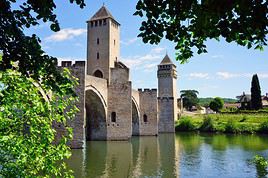
Valentré Bridge
This 14th-century fortified bridge spanning the Lot River is the emblem of Cahors and its best-known monument. It stands out for its three fortified towers, crenellated parapets, and six pointed arches. It has been pedestrian-only since 1995.
This 14th-century fortified bridge spanning the Lot River is the emblem of Cahors and its best-known monument. It stands out for its three fortified towers, crenellated parapets, and six pointed arches. It has been pedestrian-only since 1995.
Old Cahors
The historic centre includes the cathedral and episcopal complex, medieval streets and houses, and remnants of the city’s ramparts (Barbican, Saint-Jean Tower, etc.).
The historic centre includes the cathedral and episcopal complex, medieval streets and houses, and remnants of the city’s ramparts (Barbican, Saint-Jean Tower, etc.).
What to do in Cahors
Climate and weather in Cahors
Transport
Getting there
Getting around
Accommodation
Food
Useful addresses
Nearby
Some interesting sites to see around Cahors:
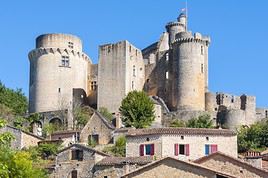
Bonaguil Castle
In Saint-Front-sur-Lémance, this is a magnificent fortress built between the Périgord and Quercy regions in the 13th century.
In Saint-Front-sur-Lémance, this is a magnificent fortress built between the Périgord and Quercy regions in the 13th century.
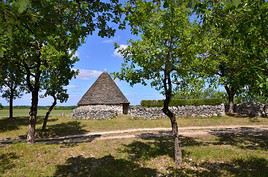
Causses du Quercy Regional Nature Park
East of Cahors, this park covers part of the Quercy region and its limestone plateaus, known as causses, where you can hike. It is also home to the famous "Dark Triangle of Quercy," a well-known spot for astronomers.
East of Cahors, this park covers part of the Quercy region and its limestone plateaus, known as causses, where you can hike. It is also home to the famous "Dark Triangle of Quercy," a well-known spot for astronomers.
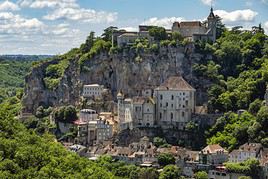
Rocamadour
Indirectly listed as a UNESCO World Heritage site as part of the Way of Saint James, this ancient cliffside village with its religious buildings is one of France’s most visited sites. Several prehistoric caves and hiking opportunities in the surrounding area.
Indirectly listed as a UNESCO World Heritage site as part of the Way of Saint James, this ancient cliffside village with its religious buildings is one of France’s most visited sites. Several prehistoric caves and hiking opportunities in the surrounding area.
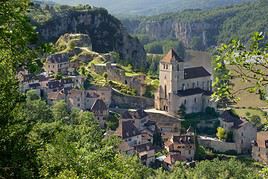
Saint-Cirq Lapopie
Not far from Cahors, this is the best-known and most visited of all the medieval villages in the region. A must-see for tourism in the Lot.
Not far from Cahors, this is the best-known and most visited of all the medieval villages in the region. A must-see for tourism in the Lot.
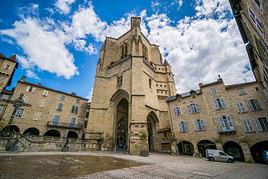
Villefranche-de-Rouergue
The sub-prefecture of Aveyron has a rather pretty town centre and a fine collegiate church.
The sub-prefecture of Aveyron has a rather pretty town centre and a fine collegiate church.