

Travel guide · Greece
Crete
The largest Greek island is a standalone tourist destination that will particularly delight lovers of landscapes and treks. But Crete is also steeped in history and culture, with its Minoan sites like the famous Knossos. And of course, the island is renowned for its many beaches and seaside resorts.
Introduction to Crete
The largest Greek island, and the fifth largest in the Mediterranean, Crete is elongated and stretches over 250 kilometres, parallel to the African coast. Its centre is dominated by limestone massifs reaching nearly 2,500 metres (Mount Ida), opening onto…
Geography, Climate, and Environment of Crete
Environment
Physical Geography of the Region
Wildlife and Flora
Natural Areas
Climate
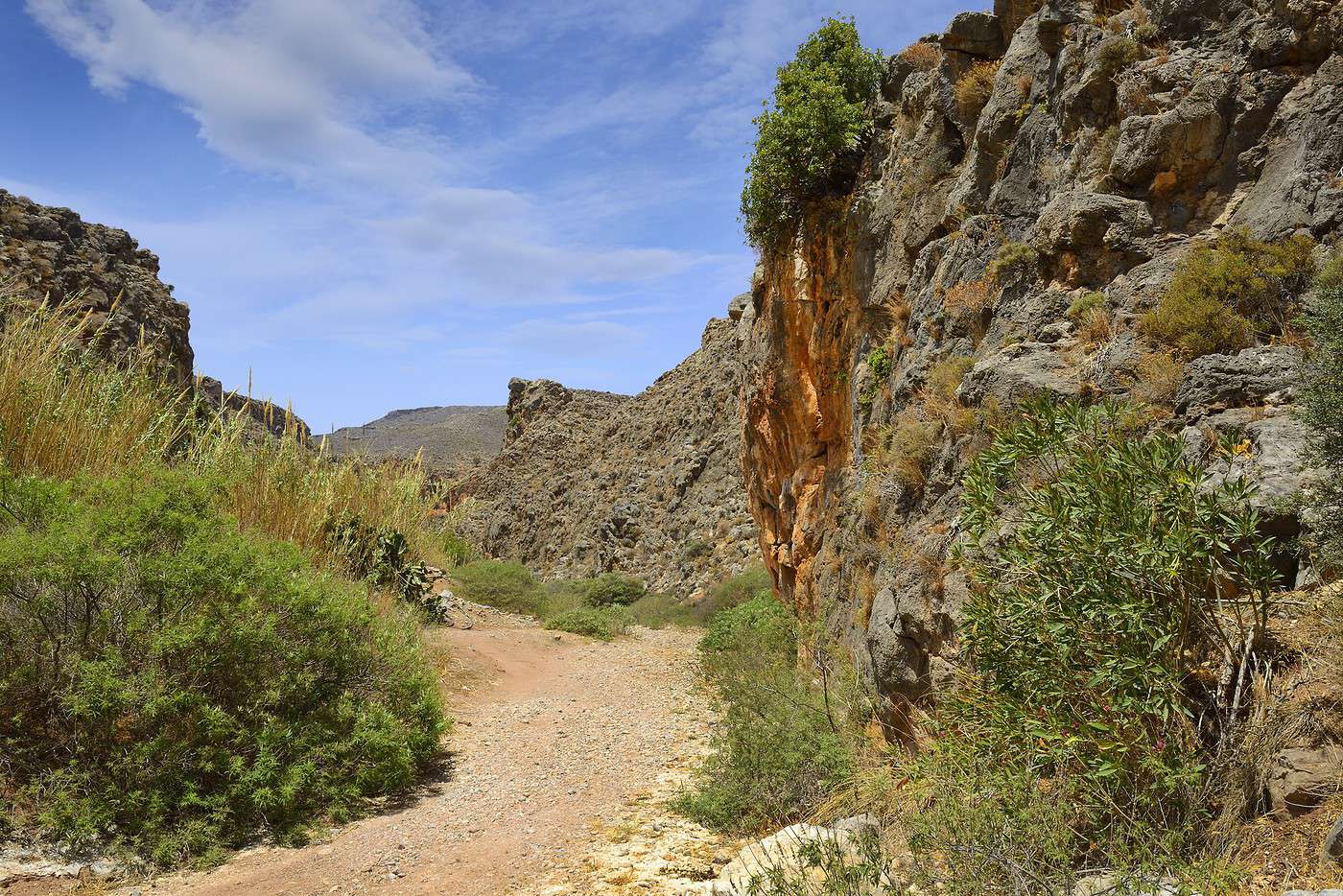
Crete has a Mediterranean climate with hot summers, though tempered by a wind (the "meltemi") that can be quite strong in the south. Winters are relatively mild and accompanied by some rain, at least on the coast, while in the mountainous interior, winters can be cold and snowy.
Best Time to Visit
Climatically (and even in terms of crowds), the best time to visit is spring or early autumn, rather than July or August.
| Jan. | Feb. | Mar. | Apr. | May | Jun. | Jul. | Aug. | Sep. | Oct. | Nov. | Dec. | |
|---|---|---|---|---|---|---|---|---|---|---|---|---|
| Coastal Climate | ||||||||||||
| Inland Climate | / |
: very favorable | : favorable | : moderately favorable | : unfavorable.
Sea Temperatures Throughout the Year
| Jan. | Feb. | Mar. | Apr. | May | Jun. | Jul. | Aug. | Sep. | Oct. | Nov. | Dec. | |
|---|---|---|---|---|---|---|---|---|---|---|---|---|
| Heraklion | 16 | 15 | 16 | 17 | 19 | 22 | 24 | 25 | 24 | 23 | 21 | 18 |
Climate and Weather in Crete (Coastal Areas)
Cretan Society, Culture, and Customs
Major Historical Dates
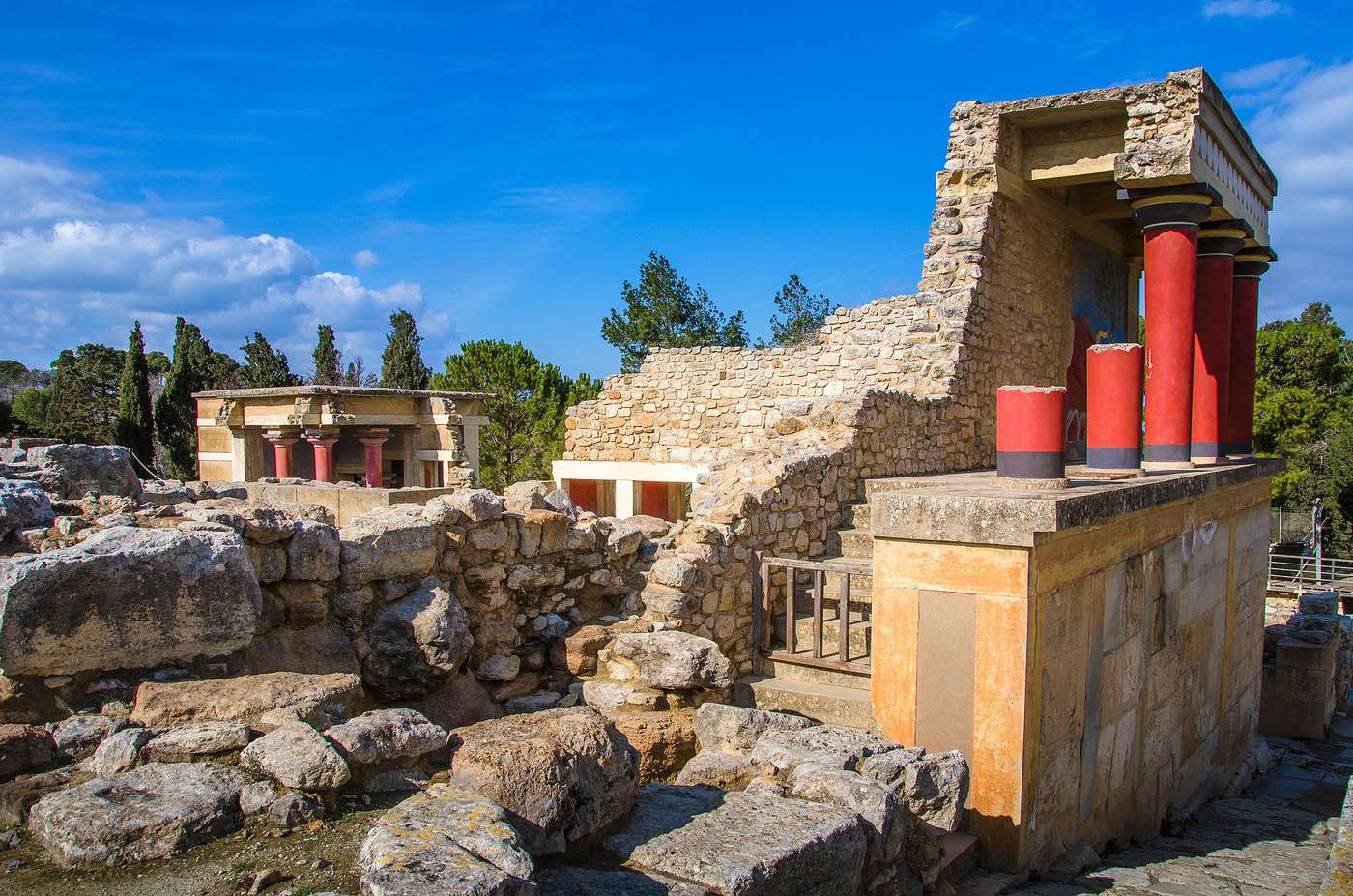
- 3rd millennium BCE: This is the most brilliant period in Cretan history with the Minoan civilization, which saw the creation of cities like Knossos.
- 15th century BCE: The beginning of Crete’s decline, which accelerated a few centuries later with the Dorian invasion.
- 6th–1st century BCE: Greek period, followed by the Roman era (from 67 BCE). Crete once again becomes a trading hub.
- 825–960: After a Byzantine period (395–824), Crete falls under Arab control for over a century.
- 961–1204: Byzantine reconquest.
- Early 13th century: After the Crusaders’ capture of Constantinople, the island becomes a Venetian stronghold until the arrival of the Turks a few centuries later.
- 1669–1822: Period of Turkish occupation. The Ottomans bring Muslim populations to the island.
- 1822–1840: Crete is attached to Egypt before returning to Ottoman rule in 1840.
- 1868: Following a popular uprising (1866–1868), the island gains autonomous status within the Ottoman Empire.
- 1897–1898: Another insurrection leads to the departure of the Turks. Crete is then administered by the Greeks while remaining autonomous.
- 1913: Following the 1905 popular movement in favor of union with Greece, Crete is fully integrated into the country.
- 1922–1923: Under the Treaty of Lausanne following the Greco-Turkish War of 1919–1922, Cretan Muslims are exchanged for Orthodox Christians from Turkey.
- 1941–1945: Crete plays a key role in World War II in the Mediterranean.
- 1981: Greece, and thus Crete, joins the European Union.
- 1980s: Development of tourism on the island.
- 2001: On January 1st, the euro becomes Greece’s official currency.
- 2007: Like the rest of the country, Crete is severely affected by the global economic crisis and its impact on the economy and population.
Arts and Architecture
Society
Population
Economy
Customs and Traditions
Local Traditions
Regional Languages
Festivals and Celebrations
Books, Films, and Music
What to See in Crete
Among other sites from the Minoan era, such as Knossos, which remains the best known, as well as numerous beaches and seaside resorts. Crete has no sites listed as UNESCO World Heritage Sites. Agios Nikolaos ★★ A charming tourist port on the northeast coast,…
Things to Do in Crete
Interests (rated ★★★★ ) : Nature ★★★ ; Adventure ★ ; Culture ★★★ ; Relaxation-holidays ★★★★ . The sea, the mountains, and especially beautiful gorges like those of Samaria , which are among the most remarkable in Europe for many. The island is therefore also…
Travel and suggested itineraries in Crete
Best times to visit
Finding the best time to visit means balancing climate conditions with crowds and the most attractive prices, both on-site and for travel.
The climate, crowds, and prices all follow the same pattern. The best time to visit Crete is in the spring (late April to mid-June) or early autumn (mid-September to October), avoiding July and August, which are hot and especially crowded—particularly from July 15 to August 15.
| Jan. | Feb. | Mar. | Apr. | May | Jun. | Jul. | Aug. | Sep. | Oct. | Nov. | Dec. | |
|---|---|---|---|---|---|---|---|---|---|---|---|---|
| Coastal climate | ||||||||||||
| Inland climate | / | |||||||||||
| Avoid crowds | / | / | ||||||||||
| Low prices | / | / |
: very favorable | : favorable | : moderately favorable | : unfavorable.
Types of travel
Independent
Like the rest of Greece, Crete is a very easy destination for independent travel.
Organized
Crete is well represented in travel agency catalogs, both for departures from Paris and from major provincial cities during the season. You’ll easily find package tours, group stays, and à la carte services (car rental, hotel nights, etc.).
All-inclusive
As a popular beach destination—like much of Greece—all-inclusive resorts are common, mostly along the northern coast. While these packages attract a lot of British, German, and Scandinavian visitors, they’re worth checking out, especially if there are promotions. In some cases, the prices can be very appealing.
Some itinerary ideas
Flying to Crete
With Heraklion’s Nikos Kazantzakis Airport, Crete has the country’s second-busiest hub in terms of traffic, handling over 6 million passengers per year (6.092 million in 2014). It is also the base for two Greek airlines: Minoan Air and Sky Express, which…
Getting to Crete by Sea
Ferries
While Crete doesn’t have international ferry connections, it does benefit from many regular direct routes to mainland Greece and several other islands. All depart from the north coast, from the ports (west to east) of Kissamos, Chania, Rethymnon, Heraklion, and Sitia. Anek Lines, Blue Star Ferries, Hellenic Seaways, Minoan Lines, and SeaJets are the companies operating these routes, some of which are "circular" with multiple ports on the itinerary.
To/from Heraklion:
- Athens/Piraeus (Anek + Blue Star + Minoan)
- Circular route Piraeus - Milos - Santorini - Anafi - Heraklion - Sitia - Kasos - Karpathos - Rhodes (Anek).
- Circular route Heraklion - Santorini - Ios - Naxos - Mykonos (SeaJets).
- Circular route Heraklion - Santorini - Ios - Paros - Mykonos (Hellenic Seaways).
To/from Kissamos:
- Circular route Kissamos - Antikythera - Kythira - Piraeus (Anek).
To/from Chania:
- Athens/Piraeus (Anek + Blue Star).
To/from Rethymnon:
- Santorini (SeaJets).
To/from Sitia:
- Circular route Piraeus - Milos - Santorini - Anafi - Heraklion - Sitia - Kasos - Karpathos - Rhodes (Anek).
Cargo
Cruises
Sailboats
Additional Information
Getting Around Crete
Having your own vehicle is an excellent way to explore Crete. It's even the best option thanks to the freedom and time saved compared to public transport. However, unless you're staying on the island for a long time, there's little point in bringing your own…
Accommodation and Food in Crete
Accommodation Options
Crete is a very touristy island, so the full range of accommodation is available: youth hostels, campsites, apartment rentals, homestays, guesthouses, and hotels of all categories. For every taste and budget. Given the crowds, it’s not always easy to find a bed in the most touristy spots in summer—at least not at a good price—if you haven’t booked ahead.
Hotels and Guesthouses
All-Inclusive
Camping
Homestays
Other Options
Choosing Your Accommodation
As with the rest of the country, it all depends on the type of trip you’re planning. If you’re staying in one place, an all-inclusive package or—if you prefer more freedom—renting a villa or apartment might work. Otherwise, if you’re traveling around, homestays or, as a secondary option, camping (better suited for those with a vehicle) usually offer the best value.
Food
Where to Eat?
Other practical information for Crete
Baggage and equipment to bring
In summer, pack light clothing plus a sweater for the inland areas and evenings. In winter, while mid-season clothes may suffice for the coast, warmer clothing is needed for the mountainous parts of the island. Don’t forget sun protection—it’s intense—and rain gear for the start or end of the year.
Budget
The budget for a stay in Crete is fairly typical of what you’d expect in Greece. Costs vary widely depending on the season and whether you choose busy or quieter spots. Off-season or away from the "tourist highways," you can budget around 45/60 € per person per day (based on two people), prioritising camping, small homestays, local restaurants, and transport. In July-August or in the coastal resorts of the north coast, expect closer to 55/70 €.
Precautions
No particular health or safety concerns, though watch for car break-ins. Take the usual precautions when hiking or exploring the mountains. Also, stay alert on Crete’s roads—they’re not always the safest.
Opening hours
Laundries
Local tourist offices
French language use
Something wrong or out of date? Report this page