

Travel guide · United States
Florida
Often reminiscent of the Caribbean or Latin America, Florida maintains its tourist image with beach resorts and theme parks. But it also boasts wild nature, with forests and swamps (the famous Everglades) that are home to a rich and diverse fauna and flora.
Florida Overview
S'il est un état au relief plat et peu élevé c'est bien la Floride. Cette excroissance au sud-est du territoire américain, pointant l'île de Cuba , est bordée à l'est par l'Océan Atlantique et à l'ouest par le golfe du Mexique. Au delà de l'image touristique…
Florida: Culture, Society, and Customs
Fort Matanzas, Floride, États-Unis 1498: The Anglo-Venetian John Cabot is the first European to sail off the coast of Florida, then inhabited by around 100,000 Native Americans. 1513: "Official" discovery of Florida by the Spanish with the conquistador Juan…
What to See in Florida
Of the twenty or so American sites listed as UNESCO World Heritage Sites, Florida has one: Everglades National Park ★★★★ (1979) This vast swamp at the tip of Florida is world-famous for its natural environment, which you can explore on foot or by airboat.…
Things to Do in Florida
Intérêts (sur ★★★★ ) : Nature ★★ / ★★★ ; Aventure ★ ; Culture ★★ ; Détente-vacances ★★★★ . Même si la région est plutôt plate et très peu élevée, la Floride possède néanmoins une nature assez belle en certains endroits. Outre le littoral et ses superbes…
Suggested Travel and Itineraries in Florida
Best Times to Visit
Finding the best time to visit means balancing climate conditions with crowd levels and the most attractive prices for travel and on-site expenses.
Climatically, as is often the case, the "dry" season is the most recommended for exploring this part of the United States. This primarily means from late November to mid-May, when the heat and humidity are notably lower, even if January can sometimes be a bit chilly in the north. The only downside is that this is also peak tourist season, with prices to match—especially around Christmas and then from February to Easter, which sees nearly 50% of the year’s visitors. In short, April to mid-May and November offer the best compromise.
| Jan. | Feb. | Mar. | Apr. | May | Jun. | Jul. | Aug. | Sep. | Oct. | Nov. | Dec. | |
|---|---|---|---|---|---|---|---|---|---|---|---|---|
| Climate | ||||||||||||
| Avoid crowds | / | |||||||||||
| Low prices | / |
: very favorable | : favorable | : moderately favorable | : unfavorable.
Some Itinerary Ideas
Getting Around Florida
Greyhound , Megabus and RedCoach are the three major companies operating in Florida. They connect the state's main cities well. Other local or regional companies provide additional services, including secondary routes. In short, even if buses don’t go…
Accommodation in Florida
Overview of the offer
Logically, given the tourist influx, Florida offers a wide range of accommodation options, including private or state-run campgrounds, youth hostels (or similar), B&Bs, hotels, and motels of all kinds (including famous "boutique hotels") and for all budgets. There are also options for renting (or exchanging) villas and apartments for longer stays.
Prices fluctuate (greatly) depending on the season (late November to March being peak), and in some areas, they also vary by day of the week (weekends are often more expensive). In the most tourist-heavy areas during peak periods, it’s recommended to book in advance. Note that, as everywhere in the country, you can find discount coupons or promotional offers online for accommodation.
Hotels of all kinds
Camping
Other options
Homestays
Apartments or villas
Choosing your accommodation
Geography and Environment of Florida
State Physiography
Natural Areas
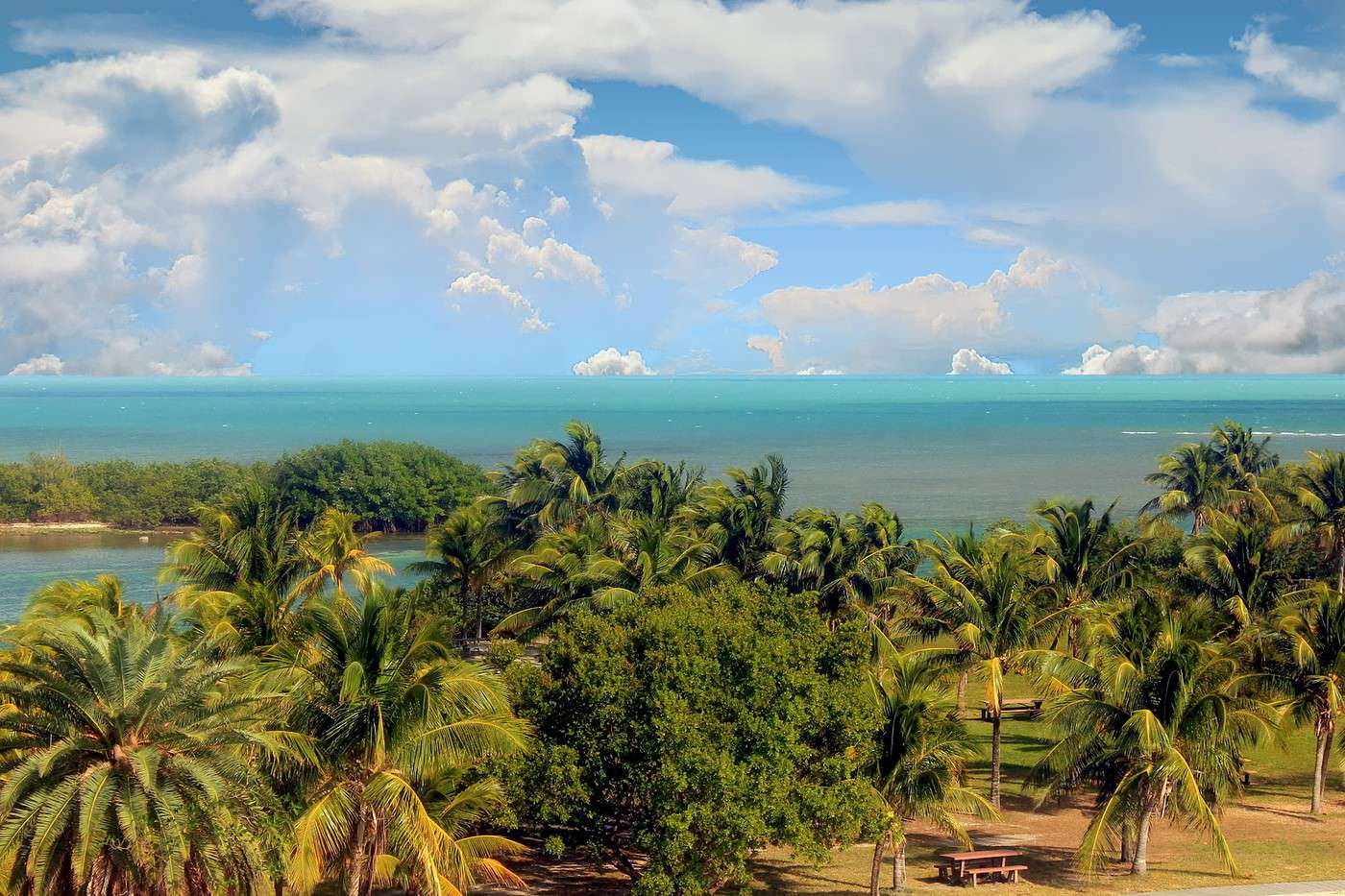
Wildlife and Flora
Florida Climate and Weather
Climate Overview
The climate is one of Florida’s main assets. It is subtropical, even tropical in the southern tip. It is also fairly uniform across the state due to the "lack" of relief, which doesn’t cause many variations from place to place, though it does get slightly cooler as you head north. Daytime temperatures year-round range between 24 and 32 °C, and nighttime temperatures between 15 and 25 °C, with late May to late September being the hottest and most humid period. Florida also receives its share of rain and storms—often short but violent—along with frequent and sometimes deadly hurricanes, whose "official" season runs from June 1 to November 30.
Best Time to Visit Florida
As is often the case, the "dry" season is the most recommended time to explore this part of the United States. This means primarily from late November to mid-May, when the heat and humidity are notably lower, though January can sometimes be a bit chilly in the north.
| Jan. | Feb. | Mar. | Apr. | May | Jun. | Jul. | Aug. | Sep. | Oct. | Nov. | Dec. | |
|---|---|---|---|---|---|---|---|---|---|---|---|---|
| Climate |
: very favorable | : favorable | : moderately favorable | : unfavorable.
Sea Temperatures Throughout the Year
With water temperatures ranging from 23 to nearly 30 °C, you can swim year-round along Florida’s coasts.
| Jan. | Feb. | Mar. | Apr. | May | Jun. | Jul. | Aug. | Sep. | Oct. | Nov. | Dec. | |
|---|---|---|---|---|---|---|---|---|---|---|---|---|
| Miami | 23 | 22 | 25 | 23 | 25 | 27 | 28 | 28 | 28 | 27 | 25 | 23 |
Climate and Weather in Miami
Additional Information
Flying to Florida
Overview
While no Florida airport ranks in the country's Top 10 busiest, the state still has four major hubs that together handle nearly 120 million passengers annually. These include Miami Airport (41 million passengers in 2014), Orlando (35.5 million), Fort Lauderdale (24.5 million), and Tampa (17.5 million). As a result, finding flights to Florida from the rest of the U.S. or from many other parts of the world is rarely an issue.
Florida, particularly Miami, is also home to several airlines like American Airlines. It serves as a key hub for destinations in the Caribbean and much of Latin America. Additionally, Atlanta (Georgia), the world's busiest airport, is not far from northern Florida.
Which city to land in?
Unsurprisingly, the vast majority of travelers opt to arrive in Miami, which is by far the best-connected city, especially from Europe. However, if you're planning a multi-stop trip in the region, there's no reason not to use the other airports depending on your departure point or to mix and match.
Types of flights
Charters, scheduled, and low-cost flights
Promotions and special offers
From France and Europe
From the rest of the Americas
Canada
Rest of the United States
Flying directly to Florida from elsewhere in the U.S. is no problem. Miami, and to a lesser extent the other major airports in the region, offer numerous connections to destinations across the country, operated primarily by American Airlines and its subsidiaries, which have made Florida one of their key bases.
Caribbean and Latin America
From elsewhere
Additional information
Getting to Florida by Land or Sea
Florida borders two other American states: Alabama and Georgia , both located to the north/northwest of Florida. There’s no issue arriving by road, as the state is connected by three "Interstate" highways (10, 75, and 95) and numerous major roads. Greyhound…
Other practical information for Florida
If staying in central or southern Florida, plan lightweight clothing and a sweater for evenings or air conditioning at all times. For the north, a warmer garment may be useful around January when it can occasionally get a bit cold. Otherwise, think about sun…
Something wrong or out of date? Report this page