
Travel guide · French Guiana
French Guiana
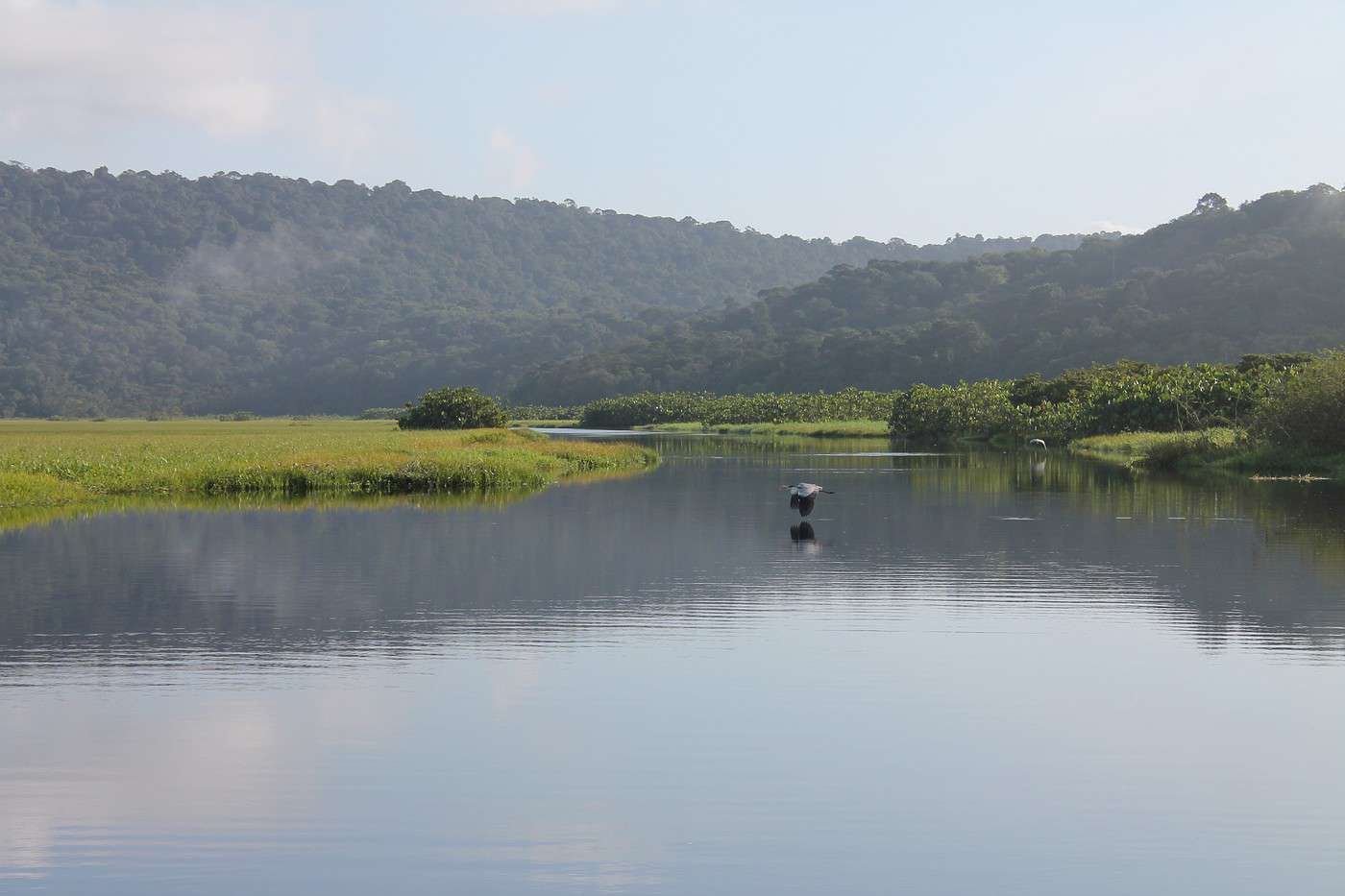
This piece of France in the Americas, with 95% of its territory covered by the Amazon rainforest, is made for nature lovers and even adventure seekers, rather than those looking for a relaxing beach holiday.
Introduction to French Guiana
A French overseas department and region, French Guiana is a land of low relief, not exceeding 850 m near the Brazilian border in the Tumuc-Humac Mountains. Over three-quarters of its area is covered by the Amazon rainforest, which means the vast majority of…
Geography and Environment of French Guiana
Country Physiognomy
Natural Zones
Wildlife and Flora
Climate and Weather in French Guiana
Climate Overview
The climate in French Guiana, both along the coast and inland, is hot and humid. It is defined by two distinct seasons: the rainy season, which is quite long and runs from December to July (with May-June being the wettest, while March/early April offers a lull with the "little March summer"), and the dry season for the rest of the year. In both seasons, the average temperature hovers around 30°C during the day and 22°C at night. Everywhere, the heat is muggy but significantly tempered along the coast by trade winds. It’s also worth noting that rain typically falls in the late afternoon, and unlike the Caribbean, French Guiana is not prone to cyclones.
Best Time to Visit for Climate
The ideal time to visit is during the dry season, from August to November, though the department’s major tourist highlights—such as Carnival or the sea turtle nesting season—take place at the start of the year.
| Jan. | Feb. | Mar. | Apr. | May | Jun. | Jul. | Aug. | Sep. | Oct. | Nov. | Dec. | |
|---|---|---|---|---|---|---|---|---|---|---|---|---|
| Climate |
: very favorable | : favorable | : moderately favorable | : unfavorable.
Sea Temperatures Throughout the Year
| Jan. | Feb. | Mar. | Apr. | May | Jun. | Jul. | Aug. | Sep. | Oct. | Nov. | Dec. | |
|---|---|---|---|---|---|---|---|---|---|---|---|---|
| Cayenne | 26 | 27 | 27 | 27 | 27 | 28 | 28 | 28 | 28 | 27 | 27 | 27 |
Climate and Weather in Cayenne
Additional Information
History of French Guiana
Saint-Laurent du Maroni, Guyane · © VoyageForum 1498: During his third voyage to the Americas, Christopher Columbus sailed near French Guiana, then inhabited by 30,000 Amerindians. Mid-16th to mid-17th centuries: The territory saw several attempts…
Society in French Guiana
Population
The population of French Guiana is concentrated along the coast, primarily in Cayenne and its surroundings, as well as along a few rivers like the Maroni. Overall, 40% of inhabitants are Guyanese Creoles, 12% are "Métros" (French from mainland France), 4% are Amerindians from six ethnic groups, 2% are descendants of the Maroons, and 1% are of Hmong origin (refugees from Laos in the 1970s). Additionally, around 40% of the population has diverse origins, mainly Chinese, Lebanese, Brazilians, Haitians, Surinamese, and Guyanese.
Political Institutions
Economy
Religion
Culture and Customs of French Guiana
Arts, Crafts, and Architecture
Arts
Crafts
Architecture
Museums
Customs and Traditions
Local Traditions
Etiquette
Dress and Behavior
Sensitive or Taboo Topics
Languages
While French is the official language, French Guianese Creole is also widely spoken in the department, with 50,000 to 60,000 speakers. It is a blend of French, English, Spanish, Dutch, Portuguese and Brazilian, African dialects, and a few Amerindian words—essentially, all those who have left their mark on the region at some point. Linguistically, Guianese Creole is more or less similar to Antillean Creole but very different from the Creole spoken in Réunion, for example.
Glossary
A few local words and expressions useful for travelers:
- Boucaner: the process of smoking fish or meat to preserve it.
- Cachiri: a traditional Amerindian drink made from fermented cassava juice.
- Carbets: wooden shelters without walls, typical of Amerindian cultures, where people sleep in hammocks communally.
- Crique: a local term for any type of watercourse.
- Layon: a trail in the forest, usually cleared beforehand with a machete.
- Orpailleurs: or garimpeiros in Brazilian Portuguese. These are gold prospectors in the Amazon rainforest.
- Saut: small waterfalls found in large numbers on Guiana’s rivers, often difficult to navigate by canoe, especially in the dry season.
- Taxis Co: minibuses with around ten seats that leave when full and connect the main towns.
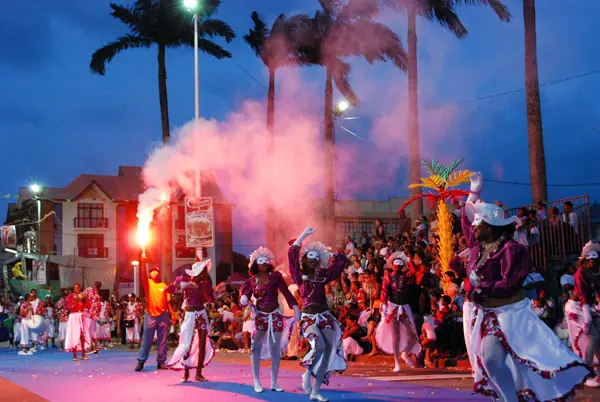
- Touloulou: women fully disguised during Carnival who invite men to dance.
Festivals and Events
Major Events and Public Holidays
Books, Films, and Music
Guyana's Cuisine
Local Cuisine
Guyanese cuisine is highly varied and draws its origins from the mosaic of populations that make up the department. It remains quite spicy when it comes to purely Creole dishes.
Other Cuisines
Culinary options beyond local cuisine are somewhat limited in French Guiana. They primarily reflect the different communities present or the origins of the inhabitants. You’ll find establishments offering metropolitan French cuisine (generally quite expensive), as well as Brazilian, Chinese, Lebanese, or Hmong restaurants.
Specialties
Starters
Main Dishes
Desserts
Drinks
Where to Eat
There are several options for dining out, each with a very different budget. The most economical choices are markets or Chinese cuisine; for 5 or 6 €, you can have a basic meal. For 10 to 15 €, you can eat at small restaurants serving local dishes. For higher-end dining or metropolitan French products (including those bought in supermarkets), expect to spend at least 20 €.
Additional Information
What to See in French Guiana
French Guiana has no sites listed as UNESCO World Heritage Sites. Awala-Yalimapo ★ With its Les Hattes beach, this Indigenous municipality on the northern coast facing Suriname is one of the last nesting sites for leatherback turtles. Cacao ★ This small Hmong…
Things to Do in French Guiana
Beaches and Seaside Resorts
Despite its nearly 400 kilometres of coastline, much of which is occupied by mangroves, French Guiana is not a beach destination and has no proper resorts. You’ll find just a few beaches (see list), such as those in Remire-Montjoly in the Cayenne suburbs, often described as the most beautiful, or near Kourou. The Atlantic waters, though pleasantly warm year-round (26/28°C), are far from turquoise due to the proximity of the Amazon and Orinoco rivers. Alternatively, you can swim in the rivers. There’s no real danger, but the water is also murky.
Water Activities
Hiking
Hiking Trails
There are quite a few hiking trails, more or less developed, along the coast and in the forest. They cater to all levels, though the climate is more of a challenge than elevation. Outside marked trails near settlements, never venture into the Amazon rainforest or marshes without a guide—and certainly not alone. Local providers can assist. Whatever the hike or planned duration, always bring basic gear and go with others.
Cycling
Outdoor and Adventure Activities
Hunting and Fishing
Hunting and fishing are popular activities in French Guiana. Unlike in mainland France, no permit is required for hunting, but you must apply for a firearms licence at the prefecture. Fishing is most appealing in the Amazonian rivers and streams, though sea fishing is also possible.
Whitewater and River Expeditions
Cultural Life and Activities
Nightlife and Going Out
Types of Travel in French Guiana
Travel Themes
Interests (rated ): Nature ; Adventure ; Culture ; Relaxation-holidays .
Nature-Adventure
Nature and adventure are what best define French Guiana. The Amazon rainforest is never far away, offering all the discoveries and activities it has to offer—though at a much higher price than in other countries in the region. Aside from a few sites or occasions, ecotourism in French Guiana almost always requires local providers, if only for safety reasons.
Culture
While the remnants of the penal colony that marked this land are still very present, it is the diverse populations that make up Guianese society, with their unique traditions and customs, that represent the primary "cultural interest" of the destination.
Relaxation-Holidays
Despite its nearly 400 kilometers of coastline, French Guiana is not a beach destination and has no resorts to speak of. Opportunities for "relaxation-holidays," whether on the coast or inland, are extremely limited or nonexistent in the usual sense.
Independent Travel
French Guiana is an easy destination for independent travel and well-suited for beginner travelers. However, its (Amazonian) interior, the most challenging part, almost always requires guided support.
Organized Travel
French Guiana is not really part of the mainstream tourist circuit, and very few professionals offer organized trips from mainland France (and even fewer from elsewhere). What is most commonly proposed by travel agencies is a customizable system, where you purchase services (flights, car rentals, accommodations, day trips, etc.) as needed. That said, once on the ground, you’ll easily find the few essential local agencies that can help you explore the rainforest or marshes.
Family
To Do
To Avoid
Senior Travelers
Women Travelers
Gay and Lesbian Travel
Travel with Disabilities
When and Where to Go in French Guiana
Best Times to Visit French Guiana
Finding the best time to visit French Guiana means balancing climate constraints with crowd levels and the most attractive prices for travel and on-site expenses.
Climatically, the best time to visit is during the dry season, from August to November, even though the department's major tourist events—like Carnival and turtle nesting—take place at the start of the year. In terms of crowds, the busiest periods coincide with school holidays (the same as in mainland France), particularly in summer, though tourist pressure remains relatively low. In short, late August to November—or alternatively, the "little summer of March" (March to early April)—are the best times to go.
| Jan. | Feb. | Mar. | Apr. | May | Jun. | Jul. | Aug. | Sep. | Oct. | Nov. | Dec. | |
|---|---|---|---|---|---|---|---|---|---|---|---|---|
| Climate | ||||||||||||
| Avoid crowds | ||||||||||||
| Low prices |
: very favorable | : favorable | : moderately favorable | : unfavorable.
Where to Go by Travel Style and Interest
Flying to French Guiana
French Guiana has around ten airports and airfields, with Cayenne's Félix Eboué Airport as the main gateway. With 500,000 passengers per year, it is by far the busiest, ahead of Saint-Laurent, and the base for the local airline Air Guyane Express. However,…
Getting to French Guiana by Land or Sea
By Land
Borders
French Guiana shares a border with Brazil (730 km) and Suriname (510 km).
From Neighboring Countries
The Maroni and Oyapock rivers have long served as borders to the west with Suriname and to the east with Brazil (the south is not accessible). However, there are no roads crossing these borders, except for a bridge completed in 2011 that connects Saint-Georges to Oiapoque in Brazil. At least in theory, because it remains closed for a variety of more or less official reasons and may stay that way for a long time according to some. In short, to travel from French Guiana to its neighbors, you must cross the rivers by pirogue.
To/From Suriname
There is a regular daytime pirogue service between Saint-Laurent and Albina (Suriname) for 5 € per trip. Note that a visa is required to enter Suriname. Less formally, crossings of the Maroni are also possible in other places upstream.
To/From Brazil
The crossing between French Guiana and Brazil at Saint-Georges takes about fifteen minutes by pirogue, which depart when full. Count between 5 € and 10 € for the trip, depending on whether it is during the day or at night. Once on the Brazilian side, filling out the country’s entry form is mandatory. As with the Maroni, less formal crossings are also possible upstream.
By Sea
Ferries
There are no ferry lines connecting French Guiana to other places.
Cargo
There are a few cargo options traveling from mainland France to the port of Cayenne. Count roughly 1,200 € to 1,500 € for the crossing.
Cruises
Sailboats
Getting Around in French Guiana
While the road network is generally good, it is mostly limited to the coast, with National Routes 1 and 2 connecting the two ends of the department from Saint-Laurent to Saint-Georges. Beyond that, roads are scarce, replaced by dirt tracks or, in the…
Accommodation in French Guiana
Since French Guiana is not a major tourist destination, accommodation there is quite expensive and not always plentiful. The department's thirty or so hotels are located on the coast, mainly in Cayenne, Kourou, and Saint-Laurent. While their quality is more…
Entry Requirements and Visa for French Guiana
People
For French Citizens
Since French Guiana is a French department, there are no special entry requirements regardless of the length or purpose of your stay. A valid national identity card or passport is sufficient. However, a yellow fever vaccination certificate is (in principle) mandatory.
Other Nationalities
For citizens of the European Union, Canada, and Switzerland, a valid passport is required along with a return travel ticket. Like all other French overseas territories, French Guiana is not part of the Schengen Area.
Long Stays
In Case of Offense
Regulated Access Zone
In 1970, to protect indigenous populations and their environment, the prefecture established a "Regulated Access Zone" (ZAR) covering southern French Guiana. In practice, this means that anyone outside local communities wishing to visit must submit a prior request to the prefectural authorities in Cayenne. Visits for purely tourist purposes are systematically refused.
However, in recent years, this regulation has been increasingly questioned, including by some Indigenous communities who see it as a barrier to their development and ecotourism projects. In 2013, the municipality of Camopi withdrew from the ZAR, accelerating the idea that a general relaxation of the rules may occur in the near future.
Vehicles
Consulates
In foreign countries, French consulates handle all matters concerning French Guiana. Note that there are some administrative differences between metropolitan France and the overseas territories, such as the Foreigners' Entry and Residence Code, which does not apply locally.
Money, Budget, and Shopping in French Guiana
Currency: Euro (100 cents). Notes: 5, 10, 20, 50, 100, 200 and 500 €. Coins: 1, 2, 5, 10, 20 and 50 cents + 1 and 2 €. Exchange: For those outside the eurozone, several banks accept major currencies, and ATMs in the main towns offer exchange services. You can…
Health and Safety in French Guiana
In France, both for individuals and professionals, the "travel advice" from the Ministry of Foreign Affairs regarding precautions for each country has legal value. A similar online travel advice system exists in several countries: Foreign Affairs Belgium…
Other practical information for French Guiana
Baggage and equipment to bring
At all times, pack light clothing and something warmer for the evenings, as well as protection from rain (and sun) and mosquitoes, especially if you plan to hike in the forest. For the forest, good shoes are recommended, along with plastic sandals or, even better, rubber boots for walking in water. For those who prefer nights in "carbets," bring a hammock with ropes and mosquito net (available locally), as well as a light sleeping bag (nights can be cool) and a headlamp.
Communications
Phone
International dialing code: (00 +) 594.
Internet
The postal service in French Guiana works like in mainland France, with the same postage rates. Allow three to four days for mail delivery between the two.
Time difference
Local time: .
French Guiana, like its neighboring Suriname, is on GMT-3. This means there are 4 hours less in winter and 5 hours less in summer compared to mainland France.
Electricity
220 Volt (50 Hz) with "French" plugs (officially types C and E), which will require an adapter for North American plugs.
Opening hours
Shops and other services are generally open as in mainland France, though they close for meals and have an early-afternoon siesta. Many small grocery stores stay open almost every day until at least 8:00 PM.
Laundromats
Local tourist offices
Weights and measures
French Guiana uses the metric and decimal system, like mainland France.
Use of French
While French is the official language, Guyanese Creole is also widely spoken in the department, with 50,000 to 60,000 speakers.
Press and media
Something wrong or out of date? Report this page