last edited Dec 11, 2019
Getting Around Ireland
Location Map of Ireland
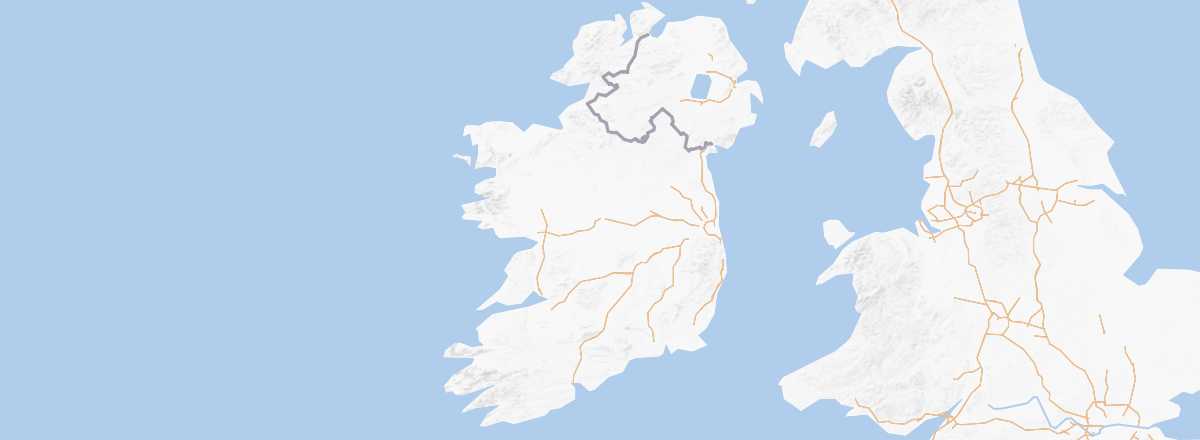 Ireland
Open the interactive map
Ireland
Open the interactive map
Road Network, Traffic
With nearly 100,000 kilometres, including 1,200 km of expressways, Ireland's road network is quite extensive for the size of the island. However, it can get congested near major urban areas. Rural roads are sometimes in mediocre condition, narrower and winding (not always suitable for campervans), and signage may occasionally be in Irish Gaelic. Remember that you drive on the left in Ireland.
Car, Campervan
Personal Vehicle
If you're travelling in a group, have some time, or want to explore Ireland freely, bringing your own vehicle can be an option. However, financially, it may be more expensive for some, especially given the flight options from France to Ireland.
The main factor to consider is the journey and transporting your vehicle from home to Ireland. Most people choose the France-Ireland ferry over travelling via England. Compare the cost of the crossing and transport to the departure port with the price of flying and renting a car locally.
Rental
Renting a car in Ireland is straightforward. An international driving permit isn’t required, and you just need to be over 21 (and sometimes under 70) to rent. Expect to pay around 200 € per week at minimum, and booking in advance is advisable during peak season. Many travel agencies offer "fly and drive" packages (flight + car rental) that can be cost-effective.
Bus
Ireland has a good bus network, comfortable and punctual. There are two "national" companies (Eireann in the Republic and Ulster Bus in Northern Ireland) alongside private operators. Buses are a solid option if you don’t have a personal vehicle, though some routes only run seasonally or with limited frequency. Some tourist areas are poorly served, so combining bus travel with a bike can offer more flexibility.
While bus fares are cheaper than trains, they can add up over time (unless you're a student). Expect to pay around 6 €–8 per 100 km. If you opt for buses, consider the available passes, especially from national companies, some of which also include train travel.
Two Wheels
Motorcycle
Bike
Exploring Ireland by bike is a great option since distances are short, though wind, terrain, and rain can sometimes be challenging. You can always take your bike on trains or buses occasionally. Renting a bike costs around 100 € per week. In some cases, renting or even buying a second-hand bike locally may be more economical than transporting your own by plane.
Hitchhiking
Hitchhiking is relatively easy, though unpredictable weather and low traffic in some areas might deter some travellers.
Trains
Ireland has a small rail network of about 3,500 km, heavily centred on the capital, where most lines originate. There are two national companies: Irish Rail in the Republic and NIR in Northern Ireland. Some routes, like Cork-Tralee or Dublin-Galway, offer beautiful views of the Irish countryside. However, trains are relatively expensive—more so than buses—and may not be the best way to explore the country, though passes (some combined with bus travel) are available. Ireland is also included in the InterRail pass.
Boats
Travelling by water in Ireland primarily means canal boating with small barges. The most popular route is the Shannon-Erne Waterway, connecting these two rivers across both parts of Ireland.
Beyond that, there are a few ferry services to the Aran Islands from Rossaveal and Doolin, as well as between the islands themselves. The main operators are The Doolin Ferry, Cliffs and Aran Cruises, and O'Brien Line.
Domestic Flights
Apart from Dublin-Donegal and Dublin-Kerry (operated by Stobart Air), there’s only one other domestic route in Ireland: flights between Connemara Airport (near Galway) and the Aran Islands (Inishmore, Inishmaan, and Inisheer). These are operated by Aer Arann Islands with small aircraft.
In Towns
Taxis
Other Options
What’s the Best Way to Get Around?
As always, the ideal is to be self-sufficient for transport to make the most of Ireland’s nature and countryside. Bringing or renting a vehicle is the best option. Otherwise, you can use buses in season, ideally combined with a bike for more freedom.
Distances Between Cities
Distances (km) between the main cities on the island:
| Belfast | Cork | Derry | Dublin | Galway | Killar. | Limer. | Rossl. | Sligo | Wate. | |
|---|---|---|---|---|---|---|---|---|---|---|
| Belfast* | 165 | |||||||||
| Cork | 265 | |||||||||
| Derry* | 235 | |||||||||
| Dublin | 165 | 265 | 235 | 210 | 310 | 200 | 160 | 210 | 170 | |
| Galway | 210 | |||||||||
| Killarney | 310 | |||||||||
| Limerick | 200 | |||||||||
| Rosslare | 160 | |||||||||
| Sligo | 210 | |||||||||
| Waterford | 170 |
*Belfast and Derry are in Northern Ireland.