last edited Aug 19, 2020
Getting Around Réunion
Location Map of Réunion
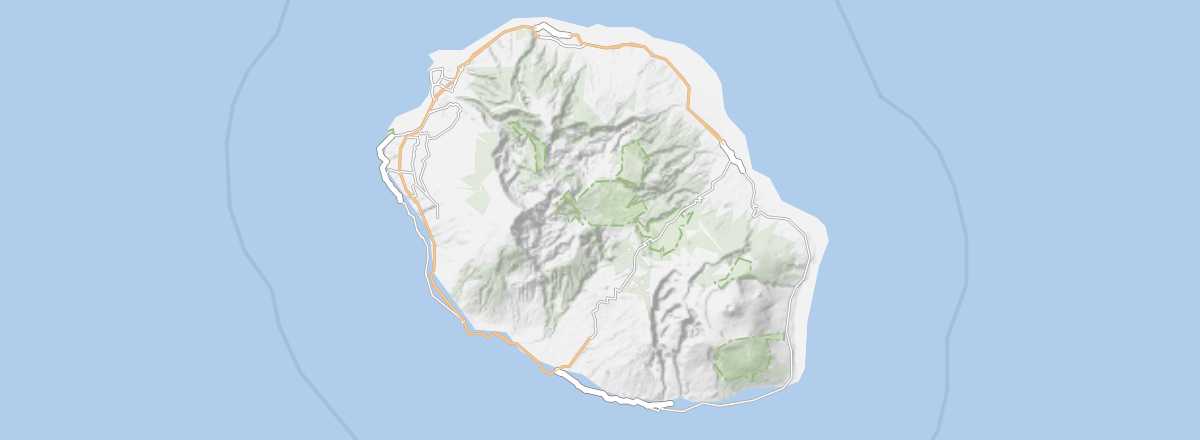 Réunion
Open the interactive map
Réunion
Open the interactive map
Road Network and Traffic
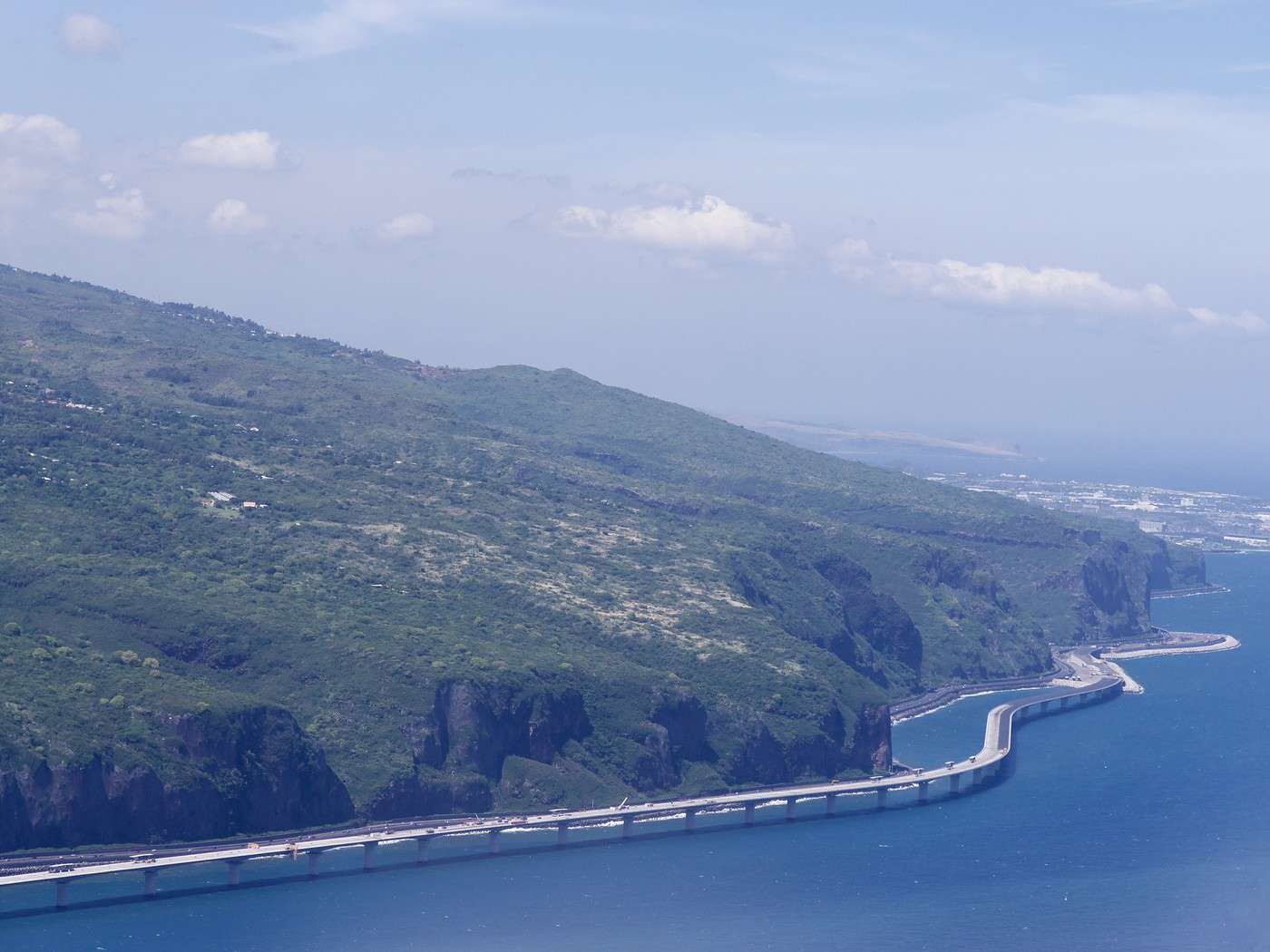
The road rules in Réunion are the same as in mainland France. The road network is very good, including in the interior, though the roads there are narrower, with many bends and sometimes deep shoulders that require caution. The only downside—and a major one—is the constant traffic jams on the coastal road, especially around Saint-Denis or Saint-Pierre, which make driving frustrating. However, since 2009, the *Route des Tamarins* has been in place, linking Saint-Paul to Étang Salé via the *Hauts*, easing congestion on the coastal road in that area by providing an alternative route.
Car Rental
For two or three people, renting a car is by far the best way to get around and explore the island. It offers freedom and, above all, saves time for discovering all the great spots Réunion has to offer—all at an affordable price. There are many car rental agencies on the island, both international and local. Additionally, like in mainland France, peer-to-peer car rental is growing.
Given the competition, you can find vehicles for around 25 to 30 € per day (especially with local rental companies), with discounts for longer rentals. During peak season, it’s sometimes useful to book in advance to secure the best deals. As always, opt for unlimited mileage and pay attention to insurance and excess fees when choosing your rental. Also, note that there’s usually an extra charge for vehicles rented from the airport. Lastly, a 4x4 isn’t necessary for exploring the island, and there are a few campervan rental companies on the island.
Buses and Shared Vehicles
Buses
Réunion has a fairly good bus network, though the coastal areas (especially the west) are much better served than the interior. The island has around ten bus stations (mostly in larger towns), with services generally running from around 5:00 AM until 6:00 or 7:00 PM.
Fares are quite affordable, ranging from 1 € to around 4.50 € (for roughly 50 km), depending on the company and route. However, buses aren’t always fast or frequent in some areas, and they don’t offer the flexibility to go everywhere. In short, they may not be the best option if you plan to explore the whole island or have limited time. But if you just need to travel between towns, especially along the west coast, they’re worth considering.
Main Companies
- Alterneo: Serves the triangle between Étang Salé, Saint-Pierre, and Cilaos.
- Les Cars Jaunes: The main company, operating around twenty routes along the coast and circling the island. The *Ti'Cars Jaunes* complement the *Cars Jaunes* for the *Hauts*.
- Carsud: Buses serving the southern part of the island.
- Cirest/Alizé: This company handles services in the east.
- Citalis: The urban and peri-urban network for the three municipalities of Saint-Denis, Sainte-Marie, and Sainte-Suzanne.
- Kar'Ouest: As the name suggests, these buses operate along the west coast, particularly between La Possession and Les Avirons.
Shared Taxis
These are alternatives to buses found in some parts of the island. These minibuses wait at bus stations, leave when full, and drop passengers off along their route. They’re cheaper than buses.
Two Wheels
Motorcycle
You can rent a small motorcycle or scooter to get around the island. A big advantage—if you’re in Saint-Denis or along the west coast—is that you’ll avoid traffic jams. The downside: bad weather, especially rain, can make riding unpleasant at certain times of the year. Also, watch out for theft.
Bicycle
Réunion is far from ideal for cycle touring. Besides the heavy traffic on the west coast, the lack of bike lanes, wind, rain, and the terrain—with steep inclines as soon as you head inland—mean you’ll need to be motivated and in good shape!
For something more fun, the island has around ten downhill mountain biking areas with marked trails. Like skiing, the difficulty of the routes (around 200) is indicated by colors, from green (very easy) to black (difficult). You can easily rent all the equipment on-site.
Hitchhiking (and Carpooling)
While it’s possible to hitchhike, it’s not very reliable in Réunion, and you shouldn’t be in a hurry. Plus, during the rainy season, it’s far from ideal. That said, organized carpooling is now available on the island.
Trains and Boats
There are no trains on the island, nor any internal ferry services.
Domestic Flights
There are no domestic flights on the island. However, some inland areas inaccessible by road are served by helicopter or even ultralight aircraft.
In Town
Urban Buses
Some of the bus companies mentioned earlier, such as Citalis for Saint-Denis and its suburbs, provide urban services in the main towns.
Taxis
They’re not always plentiful or cheap, but they must have a meter.
Bicycle
Some coastal towns like Le Port or Saint-Paul have set up urban bike rental services (roughly 1.50 € per hour to 7 € per day) and even bike-taxis (cycle rickshaws) for 1.50 € per ride. The whole system is managed by Semto.
What to Choose for Getting Around?
For two or three people, renting a car is by far the best way to explore Réunion. It offers freedom and, above all, saves time for discovering all the great spots the island has to offer—all at an affordable price. Otherwise, if you’re alone, you can always consider the bus.
Distances Between Towns
Distances (km) between the main towns:
| Cilaos | Hell-Bourg | Plaine des Cafres | Saint-Denis | Saint-Gilles | Saint-Louis | Saint-Philippe | Saint-Pierre | Sainte-Rose | |
|---|---|---|---|---|---|---|---|---|---|
| Cilaos | 120 | 55 | 100 | 80 | 35 | 75 | 45 | 100 | |
| Hell-Bourg | 120 | 70 | 50 | 90 | 100 | 85 | 90 | 50 | |
| Plaine des Cafres | 55 | 70 | 70 | 75 | 30 | 60 | 25 | 50 | |
| Saint-Denis | 100 | 50 | 70 | 40 | 70 | 90 | 80 | 55 | |
| Saint-Gilles | 80 | 90 | 75 | 40 | 40 | 85 | 50 | 100 | |
| Saint-Louis | 35 | 100 | 30 | 70 | 40 | 40 | 10 | 75 | |
| Saint-Philippe | 75 | 85 | 60 | 90 | 85 | 40 | 35 | 30 | |
| Saint-Pierre | 45 | 90 | 25 | 80 | 50 | 10 | 35 | 65 | |
| Sainte-Rose | 100 | 50 | 50 | 55 | 100 | 75 | 30 | 65 |