last edited Dec 11, 2019
Getting Around Uruguay
Location Map of Uruguay
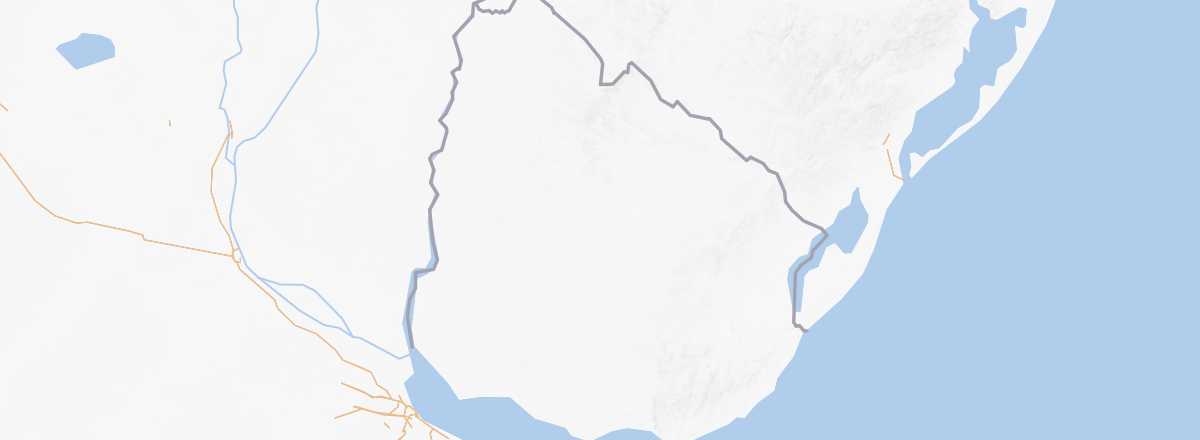 Uruguay
Open the interactive map
Uruguay
Open the interactive map
Road Network and Traffic
Uruguay's road network is well-developed and of good quality, at least along the coastline. Some expressways are toll roads. Inland, the network is somewhat more limited, and some roads are unpaved. Note that it is mandatory to drive with headlights on at all times, day or night, and that gas stations are not always plentiful in rural areas. As for local driving habits, they vary in terms of respect for the rules of the road, so it’s wise to stay alert behind the wheel.
Car, Camper Van
Rental
Bus
The bus network is well-developed, with various operators and different types of buses. As is often the case, you’ll find fast, frequent, and comfortable buses on main routes and long-distance trips (including to neighboring countries), while secondary routes may have slower and more basic services. In any case, fares are reasonable, and buses remain an excellent way to get around the country.
Two Wheels
Motorcycle
Bicycle
Hitchhiking
Trains
Boats
Domestic Flights
Since the local airline BQC ceased operations in 2015, there have been no regular domestic flights as before between the capital and the northern cities of Salto and Rivera. However, these routes may resume one day with the new airline Alas Uruguay.
In Town
Taxis
Other Means
What to Choose for Getting Around?
Given that the country is not very large and the bus network is quite good—especially along the coast, where many points of interest are concentrated—it makes sense to prioritize this mode of transport, which is also fairly economical.
Distances Between Cities
Distances (km) between the main cities and tourist sites in the country:
| Colonia | Monte. | Paysa. | Piria. | P.del E. | Rivera | Salto | Tacua. | |
|---|---|---|---|---|---|---|---|---|
| Colonia | 180 | |||||||
| Montevideo | 180 | 380 | 100 | 130 | 505 | 490 | 395 | |
| Paysandu | 380 | |||||||
| Piriapolis | 100 | |||||||
| Punta del Este | 130 | |||||||
| Rivera | 505 | |||||||
| Salto | 490 | |||||||
| Tacuarembo | 395 |