last edited Jan 8, 2020
History of Egypt
Location Map of Egypt
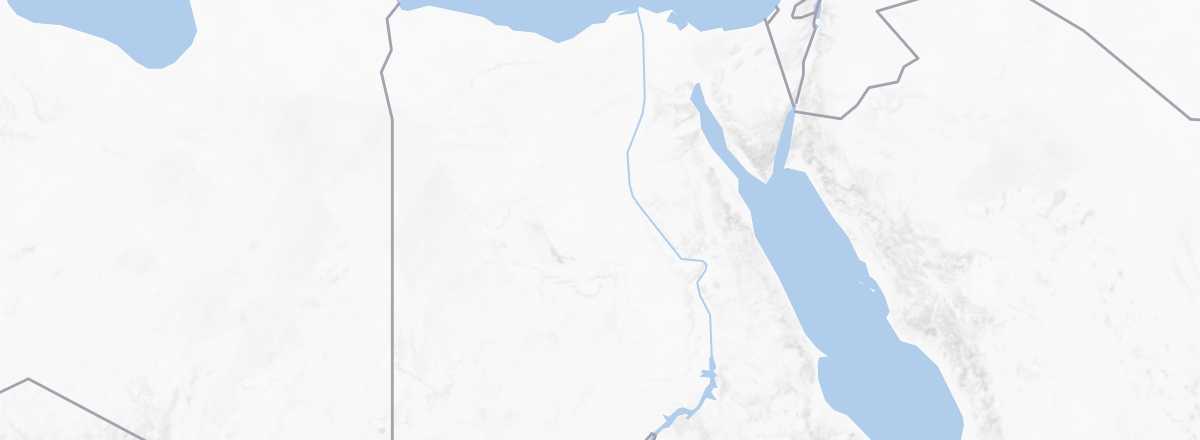 Egypt
Open the interactive map
Egypt
Open the interactive map
History of Egypt
Key Dates
- Until 3100 BCE: early settlements along the Nile. The country was then divided into two rival kingdoms: the North and the South.
- 3100-2700 BCE: the kings of the South invaded the northern part and unified the country.
- 2700-1080 BCE: succession of empires and dynasties. From 1550 BCE, Egypt experienced its golden age with its famous pharaohs (Ramses II, Tutankhamun...), its conquests, and its grand constructions.
- 1080 BCE-40 CE: decline of the Empire. Persian, Greek, and then Roman invasions. Egypt became a wealthy Roman province ("Caesar and Cleopatra").
- 40-1798: after a "Christian period," the country fell under the domination of Arab Caliphs from the 7th century before they were overthrown by the Turks.
- 1798-1801: Bonaparte’s expedition and the French defeat. Egypt laid the foundations of a modern state by opening up to the West.
- 1805-1876: the successive Pashas modernized the country, destroyed the power of the Mamluks, and undertook conquests. Gradually, French influence waned in favor of the British.
- 1869: inauguration of the Suez Canal, built by the Frenchman Ferdinand de Lesseps. However, five years later, the British became the main shareholders of the project.
- 1879-1952: British occupation, followed by a protectorate (from 1914) despite nominal independence granted in 1922. Meanwhile, a nationalist movement developed from 1914.
- 1948-1949: war lost against Israel by King Farouk, who had been in power since 1936.
- 1952: the army seized power and deposed King Farouk.
- 1953: proclamation of the republic. Nasser came to power a year later.
- 1956: "Suez Crisis" with the failure of the Franco-British intervention and the nationalization of the Canal by Nasser. Conflict with Israel.
- 1958-1961: for a time, Egypt formed the United Arab Republic with Syria and then Yemen. The country gradually turned toward the USSR.
- 1967: another war lost against Israel ("Six-Day War"), which then occupied the Sinai. Closure (until 1975) of the Suez Canal, damaged by the war.
- 1970: death of Nasser, who was succeeded by Anwar el-Sadat. He partially reversed his predecessor’s policies.
- 1971: completion of the Aswan Dam, the largest in the world.
- 1973: fourth conflict with Israel ("Yom Kippur War").
- 1977: negotiations with Israel, followed in 1979 by a peace agreement between the two countries. Gradual rapprochement with the United States.
- 1981: assassination of Sadat in 1981 by Islamic extremists and rise of fundamentalism. Hosni Mubarak became president.
- 1982: Israel returned the Sinai to Egypt.
- 1989: Egypt’s return to the Arab League, which had distanced itself after the 1979 agreements with Israel.
- 1991: Egypt was part of the coalition against Iraq during the first Gulf War.
- 1991-1992: beginning of attacks against the country’s tourist interests.
- 1992: several hundred deaths in Cairo following an earthquake.
- 1997: 67 deaths in November in an anti-tourist extremist attack near Luxor. Other similar attacks occurred sporadically in the following years.
- 2005: Mubarak’s reelection as head of the country with 88.6% of the vote in multiparty elections.
- 2011: in January, the start of the Egyptian Revolution, symbolized by Tahrir Square in Cairo, against Mubarak’s regime. His departure in February and the establishment of a military government, which was far from unanimous, as evidenced by the clashes in November.
- 2012: after the resignation of the transitional government and the victory of Islamist parties in the following elections, Mohamed Morsi (supported by the Muslim Brotherhood) was elected president on June 24. His reforms raised fears of an attack on democracy and pushed part of the population toward new protests.
- 2013: Morsi was ousted by a military coup in July. A new transitional government was established.
- 2014: Marshal al-Sissi was elected head of state in May in a context of unrest and conflict, particularly with the Muslim Brotherhood. Meanwhile, the still very tense situation in the country (and its neighbors) continued to reduce tourism in Egypt.
- 2015: doubling of the Suez Canal with the opening of a second parallel canal.