last edited Jan 8, 2020
History of Tunisia
Location Map of Tunisia
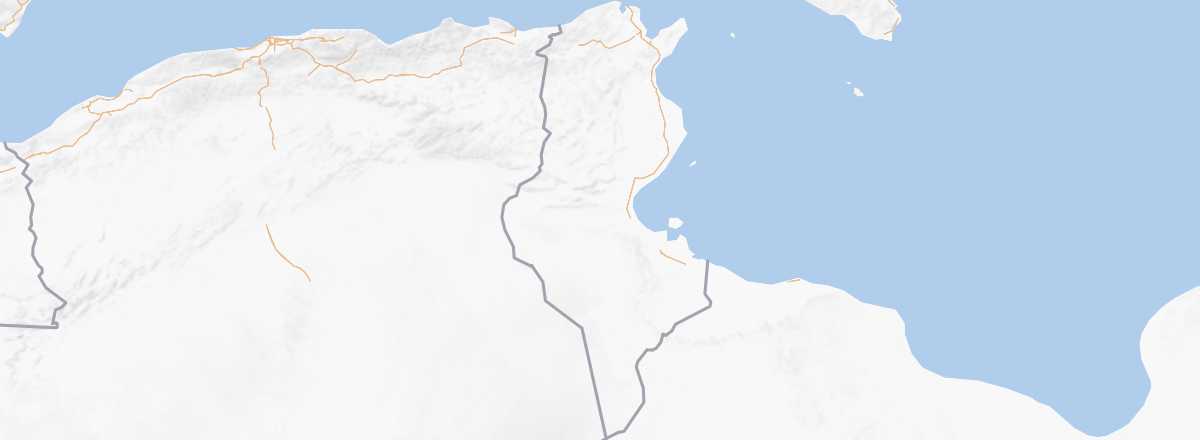 Tunisia
Open the interactive map
History of Tunisia

Key Dates
- 9th–2nd century BC: The Phoenicians, who originally inhabited land populated by Berbers, occupy the region and found the city of Carthage.
- 146 BC: Destruction of Carthage; the Numidians oppose the Romans for control of the territory.
- 105 BC: Roman rule until the Vandal occupation in the 5th century.
- 669: Beginning of the Arab conquest, replacing the Byzantines.
- 1229: The ruling dynasty rejects the authority of Marrakech and makes Tunis its capital.
- 1535: Charles V imposes his suzerainty. Turkish intervention follows.
- 1859–1882: Modernisation of the country. Growing Italian influence over Tunisia prompts French intervention.
- 1881: With the Treaty of Bardo, France establishes its protectorate.
- 1920: Creation of the Destour, the nationalist party of which Bourguiba becomes secretary-general in 1934.
- 1942–1943: Italian and German occupation during World War II.
- 1954: Internal autonomy after two years of guerrilla warfare against France.
- 1956: Tunisia becomes independent.
- 1957: Bourguiba takes power and remains president until his removal in November 1987.
- 1961–1963: Evacuation of Bizerte by the French, nationalisation of settlers' lands, secularisation of institutions, and a one-party system.
- 1975: Bourguiba becomes president for life. The country moves closer to France and the USA and adopts a moderate policy within the Arab League.
- 1977–1986: Period of strikes and protests, sometimes harshly repressed, against economic hardship.
- 1987: Removal of Bourguiba, who is replaced by his Prime Minister, Ben Ali, who is later elected president in 1989, 1994, 1999, 2004, and 2009.
- 2000: Death of Habib Bourguiba.
- 2008: Serious unrest in the Gafsa region, severely affected by unemployment and poverty.
- 2009: Fifth term for Ben Ali, elected for the first time with less than... 90% of the vote.
- 2010–2011: The Jasmine Revolution forces Ben Ali to flee in January 2011. A tense transition period follows, with a state of emergency in place until early 2014.
- 2011: New elections bring to power a coalition led by the Islamist Ennahdha, with Moncef Marzouki at its head.
- 2014: The secular party Nidaa Tounes overtakes Ennahdha in the legislative elections. Its candidate, Béji Caïd Essebsi, later wins the presidential election against the incumbent Marzouki.
- 2015: After the attack on the Bardo Museum in Tunis in March, which killed 20 tourists, another attack in Sousse three months later claims dozens of lives, dealing a severe blow to Tunisian tourism for several months.
- 2018: As the country slowly recovers—particularly in tourism—Tunisia is hit by a wave of socio-economic protests.