last edited Dec 11, 2019
Introduction to New England
Location Map of New England
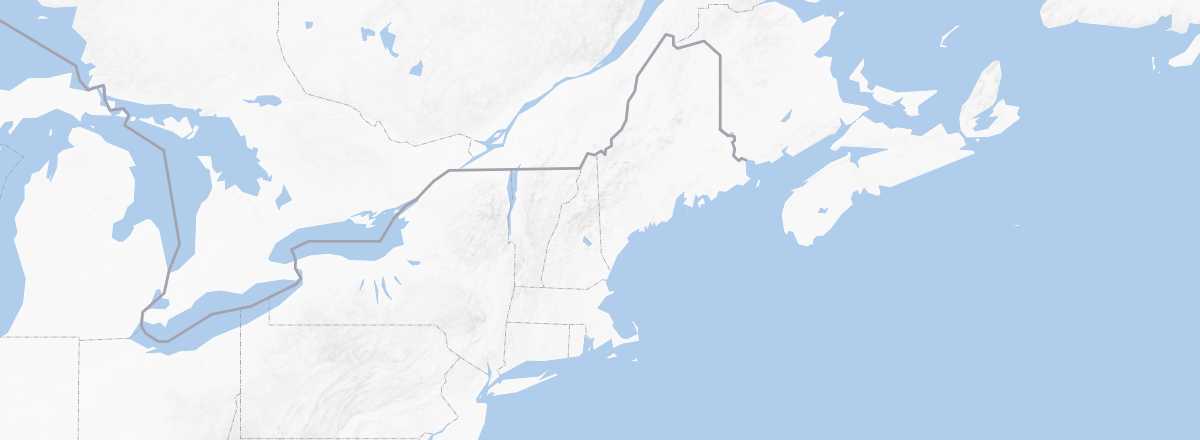 New England
Open the interactive map
New England
Open the interactive map
Overview
New England is made up of six small states in the northeast, on the Canadian border. From north to south: Maine, New Hampshire, Vermont, Massachusetts (where Boston is located), Rhode Island, and Connecticut. This is where the history of what would one day become the United States of America began. Beyond Boston, the great metropolis, and its surroundings, lies a rugged land of countryside, mountains, lakes, and above all forests (70% of the region), sparsely populated in many areas, and not heavily frequented by foreign tourists—unlike Americans (and Canadians), who, on the contrary, visit in large numbers both in summer and winter.
Unlike many other parts of the country, New England's population is growing quite slowly and is relatively aging. Conversely, the region is often seen as the most progressive, the most "cultural, intellectual, and open-minded" in the United States; from the abolition of slavery to same-sex marriage and environmental protection, it has always been innovative. In short, New England offers a different vision of America, far from what you might (sometimes unfortunately) see in many other states of the Union...
Key Facts
- Type of place: tourist region.
- Location: at the extreme northeast of the country, just above the state of New York and bordering Canada.
- Local time: . New England is on "Eastern Time."
- Main city: Boston.
- Population: 14,681,000 inhabitants (2014).
- Area: 186,458 km².
- Density: 79 inhabitants/km².
- Highest point: Mount Washington (1,916 m) in New Hampshire.
- Lowest point: sea level.
Tourism
While not necessarily the most tourist-heavy region in the country, New England attracts visitors from elsewhere in summer for its beaches, vacation spots (like Cape Cod), and outdoor activities, as well as in winter for its excellent winter sports opportunities. However, visitors are mostly Americans or Canadians, often on relatively short trips. In terms of urban areas, it’s naturally the city of Boston that draws the most people.
Travel Essentials
- By plane: France-Boston round trip for 450 € to 800 €.
- Backpacker daily budget:
- Best for accommodation:
- Best for getting around: car or, secondarily, bus/train.
- Risks: very low in terms of health and relatively low in terms of safety.
- Best time for climate/crowds/prices: the best compromise is the shoulder seasons, from late May to late June and September to early October.
- Interests (out of ): Nature ; Adventure /; Culture ; Relaxation-holidays /.
- Website: http://www.visitnewengland.com