last edited Dec 11, 2019
Introduction to Spanish Basque Country
Quick Overview
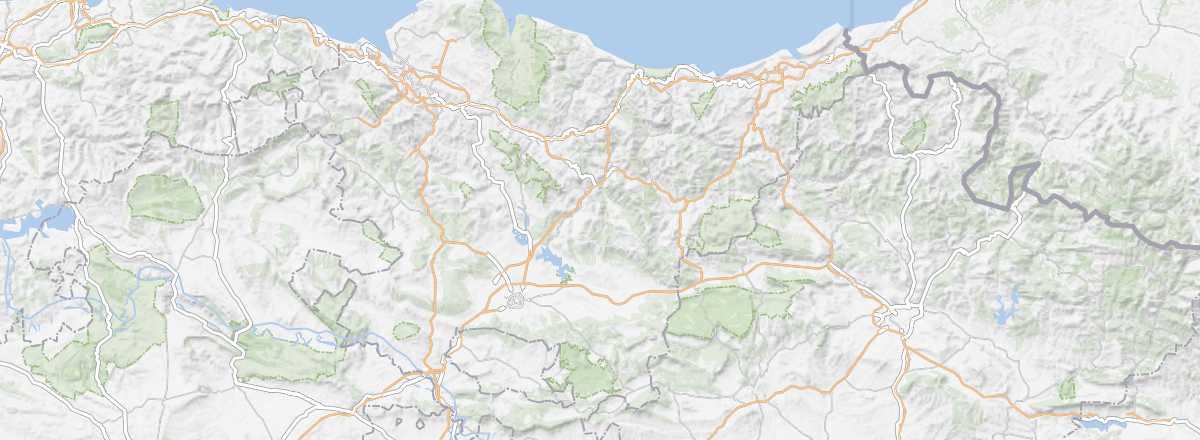
Bordered by the Bay of Biscay and straddling France and Spain, the Basque Country—on the Spanish side, an autonomous community—is a region of traditions, culture, and history with a distinct identity and language. More than its landscapes, monuments, or coastline, it’s this Basque uniqueness that’s worth discovering. This distinctiveness even extends somewhat beyond the "administrative province," as neighboring Navarre also claims (to varying degrees) this Basque identity.
Key Facts
- Type of place: tourist region.
- Location: on the Atlantic coast, at the French border.
- Local time: .
- "Capital": Vitoria-Gasteiz.
- Official language: Spanish and Basque.
- Population: 2,166,000 inhabitants (2014).
- Area: 7,234 km².
- Density: 303 inhabitants/km².
- Highest point: Aitxuri (1,551 m).
- Lowest point: sea level.
Tourism
The Basque Country isn’t a major tourist destination on the Spanish scale. It’s even somewhat of a transit zone for European vacationers driving down to Portugal or southern Spain via the Atlantic coast. Nevertheless, the region offers several pleasant seaside resorts (Hondarribia, Zumaia, Zarautz...) and, above all, two cities worth a detour: Bilbao with its famous Guggenheim Museum of modern art, and San Sebastián, which remains one of the most visited destinations on the coast.
Travel Essentials
- Destination: for beginner travelers.
- By air: France-Bilbao.
- Backpacker daily budget:
- Accommodation:
- Getting around:
- Risks: almost none in terms of health and low in terms of safety.
- Best time for climate/crowds/prices: from May to October, avoiding August if possible.
- Intérêts (out of ): Nature ; Adventure ; Culture ; Relaxation/holidays .
- Website: https://tourisme.euskadi.eus/fr/