
Travel guide · Spain
Spanish Basque Country
Bathed by the Bay of Biscay and straddling France and Spain, the Basque Country—an autonomous community on the Spanish side—is a land of traditions, culture, and history with a distinct identity and language. More than its landscapes, monuments, or coastline, it’s this unique Basque character that’s truly worth discovering.
Introduction to Spanish Basque Country
Quick Overview
Bordered by the Bay of Biscay and straddling France and Spain, the Basque Country—on the Spanish side, an autonomous community—is a region of traditions, culture, and history with a distinct identity and language. More than its landscapes, monuments, or coastline, it’s this Basque uniqueness that’s worth discovering. This distinctiveness even extends somewhat beyond the "administrative province," as neighboring Navarre also claims (to varying degrees) this Basque identity.
Key Facts
- Type of place: tourist region.
- Location: on the Atlantic coast, at the French border.
- Local time: .
- "Capital": Vitoria-Gasteiz.
- Official language: Spanish and Basque.
- Population: 2,166,000 inhabitants (2014).
- Area: 7,234 km².
- Density: 303 inhabitants/km².
- Highest point: Aitxuri (1,551 m).
- Lowest point: sea level.
Tourism
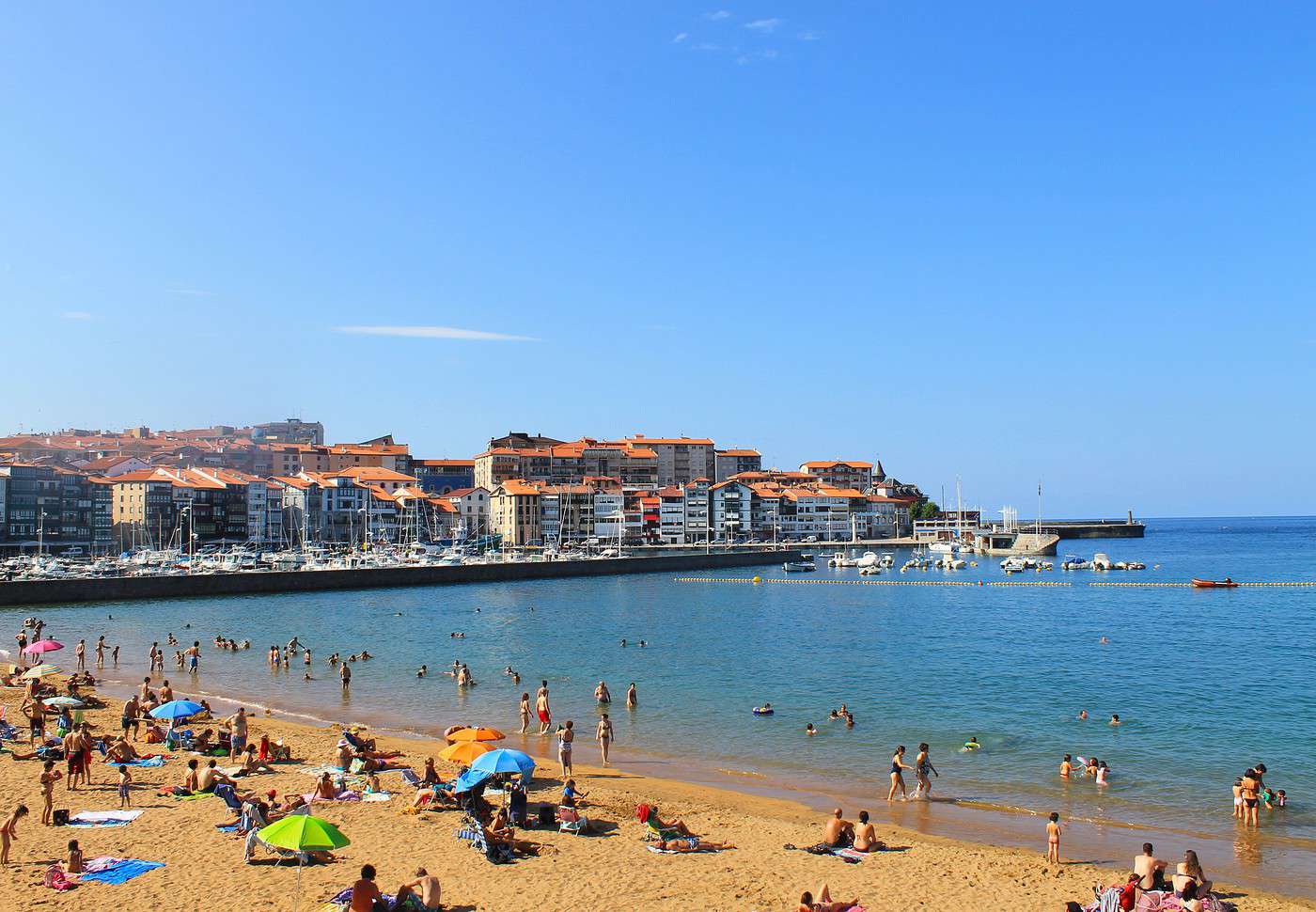
The Basque Country isn’t a major tourist destination on the Spanish scale. It’s even somewhat of a transit zone for European vacationers driving down to Portugal or southern Spain via the Atlantic coast. Nevertheless, the region offers several pleasant seaside resorts (Hondarribia, Zumaia, Zarautz...) and, above all, two cities worth a detour: Bilbao with its famous Guggenheim Museum of modern art, and San Sebastián, which remains one of the most visited destinations on the coast.
Travel Essentials
- Destination: for beginner travelers.
- By air: France-Bilbao.
- Backpacker daily budget:
- Accommodation:
- Getting around:
- Risks: almost none in terms of health and low in terms of safety.
- Best time for climate/crowds/prices: from May to October, avoiding August if possible.
- Intérêts (out of ): Nature ; Adventure ; Culture ; Relaxation/holidays .
- Website: https://tourisme.euskadi.eus/fr/
Geography, Climate, and Environment of the Spanish Basque Country
Environment
Physical Geography of the Region
Wildlife and Flora
Natural Areas
Climate
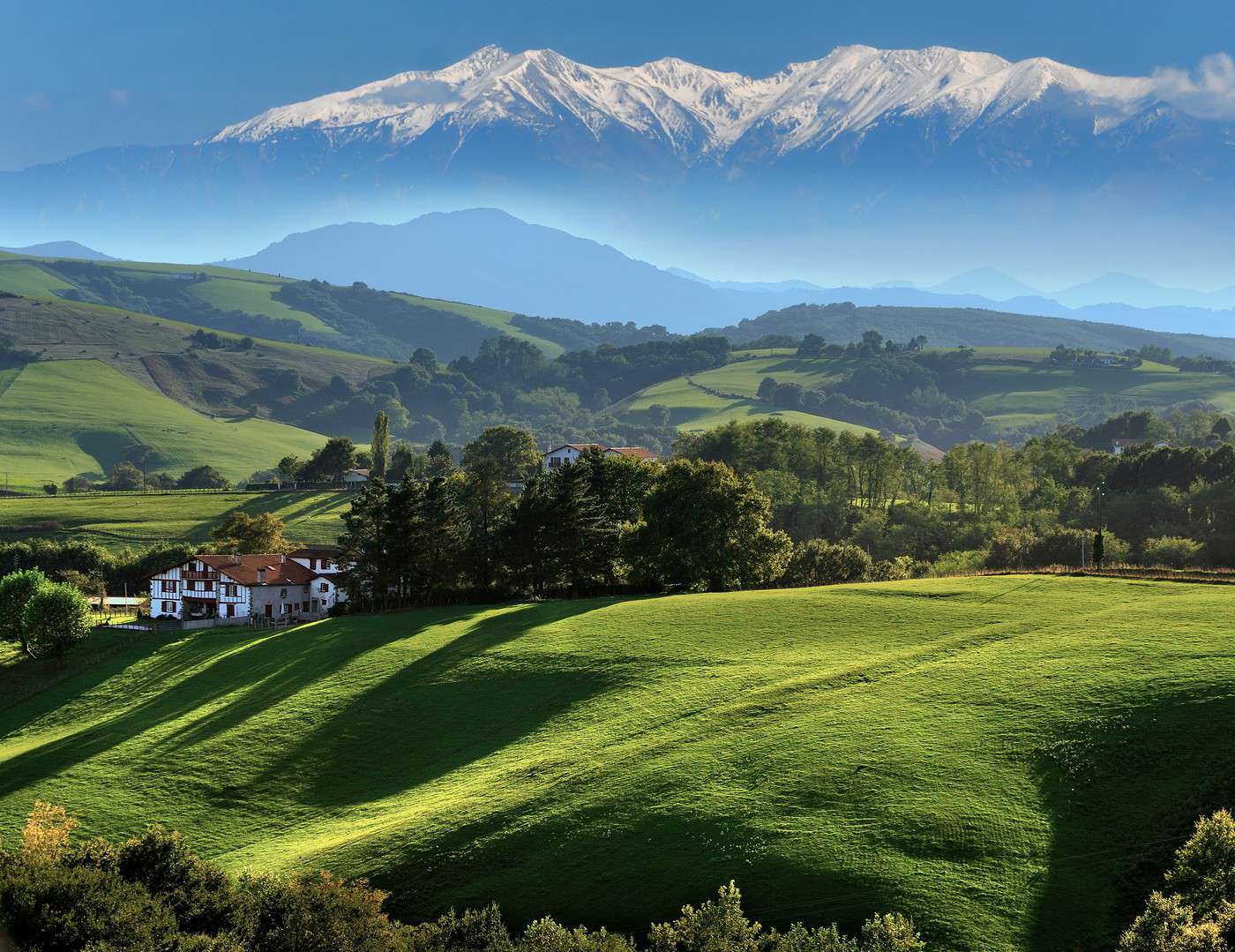
The Spanish Basque Country has an oceanic climate. It is characterized by low temperature ranges, both daily and annually, with monthly averages that do not drop below 12°C or exceed 25°C. However, it rains much more here than in other parts of Spain, particularly at the start and end of the year.
It is worth noting that, sandwiched between the Pyrenees and the Cantabrian Range, the region also has significant elevation in what are called the Basque Mountains, which rise up to 1,500 meters. These mountains influence the climate, with logically colder and snowier winters.
Best Climate Period
The period from May to October is a good time to visit the region.
| Jan. | Feb. | Mar. | Apr. | May | Jun. | Jul. | Aug. | Sep. | Oct. | Nov. | Dec. | |
|---|---|---|---|---|---|---|---|---|---|---|---|---|
| Northern Atlantic | / |
: very favorable | : favorable | : moderately favorable | : unfavorable.
Sea Temperature Throughout the Year
| Jan. | Feb. | Mar. | Apr. | May | Jun. | Jul. | Aug. | Sep. | Oct. | Nov. | Dec. | |
|---|---|---|---|---|---|---|---|---|---|---|---|---|
| Northern Atlantic (San Sebastian) | 12 | 11 | 12 | 13 | 14 | 16 | 18 | 20 | 18 | 16 | 14 | 13 |
Climate and Weather in Bilbao
What to See in the Spanish Basque Country
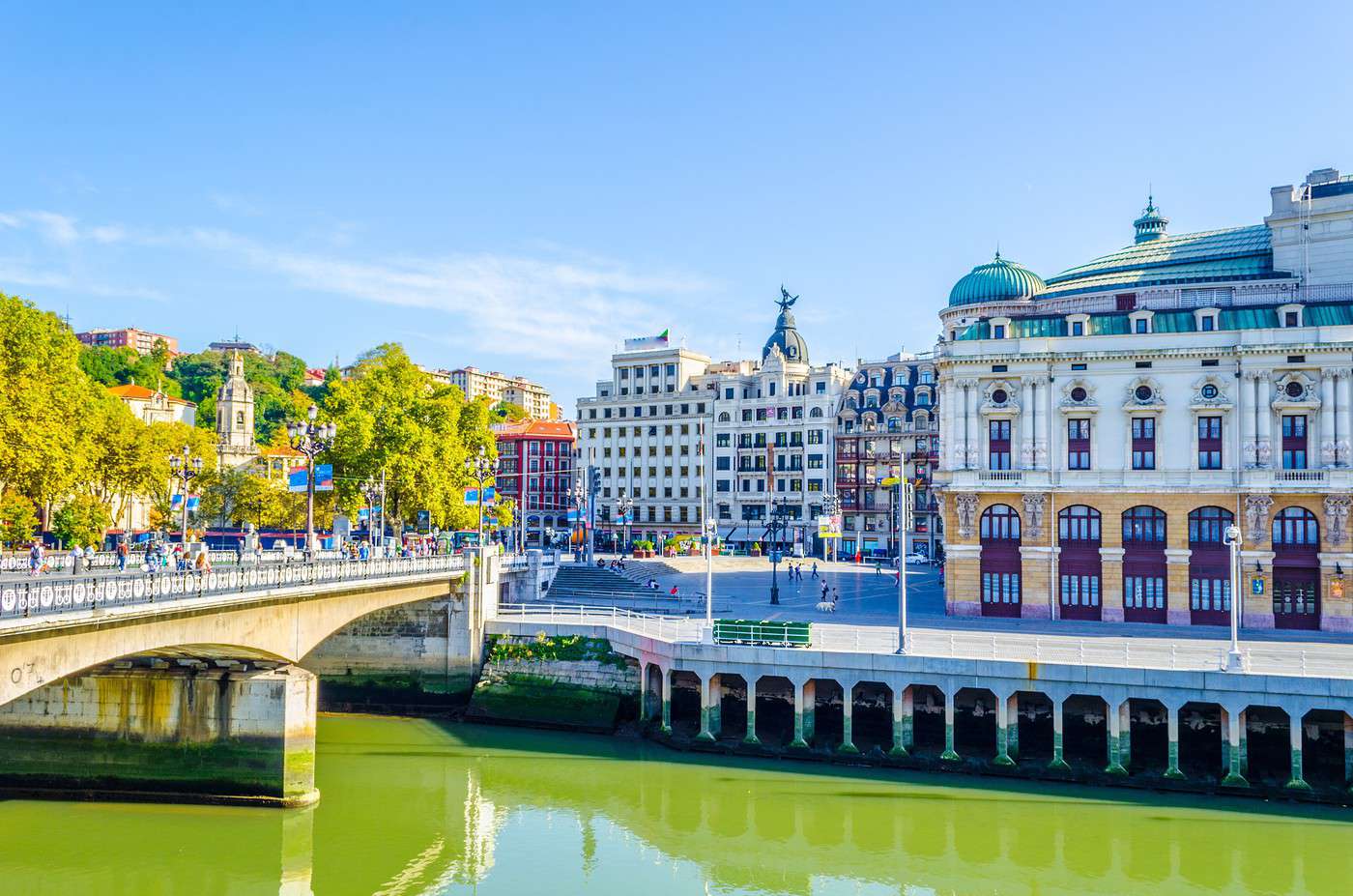
Featuring Bilbao, Hondarribia, Getaria, Guernica, and San Sebastián. The Spanish Basque Country has one site inscribed on the UNESCO World Heritage list: Biscay Bridge ★ (2006) This transporter bridge, built between 1888 and 1893, connects Portugalete to…
Things to Do in Spanish Basque Country
Travel Themes
- Interests (out of ): Nature ; Adventure ; Culture ; Relaxation-holidays .
Nature-Adventure
Culture
Relaxation-Holidays
Beaches and Seaside Resorts
Water Activities
Surfing
Other Activities
Fishing:
Diving:
Watersports:
Sailing:
Outdoor and Nature Sports
Hiking
Cycling
Horseback Riding
Other Activities
White-water sports:
Climbing:
Golf:
Paragliding and Aerial Sports:
Caving:
Cultural Life and Activities
Nightlife and Outings
Travel and suggested itineraries in Spanish Basque Country
Best times to visit
Finding the best time to visit means balancing climate conditions with crowd levels and the most attractive prices for travel and on-site expenses.
The period from May to October is a great time to explore the region in terms of climate. Even though there can be crowds in August at coastal resorts or during the San Sebastián festivals, the tourist pressure is lower than in many other parts of Spain. In short, by avoiding August, you can enjoy the Basque Country from mid-spring to mid-autumn.
| Jan. | Feb. | Mar. | Apr. | May | Jun. | Jul. | Aug. | Sep. | Oct. | Nov. | Dec. | |
|---|---|---|---|---|---|---|---|---|---|---|---|---|
| Climate | / | |||||||||||
| Avoid crowds | ||||||||||||
| Low prices |
: very favourable | : favourable | : moderately favourable | : unfavourable.
Types of travel
Independent
Like the rest of Spain, the region is very easy to explore independently.
Organised
Some itinerary ideas
Getting to the Spanish Basque Country
By land
By road
By train
By air
The Spanish Basque Country has three commercial airports, including the (very) small ones in Vitoria and San Sebastián, but above all Bilbao, which is by far the busiest. With 4 million passengers a year, it is actually the most important airport in northern Spain, thanks to a mix of domestic and European flights, both regular and seasonal. Bilbao is served by flights from Paris (Hop! and Vueling), Brussels (Brussels Airlines and Vueling), Geneva (easyJet, seasonal), and Zurich (Swiss). Note that other airports, such as Santander or even Biarritz on the French side, are not far from the Basque Country.
By boat
Ferries
There are two ferry routes offered by Brittany Ferries that allow you to reach Bilbao directly from Roscoff (France) or Portsmouth (England).
Cargo
Bilbao is the main port in the Basque Country, so there are options for arriving by cargo ship.
Cruises
Sailboats
Getting Around in Spanish Basque Country
Road Network, Traffic
Car, Camper Van
Personal Vehicle
Having your own vehicle is an excellent way to explore this part of the country. It’s even the best option thanks to the freedom and time saved compared to public transport.
Rental
Bus
Two Wheels
Motorcycle
Bicycle
Hitchhiking
Train
In Town
Taxis
Other Means
What to Choose for Getting Around?
Other practical information for Spanish Basque Country
What to pack
In summer, pack light clothing plus a sweater for inland areas and evenings. In winter, while "mid-season" clothes may be enough for the coast, warmer clothing is needed for the mountainous parts of the region. Don’t forget sun protection and, above all, rain gear—rain is quite common year-round in this part of Spain.
Budget
Precautions
No particular health or safety concerns. Regarding safety, Basque terrorism by ETA, which affected the region and Spain as a whole for years, is now over. Beginning during Franco’s era, this "conflict," which claimed hundreds of lives on both sides, ended in 2011 when the separatist group announced "the definitive end of its armed struggle." In short, the "risks" are now the same as in other European regions.
Opening hours
Laundromats
Local tourist offices
French language use
Something wrong or out of date? Report this page