
Travel guide · Madagascar
Madagascar
"The Red Island", Madagascar with its unique and majestic nature is one of those destinations you dream of visiting, but which also requires some effort—especially if you're traveling independently and want to venture off the beaten track...
Introduction to Madagascar
At over 1,500 km long and 600 km wide, the island is located in the tropical zone of the Indian Ocean, 600 km from the African coast, from which it is separated by the Mozambique Channel. Madagascar is a "platform" composed of hills and high plateaus (in the…
Regions of Madagascar
Since 2007, Madagascar has been divided into 22 regions, resulting from a redrawing of the island's six former provinces, which were named after their capitals. Although this division is no longer current, it still helps simplify the way one can view the…
Geography and Environment of Madagascar
Allée des baobabs, Madagascar · © VoyageForum If there is one destination synonymous with nature, it’s Madagascar! The country is indeed rich in exceptional natural areas, as it is home to 18 national parks and around thirty terrestrial or marine…
Climate and Weather in Madagascar
Madagascar's climate varies greatly depending on altitude and coastal orientation. The east coast (and the north, incidentally), from Antsiranana to Tolanaro , is the wettest, while the southwest is much drier and even arid. The rainy season runs from…
History of Madagascar
Toamasina, Madagascar · © VoyageForum XIIe siècle: l'île jusqu'alors peuplée par des populations venues d'Indonésie puis d'Afrique voit les Arabes s'installer sur la côte occidentale 1500: arrivée du premier européen, le navigateur portugais Diego…
Society of Madagascar
Population
Political Institutions
Economy
Religion
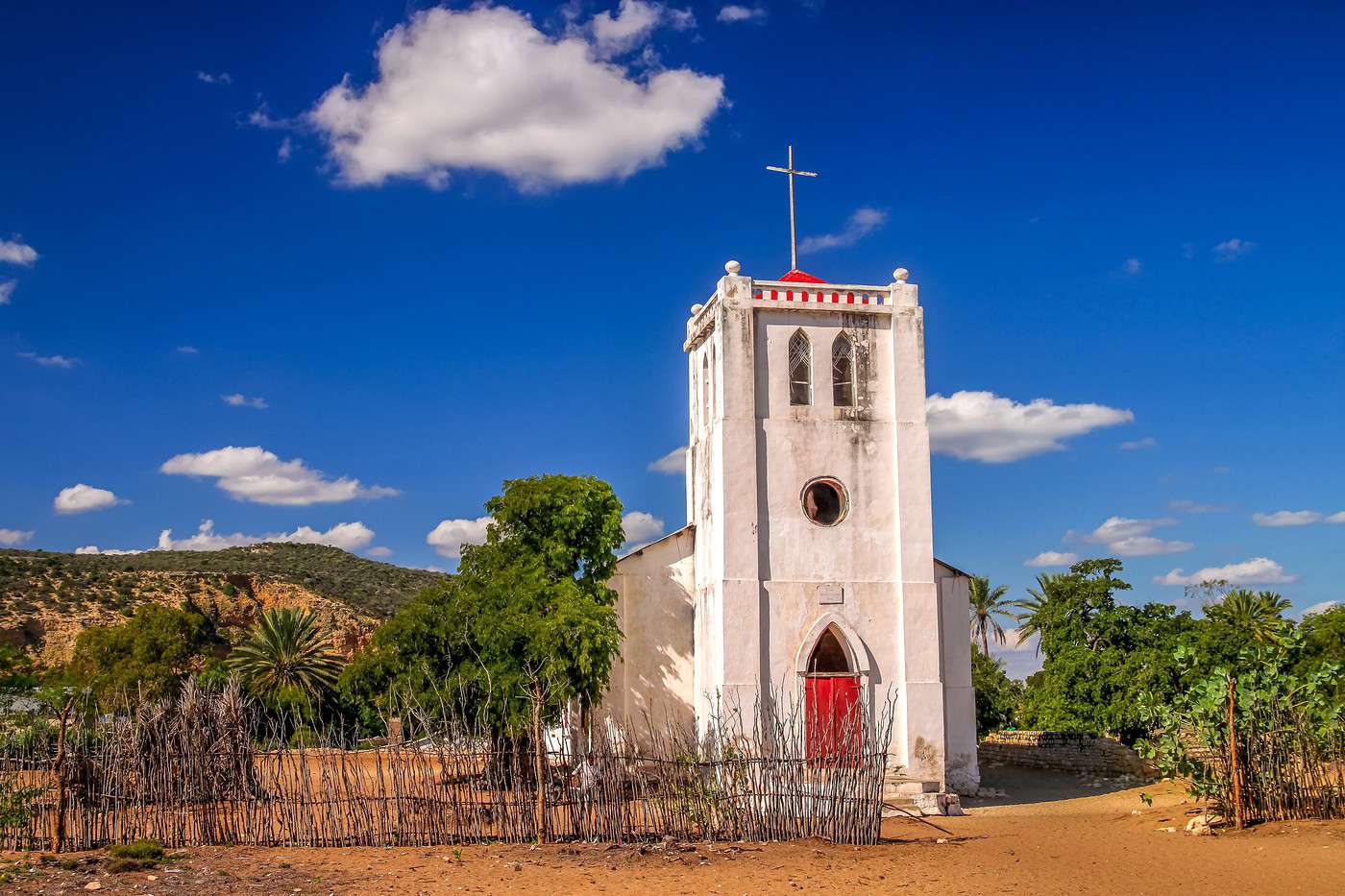
While the island is officially Christian, with equal numbers of Catholics and Protestants, a majority of the population also practices or retains animist beliefs and follows the ancestor worship. There is also a small Muslim minority on the island, representing 1 to 2%.
Culture and Customs of Madagascar
While there are no strict dress codes for visitors, it’s important to know that Malagasy society is generally modest. Malagasy culture differs significantly from Western culture, especially outside cities or tourist areas. It is deeply rooted in the concept…
Madagascar Cuisine
Local Cuisine
Malagasy cuisine has rice as its "traditional" ingredient, which means that in many places the main dish will revolve around it, either alone or accompanied by chicken or other meats. As for romazava (a beef and vegetable stew), it is the national dish. Other classics of Malagasy cuisine include soups (Chinese, vegetable...), chicken (roasted, in sauce), zebu meat (as steak, tournedos...), and duck (magret and foie gras), served with rice or sautéed vegetables. Sea and river fish, as well as seafood, are also common. Generally speaking, while Malagasy gastronomy is quite spicy, it is more fragrant than hot.
Other Cuisines
It is in the cities, particularly in the capital, that you will find other types of cuisine. French cuisine is logically well represented and has even strongly inspired local cooking, with dishes like magret, foie gras, zebu steak and fries, and a full range of bakery products, including croissants. Among foreign cuisines, you will also find dishes from Réunion (such as curries), Italian pasta and pizzas, as well as Chinese restaurants and, occasionally, Indian ones in certain areas.
Specialties
Starters
Dishes
Desserts
Drinks
Where to Eat
There are two categories of restaurants in Madagascar: the hotelys, where bush taxis often stop, and more "classic" restaurants offering Chinese or "French-style" cuisine but rarely Malagasy food. The former are by far the cheapest—you can eat for less than 4 or 5 €—but also the least varied, with meals typically revolving around chicken, zebu, and the ever-present rice. For more diversity in the more "classic" establishments, expect to pay around 10 € for a meal.
Additional Information
What to See in Madagascar
Madagascar has three sites inscribed on the UNESCO World Heritage list: Ambohimanga ★★ (2001) This "royal hill" is one of the twelve surrounding the capital. It is home to the ancient city that gave rise to the Merina kingdom. The site and its buildings are…
Things to Do in Madagascar
Anakao, Madagascar · © VoyageForum Madagascar has beautiful and even stunning beaches, but very few beach resorts given its hundreds of kilometres of coastline, which, admittedly, isn’t always easily accessible. The best places to enjoy the sea…
Types of Travel in Madagascar
Interests (out of ★★★★ ) : Nature ★★★★ ; Adventure ★★★★ ; Culture ★★ ; Relaxation-holidays ★ . If there’s one destination synonymous with nature, it’s Madagascar! The country is incredibly rich in exceptional natural areas, home to 18 national parks and…
When and Where to Go in Madagascar
Best Times to Visit Madagascar
The island is vast, and depending on the areas you wish to visit, the climatically favorable periods won’t necessarily be the same. Above all, it’s the climate and weather conditions you’ll need to consider—more than tourist crowds, which are minimal, or slight price variations from one month to the next. In any case, to be sure of the "best" time everywhere, May and especially mid-September to mid-November are the periods to prioritize.
| Jan. | Feb. | Mar. | Apr. | May | Jun. | Jul. | Aug. | Sep. | Oct. | Nov. | Dec. | |
|---|---|---|---|---|---|---|---|---|---|---|---|---|
| East Coast Climate | ||||||||||||
| West Coast Climate | ||||||||||||
| South Coast Climate | ||||||||||||
| Inland Climate | ||||||||||||
| Avoid Crowds | ||||||||||||
| Low Prices |
: very favorable | : favorable | : moderately favorable | : unfavorable.
Where to Go Based on Travel Type and Interest
Flying to Madagascar
Madagascar has around sixty airports, half of which have regular commercial traffic. Among these, Antananarivo and five or six others ( Tamatave , Mahajanga , Nosy Be ...) have international activity, mostly limited to Réunion and Mayotte . Logically, the…
Getting around Madagascar
Même s'il s'est un petit peu amélioré ces dernières années, le réseau routier malgache n'est pas vraiment ce qu'on fait de mieux. Sur les 35 000 km de routes, à peine 15 à 20% est goudronné et encore s'agit-il pour beaucoup des principaux axes partant de la…
Accommodation in Madagascar
Accommodation is not Madagascar’s strong point. Hotels and other types of mid-range to high-end lodging are rare (except, at a stretch, in the capital and Nosy Be ), and basic comfort is the norm once you leave the cities or a few tourist spots. What’s more,…
Entry Requirements and Visa for Madagascar
For tourist travel purposes. A passport valid for at least 6 months beyond the end of your stay in the country is required, as is a visa allowing a maximum of 3 months on site. Note that this "tourist" visa cannot be extended later. Since January 1, 2016, a…
Money, Budget, and Shopping in Madagascar
Currency: Ariary (5 iraimbilanja) Banknotes: 100, 200, 500, 1,000, 2,000, 5,000 and 10,000 Ar Coins: 1/5, 2/5 + 1, 2, 4, 5, 10, 20 and 50 Ar Exchange: The Ariary (Ar) was already the monetary unit of the Kingdom of Madagascar in the 19th century. It was…
Health and Safety in Madagascar
In France, both for individuals and professionals, the "travel advice" from the Ministry of Foreign Affairs regarding precautions for each country has legal value. A similar online travel advice system exists in several countries: Foreign Affairs Belgium…
Other practical information for Madagascar
For the coast, pack light clothing for all seasons plus a sweater for evenings or air conditioning. For the interior, warmer clothes are recommended. Since Madagascar is a very rainy island, it’s best to also prepare for rain, as well as for sun at the other…
Reaching Madagascar by Sea
From Madagascar to... Comoros (Anjouan): Diego Suarez 530 km; Majunga 440 km. African Coast (Mozambique): Majunga 620 km; Tuléar 930 km. Mayotte : Diego Suarez 450 km; Majunga 350 km. Mauritius : Diego Suarez 1,250 km; Tamatave 890 km. Réunion : Diego Suarez…
Something wrong or out of date? Report this page