
Note that the Republic of Cyprus is covered separately.
Travel guide
Note that the Republic of Cyprus is covered separately.
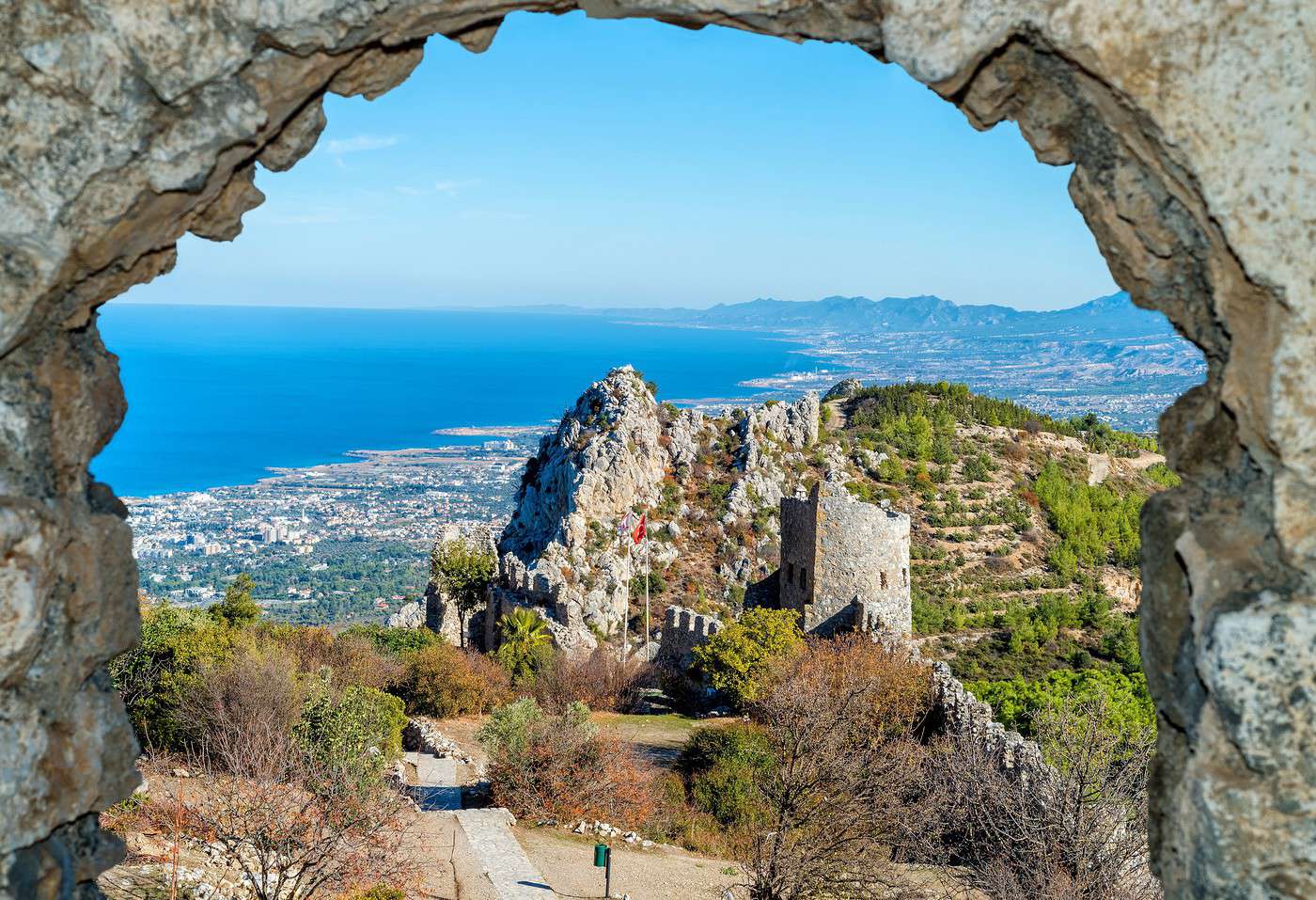
Northern Cyprus, or the "Turkish Republic of Northern Cyprus" (TRNC), is the northern part of the island of Cyprus, bordering the Republic of Cyprus . Since the 1974 coup on the island, it has been occupied by Turkey , which declared it an "independent…
Northern Cyprus has no sites listed as UNESCO World Heritage Sites.
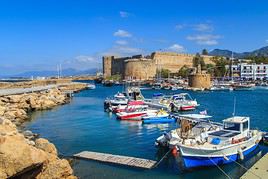
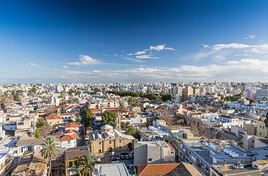
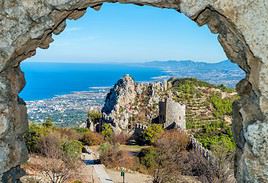
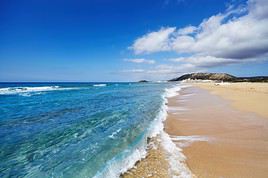

Just like the southern part of the island, Northern Cyprus has some stunning beaches, which also have the advantage of being less crowded in season. Beyond Kyrenia, the "tourist capital of the country", the most beautiful spots are around Famagusta and its bay. For those who prefer wilder places, the long Karpas Peninsula is ideal.
Diving remains the main water activity, with great spots for all levels, pleasant water year-round, and excellent visibility. Among the marine life, sea turtles can be spotted in many places. There are several dive clubs, particularly in Kyrenia.
Fishing:
Watersports:
Sailing:
The best walking opportunities in this part of Cyprus are found in the Kyrenia Range, a mountain range parallel to the sea near the seaside and port city of the same name.
By far, the city of Kyrenia offers the most nightlife and entertainment options, with its many bars and nightclubs. Elsewhere, only Famagusta has a bit of nightlife. Northern Cyprus is also known for its numerous casinos scattered across the territory.
It's possible to rent a vehicle in Northern Cyprus with an international driving permit. As with many things, rentals are cheaper in this part of the island than in the South. A local quirk: while driving is on the left across the entire island, many local rental companies offer vehicles with either left- or right-hand drive—it's up to you to choose. Note that you can drive in the North with a car rented in Southern Cyprus, but the reverse is not allowed.
There is a fairly extensive network of buses and minibuses connecting the different towns in the TRNC. There aren’t really set schedules, but departures are generally frequent and fares are cheap.
In addition to the bus network, and on the same routes, there’s also a system of shared taxis called dolmuş, just like in Turkey. As always, they only leave when full.
There are no trains, domestic air routes, or maritime lines within the Turkish Republic of Northern Cyprus—or anywhere else on the island, for that matter.
As always, having a (rental) car is ideal. That said, buses or shared taxis, which are much more economical, can also be sufficient for getting around. At a pinch, you can just rent one when needed if you want to explore Karpas Peninsula, which is indeed more pleasant to visit when you’re independent in terms of transport.
Distances (km) between the main cities on the island (Republic of Cyprus and Northern Cyprus):
| A. Napa | Famag. | Kyrenia | Larnaca | Limas. | Nicosia | Paphos | |
|---|---|---|---|---|---|---|---|
| Ayia Napa* | 85 | ||||||
| Famagusta | 70 | ||||||
| Kyrenia | 28 | ||||||
| Larnaca* | 46 | ||||||
| Limassol* | 83 | ||||||
| Nicosia* | 85 | 70 | 28 | 46 | 83 | 138 | |
| Paphos* | 138 |
As you’d expect, the island of Cyprus enjoys a Mediterranean climate. It has hot, dry summers, which can often be scorching in the inland plains during July and August (the coast is less stifling thanks to sea breezes). Winters are mild and temperate along the coast or in the plains, and colder in the mountainous areas. In between, the shoulder seasons are relatively short and pleasant, with some rain at the start and end of the year.
As is often the case, spring and especially autumn are good times to visit, if only to avoid the occasional summer heat.
| Jan. | Feb. | Mar. | Apr. | May | Jun. | Jul. | Aug. | Sep. | Oct. | Nov. | Dec. | |
|---|---|---|---|---|---|---|---|---|---|---|---|---|
| Climate | / | / | / |
: very favourable | : favourable | : moderately favourable | : unfavourable.
| Jan. | Feb. | Mar. | Apr. | May | Jun. | Jul. | Aug. | Sep. | Oct. | Nov. | Dec. | |
|---|---|---|---|---|---|---|---|---|---|---|---|---|
| Kyrenia | 17 | 16 | 17 | 18 | 20 | 23 | 25 | 27 | 26 | 25 | 21 | 19 |
Château de Kantara, Chypre · © VoyageForum BC: thanks to its position as a crossroads between the Near East and the Mediterranean world, the island is quickly populated, particularly along the coasts. It soon also becomes a source of rivalry…
Unlike Greek Cypriots, who are overwhelmingly Orthodox Christians, over 95% of the population in Northern Cyprus is Muslim. However, secularism is enshrined in the Turkish Cypriot constitution.
If there is one topic best avoided—one that still stirs strong emotions, even if tensions have eased somewhat in recent years—it is the island’s partition into two.
The official language of Northern Cyprus is Turkish (slightly different from that spoken in Turkey), used by 99% of the population. Aside from settlers from Turkey, the vast majority of Northern Cypriots also speak Greek. As for foreign languages, English is far less common and widely used than in the south of the island. Additionally, since the "country" is less tourist-oriented and attracts relatively few Western visitors, other languages, including French, are rarely spoken.
A few local words and phrases useful for travelers:
While the Northern coastline is every bit as impressive as the South’s, the interior of the TRNC—particularly its mountainous regions—is less spectacular, with fewer outdoor activities, even though ecotourism is growing. For example, you won’t find the stunning landscapes of Troodos Mountains, which remains a must-see in the Republic of Cyprus.
As is often the case around the Mediterranean, historical and cultural sites are relatively abundant in this part of the island, though they still fall short of what you can discover in the south, in the Republic of Cyprus. If anything, the culture and traditions of Turkish Cypriots may be the main cultural draw of the "country."
Less well-known than those in the south, the beaches of Northern Cyprus are just as beautiful, with the added advantage of being far less crowded in season. Aside from the lively seaside resort of Kyrenia, which rivals Paphos in every way, you can enjoy a peaceful holiday anywhere else in the region.
Cyprus (both the north and the south) is an easy destination for independent travel, perfect for beginners, and presents no major challenges.
Finding the best time to visit means balancing climate conditions with crowd levels and the most attractive prices for travel and on-site expenses.
As is often the case around the Mediterranean, spring (April to June) and autumn (mid-September to early November) are good times to visit, if only to avoid the occasional heat of the summer months. However, since Northern Cyprus (apart from Kyrenia) is far less touristy than its southern neighbor, you’ll hardly be bothered by crowds, so a summer stay is also worth considering.
| Jan. | Feb. | Mar. | Apr. | May | Jun. | Jul. | Aug. | Sep. | Oct. | Nov. | Dec. | |
|---|---|---|---|---|---|---|---|---|---|---|---|---|
| Climate | / | / | / | |||||||||
| Avoid crowds | ||||||||||||
| Low prices |
: very favorable | : favorable | : moderately favorable | : unfavorable.
The Turkish Republic of Northern Cyprus has only one commercial airport within its territory, which is considered "illegal" by the authorities in the south. This is Ercan Airport, located 34 km from the capital, Nicosia.
Given the political situation in the TRNC, air traffic is quite limited. Additionally, due to a specific international law (still under discussion), all international flights (to/from outside Turkey) must make a mandatory stopover in Turkey and cannot be non-stop. In practice, this stop in Turkish territory, which serves no real purpose, typically lasts half an hour without requiring a change of aircraft.
In the end, only a few European (non-national) airlines offer seasonal routes to/from the UK, Germany, Brussels (Corendon Airlines), and very occasionally Zurich or Paris, with journeys lasting at least 6 hours and round-trip fares starting at 300/400 €. Everything else is limited—and logically so—to neighboring Turkey, with a wide range of flights offered by various Turkish airlines. In many cases, visitors opt for this route via Turkey or simply arrive in the "southern zone" of the island, which is often more economical.
Built during the last war by the British for military purposes, the airport was abandoned after the British left before being reused after the 1974 invasion by the authorities in the north for commercial purposes.
Borders: Republic of Cyprus (156 km); British enclave of Dhekelia (around 40 km). Since the Turkish intervention in 1974, the island has been divided in two, with its northern part no longer controlled by the Republic of Cyprus, the only internationally…
For tourist travel.
A passport is sufficient to enter the Turkish Republic of Northern Cyprus for any stay of less than 90 days. However, an ID card is not sufficient, unlike in the southern part of the island. Note that if you do not want your passport to be stamped on arrival by the authorities, you can simply ask for it to be stamped on a separate piece of paper.
Same as for the French for all other nationalities... except Armenians and Nigerians, who are the only ones required to obtain a visa before entering the "country".
While for a long time access from one part of the island to the other was a bit complicated for visitors, things are now much simpler. See details "Northern Cyprus-Cyprus crossing".
Note that internationally, since the Turkish Republic of Northern Cyprus is not recognized, the entire island is by right part of the European Union. This therefore implies the free movement of persons and free choice of point of entry, even if the latter is located in Northern Cyprus, whereas the Cypriot (southern) government still more or less considers these entry points to be "illegal". In this regard, visitors not belonging to an EU country wishing to cross from North to South (and only in this direction) may theoretically be refused passage by the authorities of the Republic of Cyprus on the pretext that they entered the European space "illegally". Fortunately, this rule is no longer actually applied.
There is no diplomatic representation of the Turkish Republic of Northern Cyprus abroad (just unofficial "representations" in a few countries), except in Turkey with an embassy in Ankara and three consulates in Istanbul, Izmir and Mersin.
The main currencies, especially the euro and the British pound, can be exchanged without any issues at exchange bureaus and banks that offer this service.
The euro is obviously the easiest option if you're coming from the eurozone.
You can, of course, pay in cash, including often directly in euros or British pounds, especially in cities (but watch the exchange rate). You can also use a bank card, but almost exclusively in upscale places and businesses. In short, it's useful to always have a minimum of cash in the local currency or even euros, especially if you venture off the beaten path.
As is often the case, it's best to avoid ending up with too much local currency that you'll struggle to exchange back at a good rate upon return.
The Turkish part of Cyprus is much more affordable than the Greek part; less tourism and fewer Western visitors are among the reasons for this difference. Budget roughly 35 € to 50 € per person per day (for two people), and even less if you stick to local or basic options. On the other hand, an extended stay in Kyrenia may see the necessary daily budget increase slightly.
In France, both for individuals and professionals, the "travel advice" from the Ministry of Foreign Affairs regarding precautions for each country has legal value. A similar online travel advice system exists in several countries: Foreign Affairs Belgium…
In summer, pack light clothing plus a woollen layer for altitude and for evenings on the coast. In winter, while "mid-season" clothes may be enough for the coast, warmer clothing is needed for the mountainous areas. Don’t forget sun protection, as well as rain gear for the season.
International dialling code: (00 +) 90.
Local time: .
Both Cyprus and Northern Cyprus are on GMT+2, with summer and winter time changes generally aligning with those in France. There is therefore a one-hour difference year-round with France; for example, it is 1:00 PM in Nicosia when it is noon in Paris.
230 V (50 Hz) with "British" sockets (officially type G), which will require an adapter for French or North American plugs.
Despite the long British presence on the island, Cyprus uses the metric and decimal system like France.
Something wrong or out of date? Report this page