last edited Dec 11, 2019
Overview of the Galapagos
Location Map of Galapagos
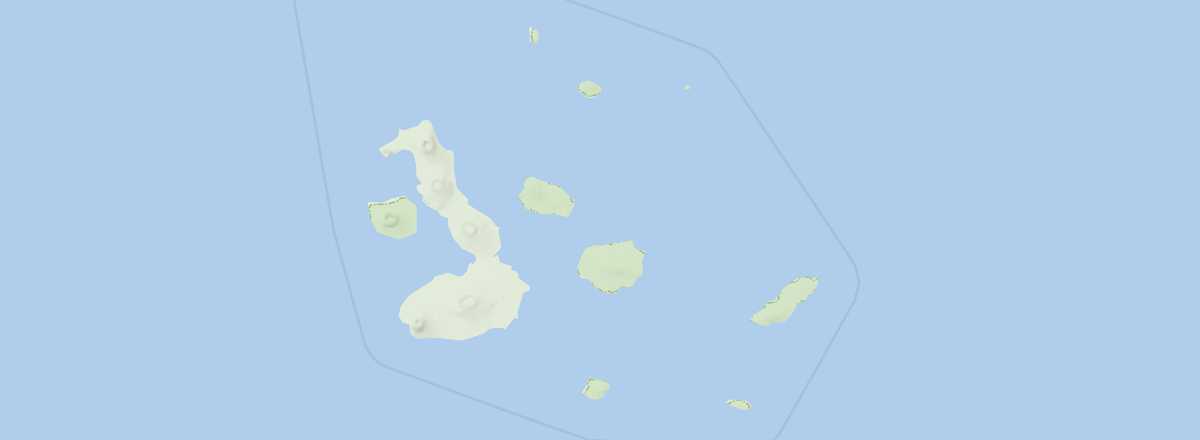 Galapagos
Open the interactive map
Galapagos
Open the interactive map
Quick Overview
A UNESCO World Heritage site, the Galapagos Archipelago is a unique destination for its marine and terrestrial wildlife. Located nearly a thousand kilometres off the Ecuadorian coast, this separate world bears no resemblance to the rest of the country, particularly in terms of tourism and the budget required to explore it...
The archipelago is one of Ecuador’s Ecuador 24 provinces and also holds national park status. It consists of thirteen main volcanic islands, none exceeding 1,707 metres (Wolf Volcano). Only five of these are inhabited, including Santa Cruz (home to Puerto Ayora, the largest town) and San Cristobal (the "capital’s" seat). Additionally, only a few areas are open to the public to protect the environment. Officially, the Galapagos are called the Archipiélago de Colón and primarily rely on tourism.
Key Facts
- Type of place: tourist region.
- Location: 950 km west of the South American coast on the equator.
- Latitude/longitude: 0.50' N, 90.00' W.
- Local time:
- Main town: Puerto Baquerizo Moreno (on San Cristobal).
- Population: 26,640 inhabitants (2012).
- Area: 8,010 km².
- Density: 3 inhabitants/km².
- Highest point: Wolf Volcano (1,707 m).
- Lowest point: sea level.
- Coastline:
Tourism
While not necessarily a mainstream destination due to the required budget, the Galapagos still attract nature-loving visitors, with 60,000 to 70,000 tourists annually. Most extend their trip after exploring mainland Ecuador. Generally, the destination is very easy to visit.
Note that while tourism development in the archipelago once had a harmful impact on the environment, it is now strictly regulated, with visitor quotas and "no-go zones" to better preserve the natural habitat.
Travel Essentials
- Destination: for beginner travellers.
- By air: approximately $400 round trip from Quito or Guayaquil.
- Backpacker budget: $1,200 to $1,400 per person all-inclusive for around ten days, including 5 or 6 days of cruising.
- Accommodation: on cruise boats, plus small hotels or homestays.
- Getting around: on foot and mandatory organised cruises.
- Risks: no health or safety risks.
- Best time for climate/crowds/prices: year-round, but mid-January to May (excluding Easter) and September to November see fewer visitors.
- Interests (out of ): Nature ; Adventure ; Culture ; Relaxation/Holidays .