
Overview of Pau
The city of Henri IV is primarily known for its castle. It is also the prefecture of the Pyrénées-Atlantiques.
Key Facts
- Type de lieu: city.
- Intérêt touristique: (worth seeing).
- Localisation:
- Distances:
- Heure locale: .
- Population: 77,130 inhabitants (2017).
- Superficie: 31.51 km².
- Altitude: from 165 to 245 m.
- Site internet: http://www.pau-pyrenees.com
History of Pau
What to See in Pau
Boulevard des Pyrénées
This 1.8 km-long thoroughfare is an urban promenade that also offers a lovely panorama of the Pyrenees mountain range. You can reach the boulevard from the train station via an old funicular, which has been in service since 1908.
This 1.8 km-long thoroughfare is an urban promenade that also offers a lovely panorama of the Pyrenees mountain range. You can reach the boulevard from the train station via an old funicular, which has been in service since 1908.
Pau Castle
Overlooking the river, this medieval castle later transformed during the Renaissance is associated with Henry IV, who was born here in 1553. It is the city’s main attraction. Visitors can explore the royal apartments, a collection of 16th–19th century tapestries, and exhibits recalling the life of Henry IV.
Overlooking the river, this medieval castle later transformed during the Renaissance is associated with Henry IV, who was born here in 1553. It is the city’s main attraction. Visitors can explore the royal apartments, a collection of 16th–19th century tapestries, and exhibits recalling the life of Henry IV.
Musée des Beaux-Arts
This is one of the main museums in Aquitaine. It is dedicated to European and local painters (and sculptors) from the 15th to the 20th century.
This is one of the main museums in Aquitaine. It is dedicated to European and local painters (and sculptors) from the 15th to the 20th century.
Bernadotte Museum
It traces the life and career of Jean-Baptiste Bernadotte (born in Pau in 1763), who became a Marshal of the Empire and later King of Sweden and Norway.
It traces the life and career of Jean-Baptiste Bernadotte (born in Pau in 1763), who became a Marshal of the Empire and later King of Sweden and Norway.
Beaumont Park
This is a beautiful urban park featuring century-old trees, a small lake, and an old bandstand.
This is a beautiful urban park featuring century-old trees, a small lake, and an old bandstand.
Trespoey District
This district is known for its beautiful villas built in the 19th century by wealthy English residents.
This district is known for its beautiful villas built in the 19th century by wealthy English residents.
The Tour des Géants
Opened in 2015, it is the only open-air museum dedicated to the Tour de France and its legends.
Opened in 2015, it is the only open-air museum dedicated to the Tour de France and its legends.
What to Do in Pau
Climate and Weather in Pau
Transport
Getting There
Getting Around
Accommodation
Eating
Useful Addresses
Nearby
Among the main places of interest near Pau:

Bétharram Caves
A series of caves to explore on the border of the Hautes-Pyrénées and Pyrénées-Atlantiques.
A series of caves to explore on the border of the Hautes-Pyrénées and Pyrénées-Atlantiques.
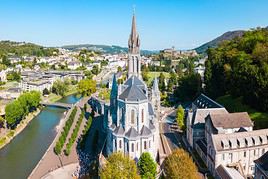
Lourdes
A world-renowned pilgrimage site, Lourdes is one of the most visited cities in France. Beyond the grotto and sanctuaries, you can also discover several museums and a few old quarters.
A world-renowned pilgrimage site, Lourdes is one of the most visited cities in France. Beyond the grotto and sanctuaries, you can also discover several museums and a few old quarters.
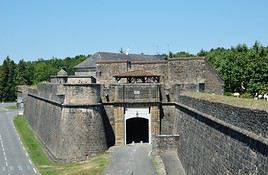
Navarrenx
This medieval bastide is one of the oldest towns in Béarn, with its ramparts and a few old buildings.
This medieval bastide is one of the oldest towns in Béarn, with its ramparts and a few old buildings.

Ossau Valley and Peak
Dominated by the Pic d'Ossau, this valley in the Pyrénées National Park is one of the main ones in the Béarn region. It’s a major hub for tourism and hiking, with stunning landscapes. Visitors can enjoy the Gourette and Artouste ski resorts, as well as the Artouste little train.
Dominated by the Pic d'Ossau, this valley in the Pyrénées National Park is one of the main ones in the Béarn region. It’s a major hub for tourism and hiking, with stunning landscapes. Visitors can enjoy the Gourette and Artouste ski resorts, as well as the Artouste little train.