Skip to content
Quebec

Travel guide · QC

Quebec

★ 4 · last edited Aug 17, 2020 · 2 versions

Larger than life, this region offers the chance to discover picturesque towns and villages, exceptional national parks, and lets you take part in a multitude of festivals and activities for the whole family.
Biodôme de Montréal, Montréal, Québec, Canada
Biodôme de Montréal, Montréal, Québec, Canada · © VoyageForum

Regional Guides for Quebec

Abitibi-Temiscamingue · Bas-Saint-Laurent and Chaudière-Appalaches · Eastern Townships · Charlevoix · North Shore · Gaspésie · Magdalen Islands · Laurentians and Lanaudière · Mauricie · Montérégie and Centre-du-Québec · Montreal (and Laval) · Northern Quebec · Outaouais · Quebec City · Saguenay–Lac-Saint-Jean

Additional Resources on VoyageForum

Overview of Quebec

Quebec is the largest province in Canada . It is bordered by three other Canadian provinces—Ontario, New Brunswick, and Newfoundland and Labrador—as well as four U.S. states (New York, Vermont, New Hampshire, and Maine). Its capital is the city of Quebec,…

Read the full guide: Overview of Quebec

History of Quebec

Chambord, Québec, Canada · © VoyageForum 11 000 av. J.C.: Arrivée des chasseurs paléoindiens dans la vallée du Saint-Laurent. Leurs descendants formeront les tribus amérindiennes. 1534: Jacques Cartier découvre le Golfe du Saint-Laurent . 1608:…

Read the full guide: History of Quebec

What to See in Quebec

Of the 18 Canadian sites inscribed on the UNESCO World Heritage list, Quebec is home to two: Old Quebec and Miguasha National Park. What to see in Abitibi-Témiscamingue : including Rouyn-Noranda and Val-d'Or, plus Aiguebelle National Park. What to See in…

Read the full guide: What to See in Quebec

Things to Do in Quebec

It’s true that from abroad, we sometimes forget that Quebec has countless beaches where you can spend time. Not necessarily for swimming (though that’s an option), but more for walking, camping, or simply having a picnic. In Quebec, as elsewhere in the…

Read the full guide: Things to Do in Quebec

Types of Travel in Quebec

Interests (rated ★★★★ ) : Nature ★★★★ ; Adventure ★★★★ ; Culture ★★ ; Relaxation-holidays ★ . No matter the season, the province offers plenty of opportunities to get your adrenaline fix with outdoor activities in a majestic setting. Here, nature allows for a…

Read the full guide: Types of Travel in Quebec

Flying to Quebec

General Information

By far the two most important international airports in Quebec are Jean Lesage in Quebec City (1.8 million passengers in 2025) and, above all, Pierre Elliott Trudeau in Montreal (23 million). It makes sense that the vast majority of visitors arrive at the latter, as flight options are more extensive and often more affordable. However, Quebec City’s airport can also be a good choice if you plan to visit the northern part of the city first.

From France and Europe

As expected, France is very well connected to La Belle Province, primarily through Montreal with flights to and from Paris and seven or eight cities across France. With options like Air Transat, Air Canada, Air France, and even French Bee, there’s plenty of choice. In fact, it’s always best to prioritize direct flights—including those from regional airports when available—for their excellent value compared to connecting flights. Expect to pay between 400 and 800 € for a ticket, depending on the season and airline.

From the Rest of Europe

There’s also a wide selection here, with Air Canada and Air Transat offering direct flights to many European countries, capitals, and tourist cities, either year-round or seasonally.

From the Rest of the Americas and Beyond

The options are extensive for the rest of Canada, the U.S., the Caribbean (including Martinique and Guadeloupe), and much of Latin America. This is partly because many of these destinations are popular with Quebec travelers.

For other continents, aside from direct flights from Montreal to Tokyo and Morocco, there’s nothing nonstop, so connecting flights are necessary.

Additional Information

View guide page: Flying to Quebec

Getting to Quebec by Land or Sea

By Land

Borders

Quebec shares borders with two Canadian provinces: Ontario and New Brunswick. The main road links connecting the province's two largest cities, Quebec City and Montreal, are Highway 40 on the north shore of the St. Lawrence River and Highway 20 on the south shore. Several other highways serve different regions of Quebec.

From Neighboring Countries

Quebec also shares borders with several U.S. states. Border crossings exist in Maine, New Hampshire, Vermont, and New York.

Public Transportation

Orléans Express and Greyhound are the two major bus companies operating within Quebec and to/from neighboring regions or the United States. For rail travel, Amtrak trains connect Montreal to New York, while Via Rail Canada provides passenger rail service to major cities across Canada.

By Sea

Ferries

Cargo

Cruises

Quebec has three major ports with cruise terminals: Montreal, Quebec City, and Saguenay.

Sailboats

View guide page: Getting to Quebec by Land or Sea

Getting Around Quebec

Orléans Express is the largest company operating in Quebec. It connects the province's main cities. However, other companies provide additional coverage by serving several other regions, such as Intercar , which links Quebec City to the…

Read the full guide: Getting Around Quebec

Accommodation in Quebec

Overview of the offer

Quebec is a major tourist destination. It offers an excellent range of accommodations to suit all types of travelers: campgrounds, youth hostels, student residences, hotels and motels, bed and breakfasts, wilderness lodges, and more. Rates vary by season, day of the week (weekend days can be more expensive), and even during special events. It is therefore recommended to book in advance in the most tourist-heavy areas, especially during peak periods. As for accommodations, discount coupons or promotional offers are often available online.

Hotels and motels of all kinds

Youth hostel

Camping

Staying with locals

B&B or similar

Home exchange

Other options

Student residences

Gîtes

Apartment or house rental

Which accommodation to choose?

View guide page: Accommodation in Quebec

Health and Safety in Quebec

In France, for both individuals and professionals, the "travel advice" from the Ministry of Foreign Affairs regarding precautions for each country has legal value. A similar online travel advice system exists in several countries: Foreign Affairs Belgium…

Read the full guide: Health and Safety in Quebec

Other Practical Information for Québec

In summer, light clothing is recommended, along with a light sweater for cooler days or to counter air conditioning. Don’t forget sun and rain protection. If you plan to hike in regional or national parks, make sure to bring sturdy shoes and appropriate gear.…

Read the full guide: Other Practical Information for Québec

Regions of Quebec

This is the ideal spot for recreational activities like hunting, fishing, and nature observation and interpretation. This area boasts a rich cultural and natural heritage. Charming small villages make up the landscape, and many outdoor activities are…

Read the full guide: Regions of Quebec

Geography and Environment of Quebec

Province Overview

Natural Zones

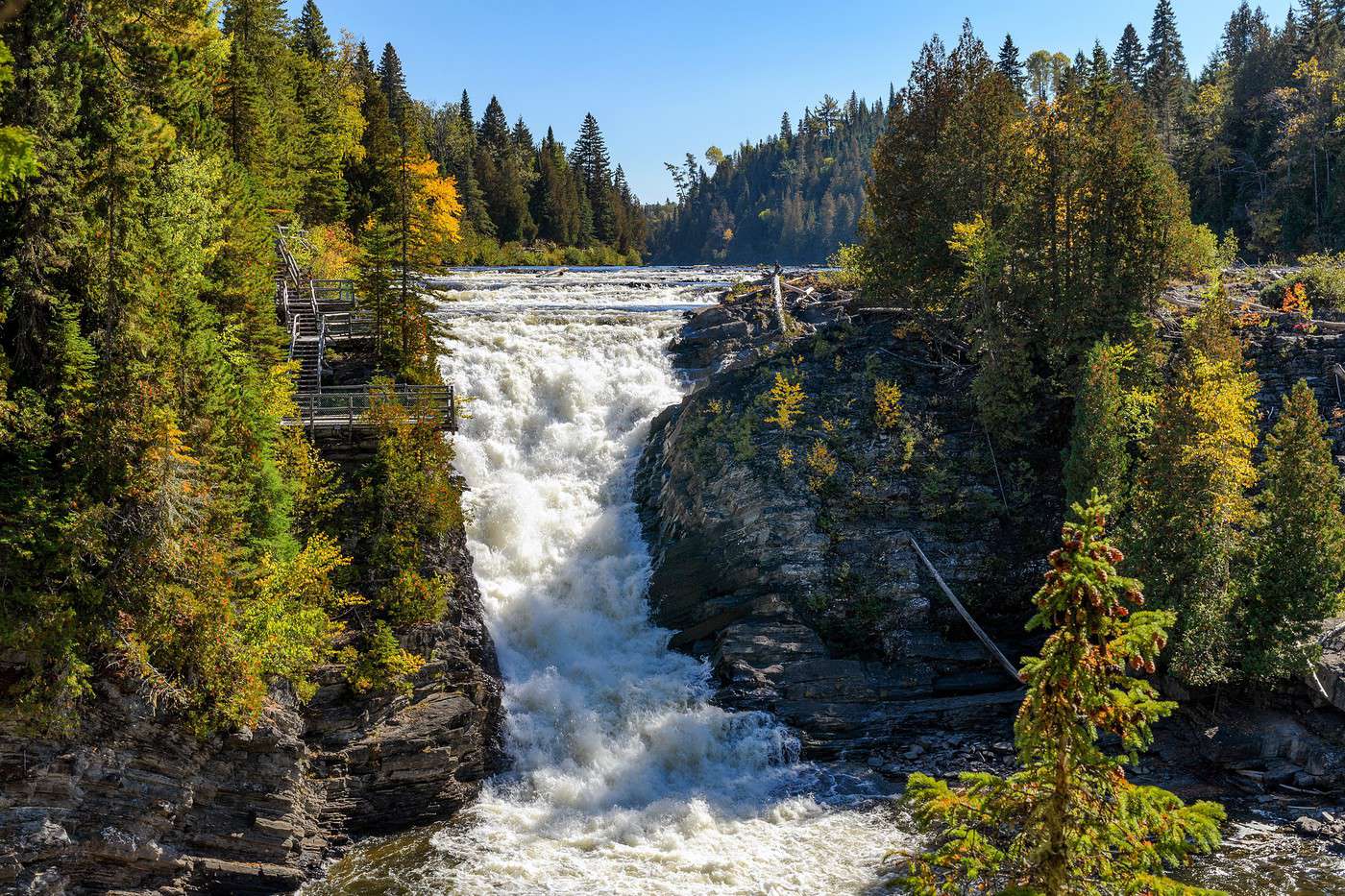
Canyon des Portes de l'Enfer, Québec, Canada
Canyon des Portes de l'Enfer, Québec, Canada · © VoyageForum

Wildlife and Plant Life

View guide page: Geography and Environment of Quebec

Climate and Weather in Quebec

Parc Maisonneuve, Montréal, Québec, Canada · © VoyageForum Quebec is vast, so its climate is divided into four zones and varies significantly from one region to another. It is directly influenced by latitude, terrain, and maritime effects. From…

Read the full guide: Climate and Weather in Quebec

When and Where to Go in Quebec

Best Times to Visit Quebec

Finding the best time to visit means balancing climate constraints with crowd levels and the most attractive prices for travel and on-site costs.

Summer is the best time to visit Quebec. However, since it's peak tourist season, prices are higher. Generally, from May to mid-June and from mid-September to mid-October would be the ideal time to visit Quebec, as the climate is favorable and prices are more affordable.

For the winter season, January and March are more favorable months because prices are usually more economical, given there are fewer tourists.

Jan.Feb.Mar.Apr.MayJun.Jul.Aug.Sep.Oct.Nov.Dec.
Climate /
Avoid crowds /
Low prices /

: very favorable | : favorable | : moderately favorable | : unfavorable.

Where to Go Based on Travel Type and Interest

View guide page: When and Where to Go in Quebec

Quebec Society

Population

Quebec's population is estimated at just over eight million people, with francophones making up the majority.

It is primarily composed of French Canadians, whose descendants come from European countries, Indigenous peoples who have been present on this territory for several millennia, as well as many other ethnic groups (Haitians, Italians, Vietnamese, etc.).

Due to its cultural diversity, Quebec society truly demonstrates an openness to the world.

Political Institutions

Economy

Religion

The Church played a significant role in Quebec's history, as priests, nuns, and monks contributed to the establishment of healthcare and education systems. They also funded major projects and held an important place in Quebec's social and political life.

Quebecers are primarily Catholic. However, few practice today. Other religious communities (Protestants, Muslims, Jews, Buddhists, Hindus, etc.) later established themselves following large waves of immigration from Africa, Europe, and Asia.

Nowadays, even though many churches in Quebec must close due to lack of attendance, some places of worship are still visited by millions of visitors each year. Among these pilgrimage sites are the Basilica of Sainte-Anne-de-Beaupré, Saint Joseph's Oratory, and Notre-Dame Basilica of Montreal.

View guide page: Quebec Society

Culture and Customs of Quebec

Arts, Crafts, and Architecture

Arts

Crafts

Architecture

Museums

Customs and Traditions

Local Traditions

Etiquette

Attire and Behavior

Sensitive or Taboo Topics

Languages

French is the only official language in Quebec. Over two-thirds of Quebec's population have French as their mother tongue. English is the second mother tongue (8%). Moreover, English is commonly spoken in most tourist areas.

12% of the population are allophone, meaning their mother tongue is neither French nor English. These allophone groups include Chinese, Haitians, Italians, Greeks, Arabs, and others.

Glossary

A few local words and expressions useful to know while traveling:

  • À tantôt: See you later
  • Barrer la porte: Lock the door
  • Bienvenue: You're welcome
  • Bon matin: Good morning
  • Capoter: To freak out
  • C'est plate: It's boring
  • Char: Car
  • Chialer: To complain
  • Dépanneur: Convenience store
  • Il mouille: It's raining
  • Il fait frette: It's freezing cold
  • Jaser: To chat
  • Je suis tanné: I'm fed up
  • Niaiser: To tease
  • Nous autres/Vous autres: We/You
  • On est rendu: We've arrived
  • Pantoute: Not at all
  • Un déjeuner: Breakfast
  • Un dîner: Lunch
  • Un souper: Dinner
  • Fin de semaine: Weekend

Festivals and Celebrations

By Region

Major Events and Public Holidays

  • January 1: New Year's Day.
  • March or April: Good Friday.
  • March or April: Easter Monday.
  • May (Second-to-last Monday): National Patriots' Day.
  • June 24: Quebec National Holiday.
  • July 1: Canada Day.
  • September (First Monday): Labor Day.
  • October (Second Monday): Thanksgiving.
  • December 25: Christmas.
  • December 26: Boxing Day.

Most shops, banks, businesses, and government offices are closed on these public holidays. However, many tourist sites remain open.

Books, Films, and Music

View guide page: Culture and Customs of Quebec

Something wrong or out of date? Report this page