
Overview of Quimper

It is the prefecture of Finistère and the "capital" of Cornouaille. The city boasts an old town center and an impressive cathedral.
Key Facts
- Type of place: city.
- Tourist interest: (worth seeing).
- Location:
- Distances:
- Local time: .
- Population: 62,985 inhabitants (2017).
- Area: 84.45 km².
- Altitude: from -2 m to 151 m.
- Website: https://www.quimper-tourisme.bzh
History of Quimper
What to See in Quimper
Saint-Corentin Cathedral
This is a stunning 13th-century Gothic building at the heart of the old town. The interior houses beautiful stained-glass windows, and its spire rises to 75 metres.
This is a stunning 13th-century Gothic building at the heart of the old town. The interior houses beautiful stained-glass windows, and its spire rises to 75 metres.
Retirement Garden
This former monastery garden is located in the city center, within the ramparts of the old fortified city. Together with the adjacent Peace Garden, it forms a pleasant area of over one hectare.
This former monastery garden is located in the city center, within the ramparts of the old fortified city. Together with the adjacent Peace Garden, it forms a pleasant area of over one hectare.
Mount Frugy
This 70-metre hill overlooks the city of Quimper. It hosts festivities and offers a fine panorama of the town.
This 70-metre hill overlooks the city of Quimper. It hosts festivities and offers a fine panorama of the town.
Museum of Fine Arts
Next to the cathedral, collections of paintings from the 14th century to today, plus others dedicated to local artists or the Pont-Aven School.
Next to the cathedral, collections of paintings from the 14th century to today, plus others dedicated to local artists or the Pont-Aven School.
Departmental Breton Museum
Housed in the former palace of the Bishops of Cornouaille, the museum is dedicated to the history and popular arts and traditions of Finistère (archaeology, sculptures, paintings, costumes, furniture, etc.).
Housed in the former palace of the Bishops of Cornouaille, the museum is dedicated to the history and popular arts and traditions of Finistère (archaeology, sculptures, paintings, costumes, furniture, etc.).
Quimper Faience Museum
This former factory has been turned into a museum, tracing several centuries of Quimper's history and its faience.
This former factory has been turned into a museum, tracing several centuries of Quimper's history and its faience.

Old Quimper
The historic district of the city is made up of ramparts, old half-timbered houses (including the House of the Caryatids), narrow streets like Rue Kéréon, Place au Beurre, the cathedral, and a large pedestrian zone.
The historic district of the city is made up of ramparts, old half-timbered houses (including the House of the Caryatids), narrow streets like Rue Kéréon, Place au Beurre, the cathedral, and a large pedestrian zone.
What to Do in Quimper
Climate and Weather in Quimper
The city has an oceanic climate, mild and humid, with relatively low temperature variation—neither too cold in winter nor too hot in summer. Rainfall is spread throughout the year, with a peak in autumn and winter.
Transportation
Getting There
Getting Around
Accommodation
Dining
Useful Addresses
Nearby Attractions
Key places of interest near Quimper include:

Trévarez Castle
In Saint-Goazec. A stunning castle with gardens dating back to the late 19th century.
In Saint-Goazec. A stunning castle with gardens dating back to the late 19th century.
Concarneau
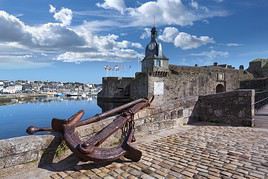
A major fishing port (with a museum on the subject) and shipbuilding hub, Concarneau is also a walled city surrounded by some of France’s most beautiful ramparts.
A major fishing port (with a museum on the subject) and shipbuilding hub, Concarneau is also a walled city surrounded by some of France’s most beautiful ramparts.

Locronan
With its old centre and "typical" architecture, this is one of Brittany’s most beautiful villages, having also served as a filming location for numerous movies. Locronan is rightfully labelled one of the "Most Beautiful Villages of France".
With its old centre and "typical" architecture, this is one of Brittany’s most beautiful villages, having also served as a filming location for numerous movies. Locronan is rightfully labelled one of the "Most Beautiful Villages of France".

Penmarc'h
At the tip of Audierne Bay, this large commune with its fishing and pleasure ports is known for its much-visited Eckmühl Lighthouse.
At the tip of Audierne Bay, this large commune with its fishing and pleasure ports is known for its much-visited Eckmühl Lighthouse.

Pointe de la Torche
South of Audierne Bay, this stunning site is also renowned for surfing, windsurfing, and other watersports.
South of Audierne Bay, this stunning site is also renowned for surfing, windsurfing, and other watersports.
Pont-Aven
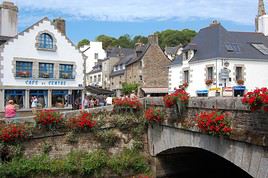
Nicknamed the "City of Painters," this small town welcomed several artists in the late 19th century (including Gauguin). Besides a fine arts museum, you can see a few old houses and several mills.
Nicknamed the "City of Painters," this small town welcomed several artists in the late 19th century (including Gauguin). Besides a fine arts museum, you can see a few old houses and several mills.

Crozon Peninsula
Opposite Brest, this peninsula is a major tourist destination. Visitors come for its stunning landscapes (especially the "pointes") and, secondarily, the remnants of various fortifications (from Vauban to World War II). The peninsula can be explored on foot.
Opposite Brest, this peninsula is a major tourist destination. Visitors come for its stunning landscapes (especially the "pointes") and, secondarily, the remnants of various fortifications (from Vauban to World War II). The peninsula can be explored on foot.