
Travel guide
Saint Barthélemy
This small island is the archetype of a "luxury destination" in the Caribbean. With beautiful beaches and a charming "capital", Gustavia, exploring it requires a certain budget—unless you consider Saint Barthélemy as a day trip from the nearby island of Saint Martin...
Overview of Saint Barthélemy
Quick Overview
Saint Barthélemy is a French island in the Lesser Antilles and an overseas collectivity. It is commonly called Saint Barth.
Key Facts
- Type of place: French overseas territory.
- Location: in the Caribbean, southeast of Saint Martin.
- Latitude/longitude: 17.90' N, 62.85' W.
- Local time:
- Capital: Gustavia.
- Nature of the state: French overseas collectivity.
- Official language: French.
- Currency: euro.
- Population: 9,417 inhabitants (2015).
- Area: 24 km².
- Density: 392 inhabitants/km².
- Highest point: Morne du Vitet (286 m).
- Lowest point: sea level.
- Coastline: 32 km.
- Driving: on the right.
Tourism
The small island is the epitome of a "luxury destination" in the Caribbean, attracting a predominantly North American clientele. Beautiful beaches and a charming "capital," Gustavia, require a certain budget to explore—unless you consider Saint Barth as a day trip from the nearby island of Saint Martin. Officially, Saint Barthélemy welcomes around 300,000 visitors annually, arriving almost equally by air and sea.
Travel Essentials
- Destination: for beginner travelers.
- By air: mainland to Gustavia.
- Entry requirements: ID card or passport.
- Currency to bring: euro.
- Exchange rate:
- Backpacker daily budget: 150 to 200 € per person.
- Best for accommodation: hotel on-site or day trip from St. Martin.
- Best way to get around: scooter or, alternatively, on foot.
- Risks: very low health risks and almost nonexistent security risks.
- Best period for climate/crowds/prices: April to early May or early December.
- Interests (out of ): Nature ; Adventure ; Culture ; Relaxation/Holidays
Addresses in Mainland France
Tourist Board: online only.
Addresses in Belgium, Switzerland, and Quebec
Climate and Weather in Saint Barthélemy
Climate Overview
Like the other islands in the region, Saint Barthélemy has a tropical maritime climate with near-constant year-round temperatures averaging around 30°C. It is characterized by two distinct periods: the dry season (called carême) and the rainy season (called hivernage). The first runs from December to the end of May, with little rain, cooler air, and more pleasant temperatures. The second spans June to November, bringing warmer, humid conditions, frequent rain, and two months—September and October—when hurricane risks exist.
Best Time to Visit Saint Barthélemy
As always, the dry season is the best time to visit, unlike the rainy and cyclone-prone period. In short, the ideal climate for a stay in Saint Barthélemy is from Christmas to late April or early May.
| Jan. | Feb. | Mar. | Apr. | May | Jun. | Jul. | Aug. | Sep. | Oct. | Nov. | Dec. | |
|---|---|---|---|---|---|---|---|---|---|---|---|---|
| Climate |
: very favorable | : favorable | : moderately favorable | : unfavorable.
Sea Temperature Throughout the Year
The water temperature in Saint Barthélemy is consistently pleasant year-round.
| Jan. | Feb. | Mar. | Apr. | May | Jun. | Jul. | Aug. | Sep. | Oct. | Nov. | Dec. | |
|---|---|---|---|---|---|---|---|---|---|---|---|---|
| Gustavia | 25 | 25 | 25 | 26 | 26 | 27 | 28 | 28 | 27 | 27 | 27 | 26 |
Climate and Weather in Saint Barthélemy
Additional Information
Culture, Society, and Customs of Saint Barthélemy
Key Historical Dates
Arts and Architecture
Society
Population
Economy
Customs and Traditions
Local Culture and Traditions
Languages
While French is the official language, English is widely spoken on the island in a tourist context. Alongside it, the local patois (a type of "French of the Americas," as it is defined) and "Creole" (of the Martinican variety) are also spoken as "traditional" languages. Despite a century of Swedish presence in Saint Barthélemy (1784–1878), Swedish never took hold on the island.
Festivals and Public Holidays
January 1: New Year’s Day.
February: Carnival.
March–April: Easter.
May 1: Labor Day.
May 8: Victory Day.
May–June: Ascension Day.
May–June: Whit Monday.
May 27: Abolition of Slavery.
July 14: National Day.
August 15: Assumption Day.
November 1: All Saints’ Day.
November 11: Armistice Day.
December 25: Christmas.
December 31: New Year’s Eve.
Books, Films, and Music
What to See in Saint Barthélemy
UNESCO World Heritage Sites
Saint Barthélemy has no sites listed as UNESCO World Heritage Sites.
Villages and Natural Sites
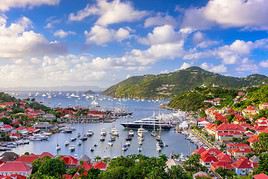
Gustavia
This is the main town on the island, featuring a marina and duty-free luxury shops. It still boasts several charming remnants of its Swedish colonial past.
This is the main town on the island, featuring a marina and duty-free luxury shops. It still boasts several charming remnants of its Swedish colonial past.
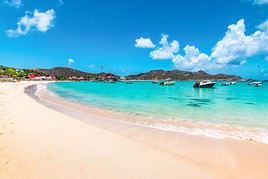
Beaches of Saint Barthélemy
The island has around fifteen (beautiful) beaches with opportunities for water activities in various locations.
The island has around fifteen (beautiful) beaches with opportunities for water activities in various locations.
Gustavia
This is the main town on the island, featuring a marina and duty-free luxury shops. It still boasts several charming remnants of its Swedish colonial past.
View guide page: GustaviaOverview of Gustavia
This is the main town on the island, featuring a marina and duty-free luxury shops. It still boasts several charming remnants of its Swedish colonial past.
Key Facts
- Type of place: small town.
- Tourist interest: (worth seeing).
- Location:
- Distances:
- Local time: .
- Population:
- Area:
- Altitude: sea level.
- Website: http://www.portdegustavia.fr
History of Gustavia
What to See and Do in Gustavia
Nearby
Climate and Weather in Gustavia
Transportation
Getting There
Getting Around
Accommodation
Dining
Useful Addresses
- == Additional Information
Beaches of Saint Barthélemy
The island has around fifteen (beautiful) beaches with opportunities for water activities in various locations.
View guide page: Beaches of Saint BarthélemyOverview
The island of Saint Barthélemy has around fifteen (beautiful) beaches with opportunities for water activities in various locations.
- Tourist interest: (worth seeing).
- Features: sandy beaches.
- Location:
- Length:
- Website:
Environment
Precautions
What to see and do
Practical information
Getting there
Sleeping and eating
- == In addition
Things to Do in Saint Barthélemy
Beaches and Seaside Resorts

Water Activities
Fishing:
Diving:
Water Sports:
Sailing and Sea Excursions:
Thalasso and Wellness
Hiking
Hiking Trails
There are only two "official" hiking trails on the island, offering short walks to the beautiful Colombier Beach (at the far northwest), which is only accessible by boat or these trails.
Cycling
Horseback Riding
Cultural Life and Activities
Nightlife and Outings
Types of Travel in Saint Barthélemy
Travel Themes
- Interests (out of ): Nature ; Adventure ; Culture ; Relaxation-holidays .
Nature-Adventure
Culture
Relaxation-Holidays
Independent Travel
Saint Barthélemy is a very easy destination for independent travel, perfect for beginner travellers... and the well-off. The backpacker style isn’t particularly appreciated here.
Organised, All-Inclusive and Weddings
Weddings and Honeymoons in Saint Barth
Family
To Do
To Avoid
Senior
Female Travellers
Gay and Lesbian
Disability Access
When and Where to Go to Saint Barthélemy
Best Times to Visit Saint Barthélemy
Finding the best time to visit means balancing climate conditions with crowd levels and the most attractive prices for travel and on-site expenses.
As always, the dry season is the ideal time to visit, avoiding the rainy season and hurricane risks. However, this period also sees the highest crowds and prices. On Saint Barthélemy, this is especially true for the Christmas to mid-January stretch. In short, between this ultra-high season and the hurricane months (September–October), the rest of the year—particularly April to early May or early December—offers the best compromise.
| Jan. | Feb. | Mar. | Apr. | May | Jun. | Jul. | Aug. | Sep. | Oct. | Nov. | Dec. | |
|---|---|---|---|---|---|---|---|---|---|---|---|---|
| Climate | ||||||||||||
| Avoid crowds | / | / | ||||||||||
| Low prices | / | / |
: very favorable | : favorable | : moderately favorable | : unfavorable.
Some Itinerary Ideas
Flying to Saint Barthélemy
Saint Barthélemy is one of those islands that only has direct flights to and from other islands in the region, with nothing beyond. This means visitors from North America or Europe must transit through these islands—primarily Saint Martin/Sint Maarten, which…
Getting Around in Saint Barthélemy
Road Network and Traffic
Car Rental
Taxis
Two-Wheelers
Motorcycle
Bicycle
On Foot and Hitchhiking
Given the island’s small size, you can explore it on foot and hitch a ride if needed.
Missing Transport Options
At just 24 km², the island is quite small, and several transport options are absent. There are no trains, no domestic flights, no regular ferry services, and no bus or public transport system at all.
What to Choose for Getting Around?
If you want transport independence, a scooter can be a good option (there are some hills). Otherwise, walking or hitchhiking can also be a pleasant way to explore the island.
Accommodation in Saint Barthélemy
Overview of the offer
Accommodation in Saint Barth is relatively limited, with roughly 500 beds available and an offering focused mainly on luxury and high-end options, as is the case for all tourism on the island. In short, you’ll only find hotels (around thirty, all 3-star minimum) and beautiful villas for rent, but no campsites (wild camping is also banned), no small guesthouses, no youth hostels, and no gîtes or bungalows like you often find on other islands.
Note that on top of already steep rates, accommodation prices tend to skyrocket during high season (mid-December to mid-April). In fact, at a push, Saint Barth can also be visited as a simple day trip from the nearby island of Saint Martin (25 km away).
Hotels and all-inclusive
Other options
Homestays
Apartments and villas
Which accommodation to choose?
Entry Requirements and Visa for Saint Barthélemy
People
For travel purposes.
For French Citizens
No special entry requirements apply regardless of the length or purpose of the stay. A valid national identity card or passport is sufficient.
Other Nationalities
For citizens of the European Union and Switzerland, a valid passport is required. Like all other overseas territories (or "assimilated"), Saint Barthélemy is not part of the Schengen Area.
For Canadians, no visa is required for stays of less than 30 days. A passport valid for three months beyond the planned departure date is required. A return or onward ticket may be requested.
Long Stays
In Case of Offense
Vehicles
Consulates
In foreign countries, French consulates handle all matters concerning Saint Barthélemy.
- Belgium: Consulate General: 42 boulevard du Regent, B-1000 Brussels. Tel: +32 2 548 8811.
- Canada: Consulate General: 25 rue Saint-Louis, Quebec City, G1R 3Y8. Tel: +1 418 266 2500.
- Switzerland: Consulate General: Signaustrasse 1, 8008 Zurich. Tel: +41 44 268 85 85.
Money, Budget, and Shopping in Saint Barthélemy
Money
Currency
- Currency: euro (100 cents).
- Banknotes: 5, 10, 20, 50, 100, 200 and 500 €.
- Coins: 1, 2, 5, 10, 20 and 50 cents + 1 and 2 €.
- Exchange:
Exchange
For those not in the eurozone, it’s possible to exchange money at banks, which accept major currencies, or use ATMs. Note that alongside the euro, the US dollar is widely accepted.
Payment Methods
You can, of course, pay in cash or by credit card (with no fees for euro-denominated accounts), just like on the mainland. However, checks from mainland France are often refused by merchants.
Budget
Saint Barthélemy has deliberately chosen a high-end tourism model, with the infrastructure and prices to match. As a result, staying here will be expensive, especially for accommodation (there’s nothing in the "budget" range) and even dining, not to mention any activities you might want to do. At best, you can expect to spend around 150 to 200 € per day per person (based on two people). That’s why, to save money, it’s worth considering a day trip to St. Barth—since the island isn’t very large—from the nearby island of Saint Martin (just 25 km away).
What Can Be Expensive
- Accommodation.
- High season (mid-December to mid-April).
What Might Not Be Expensive
- At most, a simple day trip from nearby St. Martin.
Price Range
- Double room in a "tourism" hotel:
- Snacks, meals at a "local" restaurant:
- Meals at a "tourism" restaurant:
- Budget car rental: around 40 € per day for the smallest models.
- Budget scooter rental: around 20 to 25 € minimum per day.
- Taxi:
Bargaining and Tipping
Shopping and Souvenirs
Saint Barthélemy is a duty-free zone, meaning no taxes on purchases. That said, much like the island itself, the shopping here is mostly high-end, luxury, and big-name brands.
Health and Safety in Saint Barthélemy
Official Recommendations
In France, both for individuals and professionals, the "travel advice" from the Ministry of Foreign Affairs regarding precautions for each country has legal value. A similar online travel advice system exists in several countries:
Health
While no vaccinations are mandatory for staying on the island, it’s still best to be up to date with your "basic vaccinations."
Illnesses and Hygiene
Local Healthcare Facilities
Safety
Crime and Delinquency
Nothing to fear—Saint Barthélemy is perhaps the safest island in the entire Caribbean.
Socio-Political Risks
No issues here either.
Climate, Nature, and Wildlife
Foreign Consulates on the Island
If you run into trouble while traveling abroad, your country’s consular services can assist you. It’s also worth noting that if you’re an EU citizen and your country isn’t represented, you can contact any other EU member state’s representation.
Belgium: No representation.
Canada: No office in Saint Barthélemy; it falls under the representation in Barbados. High Commission of Canada in Barbados, Bishop's Court Hill, St. Michael, P.O. Box 404, Bridgetown, Barbados BB11113. Tel.: +1 246 629 3550. In case of emergency: 613 996 8885.
Switzerland: No representation.
Other practical information for Saint Barthélemy
Luggage and equipment to bring
At any time of year, pack light clothing plus a sweater for evenings and air conditioning. Don’t forget mosquito protection, sun protection, and rain gear in season.
Communications
Phone
International dialing code: (00 +) 590.
Internet
Post
Time difference
Local time: .
Like the other islands in the region, Saint Barthélemy is on GMT-4. This means 5 hours less in winter and 6 hours less in summer compared to mainland France. In winter, there is a one-hour difference between Quebec (GMT-5) and Saint Barth.
Electricity
220 Volt (60 Hz) with “French” plugs (officially type E), which will require an adapter for North American plugs.
Opening hours
Laundromats
Local tourist offices
There is a Tourist Office in Gustavia for the whole island. It is located at Quai du Général de Gaulle, Gustavia. Tel.: 05 90 27 87 27.
Weights and measures
French language use
The official language of the island is French, so no problem. English is also widely spoken in tourist settings, and alongside it, the local patois (a type of "French of the Americas" as it is defined) and "Creole" (of the Martinican type) are also spoken as "traditional" languages.
Press and media
Getting to Saint Barthélemy by Sea
Inter-Island Distances
From Saint Barthélemy to...
| Anguilla | Barbuda | Guadeloupe | Saba | St Eustatius | St Kitts | St Martin | |
|---|---|---|---|---|---|---|---|
| St Barth | 52 km | 255 km | 25 km |
By Sea
Ferries
Beyond the many charter boats and water taxis operating from the nearby "binational" island of Saint Martin/Sint Maarten, there are two regular (small) ferry lines departing from the same island: Great Bay Express with two or three daily crossings between St Barth and the Dutch side (40 minutes at sea; from 60 € for a round-trip "daytrip") and the company Voyager offering roughly the same frequency and prices from the French side.
Cargo
Cruises
Sailboats
Something wrong or out of date? Report this page