last edited Jan 26, 2026
Health and Safety in Tunisia
Location Map of Tunisia
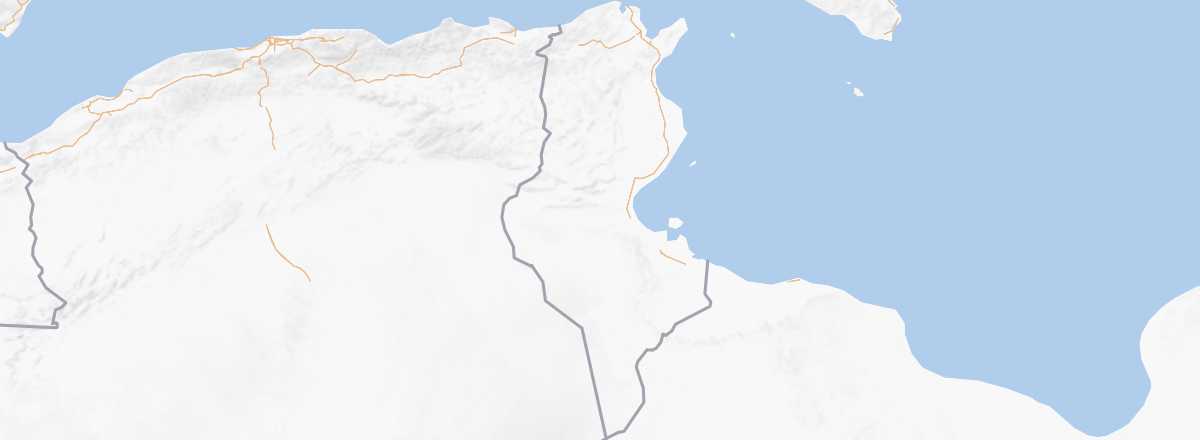 Tunisia
Open the interactive map
Official Recommendations
In France, both for individuals and professionals, the "travel advice" from the Ministry of Foreign Affairs regarding precautions for each country has legal value. A similar online travel advice system exists in several countries:
Health
Diseases
The risk of contracting a disease remains low in Tunisia, where there is also no malaria. No mandatory vaccinations are required, although staying up to date is always preferable. Among all possible issues, traveller’s diarrhoea, or "turista," is the most common concern for visitors.
Hygiene
Good personal and especially food hygiene is still necessary. Avoid tap water and dishes or foods that do not guarantee freshness, at least to prevent turista. Also, remember to stay hydrated and protect yourself from the sun in the hottest regions or seasons.
Healthcare Facilities on Site
As in many countries, there is a noticeable difference between the public and private sectors.
While the public sector lacks resources and staff, leading to long wait times for patients, private facilities meet European standards with recognised quality of care and short waiting times. This is partly because Tunisia has developed medical tourism for its visitors in recent years.
Of course, "private" means costs to consider, though fees for basic care (to be paid upfront) generally remain affordable for Europeans. That said, always travel with insurance to avoid much higher out-of-pocket expenses in case of hospitalisation or serious issues.
Safety
Crime and Delinquency
Traditional crime and delinquency are relatively low in Tunisia, and no major issues are expected. However, there are some risks of theft in tourist areas, crowded markets, and train stations. Avoid flaunting wealth and never leave valuables—visible or not—in your car, whether locked or not. Also, avoid nighttime walks alone on beaches or other poorly lit, secluded areas.
It’s worth noting that Tunisian legislation is very strict regarding drugs, both for trafficking and simple use.
Scams and "Tourist" Harassment
Fake guides, touts, "new friends," and other hustlers exist in Tunisia, particularly in tourist cities and resorts...
If faced with persistent solicitations, try saying "no" with a smile—mention that you already have a guide or can manage on your own—and as a last resort, the word "police" can also be effective. That said, more than tourist harassment, the most troublesome issue is sometimes the harassment faced by women travelling alone.
Political Risks and Terrorism
Although terrorist attacks in the country have stopped for several years, it’s best to remain vigilant and informed, especially if venturing off the beaten path. Avoid the Libyan border and much of the Algerian border, particularly in the mountainous central-western region, as well as the Grand South, which is a regulated military zone.
Additionally, Tunisia occasionally experiences social movements and protests that can sometimes escalate. It’s wise to stay away from any gatherings during such times.
Climate and Nature
Since Tunisia—and North Africa more broadly—is largely desert, the main precaution is proper hydration and sun protection. More obviously, avoid getting lost if travelling independently in desert areas.
Animals
While there are some venomous snakes and scorpions in the desert, the risks are low. The main concern is stray dogs, which may carry rabies.
Foreign Consulates on Site
If you encounter problems while travelling abroad, your country’s consular services can assist you. It’s also worth knowing that if you are an EU citizen and your country is not represented, you can contact any other EU member state’s representation.
France
Consulate General: 1 Place de l'Indépendance, 1000 Tunis. Tel.: (216) 71 105 000.
Other Consulates
There is a small network of French honorary consuls in Tunisia, all attached to the French Consulate General in Tunis.
- Djerba: (216) 50 462 850.
- Sfax: (216) 74 221 533.
- Sousse: (216) 73 817 590.
- Tozeur: (216) 99 635 813.
Other Countries
- Belgium: Embassy, Rue du 1er juin, 47 Belvédère, 1002 Tunis. Tel.: (216) 71 784 093.
- Canada: Embassy, Lot 24, Rue de la Feuille d'Érable, Cité des Pins, Tunis. Tel.: (216) 70 010 200.
- Switzerland: Embassy, Jardins du Lac 2, Zone V, 1053 Les Berges du Lac 2, Tunis. Tel.: (216) 71 191 997.