last edited Dec 11, 2019
Things to See and Do in the Galápagos
Location Map of Galapagos
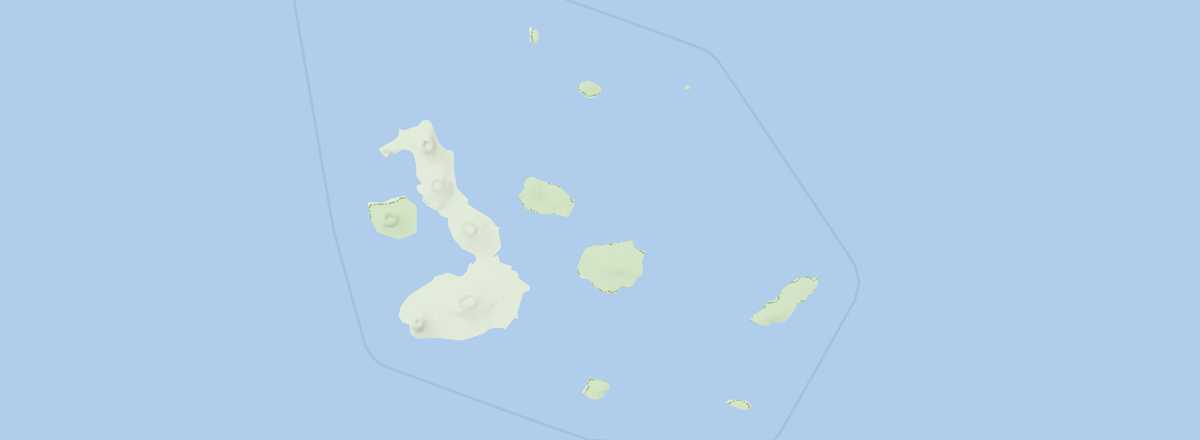 Galapagos
Open the interactive map
Allowed or Forbidden
The Galápagos are a rather unique tourist destination in the sense that what you can or cannot do is highly regulated. It’s also a place where exploration largely relies on organized cruise packages, with little way around it.
Across the archipelago, the inhabited islands naturally offer the most "freedom." First among them is Santa Cruz, where you can visit the Charles Darwin Research Station, see wildlife at Tortuga Bay, or hike into the island’s interior. Otherwise, there are roughly 120 sites in the archipelago open to guided visits—half on land and half marine (especially for diving)—while many others remain off-limits to the public.
Main Islands

Bartolome
It's a small but well-visited island where you can see penguins and tortoises among other wildlife, set in a striking, barren landscape. You can also swim and go diving here.
It's a small but well-visited island where you can see penguins and tortoises among other wildlife, set in a striking, barren landscape. You can also swim and go diving here.

Española
A fairly remote spot in the archipelago, but it offers incredibly rich wildlife, especially for birdwatching. Diving is also popular here.
A fairly remote spot in the archipelago, but it offers incredibly rich wildlife, especially for birdwatching. Diving is also popular here.

Fernandina
The westernmost island in the archipelago. Iguanas among lava fields and colonies of penguins, sea lions, and seals.
The westernmost island in the archipelago. Iguanas among lava fields and colonies of penguins, sea lions, and seals.
Floreana
Home to just a hundred or so people, the island (also called Santa Maria) offers some great diving and wildlife-watching opportunities on one of its beaches.
Home to just a hundred or so people, the island (also called Santa Maria) offers some great diving and wildlife-watching opportunities on one of its beaches.
Genovesa
This partly forested island in the northeast of the Galapagos archipelago is home to many bird species.
This partly forested island in the northeast of the Galapagos archipelago is home to many bird species.

Isabela
It is the largest island, with Puerto Villamil as its main town. It is home to half a dozen volcanoes. You can take several excursions on Isabela without needing to join a boat tour.
It is the largest island, with Puerto Villamil as its main town. It is home to half a dozen volcanoes. You can take several excursions on Isabela without needing to join a boat tour.
San Cristobal
This is the easternmost island, home to Puerto Baquerizo Moreno, the "capital" of the Galapagos. Part of the island can be explored independently, and diving is possible here.
This is the easternmost island, home to Puerto Baquerizo Moreno, the "capital" of the Galapagos. Part of the island can be explored independently, and diving is possible here.
San Salvador
This land—also called Santiago—is home to a wide variety of wildlife (birds, seals, tortoises, etc.).
This land—also called Santiago—is home to a wide variety of wildlife (birds, seals, tortoises, etc.).

Santa Cruz
This is the most populated island, with Puerto Ayora as its tourist hub and the main base for organizing excursions. Diving and hiking are popular here, offering opportunities to discover the local wildlife and volcanic landscapes.
This is the most populated island, with Puerto Ayora as its tourist hub and the main base for organizing excursions. Diving and hiking are popular here, offering opportunities to discover the local wildlife and volcanic landscapes.

Santa Fé
Cactus forests, cliffs, birds, iguanas, and sea lions on this small island between Santa Cruz and San Cristóbal.
Cactus forests, cliffs, birds, iguanas, and sea lions on this small island between Santa Cruz and San Cristóbal.
Best Times to Visit
Climatically, the beginning of the year is generally the best time to visit, though the rest of the year still offers plenty to enjoy. For crowds and prices, peak periods are around Christmas, early in the year (including Easter), and to a lesser extent, July and August. In short, the best windows are from mid-January to May (excluding Easter) and from September to November.
| Jan. | Feb. | Mar. | Apr. | May | Jun. | Jul. | Aug. | Sep. | Oct. | Nov. | Dec. | |
|---|---|---|---|---|---|---|---|---|---|---|---|---|
| Climate | ||||||||||||
| Avoid crowds | ||||||||||||
| Low prices |
: very favorable | : favorable | : moderately favorable | : unfavorable.
Activities
Diving
Diving is the main activity in the Galápagos. Whether scuba diving or snorkeling, you’ll have the chance to explore the archipelago’s unique underwater world—an unforgettable experience for enthusiasts. Of the 120 public sites, half offer diving opportunities. All diving must be arranged through licensed providers with the proper permits and authorizations.
Hiking
Hiking is another key activity for visitors, with short walks along designated trails to discover the local wildlife and flora. Many cruises include guided hikes. On inhabited islands like Isabela or Santa Cruz, you can also explore on foot, by mountain bike, or even on horseback.
Other Activities
Though not the first thing that comes to mind, surfing is possible in the Galápagos on the islands of San Cristobal, Santa Cruz, and Isabela. Elsewhere, you can explore some of the islands’ beaches by sea kayak.
Recommended
Bartolome
★★★ It's a small but well-visited island where you can see penguins and tortoises among other wildlife, set in a striking, barren landscape…
Worth a look / Other
Española
★★ A fairly remote spot in the archipelago, but it offers incredibly rich wildlife, especially for birdwatching. Diving is also popular here.
Fernandina
★★ The westernmost island in the archipelago. Iguanas among lava fields and colonies of penguins, sea lions, and seals.
Isabela
★★ It is the largest island, with Puerto Villamil as its main town. It is home to half a dozen volcanoes. You can take several excursions on…
San Cristobal (Galapagos)
★★ This is the easternmost island, home to Puerto Baquerizo Moreno, the "capital" of the Galapagos. Part of the island can be explored…
Santa Cruz (Galapagos)
★★ This is the most populated island, with Puerto Ayora as its tourist hub and the main base for organizing excursions. Diving and hiking are…
Santa Fé (Galapagos)
★★ Cactus forests, cliffs, birds, iguanas, and sea lions on this small island between Santa Cruz and San Cristóbal.
Baltra
★ This is where the main airport of the Galapagos is located.
Floreana
★ Home to just a hundred or so people, the island (also called Santa Maria) offers some great diving and wildlife-watching opportunities on…
Genovesa
★ This partly forested island in the northeast of the Galapagos archipelago is home to many bird species.
San Salvador (Galápagos)
★ This land—also called Santiago—is home to a wide variety of wildlife (birds, seals, tortoises, etc.).
Wolf
★ A tiny mountainous island home to numerous birds, iguanas, seals, sharks, and whales.