
Overview
UNESCO World Heritage Sites

Acropolis of Athens
At the heart of the city, this hill with the famous Parthenon and many other temples and monuments (the Erechtheion, Temple of Athena Nike, Theatre of Dionysus...) is the symbol of Athens. A UNESCO World Heritage site, it is also one of the world's most visited tourist attractions.
At the heart of the city, this hill with the famous Parthenon and many other temples and monuments (the Erechtheion, Temple of Athena Nike, Theatre of Dionysus...) is the symbol of Athens. A UNESCO World Heritage site, it is also one of the world's most visited tourist attractions.
Neighborhoods and Tourist Areas
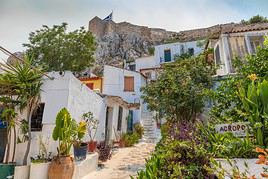
Anafiotika
Near Plaka and the Acropolis, Anafiotika has become a somewhat touristy neighborhood thanks to its fifty or so small white houses built in the 19th century in the purest Cycladic architectural style.
Near Plaka and the Acropolis, Anafiotika has become a somewhat touristy neighborhood thanks to its fifty or so small white houses built in the 19th century in the purest Cycladic architectural style.
Kolonaki
This is the capital’s upscale and trendy district, with its beautiful neoclassical buildings, luxury boutiques, and major brand stores. It’s also home to several museums (Benaki, Byzantine Museum, and others).
This is the capital’s upscale and trendy district, with its beautiful neoclassical buildings, luxury boutiques, and major brand stores. It’s also home to several museums (Benaki, Byzantine Museum, and others).
Athens Central Market
Open every day except Sunday, it's a lively area surrounded by pedestrian and shopping streets.
Open every day except Sunday, it's a lively area surrounded by pedestrian and shopping streets.
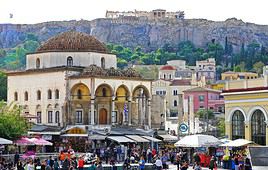
Monastiraki Flea Market
This popular flea market, loved by both locals and tourists, takes place around the eponymous square and nearby alleys in the old town.
This popular flea market, loved by both locals and tourists, takes place around the eponymous square and nearby alleys in the old town.
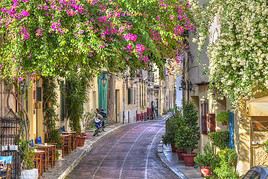
Plaka
Athens' oldest district, one of the liveliest and therefore also one of the most tourist-heavy, with old houses and narrow streets packed with bars, restaurants, and shops. All just a stone's throw from the Acropolis.
Athens' oldest district, one of the liveliest and therefore also one of the most tourist-heavy, with old houses and narrow streets packed with bars, restaurants, and shops. All just a stone's throw from the Acropolis.
Monuments and Architectural Ensembles
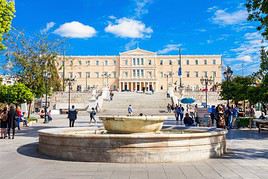
Syntagma Square
Or Constitution Square. It faces the Parliament and is a perpetually lively spot. It is also here, in front of the Tomb of the Unknown Soldier, that the hourly changing of the guard takes place, performed by sentinels in a highly photogenic "uniform.".
Or Constitution Square. It faces the Parliament and is a perpetually lively spot. It is also here, in front of the Tomb of the Unknown Soldier, that the hourly changing of the guard takes place, performed by sentinels in a highly photogenic "uniform.".
Ancient Ruins
Acropolis of Athens
At the heart of the city, this hill with the famous Parthenon and many other temples and monuments (the Erechtheion, Temple of Athena Nike, Theatre of Dionysus...) is the symbol of Athens. A UNESCO World Heritage site, it is also one of the world's most visited tourist attractions.
At the heart of the city, this hill with the famous Parthenon and many other temples and monuments (the Erechtheion, Temple of Athena Nike, Theatre of Dionysus...) is the symbol of Athens. A UNESCO World Heritage site, it is also one of the world's most visited tourist attractions.
Athens Agora
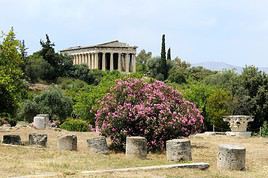
What was the central square of the ancient city is now a field of ruins, though some remains can still be seen in the museum dedicated to it on the site.
What was the central square of the ancient city is now a field of ruins, though some remains can still be seen in the museum dedicated to it on the site.
Roman Agora of Athens
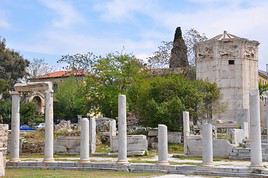
Unlike the Agora of Athens, this one also houses more numerous ancient ruins, such as the Fethiye Mosque, the Tower of the Winds, the Gate of Athena, and Hadrian’s Library.
Unlike the Agora of Athens, this one also houses more numerous ancient ruins, such as the Fethiye Mosque, the Tower of the Winds, the Gate of Athena, and Hadrian’s Library.
Kerameikos
This is the archaeological site of the potters' district of ancient Athens, alongside the Kerameikos cemetery with its tombs lining two roads. Many discoveries made here are displayed in the associated Kerameikos Archaeological Museum.
This is the archaeological site of the potters' district of ancient Athens, alongside the Kerameikos cemetery with its tombs lining two roads. Many discoveries made here are displayed in the associated Kerameikos Archaeological Museum.
Temple of Olympian Zeus
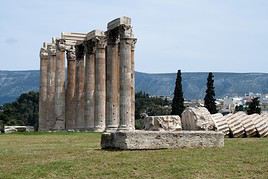
Also known as the Temple of Olympian Zeus, it lies at the foot of the Acropolis. Its fifteen Corinthian columns (out of the original 104) are all that remain of what was once a vast structure over 100 metres long. Nearby are the ruins of Hadrian's Gate, erected in 131.
Also known as the Temple of Olympian Zeus, it lies at the foot of the Acropolis. Its fifteen Corinthian columns (out of the original 104) are all that remain of what was once a vast structure over 100 metres long. Nearby are the ruins of Hadrian's Gate, erected in 131.
Panathenaic Stadium
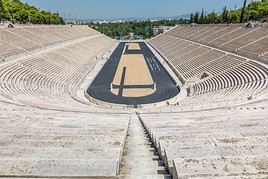
This ancient stadium, located just opposite the National Garden, was renovated for the first modern Olympic Games in 1896.
This ancient stadium, located just opposite the National Garden, was renovated for the first modern Olympic Games in 1896.
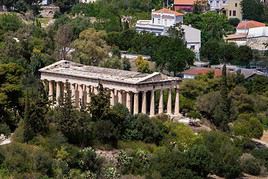
Temple of Hephaestus
Built on high ground above the Agora, this Doric temple from the 5th century BC is one of the best-preserved in the country.
Built on high ground above the Agora, this Doric temple from the 5th century BC is one of the best-preserved in the country.
Religious Buildings
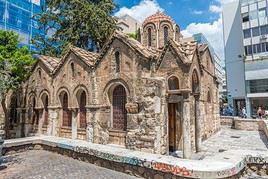
Kapnikarea Church
A stunning small Greek Orthodox church in the heart of a square. It is one of the oldest Christian religious buildings in Athens, constructed in the 11th century.
A stunning small Greek Orthodox church in the heart of a square. It is one of the oldest Christian religious buildings in Athens, constructed in the 11th century.
Museums
Acropolis Museum
Located at the foot of the Acropolis, it’s the logical complement to a visit to the site. Here, you can discover 4,000 artifacts unearthed on-site in a space with a distinctly "modern" architecture.
Located at the foot of the Acropolis, it’s the logical complement to a visit to the site. Here, you can discover 4,000 artifacts unearthed on-site in a space with a distinctly "modern" architecture.
National Archaeological Museum
It is one of the world's richest museums dedicated to ancient art, spanning from the Neolithic era to the Roman period. It houses over 20,000 artifacts and remains a "must-see" for any exploration of Greece.
It is one of the world's richest museums dedicated to ancient art, spanning from the Neolithic era to the Roman period. It houses over 20,000 artifacts and remains a "must-see" for any exploration of Greece.
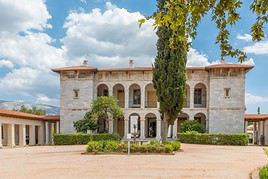
Byzantine and Christian Museum of Athens
This is one of the most important museums in Greece. It houses collections of art from antiquity and the Byzantine era.
This is one of the most important museums in Greece. It houses collections of art from antiquity and the Byzantine era.
Museum of Cycladic Art
It is dedicated to Aegean civilisation (BC) with a vast collection of Cycladic art and Greek antiquities.
It is dedicated to Aegean civilisation (BC) with a vast collection of Cycladic art and Greek antiquities.
Benaki Museum
This beautiful family mansion is a museum of Greek art and history, from prehistory to the present day. It originally housed the (highly eclectic) collections of the Benaki family.
This beautiful family mansion is a museum of Greek art and history, from prehistory to the present day. It originally housed the (highly eclectic) collections of the Benaki family.
National History Museum of Athens
The history of modern Greece, from the fall of Constantinople to the Turks in 1453 to the Second World War, through diverse and varied collections, objects, documents, photos, and more.
The history of modern Greece, from the fall of Constantinople to the Turks in 1453 to the Second World War, through diverse and varied collections, objects, documents, photos, and more.
Jewish Museum of Greece
The history and culture of the country's Jewish community, from its origins to the present day.
The history and culture of the country's Jewish community, from its origins to the present day.
Kanelopoulos Museum
Art and archaeological collections from Greece and its region, bequeathed to the state several decades ago by the Kanelopoulos family.
Art and archaeological collections from Greece and its region, bequeathed to the state several decades ago by the Kanelopoulos family.
National Museum of Contemporary Art, Athens
Opened in 2000, it is the country’s only museum dedicated to contemporary art.
Opened in 2000, it is the country’s only museum dedicated to contemporary art.
Athens City Museum
Housed in a former royal palace, the museum showcases the old royal apartments along with many historical artefacts.
Housed in a former royal palace, the museum showcases the old royal apartments along with many historical artefacts.
National Gallery of Athens
The venue houses works of modern Greek art and a collection of paintings and drawings from various European countries.
The venue houses works of modern Greek art and a collection of paintings and drawings from various European countries.
Parks, Gardens, and Natural Spaces
Hill of the Muses
Rising 147 metres high, this hill southwest of the Acropolis is home to the funerary monument of Philopappos. It offers a lovely viewpoint over the surrounding area and the city.
Rising 147 metres high, this hill southwest of the Acropolis is home to the funerary monument of Philopappos. It offers a lovely viewpoint over the surrounding area and the city.
Hill of the Nymphs
One of Athens' hills with a beautiful view of the Parthenon and the Acropolis. An old observatory stands at its summit.
One of Athens' hills with a beautiful view of the Parthenon and the Acropolis. An old observatory stands at its summit.
National Garden of Athens
Also known as the Amalia Garden, this is a public park in the heart of the city between the Olympieion and Parliament. It also houses the Athens Botanical Museum.
Also known as the Amalia Garden, this is a public park in the heart of the city between the Olympieion and Parliament. It also houses the Athens Botanical Museum.
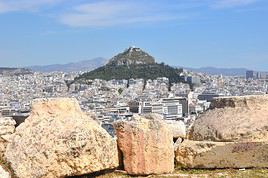
Lycabettus
At 277 metres, this hill is the highest point in the city of Athens. You can reach the summit, where the Chapel of Saint George stands, by funicular. The panoramic view over the city is naturally superb.
At 277 metres, this hill is the highest point in the city of Athens. You can reach the summit, where the Chapel of Saint George stands, by funicular. The panoramic view over the city is naturally superb.
Pnyx
Between the Muses and the Nymphs, the Pnyx hill overlooks the agora and has a few ancient ruins. Like the others, it offers a fine view of its surroundings.
Between the Muses and the Nymphs, the Pnyx hill overlooks the agora and has a few ancient ruins. Like the others, it offers a fine view of its surroundings.