last edited Apr 22, 2020
What to See in Limoges
Contributionsversion #2created Apr 22, 2020Report this pageLatest contributions in this guideContributors to this guide
Location Map of Limoges
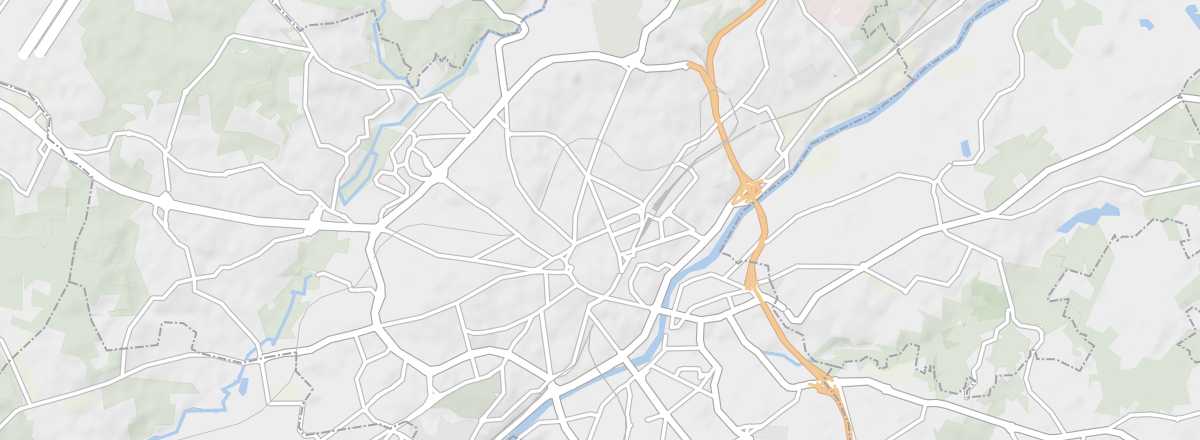 Limoges
Open the interactive map
Overview
Tourist Sites and Areas
Butchers' Quarter
This is one of the city’s two historic and lively districts, more broadly "integrated" into the city centre (or "Château Quarter"). It also features many narrow streets, including Butchers’ Street, historic façades, and shops.
This is one of the city’s two historic and lively districts, more broadly "integrated" into the city centre (or "Château Quarter"). It also features many narrow streets, including Butchers’ Street, historic façades, and shops.
Old Limoges
Also known as the Cité. Located on the Puy Saint-Étienne overlooking the Vienne, this is the oldest district in the city. It is home to the cathedral, several museums, and charming narrow streets or small squares surrounded by old façades, some with half-timbering and exposed beams.
Also known as the Cité. Located on the Puy Saint-Étienne overlooking the Vienne, this is the oldest district in the city. It is home to the cathedral, several museums, and charming narrow streets or small squares surrounded by old façades, some with half-timbering and exposed beams.
Landmarks and Architectural Ensembles
Cathédrale Saint-Étienne
Construction began in the 13th century (and finished six centuries later!), this Gothic building boasts a striking façade and a rich interior. It stands in the old town, next to the Bishop’s Gardens and the Museum of Fine Arts.
Construction began in the 13th century (and finished six centuries later!), this Gothic building boasts a striking façade and a rich interior. It stands in the old town, next to the Bishop’s Gardens and the Museum of Fine Arts.
Saint-Michel-des-Lions Church
On a charming little square in the old part of Limoges, the church owes its name to the four Gallo-Roman stone lions that "guard" it. Construction began in the 14th century, and it is Gothic in style.
On a charming little square in the old part of Limoges, the church owes its name to the four Gallo-Roman stone lions that "guard" it. Construction began in the 14th century, and it is Gothic in style.
Limoges Benedictine Station
With its bell tower and esplanade, Limoges station, built in the 1920s, is a magnificent building and a symbol of the prosperity the city experienced between the two world wars.
With its bell tower and esplanade, Limoges station, built in the 1920s, is a magnificent building and a symbol of the prosperity the city experienced between the two world wars.
Halles centrales
Over a century old, they are a fine example of late 19th-century architecture, blending brick and metal structures.
Over a century old, they are a fine example of late 19th-century architecture, blending brick and metal structures.
La Règle Underground Passage
Limoges has many underground passages and cellars built over the centuries, primarily for storing goods. The one at the former La Règle Abbey can be visited as part of guided tours.
Limoges has many underground passages and cellars built over the centuries, primarily for storing goods. The one at the former La Règle Abbey can be visited as part of guided tours.
Museums
Limoges City of Trades and Arts
Located on the edge of the Bishop's Garden, this is a meeting and exhibition space dedicated to the craft of *compagnonnage* and the work of *compagnons*. Visitors can see dozens of works completed since the 19th century.
Located on the edge of the Bishop's Garden, this is a meeting and exhibition space dedicated to the craft of *compagnonnage* and the work of *compagnons*. Visitors can see dozens of works completed since the 19th century.
Musée des Beaux-arts
Housed in a former 18th-century episcopal palace (formerly known as the Bishop's Museum) in the old town, it features an Egyptian gallery, a section dedicated to the city's history up to 1914, a collection of paintings and sculptures from the 14th to the 20th century, and an extensive enamel collection.
Housed in a former 18th-century episcopal palace (formerly known as the Bishop's Museum) in the old town, it features an Egyptian gallery, a section dedicated to the city's history up to 1914, a collection of paintings and sculptures from the 14th to the 20th century, and an extensive enamel collection.
Adrien Dubouché National Museum
Limoges is known for its porcelain, so it makes sense that it has a museum dedicated to it and to the history of ceramics. Over 15,000 pieces are on display.
Limoges is known for its porcelain, so it makes sense that it has a museum dedicated to it and to the history of ceramics. Over 15,000 pieces are on display.
Musée de la Résistance
The site, a former convent, is dedicated to the history of the Resistance, the Occupation, and the deportation in Limousin. Also worth noting is that the martyred village of Oradour-sur-Glane is just a few kilometers from Limoges.
The site, a former convent, is dedicated to the history of the Resistance, the Occupation, and the deportation in Limousin. Also worth noting is that the martyred village of Oradour-sur-Glane is just a few kilometers from Limoges.
Parks and Gardens
Vienne Riverbanks
A green corridor developed as a promenade along the Vienne River. The spot is very popular.
A green corridor developed as a promenade along the Vienne River. The spot is very popular.
Jardin de l'Évêché
It is right next to the cathedral and consists of landscaped terraces overlooking the Vienne (river). It is the largest green space in central Limoges.
It is right next to the cathedral and consists of landscaped terraces overlooking the Vienne (river). It is the largest green space in central Limoges.
Jardin d'Orsay
On the site of a Gallo-Roman amphitheatre that has since disappeared, this small urban park hosts various events and activities during the summer season. It is located in the upper part of the city.
On the site of a Gallo-Roman amphitheatre that has since disappeared, this small urban park hosts various events and activities during the summer season. It is located in the upper part of the city.
Nearby
Some interesting sites to see around Limoges:

Jarrauds Waterfall
In the south of the department, in Saint-Martin Château, this is one of the main waterfalls you can discover on foot via the "GR trail of waterfalls, moors, and peat bogs".
In the south of the department, in Saint-Martin Château, this is one of the main waterfalls you can discover on foot via the "GR trail of waterfalls, moors, and peat bogs".
Chalucet Castle
About ten kilometres south of Limoges, these are the overgrown remains of what was once one of the most important fortresses in the Limousin region.
About ten kilometres south of Limoges, these are the overgrown remains of what was once one of the most important fortresses in the Limousin region.

Coussac-Bonneval Castle
This is a charming small castle blending several architectural styles in the village of the same name.
This is a charming small castle blending several architectural styles in the village of the same name.

Mortemart
This hamlet is part of the "Most Beautiful Villages of France." You can see a small 15th-century château, two convents, a beautiful covered market, and several historic bourgeois residences.
This hamlet is part of the "Most Beautiful Villages of France." You can see a small 15th-century château, two convents, a beautiful covered market, and several historic bourgeois residences.

Oradour-sur-Glane
The ruins of this martyred village, which was destroyed and its population massacred on 10 June 1944 by Nazi troops.
The ruins of this martyred village, which was destroyed and its population massacred on 10 June 1944 by Nazi troops.
Périgord-Limousin Regional Nature Park
This is a vast area of hedgerows and forests shared by the Haute-Vienne and Dordogne departments.
This is a vast area of hedgerows and forests shared by the Haute-Vienne and Dordogne departments.

Saint-Léonard-de-Noblat
The small town has, in addition to a few old buildings, a Romanesque collegiate church dating from the Middle Ages, classified as a UNESCO World Heritage Site as part of the Way of Saint James.
The small town has, in addition to a few old buildings, a Romanesque collegiate church dating from the Middle Ages, classified as a UNESCO World Heritage Site as part of the Way of Saint James.
Additional Information
Recommended
Oradour-sur-Glane
★★★ The ruins of this martyred village, which was destroyed and its population massacred on 10 June 1944 by Nazi troops.
Worth a look / Other
Vienne Riverbanks
★★ A green corridor developed as a promenade along the Vienne River. The spot is very popular.
Jarrauds Waterfall
★★ In the south of the department, in Saint-Martin Château, this is one of the main waterfalls you can discover on foot via the "GR trail of…
Saint-Étienne Cathedral (Limoges)
★★ Construction began in the 13th century (and finished six centuries later!), this Gothic building boasts a striking façade and a rich…
Chalucet Castle
★★ About ten kilometres south of Limoges, these are the overgrown remains of what was once one of the most important fortresses in the…
Coussac-Bonneval Castle
★★ This is a charming small castle blending several architectural styles in the village of the same name.
Bishop's Garden (Limoges)
★★ It is right next to the cathedral and consists of landscaped terraces overlooking the Vienne (river). It is the largest green space in…
Mortemart
★★ This hamlet is part of the "Most Beautiful Villages of France." You can see a small 15th-century château, two convents, a beautiful covered…
Fine Arts Museum (Limoges)
★★ Housed in a former 18th-century episcopal palace (formerly known as the Bishop's Museum) in the old town, it features an Egyptian gallery…
Périgord-Limousin Regional Nature Park
★★ This is a vast area of hedgerows and forests shared by the Haute-Vienne and Dordogne departments.
Butchers' Quarter
★★ This is one of the city’s two historic and lively districts, more broadly "integrated" into the city centre (or "Château Quarter")…
Saint-Léonard-de-Noblat
★★ The small town has, in addition to a few old buildings, a Romanesque collegiate church dating from the Middle Ages, classified as a UNESCO…
Old Limoges
★★ Also known as the Cité. Located on the Puy Saint-Étienne overlooking the Vienne, this is the oldest district in the city. It is home to the…
Limoges City of Trades and Arts
★ Located on the edge of the Bishop's Garden, this is a meeting and exhibition space dedicated to the craft of *compagnonnage* and the work…
Saint-Michel-des-Lions Church
★ On a charming little square in the old part of Limoges, the church owes its name to the four Gallo-Roman stone lions that "guard" it…
Limoges Benedictine Station
★ With its bell tower and esplanade, Limoges station, built in the 1920s, is a magnificent building and a symbol of the prosperity the city…
Central Markets (Limoges)
★ Over a century old, they are a fine example of late 19th-century architecture, blending brick and metal structures.
Orsay Garden (Limoges)
★ On the site of a Gallo-Roman amphitheatre that has since disappeared, this small urban park hosts various events and activities during the…
Resistance Museum (Limoges)
★ The site, a former convent, is dedicated to the history of the Resistance, the Occupation, and the deportation in Limousin. Also worth…
Adrien Dubouché National Museum
★ Limoges is known for its porcelain, so it makes sense that it has a museum dedicated to it and to the history of ceramics. Over 15,000…
La Règle Underground Passage
★ Limoges has many underground passages and cellars built over the centuries, primarily for storing goods. The one at the former La Règle…
- Saint-Étienne Cathedral (Limoges)
- Bishop's Garden (Limoges)
- Fine Arts Museum (Limoges)
- Saint-Michel-des-Lions Church
- Old Limoges
- Butchers' Quarter
- Limoges Benedictine Station
- Adrien Dubouché National Museum
- Resistance Museum (Limoges)
- Limoges City of Trades and Arts
- Orsay Garden (Limoges)
- Vienne Riverbanks
- Central Markets (Limoges)
- La Règle Underground Passage