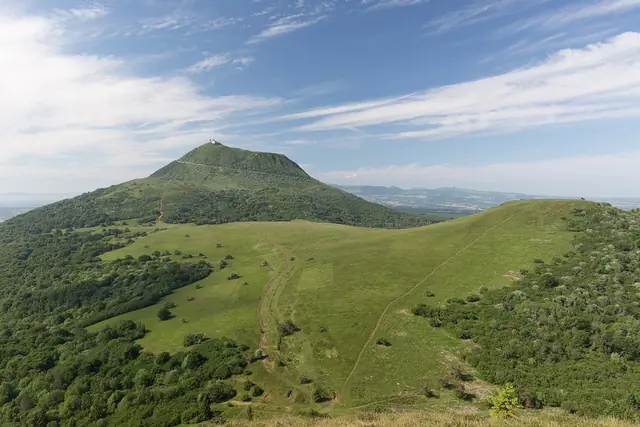
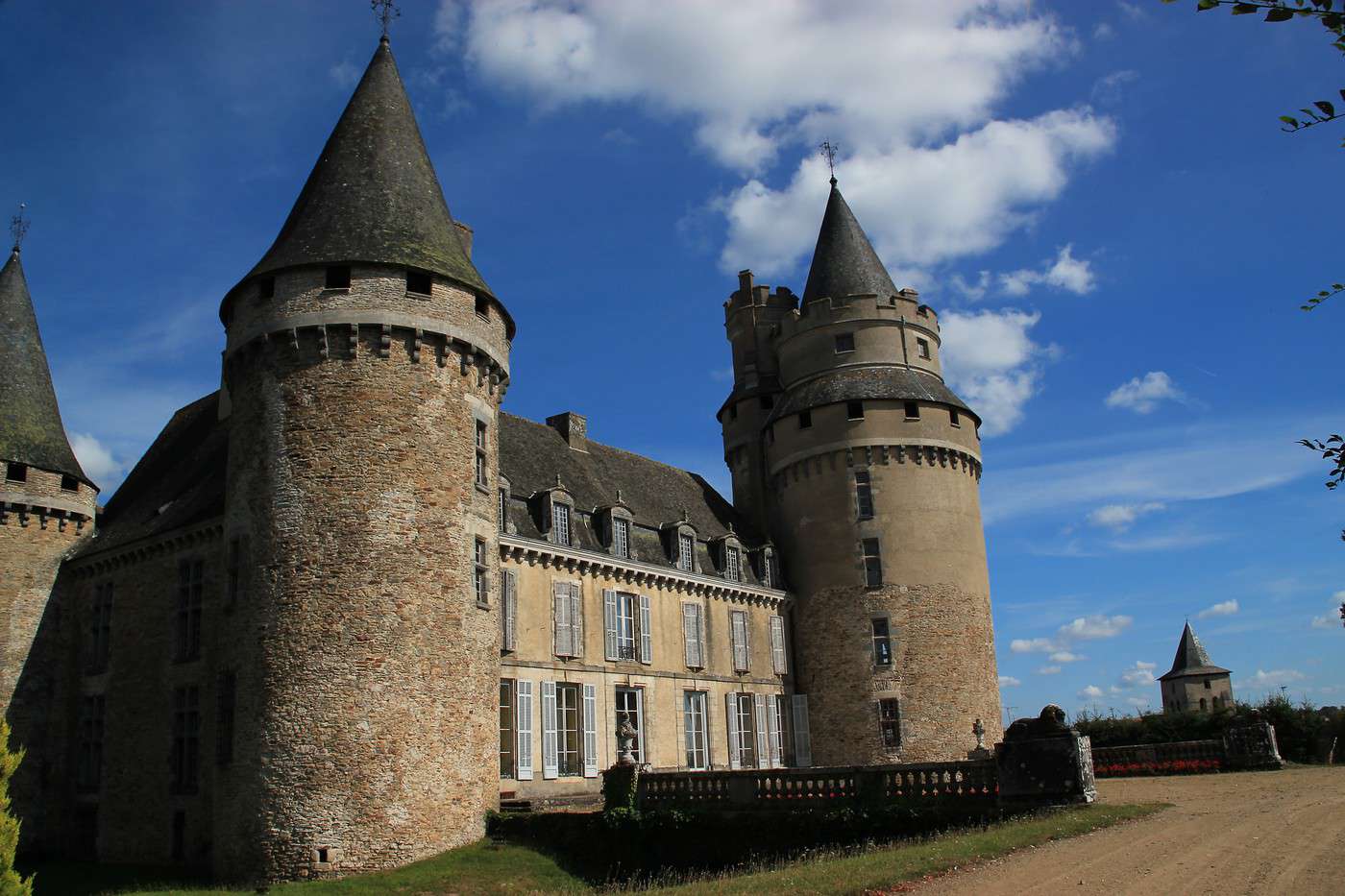
This is a nature-focused department with parks and lakes that will delight ecotourism enthusiasts. However, Haute-Vienne also boasts a rich heritage, including Limoges, which is well worth a visit, several medieval castles (Chalucet, Coussac...), Mortemart, listed among the "Most Beautiful Villages of France," and above all Oradour-sur-Glane, one of France’s key "memory tourism" sites.
This is a nature-focused department with parks and lakes, the most famous being Vassivière. It will delight ecotourism enthusiasts. However, Haute-Vienne also boasts a rich historical and cultural heritage, including Limoges, which is well worth a visit, several medieval castles (Chalucet, Coussac...), the village of Mortemart, listed among the "Most Beautiful Villages of France," and above all Oradour-sur-Glane, one of France’s key "memory tourism" sites.
What to Do in Haute-Vienne
Climate and Weather
Haute-Vienne enjoys an oceanic climate with a "mountain influence" due to its proximity to the Massif Central and its altitude. Winters can be cold and snowy, especially in the highlands, while summers are pleasant and fairly warm. Autumn is often a sunny and enjoyable season.
Butchers' Quarter ★★ This is one of the city’s two historic and lively districts, more broadly "integrated" into the city centre (or "Château Quarter"). It also features many narrow streets, including Butchers’ Street, historic façades, and shops. Old Limoges…
Straddling Creuse and Haute-Vienne, in the Millevaches Park, this is a major local tourism spot for swimming, water activities, and short hikes. In the middle of this artificial lake, an island houses a contemporary art centre.
Overview of the lake
Straddling Creuse and Haute-Vienne, in the Millevaches Park, this is a major local tourism spot for swimming, water activities, and short hikes. In the middle of this artificial lake, an island houses a contemporary art centre.
The main attraction of the village is the remains of its two castles.
Ecomuseum of the Pays de Châlus★ Housed in former stables, the site displays numerous objects showcasing rural life in the Limousin countryside during the 19th and 20th centuries.
In the northern part of the department, Le Dorat is a large village with an impressive Romanesque collegiate church, remnants of fortifications, and a few old houses.
Overview of Le Dorat
In the northern part of the department, Le Dorat is a large village with an impressive Romanesque collegiate church, remnants of fortifications, and a few old houses.
Key Facts
Type of place: village.
Tourist interest: ★ (worth a stop if you are in the area).
Location: in the northern part of the Haute-Vienne department.
This hamlet is part of the "Most Beautiful Villages of France." You can see a small 15th-century château, two convents, a beautiful covered market, and several historic bourgeois residences.
Overview of Mortemart
The hamlet of Mortemart is part of the "Most Beautiful Villages of France." You can see a small 15th-century château, two convents, a beautiful covered market, and several historic bourgeois residences.
Key Details
Type of place: village.
Tourist interest: ★★ (worth seeing).
Location: northwest of Limoges, in the Haute-Vienne department.
The town of Rochechouart features a beautiful 11th-century church and a charming 13th-century château, a key site during the Hundred Years' War, which now partly houses a contemporary art museum.
Meteorite Space★ The full story of a meteorite impact in the region around 214 million years ago, plus other details about the solar system and meteorites in general.
Rochechouart Museum of Contemporary Art★ This museum is located in the Rochechouart château. Beyond temporary exhibitions, it houses 250 works that blend contemporary creation with local historical heritage.
This museum is located in the Rochechouart château. Beyond temporary exhibitions, it houses 250 works that blend contemporary creation with local historical heritage.
Overview of the Museum
This museum is located in the Rochechouart château. Beyond temporary exhibitions, it houses 250 works that blend contemporary creation with local historical heritage.
Tourist interest:★ (worth a stop if you are in the area).
A town of just over 11,000 inhabitants with significant religious heritage.
Overview of Saint-Junien
Saint-Junien, a town of just over 11,000 inhabitants, boasts significant religious heritage.
Key Facts
Type de lieu: small town.
Intérêt touristique: ★ (worth a stop if you are in the area).
Localisation: in the Haute-Vienne department, between Limoges and Angoulême.
Distances:
Heure locale:Heure : 18896.
Population: 11,196 inhabitants (2014).
Superficie: 56.82 km²
Altitude: 157 to 317 m.
Site internet:
History of Saint-Junien
What to See and Do in Saint-Junien
Religious Heritage of Saint-Junien★ Saint-Amand Abbey (12th century), the Collegiate Church, and three or four other chapels and churches form the main tourist attractions of the town.
The small town has, in addition to a few old buildings, a Romanesque collegiate church dating from the Middle Ages, classified as a UNESCO World Heritage Site as part of the Way of Saint James.
Overview of Saint-Léonard
The small town of Saint-Léonard-de-Noblat has, in addition to a few old buildings, a Romanesque collegiate church dating from the Middle Ages, classified as a UNESCO World Heritage Site as part of the Ways of Saint-Jacques-de-Compostela.
Key Facts
Type de lieu: small town.
Intérêt touristique: ★★ (worth seeing).
Localisation: east of Limoges, in the Haute-Vienne department.
Old buildings along narrow streets and, above all, a beautiful Romanesque collegiate church dating from the Middle Ages, listed as a UNESCO World Heritage Site, give the town its charm.
Musées de Saint-Léonard de Noblat:
HistoRail★ A railway museum featuring railway-related artifacts and model train layouts with miniature networks.
Got Mill★ This restored water mill is now a museum offering guided tours on papermaking and the history of printing.
Gay-Lussac Museum★ This municipal museum is dedicated to Gay-Lussac, a chemist born in 1778 in the town.
In Le Vigen, on the outskirts of Limoges, this is a zoological and landscaped park built around a château. It is the second most visited site in the department.
Overview of the zoo
In Le Vigen, on the outskirts of Limoges, this is a zoological and landscaped park built around a château. It is the second most visited site in the Haute-Vienne department.
Tourist interest:★ (worth a stop if you are in the area).
A tourist itinerary, primarily in Haute-Vienne, covering 200 kilometres and 23 sites (castles, medieval towns, monuments...) more or less linked to this historical figure or his era (in a somewhat broad sense).
Overview of the Richard the Lionheart Route
This is a tourist itinerary, mainly in the south of Haute-Vienne, covering 200 kilometres and 23 sites (castles, medieval towns, monuments...) more or less linked to this historical figure or his era (in a somewhat broad sense).
Key details
Type de lieu: scenic route.
Intérêt touristique:★★ (worth seeing).
Thématique: historical route.
Localisation: in the southwest of the Haute-Vienne department.