
Overview
Districts and Tourist Areas
Chueca
Located behind Gran Via, this is one of the capital’s liveliest districts—trendy and gay-friendly.
Located behind Gran Via, this is one of the capital’s liveliest districts—trendy and gay-friendly.
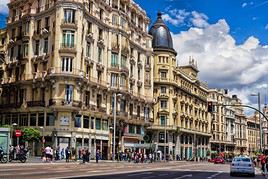
Gran Via
This is the main thoroughfare in the city centre, bustling with shops and activity. You’ll find some beautiful neo-classical buildings from the late 19th century here.
This is the main thoroughfare in the city centre, bustling with shops and activity. You’ll find some beautiful neo-classical buildings from the late 19th century here.
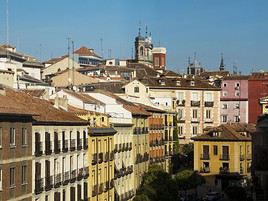
La Latina
In the historic center, with its narrow, sloping streets, La Latina is one of Madrid’s liveliest districts, with its bars, clubs, and restaurants. It’s also very busy on Sunday mornings thanks to the El Rastro flea market.
In the historic center, with its narrow, sloping streets, La Latina is one of Madrid’s liveliest districts, with its bars, clubs, and restaurants. It’s also very busy on Sunday mornings thanks to the El Rastro flea market.
Lavapiés
A lively, cosmopolitan neighbourhood with restaurants and shops from around the world. It’s also a hub for culture, especially alternative arts, with plenty of theatres and galleries.
A lively, cosmopolitan neighbourhood with restaurants and shops from around the world. It’s also a hub for culture, especially alternative arts, with plenty of theatres and galleries.

Malasaña
Not far from Puerta del Sol, the area is known for its nightlife with bars and nightclubs that attract a young crowd. It was also the birthplace of the Movida cultural movement in the 1980s.
Not far from Puerta del Sol, the area is known for its nightlife with bars and nightclubs that attract a young crowd. It was also the birthplace of the Movida cultural movement in the 1980s.
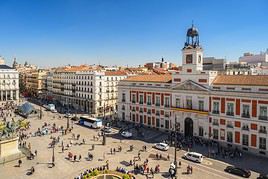
Puerta del Sol
Next to Plaza Mayor and the Royal Palace. It is one of Madrid's most famous and lively squares.
Next to Plaza Mayor and the Royal Palace. It is one of Madrid's most famous and lively squares.
Monuments and Architectural Ensembles
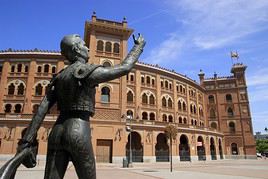
Las Ventas Bullring
This is the prestigious bullring of Madrid and the largest and most remarkable in Spain. It also houses the "Bullfighting Museum".
This is the prestigious bullring of Madrid and the largest and most remarkable in Spain. It also houses the "Bullfighting Museum".
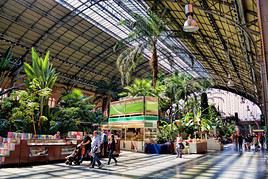
Madrid-Atocha Station
Madrid's grand station features beautiful late 19th-century architecture. The site also houses the "Memorial to the Victims of the 11 March 2004 Attacks".
Madrid's grand station features beautiful late 19th-century architecture. The site also houses the "Memorial to the Victims of the 11 March 2004 Attacks".
Gran Via
This is the main thoroughfare in the city centre, bustling with shops and activity. You’ll find some beautiful neo-classical buildings from the late 19th century here.
This is the main thoroughfare in the city centre, bustling with shops and activity. You’ll find some beautiful neo-classical buildings from the late 19th century here.
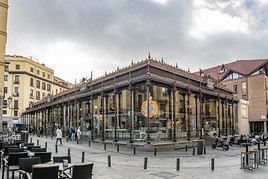
San Miguel Market
Near Plaza Mayor, this site has retained its early 20th-century metal architecture. It’s a major tourist draw and gastronomically "renowned.".
Near Plaza Mayor, this site has retained its early 20th-century metal architecture. It’s a major tourist draw and gastronomically "renowned.".
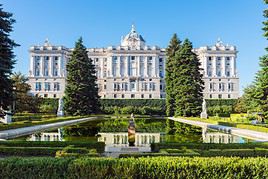
Royal Palace
This is the royal palace built in the mid-18th century in the neoclassical style. Visitors can explore its lavish interiors, as well as the Royal Armoury and various art collections.
This is the royal palace built in the mid-18th century in the neoclassical style. Visitors can explore its lavish interiors, as well as the Royal Armoury and various art collections.
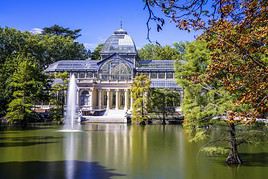
Crystal Palace
This stunning glass and metal structure was built for the 1887 colonial exhibition. It lies at the heart of Retiro Park.
This stunning glass and metal structure was built for the 1887 colonial exhibition. It lies at the heart of Retiro Park.
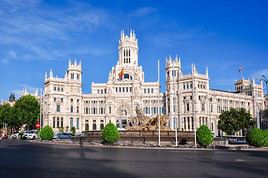
Cibeles Square
A charming square in central Madrid, featuring its namesake fountain and several palaces lining its edges.
A charming square in central Madrid, featuring its namesake fountain and several palaces lining its edges.
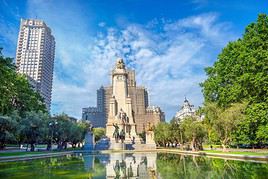
Plaza de Espana
One of Madrid's main squares, known for its Cervantes statue and the surrounding buildings in the 1950s "American" style.
One of Madrid's main squares, known for its Cervantes statue and the surrounding buildings in the 1950s "American" style.
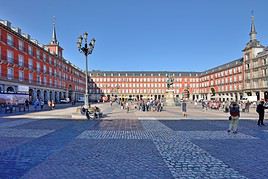
Plaza Mayor
Spacious, airy, and pedestrian-friendly, with its arcades and beautiful facades, it is one of Europe’s prettiest squares. It also lies at the heart of Madrid’s historic tourist center.
Spacious, airy, and pedestrian-friendly, with its arcades and beautiful facades, it is one of Europe’s prettiest squares. It also lies at the heart of Madrid’s historic tourist center.
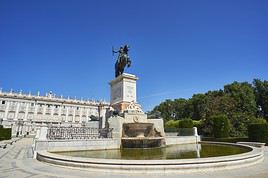
Plaza de Oriente
Between the Royal Palace and the Royal Theatre, this is a pleasant spot lined with shops and terraces, featuring beautiful gardens and sculptures of the kings of Spain.
Between the Royal Palace and the Royal Theatre, this is a pleasant spot lined with shops and terraces, featuring beautiful gardens and sculptures of the kings of Spain.
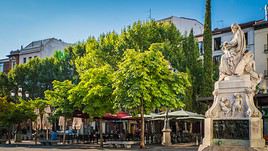
Plaza de Santa Ana
Southeast of Puerta del Sol, the square is a lively and well-known spot lined with numerous restaurants, cafés, tapas bars, and terraces.
Southeast of Puerta del Sol, the square is a lively and well-known spot lined with numerous restaurants, cafés, tapas bars, and terraces.
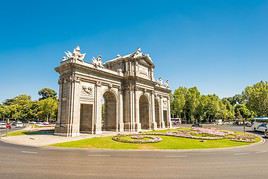
Puerta de Alcalá
A neoclassical-style monument (18th century), it is one of the five former gates that once provided access to the city of Madrid. It stands on the edge of Retiro Park.
A neoclassical-style monument (18th century), it is one of the five former gates that once provided access to the city of Madrid. It stands on the edge of Retiro Park.
Puerta del Sol
Next to Plaza Mayor and the Royal Palace. It is one of Madrid's most famous and lively squares.
Next to Plaza Mayor and the Royal Palace. It is one of Madrid's most famous and lively squares.
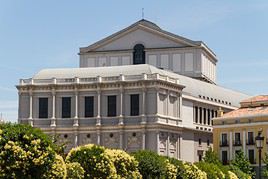
Teatro Real
Located opposite the Royal Palace, this mid-19th-century building is one of Spain’s most important opera houses.
Located opposite the Royal Palace, this mid-19th-century building is one of Spain’s most important opera houses.
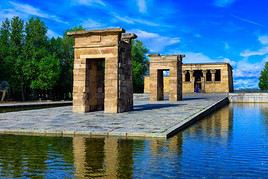
Temple of Debod
This ancient Egyptian temple was reconstructed in Madrid’s Parque del Oeste, overlooking the city, and is especially popular at sunset.
This ancient Egyptian temple was reconstructed in Madrid’s Parque del Oeste, overlooking the city, and is especially popular at sunset.
Religious Sites and Monuments
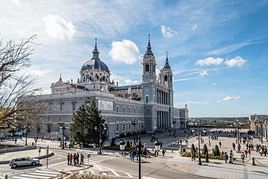
Almudena Cathedral
This large, relatively recent building (dating from the 20th century) stands opposite the royal palace to form a rather striking architectural ensemble.
This large, relatively recent building (dating from the 20th century) stands opposite the royal palace to form a rather striking architectural ensemble.
Monastery of las Descalzas Reales
This royal monastery, dating from the 16th century, also serves as a museum featuring relics and paintings from the same era.
This royal monastery, dating from the 16th century, also serves as a museum featuring relics and paintings from the same era.
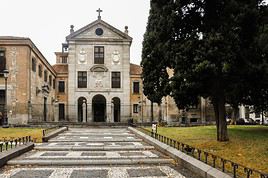
Monastère de l'Incarnation
The site is also a museum dedicated to 16th–18th century painting and sculpture.
The site is also a museum dedicated to 16th–18th century painting and sculpture.
Museums
Royal Academy of Fine Arts of San Fernando
1,400 paintings, 1,300 sculptures, 15,000 drawings, and decorative arts collections make this one of Spain’s most important museums in the field.
1,400 paintings, 1,300 sculptures, 15,000 drawings, and decorative arts collections make this one of Spain’s most important museums in the field.
CaixaForum Madrid
A former industrial brick building converted into a centre for contemporary art, exhibitions, and conferences.
A former industrial brick building converted into a centre for contemporary art, exhibitions, and conferences.
Círculo de Bellas Artes
One of Spain’s leading cultural centres, with a rich artistic and cultural programme, extensive documentation, and countless paintings and sculptures.
One of Spain’s leading cultural centres, with a rich artistic and cultural programme, extensive documentation, and countless paintings and sculptures.
Lope de Vega House-Museum
This 17th-century building was the home of one of Spain’s most important writers. It has been converted into a dedicated museum.
This 17th-century building was the home of one of Spain’s most important writers. It has been converted into a dedicated museum.
Museum of the Americas
This museum houses collections of art, archaeology, and ethnology from the Americas, spanning the pre-Columbian period to the colonial era.
This museum houses collections of art, archaeology, and ethnology from the Americas, spanning the pre-Columbian period to the colonial era.
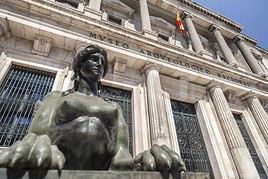
Madrid Archaeological Museum
Near the Prado Museum, the site houses prehistoric, Iberian, Greek, and Roman antiquities, as well as collections of medieval objects.
Near the Prado Museum, the site houses prehistoric, Iberian, Greek, and Roman antiquities, as well as collections of medieval objects.
Cerralbo Museum
This palace-residence showcases how an aristocratic family lived at the end of the 19th century. Within its opulent interiors, you can see nearly 50,000 items of all kinds (paintings, furniture, books, weapons, etc.).
This palace-residence showcases how an aristocratic family lived at the end of the 19th century. Within its opulent interiors, you can see nearly 50,000 items of all kinds (paintings, furniture, books, weapons, etc.).
Lázaro Galdiano Museum
This former private mansion houses, among other works, paintings by great masters such as Velázquez, El Greco, Hieronymus Bosch, and Goya.
This former private mansion houses, among other works, paintings by great masters such as Velázquez, El Greco, Hieronymus Bosch, and Goya.

Prado Museum
One of Madrid's "must-sees" and one of the world's richest museums dedicated to painting. It features European artists, particularly Spanish, from the 14th to the early 19th century.
One of Madrid's "must-sees" and one of the world's richest museums dedicated to painting. It features European artists, particularly Spanish, from the 14th to the early 19th century.
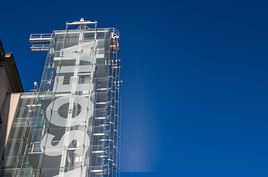
Reina Sofia National Art Centre Museum
Alongside the Prado, this is the flagship museum of the capital. It houses extensive modern and contemporary art collections from 1900 to the present day (Dalí, Miró, Picasso...).
Alongside the Prado, this is the flagship museum of the capital. It houses extensive modern and contemporary art collections from 1900 to the present day (Dalí, Miró, Picasso...).
Spain’s National Museum of Natural Sciences
This museum is dedicated to the research, description, and conservation of the world’s biological and geological diversity.
This museum is dedicated to the research, description, and conservation of the world’s biological and geological diversity.
Thyssen-Bornemisza Museum
The museum traces the history of European painting from the Middle Ages to the late 20th century.
The museum traces the history of European painting from the Middle Ages to the late 20th century.
Madrid Naval Museum
An overview of the Spanish navy from the 15th century to the present day and its influence on Spain's history.
An overview of the Spanish navy from the 15th century to the present day and its influence on Spain's history.
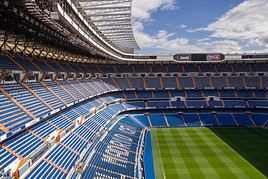
Bernabéu Tour - Real Madrid
For football fans - and like an increasing number of major clubs - this offers the chance to visit (with a guide) the stadium, facilities, and everything that has shaped or continues to shape Real Madrid's history.
For football fans - and like an increasing number of major clubs - this offers the chance to visit (with a guide) the stadium, facilities, and everything that has shaped or continues to shape Real Madrid's history.
Parks and Gardens
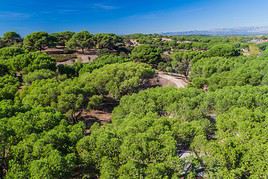
Casa de Campo
Spanning over 17 km², this is Madrid’s main urban public park. Located near the Royal Palace, it is home to several monuments, a small amusement park, and the Madrid Zoo Aquarium.
Spanning over 17 km², this is Madrid’s main urban public park. Located near the Royal Palace, it is home to several monuments, a small amusement park, and the Madrid Zoo Aquarium.
Faunia
A "mix" of zoo and botanical garden showcasing different ecosystems like the jungle, the poles, or the African forest, along with some of their wildlife.
A "mix" of zoo and botanical garden showcasing different ecosystems like the jungle, the poles, or the African forest, along with some of their wildlife.
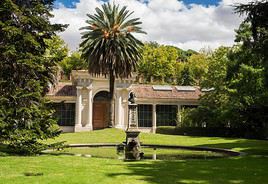
Royal Botanical Garden of Madrid
Not far from the Prado, the site is home to plants from Europe, the Americas, and the Pacific.
Not far from the Prado, the site is home to plants from Europe, the Americas, and the Pacific.
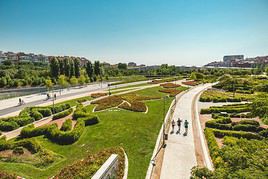
Madrid Rio
Madrid Rio Park is a recently created pedestrian landscaped area along the Manzanares River, which flows through Madrid.
Madrid Rio Park is a recently created pedestrian landscaped area along the Manzanares River, which flows through Madrid.
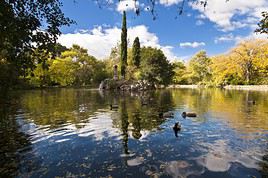
El Capricho Park
It is considered one of Madrid’s most beautiful parks, with its pond, monuments, fountains, and a style blending 18th- and 19th-century English, French, and Italian influences.
It is considered one of Madrid’s most beautiful parks, with its pond, monuments, fountains, and a style blending 18th- and 19th-century English, French, and Italian influences.
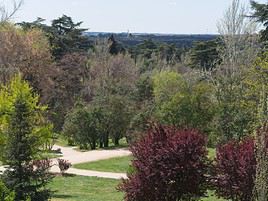
Parque del Oeste
This is a pleasant park enjoyed by Madrileños and visitors alike. It features a rose garden, some remnants of the Spanish Civil War, and, most notably in its southern section, the "famous" Egyptian Temple of Debod.
This is a pleasant park enjoyed by Madrileños and visitors alike. It features a rose garden, some remnants of the Spanish Civil War, and, most notably in its southern section, the "famous" Egyptian Temple of Debod.
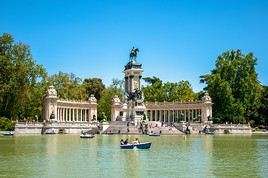
Retiro Park
A vast urban park with ponds and statues, offering a peaceful stroll. It’s also home to the beautiful Crystal Palace, a remnant of the 1887 colonial exhibition.
A vast urban park with ponds and statues, offering a peaceful stroll. It’s also home to the beautiful Crystal Palace, a remnant of the 1887 colonial exhibition.
Madrid Zoo-Aquarium
Located in the Casa de Campo, it is one of Spain’s most visited zoological parks.
Located in the Casa de Campo, it is one of Spain’s most visited zoological parks.