
UNESCO World Heritage Sites
Poland has 15 sites inscribed on the UNESCO World Heritage list:

Auschwitz-Birkenau (1979)
A few kilometres west of Kraków, Auschwitz was the largest Nazi concentration camp. A UNESCO World Heritage Site, it is now a memorial.
A few kilometres west of Kraków, Auschwitz was the largest Nazi concentration camp. A UNESCO World Heritage Site, it is now a memorial.

Malbork Castle (1997)
Also known as the Teutonic Fortress of Marienburg, this UNESCO World Heritage site is a stunning medieval castle that once served as the palace of the Teutonic Knights.
Also known as the Teutonic Fortress of Marienburg, this UNESCO World Heritage site is a stunning medieval castle that once served as the palace of the Teutonic Knights.

Historic Centre of Kraków (1978)
Largely undamaged during the war, this UNESCO-listed part of the city is rich in monuments from all periods, especially the Renaissance.
Largely undamaged during the war, this UNESCO-listed part of the city is rich in monuments from all periods, especially the Renaissance.

Historic Centre of Warsaw (1980)
This is the old quarter of the city, centered around the market square, reconstructed "true to the original" after the war and since inscribed on the UNESCO list.
This is the old quarter of the city, centered around the market square, reconstructed "true to the original" after the war and since inscribed on the UNESCO list.
Wooden Churches of Southern Lesser Poland (2003)
A collection of six wooden churches (among others) in the south of the country, listed as a UNESCO World Heritage site. These churches are slightly older (and distinct) from the Tserkvas in the same region, which are also listed.
A collection of six wooden churches (among others) in the south of the country, listed as a UNESCO World Heritage site. These churches are slightly older (and distinct) from the Tserkvas in the same region, which are also listed.
Churches of Peace in Jawor and Świdnica (2001)
The towns of Jawor and Świdnica in the Wrocław region are home to two 17th-century UNESCO-listed churches.
The towns of Jawor and Świdnica in the Wrocław region are home to two 17th-century UNESCO-listed churches.
Białowieża Forest (1979)
This vast forest park spanning both Poland and Belarus is a UNESCO World Heritage site. It is home to populations of horses, wolves, birds, and especially European bison.
This vast forest park spanning both Poland and Belarus is a UNESCO World Heritage site. It is home to populations of horses, wolves, birds, and especially European bison.
Centennial Hall in Wrocław (2006)
This reinforced concrete building was constructed between 1911 and 1913 to celebrate the centenary of the coalition troops' victory over Napoleon's forces at the Battle of Leipzig in 1813. The UNESCO-listed structure is considered a precursor to modern architecture and engineering.
This reinforced concrete building was constructed between 1911 and 1913 to celebrate the centenary of the coalition troops' victory over Napoleon's forces at the Battle of Leipzig in 1813. The UNESCO-listed structure is considered a precursor to modern architecture and engineering.
Kalwaria Zebrzydowska (1999)
The town is home to a sanctuary consisting of a basilica, a convent, and chapels, the whole complex being a UNESCO World Heritage site.
The town is home to a sanctuary consisting of a basilica, a convent, and chapels, the whole complex being a UNESCO World Heritage site.

Wieliczka and Bochnia Salt Mines (1978)
Located in two nearby towns, these salt mines are symbols of this part of the country and are UNESCO-listed. The Wieliczka mines are the most tourist-focused, with their underground cultural centre and salt-carved underground church.
Located in two nearby towns, these salt mines are symbols of this part of the country and are UNESCO-listed. The Wieliczka mines are the most tourist-focused, with their underground cultural centre and salt-carved underground church.
Muskau Park (2004)
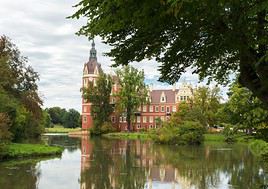
This is a landscape park straddling Germany (Bad Muskau municipality) and Poland (Łęknica). With its castle, it is a UNESCO World Heritage Site. The whole is called Park Mużakowski on the Polish side.
This is a landscape park straddling Germany (Bad Muskau municipality) and Poland (Łęknica). With its castle, it is a UNESCO World Heritage Site. The whole is called Park Mużakowski on the Polish side.

Tarnowskie Góry (2017)
This Silesian town is a UNESCO World Heritage site for its historic silver mines, partly converted into a museum.
This Silesian town is a UNESCO World Heritage site for its historic silver mines, partly converted into a museum.

Toruń (1997)
A stunning medieval city on the Vistula River. Its collection of Gothic historic buildings has earned it a place on the UNESCO World Heritage list.
A stunning medieval city on the Vistula River. Its collection of Gothic historic buildings has earned it a place on the UNESCO World Heritage list.
Tserkvas of the Carpathians (2013)
Under this name are grouped 8 traditional Orthodox churches in the south/southeast of Poland and an equal number in Ukraine. The collection is part of the World Heritage Site as a "complement" to the wooden churches of southern Lesser Poland, which are also UNESCO-listed.
Under this name are grouped 8 traditional Orthodox churches in the south/southeast of Poland and an equal number in Ukraine. The collection is part of the World Heritage Site as a "complement" to the wooden churches of southern Lesser Poland, which are also UNESCO-listed.

Zamość (1992)
One of Europe’s most beautiful Renaissance (and Baroque) cities. Its historic centre is a UNESCO World Heritage Site for this reason.
One of Europe’s most beautiful Renaissance (and Baroque) cities. Its historic centre is a UNESCO World Heritage Site for this reason.
The Coast
Malbork Castle
Also known as the Teutonic Fortress of Marienburg, this UNESCO World Heritage site is a stunning medieval castle that once served as the palace of the Teutonic Knights.
Also known as the Teutonic Fortress of Marienburg, this UNESCO World Heritage site is a stunning medieval castle that once served as the palace of the Teutonic Knights.
Elbląg
It’s a river port near the Baltic Sea with an old town (rebuilt after the war) dominated by St. Nicholas Cathedral.
It’s a river port near the Baltic Sea with an old town (rebuilt after the war) dominated by St. Nicholas Cathedral.
Frombork
The town of Copernicus, on the border with Kaliningrad, features various buildings and "old" monuments... reconstructed post-war.
The town of Copernicus, on the border with Kaliningrad, features various buildings and "old" monuments... reconstructed post-war.

Gdańsk
The former Danzig is the capital of Pomerania. Its charming historic centre was entirely rebuilt after the war, making it one of the most beautiful cities on the Baltic Sea. Several beaches surround the city, particularly in Sopot and Puck, which are Gdańsk’s seaside resorts.
The former Danzig is the capital of Pomerania. Its charming historic centre was entirely rebuilt after the war, making it one of the most beautiful cities on the Baltic Sea. Several beaches surround the city, particularly in Sopot and Puck, which are Gdańsk’s seaside resorts.
Gdynia
One of the main ports on the Baltic Sea with several pleasant beaches. It is part of the Gdańsk metropolitan area.
One of the main ports on the Baltic Sea with several pleasant beaches. It is part of the Gdańsk metropolitan area.
Giżycko
The main tourist resort in the Masurian Lakeland region, with plenty of opportunities for water-based activities.
The main tourist resort in the Masurian Lakeland region, with plenty of opportunities for water-based activities.

Kętrzyn
The town near the Russian enclave of Kaliningrad is known for having housed one of Hitler's main headquarters, the Wolfsschanze, which is now a "tourist attraction".
The town near the Russian enclave of Kaliningrad is known for having housed one of Hitler's main headquarters, the Wolfsschanze, which is now a "tourist attraction".
Kolobrzeg
A Baltic seaside and spa resort with a few historic buildings and long beaches popular with Poles and Germans.
A Baltic seaside and spa resort with a few historic buildings and long beaches popular with Poles and Germans.
Olsztyn
A large city in northeastern Poland, the regional "capital," with an old town center and a Gothic-style castle.
A large city in northeastern Poland, the regional "capital," with an old town center and a Gothic-style castle.
Hel Peninsula
A long, narrow peninsula north of Gdańsk known for its wild landscapes, stunning beaches, windsurfing, and kitesurfing. Popular seaside resorts include Jastrzebia Góra, Chalupy, Hel, and Jastarnia.
A long, narrow peninsula north of Gdańsk known for its wild landscapes, stunning beaches, windsurfing, and kitesurfing. Popular seaside resorts include Jastrzebia Góra, Chalupy, Hel, and Jastarnia.
Vistula Spit
This narrow coastal strip, shared by Russia and Poland, is home to several small seaside resorts grouped together in the municipality of Krynica Morska.
This narrow coastal strip, shared by Russia and Poland, is home to several small seaside resorts grouped together in the municipality of Krynica Morska.
Szczecin
A large port city near the German border with limited tourist appeal, featuring a reconstructed old town post-war. Nearby attractions include beaches like Trzebiez and the wetlands of the Lower Oder Valley Park.
A large port city near the German border with limited tourist appeal, featuring a reconstructed old town post-war. Nearby attractions include beaches like Trzebiez and the wetlands of the Lower Oder Valley Park.
Stutthof
This coastal village, a few kilometres east of Gdańsk, was home to the Stutthof concentration camp from 1939 to 1945. It can be visited.
This coastal village, a few kilometres east of Gdańsk, was home to the Stutthof concentration camp from 1939 to 1945. It can be visited.
Usedom
Quite touristy and very sunny, this half-German and half-Polish island offers several seaside resorts (on the German side), beautiful landscapes, and many beaches. The Polish part is home to the port of Świnoujście, from which ferries depart for Denmark and Sweden.
Quite touristy and very sunny, this half-German and half-Polish island offers several seaside resorts (on the German side), beautiful landscapes, and many beaches. The Polish part is home to the port of Świnoujście, from which ferries depart for Denmark and Sweden.
Wdzydze Kiszewskie
A village in Pomerania with an open-air museum showcasing the region’s traditional rural architecture from past centuries.
A village in Pomerania with an open-air museum showcasing the region’s traditional rural architecture from past centuries.

Wolin
This large tourist island on the German border is partly a national park known for its cliffs, forests, and bison breeding. Międzyzdroje is the island’s most popular seaside resort. Hiking and cycling are popular activities here. A Viking festival is held every July.
This large tourist island on the German border is partly a national park known for its cliffs, forests, and bison breeding. Międzyzdroje is the island’s most popular seaside resort. Hiking and cycling are popular activities here. A Viking festival is held every July.
Natural Heritage

Mazury Lakes
Mazury, a province in the northeast, is rich in lakes, canals, rivers, and forests. Its 3,500 lakes (including the largest, Śniardwy) are popular with visitors for swimming and outdoor activities (hiking, cycling, canoeing, fishing, etc.).
Mazury, a province in the northeast, is rich in lakes, canals, rivers, and forests. Its 3,500 lakes (including the largest, Śniardwy) are popular with visitors for swimming and outdoor activities (hiking, cycling, canoeing, fishing, etc.).
Bory Tucholskie National Park
Lakes, forests, and opportunities for hiking, canoeing, kayaking, and cycling in this small natural park in northern Poland.
Lakes, forests, and opportunities for hiking, canoeing, kayaking, and cycling in this small natural park in northern Poland.
Słowiński National Park
This charming stretch of the Baltic coastline, between the seaside towns of Łeba and Rowy, is home to one of Europe’s largest dune systems. You can hike or cycle through the area.
This charming stretch of the Baltic coastline, between the seaside towns of Łeba and Rowy, is home to one of Europe’s largest dune systems. You can hike or cycle through the area.
Lower Oder Valley National Park
This is a German-Polish natural polder area near Szczecin, home to numerous nesting bird species.
This is a German-Polish natural polder area near Szczecin, home to numerous nesting bird species.
Central Poland
Białystok
The capital of Podlachia is the largest city in northeastern Poland. Its main tourist attraction is the vast Branicki Palace, built in the early 18th century. Several national parks (including Białowieża) and the Masurian Lakes are accessible from Białystok.
The capital of Podlachia is the largest city in northeastern Poland. Its main tourist attraction is the vast Branicki Palace, built in the early 18th century. Several national parks (including Białowieża) and the Masurian Lakes are accessible from Białystok.
Bydgoszcz
A rather beautiful and pleasant city in central Poland, known for its Art Nouveau and Baroque architecture.
A rather beautiful and pleasant city in central Poland, known for its Art Nouveau and Baroque architecture.
Dziekanowice
This village near Poznań is home to one of Europe’s most important open-air museums, featuring a collection of rural houses and traditional buildings from the 18th–19th centuries.
This village near Poznań is home to one of Europe’s most important open-air museums, featuring a collection of rural houses and traditional buildings from the 18th–19th centuries.

Łódź
A major industrial city and Poland's third-largest, Łódź isn't the most tourist-focused despite several museums and some beautiful bourgeois mansions from the textile era.
A major industrial city and Poland's third-largest, Łódź isn't the most tourist-focused despite several museums and some beautiful bourgeois mansions from the textile era.
Suprasl Monastery
This is a charming 16th-century Orthodox monastery in the town of Suprasl, near Białystok.
This is a charming 16th-century Orthodox monastery in the town of Suprasl, near Białystok.
Ostrów Lednicki
This island on Lake Lednica contains archaeological remains of a medieval Slavic settlement.
This island on Lake Lednica contains archaeological remains of a medieval Slavic settlement.
Rogalin Palace
A beautiful 18th-century Baroque palace that also houses a painting museum, set in extensive grounds in the village of the same name.
A beautiful 18th-century Baroque palace that also houses a painting museum, set in extensive grounds in the village of the same name.
Muskau Park
This is a landscape park straddling Germany (Bad Muskau municipality) and Poland (Łęknica). With its castle, it is a UNESCO World Heritage Site. The whole is called Park Mużakowski on the Polish side.
This is a landscape park straddling Germany (Bad Muskau municipality) and Poland (Łęknica). With its castle, it is a UNESCO World Heritage Site. The whole is called Park Mużakowski on the Polish side.

Poznań
A large, pleasant, and lively city with an old town, numerous museums, and many historical and religious buildings. Several lakes and forests in the surrounding area.
A large, pleasant, and lively city with an old town, numerous museums, and many historical and religious buildings. Several lakes and forests in the surrounding area.

Radom
South of Warsaw, the city has some beautiful historic buildings and an open-air museum dedicated to the region's traditional housing.
South of Warsaw, the city has some beautiful historic buildings and an open-air museum dedicated to the region's traditional housing.
Toruń
A stunning medieval city on the Vistula River. Its collection of Gothic historic buildings has earned it a place on the UNESCO World Heritage list.
A stunning medieval city on the Vistula River. Its collection of Gothic historic buildings has earned it a place on the UNESCO World Heritage list.

Warsaw
Poland’s capital is one of Europe’s most "historic" cities. With its diverse architectural styles and city centre (largely rebuilt after the war), it is a UNESCO World Heritage site.
Poland’s capital is one of Europe’s most "historic" cities. With its diverse architectural styles and city centre (largely rebuilt after the war), it is a UNESCO World Heritage site.

Zelazowa Wola
About fifty kilometres west of Warsaw, the village is the birthplace of Chopin. You can visit his birthplace, now a museum.
About fifty kilometres west of Warsaw, the village is the birthplace of Chopin. You can visit his birthplace, now a museum.
Natural Heritage
Augustów Canal
This canal with locks spanning around a hundred kilometres, running from Poland (Augustów) to Belarus (Grodno), serves a partly tourist purpose. You can hike along its banks or explore it by canoe, kayak, or houseboat.
This canal with locks spanning around a hundred kilometres, running from Poland (Augustów) to Belarus (Grodno), serves a partly tourist purpose. You can hike along its banks or explore it by canoe, kayak, or houseboat.
Białowieża Forest
This vast forest park spanning both Poland and Belarus is a UNESCO World Heritage site. It is home to populations of horses, wolves, birds, and especially European bison.
This vast forest park spanning both Poland and Belarus is a UNESCO World Heritage site. It is home to populations of horses, wolves, birds, and especially European bison.
Biebrza National Park
Poland's largest national park is also one of Europe's most extensive marshland regions, renowned for birdwatching. You can also encounter moose here.
Poland's largest national park is also one of Europe's most extensive marshland regions, renowned for birdwatching. You can also encounter moose here.
Kampinos National Park
This forest on the outskirts of Warsaw is popular for its hiking, skiing, cycling, and horseback riding trails. The park is also home to a population of moose and lynx.
This forest on the outskirts of Warsaw is popular for its hiking, skiing, cycling, and horseback riding trails. The park is also home to a population of moose and lynx.
Wielkopolska National Park
Forests and lakes make this a popular holiday destination, also well-known among hikers.
Forests and lakes make this a popular holiday destination, also well-known among hikers.
Wigry National Park
This northeastern park is a summer favourite for hiking, fishing, and boating on its many small lakes.
This northeastern park is a summer favourite for hiking, fishing, and boating on its many small lakes.
Southern Poland

Tyniec Abbey
Just outside Kraków, this is one of the oldest religious buildings in the country, perched on its rock above the Vistula in the village of Tyniec.
Just outside Kraków, this is one of the oldest religious buildings in the country, perched on its rock above the Vistula in the village of Tyniec.
Auschwitz-Birkenau
A few kilometres west of Kraków, Auschwitz was the largest Nazi concentration camp. A UNESCO World Heritage Site, it is now a memorial.
A few kilometres west of Kraków, Auschwitz was the largest Nazi concentration camp. A UNESCO World Heritage Site, it is now a memorial.

Bielsko-Biała
This city with its interesting architecture is primarily a base for exploring the western part of the Beskidy Mountains with its wooden churches and outdoor activities, including skiing.
This city with its interesting architecture is primarily a base for exploring the western part of the Beskidy Mountains with its wooden churches and outdoor activities, including skiing.
Fürstenstein Castle
Also known as Ksiaz, this is the largest castle in the southwest of Poland. Its charming blend of Gothic, Baroque, and Rococo styles, along with its park, makes it a popular visit.
Also known as Ksiaz, this is the largest castle in the southwest of Poland. Its charming blend of Gothic, Baroque, and Rococo styles, along with its park, makes it a popular visit.
Moszna Castle
This is one of the best-known buildings in Silesia, with its slightly British appearance and beautiful gardens. It dates back to the 17th century.
This is one of the best-known buildings in Silesia, with its slightly British appearance and beautiful gardens. It dates back to the 17th century.
Cieszyn
A small town with medieval origins on the Polish-Czech border. It offers quite charming architecture.
A small town with medieval origins on the Polish-Czech border. It offers quite charming architecture.

Kraków
One of Poland’s most tourist-friendly cities, with its museums and stunning historic centre, a UNESCO World Heritage site.
One of Poland’s most tourist-friendly cities, with its museums and stunning historic centre, a UNESCO World Heritage site.
Częstochowa
This large city in Silesia is world-famous for its Pauline Fathers Monastery, one of the main Christian pilgrimage sites, attracting around 5 million visitors per year.
This large city in Silesia is world-famous for its Pauline Fathers Monastery, one of the main Christian pilgrimage sites, attracting around 5 million visitors per year.
Wooden Churches of Southern Lesser Poland
A collection of six wooden churches (among others) in the south of the country, listed as a UNESCO World Heritage site. These churches are slightly older (and distinct) from the Tserkvas in the same region, which are also listed.
A collection of six wooden churches (among others) in the south of the country, listed as a UNESCO World Heritage site. These churches are slightly older (and distinct) from the Tserkvas in the same region, which are also listed.
Churches of Peace in Jawor and Świdnica
The towns of Jawor and Świdnica in the Wrocław region are home to two 17th-century UNESCO-listed churches.
The towns of Jawor and Świdnica in the Wrocław region are home to two 17th-century UNESCO-listed churches.
Jelenia Góra
A pleasant large spa and tourist town in the southwest with nearby ski resorts (Karpacz, Szklarska Poręba), as well as hiking and kayaking opportunities.
A pleasant large spa and tourist town in the southwest with nearby ski resorts (Karpacz, Szklarska Poręba), as well as hiking and kayaking opportunities.
Kalwaria Zebrzydowska
The town is home to a sanctuary consisting of a basilica, a convent, and chapels, the whole complex being a UNESCO World Heritage site.
The town is home to a sanctuary consisting of a basilica, a convent, and chapels, the whole complex being a UNESCO World Heritage site.
Karpacz
A fairly touristy large village in the Sudetes, Karpacz is one of the region’s many spa resorts. It’s also a major hub for winter sports and hiking.
A fairly touristy large village in the Sudetes, Karpacz is one of the region’s many spa resorts. It’s also a major hub for winter sports and hiking.

Katowice
A major industrial and commercial city in the south of the country. While not the most tourist-focused, Katowice boasts a mix of beautiful historic and modern buildings, along with numerous museums and parks. The metropolitan area is also home to the "Silesian Regional Park of Culture and Recreation," one of Europe’s largest urban parks.
A major industrial and commercial city in the south of the country. While not the most tourist-focused, Katowice boasts a mix of beautiful historic and modern buildings, along with numerous museums and parks. The metropolitan area is also home to the "Silesian Regional Park of Culture and Recreation," one of Europe’s largest urban parks.

Kazimierz Dolny
A large village known for its Renaissance style and artistic scene, with many galleries.
A large village known for its Renaissance style and artistic scene, with many galleries.
Kielce
It's a large city in the south with several museums and beautiful religious buildings, such as its Baroque cathedral and the Bishops' Palace.
It's a large city in the south with several museums and beautiful religious buildings, such as its Baroque cathedral and the Bishops' Palace.
Kłodzko
A medium-sized town on the Czech border with a fortress, an old town centre, several fine buildings, and ancient tunnels beneath the city that can be visited.
A medium-sized town on the Czech border with a fortress, an old town centre, several fine buildings, and ancient tunnels beneath the city that can be visited.
Wieliczka and Bochnia Salt Mines
Located in two nearby towns, these salt mines are symbols of this part of the country and are UNESCO-listed. The Wieliczka mines are the most tourist-focused, with their underground cultural centre and salt-carved underground church.
Located in two nearby towns, these salt mines are symbols of this part of the country and are UNESCO-listed. The Wieliczka mines are the most tourist-focused, with their underground cultural centre and salt-carved underground church.
Nowy Sacz
A city in the south with many religious buildings, the remains of a medieval castle, and an open-air museum showcasing the region’s traditional rural architecture. There are also plenty of beautiful wooden churches, hiking spots, and ski resorts in the surrounding area.
A city in the south with many religious buildings, the remains of a medieval castle, and an open-air museum showcasing the region’s traditional rural architecture. There are also plenty of beautiful wooden churches, hiking spots, and ski resorts in the surrounding area.

Nysa
Built along the river of the same name, Nysa has several charming buildings, particularly religious ones.
Built along the river of the same name, Nysa has several charming buildings, particularly religious ones.
Przemyśl
A charming old town with beautiful religious buildings and several small museums, this city lies near the Ukrainian border.
A charming old town with beautiful religious buildings and several small museums, this city lies near the Ukrainian border.
Project Riese
The code name for a Nazi project to build 7 underground military complexes in Lower Silesia that can still be visited today.
The code name for a Nazi project to build 7 underground military complexes in Lower Silesia that can still be visited today.
Trail of the Eagle's Nests
This tourist route through the Polish Jura, between Kraków and Częstochowa, lets you discover around fifty medieval fortresses and towers in varying states of preservation. Most of the castles (Mirow, Olsztyn, Ogrodzieniec, Pieskowa Skala, etc.) were built in the 14th century by King Casimir the Great to protect his kingdom.
This tourist route through the Polish Jura, between Kraków and Częstochowa, lets you discover around fifty medieval fortresses and towers in varying states of preservation. Most of the castles (Mirow, Olsztyn, Ogrodzieniec, Pieskowa Skala, etc.) were built in the 14th century by King Casimir the Great to protect his kingdom.
Sandomierz
A small town in the southwest with an old centre and many buildings from the late Middle Ages or later.
A small town in the southwest with an old centre and many buildings from the late Middle Ages or later.
Sanok
The town is primarily known in Poland for its open-air ethnographic museum, which showcases the traditional housing of this part of the country in the 19th century.
The town is primarily known in Poland for its open-air ethnographic museum, which showcases the traditional housing of this part of the country in the 19th century.
Tarnowskie Góry
This Silesian town is a UNESCO World Heritage site for its historic silver mines, partly converted into a museum.
This Silesian town is a UNESCO World Heritage site for its historic silver mines, partly converted into a museum.
Tserkvas of the Carpathians
Under this name are grouped 8 traditional Orthodox churches in the south/southeast of Poland and an equal number in Ukraine. The collection is part of the World Heritage Site as a "complement" to the wooden churches of southern Lesser Poland, which are also UNESCO-listed.
Under this name are grouped 8 traditional Orthodox churches in the south/southeast of Poland and an equal number in Ukraine. The collection is part of the World Heritage Site as a "complement" to the wooden churches of southern Lesser Poland, which are also UNESCO-listed.
Wadowice
This is the birthplace of Pope John Paul II, with a museum dedicated to him. The site is now very touristy.
This is the birthplace of Pope John Paul II, with a museum dedicated to him. The site is now very touristy.
Wrocław
Rebuilt after the war, the city (also known by its German name of Breslau) offers a charming blend of Gothic and Baroque architecture.
Rebuilt after the war, the city (also known by its German name of Breslau) offers a charming blend of Gothic and Baroque architecture.
Zakopane
In the Tatras, Zakopane is Poland’s main and most renowned ski resort among the twenty or so in the country. It’s also a hub for mountaineering, caving, and hiking.
In the Tatras, Zakopane is Poland’s main and most renowned ski resort among the twenty or so in the country. It’s also a hub for mountaineering, caving, and hiking.
Zamość
One of Europe’s most beautiful Renaissance (and Baroque) cities. Its historic centre is a UNESCO World Heritage Site for this reason.
One of Europe’s most beautiful Renaissance (and Baroque) cities. Its historic centre is a UNESCO World Heritage Site for this reason.
Natural Heritage
Dunajec Gorge
Shared by Slovakia and Poland, this gorge where the Dunajec River flows attracts local tourism for its canoeing or rafting opportunities and the landscapes of the Pieniny Mountains.
Shared by Slovakia and Poland, this gorge where the Dunajec River flows attracts local tourism for its canoeing or rafting opportunities and the landscapes of the Pieniny Mountains.
Jaskinia Raj Caves
These are small caves open to visitors, located a few kilometres north of Kraków.
These are small caves open to visitors, located a few kilometres north of Kraków.
Beskidy Mountains
This is a mountainous region of the Carpathians spanning several countries between the Czech Republic and Ukraine. On the Polish side, you’ll find beautiful traditional wooden churches and plenty of outdoor activities like skiing (especially in Zakopane) and hiking.
This is a mountainous region of the Carpathians spanning several countries between the Czech Republic and Ukraine. On the Polish side, you’ll find beautiful traditional wooden churches and plenty of outdoor activities like skiing (especially in Zakopane) and hiking.
Sudetes Mountains
This small mountain range on the Czech border attracts quite a few visitors with its pretty landscapes, thermal resorts (Duszniki, Karpacz, Swieradow...), skiing opportunities, and outdoor activities like hiking.
This small mountain range on the Czech border attracts quite a few visitors with its pretty landscapes, thermal resorts (Duszniki, Karpacz, Swieradow...), skiing opportunities, and outdoor activities like hiking.
Giant Mountains
This is a mountainous region in the Sudetes massif (including Karkonosze National Park) shared between Poland and the Czech Republic. It offers beautiful landscapes and opportunities for skiing or hiking.
This is a mountainous region in the Sudetes massif (including Karkonosze National Park) shared between Poland and the Czech Republic. It offers beautiful landscapes and opportunities for skiing or hiking.
Babia Góra National Park
A mid-mountain forested area popular with hikers. The park is home to populations of lynx, wolves, and bears.
A mid-mountain forested area popular with hikers. The park is home to populations of lynx, wolves, and bears.
Bieszczady National Park
A region of small mountains and forests with rich wildlife (lynx, wolves, bears, etc.) and great hiking opportunities.
A region of small mountains and forests with rich wildlife (lynx, wolves, bears, etc.) and great hiking opportunities.
Table Mountains National Park
A stunning mountainous area bordering the Czech Republic, featuring distinctive rock formations ideal for hiking.
A stunning mountainous area bordering the Czech Republic, featuring distinctive rock formations ideal for hiking.
Polesie National Park
This small park in the Lublin region is part of Europe’s largest marshland, extending beyond borders into Ukraine and especially Belarus. The area is renowned for its birdlife.
This small park in the Lublin region is part of Europe’s largest marshland, extending beyond borders into Ukraine and especially Belarus. The area is renowned for its birdlife.
Świętokrzyski National Park
In the ancient mountain range of the same name, an area of rocky terrain, fossils, and caves, with a few churches and monasteries scattered here and there. You can hike here.
In the ancient mountain range of the same name, an area of rocky terrain, fossils, and caves, with a few churches and monasteries scattered here and there. You can hike here.

Tatra National Park
This stunning cross-border park between Slovakia and Poland covers a large part of the Tatra mountain range. It is an area of mountains and lakes with rich flora and fauna (bears, wolves, lynx, etc.). A major tourist destination, it attracts visitors for hiking, cycling, fishing, mountaineering, skiing, and rafting or canoeing on the Bela River. You can also reach one of its highest peaks (Lomnický) by cable car.
This stunning cross-border park between Slovakia and Poland covers a large part of the Tatra mountain range. It is an area of mountains and lakes with rich flora and fauna (bears, wolves, lynx, etc.). A major tourist destination, it attracts visitors for hiking, cycling, fishing, mountaineering, skiing, and rafting or canoeing on the Bela River. You can also reach one of its highest peaks (Lomnický) by cable car.