
UNESCO World Heritage Sites
Sicily has 8 sites inscribed on the UNESCO World Heritage list:
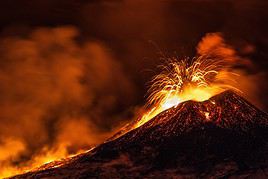
Mount Etna (2013)
Overlooking Catania, the famous—still active—volcano and its lava fields offer exploration when conditions allow. It has been a UNESCO World Heritage site for several years.
Overlooking Catania, the famous—still active—volcano and its lava fields offer exploration when conditions allow. It has been a UNESCO World Heritage site for several years.
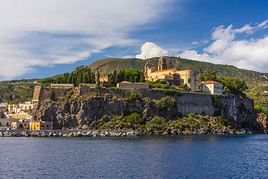
Aeolian Islands (2000)
A UNESCO-listed archipelago of 17 islands (7 inhabited), it attracts over 200,000 visitors a year. People come for the stunning landscapes and volcanic activity. Main islands: Lipari, the largest (old town, beaches, diving, hiking), Vulcano (volcanic activity, hiking, mud baths, beaches), Salina (hiking, beaches), and Stromboli (volcanic activity).
A UNESCO-listed archipelago of 17 islands (7 inhabited), it attracts over 200,000 visitors a year. People come for the stunning landscapes and volcanic activity. Main islands: Lipari, the largest (old town, beaches, diving, hiking), Vulcano (volcanic activity, hiking, mud baths, beaches), Salina (hiking, beaches), and Stromboli (volcanic activity).
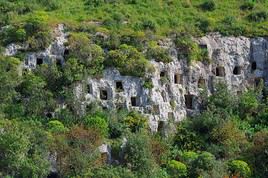
Pantalica Necropolis (2005)
This ancient necropolis near Syracuse is a UNESCO World Heritage Site for its 5,000 (small) rock-cut tombs nestled in a gorge perfect for exploring.
This ancient necropolis near Syracuse is a UNESCO World Heritage Site for its 5,000 (small) rock-cut tombs nestled in a gorge perfect for exploring.
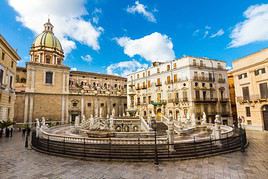
Palermo (2015)
With its stunning architecture and religious heritage, Sicily’s capital offers numerous monuments—several UNESCO-listed—and sights to explore in its historic center as well as its outskirts (Monreale and its cathedral).
With its stunning architecture and religious heritage, Sicily’s capital offers numerous monuments—several UNESCO-listed—and sights to explore in its historic center as well as its outskirts (Monreale and its cathedral).
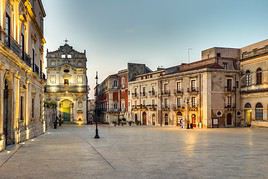
Syracuse (2005)
A magnificent UNESCO-listed historic centre and Greek ruins make this charming city on the east coast a must-visit during any trip to Sicily.
A magnificent UNESCO-listed historic centre and Greek ruins make this charming city on the east coast a must-visit during any trip to Sicily.
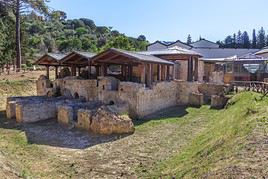
Roman Villa of Casale (1997)
Located in the town of Piazza Armerina, this site is considered representative of the large rural estates of the Roman era. It is a UNESCO World Heritage Site for its mosaics.
Located in the town of Piazza Armerina, this site is considered representative of the large rural estates of the Roman era. It is a UNESCO World Heritage Site for its mosaics.
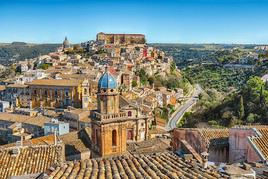
Baroque Towns of the Noto Valley (2002)
A collection of eight towns in southeastern Sicily whose Baroque-style buildings are UNESCO World Heritage sites. They can be explored via a tourist itinerary.
A collection of eight towns in southeastern Sicily whose Baroque-style buildings are UNESCO World Heritage sites. They can be explored via a tourist itinerary.

Valley of the Temples (1997)
This is Agrigento's archaeological area, evoking the city's Greek origins. The site is home to magnificent Doric temples that earned its UNESCO World Heritage status.
This is Agrigento's archaeological area, evoking the city's Greek origins. The site is home to magnificent Doric temples that earned its UNESCO World Heritage status.
Cities and Cultural Heritage
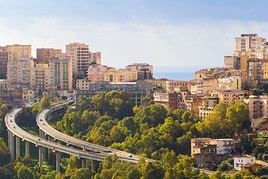
Agrigento
This city on the southern coast is primarily known for its archaeological site, the Valley of the Temples, a UNESCO World Heritage site. However, it also features an old urban centre.
This city on the southern coast is primarily known for its archaeological site, the Valley of the Temples, a UNESCO World Heritage site. However, it also features an old urban centre.
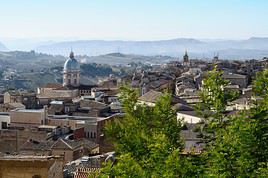
Caltanissetta
This is the major city in central Sicily, featuring the ruins of a medieval castle and several religious buildings, including the beautiful Santa Maria la Nova Cathedral.
This is the major city in central Sicily, featuring the ruins of a medieval castle and several religious buildings, including the beautiful Santa Maria la Nova Cathedral.

Caltagirone
This medium-sized town, the ceramics capital, is part of the "Baroque Towns of the Val di Noto" listed as a UNESCO World Heritage site. It features, among other things, a stunning "staircase street" covered in ceramics.
This medium-sized town, the ceramics capital, is part of the "Baroque Towns of the Val di Noto" listed as a UNESCO World Heritage site. It features, among other things, a stunning "staircase street" covered in ceramics.
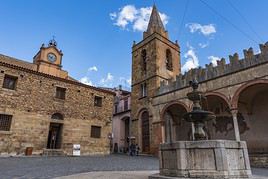
Castelbuono
At the gates of the Madonie Natural Park, this large town boasts an impressive medieval castle.
At the gates of the Madonie Natural Park, this large town boasts an impressive medieval castle.

Catania
At the foot of Mount Etna, Catania is a lively economic and university hub. Sicily’s second city, on the Ionian coast, boasts a beautiful urban centre with numerous buildings and monuments, particularly Baroque, earning it UNESCO status.
At the foot of Mount Etna, Catania is a lively economic and university hub. Sicily’s second city, on the Ionian coast, boasts a beautiful urban centre with numerous buildings and monuments, particularly Baroque, earning it UNESCO status.
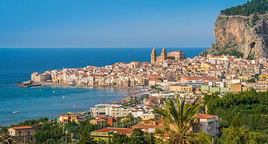
Cefalù
While the city is the main seaside resort of Sicily thanks to its beaches, it also boasts a charming old centre dominated by its UNESCO-listed cathedral. Additionally, the setting of the town squeezed between the sea and an impressive rock is quite remarkable.
While the city is the main seaside resort of Sicily thanks to its beaches, it also boasts a charming old centre dominated by its UNESCO-listed cathedral. Additionally, the setting of the town squeezed between the sea and an impressive rock is quite remarkable.
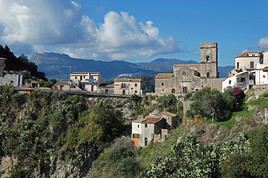
Corleone
The small town is best known for being the birthplace of numerous real or fictional mafia bosses and inspiring the film "The Godfather". It has a large number of churches.
The small town is best known for being the birthplace of numerous real or fictional mafia bosses and inspiring the film "The Godfather". It has a large number of churches.
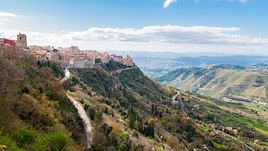
Enna
A small medieval town in central Sicily, nearly 1,000 metres above sea level, with an imposing castle and numerous religious buildings. Some ancient ruins in the surrounding area.
A small medieval town in central Sicily, nearly 1,000 metres above sea level, with an imposing castle and numerous religious buildings. Some ancient ruins in the surrounding area.
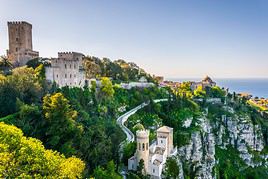
Erice
This is a small medieval town not far from Trapani, offering a lovely panorama of the surrounding area and the coast.
This is a small medieval town not far from Trapani, offering a lovely panorama of the surrounding area and the coast.
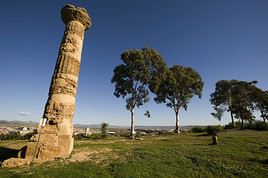
Gela
This town on the southern coast is home to the remains of what was once one of the region’s major Greek cities. There are also beaches in the surrounding area.
This town on the southern coast is home to the remains of what was once one of the region’s major Greek cities. There are also beaches in the surrounding area.
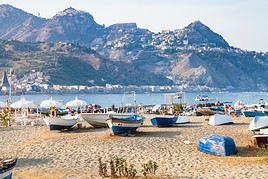
Mazara del Vallo
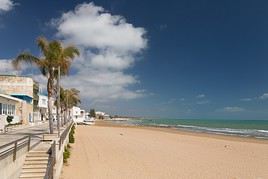
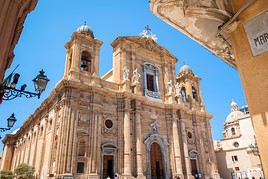
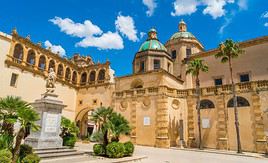
A medium-sized town on the west coast with an old quarter influenced by its Arab period. A few small archaeological sites can be found in the surrounding area.
A medium-sized town on the west coast with an old quarter influenced by its Arab period. A few small archaeological sites can be found in the surrounding area.
Messina
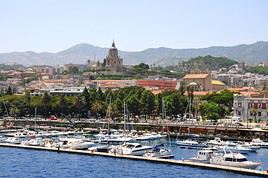
Facing Calabria, from which it is separated by the Strait of Messina, the city is primarily a transit point between these two parts of Italy and occasionally a stop for cruises in the region.
Facing Calabria, from which it is separated by the Strait of Messina, the city is primarily a transit point between these two parts of Italy and occasionally a stop for cruises in the region.
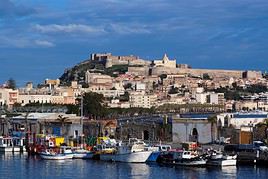
Milazzo
On the northern coast, not far from Messina, the town, with its fortress and a few beautiful residences, is primarily the departure point for the Aeolian Islands.
On the northern coast, not far from Messina, the town, with its fortress and a few beautiful residences, is primarily the departure point for the Aeolian Islands.


Modica
One of the eight "Baroque Towns of the Noto Valley" listed as a UNESCO World Heritage site for its architectural heritage.
One of the eight "Baroque Towns of the Noto Valley" listed as a UNESCO World Heritage site for its architectural heritage.

Noto
At the heart of the valley of the same name, Noto boasts stunning 18th-century Baroque architecture, earning it a place on the UNESCO World Heritage list alongside seven other nearby towns. It is, in fact, one of the most beautiful in this group.
At the heart of the valley of the same name, Noto boasts stunning 18th-century Baroque architecture, earning it a place on the UNESCO World Heritage list alongside seven other nearby towns. It is, in fact, one of the most beautiful in this group.
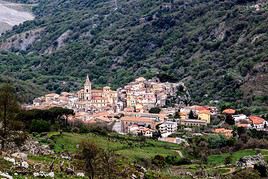
Novara di Sicilia
A stunning medieval village with five churches nestled in the mountains of northeastern Sicily.
A stunning medieval village with five churches nestled in the mountains of northeastern Sicily.

Palazzolo Acreide
It is one of the "Baroque Towns of the Val di Noto" listed as a UNESCO World Heritage site. The old town also contains ancient Greek ruins.
It is one of the "Baroque Towns of the Val di Noto" listed as a UNESCO World Heritage site. The old town also contains ancient Greek ruins.
Palermo
With its stunning architecture and religious heritage, Sicily’s capital offers numerous monuments—several UNESCO-listed—and sights to explore in its historic center as well as its outskirts (Monreale and its cathedral).
With its stunning architecture and religious heritage, Sicily’s capital offers numerous monuments—several UNESCO-listed—and sights to explore in its historic center as well as its outskirts (Monreale and its cathedral).
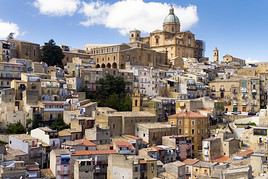
Piazza Armerina
This town boasts a castle and other grand historic residences, several religious buildings, and above all a Roman villa, the Villa del Casale, which is a UNESCO World Heritage Site for its mosaics.
This town boasts a castle and other grand historic residences, several religious buildings, and above all a Roman villa, the Villa del Casale, which is a UNESCO World Heritage Site for its mosaics.
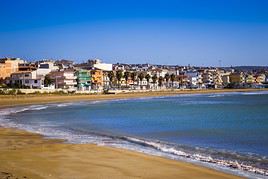
Pozzallo
This seaside resort, located at the southern tip of Sicily, mainly serves as a departure point for ferries to Malta.
This seaside resort, located at the southern tip of Sicily, mainly serves as a departure point for ferries to Malta.

Ragusa
A city in the southern tip of Sicily, renowned for its Baroque architecture, which has earned it a UNESCO listing as part of the "Eight Baroque Towns of the Val di Noto".
A city in the southern tip of Sicily, renowned for its Baroque architecture, which has earned it a UNESCO listing as part of the "Eight Baroque Towns of the Val di Noto".
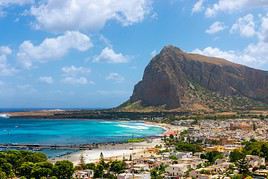
San Vito lo Capo
Surrounded by mountains, San Vito has one of the island’s most beautiful beaches. You can also go climbing or explore the caves in its cliffs.
Surrounded by mountains, San Vito has one of the island’s most beautiful beaches. You can also go climbing or explore the caves in its cliffs.
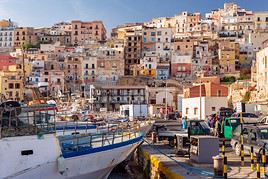

Syracuse
A magnificent UNESCO-listed historic centre and Greek ruins make this charming city on the east coast a must-visit during any trip to Sicily.
A magnificent UNESCO-listed historic centre and Greek ruins make this charming city on the east coast a must-visit during any trip to Sicily.
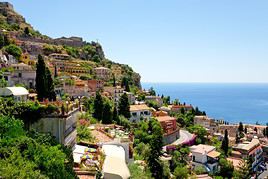
Taormina
This charming town offers both a medieval quarter and numerous ancient ruins to explore. It is also a sought-after and rather upscale seaside resort.
This charming town offers both a medieval quarter and numerous ancient ruins to explore. It is also a sought-after and rather upscale seaside resort.
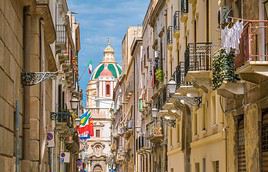
Trapani
At the western tip of Sicily, this large fishing port with some beautiful buildings is also the gateway to the nearby islands (Egadi, Pantelleria). Several beaches in the area, including Marausa Beach.
At the western tip of Sicily, this large fishing port with some beautiful buildings is also the gateway to the nearby islands (Egadi, Pantelleria). Several beaches in the area, including Marausa Beach.
Baroque Towns of the Noto Valley
A collection of eight towns in southeastern Sicily whose Baroque-style buildings are UNESCO World Heritage sites. They can be explored via a tourist itinerary.
A collection of eight towns in southeastern Sicily whose Baroque-style buildings are UNESCO World Heritage sites. They can be explored via a tourist itinerary.
Archaeological Sites
Heraclea Minoa
The ruins of a small Greek site whose main appeal is its commanding view of the sea and beautiful viewpoint.
The ruins of a small Greek site whose main appeal is its commanding view of the sea and beautiful viewpoint.
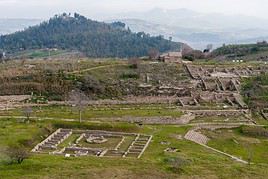
Pantalica Necropolis
This ancient necropolis near Syracuse is a UNESCO World Heritage Site for its 5,000 (small) rock-cut tombs nestled in a gorge perfect for exploring.
This ancient necropolis near Syracuse is a UNESCO World Heritage Site for its 5,000 (small) rock-cut tombs nestled in a gorge perfect for exploring.
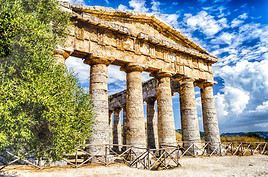
Segesta
A Greco-Roman site between Palermo and Trapani with well-preserved remains of a temple and a theatre.
A Greco-Roman site between Palermo and Trapani with well-preserved remains of a temple and a theatre.
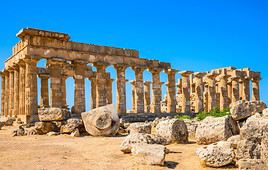
Selinunte
This is an ancient Greek city in southern Sicily where you can still admire several temples and sanctuaries.
This is an ancient Greek city in southern Sicily where you can still admire several temples and sanctuaries.
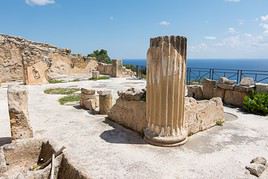
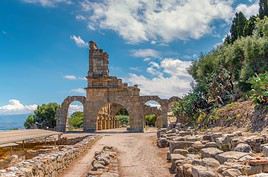
Tyndaris
Small archaeological site in the Messina region. Like many in Sicily, it overlooks the sea.
Small archaeological site in the Messina region. Like many in Sicily, it overlooks the sea.
The Islands
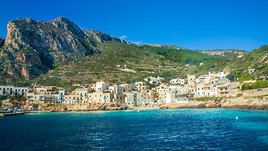
Aegadian Islands
This mountainous archipelago with its three main islands (including Favignana) is located west of Sicily. Visitors come for its few beaches, diving, and stunning landscapes.
This mountainous archipelago with its three main islands (including Favignana) is located west of Sicily. Visitors come for its few beaches, diving, and stunning landscapes.
Aeolian Islands
A UNESCO-listed archipelago of 17 islands (7 inhabited), it attracts over 200,000 visitors a year. People come for the stunning landscapes and volcanic activity. Main islands: Lipari, the largest (old town, beaches, diving, hiking), Vulcano (volcanic activity, hiking, mud baths, beaches), Salina (hiking, beaches), and Stromboli (volcanic activity).
A UNESCO-listed archipelago of 17 islands (7 inhabited), it attracts over 200,000 visitors a year. People come for the stunning landscapes and volcanic activity. Main islands: Lipari, the largest (old town, beaches, diving, hiking), Vulcano (volcanic activity, hiking, mud baths, beaches), Salina (hiking, beaches), and Stromboli (volcanic activity).
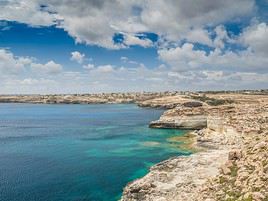
Pelagie Islands
Between Tunisia and Sicily, the archipelago is best known for Lampedusa, which "welcomes" many migrants from Africa. Traditionally, Lampedusa and its neighbor Linosa rely on beach tourism, while the third island, Lampione, is an uninhabited marine reserve.
Between Tunisia and Sicily, the archipelago is best known for Lampedusa, which "welcomes" many migrants from Africa. Traditionally, Lampedusa and its neighbor Linosa rely on beach tourism, while the third island, Lampione, is an uninhabited marine reserve.
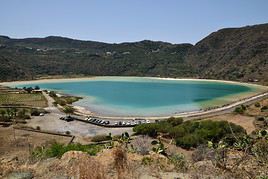
Pantelleria
Closer to Tunisia than to Sicily, this island contains several small ancient sites. You can hike through some quite beautiful landscapes.
Closer to Tunisia than to Sicily, this island contains several small ancient sites. You can hike through some quite beautiful landscapes.
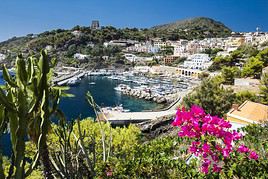
Ustica
Off the coast of Palermo, this small island, a designated marine nature reserve, is highly popular among divers.
Off the coast of Palermo, this small island, a designated marine nature reserve, is highly popular among divers.
Natural Heritage
Mount Etna
Overlooking Catania, the famous—still active—volcano and its lava fields offer exploration when conditions allow. It has been a UNESCO World Heritage site for several years.
Overlooking Catania, the famous—still active—volcano and its lava fields offer exploration when conditions allow. It has been a UNESCO World Heritage site for several years.
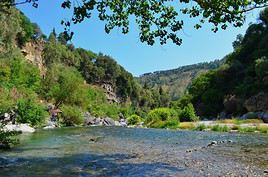
Alcantara Gorge
These are pretty little gorges located in the northeast of Sicily, which can be explored with "water walks".
These are pretty little gorges located in the northeast of Sicily, which can be explored with "water walks".
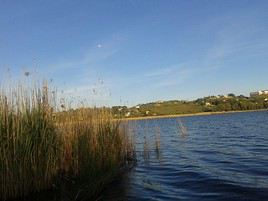
Lake Pergusa
A lake where many birds nest. Note a small archaeological area... and a motor racing circuit nearby.
A lake where many birds nest. Note a small archaeological area... and a motor racing circuit nearby.
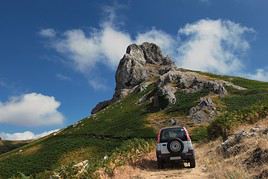
Madonie Regional Nature Park
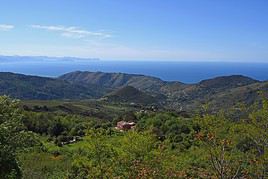
Close to the sea near Palermo, this rather wild mountainous area offers some beautiful landscapes perfect for hiking.
Close to the sea near Palermo, this rather wild mountainous area offers some beautiful landscapes perfect for hiking.
Zingaro Nature Reserve
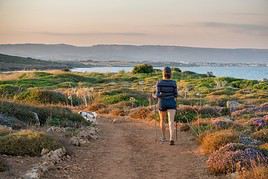
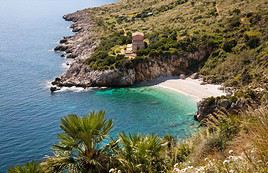
Between beaches, sea, and mountains, this small site offers beautiful hikes in a fairly wild setting.
Between beaches, sea, and mountains, this small site offers beautiful hikes in a fairly wild setting.