


Re: Burma as We Dreamed It
We take a flight to Kengtung, located in Shan State, all the way to the east, practically equidistant from China, Laos, and Thailand (about a 2-hour drive away). We’ll spend 3 days and 3 nights there, which will give us time for two days of trekking in the mountainous hills.
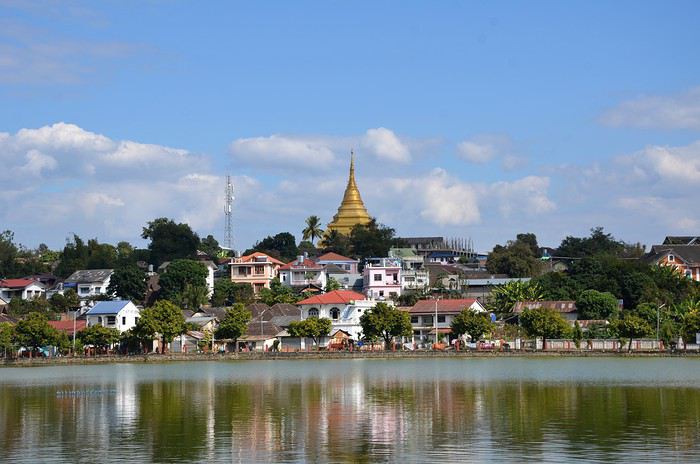
Though it appears to be a quiet large town, Kengtung sits in the Golden Triangle of opium. Officially, the government fights the opium trade, but it continues (I say "officially" because the military junta in power has made money in every possible way). Some areas are simply off-limits to foreigners, while others are accessible only under surveillance and can’t be visited without a guide or without leaving a copy of your passport at a checkpoint (this is the case for the area where we’ll trek on the first day). All of this explains why Kengtung isn’t overrun by tourists—far from it!
We’re guided by Sein, a 25-year-old from the Shan ethnic group. He first shows us around his city, which he loves. Despite having a higher education degree, he chooses to stay in Kengtung while many of his friends have left to work in Thailand for better incomes. We visit two monasteries that look modest but house beautiful wooden statues (Wat Tom Kam and Wat In).
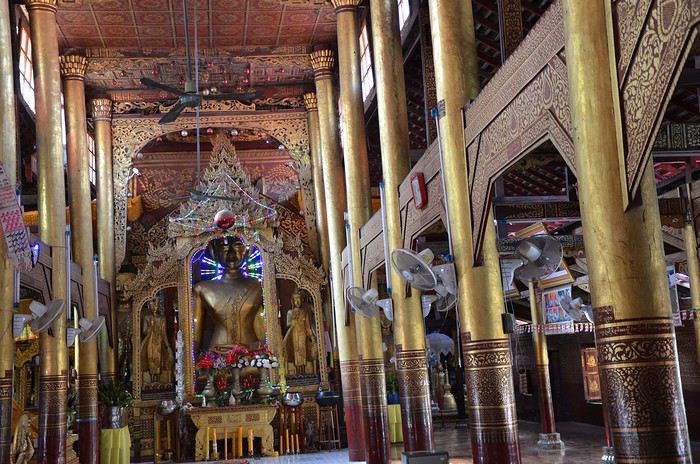
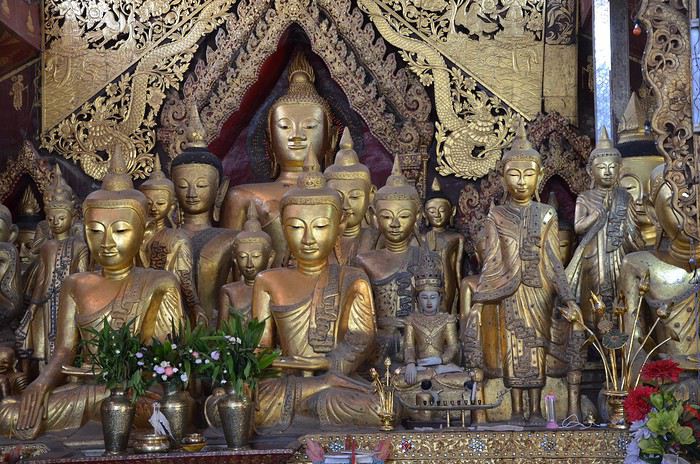
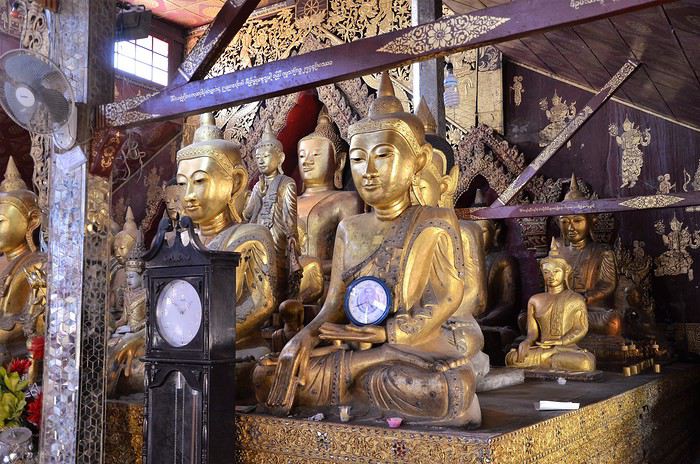
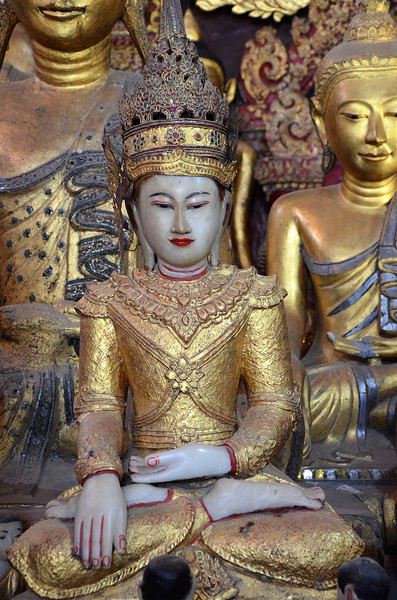
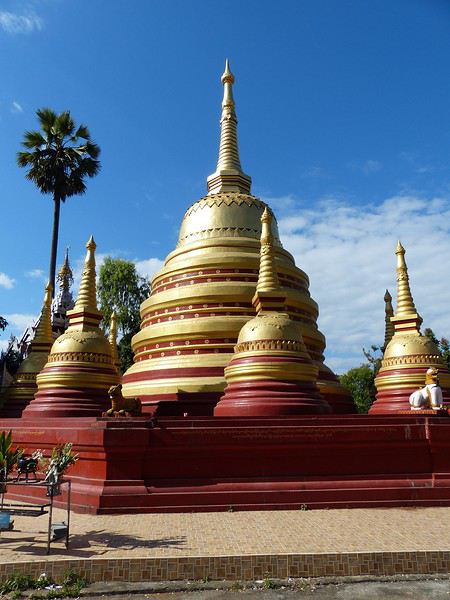 Sein spent a year as a novice in the second monastery when he was 9. He explains how the novitiate fits into children’s education (mostly boys, though there are also monasteries for girls—we’ll see many in Mandalay), what daily life is like for novices, the benefits of the education, but also the hunger that gnawed at him from evening to morning and the melancholy he felt when he had to return to the monastery after visiting his family.
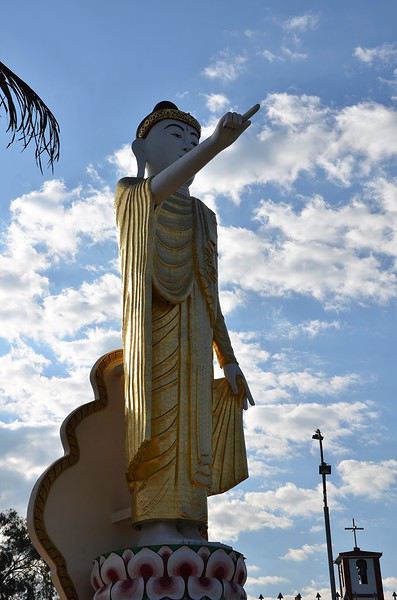
We visit the small local museum at the foot of the monumental Buddha statue overlooking the city. Tip for future visitors: you can skip the museum—the entrance fees are way too high for what’s on display.
In the evening, we head to the municipal stadium, where the "annual Lahu ethnic festival" has set up for two days. The Lahu are one of the ethnic groups in the province. They stand out with their black clothes embroidered with beads and sequins, overlaid with ribbons, and their small shoulder bags adorned with pompoms. What’s the festival about? It’s the annual meet-up for the Lahu, who arrive from the surrounding areas in whole families packed into the back of pickups or more basic vehicles. The stadium is turned into a fairground, with food stalls, games, and Lahu clothing stands. A large stage is set up, seats are installed for spectators, and we get to enjoy two evenings of singing and dancing—some in traditional costumes, others modern. The two hosts are full of energy, especially one of them, who’s a Christian priest. Singers take turns, each performing one or two songs. Oddly, while they sing, people come up to drape garlands around their necks, so by the end of their song, they look like Christmas trees! Then, during their performance, one of the officials sitting on the side of the stage comes up in a very theatrical way to hand them a wad of bills.
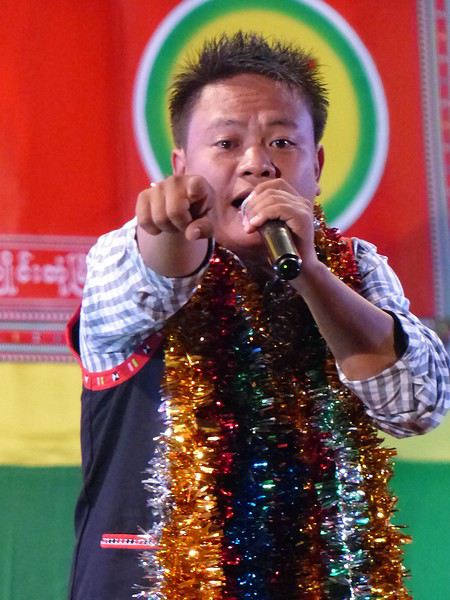
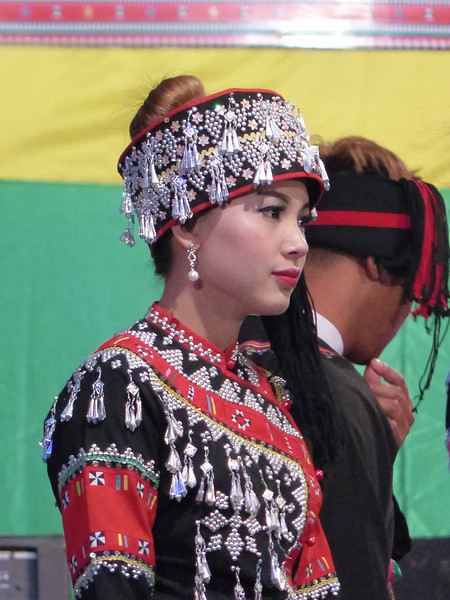
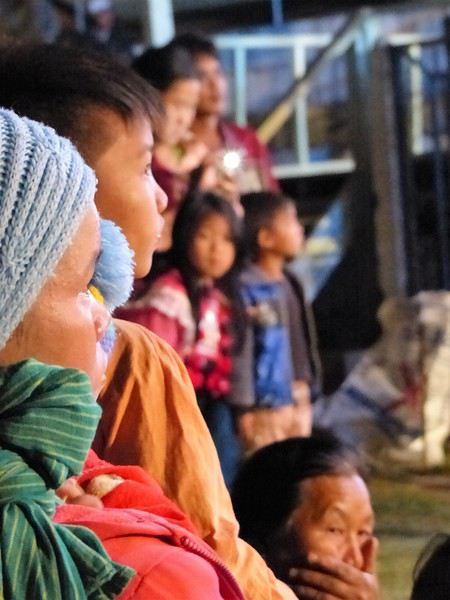
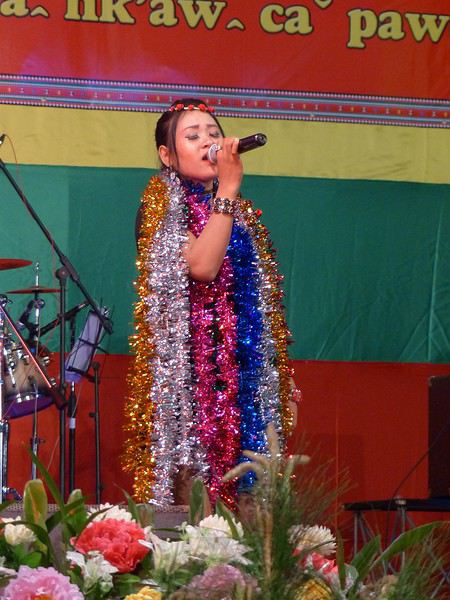 We had two great evenings there, fully immersed since this festival isn’t touristy at all (for now). The first night, we were the only two Westerners—kind of the oddities for the kids, but we were warmly welcomed at the stalls. The second night, we ran into two or three other travelers, just as delighted by the atmosphere.
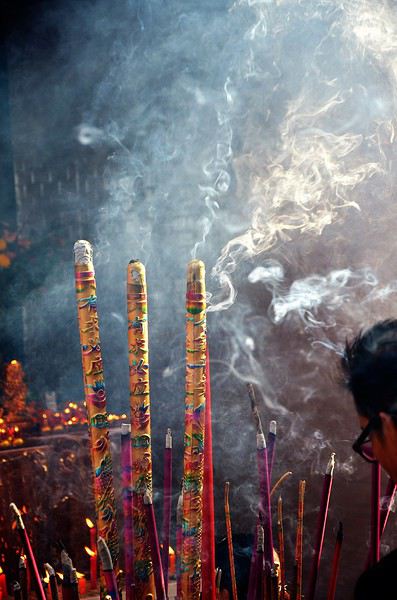
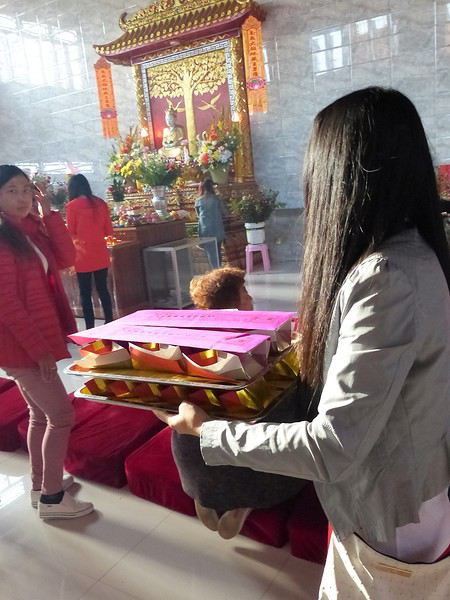
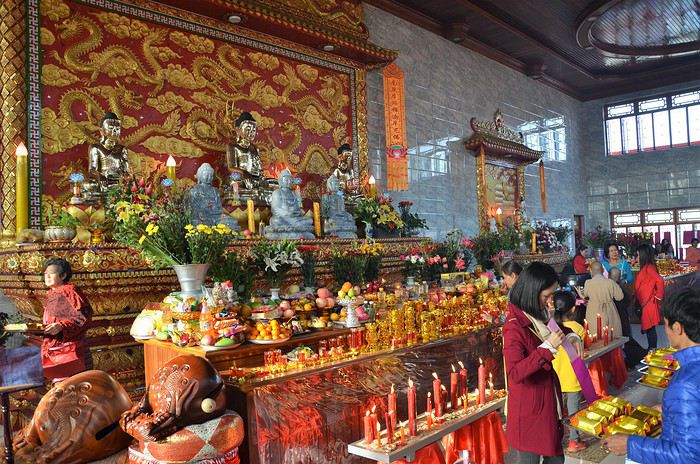
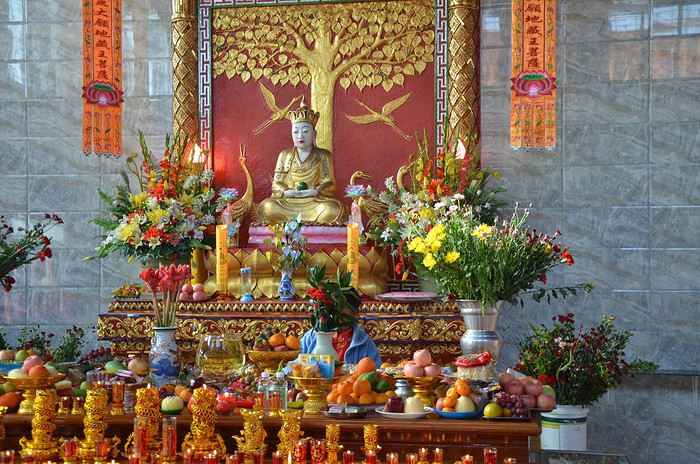
The next morning, we stop by the local market to pick up supplies for our picnic lunch (bread and fruit: bananas and mandarins). Before leaving town, we visit a Chinese temple. It’s the morning of Chinese New Year, celebrated by Kengtung’s entire Chinese community in their temple. Amid the fragrant smoke of incense sticks, a crowd gathers to leave offerings and wishes written on pink or red papers at the altars.
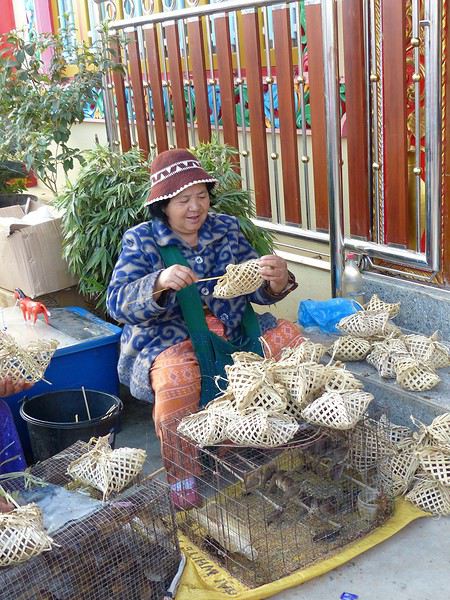
 Outside, birds wait in cages to be released while making a wish.
I realize I’m about to exceed the photo limit per post… so the rest—including the Akhas—will be in the next post!
Though it appears to be a quiet large town, Kengtung sits in the Golden Triangle of opium. Officially, the government fights the opium trade, but it continues (I say "officially" because the military junta in power has made money in every possible way). Some areas are simply off-limits to foreigners, while others are accessible only under surveillance and can’t be visited without a guide or without leaving a copy of your passport at a checkpoint (this is the case for the area where we’ll trek on the first day). All of this explains why Kengtung isn’t overrun by tourists—far from it!
We’re guided by Sein, a 25-year-old from the Shan ethnic group. He first shows us around his city, which he loves. Despite having a higher education degree, he chooses to stay in Kengtung while many of his friends have left to work in Thailand for better incomes. We visit two monasteries that look modest but house beautiful wooden statues (Wat Tom Kam and Wat In).
We visit the small local museum at the foot of the monumental Buddha statue overlooking the city. Tip for future visitors: you can skip the museum—the entrance fees are way too high for what’s on display.
In the evening, we head to the municipal stadium, where the "annual Lahu ethnic festival" has set up for two days. The Lahu are one of the ethnic groups in the province. They stand out with their black clothes embroidered with beads and sequins, overlaid with ribbons, and their small shoulder bags adorned with pompoms. What’s the festival about? It’s the annual meet-up for the Lahu, who arrive from the surrounding areas in whole families packed into the back of pickups or more basic vehicles. The stadium is turned into a fairground, with food stalls, games, and Lahu clothing stands. A large stage is set up, seats are installed for spectators, and we get to enjoy two evenings of singing and dancing—some in traditional costumes, others modern. The two hosts are full of energy, especially one of them, who’s a Christian priest. Singers take turns, each performing one or two songs. Oddly, while they sing, people come up to drape garlands around their necks, so by the end of their song, they look like Christmas trees! Then, during their performance, one of the officials sitting on the side of the stage comes up in a very theatrical way to hand them a wad of bills.
The next morning, we stop by the local market to pick up supplies for our picnic lunch (bread and fruit: bananas and mandarins). Before leaving town, we visit a Chinese temple. It’s the morning of Chinese New Year, celebrated by Kengtung’s entire Chinese community in their temple. Amid the fragrant smoke of incense sticks, a crowd gathers to leave offerings and wishes written on pink or red papers at the altars.
I realize I’m about to exceed the photo limit per post… so the rest—including the Akhas—will be in the next post!