
The next morning, we take the bus around 8 AM to leave the Golden Rock, our hearts full of joy after how much we loved this stop. The road is just as impressive in this direction!
We meet our driver at the terminus and head off to Bago (a 2-hour drive).
Bago An ancient imperial city, Bago reached its golden age in the 15th century. In the mid-18th century, it was looted and completely razed by the Burmese king to crush the province’s independence ambitions, and its inhabitants were massacred or scattered.
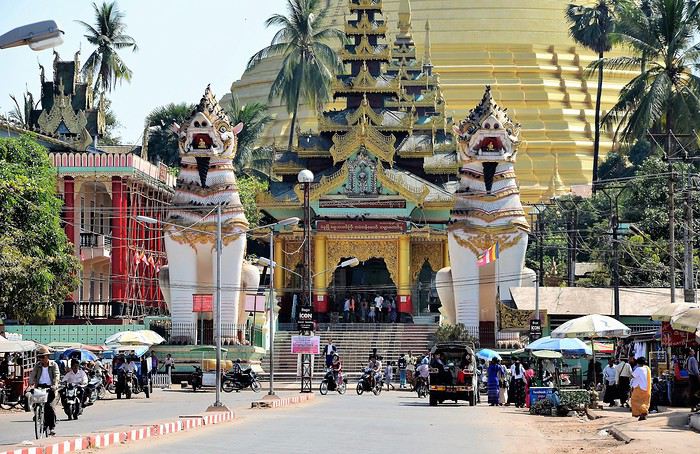
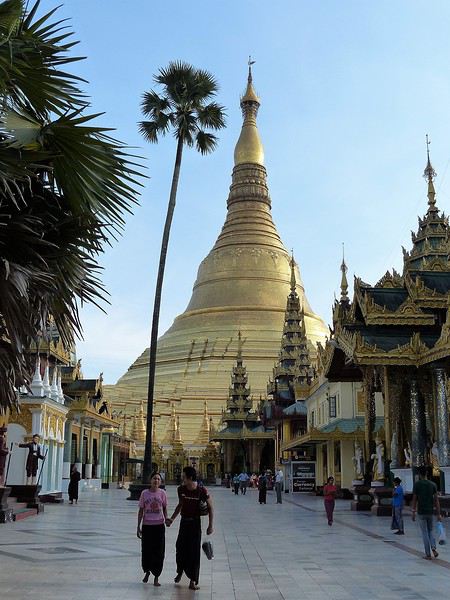
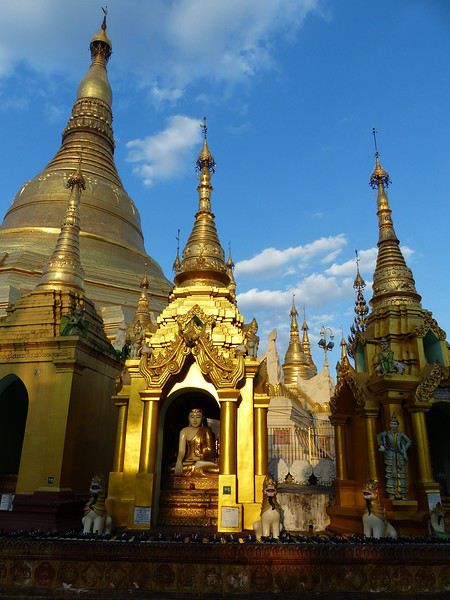
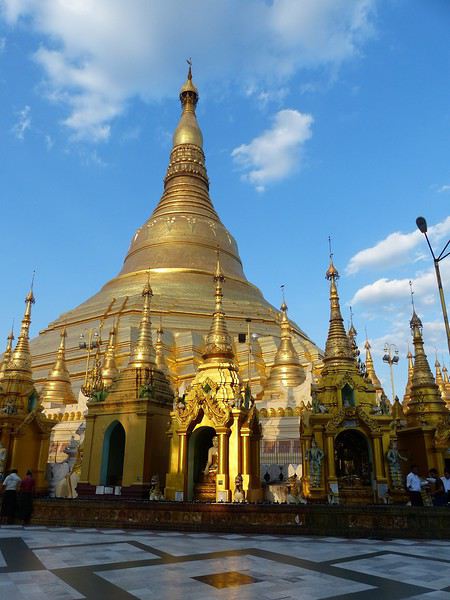
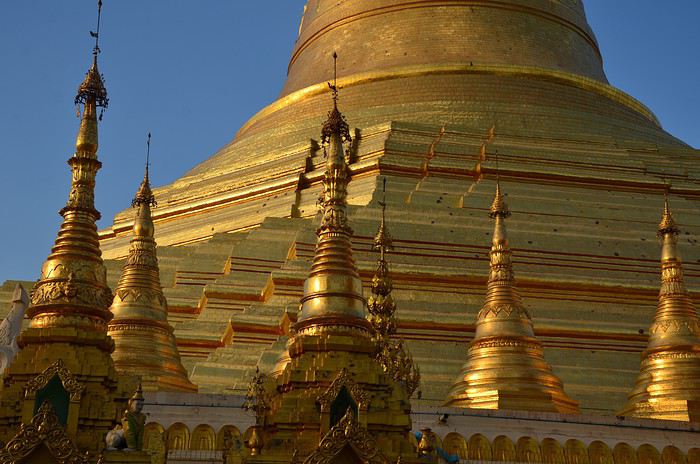
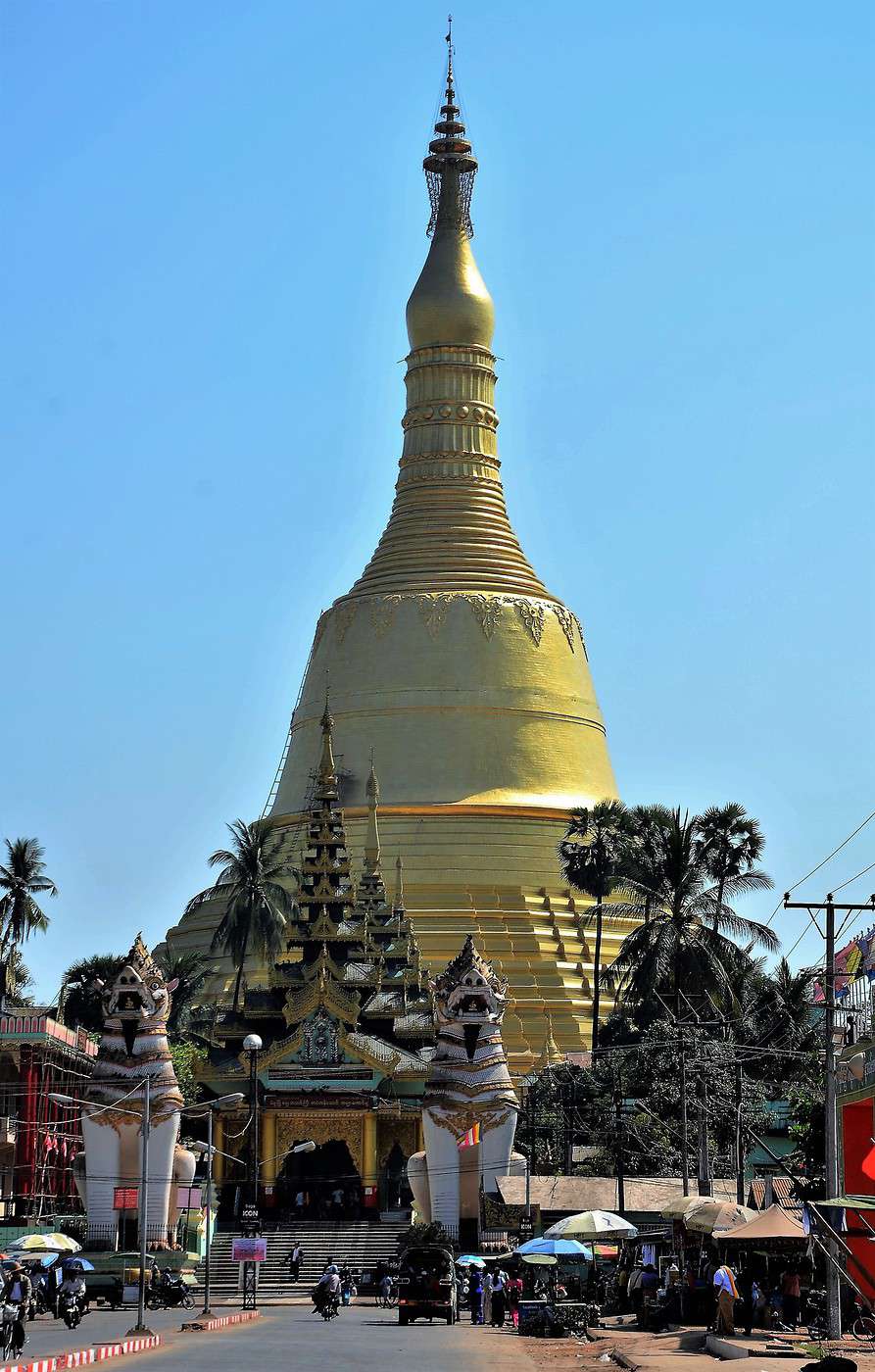
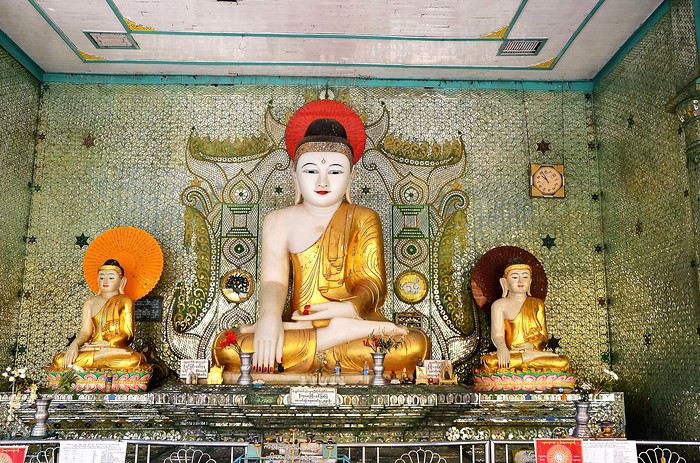
The stupa of Shwemawdaw Pagoda, standing 114 meters tall, is visible from 10 km away. Its entrance, guarded by monumental lions, is impressive. The pagoda is said to have been founded during the 1st millennium, and the stupa—also housing strands of Buddha’s hair (as usual) along with two teeth—was enlarged several times. Destroyed by a violent earthquake in 1930, it was rebuilt after the war to reach its current height.
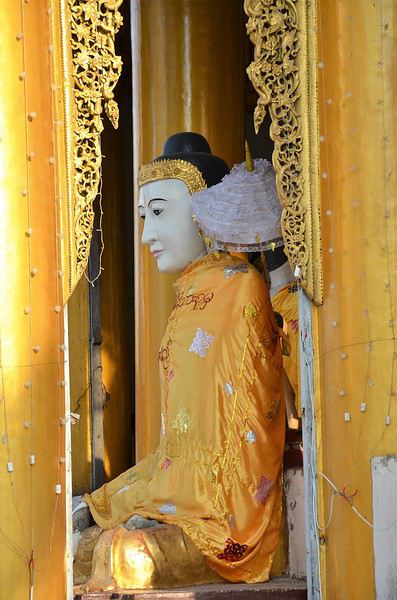
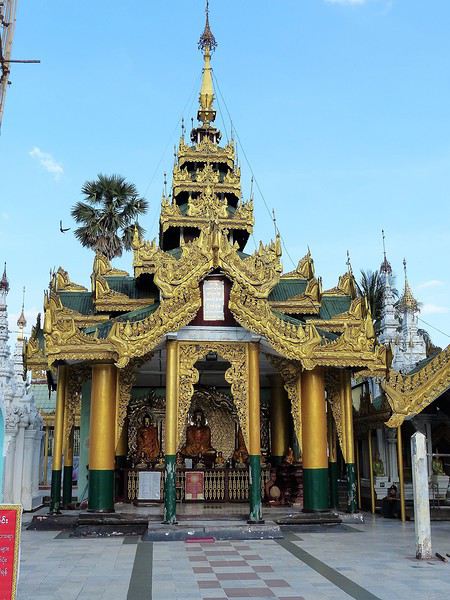
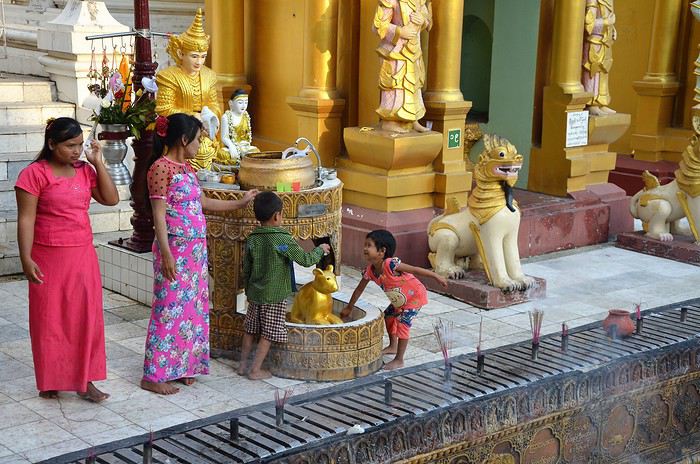
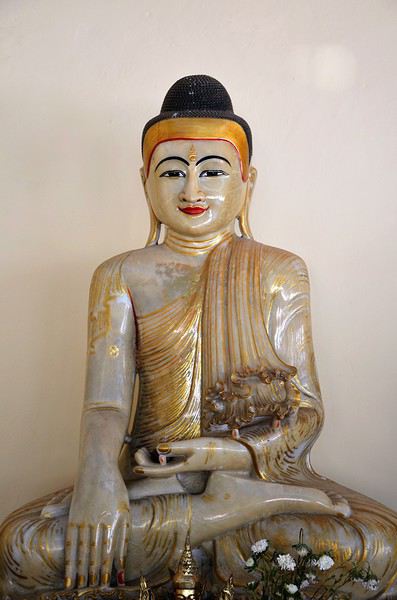
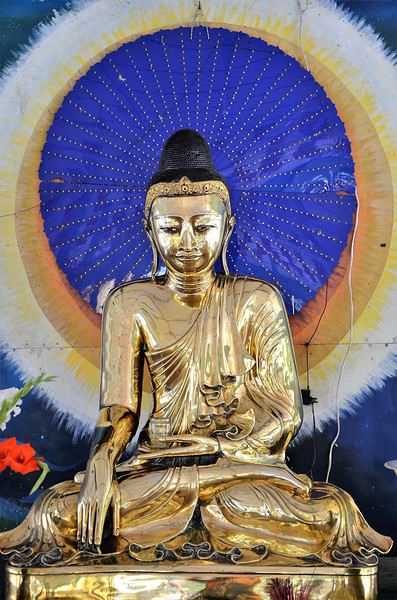
It’s truly a stunning pagoda, with a wealth of halls and beautiful statues—of which I’m only showing you a tiny fraction!!!
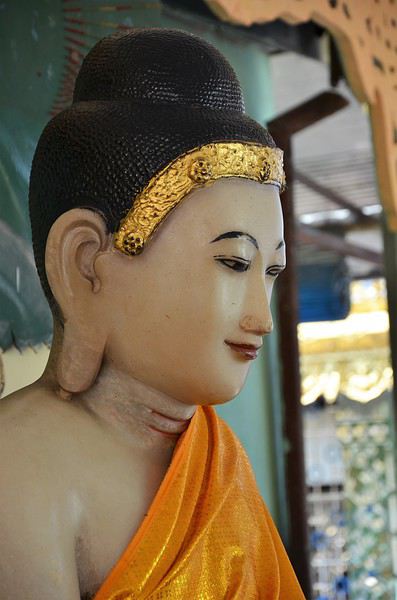
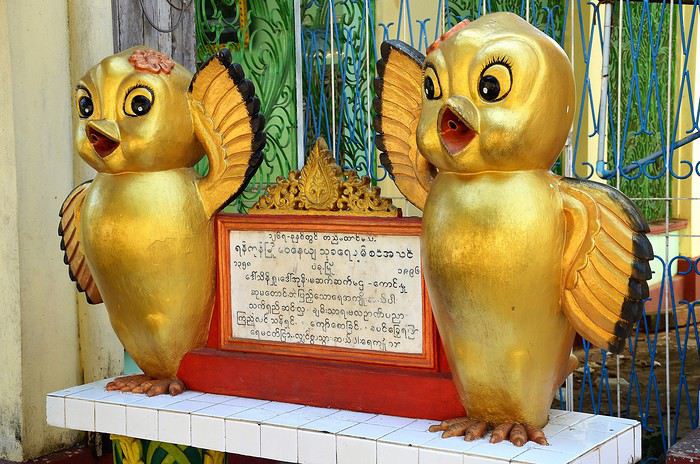
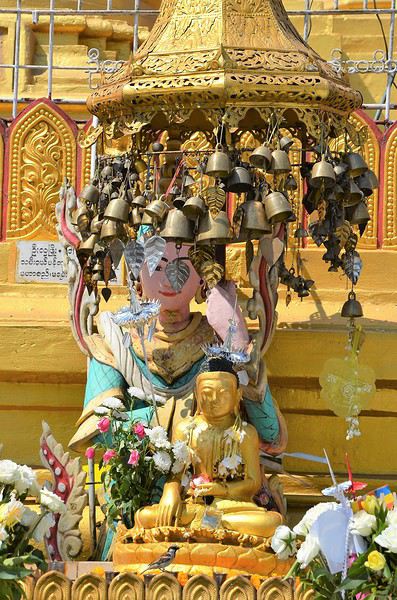
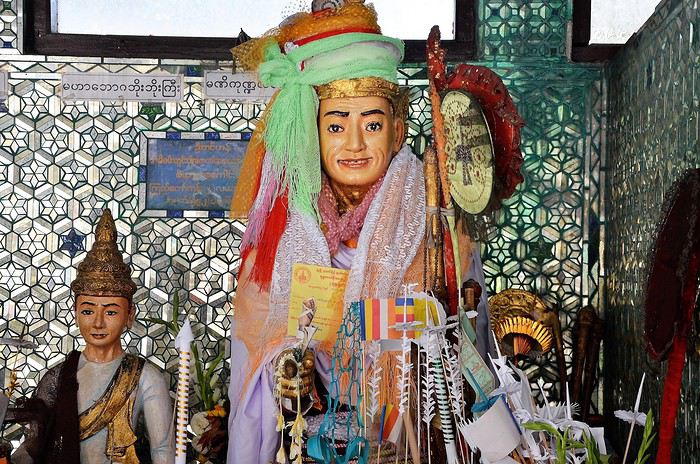
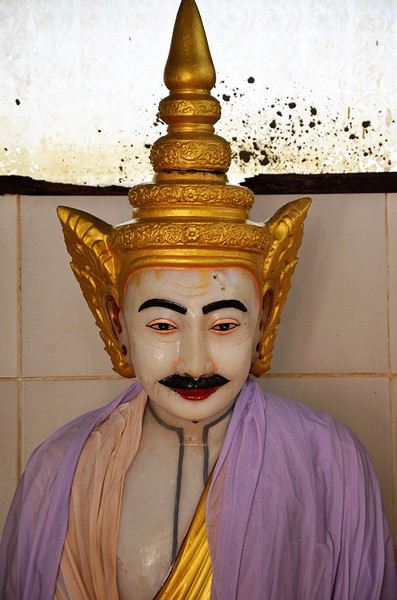
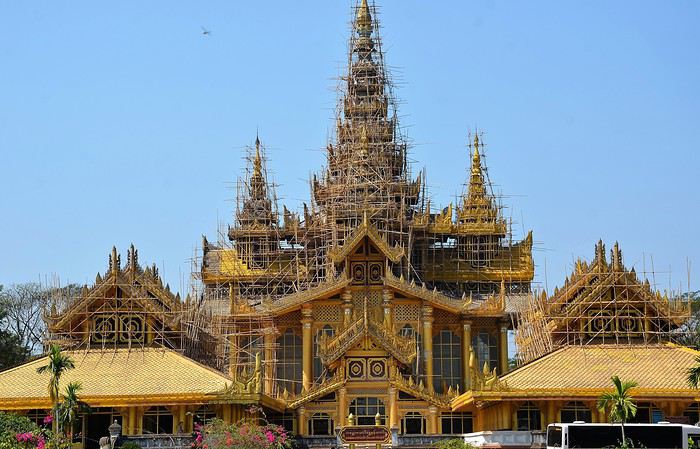
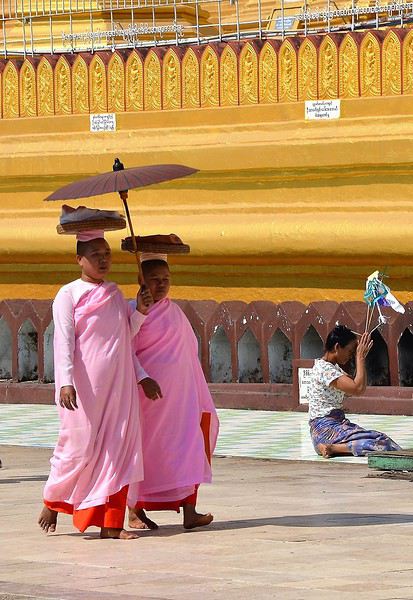 We continue exploring the city with a visit to the former imperial site. Completely destroyed, two pavilions have been rebuilt "identically." They’re currently under restoration, which explains their slightly "unkempt" appearance...
Now, a showdown at the top:
- On my right, the Shwetalyaung Reclining Buddha, 55 meters...
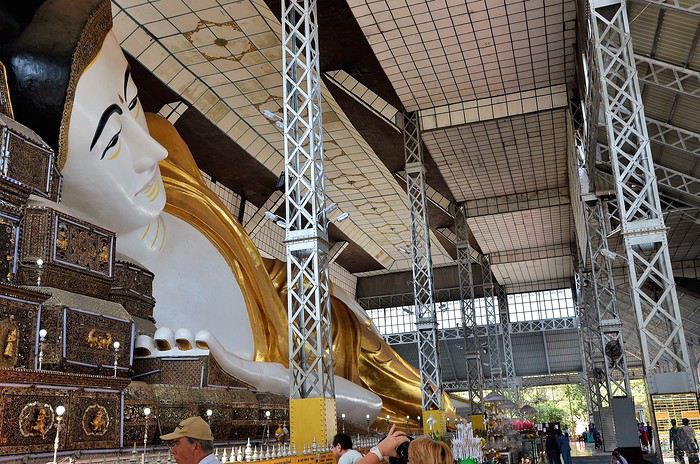
- On my left, the Nawdawgyi Myathalyaung Reclining Buddha, 76 meters.
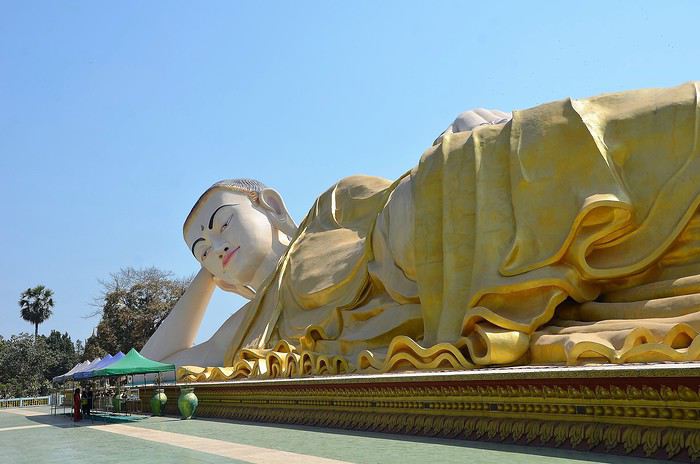
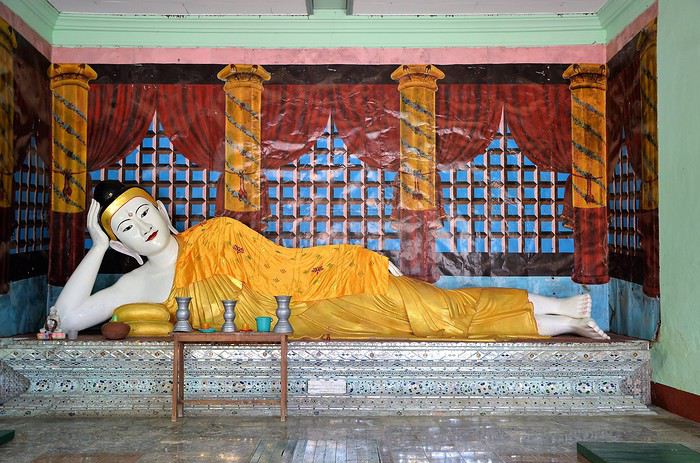
Well, the biggest one doesn’t win! The duel is undoubtedly won by the smaller one (though it’s still 55 meters), which is the most beautiful and also the oldest, dating back to 994 AD (while the larger one is a youngster from 2002).
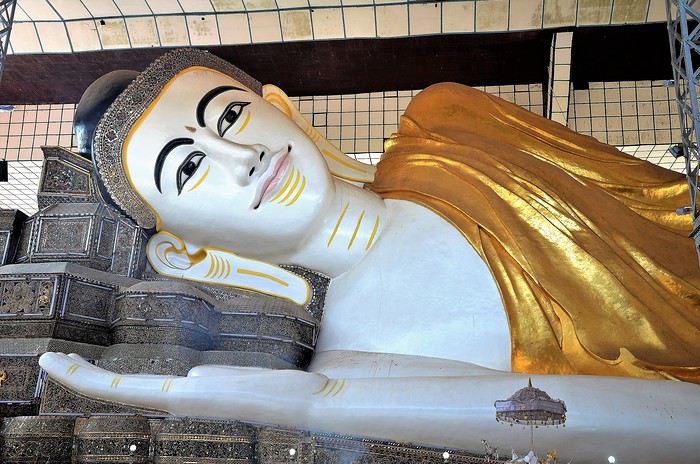
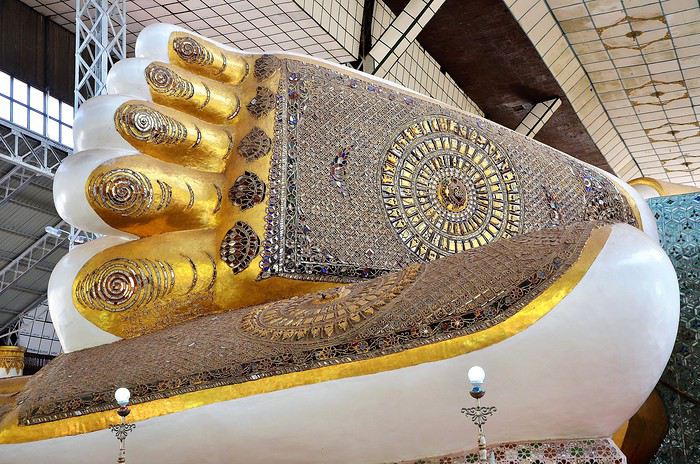
Its story is one of lost and rediscovered cities: completely forgotten after Bago was devastated in 1757, it was quickly swallowed by vegetation and rediscovered by the British at the end of the 19th century. It was then restored, given a marble base, and a mosaic-adorned cushion. A few decades ago, a roof was added to protect it. It depicts Gautama on his deathbed, moments before reaching parinirvana—the complete cessation of existence and ultimate victory over suffering...
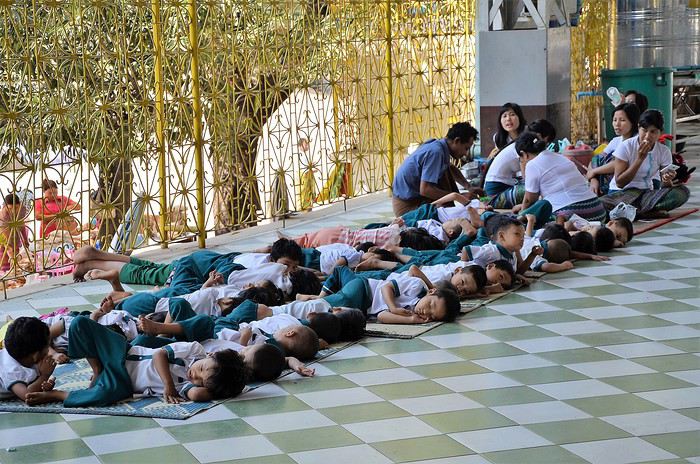
A whole class of little ones napping near the Buddha...
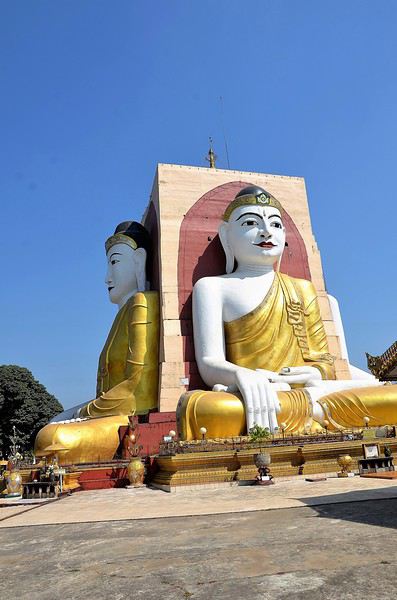
To wrap up Bago: the Kyaik Pun Pagoda, or Pagoda of the Four Images. Again, don’t let their resplendent appearance fool you—these Buddhas are 14 centuries old...
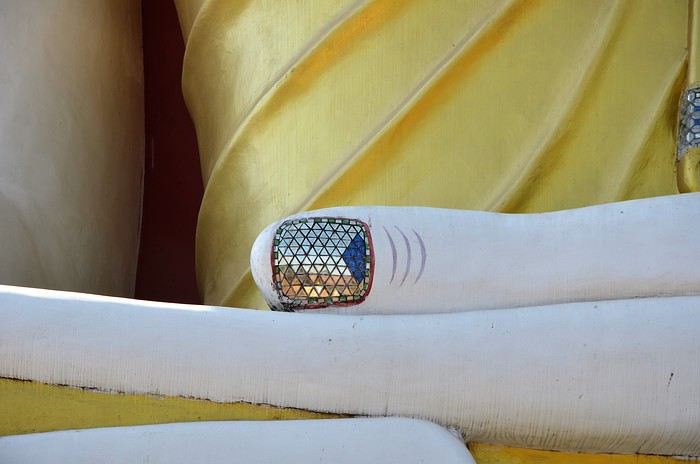
Nail art...
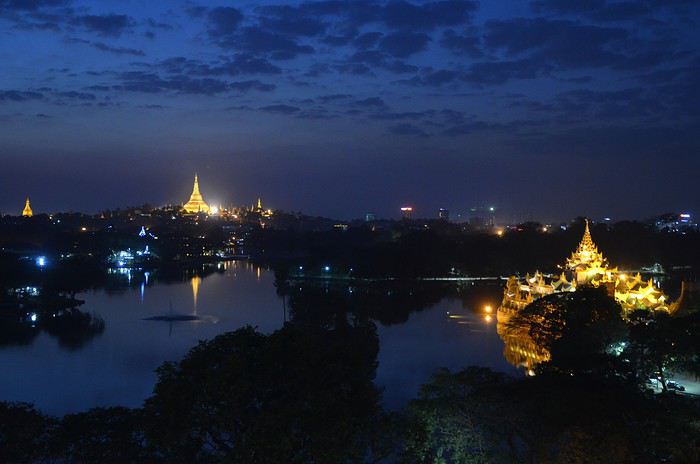
Bago could easily deserve 2 days of exploration, but we have to move on. A 2-hour drive awaits us to reach Yangon for our final evening and morning!
To conclude this travel journal:
The final verdict is overwhelmingly positive. So much joy, beautiful discoveries, and smiles everywhere. Life! Everything we wanted—and so much more!
Myanmar is a trendy destination, and some express concerns: "too late to visit," "too crowded"... but tourism is still concentrated in a few very localized areas. Even in high season, simply waking up a little earlier than others, shifting your visiting hours, staying open to surprises or the unexpected, or just walking a bit farther is often enough to make the most of your trip. As soon as you stray even slightly off the beaten path, you’ll find yourself immersed and truly away from it all.
Fellow wanderers, other travel journals or blogs (like Kristofe’s: coupsdecoeurenasie.over-blog.fr/) show just how many more discoveries Myanmar offers beyond the now-familiar routes we followed—perfect for those who want to go even further.
I had a blast writing these posts—I hope you enjoyed reading them as much or, if I’ve been too chatty, at least enjoyed the photos.
Happy trails to all, whether it’s on the other side of the world or just over the hill, whether you travel "comfortably" (as you’ve gathered, that’s more our style) or in a more "roots" way! May your eyes and heart stay open, and may your path help you avoid trolls (whether in real life or on forums ;-) ).
We meet our driver at the terminus and head off to Bago (a 2-hour drive).
Bago An ancient imperial city, Bago reached its golden age in the 15th century. In the mid-18th century, it was looted and completely razed by the Burmese king to crush the province’s independence ambitions, and its inhabitants were massacred or scattered.
The stupa of Shwemawdaw Pagoda, standing 114 meters tall, is visible from 10 km away. Its entrance, guarded by monumental lions, is impressive. The pagoda is said to have been founded during the 1st millennium, and the stupa—also housing strands of Buddha’s hair (as usual) along with two teeth—was enlarged several times. Destroyed by a violent earthquake in 1930, it was rebuilt after the war to reach its current height.
It’s truly a stunning pagoda, with a wealth of halls and beautiful statues—of which I’m only showing you a tiny fraction!!!
Now, a showdown at the top:
- On my right, the Shwetalyaung Reclining Buddha, 55 meters...
- On my left, the Nawdawgyi Myathalyaung Reclining Buddha, 76 meters.
Well, the biggest one doesn’t win! The duel is undoubtedly won by the smaller one (though it’s still 55 meters), which is the most beautiful and also the oldest, dating back to 994 AD (while the larger one is a youngster from 2002).
Its story is one of lost and rediscovered cities: completely forgotten after Bago was devastated in 1757, it was quickly swallowed by vegetation and rediscovered by the British at the end of the 19th century. It was then restored, given a marble base, and a mosaic-adorned cushion. A few decades ago, a roof was added to protect it. It depicts Gautama on his deathbed, moments before reaching parinirvana—the complete cessation of existence and ultimate victory over suffering...
A whole class of little ones napping near the Buddha...
To wrap up Bago: the Kyaik Pun Pagoda, or Pagoda of the Four Images. Again, don’t let their resplendent appearance fool you—these Buddhas are 14 centuries old...
Nail art...
Bago could easily deserve 2 days of exploration, but we have to move on. A 2-hour drive awaits us to reach Yangon for our final evening and morning!
To conclude this travel journal:
The final verdict is overwhelmingly positive. So much joy, beautiful discoveries, and smiles everywhere. Life! Everything we wanted—and so much more!
Myanmar is a trendy destination, and some express concerns: "too late to visit," "too crowded"... but tourism is still concentrated in a few very localized areas. Even in high season, simply waking up a little earlier than others, shifting your visiting hours, staying open to surprises or the unexpected, or just walking a bit farther is often enough to make the most of your trip. As soon as you stray even slightly off the beaten path, you’ll find yourself immersed and truly away from it all.
Fellow wanderers, other travel journals or blogs (like Kristofe’s: coupsdecoeurenasie.over-blog.fr/) show just how many more discoveries Myanmar offers beyond the now-familiar routes we followed—perfect for those who want to go even further.
I had a blast writing these posts—I hope you enjoyed reading them as much or, if I’ve been too chatty, at least enjoyed the photos.
Happy trails to all, whether it’s on the other side of the world or just over the hill, whether you travel "comfortably" (as you’ve gathered, that’s more our style) or in a more "roots" way! May your eyes and heart stay open, and may your path help you avoid trolls (whether in real life or on forums ;-) ).