

Re: Recap of 17 days between São Paulo - Rio de Janeiro and Iguaçu/Puerto Iguazu
Right after breakfast, we head to the Paraty bus station, which is just a few minutes from our pousada. I’d checked the day before—you don’t buy tickets in advance for the Colitur bus to Angra dos Reis, so we prefer to get there a little early. The bus leaves at 9 a.m. (if I remember correctly). There aren’t many travelers, so we have no trouble finding a bench to sit on while we wait. It would be a quiet little station… if it weren’t for three or four vagabonds putting on a show, riding bikes in circles around the station, bothering the dogs sleeping under the benches, and talking loudly so no one can ignore them. They seem out of it—who knows what they’ve taken! People are clearly annoyed.
No problem finding a seat on the bus, which is pretty decent. Along the way, we get a few glimpses of the coastline, lots of little islands, and beaches that look inviting. But most of the time, there’s nothing to see because the road cuts through thick vegetation. In fact, the entire coast and nearby mountains are covered in jungle. It’s really nice to see so much greenery!
There are only a few small villages between Paraty and Angra dos Reis. There’s just not much space between the coast and the mountains! We arrive at the Angra dos Reis port a little before 11 a.m. I was hoping to catch a ferry to Ilha Grande by late morning, but since it’s Sunday, there’s only one ferry leaving at 3 p.m.
Right as we get off the bus, there’s a crowd of people waiting in several lines for « lanchas »—speedboats that take just 20 minutes to cross. We hesitate a bit; it’s a bit chaotic and confusing, and since the tickets cost around 15 to 20 euros per person, we decide to take the ferry later.
The ferry dock is at Cais da Lapa, about 600–700 meters away—if we can find it. The entrance gate is run-down and doesn’t inspire confidence. Someone had told us along the way that it was « just past the Receita Federal office (the tax office!) ». And sure enough—that info was right (unusual, I know). There’s no one around; we’re obviously too early.
We walk along the docks on the « city side » and find a buffet where we have the cheapest lunch of our entire trip: less than 10 euros for two! Okay, it wasn’t amazing, I’ll admit, but at least we didn’t get sick! Heading back toward Praça Nilo Peçanha, we see a churrasqueira and regret not starting our walk on that side of the center—we would’ve paid more, sure, but it probably would’ve been way better! Aside from that, the square isn’t great, and the whole area near the docks is pretty uninteresting. Back at the dock, just a few minutes’ walk from the square, we still have a good hour to wait before boarding. Tickets bought on the spot.
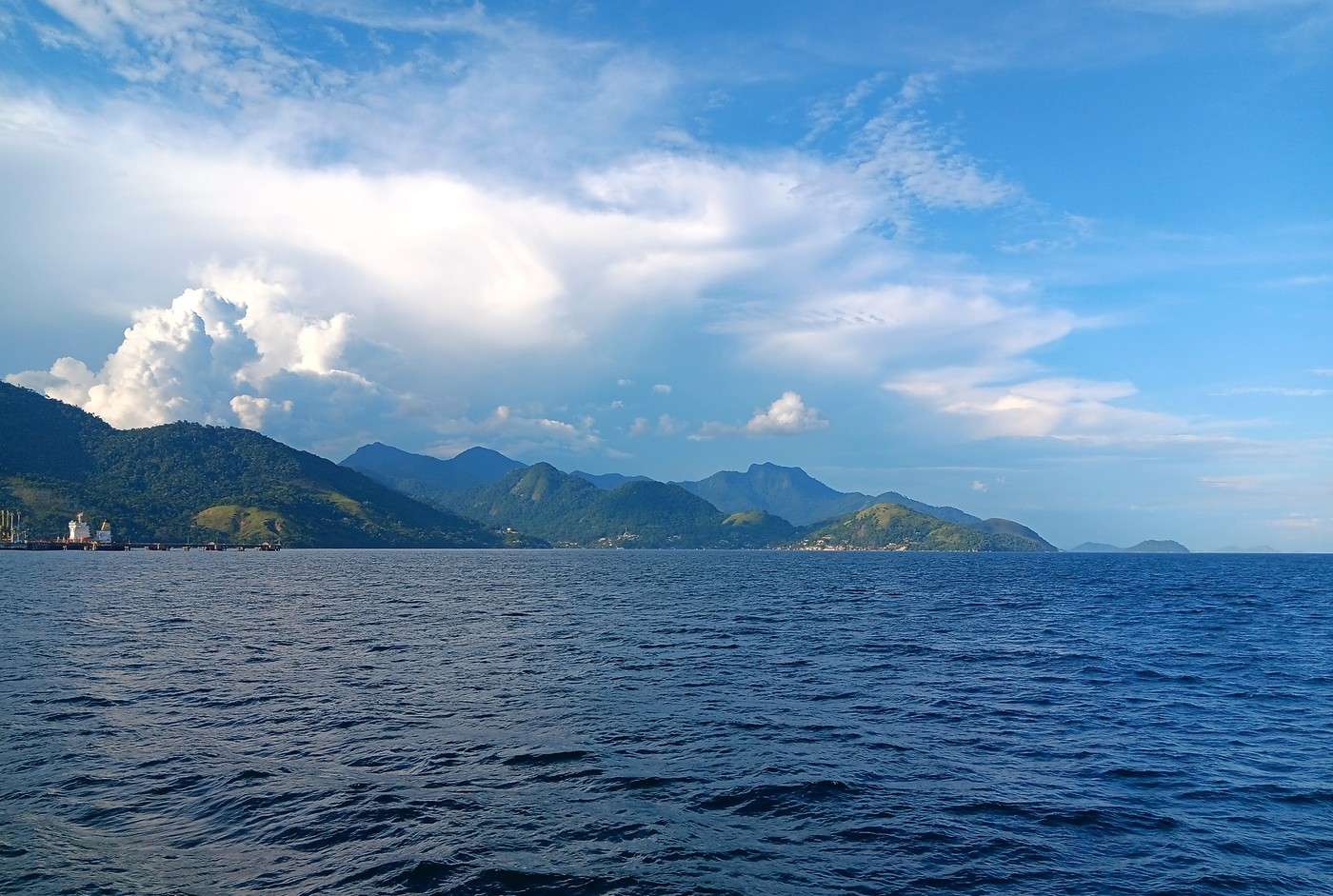
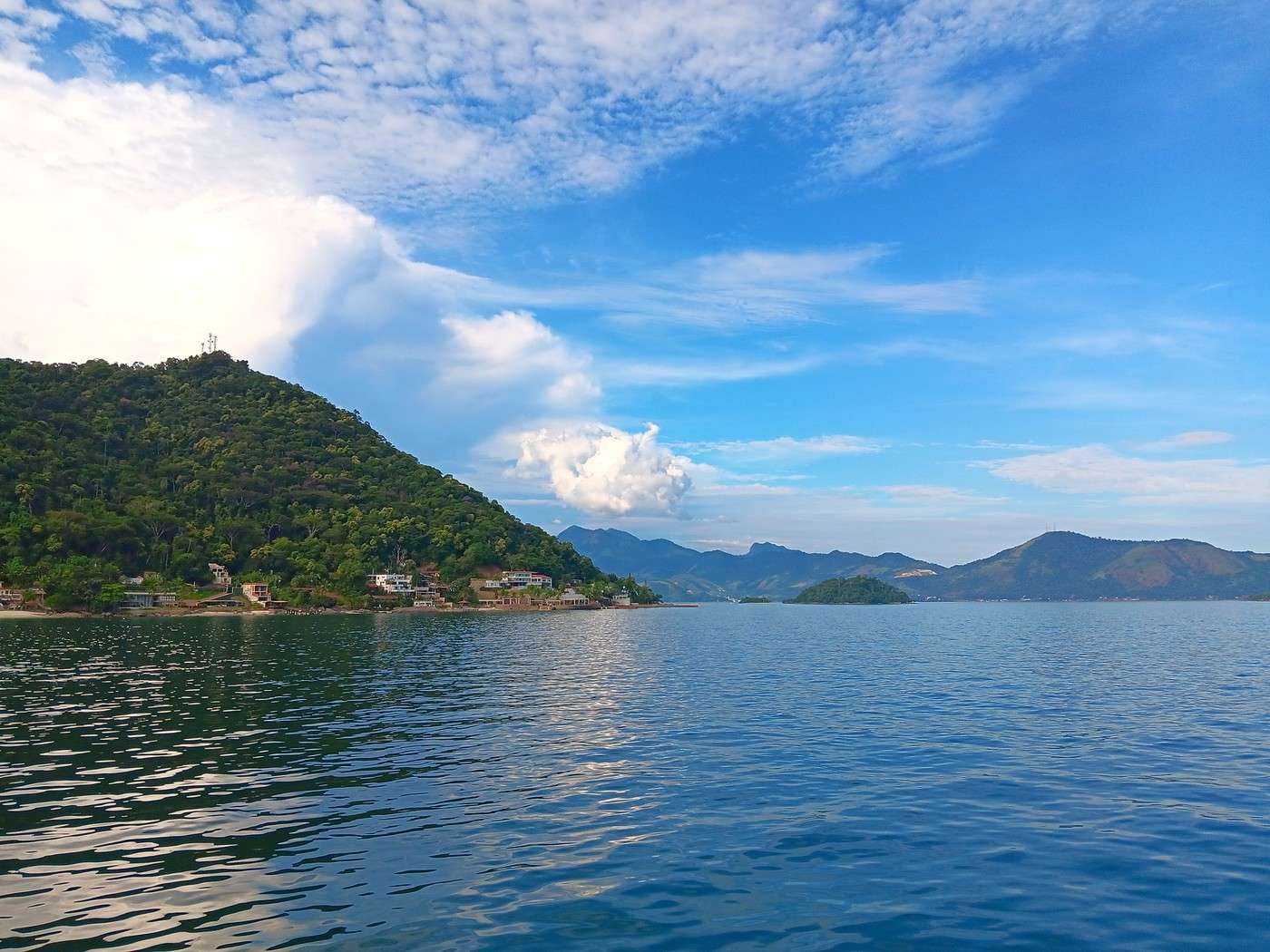
The weather isn’t great—pretty overcast. We take a few photos anyway; the coast is scenic, all jagged where the mountains meet the sea, with several small islands keeping things interesting along the way. No regrets about not taking a « lancha »—it would’ve cost 3 to 4 times more!
Our pousada in Abraão, the main spot on Ilha Grande, isn’t amazing, but it still costs us 180 euros for 3 nights. The room is ridiculously small. But keep in mind: Abraão isn’t a city—it’s barely a village you can walk around in half an hour, and it’s packed with tourists (mostly Brazilians). So everything’s expensive. That evening, we try one of the restaurants along the beach. It’s pretty mediocre, and the caipirinhas are more watered down than usual.
The next day, after an okay breakfast, we look for an agency that can offer us a good few-hour tour around the island. There are several agencies with different beach combos. It seems (maybe I’m wrong) that Abraão is the only real settlement on the island (and even that’s a stretch). Outside of that, there might be a few isolated houses, and maybe you could find a room to rent somewhere, but it’s not easy at all.
It’s already too late for today, so we plan a tour for the next day—but we’re told it depends on the weather. The forecast isn’t promising…
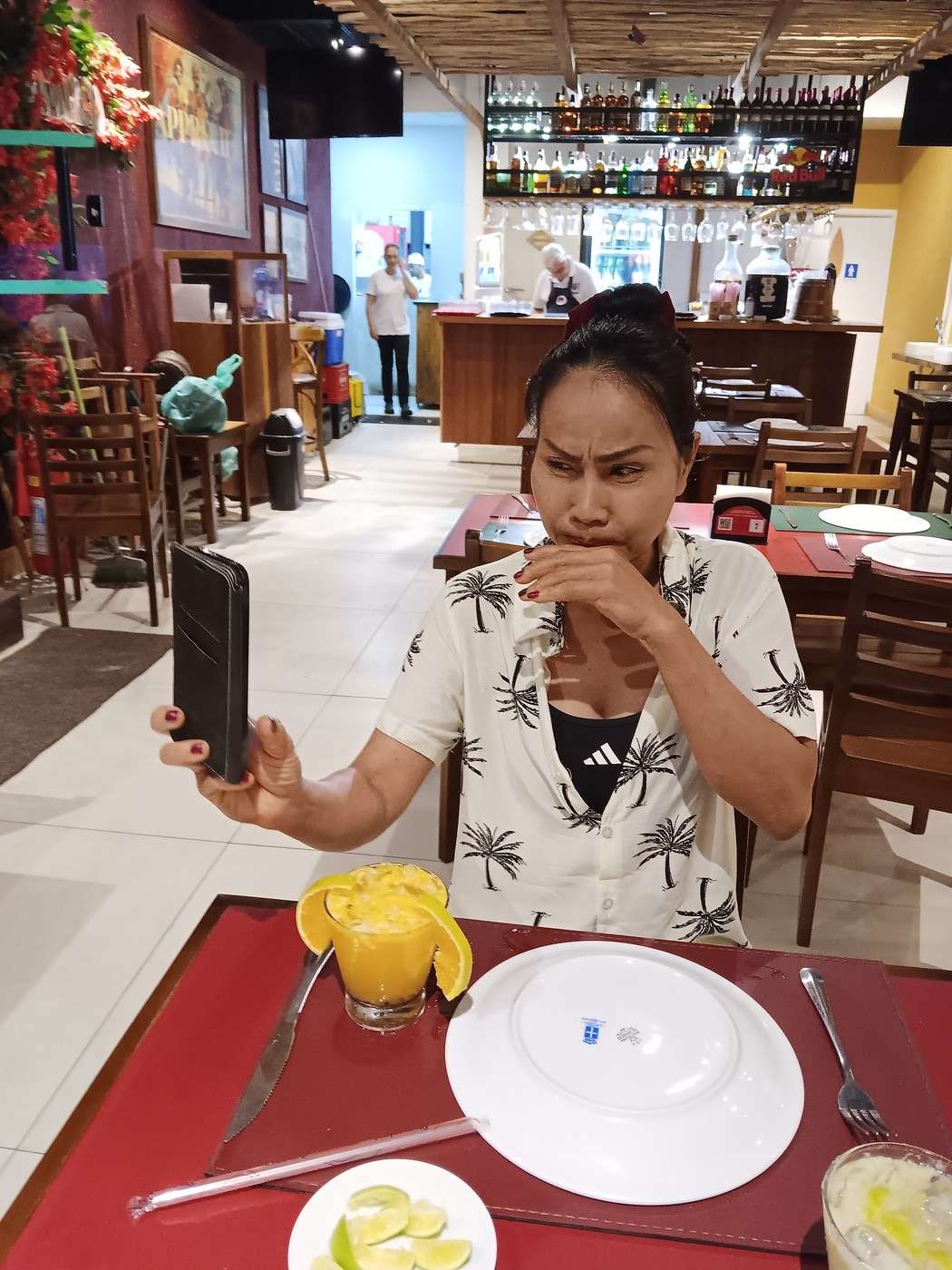
At noon, we eat at a buffet—the only one we found—at the corner of Rua Bouganville and the little street parallel to the beach. It’s decent and reasonably priced. We wander a bit in this tiny town, I’ll admit. That evening, we sit down at Bardjeco, a restaurant on a street corner by the waterfront, to enjoy a little caipirinha before getting serious. It’s a decent spot and easy to find. The caipirinhas (« de maracujá »!) are excellent and strong. They don’t serve them in thimbles in Brazil, it seems! Proof: see Y’s reaction to her first sip. She almost looks like I imagine a junkie would after shooting up!
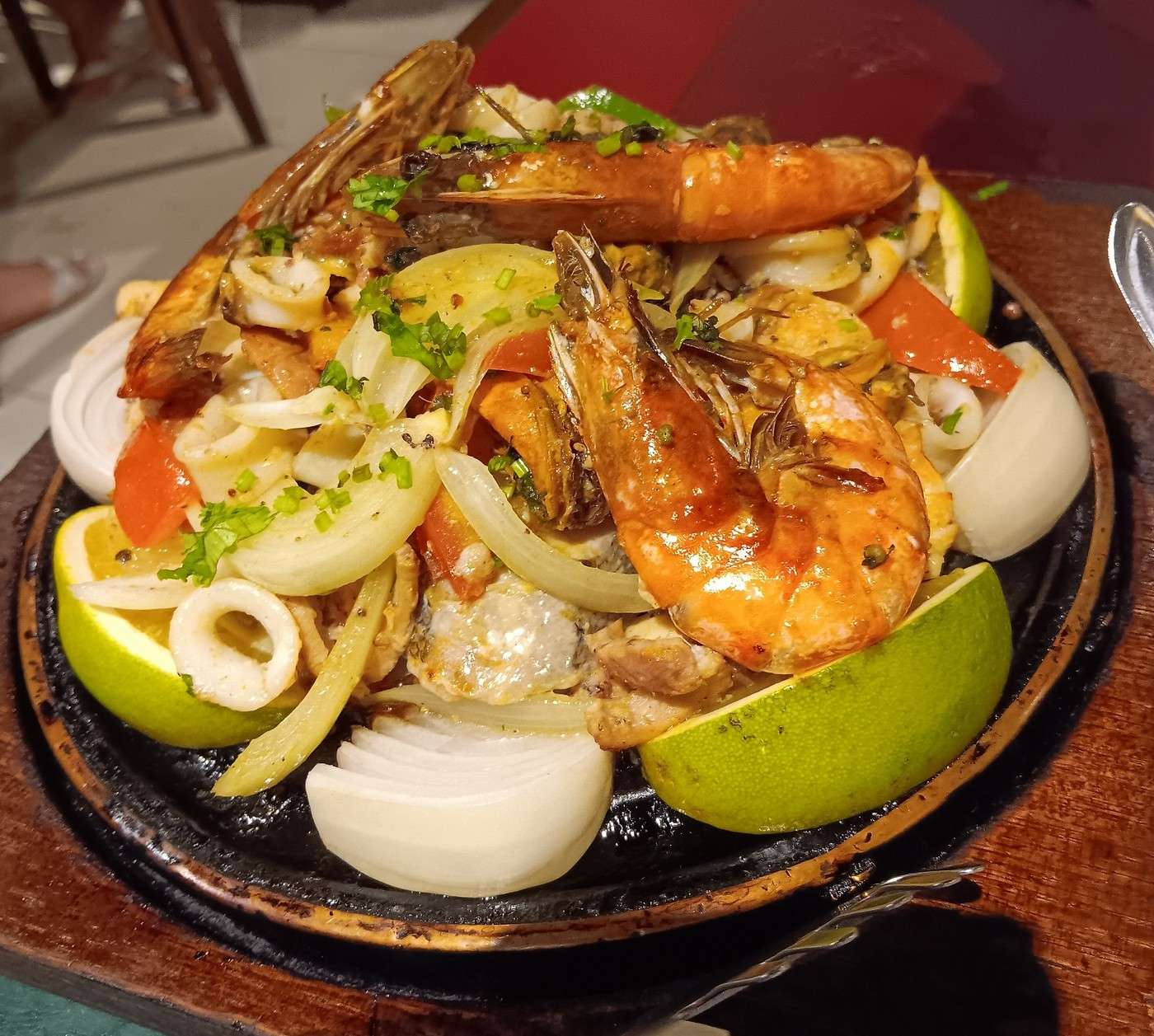
We eat well, but as I’ve said, once you venture beyond buffets, the bills are steep too! Y orders garlic shrimp (photo)—she has a real soft spot for that kind of food.
The next morning, we face the facts: it rained all night, and the thick clouds hanging over the mountain behind us don’t bode well. It’s quickly confirmed—no one’s going out to sea today. Our plan to visit 2 or 3 « paradise beaches » is washed out—literally. It’s a bummer since we have to head to Rio de Janeiro the next day. I know, I know—if we hadn’t booked all those hotels and flights in advance, we’d have had more flexibility. But these days, people book everything so far ahead; winging it day by day is just asking for trouble and expensive surprises. Plus, I don’t like the idea of wandering street to street looking for a hotel with Y on my arm. I try to guarantee her some comfort where I can.
The news is worrying. One or two agencies tell us we might not even be able to leave the island tomorrow because of the bad weather. On top of that, we hear the road from Angra dos Reis to Rio has become impassable due to landslides. We can’t get more info—there’s no electricity or internet for most of the day. It’s only in the evening that we manage to buy tickets for a « lancha » to Mangaratiba, 50 km from Angra dos Reis toward Rio de Janeiro, probably past the landslides on the coastal road.
So, a pretty depressing day in a place that should’ve given us a great « tropical » experience. Oh well—we’ll console ourselves with a little caipirinha cure at Bardjeco!