A Bold Combo: Southern Peru, Bolivia, and Northern Chile
FR

Translated into English.

MO Montagnard74 Globetrotter ·
Plus, Guillaume made it clear in the title: the combo was bold!

I’d also spent 3 days/2 nights in the Southern Lipez and Salar, from Tupiza. Of course, you come away with a "can’t-wait-to-come-back" feeling, but it’s still a great introduction, given the timing choices.

That said, it’s really interesting to follow both your travel journals (along with Carmen’s) at the same time—a great example of the same places visited in completely different ways!

I’ll take this opportunity to revisit your MP visit—you really had weather you don’t see often there!

“My” MP 😉
"Le véritable voyage de découverte ne consiste pas à chercher de nouveaux paysages, mais à avoir de nouveaux yeux." Marcel Proust
SI Sinforosa Veteran ·
definitely weather you don’t see often there

Hi there,

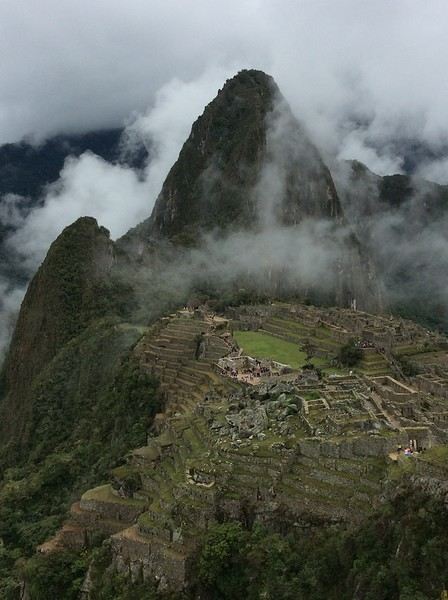
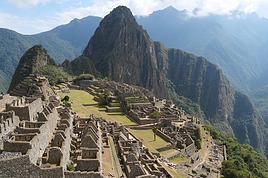
I visited MP about twelve years ago, in the summer. I arrived among the first, very early in the morning, as the day was beginning to dawn. Machu Picchu was under the morning mist, which was slowly lifting, and it was truly magical to see it emerge little by little under the sun! For me, Machu Picchu was a childhood dream, and I was over the moon.

On another note, I’d like to mention that northern Peru isn’t bad either. For those who love handicrafts, Ayacucho is a very interesting city. It’s a place that suffered a lot during the Shining Path era, and I was deeply moved by some of the firsthand accounts from witnesses of that painful time for Peru.

Looking forward to the rest of Marati’s story...
" Celui qui voyage sans rencontrer l'autre ne voyage pas , il se déplace " ( Alexandra David-Néel )

" Ahora todos quieren ser latinos , no , ey , pero les falta sazon , bateria y reggaeton " ( Bad Bunny )
DJ Djalma Globetrotter ·
You're talking about Ayacucho and the Shining Path... I've got an anecdote about that. My wife and I were in Peru in 1984, when the Shining Path was active in the country. Since I worked in aviation, I often got big discounts with certain airlines. In Lima, I went to the Peruvian airline's office to negotiate a ticket for the Cuzco/Ayacucho route. I got the tickets with the discount I asked for, but when we showed up at Cuzco airport to catch the flight, we were told the route had been closed for 3 months because of the guerrilla warfare!
https://www.youtube.com/watch?v=-XCOyB7WStI https://www.youtube.com/watch?v=g2eI67iCbKY
MO Montagnard74 Globetrotter ·
now that’s what I call a solid discount!! 🤪
"Le véritable voyage de découverte ne consiste pas à chercher de nouveaux paysages, mais à avoir de nouveaux yeux." Marcel Proust
SI Sinforosa Veteran ·
You're talking about Ayacucho and the Shining Path...

When we showed up at the Cuzco airport to catch the flight, we were told the route had been closed for 3 months because of the guerrilla war!

In my previous message, I almost wrote that during the Shining Path years, it was strongly advised against going to Ayacucho. Back then, people would leave their homes in the morning not knowing if they’d make it back alive.

For those interested in Peru’s history and handicrafts, it’s a fascinating region.
" Celui qui voyage sans rencontrer l'autre ne voyage pas , il se déplace " ( Alexandra David-Néel )

" Ahora todos quieren ser latinos , no , ey , pero les falta sazon , bateria y reggaeton " ( Bad Bunny )
MA Marati Globetrotter ·
I also spent 3 days/2 nights in the Sud Lípez and Salar from Tupiza. Of course, you leave with a "can’t-wait-to-come-back" feeling, but it’s still a great introduction, given the timing choices.

I had the same feeling, but I want to go back in a season that’s less harsh than winter. Seeing Carmen’s photos of other areas around the lagoons—or her hikes on the volcanoes—just confirmed my wish to return!

I’ll take this opportunity to revisit your MP visit—definitely weather you don’t see there often!

The mist adds a mystical vibe! And if the clouds clear up during the day so you can enjoy the site in the sun, it’s just pure bliss...
MA Marati Globetrotter ·
Hi Marie, Thanks for following the travel journal! 🙂

Otherwise, I’ll take the opportunity to say that northern Peru isn’t bad either, and for those who love crafts, Ayacucho is a really interesting city. It’s a place that suffered a lot during the Shining Path era, and I was deeply moved by some firsthand accounts from witnesses of that painful time for Peru.

Northern Peru is also on my wish list, with a planned stop in Ayacucho, the Millpu pools, Cerro Blanco, Nazca, Huacachina, Moron Lagoon, and the Ballestas Islands!
MA Marati Globetrotter ·
Day 7 - 18/07: On the way to Colca Canyon

Our overnight bus was supposed to arrive in Arequipa at 6:30 AM. But when we found ourselves in Puno in the middle of the night—nowhere near our route—I checked Google Maps and realized we’d be over 2 hours late. No one had told us about this big detour. Then again, I must’ve been the only one crazy enough to check our location at 2 AM ...

Since we had a car reservation at 8:30 AM on the outskirts of the city, I contacted Peru Rent via WhatsApp at 5:30 AM to avoid losing the car due to a "no-show."

Peru Rent’s customer service, apparently available 24/7, was super responsive. They had no problem pushing back the pickup time and even offered to let us grab the car at their downtown office, closer to the bus terminal.

But I declined—I didn’t feel like driving in Arequipa’s hyper-central area. Too risky; Peruvians drive way too aggressively. Even me, who usually drives a bit recklessly, was playing it safe there! After a taxi transfer, we picked up our SUV. During the inspection, all four tires were at or near the wear indicator! This time, we didn’t forget to check for a spare tire 😉. Everything was good—except the jack was missing the crank handle!

The manager told me I could just call if there was an issue. When I pointed out there wouldn’t be signal everywhere (I knew this firsthand—we’d taken the opposite route that morning!!), he finally gave us 20 soles to buy a crank handle ...!!! So that’s what we did on the way, stopping at a hardware store before heading north. On the way there, we took the shortest route—steeper but quickly turning into a corrugated dirt road, or worse. The rental guy had assured me it was paved!

We lost time, and contrary to what I’d read online during prep, the landscapes were pretty underwhelming—except for that one mountain!

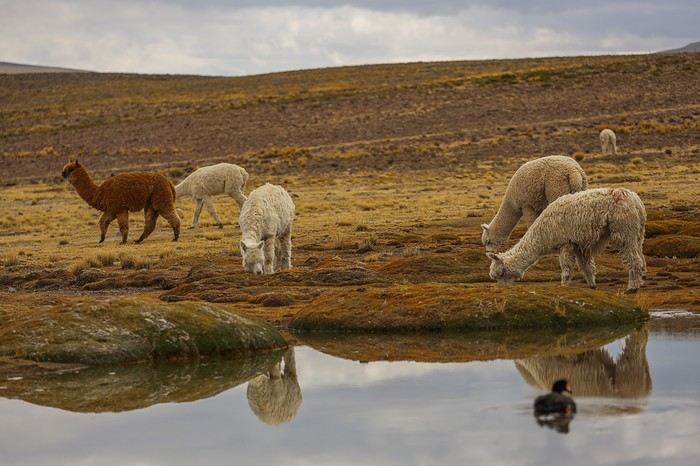
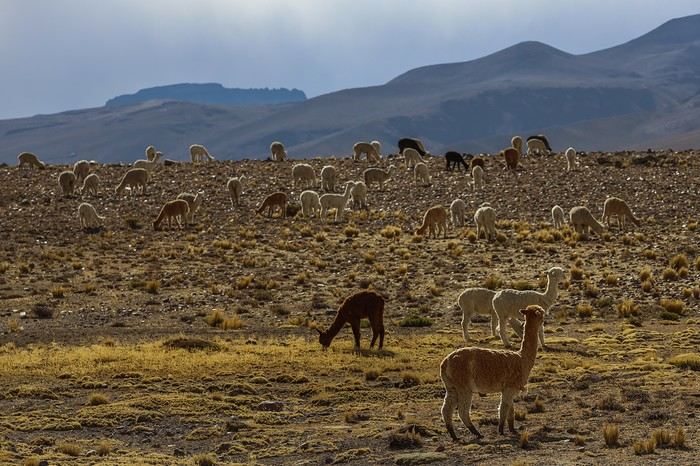
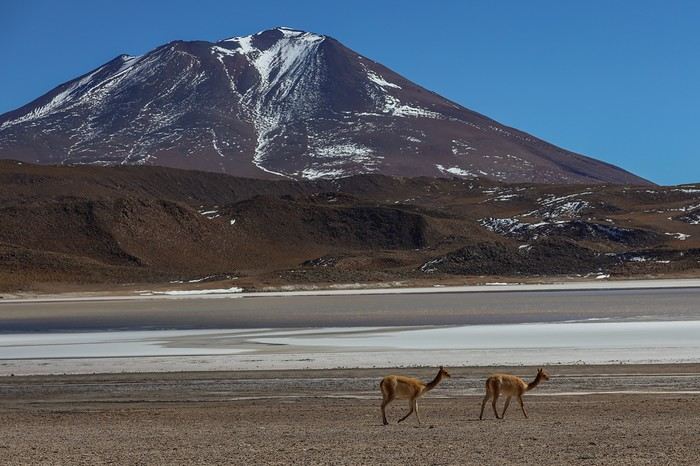
At the summit, on the plateau, we spotted alpacas and vicuñas under a perpetually overcast sky.


After a few stops along the way, we arrived in Chivay, the gateway to Colca Canyon. We paid the entrance fee in exchange for a huge ticket we couldn’t part with—it was meticulously stamped at four checkpoints: on the road *and* at different trails for descending or climbing the canyon. They don’t mess around with this cash cow that supports the whole region!

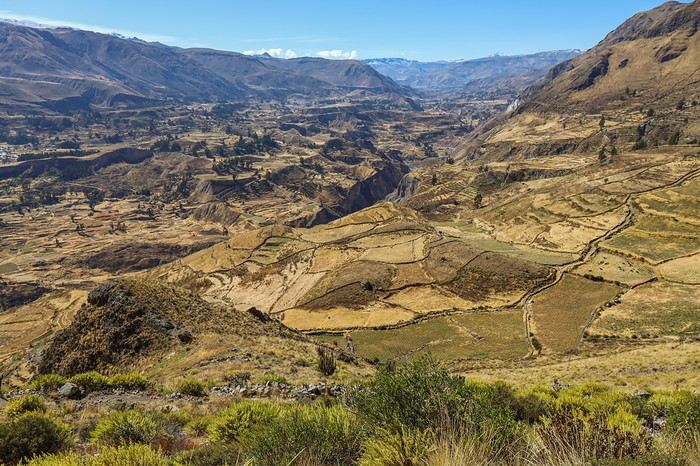
On the main road to Cabanaconde, the photos don’t do justice to what we saw, thanks to those darn clouds. We even got a few raindrops—the first of the trip.

Luckily, by late afternoon, we caught a few rare rays of sunshine and snapped some brighter souvenir photos!

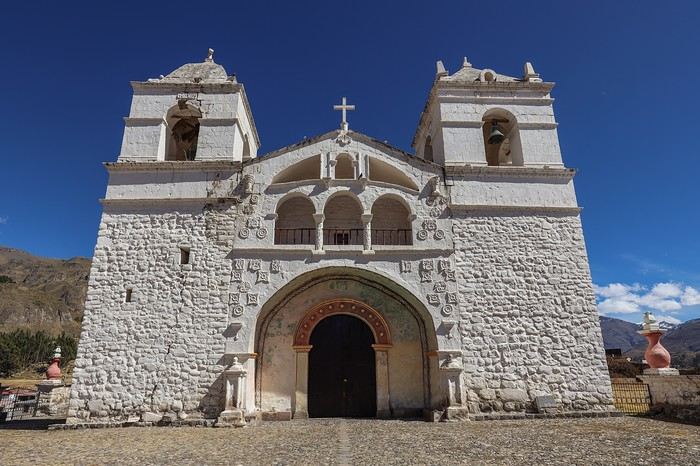
Maca’s church was closed, and the village was deserted. We hoped we’d have better luck on the way back in two days.

We finally arrived at our lodge, Cabana del Conde Lodge in Cabanaconde, where we could have dinner. Good thing, too—the village we’d just passed through seemed dead. We only saw a few small shops where we stocked up on snacks and water for the next two days, just to avoid getting ripped off at the bottom of the canyon, as I’d read about in travel groups. Then again, since they have to get their supplies delivered by mule, it’s no surprise life down there is expensive!

The lodge was perfectly located for tomorrow’s trek and let us leave our big backpacks in a secure room. Plus, after hiking back up the canyon, it offered former guests—even those without a reservation—the chance to shower for free.

Day 8 - 19/07: Descending into Colca Canyon

Before starting our hike, we headed to the condor viewpoint, about 15 minutes from Cabanaconde.

The morning promised sunshine!


We were at the viewpoint by 7:30 AM and took a well-marked trail to a great observation spot.

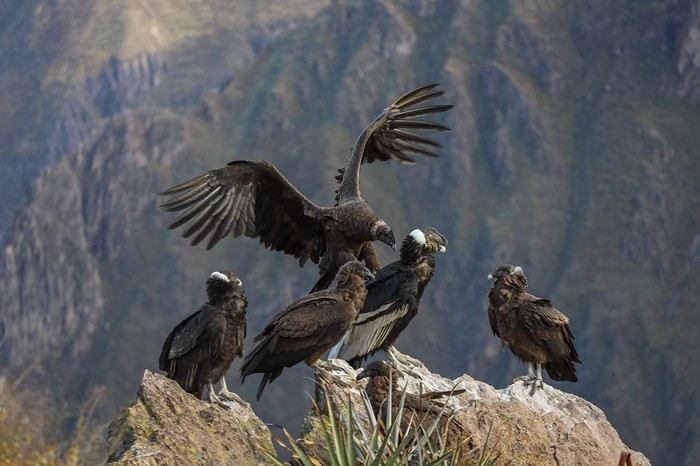
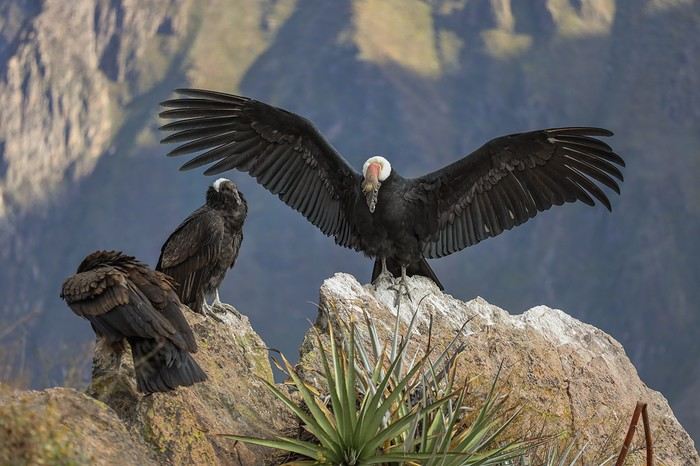
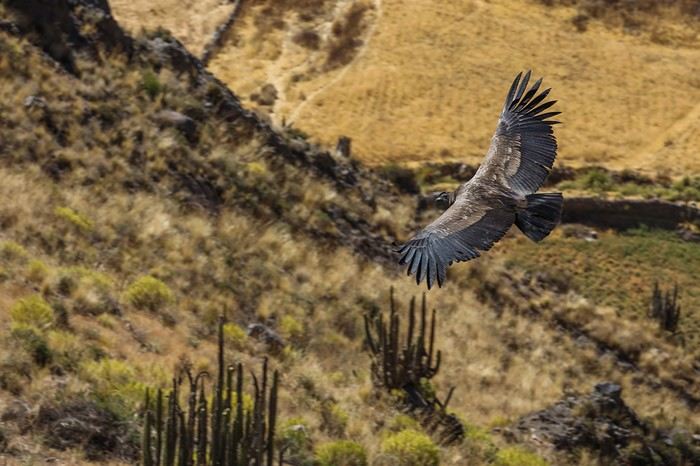
We were about 30 meters from a nest with five adults and two chicks, hidden behind a yucca.


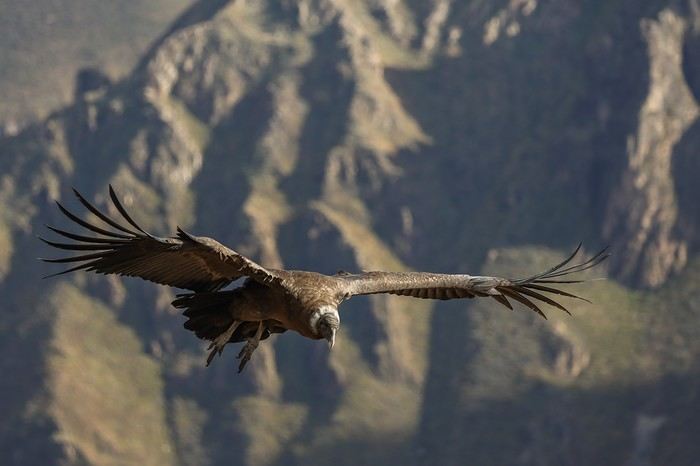
But it wasn’t until around 8 AM, once the first sunrays started creating warm air currents, that the first condors took flight! Front-row seats guaranteed . Not many photos in the journal due to the photo limit 😕


When we left to have lunch at our lodge in Cabanaconde, we spotted about fifteen condors in the sky!!
MA Marati Globetrotter ·
With our stomachs full and our bags packed, we set off on the hike just before 10 AM, aiming to reach the Sangalle Oasis, located 1,300 meters below at an altitude of 2,100 meters. We’re taking the classic loop, the shortest route, passing through San Miguel and San Juan de Chuccho.

After San Miguel and a permit checkpoint, the actual trail begins.

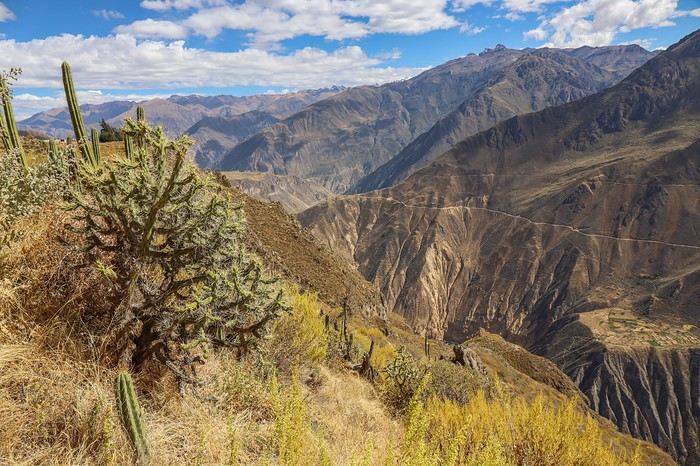
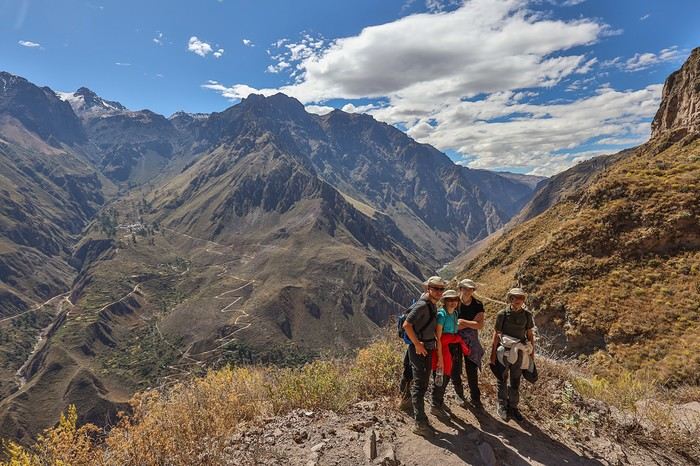
The viewpoint from the rim is breathtaking. It even earns us an exasperated remark from a family member wondering why people always want to descend to the bottom of a canyon when they’re at the top (where the view is stunning), and why they always want to climb to the top of a mountain when they’re at the bottom ...

No one had an answer for that. Still, we continue our long descent 😛!!

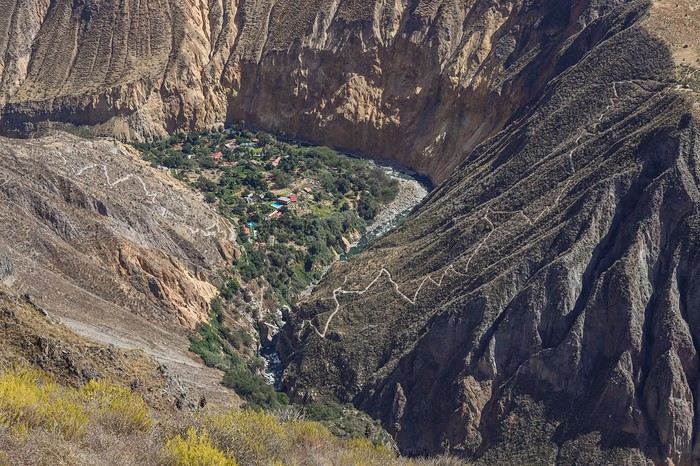
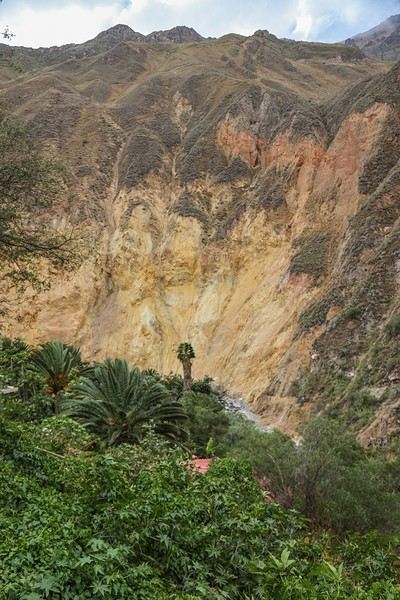
We’re treated to a stunning plunging view of the Sangalle Oasis, our stop for the day, where you can spot one of the pools that will be ours tonight!

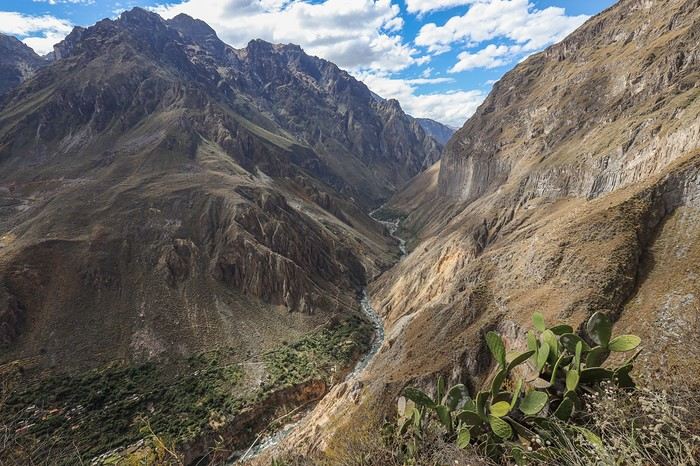
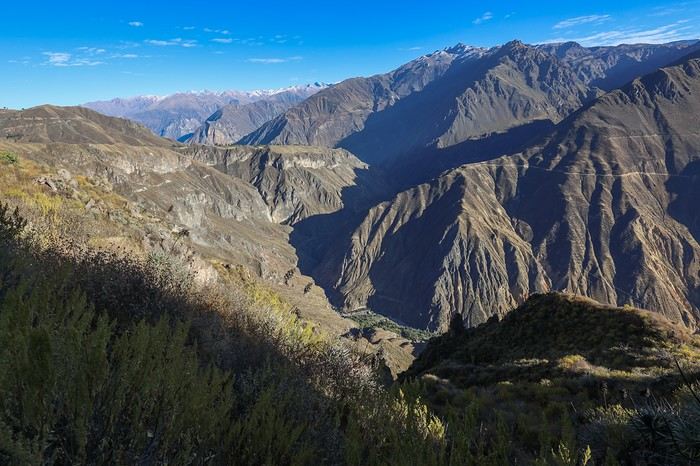
The viewpoints at the start of the trek are the most impressive and really give you a sense of the canyon’s depth!


The final descent to the bridge is really steep, and several of our little toes end up with blisters. For my part, I made the mistake of not tightening my laces enough, which increased the friction of my foot against the front of my shoe!

When the bridge comes into view, we know the hardest part is over! We’re not at risk of getting lost—we’re far from alone... Still, maps.me comes in handy several times, because after the San Juan bridge, there are multiple possible routes.

By mutual agreement, given the state of our toes and the sky starting to cloud over in the distance, we decide to take the direct option, the shortest one.

After lunch in San Juan de Chuccho, in the heart of lush vegetation,

we begin the final stretch of the hike leading to the Sangalle Oasis. The constant ups and downs in terms of climbing and descending really wear us out, and a relaxing evening will do us good.


The clouds eventually catch up with us, and we even get a few raindrops that motivate us to pick up the pace!

We finally start the switchback descent toward the oasis, cross a footbridge, and reach Eden Lodge.

Throughout the day, we heard a lot of French being spoken...

Rock colors worthy of Yellowstone Canyon, or almost...


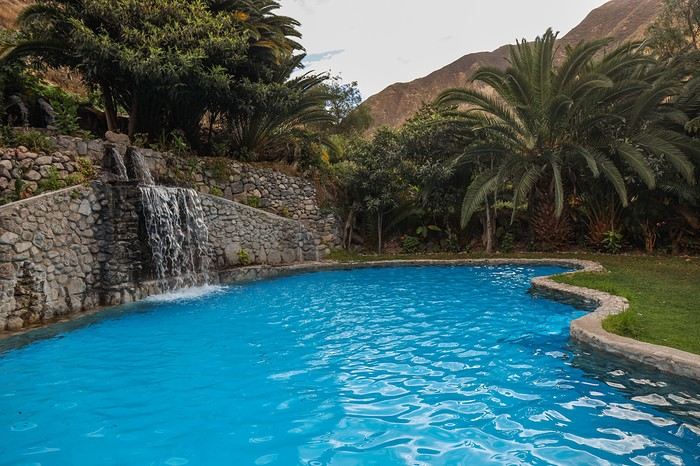
Our hotel, Eden Lodge, has a beautiful pool with a waterfall, but with wind strong enough to blow the horns off a bull and a very chilly temperature, we only dip our legs in.

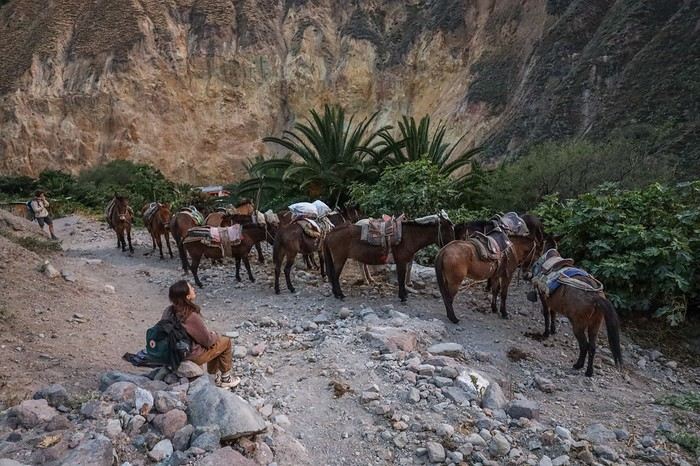
While it’s not too crowded yet, I also take the opportunity to book a mule for Laetitia, as she won’t have the strength or desire to tackle the 1,200 meters of elevation gain tomorrow morning. Timéo and Rachel consider taking a mule for themselves, alternating the effort, but the muleteer tells them it’s impossible because the mules’ pace is much faster than that of hikers. They decide to decline the option and hike up on foot 😛.

While waiting for dinner, we sip beers among several tables of French travelers and play a few card games. Not to mention the essential wi-fi, which is surprisingly good. Ultimately, contrary to what I’d read, I found the prices for meals and drinks very reasonable, given how remote the location was.

The descent into the Colca Canyon was quite a physical challenge since the most beautiful panoramas are visible from the top, from the rim!
MA Marati Globetrotter ·
Day 9 - 07/20: Hiking up Colca Canyon and returning to Arequipa

The alarm goes off at 4:50 AM to give us time to have breakfast before starting the hike up the canyon while it's still cool.

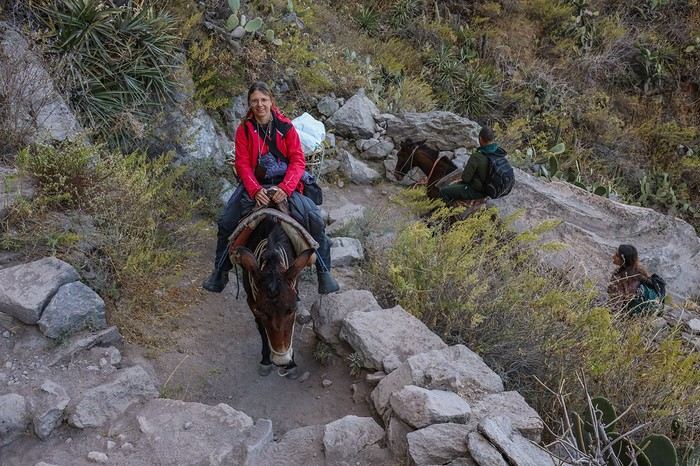
We meet up at 5:40 AM with the muleteer we rented a mule from—for my wife, whose legs aren’t up to handling the physical effort of 1,100 meters of elevation gain over 4.3 km. Since he’s running late, the kids and I start the hike at 6 AM to take advantage of the morning coolness.

We quickly pass the mules waiting patiently for their passengers.

The hike is pretty easy as long as you don’t push too hard. We keep a steady, relaxed pace. After an hour, we’ve already covered more than half the elevation gain.

The sun, climbing in the sky, gradually lights up the mountains. Meanwhile, we continue to tackle the elevation at a steady but relaxed pace. Rachel is right behind me, and as soon as I hear her breathing get heavier, I slow down. The boys could go a little faster, but we stick together in a line, and every half-hour, we check our progress on the maps app to keep everyone motivated!

It’s not until around 7:30 AM that the mules catch up to us. Laetitia later tells us they left relatively late while they saddled the mules. In the end, we complete the climb in 2 hours without pushing ourselves, with a break every half-hour. We all expected it to be worse... The muleteer did it in 1.5 hours without breaking a sweat!


At the top of the trail, we have to show our permits again!

We then walk through the village of Cabanaconde, which isn’t very charming, until we reach the lodge.

After picking up our car and bags—left at the hotel instead of in the trunk to avoid tempting anyone—we head back to Chivay, stopping at all the viewpoints and villages along the way.


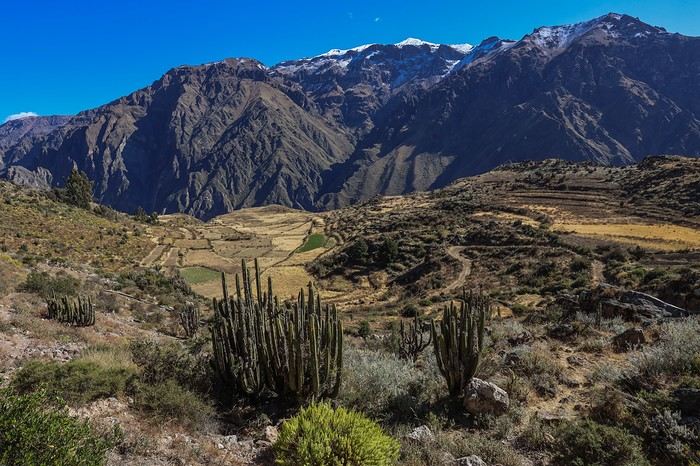
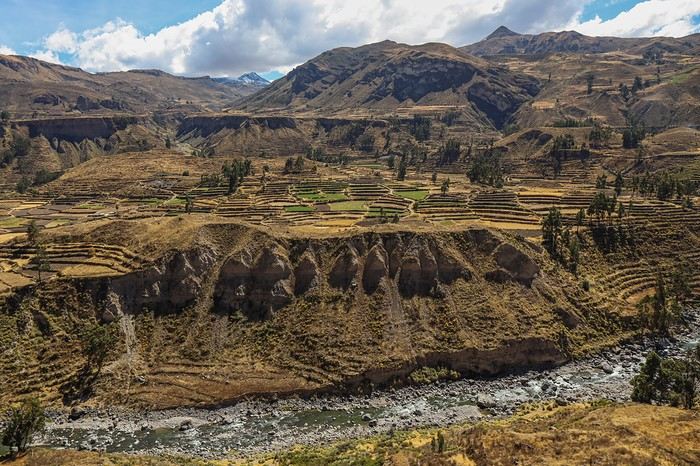
Unlike the trip there, the return drive is under a beautiful blue sky, and the views of the canyon just keep coming.

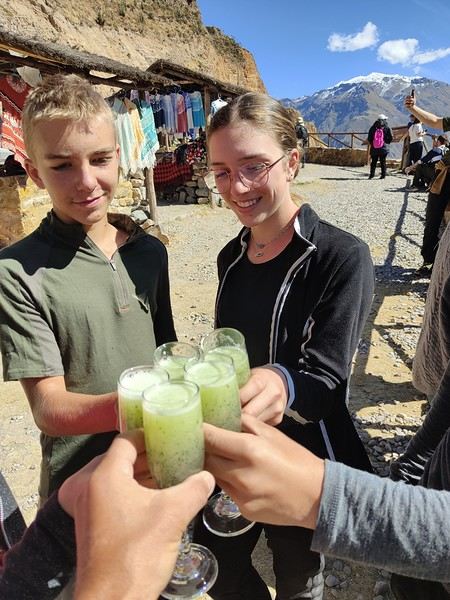
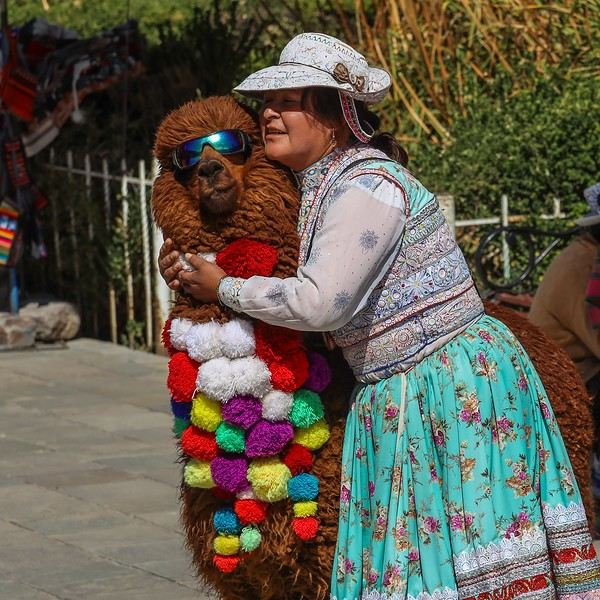
At a series of tourist stalls, we have a lovely encounter!


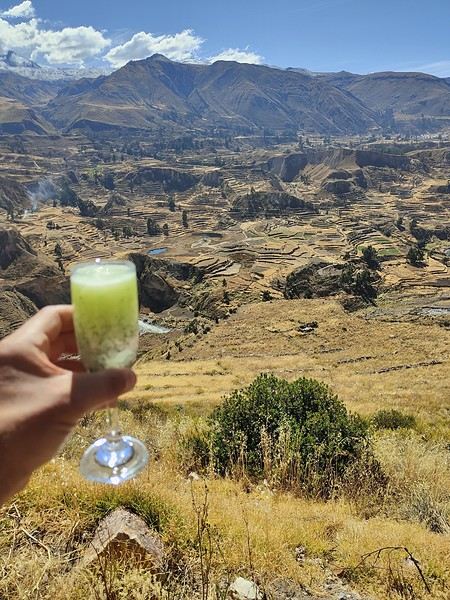
We take the opportunity to try an alcoholic aperitif made with cactus juice. Unique and really good!


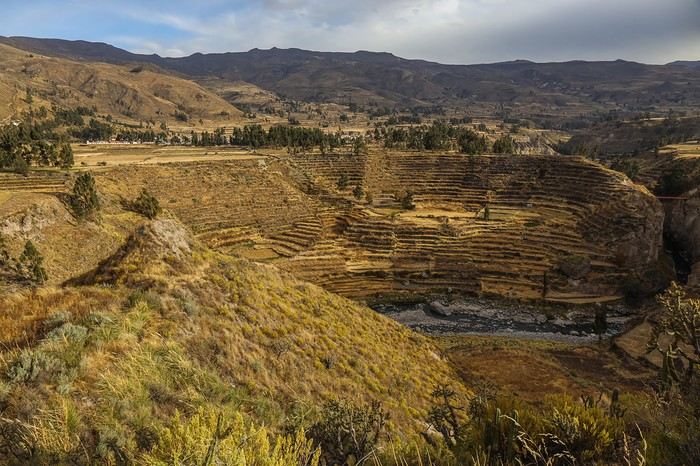
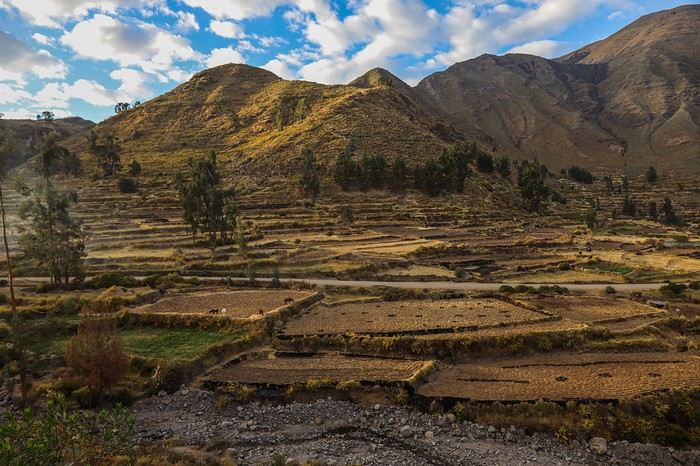
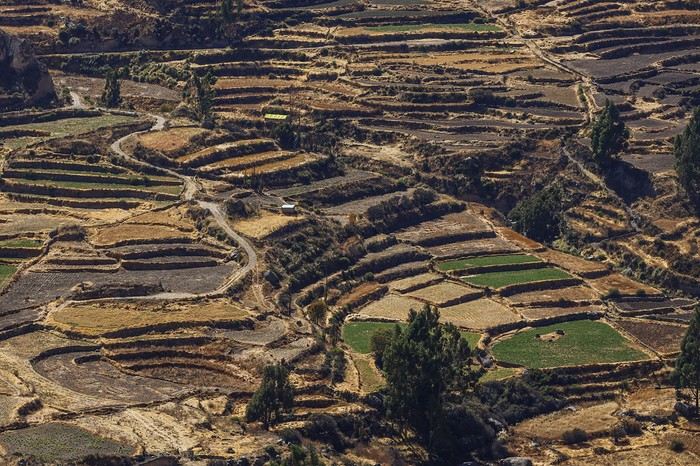
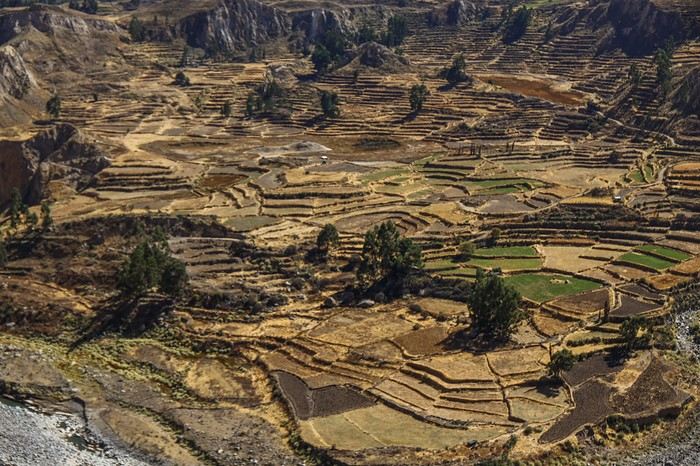
Those Andean farming terraces still form a beautiful mosaic of colors.


One last roadside stop,

MA Marati Globetrotter ·
And we arrive in Maca, with its church looking much more presentable in the sunlight,


and its inevitable tourist attractions that make us smile!


After a few more stops,

we arrive in Chivay for lunch.

After eating, we wanted to bathe in the thermal waters of La Calera, but it’s Sunday, and it’s packed with people—mostly Peruvian families enjoying these 38–40°C pools on their day off... So we decide to skip it 😕.

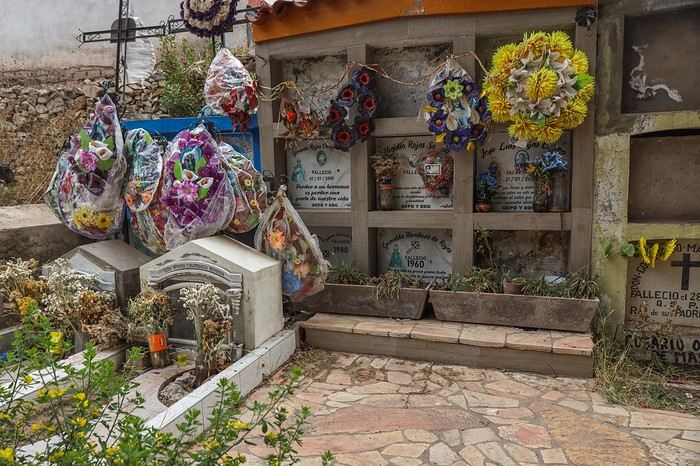
A quick stop at the Chivay cemetery, which isn’t very well maintained. In several places, people are burning grass, and we’d love to know the reason behind it.


We head back to Arequipa a little earlier than planned.

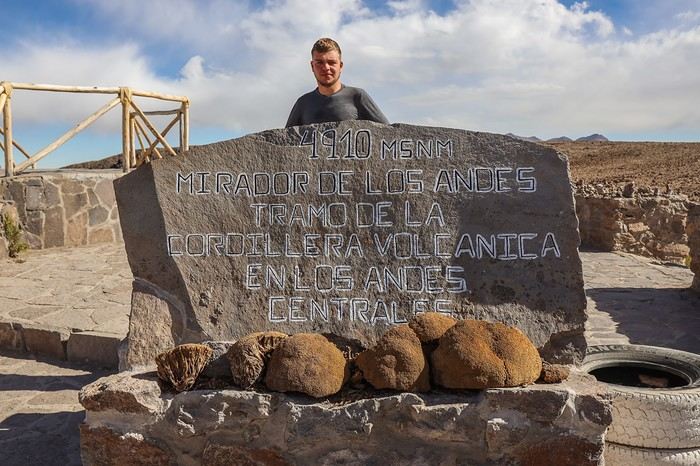
The paved road crosses a pass at 4,910 m. No altitude sickness issues—we’re 40 m below Tim’s tolerated limit, and anyway, the pass at this altitude is very brief!


We pass by the huge herd of alpacas again, which hasn’t moved to a new grazing area.


At Arequipa airport, we meet up with our rental company. Since the car had to be returned clean and we didn’t have time to wash it, we give them the equivalent in cash. When I show him the iron bar we bought to use as a jack, he laughs!

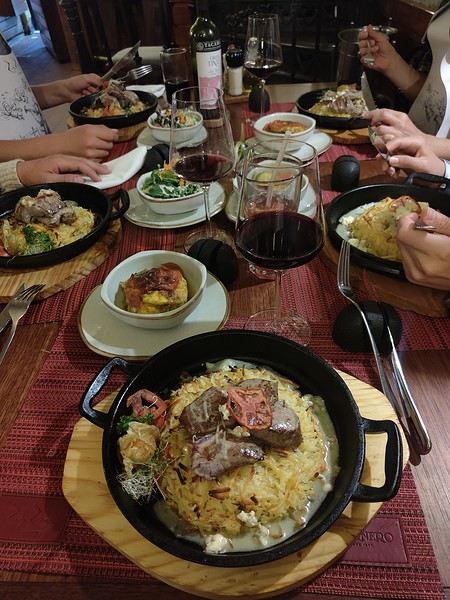
A taxi then takes us to the historic center, where we spend a fantastic evening—first at a rooftop bar, then at one of the city’s best restaurants, Zigzag. The chef is definitely French or Swiss (judging by the menu), and the service is very attentive. We all end up ordering a rösti with super tender alpaca... Absolute perfection... 😛

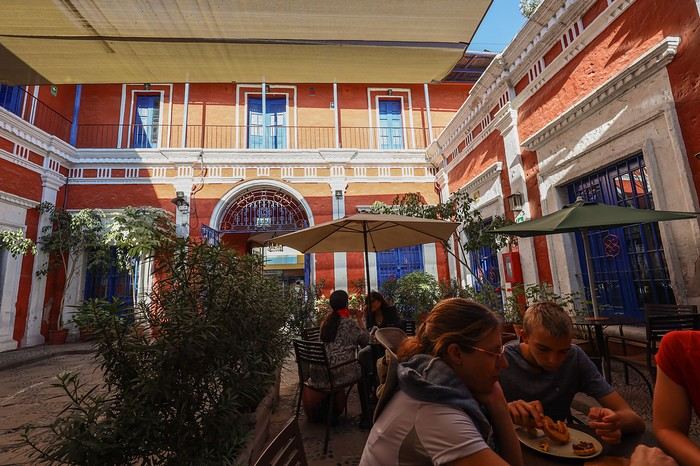
Our hotel for the night, Le Foyer, lives up to its name. The rooms are arranged around an inner courtyard, and breakfast is served on the rooftop.
BA Babouandco ·
Hi Guillaume, I’m following your travel story with pleasure and admiration. Kudos to the family for keeping up the pace! I can’t wait to read about the Salar de Uyuni—it’s one of my most beautiful travel memories... Thanks for sharing.
Babou
MU Muriel18 Globetrotter ·
Like Carmen’s, I just caught up on this thread since I didn’t get any VF notifications 😕. So many gorgeous photos 😍! The way you justified your travel pace by comparing it to Franck and Sullivan’s had me laughing! 😏
Si tu diffères de moi, mon frère, loin de me léser, tu m'enrichis (Saint Exupéry)
DJ Djalma Globetrotter ·
The alarm goes off at 4:50 AM to have time for breakfast before tackling the canyon climb in the cool morning air.

Meet-up with the muleteer at 5:40 AM.

You’re really putting them through it! Is this to stick to a schedule (linking the sites and returning the car?), I guess? The heat wasn’t too bad during the day, right? Apart from mountain hikes in the snow to keep it firm before the sun softens it, or long treks (+8h) with afternoon storm risks, I’ve rarely woken up this early! Anyway, with my kids, I’d have struggled to get them to agree to such early starts—especially several days in a row! Still, what great teamwork—I’m impressed!
https://www.youtube.com/watch?v=-XCOyB7WStI https://www.youtube.com/watch?v=g2eI67iCbKY
TI Ticapi Globetrotter ·
Your condor photos are amazing! Not having a proper zoom lens to photograph them is really my biggest regret from the trip—maybe even the only one.
RO Rouquine38 Globetrotter ·
Yes, your photos of Condor are amazing... unfortunately, I couldn't take any myself because I couldn't go there, but my husband did. However, I don't remember them being as close to you as they were. You were so lucky!
"Voyager est un triple plaisir : l'attente, l'éblouissement et le souvenir." Ilka Chase
RO Rouquine38 Globetrotter ·
Like Carmen’s, I just caught up on my backlog since I didn’t get any VF notifications 😕.

Since VF reopened, I haven’t been getting any notifications—no replies to my messages, no new posts, nothing from the forums 😞
"Voyager est un triple plaisir : l'attente, l'éblouissement et le souvenir." Ilka Chase
MU Muriel18 Globetrotter ·
Well, for me, it depends: in some travel journals I have them systematically, and in others (like this one), it's really hit-or-miss 🤪.
Si tu diffères de moi, mon frère, loin de me léser, tu m'enrichis (Saint Exupéry)
JO Jojoone1 Globetrotter ·
Not only was your trip planned like a pro, but you also seem to have made all the right choices—and even got that little extra stroke of luck around the corners.

This travel journal is super detailed, and I *love* all the colors. I don’t think I’m going out on a limb by saying this is one of the best travel journals of the year.
« Tout le monde s'interroge sur comment laisser une meilleure planète à nos enfants, mais on devrait plutôt penser à laisser de meilleurs enfants pour notre planète. » Clint Eastwood
MO Montagnard74 Globetrotter ·
Well, if you get a move on, it's March now... 😉
"Le véritable voyage de découverte ne consiste pas à chercher de nouveaux paysages, mais à avoir de nouveaux yeux." Marcel Proust
JO Jojoone1 Globetrotter ·
I never give out compliments like this lightly, and many know I’m pretty hard to please :)
« Tout le monde s'interroge sur comment laisser une meilleure planète à nos enfants, mais on devrait plutôt penser à laisser de meilleurs enfants pour notre planète. » Clint Eastwood
TI Ticapi Globetrotter ·
This travel journal is very comprehensive, and I really appreciate its vibrant use of colors. I don’t think I’m overstepping by saying this is one of the most beautiful travel journals of the year.

That’s not gonna motivate others to start or keep up their own travel journal. 😛 [;]
JO Jojoone1 Globetrotter ·
This travel journal is incredibly comprehensive, and I really appreciate its vibrant use of colors. I don’t think I’m overstepping by saying this is one of the most beautiful travel journals of the year.

That’s not going to motivate others to start or continue their own journal. 😛 😉

In that case, you should be sorry that the quality of yours has discouraged so many from making their own for a long time now. 😛

I, on the other hand, think that only excellence can truly inspire people to follow suit. That’s how we used to see things back in the day, before we started putting the cart before the horse.

Anyway, I don’t want to be part of the majority who stays silent, especially out of laziness for not writing a few lines of encouragement. And besides, this is a real crush—it’s rare, and it had to be said! 🙂
« Tout le monde s'interroge sur comment laisser une meilleure planète à nos enfants, mais on devrait plutôt penser à laisser de meilleurs enfants pour notre planète. » Clint Eastwood
DJ Djalma Globetrotter ·
This travel journal is very comprehensive, and I really appreciate its vibrant use of colors. I don’t think I’m overstating it by saying this is one of the most beautiful travel journals of the year.

There’s also a travel journal about Morocco in the 90s that should be at the top of the list... It’s had us on the edge of our seats for way too long! In the meantime, I’m following these three, including Ticapi’s, which is also really great.
https://www.youtube.com/watch?v=-XCOyB7WStI https://www.youtube.com/watch?v=g2eI67iCbKY
MO Montagnard74 Globetrotter ·
This travel journal is incredibly detailed and I really love its explosion of colors. I don’t think I’m overstepping by saying this is one of the most beautiful travel journals of the year.

That won’t exactly motivate others to start or keep up their own journals. 😛 [;]

Just try to give up yours, and I’ll swim across the lake to talk you out of it! 🤪 It’s this century’s obsession with ranking, rating, and giving thumbs up, when it’s so simple to just enjoy the huge effort a travel journal takes!
"Le véritable voyage de découverte ne consiste pas à chercher de nouveaux paysages, mais à avoir de nouveaux yeux." Marcel Proust
MA Marati Globetrotter ·
Hello Guillaume, I’m following your travel story with pleasure and admiration. Kudos to the family for keeping up the pace! I can’t wait to read about the Salar de Uyuni—it’s one of my most beautiful travel memories... Thanks for sharing.

Hi Béatrice, Thanks for your encouraging message 🙂! Ah... The Salar de Uyuni will be here soon. The kids were also looking forward to it during the trip! And that day became one of their favorites, even ahead of Machu Picchu or Palcoyo-Vinicunca!
MA Marati Globetrotter ·
Like Carmen’s, I just caught up on this thread since I didn’t get any VF notifications 😕. So many gorgeous photos 😍! The way you justified your travel pace by comparing it to Franck and Sullivan’s had me laughing! 😏

Speaking of Franck and Sullivan’s adventure from Lima to SPDA, they really outdid themselves—if I remember right, they stacked 4 nights on buses over just 18 days! And on top of that, they climbed a 6,000m peak! So yeah, our itinerary was pretty chill in comparison, right? 😛 😏?
MA Marati Globetrotter ·
The alarm went off at 4:50 AM to have time for breakfast before tackling the canyon climb in the cool morning.

We met the muleteer at 5:40 AM.

You really keep them on their toes! Is this to stick to a schedule (linking sites before returning the car?), I guess? The heat wasn’t too bad during the day, was it? Apart from mountain hikes in the snow to keep it firm before the sun softens it, or long hikes (+8h) with afternoon storm risks, I’ve rarely woken up this early! With my kids, I’d have struggled to get them to accept such early starts, especially several days in a row! Still, great teamwork—I’m impressed!

You’re right about the temperatures in Colca Canyon in winter. They’re actually quite mild, and that wasn’t the reason for such an early start. First, it was the 6 AM meet-up with the muleteer that forced us to adapt, even though they left much later.

Then, since we had a 4-hour drive ahead that day, I wanted the day to be more than just a hike and a drive—otherwise, we could’ve taken the more common bus or colectivo option. This way, we had time to stop whenever we wanted and could’ve gone for a swim in Chivay or the Chacapi hot springs if they hadn’t been packed. 😕

On this trip, I didn’t hear the kids complain once. They knew we’d be discovering three countries and three different cultures and were amazed every day. Enough to wake up calmly and without grumbling each morning! I’d warned them about the pace, and they were all in!
MA Marati Globetrotter ·
Yes, your Condor photos are amazing... unfortunately, I couldn't take any myself because I couldn't go, but my husband did. However, I don't remember them being as close to you as they were. You were so lucky!

Isabelle, we were indeed very lucky! The photos were taken at just 200 mm on a full-frame camera, with barely any cropping. A Peruvian next to me, with the same DSLR as mine, and I had a blast for half an hour comparing our shots 😎! He even almost offered to send me his because he was so happy with them too
MA Marati Globetrotter ·
Not only was your trip planning masterfully done, but you also seem to have made the right choices and had that little extra stroke of luck around the street corners.

This travel journal is so comprehensive, and I really appreciate its burst of colors. I don’t think I’m overstepping by saying this is one of the most beautiful travel journals of the year.

Hi Joël, Your kind and encouraging words truly touch me. It warms my heart and motivates me to spend all this time sharing our experience—maybe inspiring others to dare to follow our route at their own pace. Just like Franck’s experience and feelings encouraged me to take the leap. Thanks again
MA Marati Globetrotter ·
Day 10 - 07/21: Visit to Arequipa

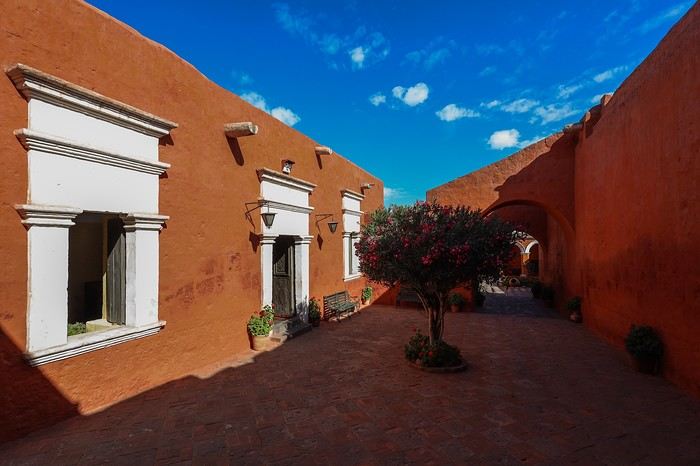
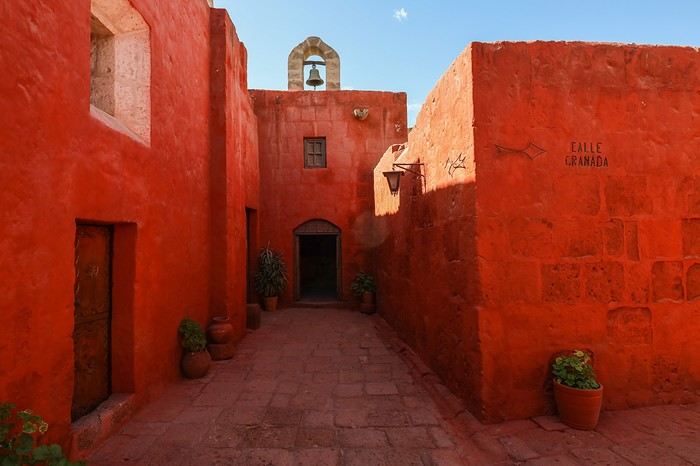
The day exploring Arequipa is shaping up to be a relaxed one. After breakfast on the rooftop terrace of the Foyer, we head to the Santa Catalina Convent, the city’s main attraction.

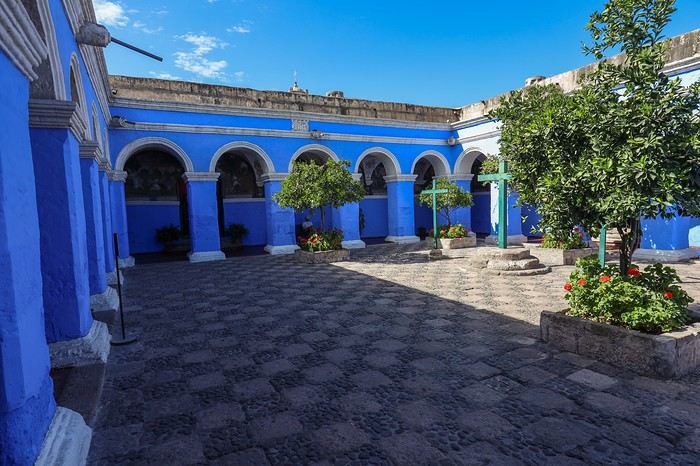
This massive convent, the largest in the world, spans over 2 hectares and is known for its vibrantly colored buildings and cloisters—indigo blue, brick red, or ochre. You can almost get lost in its many alleys, each named after Andalusian cities.

It’s not just alleys; there are also several cloisters and inner courtyards in the different quarters, each unique.

You’ll lose count of the kitchens—there’s practically one in every house you pass!

Each quarter has its own dominant color and atmosphere...


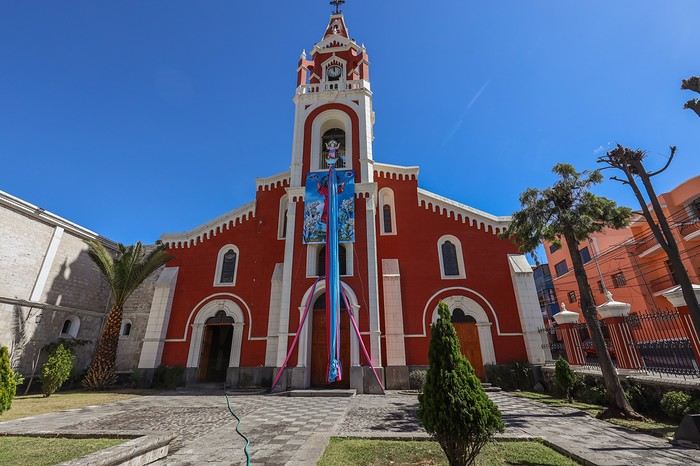
After this must-see visit to the convent, we continue to the church and monastery of La Recoleta, much less famous and visited, even though it’s just a few blocks away.


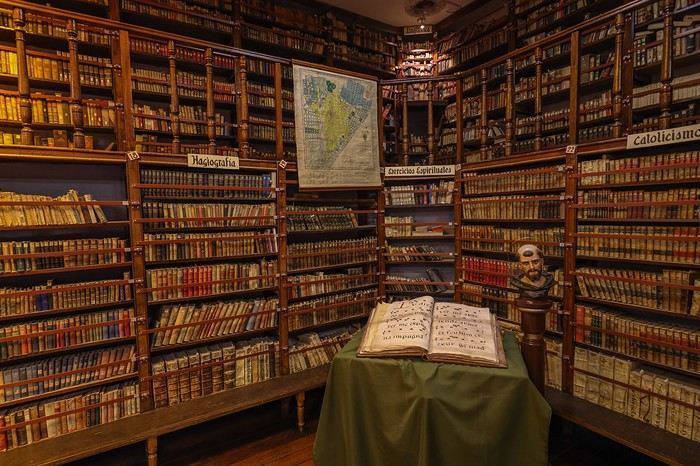
From the monastery visit, what stands out most is its library and its many ancient books.

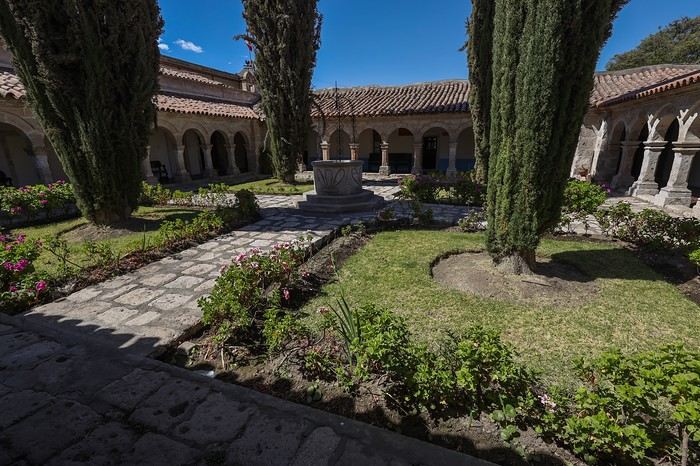
The two cloisters are relatively well-maintained, with some perennial plants in bloom, but the overall design lacks a bit of finesse.


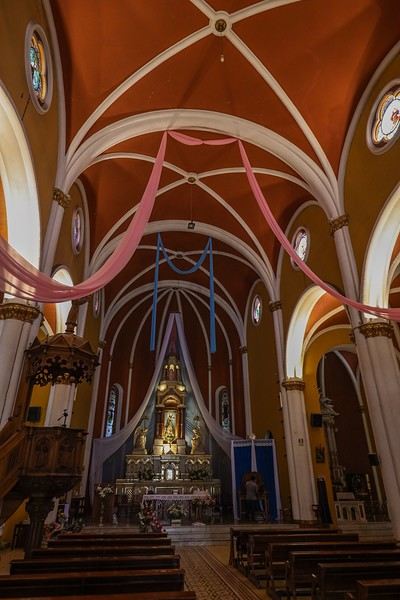
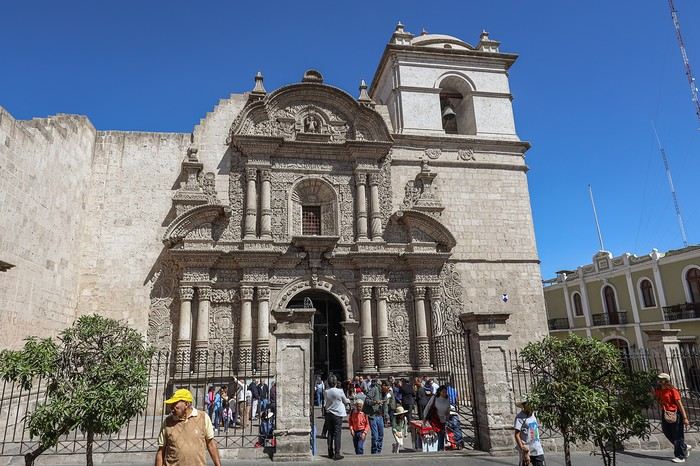
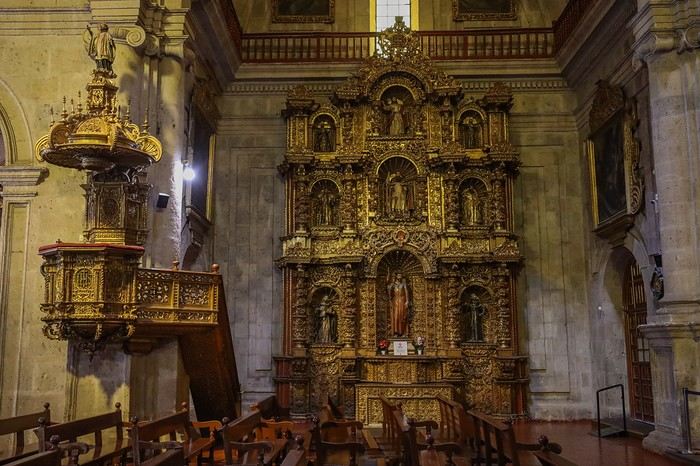
A stroll through the city center leads us to the Church of La Compañía, where the interior is just as remarkable as the exterior façade!


MA Marati Globetrotter ·
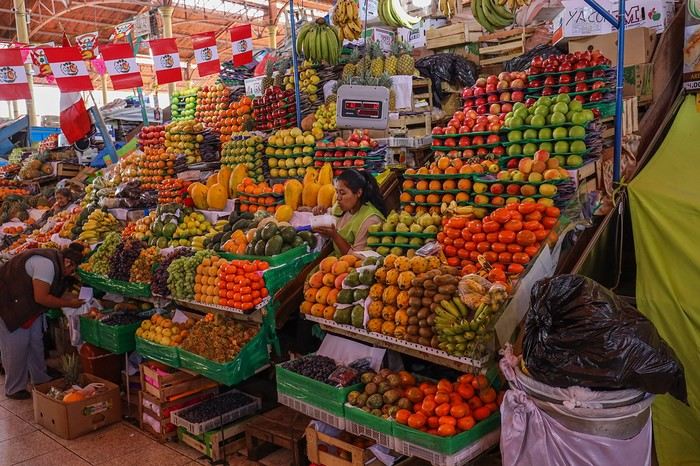
After lunch at a no-frills Chinese restaurant, we took a little stroll through the San Camilo market—its stalls are a visual attraction all on their own! What a riot of colors 😅

This stand is a reminder that South America is the continent of potatoes.

La Canasta tea salon is well-known for its pastries, so we stopped by to try several as dessert.


Then, cocktail break during Happy Hour before grabbing a crêpe at La Crepisima. In short, we did nothing but eat and drink today… Perfect for recharging our batteries!

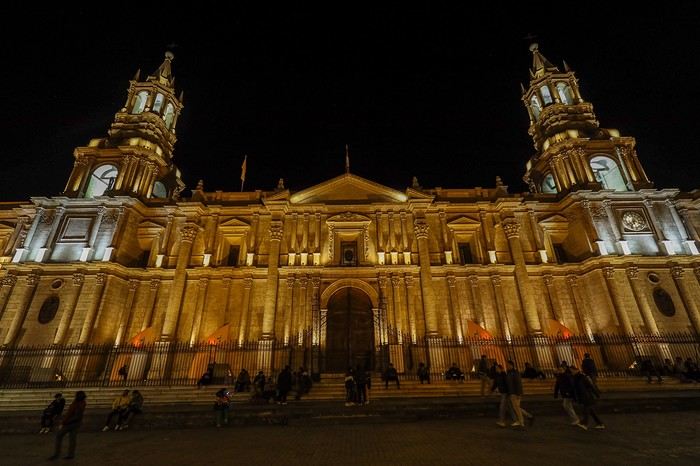
Once night fell, the cathedral opened its doors, letting us visit the interior—far less photogenic than the outside!

After that, we headed back to our hotel to pick up our laundry before rushing to the bus station for another overnight bus that’ll take us straight to Puno, on the shores of Lake Titicaca.
MA Marati Globetrotter ·
Day 11 - 07/22: Lake Titicaca

The vast Lake Titicaca, straddling the borders of Peru and Bolivia, is known for being the highest navigable lake in the world, perched at 3,800 meters above sea level. But it’s so much more than that—it’s a powerful symbol of Andean culture and a sacred place, considered the cradle of the Inca civilization.

The lake plays a significant role in local cultures, whether on its shores or islands, like the ultra-touristy floating Uros Islands.

Despite the lake’s strong symbolism, I wasn’t expecting much from this day, and to be honest, my doubts were quickly confirmed...

Why? The Uros Islands, as a "must-see" of any trip to Peru, have been suffering from over-tourism for years! Everything there has become a business. The so-called farmers, who are supposed to live on these islands, are just putting on a show for tourists. They dress in traditional costumes for the folklore and make gullible visitors believe they live permanently in reed huts... In short, we weren’t tempted by that kind of experience at all.

Given these negative reviews circulating on websites and social media, another form of tourism has developed in the area, with "homestays" on the islands of Taquile, Amantani, or the Llachón peninsula.

You can read plenty of enthusiastic comments about these "authentic" experiences. Tourists, welcomed into villages, rave about how Peruvian host families play music for them, teach them weaving, dress them in traditional costumes, involve them in feeding chickens and other farm animals, or even plowing. But knowing that some of these families host several groups of tourists every day, I struggle to see how the experience can be "authentic."

That’s just my opinion, though, so I wanted to get my family’s take. After discussing it, they agreed with me, and we decided to spend only one day there, even though our tight schedule could have allowed for two.

That said, after reading Carmen’s 3-4 day experience—where she carefully organized her stay on Lake Titicaca off the beaten path—I thought: why not!

During one of our planning evenings, I came across a website explaining that you could buy a ticket directly at the port in Puno to Taquile Island, with a mandatory one-hour stop at the Uros Islands just to "have seen them." According to this account, Taquile Island wasn’t yet ruined by mass tourism.

That’s the option I chose for the day we’d dedicate to the lake. The day started early, as we arrived by overnight bus at 4:30 AM at Puno’s bus terminal!

Shortly after 5 AM, the city began to wake up, and we dropped off our bags at our hotel (reserved for the evening) while grabbing breakfast there.

We then headed to the port. On the long pier, a guy who spoke French ( !!) approached us and offered tickets to Taquile Island, with a stop at the Uros Islands. The prices matched what I had in mind (30 soles for a slow boat, 40 soles for the speedboat).

Since he guaranteed us 3.5 hours on Taquile instead of the standard 1.5 hours, we went for that option, of course 😉!

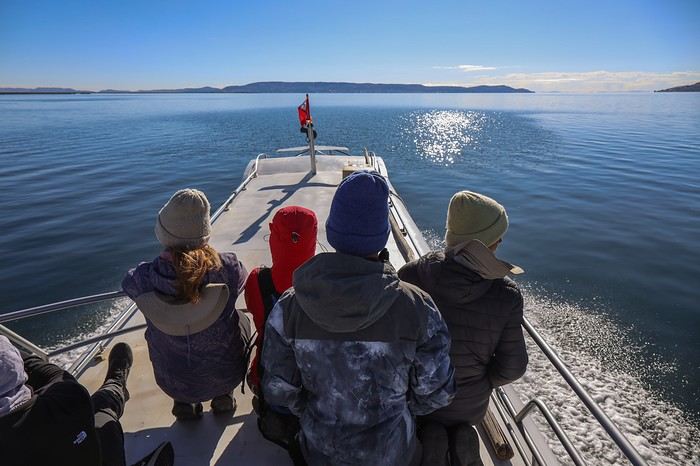
Once the boat was full, we left the port at 8 AM. Barely underway, a guy introduced himself as the day’s guide... Oops, we hadn’t realized that was part of the deal. Instead of just being dropped off on a Uros Island and then Taquile, it looked like we’d end up in a group.

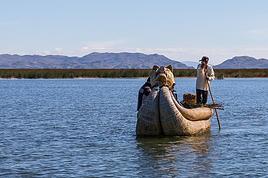
Our boat passed the first rows of reeds and floating houses,
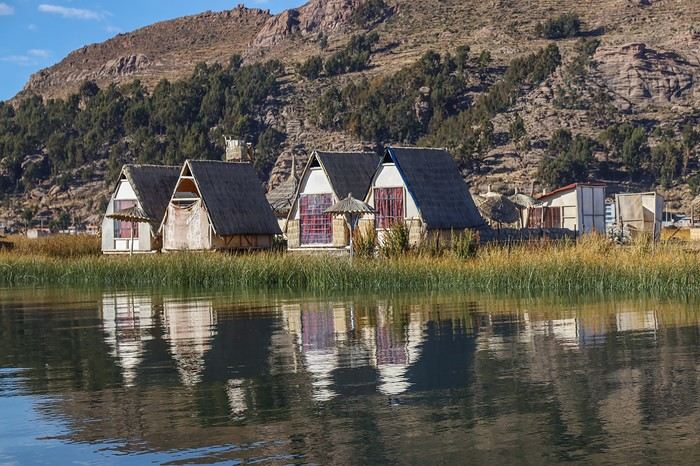


then arrived at the first floating island. But since another boat was already docked there and tourists were about to disembark, our guide asked the driver to move on.

Too bad—it all looked so perfect for our arrival !
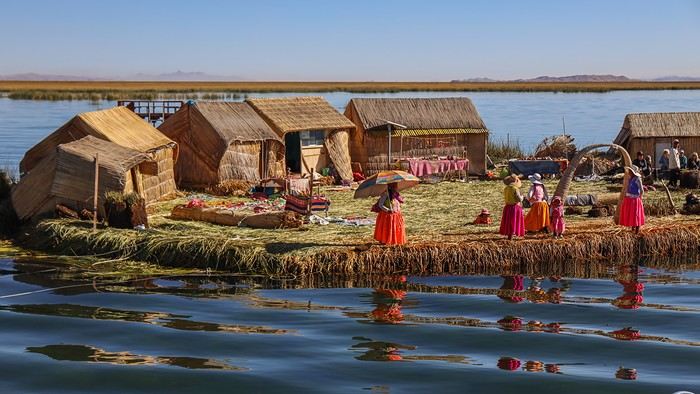


The second island we came to was the right one.

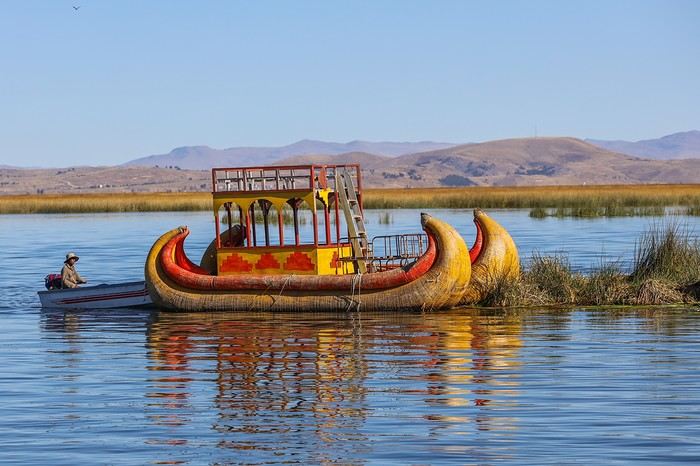
As on the previous island, a whole Peruvian family was waiting for us with a typical boat moored at the edge.

Quickly, half the group boarded the "longship" for a ride, while the other half (including us) listened to the guide’s explanations about how the islands are built and the way of life of the inhabitants. We were then shown the huts, made of reeds, where an entire family supposedly lives (). Inside, there was a mattress, a blanket, and normal clothes—probably the Peruvians’ real clothes before they dressed up for us!

Next, we got a moralizing lecture from the guide, who told us we were on vacation, "relaxing," with financial means, and that all we had to do was pay 20 soles (5 €) per person for a "longship" ride to change their lives.
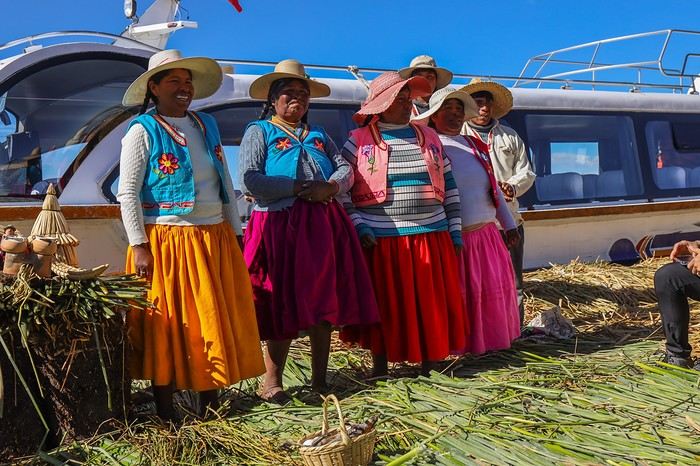
Then, we witnessed the display of all the souvenirs sold at exorbitant prices. There was major discomfort as the guide insisted people buy something or take the boat ride... Fortunately, a few people handed over some bills so the Peruvians could make their money.

View of the neighboring houses, much less picturesque—probably where these people actually live.
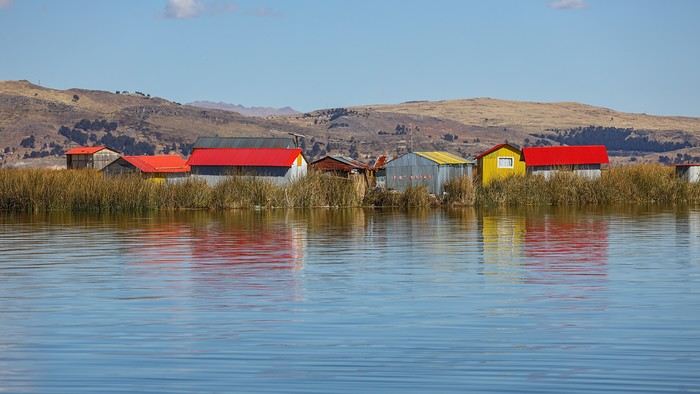


The island we were on was much more appealing!
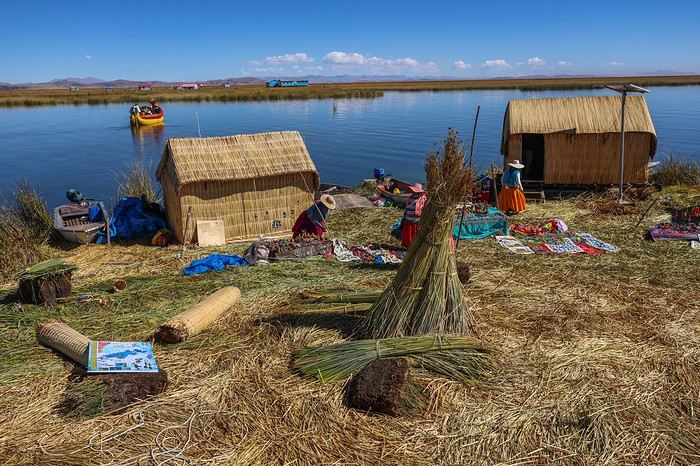
At least one woman couldn’t care less about us and went about her business.
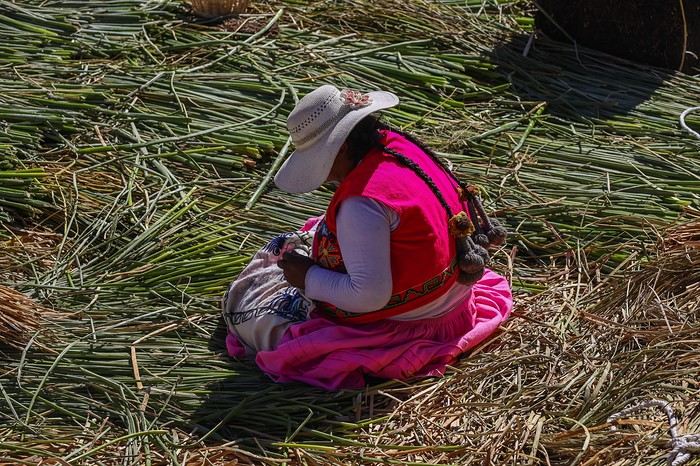
In the end, between souvenirs and boat rides, our group still spent around $300 in one hour—half the average monthly salary in Peru...

As for us, feeling uncomfortable, we quickly got back on the boat to head to Taquile.

We finally set off for another hour’s boat ride to Taquile.

MA Marati Globetrotter ·
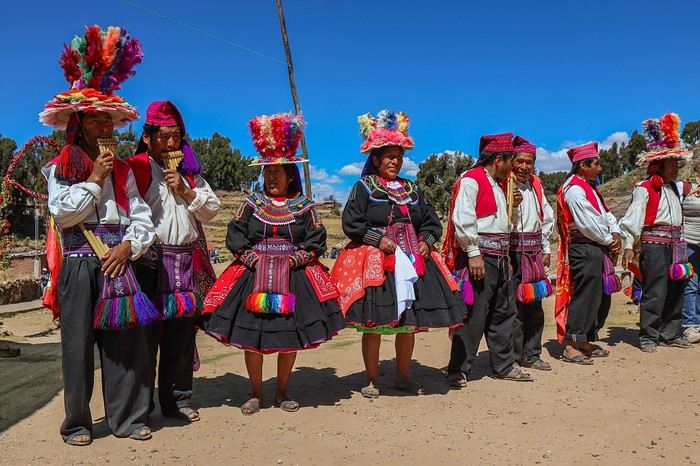
After disembarking, we walk barely 100 meters and arrive at a square where dozens of other tourists are already watching a traditional folkloric performance.

Just behind them, stalls filled with textiles, supposedly made on the island, but which look strangely like everything we’ve seen so far, with one or two exceptions...
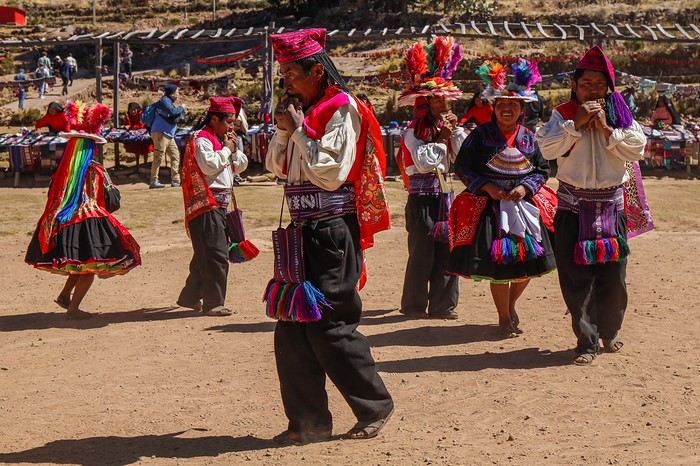
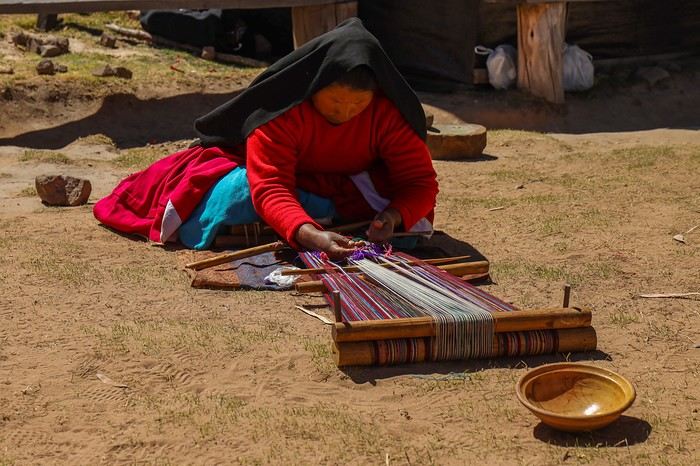
Then it’s our turn to watch the dance performance and weaving workshop. Everything is perfectly timed to move as many tourists through as possible.


On the plus side, we then get a nice walk through some really beautiful landscapes before heading to lunch.
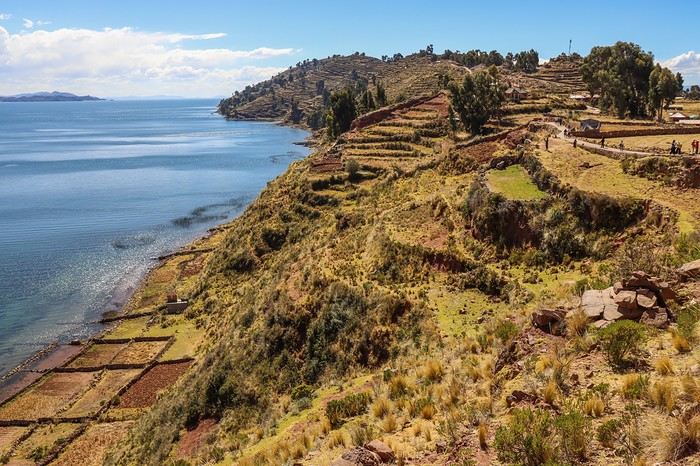
The trail takes us under a stone gate, and then we have lunch at a restaurant pre-booked for the group.
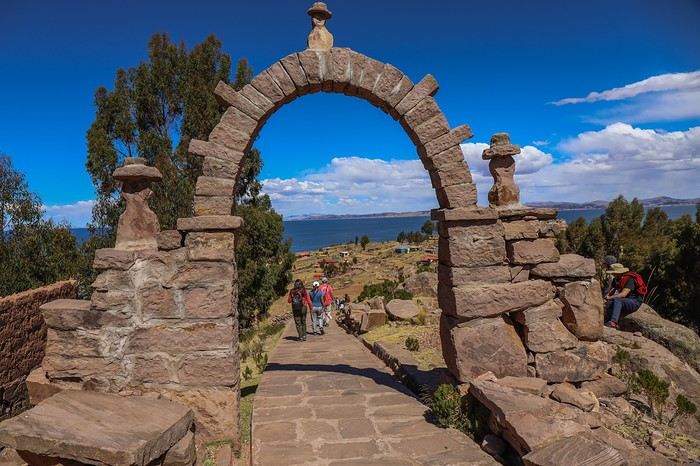
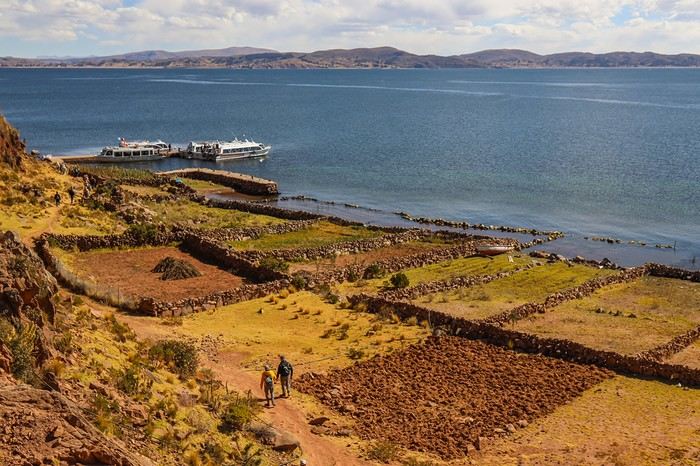
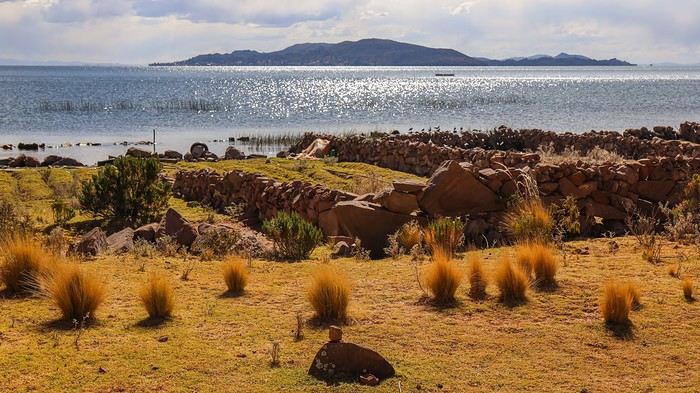

After barely an hour and a half on the island—not counting lunch—the guide asks us to head back to the boat docked at another pier, as close as possible to the restaurant. Everything is timed to the minute, and we end up spending half as much time as planned on Taquile. But I’m pretty sure I won’t be seeing that little liar again when we get back to Puno...


So, a bit of a letdown with this tourist trap, even if our walk in the southern part of the island gave us a good taste of its landscapes.
Back in Puno by 4 PM, we chill at the hotel before heading to dinner at a pizzeria, Bianca Pizza, which serves authentic Italian pizzas with thin Neapolitan crusts—just like the ones we had in Sicily. Absolute heaven! 😇 The silver lining of a disappointing day that didn’t really match our travel style, though we don’t regret giving it a try.
MO Montagnard74 Globetrotter ·
I get that it doesn’t sound appealing when pitched like that! 😄
"Le véritable voyage de découverte ne consiste pas à chercher de nouveaux paysages, mais à avoir de nouveaux yeux." Marcel Proust
AT Attila Globetrotter ·
Hi Guillaume,

I’d been following your adventures on Facebook, and it’s great to find your account of such an action-packed trip here! 😉
Ponts du monde : concours de photos amical de juillet 2026 Rubrique Jeux Voyages C'est le moment de voter !
MA Marati Globetrotter ·
Definitely doesn’t sound appealing when put like that!

In my travel journal, I kept a lot of my first impressions, jotted down on paper. The reality wasn’t that bad—with a good dose of sarcasm, we ended up enjoying this touristy folklore day with regular smiles!
MA Marati Globetrotter ·
Hey Guillaume,

I’d been following your adventures on Facebook, and it’s great to find your account of such an exhilarating trip here! 😉

Hey Agnès, It’s a real pleasure to run into you here, on one of the winding roads of El Hierro!!
MA Marati Globetrotter ·
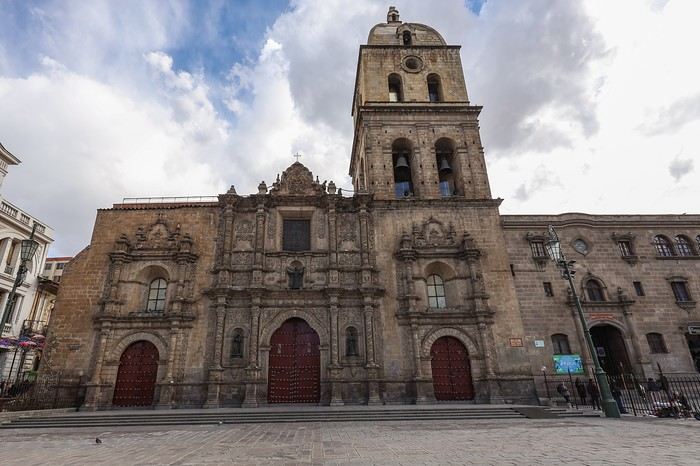
Day 12 - 07/23: Arrival in Bolivia and Visit to La Paz

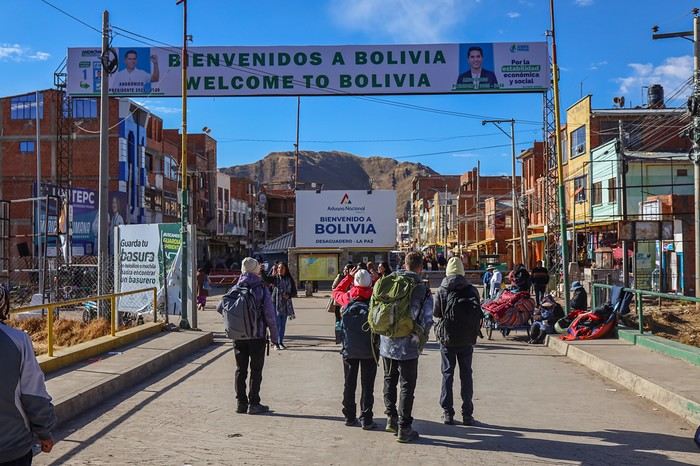
It’s not that we don’t like Puno, but we’ve got a long journey ahead to reach Bolivia and its capital, La Paz—the highest in the world. And since I hate spending a full day in transit, the best thing is to start the day as early as possible!

So, up at 4:50 AM, a quick taxi ride to catch a collectivo that leaves Puno at 5:30 AM to reach Desaguadero in about two hours.

Desaguadero’s only real interest is that it’s on the Bolivian border.

We exchange our leftover soles for cash in bolivianos. And since the exchange rate there is great for € and $, we load up on thousands of bolivianos. You don’t need to be rolling in money to amass such sums, considering you get 13 or 15 bs for $1 or 1 €...

Yet, the official rate is only around 7 bs for $1! So, if you pay by card or withdraw cash from an ATM, it’s basically a rip-off. We anticipated this by bringing a good stash of dollars and euros, which we split up in our money belts.

The huge gap is due to the economic and political crisis hitting the country hard, causing runaway inflation. Back in January, when I was discussing the price of the Salar de Uyuni tour, the euro was at 10 bs instead of the current 15 bs!!

While leaving Peru is a breeze, on the Bolivian side, we have to wait an hour just to get our passports stamped with a messy ink pad!
Once we buy a new SIM card with data right across from the border post, we catch another collectivo that takes us to La Paz in another two hours.

Since we also lose an hour due to the time difference, we arrive at our hotel at 1 PM, after nearly 8 hours of traveling!

But it’s only 1 PM, so we’ve got the whole afternoon to explore the city. The perk of waking up super early...!

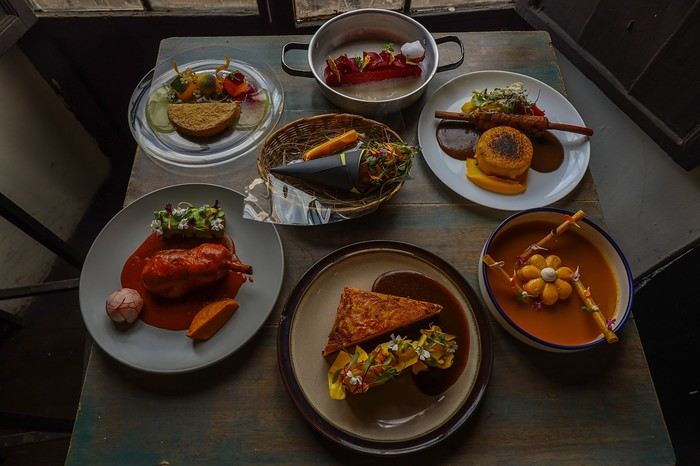
And what better way to start than by discovering new Bolivian flavors? Off we go to a favorite spot I’d carefully saved during my prep: Popular Cocina Bolivia.

When we arrive, we see 17 names written on a sign—the waiting list. Sure, most are already crossed off, but there are still plenty left...

With so many people, it only makes us more determined to stay and try the food. We finally get a table after 2 PM and feast on a thousand flavors... The photos of the dishes speak for themselves. Our best meal of the trip 😇!


The afternoon is already well underway when we leave. What better way to unwind than by taking to the skies—heading to a cable car station! For that, we walk about half an hour to leave the city center.


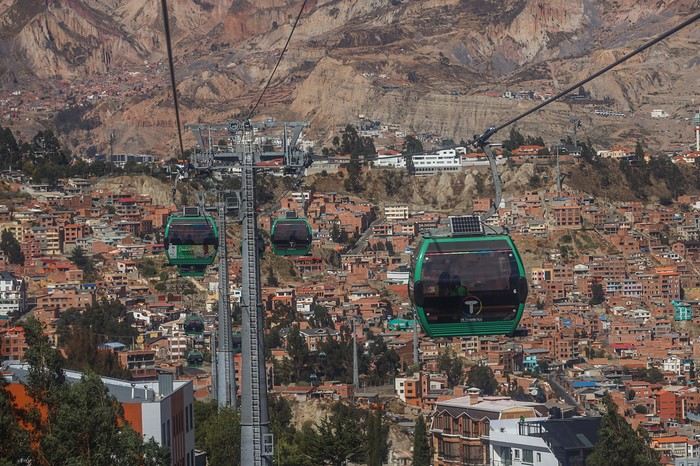
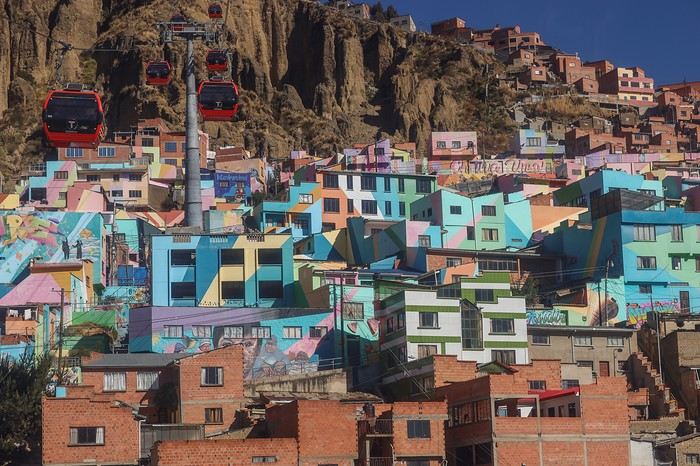
The cable car takes us up to the heights of the city. There are all sorts of colors, with nearly ten lines already in service. These lines were built to make it easier to connect the poorer neighborhoods on the hills with the more upscale ones in the center.
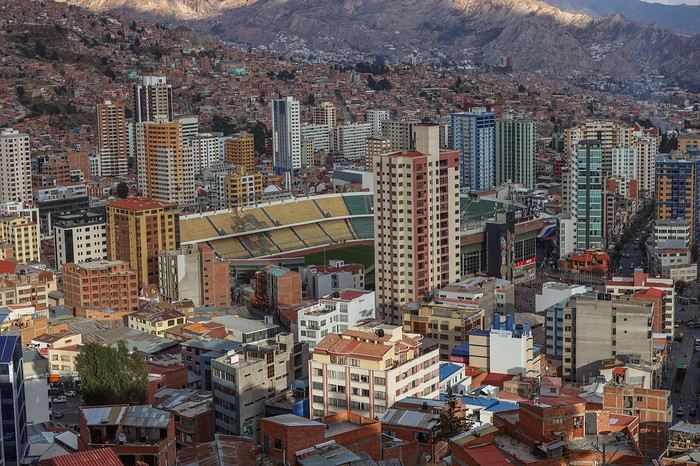
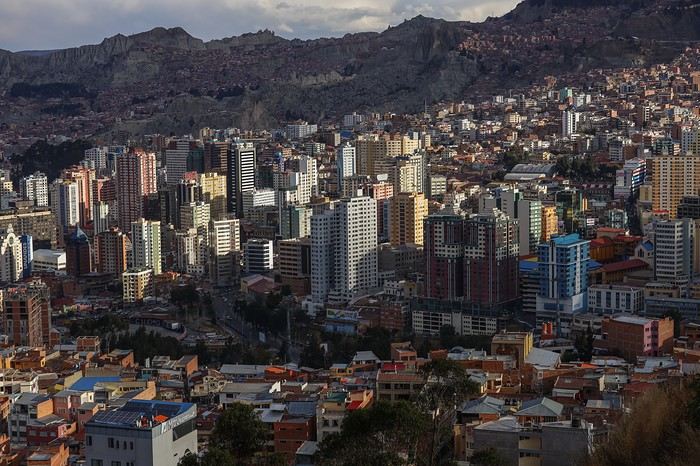
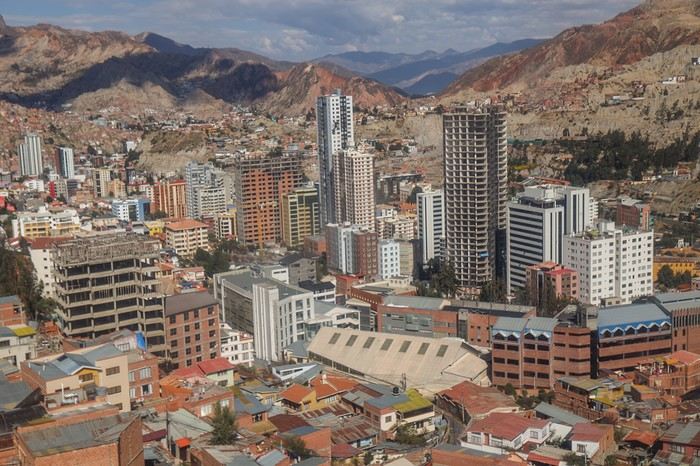
We then head down to the Killi Killi viewpoint for a panoramic view of La Paz. Legend has it that an Alsatian gave this viewpoint its name.


Too lazy to walk 2 km, and with taxi rides being dirt cheap, we let ourselves be driven to the Witches’ Market.
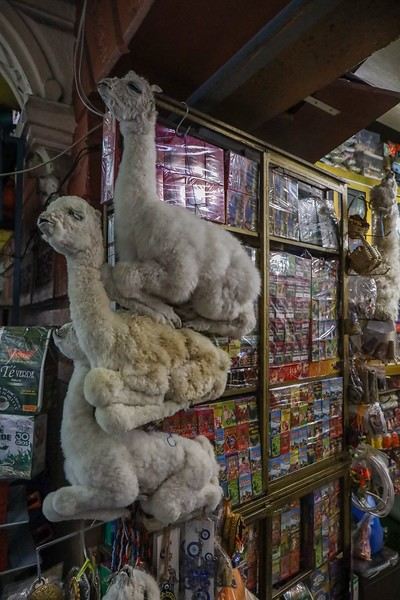
It’s a pretty unique market where you can find all sorts of potions, lotions, and herbs to satisfy Aymara superstitions and rituals. The creepiest part is the display of llama fetuses, which are used as offerings to Pachamama, the Mother Earth.

In the evening, we have a light dinner at a café. Only four of us, since Maxime bowed out—he thinks we do nothing but eat all day long...!
MA Marati Globetrotter ·
Day 13 - 07/24: Moon Valley and Las Animas Valley

Cool, this is the first time on the trip we don’t have to pack our bags in the morning. It took 12 days to finally spend at least two nights in the same place!! And this time, it’s even three nights in La Paz!

This is the last somewhat active day, with Moon Valley and then Las Animas Valley on the agenda.

The first is well-known, the second much less so.

After a ride on the blue, then green cable car, and a 10-minute taxi ride, we arrive just as Moon Valley opens.

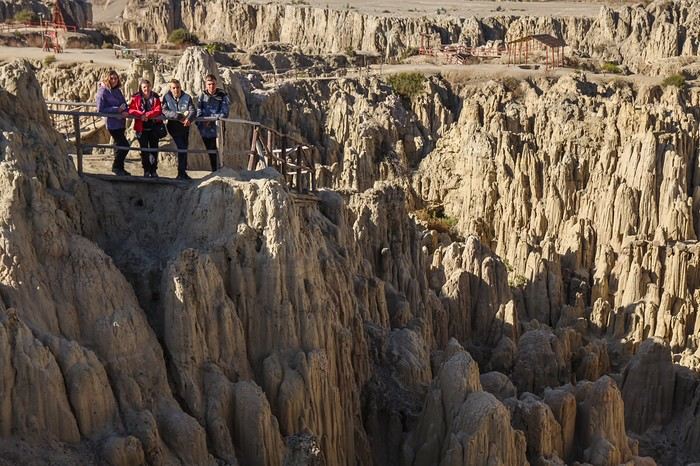
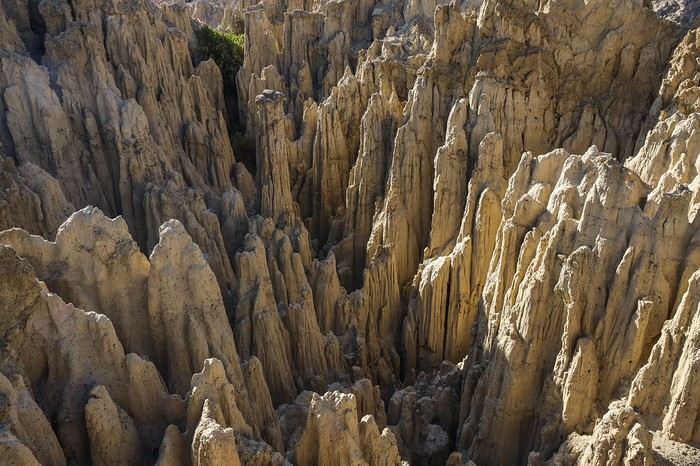
It feels a bit like the American West—think Cathedral Gorge State Park or Sidestep Canyon—White Rocks—but you’ve got to say that quickly. Because in terms of size, colors, and vibe, the comparison stops there!


We still enjoy wandering through the heart of the clay hoodoos that look like stalagmites.
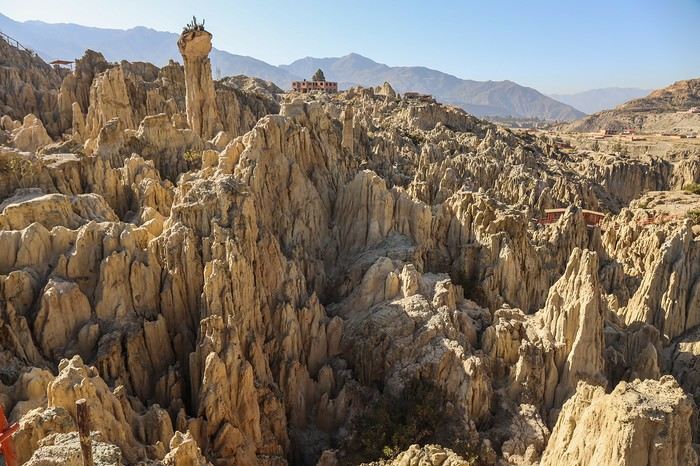
This site is a unique curiosity to explore in a country like Bolivia! In 45 minutes, even while taking our time, we see it all. A group of Germans with a guide—probably on a tour—even managed to visit it in 20 minutes flat!! Always the same way of rushing people through...
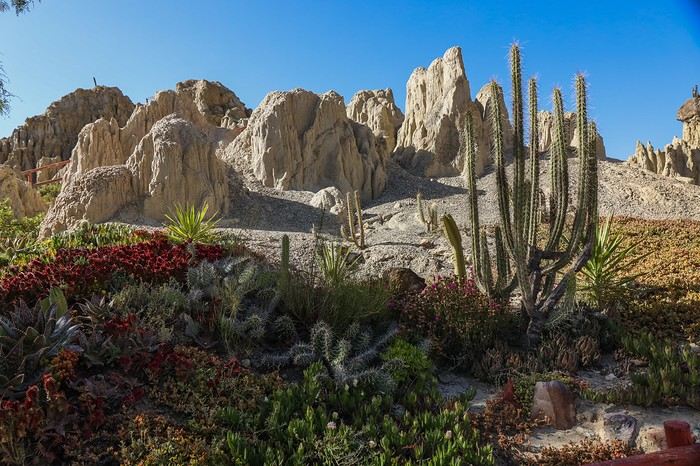
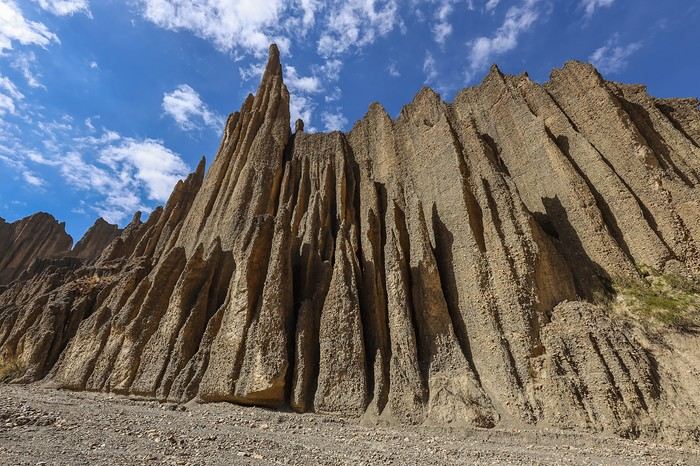
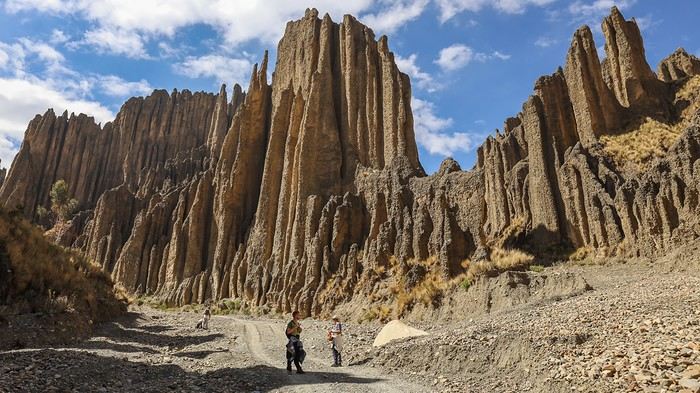
Before leaving, we can’t help but linger at the entrance, near the botanical garden where cacti and succulents mix.


We then hop back in a taxi to cover the 12 km to Las Animas Valley, a site that was still unknown two years ago but is gaining popularity thanks to Facebook groups.

A quick picnic purchase at the Ovejuyo center, and we hike up steeply to the start of the trail that follows a stream.

Looking more closely at maps.me, I realize there’s still an 800m elevation gain to reach the viewpoint I’d spotted during prep. I didn’t remember such a climb 🤪, convinced that a path following a stream couldn’t be that steep.

At the trailhead, an old man waits and charges us 5 bs per person to access this private area.

When we start the hike, the river we’re following is actually more of a mountain torrent, with a constant steep slope 😮 😏!

We take it slow to avoid burning out, and on either side of the torrent, dark gray rock spires of different sizes and shapes point toward the sky. It’s stunning!!


We don’t push ourselves to finish the hike since we’ve already seen some amazing landscapes!
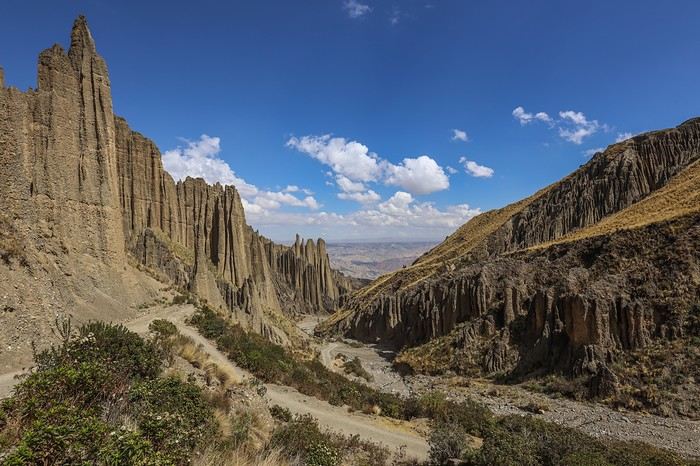
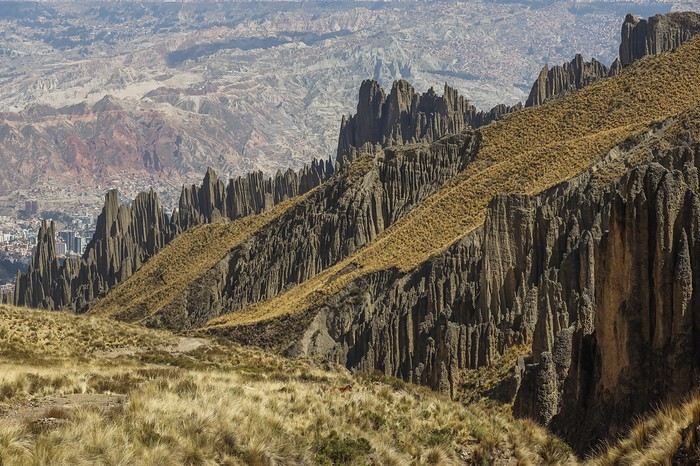


After more than two hours of hiking from the village and 600m of elevation gain, we stop for a snack at the foot of a cabin.
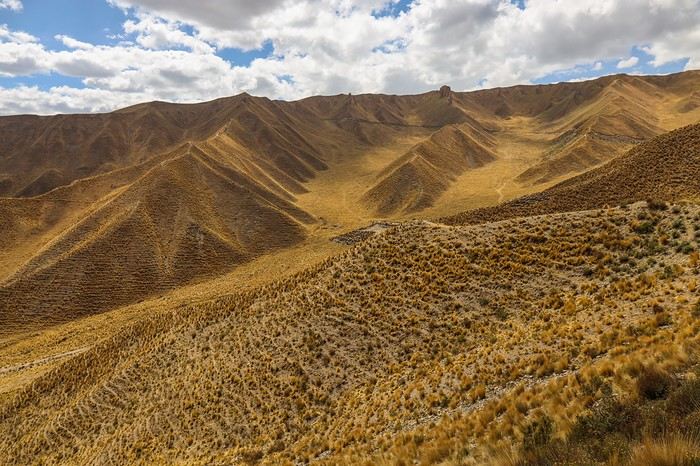
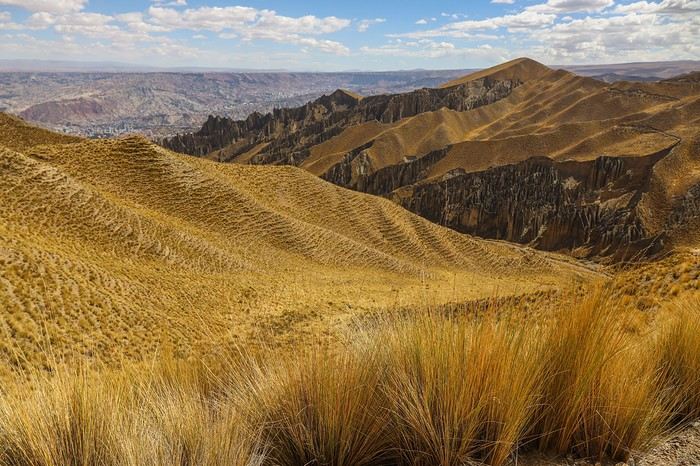
We then split into two groups: those who turn back and those who add another 200m of elevation to get a higher vantage point and loop around.

Only Max and I feel like doing it, so we enjoy some more viewpoints on this incredible valley, which clearly deserves a detour when passing through La Paz. Way more than Moon Valley!


Maxime and I end up blocked at the top of the mountain by a "Private Property" sign, so we turn back, picking up the pace so we don’t keep the others waiting too long.
MA Marati Globetrotter ·
Back at the trailhead about fifteen minutes late compared to the rest of the family, we start descending toward the village. No sooner do we reach a paved road than a taxi appears out of nowhere, and we take the opportunity to head back to the cable car, which we ride in the opposite direction to the city center.


We’ll spend the late afternoon having a drink at the Manq’a restaurant while waiting for dinner time. We’ll also eat there—Manq’a was one of the places I’d picked out.
Presentation-wise, it’s top-notch. But taste-wise, we were all a bit underwhelmed, even though all the dishes were good. We all felt the plates were a little *too* sophisticated, with too many flavor combinations that didn’t necessarily work well together...

Day 14 - 07/25: Visit to La Paz

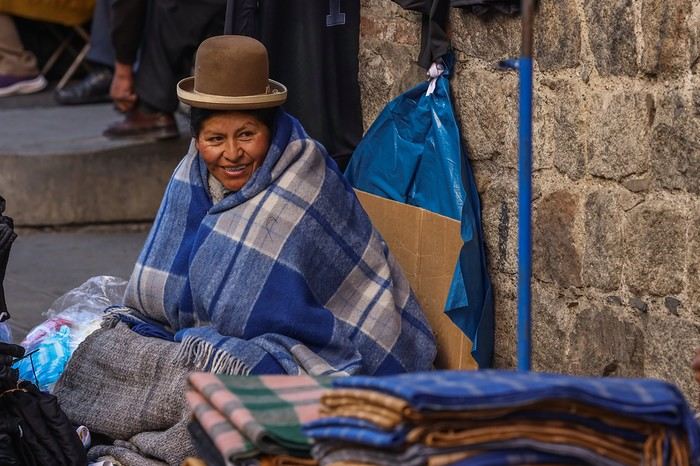
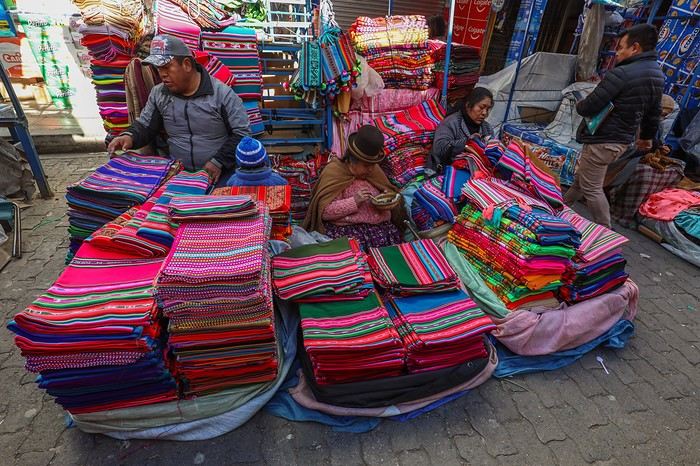
This morning, for our rest day, we start by blending into the crowd at a market in La Paz, just a few blocks from our hotel, the Sagarnaga.


Still so many colors in the fabrics


We take the cable car one last time—the red line, which climbs the highest up the city’s hills. We fly over the general cemetery of La Paz and a completely renovated neighborhood.

The terminus gives us a panoramic view of the city. But it’s backlit...
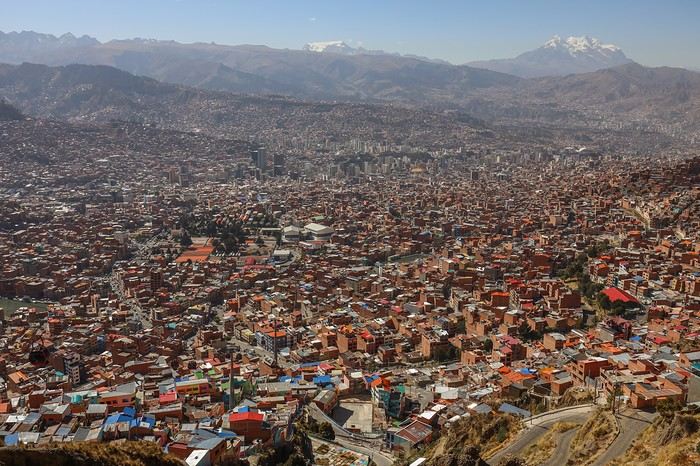
The red cable car’s terminus is near the El Alto district, which houses the city’s largest market. Unfortunately, our visit days don’t line up with market days, so we head straight back down to the general cemetery—a massive, open-air vertical cemetery!
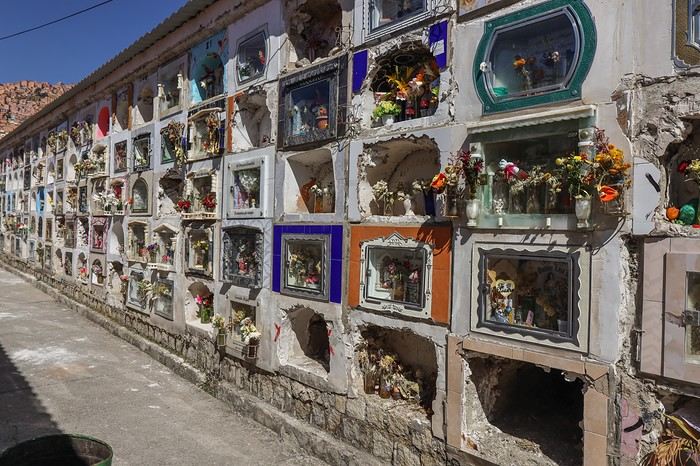
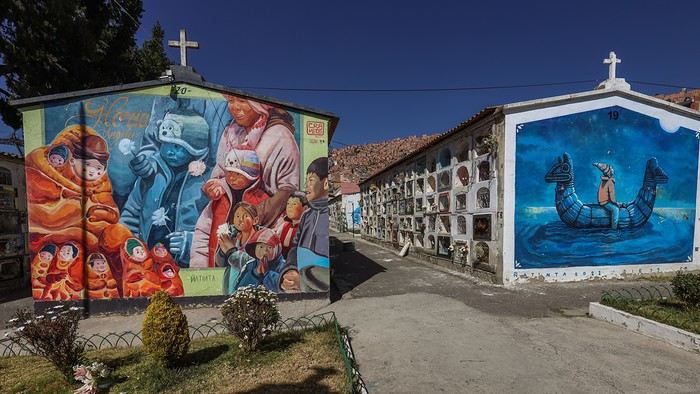
The relaxed afternoon is dedicated to shopping and souvenir hunting!

In the evening, after cocktail hour, we dine at the city’s best pizzeria, La Bella Ciao.

What to remember about La Paz? It has a unique vibe.

It’s bustling with people, but everyone’s respectful of each other. We didn’t feel unsafe—at least not during the day and in the central neighborhoods.

The cable car lines add real tourist value. Not only do they let you get around the outskirts of the city quickly, but they also let you see it differently!

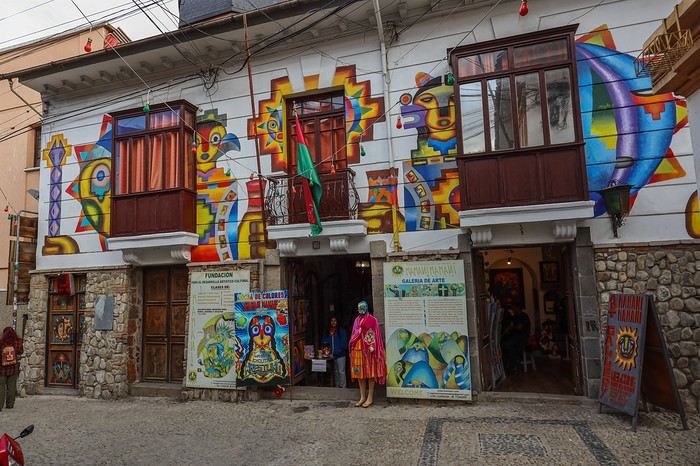
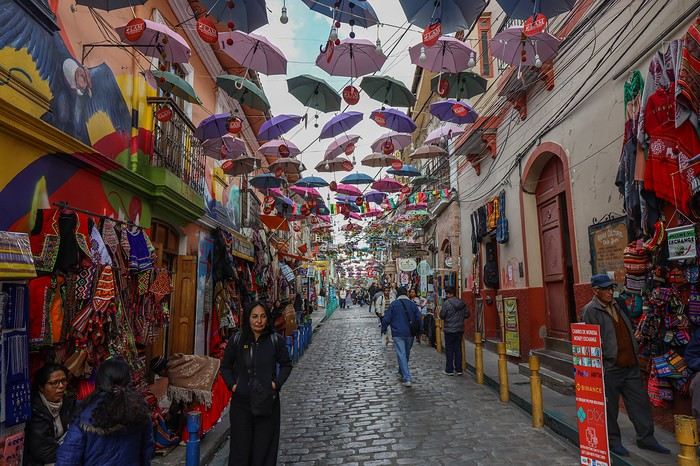
We also loved getting lost in the different streets where all the shops share the same theme. There’s the barbers’ street, souvenir streets, the high-tech street, the hardware street, and the carnival street...

Everything’s simple and affordable. Need a laundry? There’s one right across from the hotel. Need meds? Just around the corner. Need a taxi? You’ll wait about 10 to 20 seconds on average! The longest we waited was 2 minutes, outside the city, because the first taxi tried to overcharge us for being Americans.

Here, unlike in Peru, haggling is minimal—the price quickly becomes firm, and they don’t seem to like it much. In Peru, it was a real game with more room for negotiation.

Tomorrow, we’re off to Uyuni on a domestic flight—and its famous Salar... 😎
HO Holigirl Veteran ·
Love your travel journal, Guillaume! I was really looking forward to the Bolivia and Chile sections for an upcoming trip, but I have to say, the Peruvian colors totally blew me away! What a great discovery—the Las Animas Valley—I’d never seen it before.

Thanks! 🙂
PO Posabjumax ·
hi guillaume, Thanks for this new travel journal I’ve been eagerly waiting for!
MA Marati Globetrotter ·
Thanks Pascale and Pop for your encouraging messages 🙂! Valle de Las Animas won’t stay a hidden gem for long—the scenery is truly unique. You can even get dropped off much higher up by taking a winding road for a 360° panorama.
MA Marati Globetrotter ·
Day 15 - 07/26: Salar de Uyuni

We definitely needed that rest day yesterday to keep up with today’s pace.

Woke up at 4:45 AM (though as I write this in my travel journal, I realize we actually got up several times before 5 AM...).

Took a taxi to La Paz airport at 5:30 AM, followed by a very long wait. Our flight to Uyuni, originally scheduled for 7:40 AM, was delayed by half an hour.

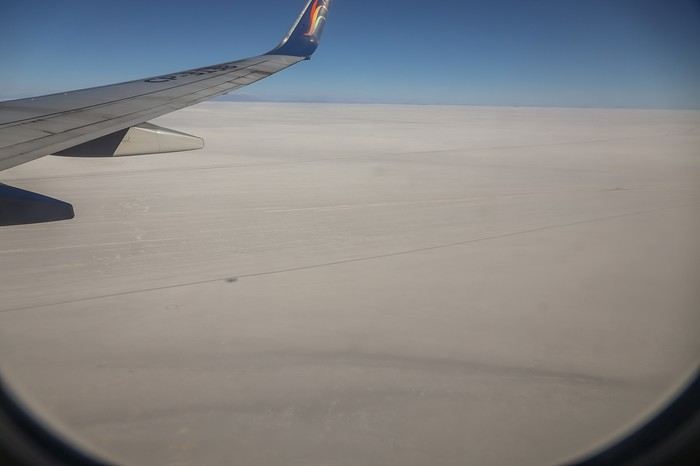
Our plane flew over the Salar de Uyuni—here we go, the show begins!!


Upon arrival, Janeth, our French-speaking guide, picked us up around 9:30 AM.

For booking the tour, I went through an agency (whose name I don’t even know!!), run by a woman named Magali, recommended in the Bolivia FB group. I also asked Janeth for a quote, but hers was too expensive. And for good reason—she’s the best French-speaking guide working on the Salar, and she’s in high demand. She was even featured recently in a French documentary about Bolivia.

So why did we end up with Janeth? I assume it’s because, in a context of significant devaluation of the Boliviano, I agreed last June to pay Magali directly in euros via a European Revolut account, at an exchange rate I knew was very much in her favor. In return, without asking for anything, we got our money’s worth... Had to take a leap of faith by paying the full amount the day before the tour... but Magali’s professionalism throughout our exchanges convinced me to go for it!

Janeth picked us up at the airport to grab breakfast in Uyuni’s center while Carlos loaded the Land Cruiser with all the food for the next two and a half days. There are hardly any other vehicles in Uyuni besides these 4x4s. Makes sense—with 250 known agencies, some of them shady operators scamming clients...

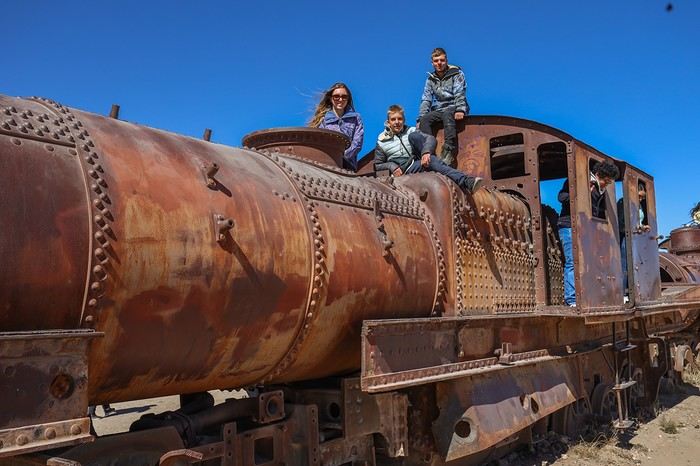
First stop of the tour, which started about half an hour behind schedule: the Uyuni train cemetery.

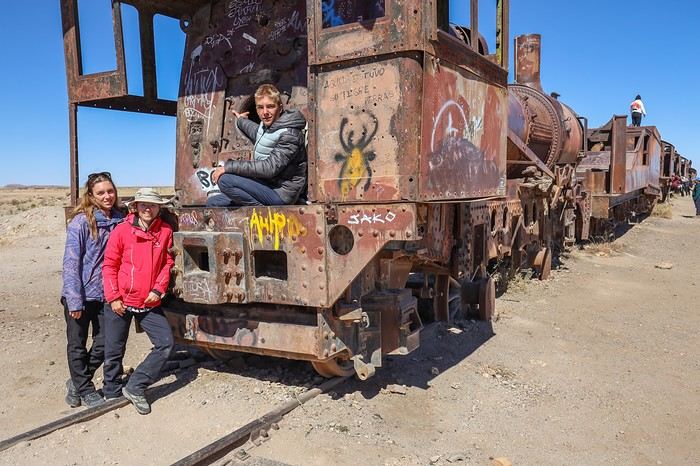
Huge general disappointment due to the overwhelming crowds. It’s a real circus—there’s not a single abandoned locomotive without ten people climbing all over it!

We had to walk as far as possible to find a little peace. Janeth explained that, in addition to the many tourists, there were lots of Bolivians because they were still on winter break for the weekend.

We claimed one of the few locomotives where we were alone, all the way at the end of the train.


I’m seriously worried about the rest of the day—if this feeling of being overwhelmed continues, it’ll definitely affect the overall experience.
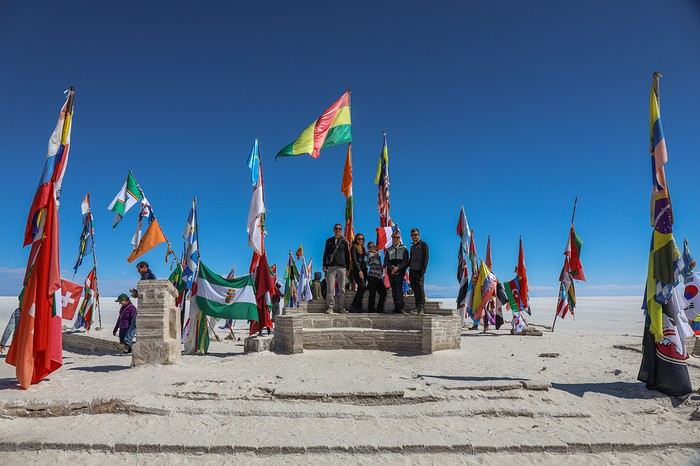
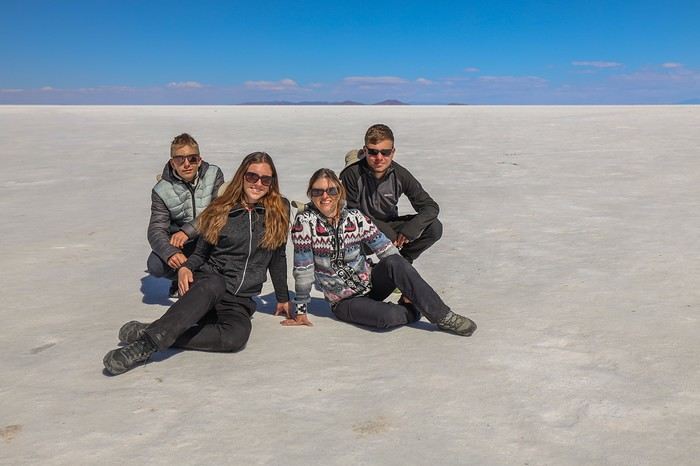
Janeth explained the meaning of the five flags, but I’ll admit I’ve already forgotten most of it!

Next stop: the Colchani artisan market, where we learned all about the salt production process. There are quite a few salt constructions as souvenirs—we treated ourselves to whatever could fit in our backpacks.

Lunch was at the salt museum, which also has a monument dedicated to the Dakar rally and a plaza with flags from countries all over the world.


Still lots of people, but much less than in the morning, so it’s bearable...
The huge dining room, with its well-spaced tables, allowed us to enjoy the excellent lunch prepared by Janeth’s team.

In the early afternoon, we tackled the 80 km to Isla Incahuasi. The driver was cautious but still relatively fast for a dirt road!

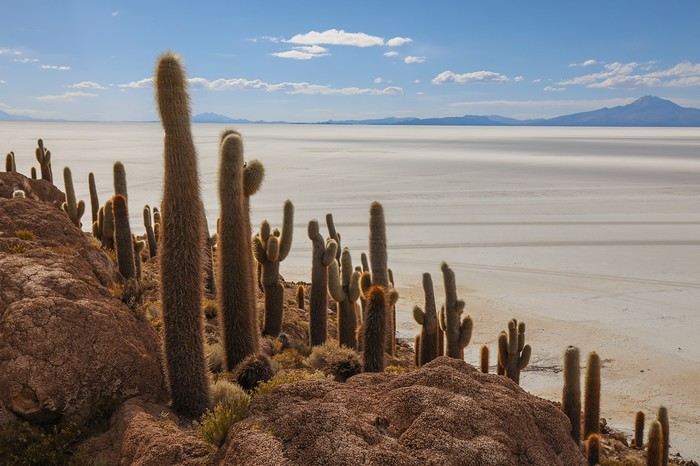
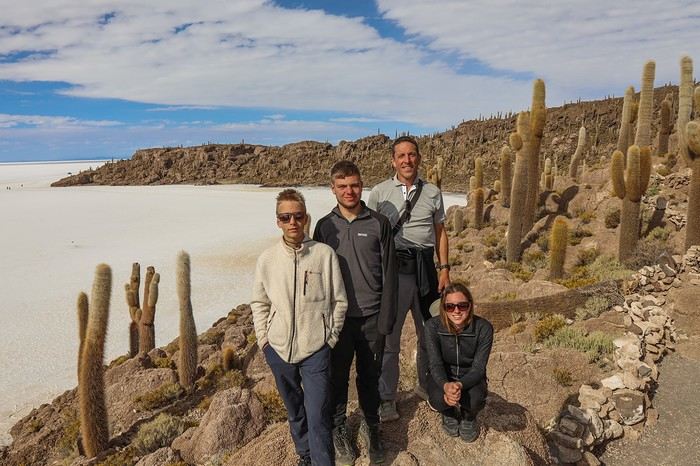
We arrived at Isla Incahuasi, home to centuries-old cacti.

When you think that these cacti grow just one centimeter per year, you can imagine how old they are. It’s stunning—this little island lost in a sea of salt !!

The trail around the island is well-marked. Impossible to get lost... and it’s forbidden to leave the marked path to avoid damaging this heavily visited site. As soon as we gained some elevation, the views became incredible!!


The cactus forest is quite dense in places.
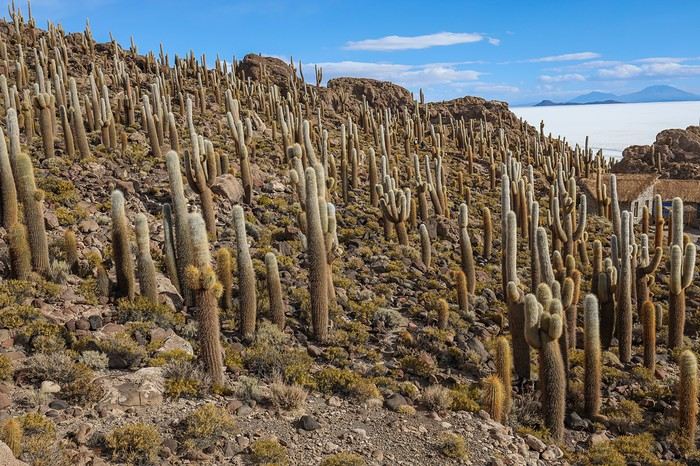
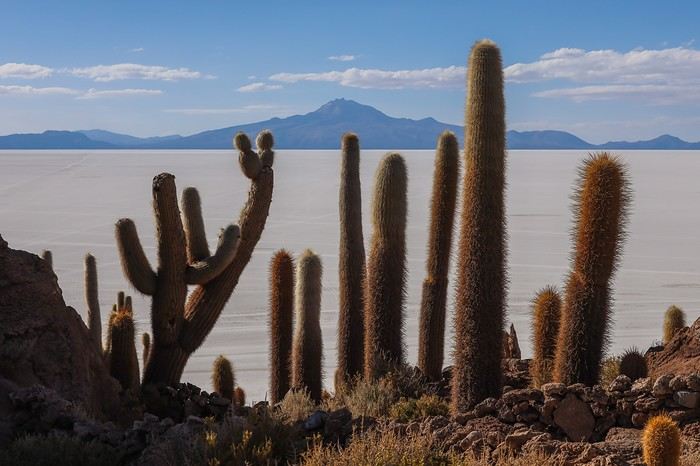


A glance at the parking lot showed we weren’t alone, but it didn’t feel too crowded on the hiking trail.

There’s even an arch—I unfortunately didn’t think to photograph it from the other side, which would’ve given a great backdrop of the Salar!

Some cacti have really unique shapes.

MA Marati Globetrotter ·
Back at the parking lot, we hit the road again—well, sort of, since you can barely make out the tracks. But Carlos, Janeth’s driver, knows the route like the back of his hand.

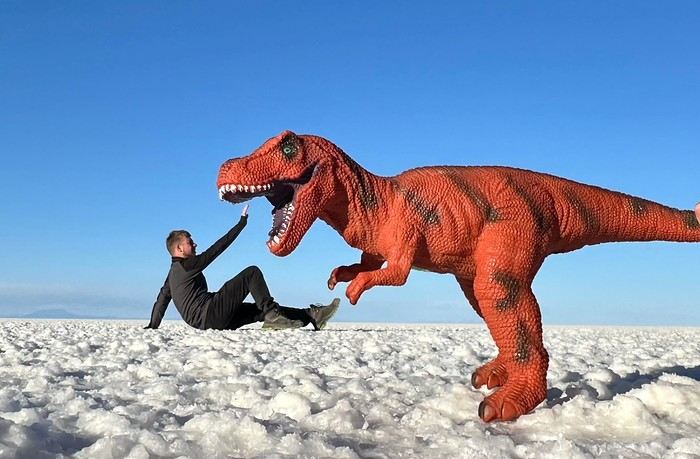
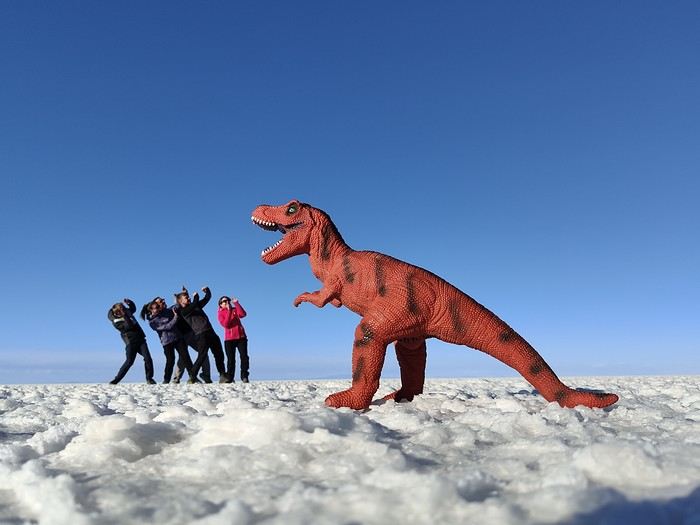
We head to the southern part of the Salar, where we snap some fun photos with Janeth, who’s a pro at striking the right poses!


The photo ideas crack us up as much as the final results!!
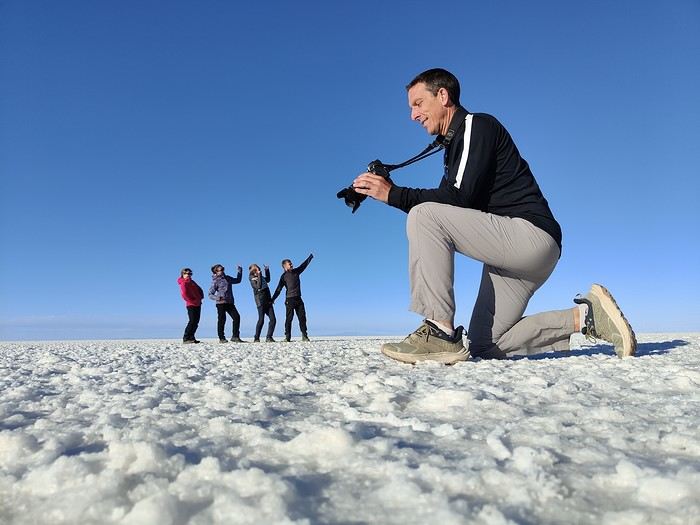
Alright, one last round! We could keep going—got a few more ideas stolen from the web—but we can tell Janeth’s starting to get fed up, so we pretend we’ve had our fill!!
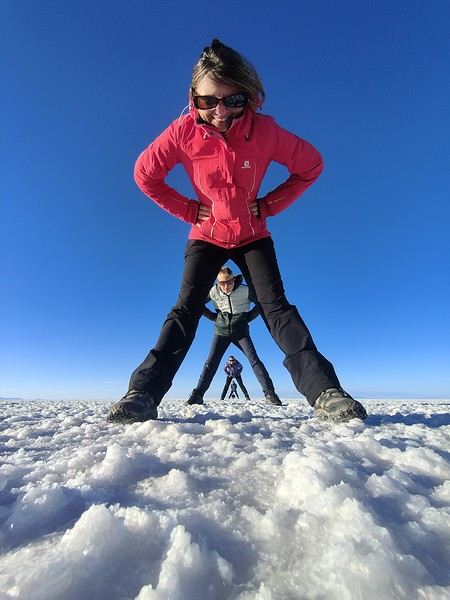


To cap off the day, Carlos takes us to the lowest part of the Salar, where there’s still water—a rare sight for this time of year. Normally, by April or May, all the water’s evaporated, but this year, the rainy season was unusually long and intense.
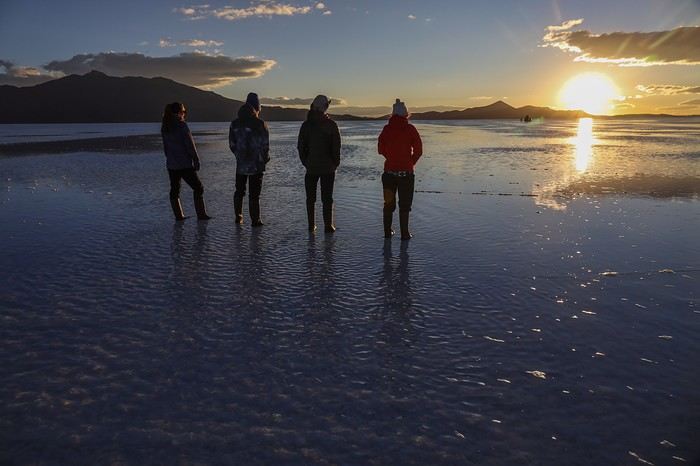
We wander through the water in our boots, snapping one last round of photos. One word: magical!!
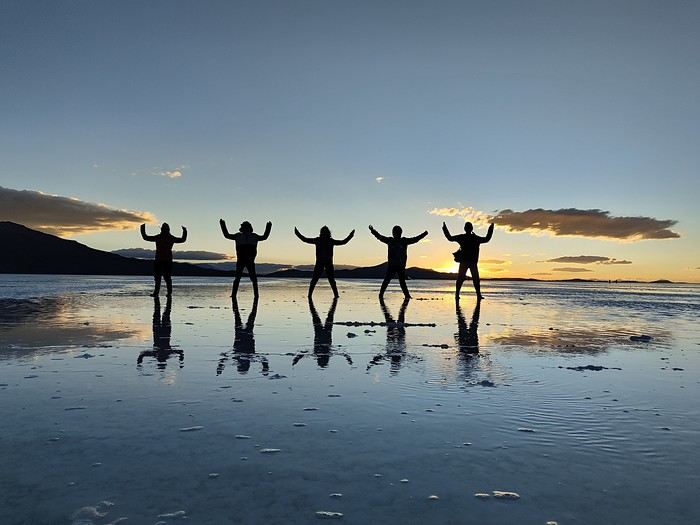
The sun slowly slips behind the horizon after these suspended moments.
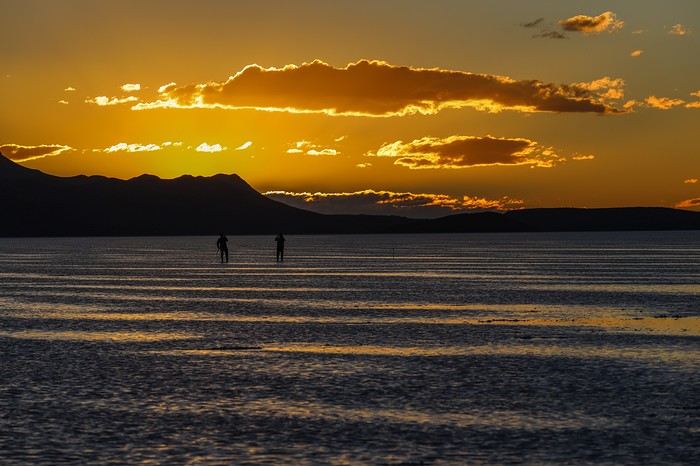


The cherry on top? Janeth and Carlos share a homemade aperitif with a bottle of red wine from Tarija, Janeth’s hometown!

All these little touches really get to us and perfectly wrap up a day that was already unforgettable...

Only the icy wind that picks up as soon as the sun sets brings us back to reality!!

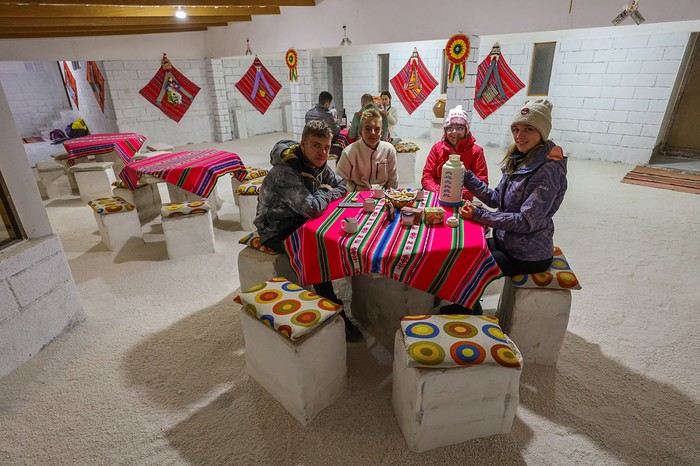
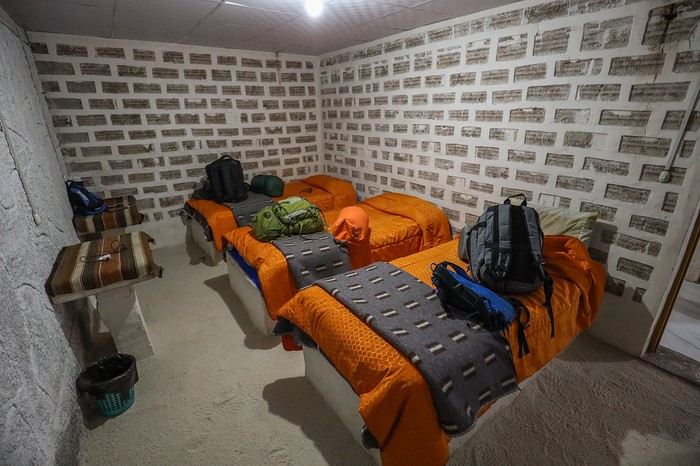
We have dinner and spend the night in a salt hotel—pretty upscale for the area! No tiles on the floor here, just salt!

No need for much wall decor to give it style.


Of course, there’s no heating, even though temperatures are already well below freezing and a fierce wind is howling!

The night promises to be... interesting. 🤪 !
DJ Djalma Globetrotter ·
With so many people, it only made us more determined to stay and try the food at this restaurant. We finally got a table after 2 PM, and we feasted on a thousand flavors... The photos of the dishes speak for themselves. Our best restaurant of the trip 😇 !

I’d found a nice restaurant in La Paz and forgot the name of a really good dish... But looking at your photo, yours is a whole other level! It’s true that overall, Bolivian cuisine isn’t bad at all. 😇

It’s the last somewhat active day, with the Moon Valley on the agenda, followed by the Las Animas Valley.

I know the first one, very close to La Paz, which we visited rather quickly. From what I remember, it felt a bit like an overdone amusement park—meh. The second one, though, looks really great. I didn’t know about it—what a shame...

Day 15 - 07/26: Salar de Uyuni

We were there in July/August too (my daughter’s school holidays), and it was a bit cold! We were underdressed for the low temperatures and had to buy local clothes!

The icing on the cake: Janeth and Carlos share a homemade aperitif with us, along with a bottle of red wine produced in the Tarija region, Janeth’s hometown!

We went to Tarija and the surrounding mountains (Condor Valley) to hike and see condors. It’s another side of Bolivia that’s really nice, with vast vineyards and landscapes like Andalusia. I thought their red wine was really good! 😇 Just like in Argentina (so close by).
https://www.youtube.com/watch?v=-XCOyB7WStI https://www.youtube.com/watch?v=g2eI67iCbKY
MA Marati Globetrotter ·
In my memory, it feels a bit like an overdone theme park... meh.

Same vibe as you for Valle de la Luna. The tour is over really quickly...

We were there in July/August (my daughter’s school holidays) and it was a bit chilly! We were underprepared for the low temps and had to buy local clothes!

Feeling a little less alone
MA Marati Globetrotter ·
Day 16 - 07/27: Crossing the Lipez and the lagoons

A long day on the dirt road awaits us to reach our destination, right next to Laguna Colorado, not far from the Chilean border.

We continue to encounter herds of alpacas.

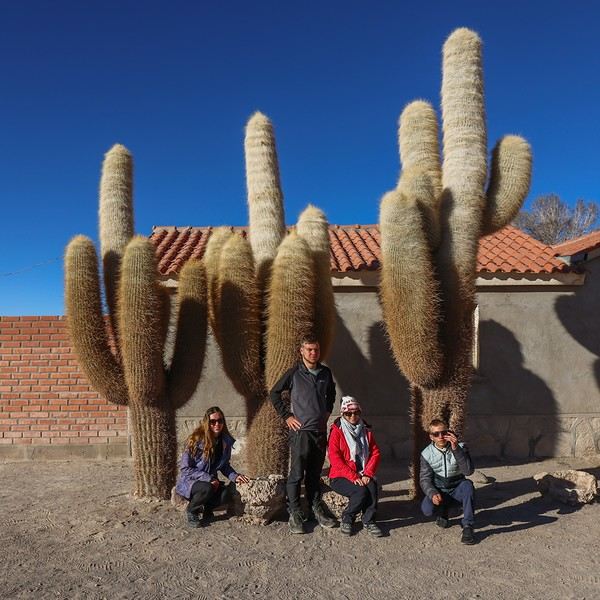
The journey is punctuated by various stops. First, San Juan, where we buy cactus beer. The village’s main attraction is this alignment of remarkable cacti with enormous arms, as thick as tree trunks!

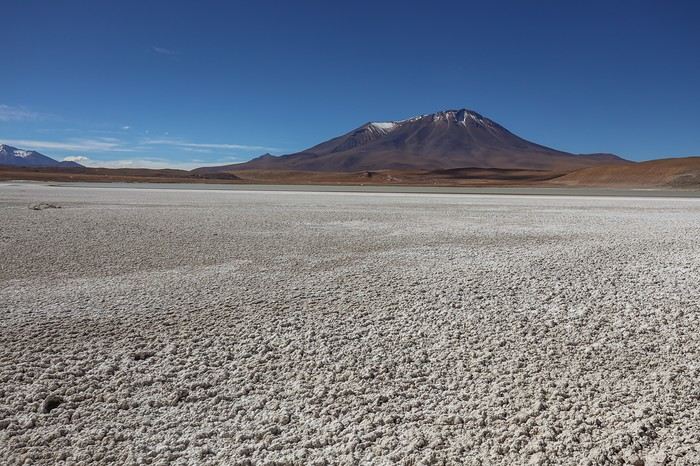
A little further south, we cross the Salar de Chiguana, the little brother of the Salar de Uyuni, which also borders the Chilean frontier.
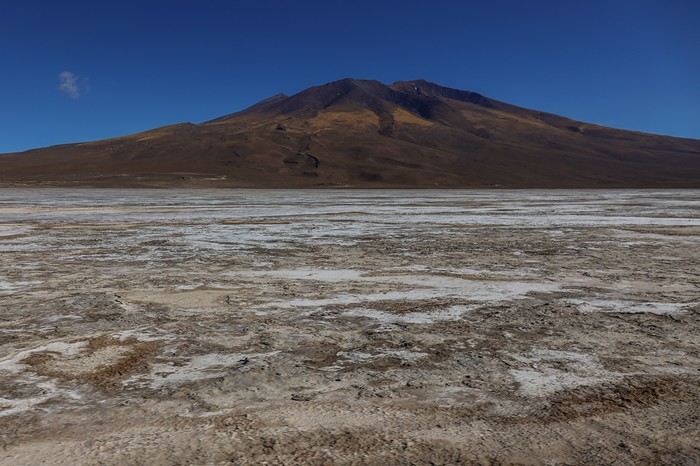
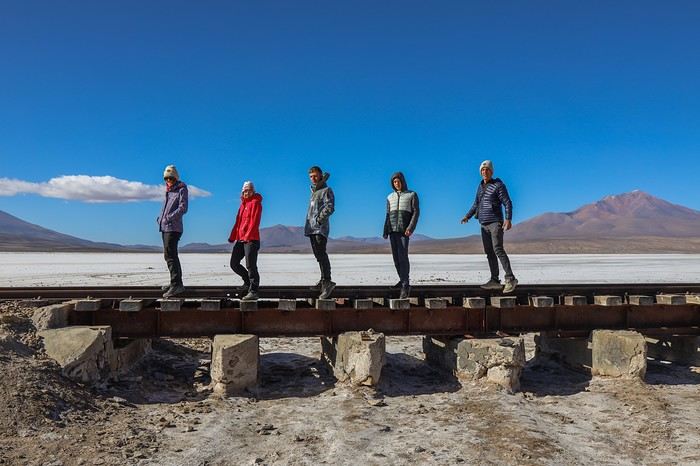
It’s surrounded by volcanic formations and mountain ranges, adding depth to the shots. The colors of this raw salt flat are much more diverse than those of the Salar de Uyuni.


When we follow a railway track, a photo stop is a must.


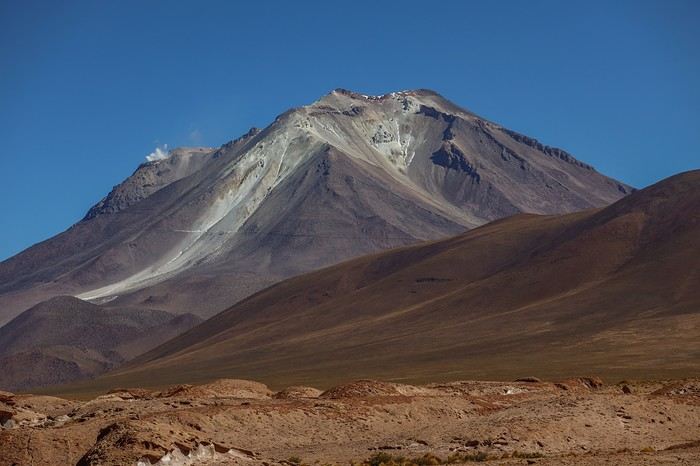
The road then leads us to a viewpoint overlooking the Ollague volcano, which peaks at an altitude of 5,870 meters.

It’s one of the most active volcanoes in the entire Western Cordillera, and from the belvedere, we can see a plume of smoke rising from it.


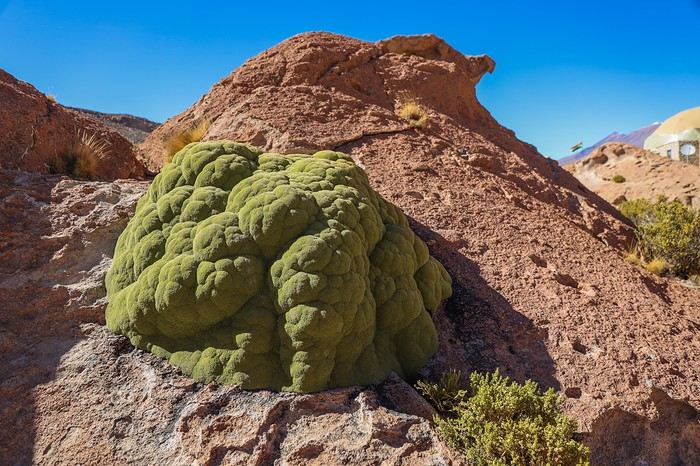
The belvedere’s appeal isn’t limited to the view of the volcano. Janeth takes us to see an Azorella compacta, a plant adapted to the extreme cold and dry conditions of the Andes. It looks like moss, yet it’s a great fuel source.

Janeth explains that in the past, Bolivians used it a lot for heating in winter. Since it grows very slowly—about 1 mm per year (!!)—authorities decided to protect it. The specimen we’re looking at is over a thousand years old! It really puts things into perspective...


I was expecting a tourist highway on the route, but in the end, there are at most five to ten 4x4s at each stop.

The landscapes are stunning. As the day goes on, we gain altitude and enter the lagoon area.

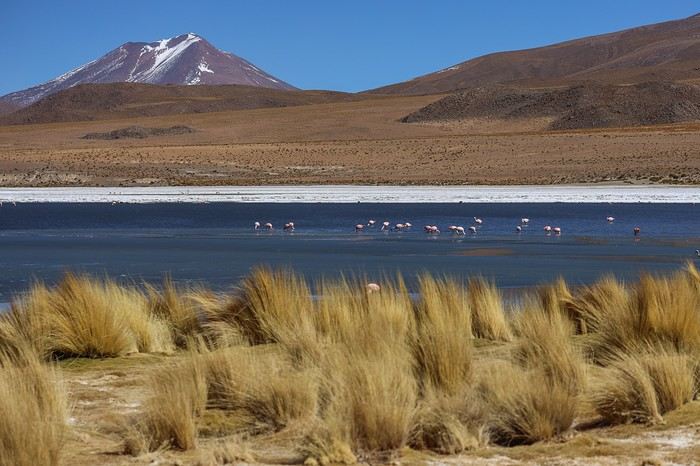
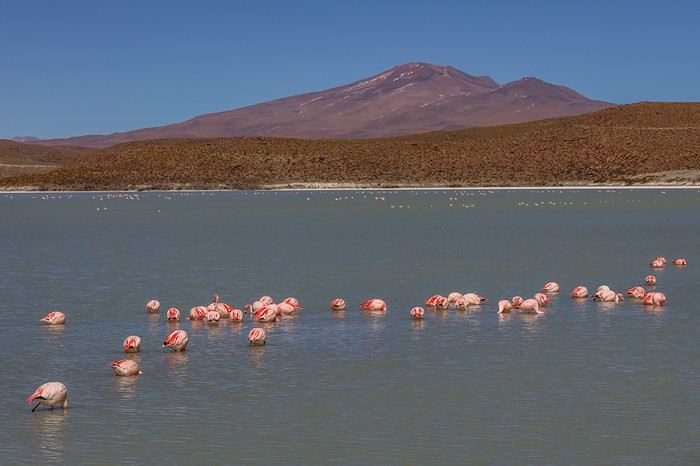
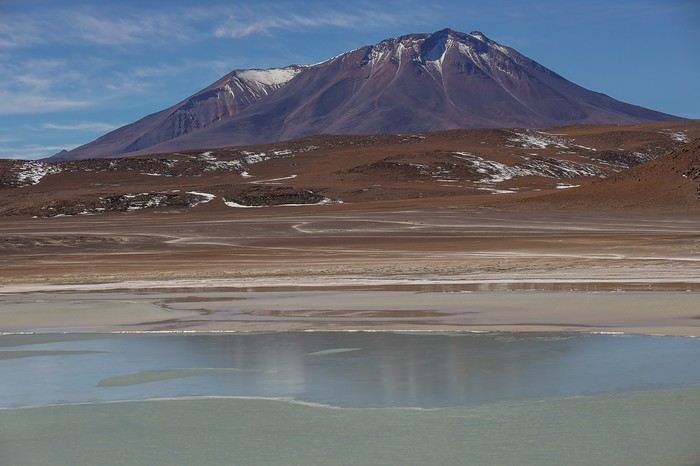
The first one we encounter is Laguna Canapa. The contrast is striking between the blue of the lagoon, the white borax edges, and the ochre mountains. The pink dots visible from afar are the famous pink flamingos of the Altiplano.

The surrounding mountains, almost devoid of vegetation, frame this glacial oasis in the middle of the desert .


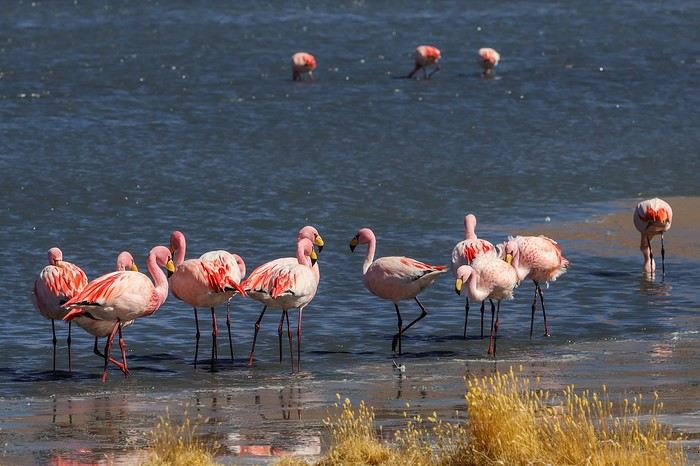
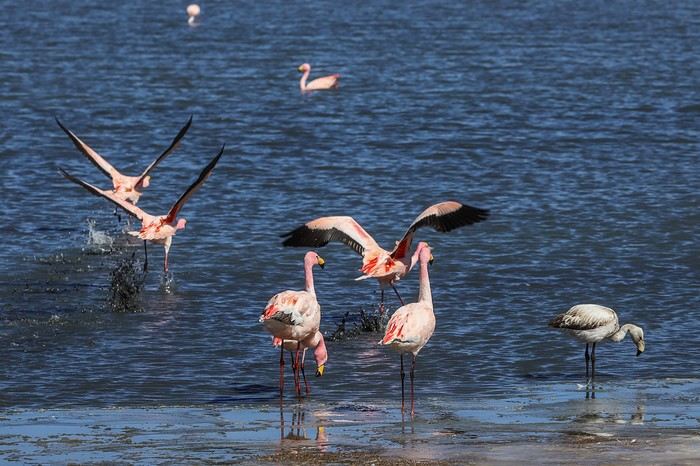
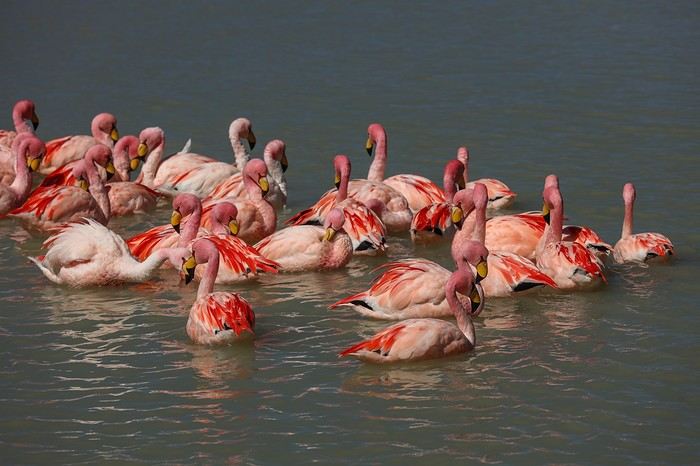
Even though it’s not the ideal season, we’re lucky to see many pink flamingos. The juveniles are easy to spot thanks to their gray plumage speckled with white.


A few flamingos have the great idea to treat us to a low flyby.


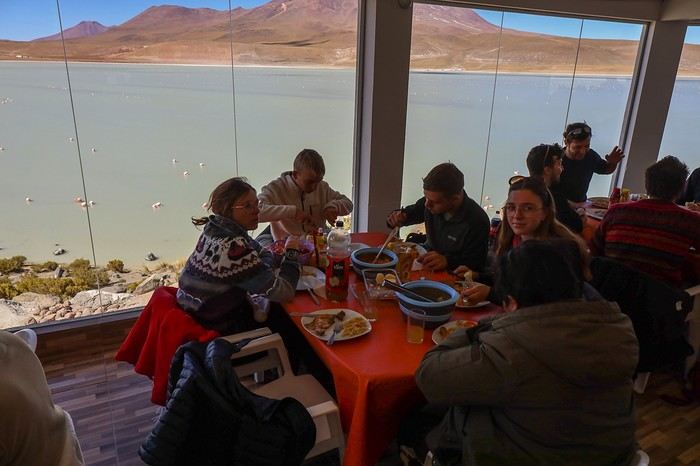
When we arrive at Laguna Hedionda, we’re pretty happy to see a building overlooking the water. Not that we enjoy seeing concrete in the heart of natural sites, but it’s almost noon, and we’re getting hungry! As expected, Janeth tells us the building has all the amenities—lunchroom and restrooms. It’s clear that everything, from the infrastructure to the organization, is designed to give tourists a hassle-free experience with all the tour operators!

Before sitting down to eat, Janeth lets us wander along Laguna Hedionda while Carlos prepares the meal and sets the table.

Unlike the bright blue of Laguna Canapa, the water here is a grayish blue.


But when it comes to flamingos, there’s no comparison! We’re treated to a feast for the eyes, with specimens in every corner of the lagoon and highly concentrated colonies in some spots—visually stunning!


Hats are still a must—you’d think it’s cold and windy in southern Lipez !
MA Marati Globetrotter ·
The picnic break, sheltered from the wind, feels great. Our plates are full, and Janeth, as usual, shares her vast knowledge about the Lipez region, Bolivian society, social movements, and the country's economic challenges.


Several lagoons follow one after another: Laguna Chiarcota (or Laguna Negra) and Laguna Honda, with a few lovely encounters along the way


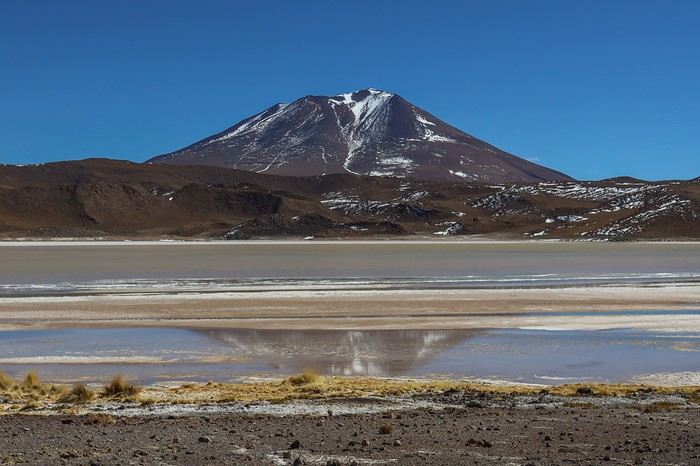
The lagoon waters create some beautiful reflections.

Every time we step out of the car, we’re reminded of the altitude, the wind exposure, and the wild, harsh nature of the Southern Lipez for vegetation
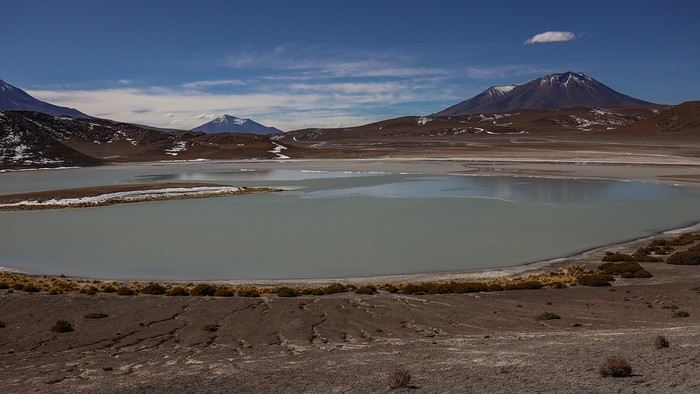
The breathtaking landscapes keep coming, and the kilometers fly by without a hint of boredom!
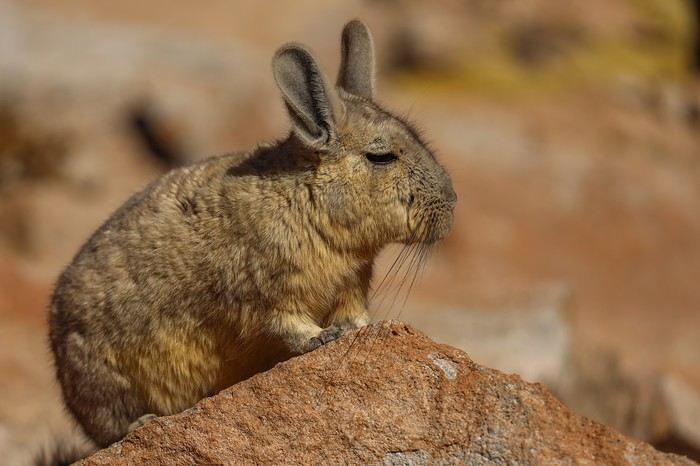
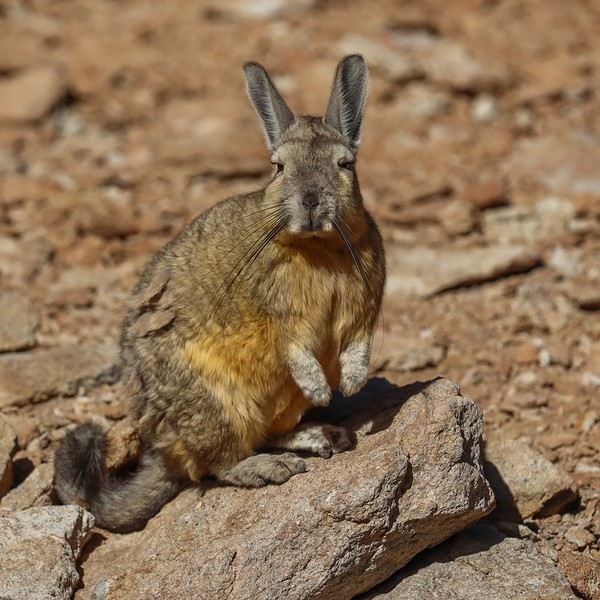
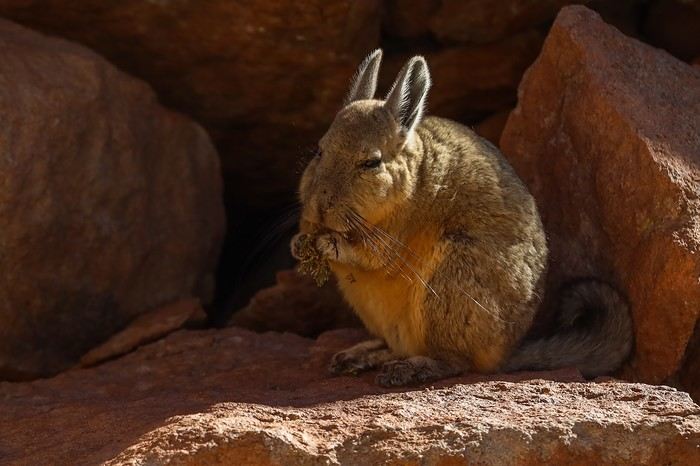
We then head into the Canyon de las Vizcachas, where we spot several viscachas—rabbit-like creatures. The canyon lives up to its name...

The two specimens we’re lucky enough to see aren’t shy at all! Though, to be fair, we’re not alone in the canyon, and these poor rabbits must see a parade of tourist 4x4s!


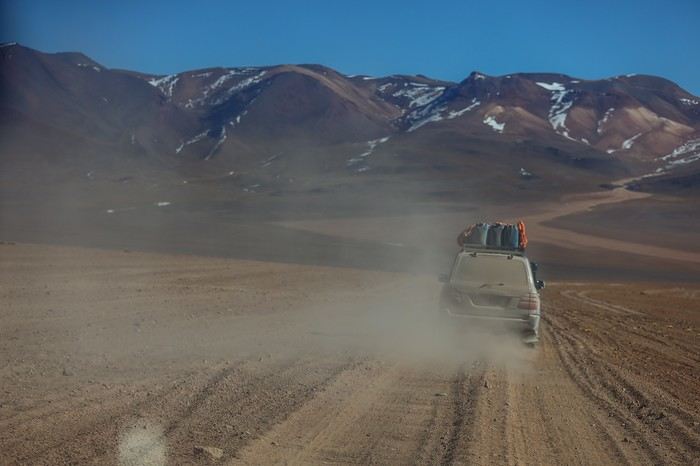
On the way to the Siloli Desert, when we see the outside of other 4x4s, we finally understand why our roof luggage is wrapped in tarps !!
Similar discussions

You might also like