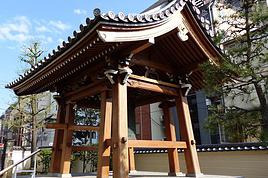
Same issue, I guess—I’m heading to Japan this summer, and I find it a bit of a bummer to waste half a vacation day just to get a translation done on the other side of Tokyo.
I don’t really see what’s so "a bummer" about it... Waiting an hour at the JAF is obviously a bit of a hassle, but going "to the other side of Tokyo" is still a chance to explore a part of the city you don’t know—so it’s actually kind of interesting. The only "wasted time" (which isn’t really wasted since it lets you drive in Japan and discover amazing places) is just the wait inside the JAF...
Otherwise, you can do the translation by mail with the JAF and provide the address of the hotel where you’ll be staying in Tokyo.
Or, if you do it from France and have it sent back to France, it’s 65 €. You can’t have it all—sometimes you just gotta accept how things work 😉 !
We can already consider ourselves lucky to be among the few countries whose driver's license only needs to be translated to be used in Japan.
Submitting the application involves filling out a form (5 minutes) and paying. If they need 3 hours, nothing stops you from going for a walk and coming back later, and if they need more time, they'll send it to you by mail...
And even if it was a bit of a time loss, well, that's the price to pay to be able to drive in Japan. We're free to pay it or stick to trains ;)
The other contributors are all right. You’ve got to take the time to live, especially in Japan... This process shouldn’t really hurt French tourism in Japan—if it did, we’d know about it!
65 € isn’t much in the budget for a trip over there, but I’d especially recommend going to the JAP counter—it’s fun to compare the behavior of the service staff to what we often see in France.
Finally, if you frame it, for a one-time trip, it makes a nice keepsake...
Does this seem "normal" to you? Because it doesn’t to me at all! I’ve traveled a lot, and for a "developed" country, charging 20 € (to be paid to a private organization!) + wasting hours (because, excuse me, I’d rather visit a museum or a temple than lose my time in some out-of-the-way neighborhood) + the *de facto* impossibility of renting a car as soon as you land from an international flight is *not* tourism-friendly at all!
(because you’ll forgive me, I’d rather visit a museum or a temple than waste my time in an outlying neighborhood)
That’s a mistake because not only are there almost no temples to see in Tokyo, but discovering Tokyo is really about exploring its streets and neighborhoods—not its museums (just like you get to know Paris better by wandering around than by visiting its museums, no matter how interesting they are). The best way to experience Tokyo is to walk endlessly through it. And that goes for any neighborhood, because Tokyo always has wonderful surprises thanks to its incredible diversity.
the "de facto" impossibility of renting a car as soon as you step off your international flight isn’t exactly tourism-friendly!
That’s a pretty self-centered take, and I think it misses the mark: I don’t think the Japanese care at all about developing tourism or not. The vast majority of foreign tourists who visit the country already have the "reflex" to take the train and wouldn’t even consider renting a car anyway... I’d guess that the number of tourists who cancel a trip to Japan just because they’d need to translate their license to drive there is a completely negligible fraction—close to 0%.
And if it does deter some people, honestly, I don’t see the downside: one of the great things about Japan is that you run into so few foreign tourists, and frankly, a country that’s not overrun with tourism (partly because it can afford to live without it) is a breath of fresh air 😛 !
By the way, I don’t know where the JAF office is in Tokyo since I did my translation back when we went through the embassy, but where is it located? Is it really out of the way? I don’t think so...
Does this seem "normal" to you? Not to me at all! I’ve traveled extensively, and for a "developed" country, charging 20 € (to be paid to a private organization!) + wasting hours (because, excuse me, I’d rather visit a museum or temple than lose my time in some out-of-the-way district) + the "de facto" impossibility of renting a car as soon as you land from an international flight is anything but tourist-friendly!
Anyway, I’ll manage.
Hi,
I completely agree with you. I was planning to rent a car upon arrival at Narita and would’ve preferred not to bother my Japanese friends for that infamous translation (since I’d misplaced the previous one ; of course, I found it later).
All this because Japan signed the 1949 convention on international driver’s permits, while France and about twenty other countries (Germany, Switzerland, Taiwan, etc.) issue international permits under the 1968 convention standard.
And all this because the number of visitors from those twenty or so countries renting cars in Japan is too low for Japanese authorities to bother offering this translation service at their diplomatic missions abroad or to do what’s needed to recognize international driver’s permits from the 1968 convention.
Mind you, French authorities aren’t any more helpful to their citizens in this area. The French embassy and consulates in Japan have stopped providing certified translations (on-site or by mail), which was convenient and affordable.
On the same topic, French diplomatic missions abroad aren’t authorized to issue driver’s licenses (international or otherwise). If you’re a resident abroad, your most valuable document isn’t your passport—it’s your driver’s license. If you lose it (or if your international driver’s permit, valid for 3 years, expires), you *must* go to the prefecture of your home in France to get a duplicate. And if you no longer have a residence in France during your expatriation, no matter how long? Well, you’re out of luck, and representatives of French citizens abroad have been fighting this administrative absurdity for decades to no avail. Okay, this is a bit off-topic, but once you’ve run into this issue, the grand speeches from our successive governments about France’s influence thanks to its expats leave a pretty bitter taste.
Note that French authorities aren’t any more helpful to their citizens in this area. The French embassy and consulates in Japan have stopped issuing certified translations (on-site or by mail), which used to be convenient and affordable.
This is really where the issue comes from, since it used to be so simple before...
After that, it’s just a matter of planning your trip to Japan around this potential hurdle. Starting with a few days in Tokyo isn’t a problem for anyone discovering the country, for that matter. And if it feels like too much, well, you can always take the train. You won’t do the same things as you would by car, but you can still have a fantastic trip in Japan using the train.
Hi there,
I used to be in the same boat, so I still follow this thread with interest—both for the info and out of curiosity!
- 20 €, expensive? Surprising coming from people who claim to have traveled extensively.
Surprising, because how much does a visa cost on average?
And what’s the average budget for a trip to Japan?
In that context, making a big deal out of 20 €...
- Losing half a day of vacation for this translation. Sure, but a trip to Japan is also about discovering a different culture and guaranteed culture shock. So isn’t this little "adventure" already a new experience in itself?
- Claiming, however, that the vast majority of tourists automatically take the train seems pretty doubtful... Why would they have a reflex in Japan that they don’t have anywhere else in the world?
- It lets you explore Tokyo a bit and get familiar with the city: true, true, but not everyone arrives in Tokyo...
During my first (but definitely not last) trip to Japan, I "landed" in Kushiro, and I was really glad to already have my translation ready to pick up the rental car...
So while this requirement to get the translation done is just a formality to take care of, in my opinion, it’s no more of a hassle than getting a visa for any other country. There’s no need to argue about it or make a huge deal about the incompetence of our leaders—whether they’re French, Japanese, or from some far-off Moldovan government...
I think the Japanese don’t care at all about developing tourism or not.
That’s not true. On the contrary, Japan has been running various campaigns for several years to attract more tourists ("Visit Japan", "Cool Japan", free urban Wi-Fi, etc.). Multilingual signage has expanded significantly everywhere, even in unlikely remote villages. City and regional tourism offices are doing their best to attract foreign tourists, including the French*. The Ministry of Foreign Affairs launched a widespread campaign targeting shopkeepers, restaurateurs, and hoteliers, asking them to improve their ability to communicate in English with tourists before the 2020 Olympics (and we’re seeing the effects— I was surprised by how many shopkeepers suddenly dared to speak to foreigners...).
In this context, I’m convinced that the issue of a driver’s license for tourists has completely slipped under the radar, given the small number of people affected and the lack of complaints. It could easily be resolved by alerting tourism offices and other relevant institutions about the current inconveniences. I’m sure that if several of us write to the tourism office in Paris about this and mention the problem when we have the chance on-site (to the English- or French-speaking staff at a local tourism office), a solution will be proposed fairly quickly, given how responsive the authorities have been lately. It might not be free, but it’ll likely be more practical and easier.
* A few months ago, I came across a hilarious TV program showing a French hitchhiker’s journey. He was driven around by a politician from a small town in the Japanese Alps who saw an opportunity to show off to his voters by presenting his guest as a French TV representative doing a report on the local matsuri. A delightful mix of opportunism and political savvy, which our compatriot cleverly played along with by giving a speech in French—applauded, of course, but completely misunderstood...
- saying, however, that the vast majority of tourists automatically take the train seems quite
doubtful to me... why would they have a reflex in Japan that they don’t have elsewhere in the world?
This is a well-known fact about Japan. Probably because people often rely on clichés, and Japan is seen as "the land of trains" (which isn’t entirely false). In reality, most tourists in Japan get around by train. For a basic "discovery" trip like Tokyo-Kyoto-Nara-Nikko, it’s actually a perfectly suitable option.
In this context, I’m convinced that the issue of driver’s licenses for tourists has completely flown under the radar, given the small number of people affected and the lack of complaints
What’s more, this translation only applies to a few countries, including France, while for most residents of other countries, a simple international permit is enough. So it’s understandable that no one really pays much attention to it... especially since there are only 80,000 French tourists in Japan per year, and in my opinion, barely 1% of them need or want to drive there.
- saying, however, that the vast majority of tourists automatically take the train seems quite
doubtful to me... why would they have that reflex in Japan when they don’t elsewhere in the world?
This isn’t a baseless claim—it’s a fact. The vast majority of tourists enter the country via Tokyo, Osaka, or Nagoya, duly equipped with a rail pass, and don’t plan to venture into rural areas where a car would be useful.
That likely explains why the issue of driver’s licenses for tourists isn’t a priority. I’m convinced that if this problem is brought up with the relevant tourist offices, a practical solution could be put in place.
$20 for the entire travel budget, sure, it's nothing—but it's "relative":
$20 for a cocktail on the beach at sunset? No problem!
$20 for a black-and-white A4 sheet that, to me, isn’t a souvenir at all: meh...
After all, it *is* a travel experience—you can always compare:
- Entering Vietnam in the early '90s (where you had to stand at attention for half an hour, and the visa took up two passport pages)
- Crossing into North Cyprus at night (great memory, highly recommend!)
- Customs checks in the former Eastern Bloc (unfortunately, they don’t exist anymore—what a shame, they were so picturesque)
But here, I’m talking about... dictatorships. If I wanted a paperwork vacation, I’d try North Korea. In this case, we just want to rent a car to explore... Okinawa.
But here I'm talking about... dictatorships. If I wanted a paperwork vacation, I'd try North Korea. In this case, we just want to rent a car to drive around... Okinawa.
There are still plenty of countries that require a visa costing way more than 20 €, and this driver's license translation can ultimately be seen as a "visa to drive in Japan." Besides, for other countries, you need an international permit... often paid for and sometimes long to obtain!
We could debate this for days, but you need this document to drive in Japan—that's it. So you figure out how to get it, using the methods mentioned above, or you give up on driving in Japan. At least it's something you can take into account before leaving; you can't say you arrive there only to find out you need a license translation...
Getting a visa is often much more of a hassle. At least, entering Japan is as simple as it gets, and unlike the United States, for example (where you have to fill out the ESTA form, which costs money!), the Japanese don’t even require your passport to be valid for 3 months after leaving the country—just that it’s still valid...
So this license translation is really just a minor detail. It’s up to you to plan your trip around this "requirement," plain and simple.
20 € for a cocktail on the beach at sunset—no problem!
20 € for a black-and-white A4 sheet that, to me, isn’t a souvenir at all: meh...
How can you compare elephants to butterflies...
A cocktail: you’re buying the actual item.
A driver’s license translation: you’re paying for a service that grants you a right (same as a visa...)
You can’t put them side by side—don’t confuse the physical paper with the intangible right it gives you...
That said, as they say, "no contest": the right to drive in a country like Japan? I wouldn’t trade it for one—or even 100—cocktails, no matter where they’re served!
But of course, to each their own tastes and preferences.
By the way, I don’t know where the JAF office is in Tokyo since I did my translation back when we went through the embassy, but where is it? Is it really out of the way? I don’t think so...
I went to Hamamatsucho, a nice little neighborhood near the Yamanote line.
Of course, you don’t have to stay for the full 3-hour wait time.
(Was it even necessary to point that out?)
20 € for a cocktail on the beach at sunset – no problem!
20 € for a black-and-white A4 sheet that, to me, isn’t a souvenir at all: meh...
That A4 sheet will let you make plenty of memories.
hours wasted (because, excuse me, I’d rather visit a museum or a temple than waste my time in some out-of-the-way neighborhood)
Who’s to say your "out-of-the-way neighborhood" won’t have a tiny temple, a hidden architectural gem, an original café, or a little museum? Japan is best discovered by wandering, not just following tourist guides.
* a few months ago I came across a hilarious TV show about a French guy hitchhiking, who got a ride from a politician in some backwater in the Japanese Alps who saw a chance to show off to his voters by introducing his guest ...
I saw that too. It was on France 0 or France 5.
So funny. Especially when the French guy had to give a little speech even though he doesn’t speak Japanese. Result: a speech in French with the audience understanding nothing.
"Un bivouac c'est un peu comme le dépucelage et la première cuite, une espèce de rite qui fais de toi un homme" (MonsieurHenri du site randonner-léger.org).
Just a little "memory" story about my experience getting that famous translation:
We needed this translation in Kushiro on Hokkaido Island.
The JAF office was in a really out-of-the-way, uninteresting neighborhood (a commercial/industrial zone), basically somewhere we never would’ve set foot otherwise.
But the welcome was super friendly (as always in Japan), even though no one spoke English, and we had a good laugh trying to make ourselves understood.
Since it was late afternoon, we couldn’t get the translation right away (the translators are in Tokyo!), so the JAF guy walked us back to our hotel.
And the next day, he personally brought our translation to our hotel.
To top it all off, he helped us find a rental car for way cheaper than what we’d managed to find the night before!
Anyway, all this to say that for me, getting this "piece of paper" remains a great memory—a little adventure (just like some tough border crossings in other countries) rather than a hassle.
Discovering a country is also about stepping outside tourist areas and meeting its people.
This translation, moreover, only applies to a few countries, including France, but for most residents of other countries in the world, a simple international permit is sufficient. So it's understandable that nobody really cares about it... especially since there are only 80,000 French tourists per year in Japan, of which, in my opinion, barely 1% need and want to drive there.
This particularly concerns Taiwanese travelers. They number 1.3 million per year visiting Japan, share a cultural proximity with Japan that few Westerners realize, have all studied Japanese in high school, and even if it's a bit rusty, they have no trouble reading the ideograms.
Otherwise, for other countries, you need an international permit... often with a fee, and sometimes it takes a while to get one!
I just got mine. It took a bit longer (20 days), but it’s free. In Paris, it costs two stamped envelopes at the registered mail rate for round-trip postage, but in the provinces, you can drop off the application and pick up the international permit at the prefecture.
I just got mine. It took a bit longer (20 days), but it's free. In Paris, it costs two stamped envelopes at the registered mail rate for round-trip, but in the provinces, you can drop off the application and pick up the international permit at the prefecture.
Yeah, I know it's free in France—I have one too, which I renew regularly (another hassle since the Japanese translation of the French license is valid for life)... but it hasn't been free for very long, and I imagine in other countries that need this permit to drive in Japan, it's not always free. And it must sometimes cost what the Japanese translation of a French license costs.
At the same time, it’ll still cost three to four times less than in France in a country with twice the population... So tourism will likely remain limited in Japan... That is, assuming this goal is even reached!
You now have to order the translation online—you can’t go to the JAF counters in person anymore since COVID, I think.
The issue is that even with a VPN redirecting to Japan, you still can’t access their website from France. I’ve tried.
The only solutions are:
1- Wait until you’re in Japan to order it—it’ll take a maximum of 3 days.
2- Use a website that’ll handle it for you and send it to your hotel or home if you want to be able to drive right after you arrive.
Several websites offer this option. licensetranslationjapan.com seems to be the cheapest—I got my code to print the translation the same day with them, so I could drive as soon as I landed at Narita Airport.
Certified JAF translation of driver's license for Japan | Keikaku
Driver's License Translation - Shipping to Japan | Destination Japon
Official JAF translation of driver's license for driving in Japan | Assist Me Japan
You’ll need to compare costs and turnaround times.
I haven’t done it yet, but it’s planned in a few months.
"Si partir vivre ses rêves remplit l'âme, les partager après les avoir réalisés la grandit"
"Qui veut apprendre à se connaître commence par explorer le monde"
Nous partons en novembre au Japon et prévoyons de louer une voiture. D'après l'ambassade du Japon la règle a changer pour la traduction du permis. On ne peut…
Je pars visiter pour la 1ère fois le Japon cet été et j'ai prévu de louer une voiture pour la première partie du voyage. J'ai donc commander une traduction de…
Nous allons aller au Japon prochainement et avons réservé par Booking une chambre pour les 2 premiers jours L’hôte nous demande une copie de nos passeports…
Je suis toute nouvelle sur ce forum, donc veuillez m'excuser si je me trompe de rubrique ou autre Donc j'avais programmé un circuit au Japon de Tokyo à Kyoto…
Hi there,
I’m heading to Senegal in January for a month and was wondering if I just need my French driver’s license or if I should get an international permit?
Thanks!
JL
Hi,
I’m bringing Seresta, an anxiolytic (tranquilizer) from the benzodiazepine family,
to help me sleep.
I’ll have the prescription with me.
Will this be a problem at customs, and do I need to declare it?
Same question for antibiotics?
Thanks a bunch!
I’m heading to Laos next spring, but I have a question about the Thai arrival/departure form. I’ll be flying PAR-BKK, then taking the train to Laos (so exiting Thailand), and later re-entering Thailand by train to catch my return flight. Do I need to fill out two forms in this case?
Hi there,
I have a 9-seater passenger vehicle that I use for my business in Paris, transporting people.
I’m planning to go to Algeria with my family.
The vehicle registration lists my company as the owner.
Can I get a TPD (Temporary Admission Document)?
Will I need a KBis extract or a power of attorney?!?
Thanks for your help.
Worst case, I can add my personal name as a co-owner on the registration, but that would be a real shame!
Hi,
I’m writing to ask for some info—I’ve heard that you **must** have travel insurance to land in Zanzibar.
What’s the process, and which insurance should I get?
Thanks in advance for your feedback!
Best,
Seb
Hi there,
I’m a French citizen living in Switzerland, and I set up an RV LLC in Montana, USA. Through that, I was able to register 3 vehicles (an RV, a Jeep, and a Harley) with Montana plates.
I’d like to spend 3 months in Mexico, but it seems complicated—maybe even impossible—to cross the border from the US with all 3 vehicles.
Can anyone give me some advice?
Hi, are there any travelers who’ve recently crossed the border between Karakalpakstan (Uzbekistan) and Beineu in Kazakhstan?
It was closed for a while.
Thanks for any info!
I bought a one-way flight (Ryanair) and a return flight (EasyJet) to spend a week in Morocco in April.
My passport expires 3 weeks after the return date.
Some websites say the passport must be valid for 3 months at the time of entry.
However, it will still be valid both on entry and return, but its validity will only be 1 month at the time of entry (and 3 weeks on the return date, everything prepaid).
It's an individual family trip.
The consulate can't give me an answer—they're still looking into it (really!)
Last year, we stayed for 3 months in Thailand, north of Khao Lak, and were able to benefit from the 2-month visa exemption, renewable for one month by going to Takua Pa to validate a 1-month extension (1,900 baht).
This year, it’s a disaster for us—not only were we planning a 4-month stay, adding a visa run in between (which some say is quite risky), but the law is apparently changing in the coming months with the return of the 1-month exemption (plus the usual 1-month option). So, we looked into applying for a 6-month multiple-entry visa, allowing a maximum of 60 consecutive days in Thailand. However, I can’t find anywhere the minimum time required outside Thailand between two stays—do any of you have an idea?
Thanks for the info! If you’d like tips on Khao Lak and the surrounding areas, we’ve got some experience, though things change fast!
Cheers,
Bruno.
My partner, our 8-year-old daughter, and I are going on vacation to Gex.
We’ve decided to spend one day in Switzerland and another in Italy. Will we need ID (national ID card or passport)? Do we also need ID for our daughter?
Hello,
We’ll soon be moving to Madagascar long-term.
As a French national, I need to obtain a short-stay visa that can be converted to a long-stay one. To do this, I have to send the required documents to the Madagascar embassy in Paris.
No issues with that procedure so far.
If I get this visa, once I arrive in Madagascar, I’ll need to provide the same documents to the Ministry of the Interior in Anosy. I’m trying to find an email address or website for the Ministry to check which documents I need to submit (I think they ask for additional ones).
If you have any info on this, I’d appreciate your replies.
Best regards,
M. Buisson Eric
I’d like to know if anyone has already applied for a private visa to Russia with an invitation from a Russian resident.
I traveled earlier this year with an e-visa, but since I want to stay longer, I’ll be visiting my friend who lives in eastern Russia.
For the visa application, does the invitation need to be on an official paper form issued by the Russian ministry? And most importantly, do I need to present the original for the application, or is there an electronic version that can be sent directly to the consulate in France?
Thanks for any info if you’ve gone through this process before!
I filled out the B2 form to apply for a visa, created an account on Atvis to pay the visa fees and schedule a meet-up, but every time I try to pay with my Boursobank Visa 1st card, they refuse the payment with a message telling me to check my details (address), even though everything is correct. Does anyone know why this is happening, or maybe they don’t accept Visa cards? Are you aware of this?
Thanks for your feedback!
Elisabeth
There are rumors going around about the ETA: it must absolutely be on your smartphone in the "ETA" app.
Paper documents might not be accepted.
Is this real or just a hoax?
Thanks, I’m leaving in 3 weeks. My passport is good to go and my ETA is still valid for a year, but I only printed the email I received.
Thanks everyone.
Hi there,
We need to apply for a B2 visa because we visited Iran in 2018. It currently costs $185, but they’re planning an additional $250 fee per person for the same visa—it’s been approved but not yet implemented. Does anyone know when this fee will take effect?
Thanks in advance!
Elisabeth
Hi there,
In November, we're heading off on a 4-month trip. We'll be landing in China and plan to leave the country via a land border into Vietnam.
I’ve read that China may ask for proof of exit within 30 days (flight ticket or other reservation). Since we’d be leaving by land, I’m wondering how this works in practice.
Has anyone here been in this situation recently?
Did the airline ask for an exit ticket before boarding?
Did Chinese authorities require proof upon arrival?
Is a train/bus ticket to Vietnam sufficient?
Is a cancelable or flexible reservation accepted?
Hi there,
Just a question that’s probably been asked before (though usually the other way around for my situation :))
My wife and I are heading to the US.
On her ticket, it only has her maiden name (e.g., Martine DUPOND).
On her passport, it’s written as Martine DUPOND épouse AVRY.
No issues for travel, I hope I did the right thing with the ticket?
Then for the ESTA, is just Martine DUPOND enough, or do I need to include the "épouse AVRY" part like on the passport?
Thanks in advance!
Hi there,
I’m spending a few days in San Pedro de Atacama (Chile) and would like to cross the Argentine border to make a loop toward Salta and then return to Chile to drop off the rental car.
I’ve heard that crossing the border can be tricky!
Is it possible with a rental company’s authorization? Which company, and at what cost?
Thanks for sharing your experiences!
Best regards,
Arnale
I saw on the French Embassy in Peru’s website and the Peruvian Consulate in Paris’s site that the rule is to have a passport valid for 6 months *after the arrival date* (not the return date).
I arrive in Peru on August 13, 2019 (for about twelve days), and my passport is valid until February 16, 2020.
That’s 6 months and 3 days after my arrival date in Peru. In my opinion, I’m good to go.
But could I still be denied entry if they say I don’t cover the return date or that I’m too close to the 6-month mark?
I read on the French Ministry of Foreign Affairs website that it’s possible to apply for a temporary driving permit in China, valid for 1 month.
I’m planning to rent a car (without a driver) to explore part of the country next August, so I was wondering:
Has anyone here already gone through this process upon arrival?
How long do the formalities take on the spot?
Is it possible to handle these steps in advance, before arriving in China?
Hi there,
My departure is slowly approaching, and now that I’ve got my Russian visa sorted, I’m fine-tuning the rest of my trip to Tajikistan. Since the Tajik visa is no longer required for stays under 30 days (for French nationals), I’ll need to visit the Ministry of Interior (OVIR) to register within 10 days of entering the country. No big deal, though, since I had to go there anyway to apply for my GBAO permit. 😉 However, I’ve *seen* several reports from travelers (mostly motorized) mentioning that you need an entry permit for Kyrgyzstan, which has to be arranged in advance at the Kyrgyz Ministry (consulate?) in Dushanbe. Otherwise, you’re *stuck* at the Kyzyl-Art border (with no Wi-Fi, of course, to try and sort it out). The most recent report was from a year ago, so I’d love to know if this is still the case and if it’s indeed at the Kyrgyz Ministry (consulate?) where you need to go for this pre-authorization.
Does anyone have any recent info on this?
Thanks in advance!
Hi everyone.
I’m leaving for almost 3 months in the Philippines (11 weeks total) starting in early May.
I already have my round-trip ticket.
The problem is, I don’t have time to get a 2-month visa because the process takes nearly a month.
From what I’ve read here and there, I need a return ticket valid for less than a month when I arrive in the Philippines to prove my good faith.
After that, I can apply for a 30-day extension at the immigration office.
I’m planning to either buy a fully refundable ticket to the nearest country or a fake ticket.
For 3 months, I’ll need to extend my visa two more times before my return date to France.
My question is this:
Will immigration ask me each time I extend my visa by one month to show proof of an exit ticket matching the new visa extension date?
Is it possible to extend directly by 2 months before the initial 30 days expire?
Thanks in advance for your experiences and tips! 😊
I’ve been to Thailand several times, but it was about 20 years ago…
There’s a new system in place now, it seems.
TDAC – Thailand Digital Arrival Card.
Before arriving, I apply for a TDAC, okay.
If during my stay I cross the border to spend a few days in Malaysia and then re-enter Thailand,
do I need to submit a new TDAC application?
Do I use the same TDAC as when I first entered the country?
Or do I initially have to pay for a Thai multi-entry visa?
Thanks in advance for your insights—I can’t find the answer online.
My partner (Mexican) entered France on January 21st as a tourist. She was therefore entitled to stay for 90 days in the Schengen Area. She’ll be leaving for Mexico on April 16th, so she’ll have “used up” 86 days.
She plans to return to France on July 18th. According to the European Commission’s Schengen calculator, this new stay “may be authorized for a maximum of 90 days.” That’s not very clear ("may be," "for a maximum of").
The text of Article 6 of the European regulation (2016/399) states that for a stay planned in the territory of the Member States, not exceeding 90 days in any 180-day period, one must examine "the 180-day period preceding each day of the stay." That’s not very clear either.
My partner wants to return to France for a 90-day period starting on July 18th. Is this possible?
There are two ways to look at it:
1) The first day she spent in the Schengen Area was January 21st. That day will drop out of the calculation 180 days later, on July 20th.
From July 20th, she’ll get back 1 day of possible stay; on July 22nd, 2 days; and so on. All the days from her previous stay (January 21st–April 16th) need to be outside the 180-day rolling window.
The last day of her stay was April 16th. Looking 180 days ahead, that brings us to October 13th. From that date, she’ll be able to return for a full 90 days.
2) The number of allowed days is calculated for each day of the new stay. In other words: the 180-day window is recalculated every day, not fixed at the entry date.
If she re-enters France on July 18th, she’ll only have a “credit” of 4 days. But with each day of her new stay, one day from the previous stay (January–April) will drop out of the calculation. The rolling window allows her to “replace” days from the previous stay with those of the new stay, without ever exceeding 90 days in any 180-day period.
In this case, my partner could stay in France for 90 days starting on July 18th.
The Prefecture doesn’t provide any information, nor does Air France, and in the forums I’ve checked, opinions are divided. Thanks for any insights you can share!
Hello,
We’re planning to travel to Indonesia (Sulawesi with family) next July and August for a stay longer than a month (about 6 weeks).
I’ve seen that it’s possible to get a 60-day visa before departure, but I’ve also read about people having a lot of trouble getting it (some even didn’t manage and had to leave without it).
We absolutely need to have these 4 visas BEFORE leaving because once we’re in Sulawesi, I’m not sure we’ll be able to go to an embassy to request a visa extension after 30 days.
In short, how can we **100% guarantee** that we’ll get our 4 60-day visas before our trip this summer?
Hello, HAPPY NEW YEAR 2026!
We’re heading back in October for a trip through Botswana, Zambia, and Zimbabwe.
I have a question: for our route, we’ll need to cross the Zambia and Zimbabwe borders twice each. From experience, I know we won’t have any issues with Botswana.
But for the other two countries, I can’t find a clear answer.
All your tips are welcome!
I’m currently a student on a gap year, and I don’t plan to go back to school right away. That said, traveling really interests me. But I’ve been wondering: does being a student come with any perks when you decide to go abroad? The real question is whether I should re-enroll in a program just to keep that status without actually attending.