La question est : COMBIEN DE TEMPS AVEZ-VOUS PASSE A SAPA POUR EXPLORER TOUS LES ALENTOURS ? Elle restera évidammzent sans réponse, donc je la donne : zéro ou pas beaucoup plus, donc, en écrivant cela, vous induisez les lecteurs en erreur 😕 L'un n'a absolument RIEN à voir l'autre, et il faut faire les 2 si on a le temps (et les moyens parce que débarquer à Mu Can Chai sans parler le viet et sans guide, bonjour !!!!
Méfiez-vous de la vie, car les ratés ne vous rateront pas!
C'est la même chose que quand on a découvert Mù Cang Chai, on sera vite déçu de Sapa.
C est clair !!!
Mu Can Chai sans parler le viet et sans guide, bonjour
Oui bonjour l aventure. C est pas ca le voyage l aventure ? Yersin ne parlait pas un mot de vietnamien lorsqu il s est installe a Nha Trang et pourtant...
Oui bonjour l aventure. C est pas ca le voyage l aventure ? Yersin ne parlait pas un mot de vietnamien lorsqu il s est installe a Nha Trang et pourtant...
En nos temps moderne, l'aventure c'est ça aussi : http://voyageforum.com/v.f?post=5801711;
Pourquoi et dans quel but faire peur aux voyageurs étrangers qui par définition ne parlent pas le vietnamien?
Lucky that we have a home/Our Home is Nha May Man/Passing rain and dry seasons/In a full-of-love atmosphere/Besides my new family/I have brothers and sisters/The sun shines over the skies/Let's stay here, with all of us,
Tout a fait d accord avec toi !!! J ai toujours voyage en Asie, beaucoup au Vietnam en ne parlant pas la langue et tres souvent a moto tout en etant un pietre mecanicien mais cela ne m a jamais decourage. J ai passe des moments magnifiques. Mes pannes ont ete l occasion de beles rencontres. Il y a un language universel, celui de l amour et du respect du prochain. Et celui ci vaut tous les guides. Surtout que dans le Nord la population est merveilleuse 🙂. On finit bien souvent a des mariages ou des agapes savoureuses !!!
Mes pannes ont ete l occasion de beles rencontres.
J'ai eu une crevaison sur la route 279, loin de tout.
Au premier village, le mécanicien a accordé la priorité pour changer notre pneu, afin qu'on puisse arriver à notre destination avant la tombée de la nuit.
Lucky that we have a home/Our Home is Nha May Man/Passing rain and dry seasons/In a full-of-love atmosphere/Besides my new family/I have brothers and sisters/The sun shines over the skies/Let's stay here, with all of us,
Il y aun peu moins d un an probleme mecanique sur une 250cc Honda entre Son La et Tuan Giao, dormi 2 nuits chez le mecano pour attendre la piece venant de Hanoi. Assister a l enterrement d un vieux du village, grosse cuite. Memorable 😏
Allez bouger de votre canape Ikea et vous verrez une autre facette du Vietnam. Je ne suis ni pro ni anti. Je quitte demain le Vietnam apres 7 ans. Je connais tres tres bien le pays. Y a du bon, y a du mauvais et pour vous faire plaisir je pourrais en raconter sur le mauvais. Je garde avec moi le bon. Le mauvais je vous le donne et vous laisse vous compoter a feux doux dedans.
Lucky that we have a home/Our Home is Nha May Man/Passing rain and dry seasons/In a full-of-love atmosphere/Besides my new family/I have brothers and sisters/The sun shines over the skies/Let's stay here, with all of us,
Je quitte demain le Vietnam apres 7 ans. Je connais tres tres bien le pays.
Puisque cette discussion tourne au ridicule par sa longueur, son manque d'intérêt et sa médiocrité, alors permettez-moi de vous dire: "il y en a des gens qui vont être contents de vous voir partir" -
Je me demande même par quel lien vous étiez obligé d'y rester: sept ans dans un pays que vous détestiez, dont vous n'appréciez pas les habitants... évidemment ils ont dû finir par vos mener la vie dure et c'est pourquoi sans doute vous partez....
Là où vous allez, carrez vous du début dans les habitudes du pays, la manière de vivre des autochtones, et peut-être arriverez vous à y rester de nombreuses années - Je crois que vous partez en Afrique ou à la Réunion ou quelque chose comme ça : je connais les Réunionnais... sont moins cools que les Vietnamiens..... si c'est là que vous allez et que vous n'êtes pas du pays, - courage...😄
Bon vent - Kimtwo
Le vent et les turbulences sont l'oeuvre de Dieu, mais la voile et le gouvernail nous appartiennent..
Voyager c'est aller de soi à soi, en passant par les autres (proverbe touareg)
"il y en a des gens qui vont être contents de vous voir partir"
Je me demande bien pourquoi une telle invective ?
Decidement vous aimez les invectives et les polemiques. Lancer des phrases assassines a quelqu un que vous ne connaissez pas, quel culot !!! Vous n etes bonne qu a cela il semblerait.
Ou l ecole de l ennui. A voir les discussionsde Kimtwo, entre meteo et lainage a emporter elle se morfond dans les chambres d hotels de Saigon et de Hanoi.
sept ans dans un pays que vous détestiez
Vous avez oublie de prendre vos cachets ou y a pasThalassa ce soir sur TV5 Monde et cela vous rend hysterique ?
Suivez un tant soit peu la conversation chere madame !!!
Pouvez-vous nous dire où aller pour voir un marché intéressant dans le delta du Mékong et quelles sont ces îles dont vous parlez ? Quel a été votre itinéraire ?
Votre réponse nous permettra de voir et connaître des endroits plus authentiques.
Pouvez-vous nous dire où aller pour voir un marché intéressant dans le delta du Mékong et quelles sont ces îles dont vous parlez ? Quel a été votre itinéraire ?
Il y a une dizaine de marchés flottants dans le Delta du Mékong.
Snobisme oblige! Quand on visite un marché flottant autre que ceux fréquentés par les touristes, on dit que c'est le meilleur! Hahaha!
Lucky that we have a home/Our Home is Nha May Man/Passing rain and dry seasons/In a full-of-love atmosphere/Besides my new family/I have brothers and sisters/The sun shines over the skies/Let's stay here, with all of us,
Bonjour, je ne connaissais pas la loi de Francklebel ! Je ne voyage jamais en groupe, (enfin avec ma famille et moi 4), je ne vis pas en Asie du Sud-Est (des fois je le regrette), et j'ai adoré le Vietnam (Nord) .
Un peu surpris par votre remarque(et encore!) : "snobisme oblige...Ah, Ah, Ah"
Ce marché entre autres m'a été conseillé par des forumistes, des guides. Cai Rang je l'ai trouvé décevant en précisant que je suis arrivé , hélas tard, et que cela en était sans doute une des raisons, Tra On nous a enchanté ai je écrit, non que c'était le meilleur de ceux que nous avons visités.
MAVN m'a aussi expliqué que l'activité dépendait probablement des saisons des fruits.
Dans un autre post ou je donnais mon itinéraire vous ecriviez "vous allez susciter des envies de visiter le delta en dehors de Can Tho..."???j'apprécie vos conseils mais j'ai du mal à vous suivre dans vos remarques aux autres.
J'ai deja mis en ligne mon itinéraire sur un autre post, j'essaie de vous en donner le lien ci-dessous. Je n'ai bien sur pas mis tous les détails, les marchés visités comme Cai Bé et d'autres. Je reste bien sur à votre disposition si vous avez besoin de précisions.
Pour moi , Madonantes, décrit parfaitement l'ambiance que nous avons pu vivre dans le delta et que malheureusement Aenathong n'a pas vecu.
Je retrouve votre bon sens surtout dans les dernières lignes de votre message.
Effectivement l'affluence sur les marchés peut dépendre de la saison des fruits
il y avait surtout des ananas, pommes d'amour, rambuttans, et melons d'eau et je reconnais que notre bateau n'est parti de Cantho qu'assez tard.
La ou vous avez raison, et je suis tombé dans le piège, c'est de ne jamais comparer le passé et le présent pour des gens qui font leur premier voyage au VN. Le passé c'est fini il ne reviendra plus.
Il y a plus de 30 ans j'ai connu les marchés flottants de Bangkok, disparus depuis longtemps, et pendant des années les guides papiers déconseillaient les nouveaux marchés en périphérie "ce n'est plus ce que cela a été etc.."et un jour partant avec une amie je lis. "eh oui le marché de Bangkok c'est fini, alors pour ceux qui ne l'ont pas connu, ne pas décrier les nouveaux ils ne connaitront que ceux la". J'ai enmené mon amie à travers les klongs à ce marché elle fut ravie et moi aussi (de la voir ravie), et pas décu non plus du marché.Ce dernier guide avait raison.
Votre fin de message m'a fait penser à cette anecdote.
Lucky that we have a home/Our Home is Nha May Man/Passing rain and dry seasons/In a full-of-love atmosphere/Besides my new family/I have brothers and sisters/The sun shines over the skies/Let's stay here, with all of us,
Tout a fait d'accord avec vous, perso je suis alle visiter les marches de Cai Bang et Pon Dieng avec une petite barque (on etait 2 en plus du pilote) et j'ai vraiment trouve cela superbe. Je precise que j'ai passe la nuit precedente a Can Tho et que je suis donc parti vers 5h du matin avec un retour vers midi. De plus il s'agissait d'un samedi et il se peut donc qu'il etait plus frequente par les vendeurs et les acheteurs.
Apres les 2 marches on est revenus par les canaux ou l'on a pu voir les acheteurs en barque faire du "porte a porte" pour revendre au detail ce qu'ils avaient achete en gros. Vraiment tres sympa.
Sinon pour ce qui est des vendeurs insistants je ne l'ai ressenti qu'a Sapa, habituellement on m'a interpelle et pas plus.
oui, je crois que le nord du Vietnam est plutôt froid en hiver, surtout la région de Sapa. Nous sommes allés au Vietnam une première fois en mars, au sud, il faisait très chaud, mais à partir de Hué, il a commencé à faire beaucoup plus frais et pas mal de pluie, et nous ne sommes pas allés au nord de Hanoi cette fois-là car il devait y faire trop mauvais. Nous y sommes donc allés fin septembre 2012 et je dois dire que c'était vraiment magnifique...(on a eu un peu de pluie quand mêmemais pas froid du tout). Si vous voulez, allez voir mon blog :http://anne-et-yannick-lamprier.over-blog.com/
Si vous décidez tout de même d'y aller l'hiver, emportez de bons anoraks, bonnets, gants et chaussures chaudes ! mais si vous allez dans le sud, alors ce sera plutôt crème solaire, maillots de bain et sandales...
Alors non je déconseille fortement à toute personne de faire le déplacement pour ce marché flottant qui n'est jamais qu'un attrape touriste et rien d'autre...
Bonjour,
Pour avoir vécu plusieurs mois à Can Tho, je peux vous dire que le marché flottant n'est pas un marché pour touristes au départ, mais qu'il y a un tourisme organisé autour. Ce qui ne vous a peut-être pas paru intéressant, c'est que c'est juste un marché comme tant d'autres, juste un peu plus grand. Les autochtones y vont régulièrement pour y faire leurs achats (moins cher et plus "en gros" que dans les magasins). Idem le marché "terrestre" qui n'est pas celui au bord du fleuve, mais bien celui qui se situe plus à l'intérieur de la ville. Là non plus, rien d'intéressant touristiquement parlant, juste des gens qui y font leurs achats.
Je ne vois d'ailleurs pas pourquoi vous avez fait le déplacement de Saigon juste pour voir le marché flottant de Can Tho alors qu'il y a bien d''autres choses à y faire et à y voir. Deux journées sont nécessaires si l'on veut faire des découvertes intéressantes.
J'ai vécu également quelque mois à Phu Quoc et, s'il y a des militaires partout, je n'en ai jamais vu aucun barrer la route, sauf à l'entrée des casernes, of course 😉
Ce sont des jeunes qui font leur service militaire et ils sont, pour la plupart, très sympathiques, peu enclins à endosser leur uniforme au grand complet, aiment se balader à moto et boire un café ensemble dès que le "chef" le permet.
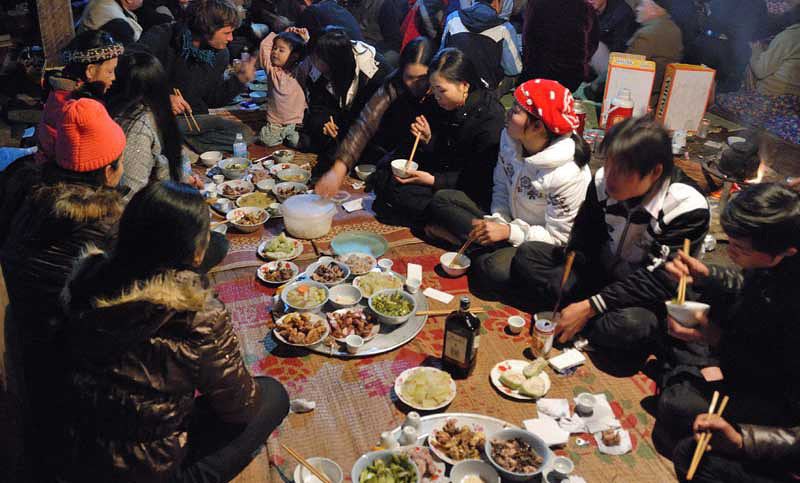
Les bo doi, je connais, ils sont généralement très sympas, ce qui m'a valu d'être interdit de passage avec un grand sourire dans l'ile Cham, et à avoir un jour un sacré mal à la tête après avoir été invité par des officiers qui assistaient à une grande fête publique en l'honneur du régiment sur la place principale de Son la, que je regardais de loin et un officier s'est levé pour me conduire auprès d'eux au1er rang ; à la fin ders danses et chants, j'ai eu droit à une tournée générale de vin de riz (ds les grandes jarres avec les grandes pailles) et je ne pouvais pas y couper, chaque officier a tenu à tirer sur la paille avec moi 😕 L'alcool de rize, ce n'estpas un problème, mais ce vin de riz, c'est trairte.
A propos, les français appeleaient le vin riz du choum, et quand j'en parle à des viets, personne ne comprend de quoi je parle. Quelqu'un a une idée là-dessus ??????
Méfiez-vous de la vie, car les ratés ne vous rateront pas!
Les bo doi, je connais, ils sont généralement très sympas, ce qui m'a valu d'être interdit de passage avec un grand sourire dans l'ile Cham, et à avoir un jour un sacré mal à la tête après avoir été invité par des officiers qui assistaient à une grande fête publique en l'honneur du régiment sur la place principale de Son la, que je regardais de loin et un officier s'est levé pour me conduire auprès d'eux au1er rang ; à la fin ders danses et chants, j'ai eu droit à une tournée générale de vin de riz (ds les grandes jarres avec les grandes pailles) et je ne pouvais pas y couper, chaque officier a tenu à tirer sur la paille avec moi 😕 L'alcool de rize, ce n'estpas un problème, mais ce vin de riz, c'est trairte.
A propos, les français appellaient le vin riz du choum, et quand j'en parle à des viets, personne ne comprend de quoi je parle. Quelqu'un a une idée là-dessus ??????
Méfiez-vous de la vie, car les ratés ne vous rateront pas!
Tout comme Larsay dans le Nord, il aura fallu sortir un peu des routes 😉. La prochaine fois je dirais a mon ami Mike de vous preter sa 250cc Honda XR pour que vous puissiez sortir des sentiers battus.
A propos, les français appellaient le vin riz du choum, et quand j'en parle à des viets, personne ne comprend de quoi je parle. Quelqu'un a une idée là-dessus ??????
Bonjour Jacques,
D'après mon érudit personnel, le choum était l'alcool de riz à 45° (qui flambait comme du cognac). - Il avait été interdit aux paysans pendant la colonisation de faire cet alcool de riz, sans payer d'impôts. - alors les militaires français demandaient discrètement à ces paysans du choum pour éviter de prononcer le nom "d'alcool de riz" (ruou)
Aujourd'hui le fait est tellement ancien que les Viets ne se souviennent plus de l'origine de ce mot... hi hi h i
Ne reste plus que le "ruou" que l'on répand sur les tombes en même temps que les rituels, et on le retrouve aussi dans les fêtes et les festins... Quant au "ruou nep" que l'on trouve encore assez souvent dans les rues d'Hanoi, ( et qui n'est pas mauvais... hic )c'est le dépôt de cet alcool.
Voila
Bonne journée - amitiés - Kimtwo
Le vent et les turbulences sont l'oeuvre de Dieu, mais la voile et le gouvernail nous appartiennent..
Voyager c'est aller de soi à soi, en passant par les autres (proverbe touareg)
Lucky that we have a home/Our Home is Nha May Man/Passing rain and dry seasons/In a full-of-love atmosphere/Besides my new family/I have brothers and sisters/The sun shines over the skies/Let's stay here, with all of us,
Pourquoi, dites moi, pourquoi systématiquement ne dites-vous que des sottises ?: laissez donc les gens qui savent, - on ne peut pas tout savoir, il n'y a rien de honteux à ça, et un forum est là pour réunir, par petits morceaux, tout ce qui peut se rejoindre et éclairer un peu les autres.
Vous avez des soucis.... Cher Monsieur...
Le vent et les turbulences sont l'oeuvre de Dieu, mais la voile et le gouvernail nous appartiennent..
Voyager c'est aller de soi à soi, en passant par les autres (proverbe touareg)
Complément de l'érudit, même si ça vous contrarie :
Une jarre c'est : cai chum" et non choum...
On mettait dans ces chum de l'eau potable, des condiments, des ca bat et des dua.. - a fortiori, on peut mettre de l'alcool dans de tels contenants, mais fermés comme des amphores..... - donc ....appelez comme vous voulez le contenu alcoolisé, mais l'histoire de la discrétion à la base est vraie.... - somme toute, vous n'aviez que la moitié de l'histoire....et vous en profitez pour être désagréable à la fois avec notre co-forumiste et moi-même.......
Vous devriez vous souvenir de la phrase de Paul Valéry : la culture c'est ce qui reste quand on a tout oublié.
Le vent et les turbulences sont l'oeuvre de Dieu, mais la voile et le gouvernail nous appartiennent..
Voyager c'est aller de soi à soi, en passant par les autres (proverbe touareg)
somme toute, vous n'aviez que la moitié de l'histoire
Pour une fois, je suis d'accord. Choum vient du mot chinois "Samchou" -eau de vie- qui est devenu choum-choum en annamite.
source : "Conchinchine française et Royaume du Cambodge" de Ch. Lemire
Merci de cette précision, et effectivement, en viet, une jarre est câi chum et non seulement chum, ce qui explique que les viets ne comprennaient pas ce que je leur demandais (y compris les grands amaters du contenu alcoolisé 😏 )
Méfiez-vous de la vie, car les ratés ne vous rateront pas!
Mais peut-être qu'Albalone a ses raisons pour lui poser cette question.
Aenathnong refuse manifestement de répondre à ma question, afin que je puisse comprendre ce qui l'a rendue déçue de sa visite d'un marché flottant du Delta du Mékong.
Sans doute, cette personne n'a que le goût pour la polémique, en proliférant des énormités relevant d'une ignorance totale et de contre-vérités.
Je respecte le fait que quelqu'un puisse ne pas aimer telle ou telle chose, mais le fait de se permettre de prendre ses goûts comme universels pour déconseiller ceci ou celaest pour moi inadmissible.
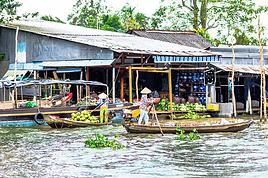
Les marchés flottants dans le Delta du Mékong (une dizaine et se trouvant à la réunion de plusieurs branches des fleuves) n'ont rien à voir avec le tourisme. Ils existent depuis très longtemps, avant que le tourisme existe au Vietnam.
Ces marchés flottants sont les seuls lieux de rendez-vous des producteurs et des commerçants, dus au fait que tout le Delta du Mékong (depuis un petit bled perdu) est relié par un réseau de plusieurs milliers de km de canaux de navigation.
Les touristes qui se disent toujours avoir pour but d'aller au devant de la culture d'un pays visité ont toutes les raisons de venir constater de leurs yeux cette activité singulière de la vie du Delta du Mékong.
Les noms des marchés flottants prennent parfois les noms des carrefours de plusieurs fleuves: Cho Nôi Nga Ba, Cho Nôi Nga Nam, Cho Nôi Nga Bay etc ...
Selon les dates de l'année, la production agricole varie selon les récoltes et l'activité des marchés flottants dépend de l'activité de la récolte des différents produits agricoles et aussi de la période de stockage ou des besoins des marchés urbains.
Evidemment, il y a aussi la fête du Têt, où l'on connaît une immense activité avant, pour ravitailler tous les marchés et une activité réduite presque à néant, les jours suivant la fête du Têt.
Durant la journée, cette activité connaît également des variations. Au Vietnam, la journée commence à l'aube et s'estompe de 10 H à 15 H, avant de recommencer pour la fin d'après-midi.
Ensuite, il y a aussi l'histoire des marées qui conditionne l'intensité des marchés. Certains propriétaires de barque qui souhaitent rentrer dormir chez eux, s'empressent de repartir avant que le niveau de la marée baisse, empêchant toute navigation.
La personne qui déclare ne pas s'intéresser au marché flottant du Delta du Mékong est celle qui se désintéresse complètement de sa culture.
Lucky that we have a home/Our Home is Nha May Man/Passing rain and dry seasons/In a full-of-love atmosphere/Besides my new family/I have brothers and sisters/The sun shines over the skies/Let's stay here, with all of us,
J'ai certainement d'autres choses à faire bien plus intéressantes que vous répondre sur les dates auxquelles j'étais dans le delta du Mékong, ceci dit il n y a aucun mystère.......juste deux jours avant la fête de nouvel an.....soit juste avant le têt......à 5h du mat, petite précision juste pour vous......
Sans plus....je le dis et le redis et si vous étiez un minimum objectif vous auriez relu mes posts ou je dis et redis que je ne regrette absolument pas ce voyage et que les vietnamiens sont des personnes charmantes, que ce pays est très intéressant et à découvrir......
Je ne sais pas qui vous êtes, sans doute une personne intéressée, cela va s'en dire.....mais sachez que je ne suis certainement pas aussi cultivée que vous et sans aucun doute ignorante et au delà de votre obstination, prenez un dictionnaire....pour bien me comprendre, savoir ce que c'est d'être obstiné..... je ne cherche vraiment pas la polémique mais juste informe les gens sur les temps de voyage pour découvrir un site tout en sachant que nous "les touristes" ne disposons pas d'un temps infini.......donc voir les priorités de chacun...........
Vous parlez de respect....j'espère juste que vous n'êtes pas Vietnamiens......je ne le pense pas......ce serait vraiment une grande déception pour moi parce que justement cette population est non seulement respectable mais aussi respecte les autres et n'impose pas forcément leur point de vue mais justement reste ouverte à toute discussion constructive ou non. Mais surtout constructive!
Ceci dit, sachez que j'ai peu posté et que bcp d'autres ont absolument confirmé le fait que ce marché, je ne parle pas des autres marchés, n'était pas forcément des plus intéressant....... et que ce post, peu importe le titre qui évidement ne vous plait pas, était juste l'avis d'une touriste.......sans plus....
Pour être honnête, j'ai juste l'impression que vous menez un combat utopiste et vous ne rendez service à personne....ni aux vietnamiens, ni aux touristes, et surtout ne me prenez pas pour une tête de turc........ relisez et relisez...........
Voilà, bien à vous....je vous souhaite une très bonne année et surtout je ne pense pas que cet endroit soit le plus propice à ce genre de propos, ce genre de positions, ce genre de déballage de "la culture".....il s'agit juste d'un forum pour les vacances....restons zen
C.
Je suis toujours ok pour un marché flottant.....cool et sympa et vrai.........sans me taper forcément 4h de route à l'aller...... j'essaie juste d'acquérir un peu de culture.......... Allez c'est pas méchant!!!!!
juste deux jours avant la fête de nouvel an.....soit juste avant le têt......à 5h du mat, petite précision juste pour vous......
Si j'ai demandé la date par rapport à la fête du Têt, c'est pour deviner si vous êtes déçue du marché flottant qui bat son plein ou que vous êtes déçue parce que vous n'aimez pas un vrai marché flottant qui existe pour des raisons structurelles et non pour des raisons purement touristiques comme cela existe dans d'autres pays dont celui vous citez en comparaison.
Maintenant que vous avez donné la date, c'est clair. Allez consommer du marché flottant touristique à quelques minutes de votre hôtel.
Sans plus....je le dis et le redis et si vous étiez un minimum objectif vous auriez relu mes posts ou je dis et redis que je ne regrette absolument pas ce voyage et que les vietnamiens sont des personnes charmantes, que ce pays est très intéressant et à découvrir......
Je n'ai pas abordé cet aspect du problème, donc si vous trouvez des personnes charmantes, tant mieux, mais ce n'est pas le sujet dans mon message précédent.
Je ne sais pas qui vous êtes, sans doute une personne intéressée, cela va s'en dire.....mais sachez que je ne suis certainement pas aussi cultivée que vous.
Interessé par la culture de mon pays sans aucun doute et bénévole depuis presque 8 ans à distiller plein d'informations pratiques pour les voyageurs.
Si cela vous chagrine, je n'y peux rien.Ceci dit, sachez que j'ai peu posté et que bcp d'autres ont absolument confirmé le fait que ce marché, je ne parle pas des autres marchés, n'était pas forcément des plus intéressant....... et que ce post, peu importe le titre qui évidement ne vous plait pas, était juste l'avis d'une touriste.......sans plus....
L'intérêt que chacun porte pour quelque chose que ce soit est purement subjective, je ne critique pas cela et je l'ai dit dans mon précédent message. Si vous n'aimez pas, ce n'est pas une raison d'écrire en gros caractère, un truc débile comme ça :
Alors non je déconseille fortement à toute personne de faire le déplacement pour ce marché flottant qui n'est jamais qu'un attrape touriste et rien d'autre...
Je tiens simplement à rectifier en disant que les marchés flottants dans le Delta du Mékong ne sont pas des attrape touristes et que cela fait partie du paysage économique du pays.
Je suis toujours ok pour un marché flottant.....cool et sympa et vrai.........sans me taper forcément 4h de route à l'aller......
Lucky that we have a home/Our Home is Nha May Man/Passing rain and dry seasons/In a full-of-love atmosphere/Besides my new family/I have brothers and sisters/The sun shines over the skies/Let's stay here, with all of us,
Tout comme Larsay dans le Nord, il aura fallu sortir un peu des routes 😉.
Sortir des routes ? Je ne comprends pas bien. Si vous parlez des "axes principaux", j'en suis sortie plus qu'à mon tour et à moto.
Si vous parlez de traverser les champs, là, je suis d'accord avec l'armée. 😉
moi je roule toujours a moto..a 40 km/h en moyenne
donc pas de probleme avec les bouchons
par ailleurs la moto est mieux pour profiter du paysage et des gens.
les routes du VN ne pas adaptees aux voitures (trop nombreuses)
si vous n'aimez pas mes informations, ne les lisez pas, lisez autre chose, mais respectez les car elles serviront a d'autres
bonsoir ,
IL FAUT ËTRE VIETNAMIEN pour rouler à moto dans ce pays :c'est presque criminel🏴☠️ de conseiller aux touristes ce mode de transport ! Surtout dans les villes ! Et les routes sont souvent en mauvais état ...même à 40 c'est risqué ...
quant à conduire une voiture ...????
Mais je suis surprise de ne pas avoir vu plus d'accidents en 3 semaines ...je viens de rentrer hier . Pourtant j'en ai vu 5 ..... et c'est déjà beaucoup ...
Pour ce qui est des marchés flottants du Mékong ....on y va pour voir ce genre de commerce sur l'eau , qui est étonnant et que j'ai été émue de voir cela justement parce que c'est "vrai " . J'ai aimé les marchés aussi (parfois ...l'odeur des poissons et des crevettes....🤪 moins ...) car ce n'est pas du spectacle pour touristes mais la vraie vie ...pour tout ces gens pour qui manger est le premier souci .
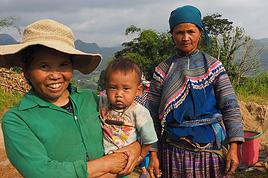
Bien sûr nous étions très sollicités par les vendeurs , nous sommes une "source de revenus " mais à part quelques exceptions près de Sapa chez les Hmongs Noirs "Copina ! achète mon sac ....etc..." ces dames ont des phrases toutes faites et harcèlent pour vendre .Mais dans d'autres villages , chez les Daos Rouges aucun souci et dans le centre chez les Bahnars et les Jarais non plus ...mais il n'y avait
d'autres visiteurs que nous ...
Tout cela pour dire aussi qu'il ne faut pas généraliser ...
Bon le décalage horaire ...cela existe ...A plus .
Mais je suis surprise de ne pas avoir vu plus d'accidents en 3 semaines ...je viens de rentrer hier . Pourtant j'en ai vu 5 ..... et c'est déjà beaucoup ...
Les viets, ils savent pas conduire. Faut pas leur en vouloir.
Désolée de ne pas être d'accord avec vous : les Vietnamiens ne conduisent pas comme nous : ils sont beaucoup plus respectueux que nous des autres - ils sont nombreux, ça c'est une évidence, mais regardez bien : ils négocient, ils évitent avec maestria les piétons, milent net devant des personnes qui ont de la peine, ou tout simplement peur de traverser une rue à Saigon ou à Hanoi -
Je me permets d'en parler car au bout de tant d'années dans ce pays, après avoir ressenti bien sûr les terreurs et les angoisses des premiers jours, il ne nous est jamais arrivé quoi que ce soit de fâcheux - les accidents de piétons que j'ai pu voir sont, malheureusement, dûs à la non observation de leur manière de conduire : La règle est simple : avancer lentement, s'arrêter, regarder, et règle vitale, ne jamais reculer.... - appliquer ça et jamais vous n'aurez d'accident en traversant les nuées de motos et autres au Vietnam.
Quant à la conduite sur la route où malheureusement il ya de gros accidents graves, c'est autre chose : ils savent conduire, mais ils courent toujours après les cinq minutes qui leur manquent pour gagner de l'argent....alors ils s'accordent bien sûr des libertés...😕
Bonne journée - cordialement - Kimtwo
Le vent et les turbulences sont l'oeuvre de Dieu, mais la voile et le gouvernail nous appartiennent..
Voyager c'est aller de soi à soi, en passant par les autres (proverbe touareg)
Je pense au contraire que compte tenu des conditions de conduite : encombrements , routes défoncées ....etc ils conduisent plutôt bien avec beaucoup de réactivité, de concentration et je ne pourrais pas en faire autant ... c'est ce que je voulais dire ....
Par contre (sauf à HCMV ) je les ai maudit de tant klaxonner 😕 !
A Hanoi c'est jour et nuit .....Alors difficile de dormir la permière nuit .....après on s'habitue ....c'est un bruit régulier ......😉 .
Le Vietnam même si je sais maintenant ...j'y retournerai ....c'est un pays si attachant ....si souriant ...même si c'est parfois c'est pour vendre 😉 je ne suis pas si naîve.......il faut bien les aider à vivre mieux ...je l'accepte ...je n'oublrai jamais les DAOS ROUGES qui nous ont invités à boire et à chanter à leur fête de mariage ( nous visitions le village ) .......sans rien demander en retour on ferait cela en France ?
Et j'aurais bien d'autres souvenirs à raconter ...
je n'oublrai jamais les DAOS ROUGES qui nous ont invités à boire et à chanter à leur fête de mariage ( nous visitions le village ) .......sans rien demander en retour on ferait cela en France ?
Et j'aurais bien d'autres souvenirs à raconter ..
ça c'est vrai : les minorités ethniques sont différentes. Rien à voir avec les viets.
Je suis un peu d'accord avce vous ; vu la façon dont ils conduisent, je suis toujours étonné qu'il y ait aussi peu des accidents et je me déplace à vélo tous les jours dans Hanoi depuis 5 ans, où j'en vois de toutes les couleurs, y compris des minettes conduisant la moto tout en tapant un message SMS 🏴☠️ ; des virtuoses ! Ceci dit, il faut être viet et avoir l'habitue et des sacrés réflexes pour tenir le coup.
Méfiez-vous de la vie, car les ratés ne vous rateront pas!
Après 2 semaines au Laos nous voilà maintenant pour 2 autres semaines au Sud du Vietnam. Cette fois aussi ce sera surtout des photos. On commence avec Ho Chi…
Pourquoi démarrer une nouvelle discussion?? simplement pour oublier ce débat stérile sur l'arnaque au vietnam. Dans quel pays n'y a-t-il pas d'arnaques?? même…
Nous serons à Mai Chau en juin et nous pensions rejoindre Sapa mais avant passer quelques jours à Bac ha pour faire des randonnées et découvrir la région. Est…
J’ai pas mal bougé au Vietnam ces dernières années, du delta au sud, aux villes un peu agitées, aux petites îles aussi... mais ce qui me reste vraiment, c’est…
Je n'ai pas trouvé de messages récent sur ce sujet alors je me permets d'en créer un nouveau. Nous commençons tout juste la préparation de notre voyage en…
Je prepare un voyage un Indonésie sur Sulawesi et Java, en Septembre sur 10 jours.
Je ne connais pas du tout cette partir du monde, tout conseil bienvenue!
Je voyagerais seul, également a la recherche de conseils pour rencontrer d'autres voyageurs ou locaux.
Hi everyone,
I couldn’t find any recent info on Kuching.
Can anyone recommend a hotel or guesthouse for under 100 RM that’s nice and affordable? No dorms, please.
Also, does it rain a lot in November, and is it still worth visiting Semenggoh or Bako?
Hi,
On September 1st, we're heading to Kalimantan for six weeks, probably from Pontianak to the Derawan Islands.
I've scoured this site, which is usually my go-to 😉, and others like VoyageForum, but recent info is pretty scarce.
I'd love any tips on places you've visited—our itinerary is still a work in progress.
We're two couples traveling with backpacks, using buses, boats, guesthouses, and homestays.
Thanks in advance!
Hi everyone,
Could you share your thoughts on my 3-week itinerary?
We’re a small group (family + friends) of 12 people, planning to leave around January 21, 2027.
Here’s my itinerary:
3 nights in Bangkok
4 nights in Chiang Mai
3 nights on Koh Samui
3 nights on Koh Phangan
4 nights in Krabi
4 nights in Phuket
I’m also open to any great tips you might have...
Thanks, everyone! Alain.
Hi,
From Malacca to get to Jerantut, is it better to go back to KL and take a bus from there, or take a bus to Tampin and then a train? Any feedback on the "Jungle Train"? (duration, price, comfort, etc.). Thanks
Hi there,
We’re planning a 3-week family trip next summer with our three kids, who’ll be 8, 8, and 7 years old.
After some research, we’re leaning toward Malaysia to combine nature/forests and paradise beaches. The idea is to introduce our kids to the country’s culture, nature, and wildlife.
We want a great trip but without splurging on luxury options like high-end lodges and resorts. We’re looking for comfort with a touch of authenticity—basically, a good middle ground.
I’ve started putting together an itinerary and would love your expert advice and tips to help us build this amazing trip with our little ones.
Day 1: Departure from France
Day 2: Kuala Lumpur
Stay at a hotel near the airport or KL Sentral.
Just one night.
Day 3: Morning flight to Sandakan (Borneo).
Stay in Sepilok
Day 4: Sepilok:
* Orangutan Center
* Malayan Sun Bear Center
* Rainforest Discovery Centre
Day 5: Depart for Kinabatangan.
Boat safari in the late afternoon.
Day 6: Sunrise safari.
Jungle walk.
Evening safari.
Day 7: Final safari.
Return to Sandakan.
Flight to Kuala Lumpur, then to Kota Bharu (or overnight transit depending on schedules).
Day 8: Transfer to the port.
Boat to the Perhentian Islands.
Days 9 to 13: Perhentian Besar
5 full days.
* Snorkeling
* Hiking
* Turtle watching
* Wild beaches
* Relaxation
Day 14: Return to the mainland.
Bus or private car to Taman Negara.
Hi there,
I’m planning a family trip (my wife and I, both 47, and our two sons, aged 5 and 12) to Malaysia for the last week of June and the first two weeks of July 2027.
We used to love road trips as a couple, then as a trio, but since our second child arrived, we’ve taken a break with "camping village" style trips.
Now feels like the right time to get back to our old habits, while adjusting the pace for the kids.
We’re craving Asia. We’ve been lucky enough to visit Thailand, Indonesia (Bali and Lombok), and Sri Lanka before.
Friends have raved about Malaysia, so we’re definitely tempted.
For those who know and love Malaysia, what would be a good itinerary starting from Kuala Lumpur, with a maximum of 3-4 stops? We’d like a mix of culture, nature, and relaxation (just to clarify, we’re not big beach fans). All of this without rushing, of course.
Hi everyone,
We’re heading to Flores and then Bali at the end of September.
We’ve already visited both but this time, once we’re in Labuan Bajo, we’d like to take a boat to the Komodo Islands to see the famous Komodo dragons.
I don’t want to sleep on the boat—just a day trip would be perfect.
Does anyone know a reliable and friendly provider to recommend?
Thanks in advance, and have a great summer!
Summer seems to be the best time weather-wise for Bali.
And since summer’s when we can take a long trip, let’s go for Bali... even though we know it’ll be *packed* with people!
So we’ll steer clear of the island’s south...
Our current plan (19 days on the ground, 7 stops):
- 4 Nights (3 days) in Ubud
2 days for rice terraces / activities (Tegallalang, Campuhan Ridge, Monkey Forest, Bird Park, coffee plantation, market (?), dance "pestacle," cooking class and/or spa)
1 day with a driver for the Temples (Pura Gunung Kawi, Tirta Empul Spring, Pura Mengening, Goa Gajah...)
- 2 nights in Sidemen (1 day for Pura Kehen + Batur Caldera + Pura Besakih and 1 day to relax in the rice terraces)
- 3 nights on Gili Meno (Rest and beaches) from Padangbai
- 2 nights in Amed (1 day from Padangbai with the Abang rice terrace and Tirta Gangga baths, and the next day a boat tour in Amed)
- 4 nights in Pemuteran (1 day for transfer and rest, 1 day to visit Kawah Ijen, and 2 days of snorkeling at Menjangan Island)
- 2 nights in Munduk (1 day with the Dayang rice terrace and the 3-waterfall hike, 1 day at Pura Ulun Danu Bratan)
- 2 nights in Jatiluwih (1 day in the rice terraces, and on the last day, we’ll stop by Pura Taman Ayun in Mengwi and Pura Tanah Lot before catching our red-eye flight).
Accommodations in homestays or hotels.
Transportation to be arranged on-site with the lodgings (?)
Boat to Gili Meno to book in advance (?)
Kawah Ijen excursion to plan ahead (?)—check with the homestay (?)
Thanks for your thoughts/comments to help us explore this destination...
After reading and researching, we're planning the following stops in Cambodia in January 2027:
- Phnom Penh
- Kampong Cham
- Kratie
- Siem Reap
- Battambang
- Kampot (round trip)
I'm wondering about the direction of these stops, which could also influence our international flights.
Either a round trip from Phnom Penh in the order above.
Or landing in Siem Reap with the following order:
This second option would save us the Battambang - PP - Kampot trip but means doing a round trip to Battambang from Siem Reap and placing the "highlight of the trip" (Angkor) at the beginning of our stay.
We’ll be arriving in Phnom Penh this coming January and we’re thinking of starting our trip with a stop in Kampong Cham, then Kratie.
After Kratie, we’re considering heading toward Siem Reap with a stop in Kampong Thom.
That said, I’m not really sure how long the Kratie–Kampong Thom journey might take or how complicated it is.
Does this stop on the way to Siem Reap seem like a good idea to you?
If we don’t visit the Sambor Prei Kuk site, are there still any walks or sights worth checking out in Kampong Thom?
We’ll be arriving in Phnom Penh this coming January and we’re thinking of starting our trip with a stop in Kampong Cham, then Kratie.
After Kratie, we’re considering heading toward Siem Reap with a stop in Kampong Thom.
However, I’m not quite sure how long the Kratie–Kampong Thom journey might take or how complicated it is.
Does this stop on the way to Siem Reap seem like a good idea to you?
If we don’t visit the Sambor Prei Kuk site, are there still some walks and/or things to see in Kampong Thom?
Hi there,
We’re planning to travel from Chiang Rai to Luang Prabang next November.
We’d like to take a slow boat from Chiang Khong—or rather from Huay Xai in Laos—with an overnight stop in Pakbeng.
Could you let us know if the boat still leaves Huay Xai in the late morning? If so, what time roughly, and what’s the price for the trip?
Thanks for your help!
Alod
We (3 adults: 68, 65, and 25 years old) are just back from a short trip to the Philippines, and I’d like to share a little summary of our journey. First of all, I’d like to thank everyone who contributes to this forum about this destination and answers the questions of those who aren’t familiar with it. I should also mention that my comments are personal and don’t reflect anyone else’s opinions. Since I don’t have any literary or photographic talent, I’ll stick to the facts and share a few details about the sights, hotels, and restaurants.
Preparations:
We chose this destination in December and quickly booked our flight tickets (540 € with Turkish Airlines) for a departure on February 16 and return on March 5, 2019. We then contacted two French-speaking tour operators based in Manila, asking them to put together an itinerary based on our wishes (places to visit, type of accommodation) and our budget. We wanted to see the rice terraces in northern Luzon, the hanging coffins in Sagada, before flying to the Visayas (Bohol, Siquijor, etc.), and the Taal Volcano, while limiting our nights in Manila as much as possible. In the end, we opted for Alize, whose itinerary and quote matched our request almost perfectly. Our exchanges helped us refine our circuit.
International flights:
The round-trip flights went smoothly. Turkish Airlines, while not at the level of Asian or Gulf airlines, does the job just fine.
Day 1:
We landed on time (6:15 PM) on Monday, February 16, at Terminal 3. We exchanged our euros (near the car rental counters), and I can confirm the exchange rate was very good. On the way to the St. Giles Hotel (decent and affordable for a transit night), we got our first glimpse of Manila’s dense traffic. The Makati district, where our hotel was located, offers a wide choice of restaurants, so we grabbed a quick bite to recover from the trip.
Day 2:
This day was dedicated to transferring to Banaue. Fortunately, we had a comfortable van and an excellent driver for this journey, which took all day (8 to 9 hours with stops). We got a taste of driving in the Philippines—and it’s terrifying. You wouldn’t want to drive on these roads. The first thing that struck us was the relatively good condition of the roads and the cleanliness (a change from other Southeast Asian countries). This impression lasted throughout our trip. Around 6 PM, we checked into our room at the Banaue Hotel (large, charm-free, but with a beautiful view of the rice terraces).
Day 3:
With the help of a local guide, we took a jeepney to Batad. And then—wow! The rice terraces form an amphitheater overlooking the small village. Under the sun, it’s simply spectacular and breathtaking! Even though we’re familiar with rice terraces (Sapa, Bali, Thailand, etc.), we were dazzled by so much beauty. We spent the day walking along the terrace walls. This place is timeless and fully deserves its UNESCO World Heritage status. However, we returned to the hotel exhausted (due to our ages and lack of exercise). We had dinner with our driver at the Las Vegas restaurant in the center of Banaue. The meal was decent, cheap, and the Filipino owner played the guitar to accompany our dinner.
Day 4:
Today, our driver took us to Sagada. The mountain road offered spectacular landscapes (about 1.5 to 2 hours). Along the way, we stopped in Bontoc to visit the small but interesting anthropological museum. It features old photos and various objects from the Ifugao tribes, as well as a reconstruction of primitive dwellings.
We then went on a short hike in Sagada with a very friendly local guide who explained the region’s funeral rites. The walk started at the communal cemetery before reaching “Echo Valley,” where we saw the first coffins hanging on the cliff. We continued to the “Underground River” and a small waterfall, ending our journey in the “Lumiang Cave” burial cave. All in all, this day was very interesting. On the way back, we made a few photo stops.
In the evening, on our driver’s recommendation, we ate at the “Bistro,” a French enclave in the center of Banaue (good pizza, roasted quail, homemade fries).
Day 5:
Today was a transfer day. To limit fatigue and nights in Manila, our tour operator arranged a flight from Clark to Tagbilaran (Bohol), saving us 2 to 3 hours of driving. But to catch our flight, we had to leave very early: 5:30 AM. Our kind driver dropped us off on time at the airport. To use it, we had to pay a 150 PHP tax per person. The Philippine Airlines flight (15 minutes) left early and was far from full. Upon arrival, we were taken to the Loboc River Hotel, on the banks of the river of the same name. A very charming lodge lost in a tropical garden. We stayed in a stilt cottage overlooking the river. We relaxed a bit in the lovely pool. This place is really great—the staff is charming, and the food is excellent for a reasonable price.
Day 6:
This day was dedicated to exploring Bohol. The program was classic, starting with the tarsier sanctuary. We saw a few specimens in a small garden, each pointed out by a staff member. It was both good and disappointing because the animals were in pseudo-freedom in a small enclosure. Then we went to the “Chocolate Hills” and climbed 240 steps to admire the panoramic view of the hills—but by 10 AM, it was crowded. On the way back, we stopped at the butterfly garden, which was uninteresting: tiny, with few butterflies. We consoled ourselves by photographing beautiful flowers. To please our teen, we stopped at the Loboc Eco Tourism Adventure Park and crossed the river lying down, suspended from a steel cable (300 PHP). Finally, we had the traditional lunch-cruise on the Loboc River. It was a factory-like experience, and the meal was unremarkable. The only good thing was the singer on each boat and the lush vegetation. Afterward, we visited colonial churches and the cathedral, remnants of the Spanish presence, before returning to the hotel for a well-deserved dip in the pool. Note that for those interested, there’s an arena near the hotel where cockfights are held every Sunday—something Filipinos are passionate (if not obsessed) about.
Day 8:
Very early departure for the port. We boarded a *banca* in search of dolphins. After about an hour of sailing, we were lucky enough to spot around a hundred dolphins. Our boat then headed to the small and charming island of Pamilacan. After a walk through the little village, we came across locals traditionally building a boat. They told us it takes about a month to finish their outrigger boat. Then we had to choose our snorkeling spot between the coral garden, the fish park, and the turtle enclosure. Note that a fee is charged for each spot: 150 PHP per place and per person. It felt a bit like we were being ripped off, especially since the spots weren’t amazing—we’d see much better on Apo for much less. We had lunch on the island at one of the many small eateries (350 PHP per person).
Days 9 and 10:
On our return, we were taken to the Bohol Sea Resort on Panglao Island, where we stayed for 2 nights. It’s a small, recent establishment in a quiet corner of the island. It’s relaxing—maybe a bit too much. It has a nice pool and access to Danao Beach, but the view is blocked by a flotilla of boats. We didn’t try their diving school. The meals were good. If we had to do it again, we’d skip this stop to spend more time in Negros.
Days 11 and 12:
We took a fast ferry (Ocean Jet) from Tagbilaran port to Dumaguete and were taken to the Thalatta Resort, about 20 km away near Zamboanguita. We stayed there for 2 nights. Let’s just say it was our favorite. It’s a small place facing Apo Island. The rooms are simple, and the pool, nestled in a magnificent tropical garden, is fantastic. The staff is friendly, and the meals are very good. The hotel has its own diving center (snorkeling gear provided) and its own boats. We booked the Apo Island excursion: 1,350 PHP per person, including lunch. It was incredible: magnificent corals, colorful fish, and turtles of all sizes. The crew was endlessly kind and didn’t hesitate to dive to guide us to the best spots. In short, a perfect day. This site is ranked among the top 5 diving spots in the Philippines.
Since we were lucky enough to be there on a Wednesday morning, we explored the surprising Malapay Market, a 10-minute walk from our hotel. You’ll find numerous stalls selling vegetables, fruits, live or dried fish, and handicrafts. Enclosures are set up for selling livestock (calves, zebu, pigs). There are also restaurants. We were lucky to see two pigs roasted traditionally on a spit. There are few Europeans, and the people are warm. A great moment.
We left this beautiful place with regret because we didn’t have time to visit the island or go swimming with whale sharks.
Days 12 to 15:
From Dumaguete port, we took a short crossing (1 hour with Ocean Jet) to Siquijor Island to reach the Coco Grove Beach Resort. A beautiful hotel nestled in a spacious tropical garden. Several restaurants and bars, 4 pools. Despite the size of the place, it remains intimate. You can snorkel (corals and fish) right in front of the beautiful beach. We stayed in a very pleasant duplex suite. For those interested, there’s a spa and a diving center. You can also take the Apo Island excursion (offered at 1,950 PHP).
We spent our days relaxing between the pool and the beach. In the evening, the sunsets over Negros and Apo were stunning.
We booked an island tour with a comfortable tricycle from the hotel (1,500 PHP). The circuit was classic and allowed us to go around the island. We discovered beaches, the famous 400-year-old ficus tree with its enormous roots, and its equally famous foot bath with its cleaning fish. Then we visited the St. Isidore Convent before heading to the Cambugahay waterfalls and their four pools. The setting is idyllic, and the water is surprisingly good—we had a lot of fun swimming. We had dinner at a restaurant overlooking the island, where you can see Apo, Cebu, and Negros. In the end, Siquijor turned out to be a real little tropical paradise.
Since the hotel restaurants were expensive, we dined at nearby establishments: Fuego (clean, good—excellent raw fish—and quiet), Chekesch (louder), and the very pleasant Baha Bar, which brews its own beer and offers more refined cuisine.
Days 15 to 16:
We left at dawn to return to Dumaguete and its airport by ferry. We had breakfast at the Coco Grande Hotel, an annex of the previous one. The Philippine Airlines flight went smoothly. A driver took us to the town of Taal. We stayed at Paradores Del Castillo, right in the heart of the old town. It’s a charming old house with only 6 rooms. The various rooms are decorated with antiques—a real little museum. The garden is pleasant and opens onto the town.
It’s an old early 19th-century house converted into a hotel, beautifully arranged with 6 rooms in the heart of the city. The restaurant in the garden is very pleasant and offers a panoramic view.
We visited an old Spanish house before heading to the beautiful Basilica of St. Martin of Tours, one of the most beautiful religious buildings in the Philippines. A mass was in progress, allowing us to gauge the Filipinos’ fervor before we could visit. When we left, it was dark, and we could admire the illuminated building. We ended our evening by exploring the night market with its many fruit and skewer stalls. A nice surprise.
In the morning, we were taken to the shores of Taal Lake, an ancient caldera where a second volcano has formed in the middle of the lake, which in turn contains another lake. We boarded a *banca* to reach the island in the middle of the lake. This was followed by an uphill walk, made difficult by the high temperature (36°C) and the dust on the path. The dust was worsened by the many horses carrying (or bringing back) the less courageous. To illustrate the difficulty of the climb, the trail is marked by the Stations of the Cross and its 14 stations. We were panting while our guide trotted far ahead. Our effort was rewarded when we reached the summit and its viewpoints over the inner lake and the surroundings. The wisps of smoke seen here and there confirmed we were on an active volcano. Inside the lake, there are supposedly 45 small volcanoes, one of which emerged during its last eruption in 1911.
On the way back, we had lunch by the lake before returning to Manila and the Bayleaf Hotel, whose main merit is its location in the Intramuros district. In the late afternoon, we walked along the walls of the old city.
We had dinner on the hotel’s panoramic terrace overlooking the city and the bay.
Day 17:
Last day! Our tour operator joined us for a tour of the Intramuros district. He enriched the visit with comments on the history, geopolitics, and economy of the Philippines. We visited the Manila Cathedral, destroyed 7 times in the past (6 earthquakes and the 1945 bombing). It’s beautiful, and its stained glass is magnificent. We couldn’t enter the San Agustin Church, the oldest Catholic building in Manila. We passed by the memorial to the Battle of Manila, which claimed over 100,000 lives. We visited the area around Casa Manila, which was closed on Monday, and had a drink at Barbara’s cabaret, located in a historic house. A very enriching morning.
Then we went to the Mall of Asia, the world’s largest shopping mall, to buy some souvenirs (Kultura store) before being taken to the airport. We exchanged our last pesos at the buying rate right after check-in.
The return flight went smoothly. We regretted not being able to use the facilities of Istanbul’s new airport, as its opening was delayed by another month.
Finances:
In the end, we spent 1,640 € for the international flights, 4,200 € for the stay (hotels, visits, various transports) with the agency (whose professionalism we can only praise), and about 700 € for meals, tips, and souvenirs.
Summary:
Luckily, we had beautiful weather throughout our stay, with temperatures between 26 and 35°C. Discovering the Philippines was a wonderful experience. The diversity of the landscapes, the kindness of the Filipinos, the cleanliness, and the truly delicious fruits (especially pineapples and mangoes). We were never harassed, unlike in many touristy countries. On the other hand, the food, though generally cheap, wasn’t exceptional.
Since this country is so vast, we might return in the near future.
Though I’m not a specialist on this destination, I’m happy to answer your questions based on my experience.
So, my flight tickets have just been booked for a trip to Cambodia from November 4th to 27th, 2025.
I’ll be traveling solo and want to explore this amazing country while getting a bit off the beaten path.
I’m arriving in Phnom Penh and also departing from Phnom Penh.
My goal is to travel as much as possible by bus and scooter.
What itinerary would you recommend?
What are the must-do things?
I’m open to all tips and info.
Thanks in advance for your help and responses.
We got back enchanted from a 6-week trip to Cambodia!
Our itinerary: Kampot - Kampong Chhnang - Battambang - Siem Reap - Kampong Cham - Sen Monorom (Mondulkiri) - Banlung (Ratanakiri) - Kratie - Kampong Thom - Phnom Penh.
We traveled by bus, minivan, boat (between Battambang and Siem Reap), overnight bus, scooter, tuk-tuk, and rickshaw for shorter distances. We stayed in guesthouses, homestays, and even in the jungle during a trek.
While the Angkor temples are fabulous, it’s the people you should visit Cambodia for—the "Land of Smiles" truly lives up to its nickname! Tourists gather in Angkor but are quite rare elsewhere, even though the country is easy to travel around.
I won’t describe our trip in detail but instead highlight a few favorite moments.
From Kampot, don’t hesitate to head out around 6 AM to see the fishermen return and their wives selling their catch (just 10 minutes away by the coast). Guaranteed picturesque!
In Battambang, known for its food scene, we discovered a cooking class with Smokin’ Pot (authentic Khmer cooking class). They pick you up from your guesthouse to shop for ingredients (we made fish amok and beef lok lak) at their village market, then cook and eat together. A private class—just the two of us! They also send the recipes via WhatsApp as a PDF. +855 12 821 400
In Siem Reap, I can recommend a francophone tuk-tuk driver who was very attentive to our wishes. We visited tourist spots but also more remote villages and local grilled-pork restaurants with him. He’s a wealth of information about local life, and chatting with him was a real pleasure—we left with regret! You can reach him on WhatsApp: Vung Hem, +855 96 614 0146.
We did a 2-day, 1-night trek in Mondulkiri. Don’t expect a super dense jungle—it looks more like a forest similar to ours. But Nara, our Bunong ethnic guide, made the experience adventurous and ultimately very immersive! WhatsApp +855 86 630 489
Bee Bee’s Chalets homestay: If you pass through Banlung in Ratanakiri, we *loved* this family and their budget-friendly bungalows. Playing Uno, enjoying Nita’s cooking (ask for her fish amok—amazing!), it was a true homestay experience! Contact Nita on WhatsApp: +855 88 818 5525.
In Kratie, rent a scooter and follow the Mekong north for 40 km at your own pace. Being so close to the locals was a treat! Same goes for heading south if you have time.
Kampong Thom: Head 25 km out to visit the pre-Angkorian temples of Sambor Prei Kuk. Around a hundred monuments spread across three sites… and hardly anyone there!
A few practical tips:
Though prices are often listed in dollars, you can always pay in riels (1 USD = 4000 riels), which is what we preferred.
PassApp: An app to book tuk-tuks or rickshaws (and most importantly, know the price upfront).
Virak Buntham: A bus company connecting several cities, bookable online.
Feel free to ask me questions about places, accommodations, etc.—I’d be happy to answer!
We’re planning our second trip to Thailand (2 weeks on-site, late April/early May) as a family with our 5- and 7-year-olds.
On our first trip, we visited Bangkok, Ayutthaya, the River Kwai, Koh Lipe, Koh Phi Phi, and Khao Lak. We especially loved Koh Phi Phi for its limestone cliffs and lush vegetation, as well as Koh Lipe for its crystal-clear waters and snorkeling.
This time, I’m thinking of spending 7 days on the islands. I was considering Koh Tao and Koh Phangan. We’d like some scenery, snorkeling right from the beach, and a bit of atmosphere—but not too much (just enough to grab dinner in the evening).
For the other part of the trip, we’re torn between Chiang Mai and Khao Sok. One or the other… or both? We don’t want to rush, but we’re really nature-focused, so we won’t be hitting too many temples…
Hi there, I’ll be on vacation in Malaysia in November and plan to spend 5 days in Penang. After that, I’d like to visit some temples and places in Butterworth or nearby, and also explore the city. Since I usually get around on foot, which neighborhood would be best for me—meaning within a 30-minute walk of attractions, street food stalls, bus lines, etc.? Thanks in advance for your help!
Françoise
Hello, it’s been a while since I last asked for your help on this forum—I’ve really missed it! I hope you’re all doing well, whether you're new or returning members.
I’m planning a trip from February 6 to 18, 2027, with my sister (we’re 47 and 50—time flies!). I’ve got my eye on a flight from Paris that lands in Bangkok on February 7 at 3 PM, with a return flight from Bangkok on February 18 at noon.
My sister has never been to this destination, and it’ll be her first time in Asia. Her priorities: beaches, sunshine, and cocktails by the shore. For me, I love that too, but I also enjoy exploring, nature, forests, and a bit of comfort (mixing guesthouses and higher-end hotels with pools). A little evening entertainment would be great, but not too much—good cocktails in a nice atmosphere rather than a rave party ;-). And I can’t help but dream of taking her on a little trek through a tropical forest (guaranteed memories and laughs, though she might curse me at the time) and showing her some karst landscapes.
I’ve been to Thailand before, but it was 15 years ago...
The idea is to give her a taste of Bangkok for 1 or 2 nights, a few days on an island (but which one...?), a tropical forest excursion with 1 or 2 nights on-site (Khao Sok?), and then back to Bangkok.
For the "main" island, even after reading the *Guide du Routard*, I’m still undecided. It’s hard to find a place that ticks all the boxes without feeling as crowded as the French Riviera in August: Koh Lanta? Khao Lak (though it’s not an island)? Koh Tao (I could maybe get my PADI certification, but I’m afraid she’d get bored, and it might be better to save that for a solo trip)? Koh Yao Yai (I worry we’d be bored in the evenings)? What a dilemma!
Thank you if you’ve read this far! Feel free to share any advice—it’ll all be warmly welcomed.
Here’s a rough outline of the itinerary (I’d rather skip a night in Bangkok if needed):
· Saturday, February 6, 2027: departure (overnight flight)
· Sunday, February 7, 2027: arrival at 3 PM, probably at the hotel by 6 PM, evening in Bangkok (overnight in Bangkok)
· Monday, February 8, 2027: day in Bangkok (Wat Pho and a floating market?) (overnight in Bangkok)
· Tuesday, February 9, 2027: travel to Koh Lanta or another island (flight to Phuket or Krabi?) (overnight on island "x")
· Wednesday, February 10, 2027: beach and walks (overnight on island "x")
· Thursday, February 11, 2027: beach and walks (overnight on island "x")
· Friday, February 12, 2027: beach and walks (overnight on island "x")
· Saturday, February 13, 2027: beach and walks (overnight on island "x")
· Sunday, February 14, 2027: beach and walks (overnight on island "x")
· Monday, February 15, 2027: travel to Khao Sok—nighttime excursion to Khao Sok (overnight in Khao Sok)
· Tuesday, February 16, 2027: exploration and hike in Khao Sok (overnight in Khao Sok)
· Wednesday, February 17, 2027: return trip to Bangkok (overnight in Bangkok)
· Thursday, February 18, 2027: return flight to Paris at noon
I’m planning a trip to Cambodia and was set on visiting the Ratanakiri region, which seemed to match what we love most in terms of landscapes: forests, jungle, greenery...
However, as I started looking into the area, I read that deforestation there is massive, and some of the info on the topic is years old—the situation hasn’t improved since, unfortunately.
So my question is: is Ratanakiri still worth visiting, and does it justify the long travel time and distance to get there?
I’ve seen that jungle treks are possible, but from experience, I know guides sometimes hesitate to venture deep into the forest and stick to shorter walks along the edges of parks.
Hi there,
I’ve found so many tips and reviews on this forum, so it’s my turn to contribute a little.
We spent just over two weeks with our family, with the following itinerary:
- Hanoi: 5 days
- Halong Bay: 3 days and 2 nights
- Tam Coc: 3 days
- Mai Chau: 2 days
- Sapa: 3 days
We got around by bike, scooter, Grab, and bus.
Our main accommodations were homestays and hotels in Hanoi.
We visited lots of museums, temples, and neighborhoods in Hanoi.
We did a 2-day, 1-night trek in Sapa with May, a Hmong local, without going through an agency.
A few small regrets: the weather was overcast, and we couldn’t make it to Fansipan, but nothing major 😅. We also couldn’t find transport to get from Sapa to Mu Cang Chai.
Other than that, this trip will stay in our memories for the kindness of the Vietnamese people, the connections we made, the food (street food, homestays...), the coffee 😋, the landscapes, and how easy it was to get around...
Our goal was to take our time and focus only on a small part of northern Vietnam.
If you need any tips or recommendations, don’t hesitate to ask.
Looking forward to hearing from you.
Cédric.
Hi there, we’re landing at Hanoi Airport and would like to head straight to Cao Bang without going into Hanoi. Does anyone know if there are buses that go directly from the airport to Cao Bang (especially in the early afternoon)? Thanks in advance!
Hi everyone,
I’m currently working on a 30-day itinerary for May/June 2027.
10 days in eastern Java (Malang, Bromo, waterfalls, Meru Beriti Park, Banyuwangi, and Ijen), a short transit in Ubud for a few days, then Flores before heading back to Jakarta.
We’ll spend 15 days in Flores (the classic route: Moni, Bajawa, Riung, Ruteng, ending in Labuan Bajo).
I’d love some firsthand feedback on flights to Maumere or Ende from Bali Denpasar. I know there are no direct routes and that you have to connect through Labuan Bajo or Timor (I think), which isn’t an issue in itself.
But I’ve read here and there that flights to these destinations can be delayed—or worse, canceled—and that it’s better to fly in and out of Labuan Bajo, which isn’t exactly ideal...
Thanks for any tips or experiences you can share!
hi everyone,
I want to travel in the north for 3 weeks in September-October 2026 to meet ethnic minorities, photograph mountain rice terraces and their harvest, and revisit Halong Bay—but maybe Lan Ha Bay instead. Can you recommend one or more local agencies?
Thanks, and happy holidays!
I need some expert advice on these two destinations for a 15-day trip. We land in KL and plan to stay for 2 days before heading to Borneo and finishing with an island for snorkeling.
For those who’ve been, what are your must-sees?
We were thinking of spending the last 3 days on the Perhentian Islands, unless you’ve got another island to recommend near Borneo.
Thanks for your tips and help!
I’d love to get some feedback on our itinerary—it’s probably pretty basic! This is our second trip to Asia and our first to Indonesia. We have three kids aged 20, 18, and 12. We land in Jakarta at 4 PM, spend 3 nights/2 days there, then take the train to Yogyakarta for 3 nights/2 days, followed by the train to Surabaya for 2 nights/1 day, then the train to Bromo for 1 day/1 night, a private driver to Ijen for 2 nights/2 days, then on to Bali (Ubud) for 4 nights/3 days, followed by Gili Air for 3 nights/2 days, Senggigi (Lombok) for 2 nights, and finally 5 nights in Kuta. I’m considering cutting the 2 nights in Senggigi to just keep Kuta and extend it to 7 nights. In Lombok, I’m not sure how to get around since I’m not comfortable with scooters... Your thoughts on all of this, and any advice, are more than welcome—don’t hesitate!
For those wondering why cities like Jakarta and Surabaya: we don’t often get the chance to visit big Asian cities, so we wanted to include that discovery in our trip. The trains between Jakarta and Yogyakarta, Surabaya and Probolinggo are booked. The return flight from Lombok to Jakarta is also set. Accommodations are booked but flexible (same for the trains).
Hi everyone,
I’m looking for addresses for guesthouses or, even better, houseboats or rafting houses on the River Kwai, between Kanchanaburi and Sangkhlaburi, to spend a few weeks contemplating this beautiful river.
Thanks for your suggestions!
Premaria