Pour les batons j'en ai deux.
Pour le sac de couchage merci d'avoir insisté dessus ! Je vais en acheter un autre directement avant de partir.
Pour le matelas de sol vous conseillez quoi du coup? J'ai ca car je l'avais déjà avant, mais j'avoue que ce n'est pas forcément bon.
Pour l'eau du coup à ce que je comprends, même dans les sources que je pourrais croiser sur la route, je peux remplir mon réservoir directement sans aucun filtre ? Si oui, effectivement cela ne sert à rien.
Des conseils pour le sac de couchage niveau marque etc ?
Pour le briquet j'en ai pris qu'un mais un bon du coup qui ne risque pas se casser en route.
Pour le sac je vous dirais demain mais pour l'instant de ce que j'ai pesé je suis à 14kg avec 3L d'eau dessus.
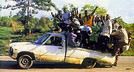
Evidemment rien de comparable, d'un coté une personne qui met une liste sur un forum et à qui les membres proposent des conseils pour être en sécurité et en confort dans un poids de sac à dos correct et de l'autre des personnes qui sont obligées, si elles veulent garder leur boulot ( je parle de porteurs pour touristes) de porter des charges totalement inhumaines pour un salaire journalier de misère.
Mais effectivement, on est pas du tout dans le même débat et on s'éloigne du GR20
Pour mon sac "trop lourd" c'est trop tard, je n'en racheterais pas un autre maintenant .. Il est par contre très confortable et le poid est très bien répartit. J'en ai testé de plus leger qui donnait une impression de poids plus importante.
Le problème c'est que le Néoair est extrêment fragile et sur un sol cailloteux le risque de crevaison n'est pas à négliger.
Personnellement, je prendrai un matelas en mousse de qualité plus de place , moins de poids mais là n'est pas forcément le problème mais pas de crevaison à craindre.
Si tu es sur paris tu peux aller faire un tour au Vieux C.... ils ont du choix car pour la vente par correspondance vu ta date de départ cela va être trop juste.
Tu as aussi la possibilité si cela est trop cher d'acheter un nouveau duvet de prendre une doudoune légère qui pourra te servir le soir et aussi en complément dans ton duvet avec au besoin un collant type running.
Personnellement, je prendrai chez Décath ... une rain cut qui ne coûte presque rien, bien moins chère qu'une veste en goretex pour un rendement presque identique .
pour la Polaire vu que c'est ta couche chaude prends en une assez épaisse voir décathlon ou le vieux campeur
la polaire peut etre aussi remplacé par une micro doudoune en statique.
dans ce cas il faut aussi une polaire tres tres légére sous la veste coupe vent pour la marche tot le matin
Là c'est à toi de voir. Si tu es fragile des genoux ça peut être utile même très utile dans les descentes .perso je n'en prends pas j'ai jamais pu m'y faire j'aime trop avoir les mains libres.
Pour le matelas de sol vous conseillez quoi du coup? J'ai ca car je l'avais déjà avant, mais j'avoue que ce n'est pas forcément bon.
L'importance du matelas c'est d'abord quand tu bivouaques par temps très froid , dans la neige par exemple l'isolation du sol est très importante pour ne pas avoir froid;mais en Corse en Août l'important c'est surtout le duvet..après c'est juste une question de confort pour le matelas c'est toi qui vois à mon avis un léger est suffisant.
Pour le duvet, Décathlon en avait un confort 0°C relativement léger mais plus proche du KG quand même que des 200gr! pas beson d'investir dans plus performant sauf si tu prévois par la suite de bivouaquer dans les Alpes
Pour le briquet j'en ai pris qu'un mais un bon du coup qui ne risque pas se casser en route.
ça aussi c'est pas 30 gr de plus qui vont t'alourdir si tu en as 2 c'est un plus !
Pour l'eau du coup à ce que je comprends, même dans les sources que je pourrais croiser sur la route, je peux remplir mon réservoir directement sans aucun filtre ? Si oui, effectivement cela ne sert à rien.
L'eau des refuges est potable ;tu fais le plein pour boire 1,5 à 2 litres sont suffisants pour chaque étape et si tu prépares du lyophilisé( repas) l'eau des sources ou des torrents viendra en complément vu que tu la feras bouillir. Au besoin tu peux compléter ( pour boire)en évitant les points d'eau où viennent s'abreuver les troupeaux.
Pour le sac je vous dirais demain mais pour l'instant de ce que j'ai pesé je suis à 14kg avec 3L d'eau dessus.
Donc sans l'eau ça fait 11 kg c'est ça? ça me paraît correct.
Emporte une bonne polaire épaisse pas une trop légère c'est surtout pour le soir et éventuellement en cas de mauvais temps. Par sécurité prends une couverture de survie ça pèse 100gr; on ne s'en sert jamais mais suffit d'une fois...
Djalma est toujours de bon conseil 🙂
Ah, les "du coup", "en fait" et toutes ces expressions à la mode ! 😉
Pour le matelas, je suis très content de mon Thermarest-Z-Lite.
L'état d'un genou accidenté plus mon âge me font utiliser deux bâtons (trois brins) mais faut savoir les utiliser. Les inflammations des genoux (gonalgie...) sont la cause de la majorité des abandons sur le GR20. Du froid ou un gel (comme Urgo-Gel-Froid), éventuellement un anti inflammatoire pour traiter le mal chaque soir. Pas de bande ou de truc autour de l'articulation, ça gêne à la marche et ça ne sert pas à grand chose.
Bon GR !
"Celui qui a atteint son but a manqué tout le reste"
Les inflammations des genoux (gonalgie...) sont la cause de la majorité des abandons sur le GR20.
ça peut être aussi un bon alibi pour abandonner!😉
Du froid ou un gel (comme Urgo-Gel-Froid), éventuellement un anti inflammatoire pour traiter le mal chaque soir. Pas de bande ou de truc autour de l'articulation, ça gêne à la marche et ça ne sert pas à grand chose.
Tu vas lui porter la poisse avec cette histoire de genoux!😏
Tu vas lui porter la poisse avec cette histoire de genoux!😏
J'ai pas tout dit : ça peut aussi toucher les chevilles ou les hanches, ça peut être une tendinite. Sans parler des classiques entorses, foulures ou parfois une fracture ouverte. Pour ce dernier, on a droit à un tour en hélico, gratis !
"Celui qui a atteint son but a manqué tout le reste"
J'ai pris en compte tous vos conseil, qui vont surement me sauver la vie à default d'avoir tué mon compte en banque :).
J'ai changé de sac de couchage pour un à 0°
Changé mon tapis de sol pour un autogonflant + leger + resistant
1 seul briquet tempête
1 polaire très chaude + un imper en goretex . Les deux très leger.
Pris anti inflamatoire et autre.
Enlevé le filtre à eau de mon équipement
En tout mon sac avec les 3L d'eau arrive à : 16.2kg. Ca me parrait un peu lourd mais c'est à cause de mon petit appareil photo + iPad mini + Batteries.
Voila la liste du materiel "finale". Qu'est-ce que vous enlèveriez ?
1 Paire de chaussure de rando
2 paires de chaussettes falke
une polaire mountain hardware
1 veste goretex Mammut
2 calçon Dim respirant
2 tee-shirt icebreaker Merino
1 short Cordura
1couvre chef colombia
1 maillot de bain
7 food salé lyophilisé
13 Barres d'energie
3 sac de fruit lyophilisé
trousse de soin
antimoustique
anti ampoules pied (arrière et doigt)
doliprane
antiseptique
anti inflamatoire
anti alergène
vitamine C
anti mal de ventre
brosse à dent
dentifrice
crème solaire
lave tout care plus
lampe frontale Silva
lampe diffuse tente
iPhone
iPad mini
appareil photo
mini trepied
4 Batteries appareil photo
3 cartes memoires
3 piles AAA
2 Batterie portable longue durée mophie
2 cable micro usb
1 cable apple
Tente 1.4kg
Matelas autogonflant thermorest 400gr
sac de couchage 0° confort Valandré 650gr
petit coussin thermorest 100gr
corde à linge
10 petites pinces à linge
1 popote + petit goblet
briquet tempête
1 cuillière/fourchette
1 couteau suisse de base
1 crux rechaud 72 gr
Vitamine C... c'est pour l'effet psychologique ? (je l'enlèverais)
As-tu des allergies connues... Pollen ou autres... qui occasionnent des manifestations gênantes : démangeaisons, éternuements ? (sinon je l'enlèverais)
Anti mal de ventre... Lequel ?
Belle liste !
Mon avis :
Une lampe frontale suffit.
Pourquoi tous ces trucs ipod, ipad et trépied ?
Tu as pensé à l'eau ? Il te faut 1,5 l. Un camelbag est pratique (Pas de chez D4, pas dans les bas de gamme car ça prend l'odeur du plastique : la marque Platypus-Hoser-1,8 litre est très bien).
Tu as une paire de chaussures pour le soir ? Genre sandales ou tongue.
Trop de bouffe concentrée sauf si tu en fais tes repas du midi (mais ça doit peut-être se vendre dans mes refuges) et que ton budget est très, très serré.
Pas de tire-bouchon ? Prends 2 ou 3 sacs plastique, c'est utile. Dont un assez grand et solide pour protéger ton sac en cas de pluies, genre sac à gravas ; à moins que tu aies de quoi déjà. Et un petit sac poubelle.
Et le PQ ? J'y ajoute des lingettes, le tout à portée de... main, dans un petit sac plastique.
Ton réchaud Crux : et la bouteille de gaz ? Tu as testé la compatibilité avec ta popote ? Tu crois que c'est utile ces trucs pour manger chaud ?
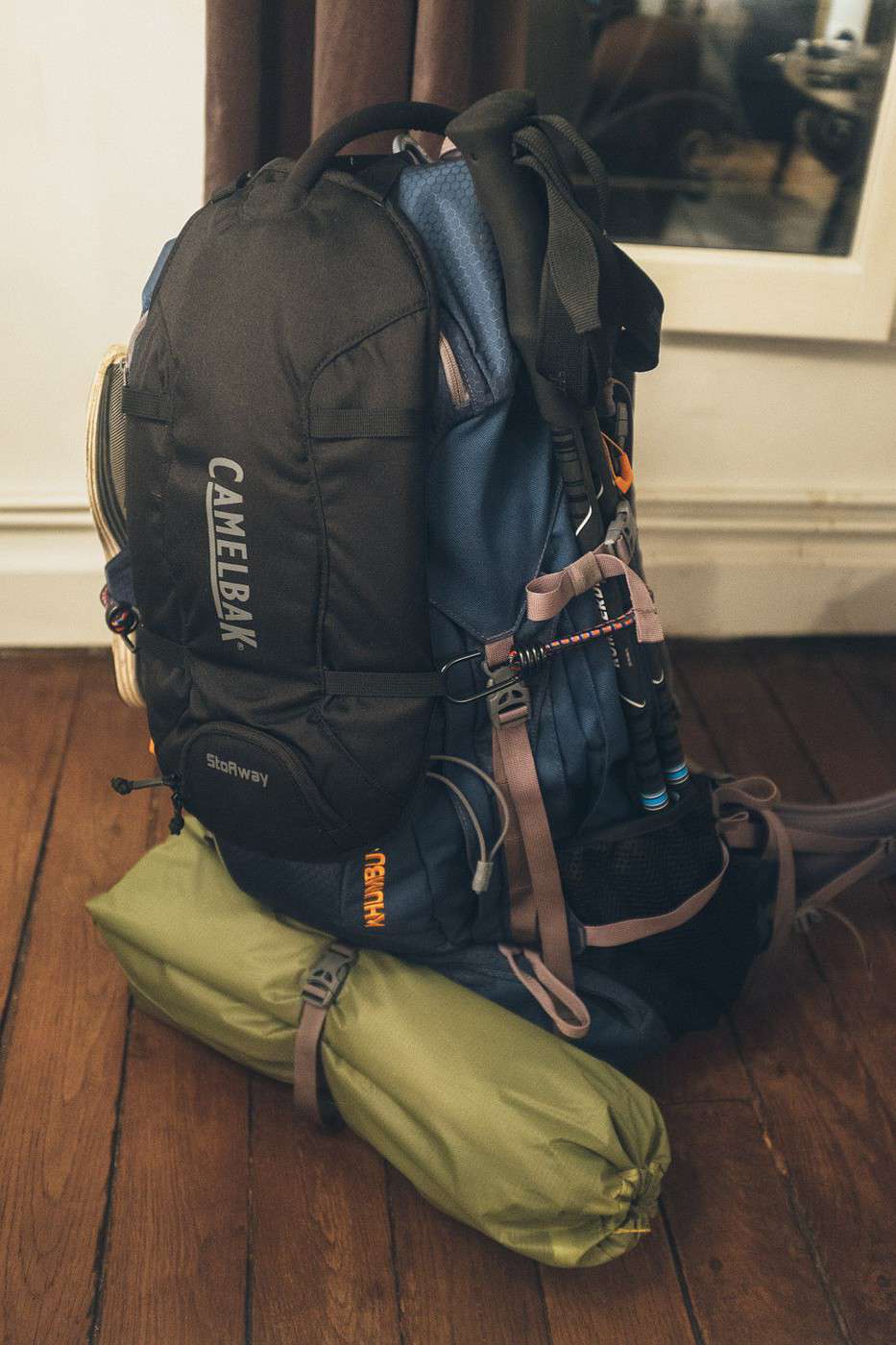
Photo de ton sac : le matelas semble n'être attaché que par une seule sangle et ça risque fort de balancer. Tu peux pas le fixer vertical ?
"Celui qui a atteint son but a manqué tout le reste"
Suis d'accord avec Chnoupi pour la fixation et la position de la tente sur le sac !
- mais pas pour le tire-bouchon : quand on veut l'ouvrir la bouteille, on y arrive toujours ! 😛
OK. Mais batailler une heure pour finir par casser le goulot de la bouteille consignée, c'est un manque à gagner 😉
J'ai 3 sacs à dos et dans chacun, j'ai un tire-bouchon, un sifflet et un Opinel. C'est mon minimum vital.
Ce qui me fait penser qu'il ne faut pas oublier un sifflet à portée de main. Et des mouchoirs Kleenex sauf si on sait se moucher comme un homme, un vrai, sans en foutre sur soi, dans la main 🙁
Je reviens au Camelbag : une bouteille plastique de 1,5l fait aussi l'affaire : en prendre une qui a contenu une boisson gazeuse car la matière est plus solide.
N'oublie pas une pièce d'identité, éventuellement un petit carnet et de quoi écrire. Et de l'argent liquide car les refuges ne prennent que ça (sauf avis contraire de GR20-istes plus au fait des choses actuelles).
"Celui qui a atteint son but a manqué tout le reste"
Moi je suis d'accord pas de lampe diffuse tente. A choisir entre un appareil photo ou un Ipad mais pas les deux en enlevant bien sur ou les pilles ou le chargeur qui vont avec. De toute façon là haut je ne crois pas que l'on capte internet. Peut-être à trois endroits mais c'est tout, même le portable je ne me souviens plus vraiment mais c'est sûr que tu ne pourras pas appeler tous les jours. Le trépied tu n'en as pas besoin il y aura suffisamment de pierre pour poser ton appareil. Trois pinces à linge suffisent, la plupart du temps tu auras tes affaires à sécher attacher sur ton sac à dos ou au fond de ton duvet la nuit suivant le temps (cela te parait peut-être mesquin d'enlever 7 pinces à linge mais j'ai vu sur le GR20 des personnes qui avaient scié leur brosse à dent pour gagner du poids). Je lis caleçons j'espère que c'est des boxers. Il faut absolument que tu sois soutenu, ne ris pas mon fils à fait une torsion de couille sur le GR et crois moi il s'en rappelle. Il faut que tu gagnes du poids maxi 15 kg avec l'eau c'est déjà beaucoup.
Voilà bravo pour tes achats tu ne le regretteras pas et surtout je pense que tu seras ravi d'avoir connu ce forum à la fin de ton exploit.
Allez bonnes vacances, profite bien de ce paysage grandiose !
Je reviens au Camelbag : une bouteille plastique de 1,5l fait aussi l'affaire : en prendre une qui a contenu une boisson gazeuse car la matière est plus solide.
Il en a un ( camelbag!) Moi j'ai horreur de ça c'est un nid à bactéries à moins de le désinfecter assez souvent.. du coup les "micropur" ne sont pas si inutiles que ça. Chez décathlon ils vendent des adaptateurs pour bouteilles plastique je trouve que c'est mieux.
Ce qui me fait penser qu'il ne faut pas oublier un sifflet à portée de main. Et des mouchoirs Kleenex sauf si on sait se moucher comme un homme, un vrai, sans en foutre sur soi, dans la main
Si on sait siffler ( avec les doigts ou sans les doigts) et se moucher avec les doigts pas besoin de sifflet... ni de kleenex!!
Il faut absolument que tu sois soutenu, ne ris pas mon fils à fait une torsion de couille sur le GR et crois moi il s'en rappelle.
ça alors! ça doit pas être trop fréquent ce genre d'accident! Un de plus à ajouter sur la liste, déjà longue, de chnoupi ( des risques potentiels sur le GR20)
Siffler les doigts dans la bouche : les frotter avec un désinfectant avant car ça risque 😉 : donc ajouter un désinfectant, voire un antibactérien en gel.
Et pour "les soutenir" on peut utiliser la ficelle à étendre le linge. Mais attention de ne pas en faire un garrot 🤪, ça sèche vite ces petites choses ! Faut faire une boucle ou un nœud de chaise simple ou double puis attacher l'autre bout à la taille. Éventuellement utiliser du ruban adhésif mais ça fait épilatoire...
"Celui qui a atteint son but a manqué tout le reste"
Arrivant vers 8h à Bastia et ayant un bus qui arrive vers 12h30 à Calvi ou train qui arrive vers 12h45. Commencer le GR20 à Calenzana à cette heure est-ce trop…
Je souhaite partir en corse et faire le Gr 20 Donc je souhaiterais avoir bon nombres d'informations, Le prix du ferry? Le départ du GR? Combien de temps pr le…
Nous avons prévu de réaliser le GR20 en août cet été avec notre propre tente mais, pour ne pas avoir de sacs trop lourds, sans portage de la nourriture…
I’m planning to do the Mercantour crossing following the Randoxygène route in mid-July.
I’m used to hiking in the mountains, but I sometimes get vertigo, for example on ridges with drops on both sides. I wanted to check if there are any T4 or T3-T4 sections and find out if there are any very exposed passages—and if so, where—so I can plan an alternative route.
Can anyone give me some info on this?
Thanks!
hi how can I get internet when I arrive at Haneda? I mean in areas without free wifi. Is it more interesting to buy a SIM card? If so, at the airport? thanks for your help
We're planning to go at the end of November/beginning of December to visit (with a rental car) and hike on La Palma and El Hierro for 15 full days, including 1 day for inter-island ferry transfers. What’s the best split between the two islands—8 days on La Palma and 6 on El Hierro, or even more time for La Palma? Should we have one or two home bases on La Palma? Thanks for your tips!
Annie
Hi there,
I’m planning to cross the Gourgs Blancs Pass at the end of the month, from La Soula Refuge to Portillon Refuge. On this section near the pass, I don’t have any trail marked on my IGN map. Is the path well signposted, or should I use a compass?
Also, beyond the physical effort, are there any technical, exposed, or vertigo-inducing sections on this part?
Since I’m finding very little info, I’m being thorough with my questions.
I'm developing a free and open-source web app for planning walking and cycling trips (and even car trips). You can create a route by clicking directly on the map to add waypoints, and it can consist of multiple stages. The app provides tools to edit the stages and the overall route, and to display useful information (distances, altitudes, and elevation changes). A relief profile can be shown as a graph for a specific stage or the entire route.
Once the route is ready, it can be exported as a GPX file, which can then be used with a GPS or a mobile navigation app.
The app is built in JavaScript and runs entirely in the web browser. It uses the Leaflet library and several OpenStreetMap-based services. Initially developed for my personal needs (I enjoy hiking and cycle touring), I’d be happy to share it with anyone who might find it useful. It’s free to use, doesn’t require an account, and the source code is available.
hi there
I’m heading to Uzbekistan for three weeks from mid-September to mid-October 2026—a country I haven’t visited yet.
I’d love to do a few multi-day hikes in the mountains without going through a tour operator or hiring a guide. Has anyone here done this?
It doesn’t have to be all trekking; day hikes are great too.
I’m open to any tips!
Also, I see there are lots of train options if you book well in advance—does that only apply to the "fast" trains? Are there buses as well?
Hello,
In mid-November, we’ll be in Mindelo and Santo Antão.
We’ve booked transportation with Kapverden Tours.
One trip is from Porto Novo to Ponta do Sol, including the hike from Corda to Coculi.
What’s the trail like?
Then we’ll be staying in Ponta do Sol,
Here’s what we’re planning:
A hike to Fontainhas—what’s the best direction, considering we’re not great with climbs? No problem with flat terrain or descents.
Take an aluguer to Ribeira Grande and continue along the coastal road.
With the agency:
An excursion to Cruzinha with a short walk.
Return to Porto Novo via the path from Cova to… I’m not sure where yet, to pick up the car for Porto Novo, since we’ll be taking the ferry that evening.
We’ll have a guide for this hike.
We’d love to spend a day in Tarrafal, but getting back requires a boat or taxi, and it’s really expensive!
We’re a couple, 78 and 76 years old.
What do you think of this itinerary?
Not very well known: Hokkaido Island has national parks that rival those in North America. Hiking there is free (even many mountain huts) and requires no formalities. These treks are described in the LP *Hiking in Japan* guide—you can just buy the Hokkaido PDF. It’s way better than Mount Fuji. Of course, everything depends on the weather, which is very unstable in the Japanese mountains (frequent strong winds). The trails are often obstacle courses.
The Daisetsu Zan traverse is a stunning hike through volcanic terrain with a remote section in the middle that requires at least one night of camping (there are basic huts for the rest, which is popular with Japanese hikers): 4 to 6 days.
The Shiretoko traverse takes 2 days with views including an island in Russia, but the ridge is brown bear territory—there are even more here than in Denali National Park in Alaska (brown bears and grizzlies are the same). I ran into 7 in just 6 hours of hiking!
Hi everyone,
I’m leaving on Monday, August 3rd for my very first long-distance trek: the GR223 from Coutances to Mont Saint-Michel, over 6-7 days (~11-14 miles/day), solo.
I’m looking for tips from people who know this section well (Coutances → Regnéville-sur-Mer → Hauteville-sur-Mer → Bréhal → Granville → Genêts → bay crossing):
Budget-friendly accommodations: I’m struggling to find affordable stopover lodgings (a lot of what I find online are expensive vacation rentals, not really suited for a solo hiker). If you have any great spots (hostels, hiker-friendly B&Bs, nice campgrounds), I’d love to hear them!
Bay crossing: Any feedback on guides/providers leaving from Genêts for the final crossing?
General tips for a first long-distance trek: What you wish you’d known before your first time, pitfalls to avoid, etc.
Hi,
We’re planning to do the 4-day trek from Mestia to Ushguli without an agency. The descriptions mention that there are accommodations at each stop, but we can’t find any details about them. Has anyone got info or feedback on this route?
New to this forum, I’m planning a pretty big project for 2028.
I’m heading to Nepal to do a trek from Kathmandu all the way to Everest Base Camp (a cool 5,300 m 😄).
This trek is a bit special because even though I’ll be part of a group, I’m going solo (so far, no problem—I’m used to it). But it’s my first real trek, and it’s also a humanitarian one: once I reach base camp, I’ll stay an extra week to help clean up the waste left by tens of thousands of climbers! Since I’m originally from South America, from two countries that share the Andes, I have a deep respect for mountains—they fascinate me. So Everest… it’s kind of the trip of a lifetime!
So, a little question for those who’ve done treks to Everest before… any tips for good mental preparation (I’m already working on the physical side)?
We're planning to trek in Peru and Bolivia and would love to find some local agencies.
If you know any, could you share details on prices and, of course, the names of the agencies?
Which trek would you recommend?
Elocine
I'm heading out on a fully self-sufficient trek in Morocco (10 days) from Imilchil to Aghbalou.
Can I find screw-on gas canisters (Coleman, Primus) in Marrakech (any addresses?) or in villages between Imilchil and Aghbalou?
If not, are Butagaz canisters for camping gas (small 230g size) available?
Thanks in advance for your tips!
Hello, I’d like to embark on a little trip in my home country, Switzerland. I’ll start walking from La Cure, heading toward Le Noirmont first, then I’ll improvise my route—but it’ll probably follow the French border... at least as far as Lac de Joux.
I’ll decide day by day how much farther to go after that. My goal is to stay in nature as much as possible, wander around for as long as I can, and restock food in villages or towns along the way.
I’m thinking of mostly camping, but we’ll see if I end up in a hotel or another campsite depending on my route.
I’d love to reach La Chaux-de-Fonds on foot... maybe even Delémont.
The whole thing should take about a week, give or take.
I’ll be bringing my dog, and I’m preparing for this as soon as I’m ready.
Any tips to make sure everything goes smoothly for us? Things I should know—or avoid? What about shepherds with their flocks of sheep? And isn’t hunting season open right now?
I’m not sure if what I’m planning is even doable, which is why I’m asking around.
This’ll be my first time doing something like this—wandering in nature *and* with a dog. I’m really excited for this adventure... and I need it. Thanks!
We’re really keen on ecosystems and want to hike in "natural" ancient forests—not planted woods or areas heavily degraded by human activity. Travel guides (like Lonely Planet) don’t provide much info on this. Could you point us to the most interesting spots?
Thanks in advance for your tips.
We wish you happy holidays and a fantastic 2026, full of discoveries!
Claire and Albert
Hi, this might not be the right section, but I’d like to know if it’s possible to start mountaineering with another person without necessarily hiring a guide. We’ve done quite a bit of hiking but not mountaineering—we’ll just do a half-day glacier course. After that, we were thinking of starting with La Grande Motte and the Pointe de la Traversière, which were recommended to us. Honestly, for things like roping up and knots, I’ll learn at home with lots of videos and a book.
I’d love to know if anyone has done treks in the Rwenzori Mountains and how much it costs on average, what the infrastructure is like, the landscapes, and safety in the area. Thanks so much! I’m really looking forward to your replies.
We’re leaving in 9 days for a two-week trip to Madeira, mainly to hike.
From my research, I’ve found that since last year, access to most trails—and systematically for the most popular ones—is now paid. You have to pay an access fee of 4.50 € per person per classified hike in 2026, and even 10.50 € for the most iconic hike: Pico Arieiro to Pico Ruivo. When paying, you also have to choose a day and a 30-minute time slot for your start time. Of course, this reservation is neither changeable nor refundable, even if the weather that day is terrible.
Personally, given the massive influx of tourists to the island in recent years, I don’t mind paying a fee to help maintain the trails. Similarly, setting a limit on the number of people who can hike them per day is certainly preferable to preserve this priceless heritage.
However, what’s much less fair is that in reality, most of the available spots are reserved: 1/ for Madeira residents (which is normal); 2/ for "economic operators" (meaning local tour operators). For example, if you’re a non-resident (independent tourist), no booking is possible for the Pico Arieiro hike for an early morning start before September! So, unfortunately, we’ll have to skip this hike.
It’s the same issue for Ponta de São Lourenço, the 25 Fontes, Pico Ruivo... in short, all the most popular hikes. Oh well, we’ll skip those too!
So my question is: which hikes do you recommend where we won’t face the huge crowds that the others get? And where we can book the day before for the next day, taking the weather into account?
Finally, a quick accommodation question: we’ve booked the first week in Funchal, but I haven’t decided yet for the second week. Do you have any advice on where to stay in the south or north, preferably avoiding overly concrete-heavy and touristy spots?
I’m reposting about the logistics for Samaria Gorge.
I’d love to get recent info, especially about whether it’s possible to park my car in Omalos, do the hike, and then catch a bus back to my vehicle.
In theory, it’s doable, but when you check the KTEL website, there aren’t any feasible schedules listed. If anyone has recently organized this with reliable, verified details, I’d really appreciate it. Thanks in advance!
Hi there,
We’re flying from Montreal to Lyon this August to go hiking in the French Alps. We’ve rented a car and will be staying at campgrounds. We’re planning to do day hikes and want to stay a few days in one spot, do a few hikes, then move on to our next camping spot. Could you share your favorite spots or any recommendations for places to spend a few days with great hikes?
A few details:
We arrive in early August and leave in early September.
We’re looking for day hikes (or shorter), moderate difficulty, with a cumulative elevation gain of no more than 1000m, and of course, beautiful scenery!
We’d prefer not to drive too much—maybe it’s best not to head too far south and deal with unnecessary heat?
Along the same lines, if you know of any great campgrounds where we can start our hike directly without needing the car, we’d love to hear your suggestions!
Hi there,
I’m planning to go hiking on this island and would like to know the best time to do it. I visited for a few days in November 2018—not for hiking but just to explore—and the weather wasn’t great, especially in the mountains. So, is a star-shaped itinerary doable if I rent a car and maybe use two different accommodations?
I’m not planning to join an organized group—just traveling with one other person and organizing things ourselves—unless you’d recommend a local agency or guide. Finally, even though I’ll be getting maps, a topo guide, and a GPS, I’d really appreciate your top hiking recommendations.
Thanks so much for your tips!
I’m planning a trip around Cap Corse and the AGRIATES in 2026, from May 8th to 15th (there are still 2 spots left, by the way! Just DM me if you're interested).
I’d love to know which hikes are worth prioritizing in the AGRIATES. We’ll be staying in SALECCIA for two days as our base—what should we focus on from there?
A round trip to IGNHU beach? Any other suggestions?
For Ostricano, I think it’s too far for a round trip...
Thanks for your tips!
Have a great day,
Anie, Toulouse
I’d like to get some info about the GR10 Pyrenees traverse. I need help planning the daily stages and accommodations—my wife isn’t an experienced hiker but walks a lot, so I’d like to schedule shorter walking days and thus a longer overall trip in terms of number of days.
Could anyone give me some help and advice?
Best regards,
Hi there, I’m planning the Annapurna Circuit for March 2027 and I’m looking for a local agency with a local guide—preferably French-speaking—to arrange this trek for us. Any suggestions? Thanks
Hello!
We’re spending a few days in Toraja country at the end of May. We’d love to do a day trek—taking our time—on a route that’s stunning in terms of scenery, but not a level 5 in difficulty!
Any suggestions you can share, please?
Thanks in advance
I’d like to do the Mare a Mare Sud in May over 4 days. I’ve found quite a few places to stay along the route, but I’m stuck on the start and finish.
I’ll be arriving by plane on Sunday evening and would like to start pretty early on Monday morning. Ideally, accommodation right at the trailhead (Alzu di Gallina) would be amazing, but I can’t find anything. Any tips?
Also, for the transfer from Figari Airport to Porto Vecchio or Alzu di Gallina?
At the end, I’d like to pick up a rental car—any advice on that too?
I’m traveling solo by plane to Catania in May and plan to hike the northern side of Etna, starting from Linguaglossa where I’ll arrive by bus. After that, I’d love some info on how to get up to Piano Provenzana (shuttles or hitchhiking), since it seems there’s no public transport except in the summer. Can you sleep there in a free or cheap refuge, or camp? And how far up can you go without having to hire a guide? Thanks in advance. Bernard.