I’d almost be mischievously tempted to ask if you’ve traveled to Thailand in the meantime.
Whether as a tourist or an expat, it’s clear that the topic of royalty isn’t a priority for Westerners—or for non-Thais in general, in my opinion. As for Thais themselves, and COVID certainly didn’t help, many are busy every day just trying to make ends meet and pay off loans, especially for their vehicles. Politics isn’t the first thing brought up in conversations, and even then, you’d need an advanced grasp of the language to discuss it.
A few scattered thoughts that come to mind:
- In medieval Europe, royalty was considered divine right—meaning only God stood above the king, and the king ruled because it was God’s will. In Thailand, the royal status is at least on that level.
- Thai law clearly defines lèse-majesté as a crime. Not only is it illegal to criticize the king, but also his family, and this can even extend to his pets.
Ten years ago, a Swiss man—heavily intoxicated at the time—got the idea to vandalize posters of the king and his wife. He was sentenced to 10 years in prison. The sentence was halved only because he admitted guilt.
The king did pardon him later, but spending time in a Thai prison, followed by deportation when you’re married to a Thai woman and have lived in the country for a decade…
- It’s common for people who stay in Thailand for a while to develop a real fondness for its people. They have a spontaneity, kindness, and humor that’s rare in many other countries. It’s no surprise that many of us defend their faith, traditions, and the system they’ve built. Sure, some comments make it seem like certain people are *more royalist than the king himself*. Sometimes it’s a bit of naivety or sentimentality, other times it’s because they’ve adopted the country as their own. And what lessons can we really offer when we see how things are evolving back home?
- This debate reminds me of discussions about boycotting airlines because they belong to nations that are supposedly plotting against us. In those debates, everyone’s right, and no one is.
The only argument that seems hard to dispute is that those who choose to spend a large part of their lives in a country can’t—and shouldn’t—behave like its citizens. As many expats say, they’re just guests and shouldn’t meddle in political or even economic matters. In a way, it’s a sign of respect.
- If you look into recent history, you’ll see that this king was behind many initiatives that benefited the population. I’m thinking of dams, local craft zones (OTOP—One Tambon, One Product), national parks, and generally helping Thailand enter the 20th century. He was also a calm, discreet man who made sure to be present, traveling the country and supporting victims of natural disasters.
Several generations knew only this one king, and losing him felt like losing the father of the nation for all these reasons.
This topic once again highlights the culture clash. Sometimes, I think it’s best to keep these thoughts to yourself.
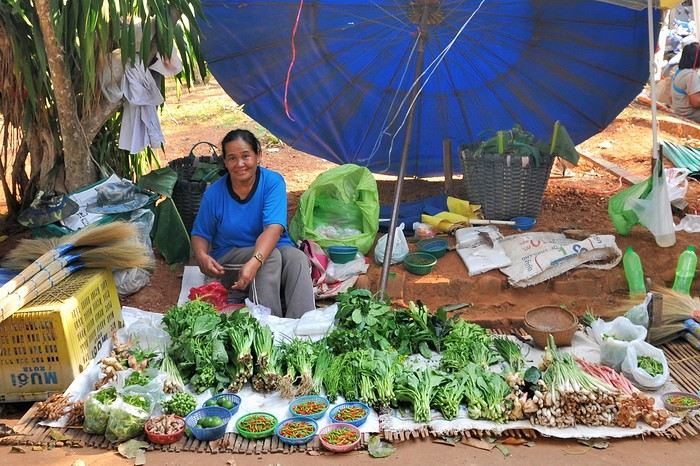
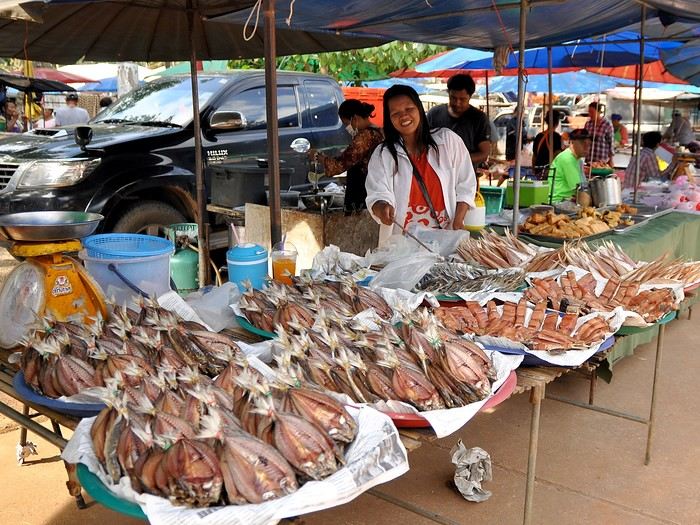
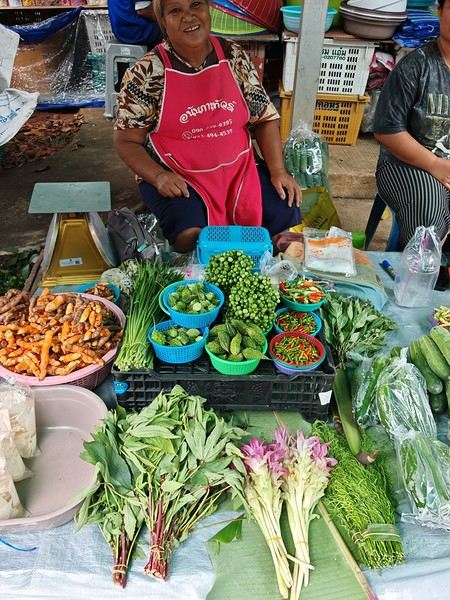
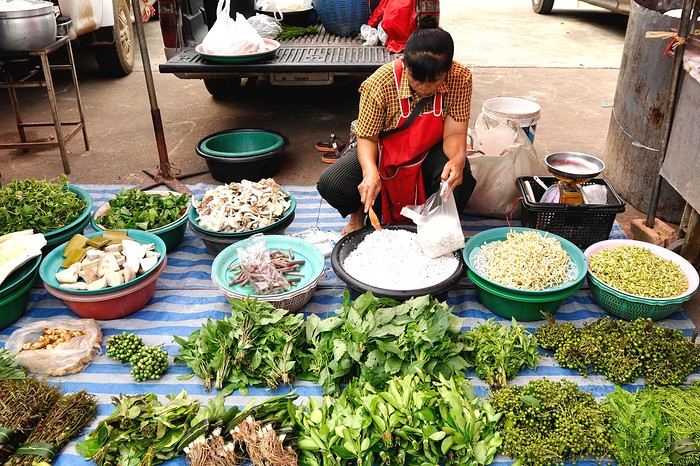
I don’t know about you, but I’m a huge fan of markets. No matter where I go, in every country or city I visit, I won’t leave without having seen one. I’m mostly talking about food markets. I love the smells, the colors, and watching people from all walks of life stroll around. It’s like a mirror of a country’s culture, and I love soaking it all in.
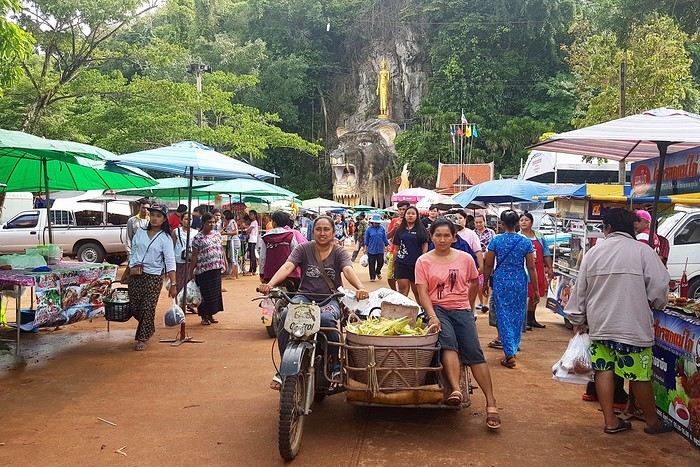
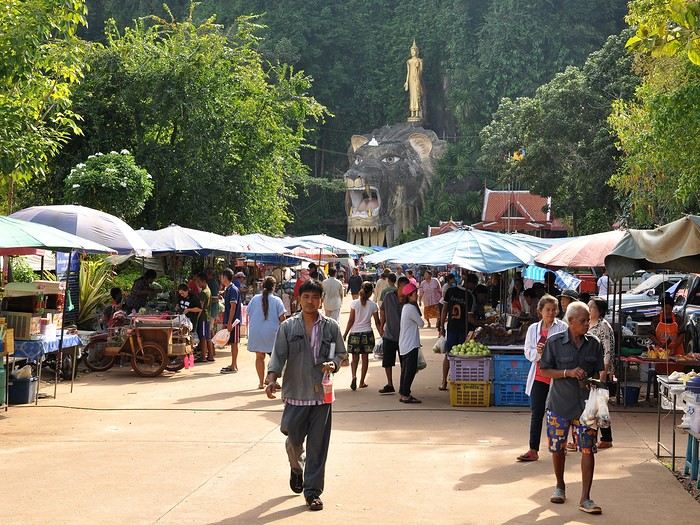
Thai markets are particularly appealing to me. In my province, there are so many. Maybe more than elsewhere—I’m not sure—but every day, you can find a "Talat Nat." These are traveling markets that set up in specific places on specific days. They only stay open for a few hours. Some attract more shoppers than others because they have more stalls and a wider variety of products. Sometimes, they’re set up in pretty unusual spots: temples, roadside, even on train tracks...
On top of these, there are also markets in the city that stay open all day.
I’d love for you to share your photos of markets, local product stalls, and why not, let’s talk about gastronomy and cuisine too!
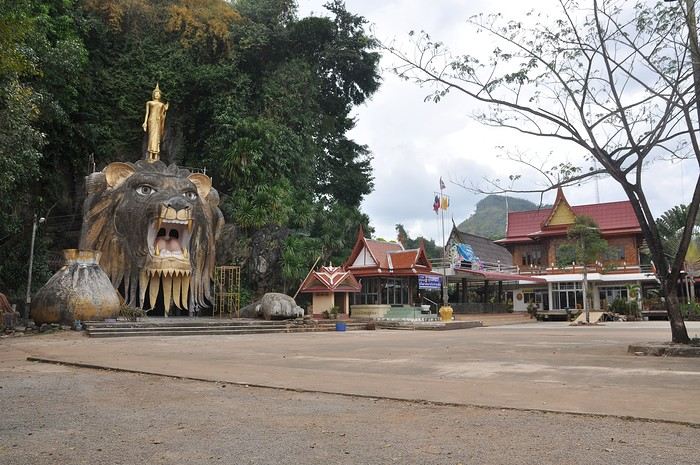
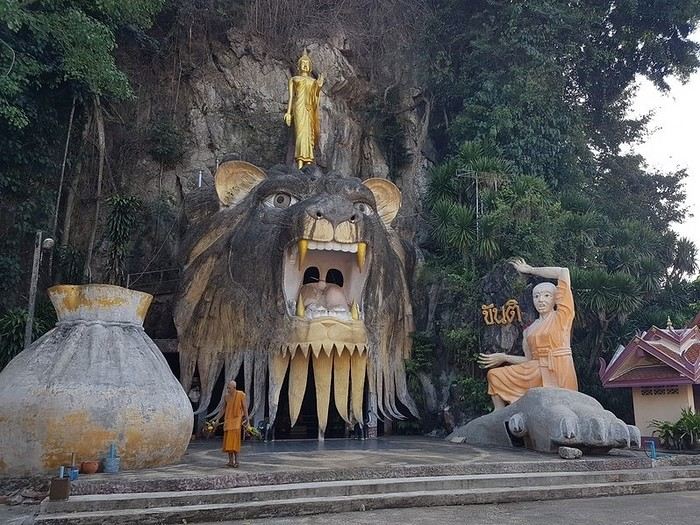
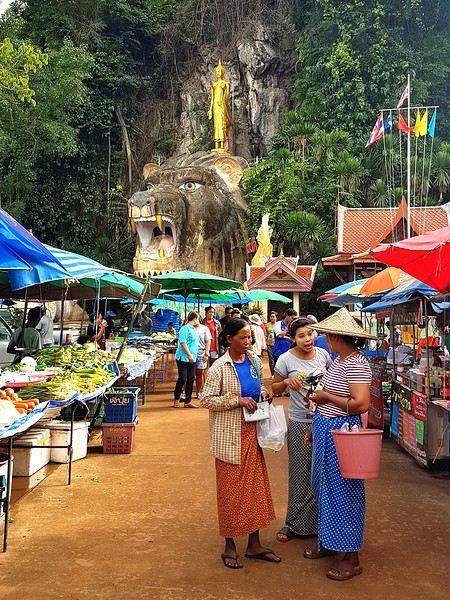
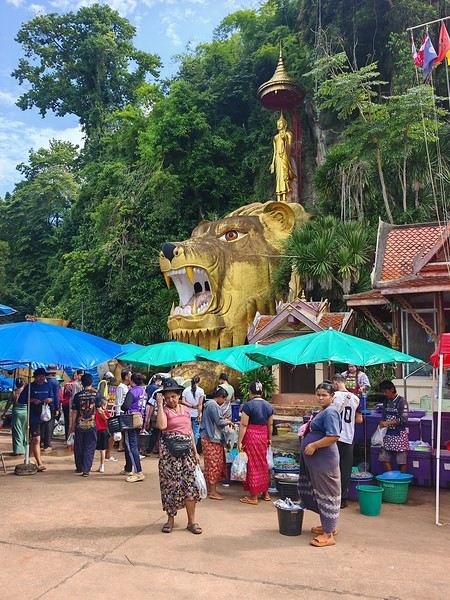
I’ll start with my favorite market—it’s 8 kilometers from my place and happens every Tuesday from 2 PM to 5 PM. I never miss a Tuesday unless there’s a downpour... 😉 It’s located in the countryside, in a village famous for its coffee (ThamSing), and inside the grounds of a slightly unusual temple. It’s easy to get to—over the past 10 years, the roads have been paved, which wasn’t the case before and made the trip a bit risky when it rained...
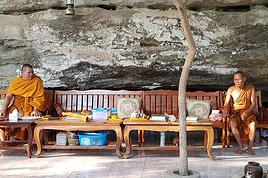
In the first two photos, you’ll see the temple courtyard on a normal day, without the market.
I’m planning our summer vacation for August 2027.
We’re a family of 4, and here’s what I had in mind:
- Arrival in Surabaya (one or two stops, including Jakarta). 6 nights on Java Island (private driver, nights split between Bromo and Yogyakarta)
Budget airline.
- 7 nights in Bali: 4 in Ubud, 3 in Amed (with a rental car)
- And a 3-night stopover in Singapore.
During my trip to Thailand, I’ll be spending 2 nights at Tonsai Beach, near Ao Nang Beach, close to Krabi. Tonsai Beach is only accessible by boat, so I was wondering where I could safely leave my car at Ao Nang Beach for 48 hours?
Alternatively, at Ao Nam Mao Beach (on the other side), if there are shuttles to Tonsai Beach.
Hi, I’ve read that these two volcanoes are super popular and that there are *tons* of people for sunrise, especially in July. I’m looking for firsthand accounts from anyone who’s done it later, around 9–10 a.m.
Thanks for your help!
Laëtitia
We’re planning a two-week trip to the Philippines in August (unfortunately, we don’t have a choice on the dates...) and we’ve seen, especially through many posts here, that a large part of the Philippines is advised against visiting. However, some areas might still be okay for this month.
Based on that, we’re considering the following itinerary:
• D1–D2: Flight from France to Manila, overnight transit in Manila.
• D3–D5: Camiguin — beaches, Mantigue, White Island, and a volcanic tour (staying at Balai sa Baibai)
• D6–D9: Anda — beach, snorkeling, rice terraces, Can-Umantad Falls, Chocolate Hills, tarsiers, waterfalls, and adventure activities (staying at Anda White Beach Resort)
• D10–D14: Siquijor — snorkeling, whale shark excursion in Oslob if possible, Apo Island, and sunset fishing (staying at Coco Grove Beach Resort)
• D15–D16: Return via Cebu and Manila, then international flight back to France.
We’ll be two families of four with kids over 20...
I’d love to hear your thoughts on whether this itinerary is feasible, and I’m open to suggestions for other islands or activities from those who know the destination well.
Thanks for your help! :slight_smile:
Hi there,
We’re thinking of spending a month in the Philippines at the end of February and the beginning of March. What’s the tourist crowd like during that time—is it super busy? We’re not really used to booking accommodations, transport, etc., in advance.
Thanks in advance!
Hi,
We're heading out at the end of the year to join family in Cebu. We're planning to spend a week in the area but are struggling to choose between these 3 islands... Ideally, we'd like to have 2 bases to explore two of them. Have any of you visited all three, and which would you recommend? We're into snorkeling, beautiful excursions, and would also love to connect with locals. And ideally, do all that without too much logistical hassle 😅
Thanks for your experiences/tips!
Hi everyone.
I’m heading to Malaysia for five weeks over the holiday season.
I just found out that tourists can pay by QR code like locals (street food, small shops) to avoid using cash.
This works with apps like Wise or TNG eWallet.
Has anyone tried this system before?
Hi there,
We’re planning a backpacking trip to Northern Malaysia and northern Sumatra in February/March 2027. It’ll be our first time in these areas (we’re pretty familiar with the rest of Asia). Thanks in advance for your favorite spots and diving recommendations! It’s still very open-ended—we haven’t set anything in stone yet.
Thanks,
Hi,
On September 1st, we're heading to Kalimantan for six weeks, probably from Pontianak to the Derawan Islands.
I've scoured this site, which is usually my go-to 😉, and others like VoyageForum, but recent info is pretty scarce.
I'd love any tips on places you've visited—our itinerary is still a work in progress.
We're two couples traveling with backpacks, using buses, boats, guesthouses, and homestays.
Thanks in advance!
Hello fellow travelers, and thanks to everyone for keeping this blog alive!
It’s my turn to ask a question.
For our trip to Laos next year, I’m torn between using a local agency or organizing everything myself with the Lonely Planet guide and tips from VoyageForum.
If I plan it myself, will I still be able to find French-speaking guides on the spot or book excursions in advance?
Thanks for sharing your experiences, and if you have any recommendations for local agencies—just for excursions or even transportation—that’d be great!
Sylvie
Cinefil67
Hello,
I’m planning a trip to Vietnam with my partner, and we’re considering Ha Giang in October-November for 4 days on-site to do the loop by bus, since we’re not old enough to ride motorbikes.
I see there are sleeper buses—how does that work for sleeping at night, meals, etc.? And what are the rates per person for these 4 days and nights?
Then there’s Sapa—what’s the most practical way to travel between the two, or should we return to Hanoi?
I’d love recommendations for simple but decent hotels and any other tips you have.
Thanks so much! !
Hi,
Is it useful to rent a car from Puerto Princesa to get to El Nido? Are there any nice stops along the way?
I read that once you arrive in El Nido, most of the beaches and sights are accessed by boat, so I'm wondering if this rental is really worth it...
Thanks for your help
We’re 49 years old, love beautiful landscapes, meeting locals, discovering local food and traditions, and we avoid overly touristy places.
We enjoy hiking, cycling, running, and diving.
This is our first time in Thailand (my husband knows Bangkok).
We arrive on Friday, November 13th in Bangkok (city visit) and return on Friday, November 27th.
We’re considering heading south (possibly toward Krabi) from the 14th to the 18th to enjoy the beautiful beaches, go diving, and see Khao Sok...
Then back to Bangkok and on to Kanchanaburi to see the Sai Yok Noi waterfalls, followed by a bike visit to Ayutthaya.
From there, we’d take an overnight train to the north: Chiang Mai, Chiang Rai, and the Lantern Festival from November 21st to 25th.
On the 26th, we’d take a flight from Chiang Mai to Bangkok (city visit), and on the 27th, we have our flight back to France.
Does this itinerary seem too packed?
Should we remove some things to avoid feeling rushed and fully enjoy the trip?
Do you recommend anything other than Krabi?
Hello.
We’re joining our daughter in Ho Chi Minh City for Christmas—she’s studying there. There’ll be five of us adults, and we couldn’t choose our travel dates, so some flights are fixed. I’ve sketched out the following route, but I’m not sure if it all makes sense. This is our fourth trip to Asia (Thailand twice, Lombok, Kuala Lumpur, and Singapore). We often travel on a budget, love authentic spots, and enjoy meeting locals (we’ve done volunteer work and homestays).
18/12: Two of us arrive in HCMC
20/12: Head to Hanoi, where the boys land
20/12 to 23 or 24: Hanoi and day trips around—still deciding
23 or 24 to 26: Phu Quoc, so we can head south and spend Christmas by the beach (one son is crazy about the sea and fishing)
27 to 30: Mekong Delta, stopping in Ha Tien, Chau Doc, and another spot to get back to Ho Chi Minh City
1/1: Return flight to France.
What do you think of this plan—is it doable or totally unrealistic? Any recommendations for a one- or two-day trip from Hanoi (Phu Long, Mai Chau), or is it better to stick around the city?
Thanks in advance for your insights.
I’m planning a 28-day trip to the Philippines starting in the second half of April, and I’m skipping all the super touristy spots.
I’ve got some ideas, but they’re still a bit vague and scattered, and I’d love your help and tips to finalize my itinerary.
For this trip, I’m mostly looking for architecture, ancestral homes, cultural discoveries, local crafts, exceptional natural sites, and islands with beautiful, less crowded beaches—especially avoiding international tourists.
So here are my ideas, and I’d really appreciate your advice:
1- Surigao del Sur, if security allows: the Enchanted River in Hinatuan and Tinuy-an Falls in Bislig City.
2- Iloilo City, Bacolod, Silay
3- The Heritage Town of Taal
4- Banaue and Batad
5- Romblon Island (Bonbon Beach and the marble workshops in Romblon town)
6- Bolinao Falls and Hundred Islands in Pangasinan
7- Baguio, Vigan, Laoag, and Pagudpud (Saud Beach and/or Blue Lagoon)
8- Guimaras Island, Samal Island, and Dinagat Island
I know logistically it’s impossible to cover all the spots I’ve listed in 28 days, which is why I’m counting on your advice to drop a few destinations that might not be worth the detour and highlight the must-sees.
Thanks in advance
Hi,
We're planning to visit this region as a couple for a few days during our trip to Vietnam.
What should we do with 3 to 4 days there, and how can we get around to the different spots?
Should we return to Sapa every day or stay in different places each night?
Any tips on accommodations, dining, and must-see sites?
Also, advice on traveling from Hanoi to Sapa.
Thanks so much for helping us prepare for this autumn 2027 trip!
Hi there,
We're planning a little trip along the west side, visiting KL, Malacca, then heading up to Penang and ending with a few days at the beach.
The most common option would be to finish the stay in Langkawi. My question: are there other spots with beautiful beaches on this coast where we could spend 4 to 5 days?
Thanks in advance for your replies.
hi everyone,
I want to travel in the north for 3 weeks in September-October 2026 to meet ethnic minorities, photograph mountain rice terraces and their harvest, and revisit Halong Bay—but maybe Lan Ha Bay instead. Can you recommend one or more local agencies?
Thanks, and happy holidays!
I’d like to know if it’s possible (and reasonable) to travel directly between Battambang and Kampot?
From what I’ve gathered, all the buses between these two destinations go back through Phnom Penh, which means we’d have to spend an extra night there in the middle of our trip. That’s not ideal for us.
Hello, South Sulawesi loop: Makassar-Ramang Ramang-Rantepao-Sengkang-Lake Tempe-Bira. Which direction should I take for this loop, starting and ending in Makassar?
Public transport preferred, and about 3 weeks in total.
Any nice homestays? And tips for solo travel?
Thanks, Françoise
Hi there,
I’ve found so many tips and reviews on this forum, so it’s my turn to contribute a little.
We spent just over two weeks with our family, with the following itinerary:
- Hanoi: 5 days
- Halong Bay: 3 days and 2 nights
- Tam Coc: 3 days
- Mai Chau: 2 days
- Sapa: 3 days
We got around by bike, scooter, Grab, and bus.
Our main accommodations were homestays and hotels in Hanoi.
We visited lots of museums, temples, and neighborhoods in Hanoi.
We did a 2-day, 1-night trek in Sapa with May, a Hmong local, without going through an agency.
A few small regrets: the weather was overcast, and we couldn’t make it to Fansipan, but nothing major 😅. We also couldn’t find transport to get from Sapa to Mu Cang Chai.
Other than that, this trip will stay in our memories for the kindness of the Vietnamese people, the connections we made, the food (street food, homestays...), the coffee 😋, the landscapes, and how easy it was to get around...
Our goal was to take our time and focus only on a small part of northern Vietnam.
If you need any tips or recommendations, don’t hesitate to ask.
Looking forward to hearing from you.
Cédric.
Hi there,
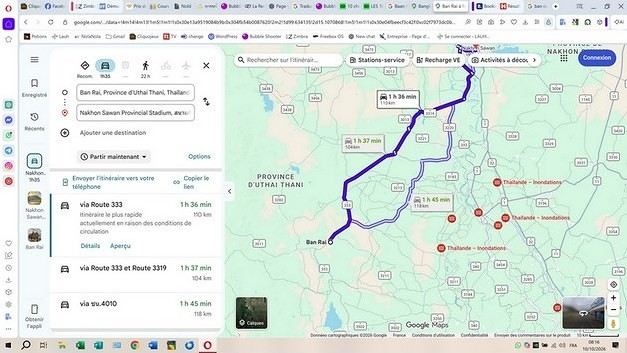
After a stay in Hua Hin and before another in Chiang Mai, I’d like to break up the trip from Bangkok to Chiang Mai into several stops. I’ve found bus and train routes on Maps, but I’m stuck on the connection between Ban Rai / Uthai Thani and then Nakhon Sawan (bus for the latter).
Does anyone have any idea where I could find info, maybe via Route 333?
I know my question isn’t super general or exciting, but if you can help, thanks!
I’d like to do a kind of personal retreat this winter and I’m looking for a destination near the sea (preferably an island) that’s quiet. Is that possible in Thailand, or should I consider another destination?
Thanks for your thoughts.
Dayi
This September, my partner and I are heading to North Sulawesi for 3 weeks. Our international flight is with Malaysia Airlines, departing from Paris. We have a layover in KL, then fly to Denpasar, followed by a domestic flight from Denpasar to Manado. We land in Bali Denpasar on 05/09 around 12:00 PM, and our flight to Manado is on 07/09 at 1:30 AM. The plan was to have at least one night (from the 5th to the 6th of September) between our international flight and our flight to Manado, just to recharge a bit since we're not 20 anymore 😛. My question is, given the very short stop in Bali (a day and a half), is it better to stay in Denpasar rather than go to Ubud for the night? I’ve been to Bali before, and from what I remember, even though the distances are short, transfers take a long time because of the extremely heavy traffic—but I was there in July, not September. I’m not sure if that makes a big difference?
If the answer is "it’s better to stay in Denpasar," are there any nice places to visit? There’s very little feedback about the city since tourists usually don’t stick around.
Thanks in advance for your replies.
Hello everyone! I’m heading off solo in February and wanted to share my rough itinerary with you. Does this sound doable?
PS: I’m not really into beaches.
D1 Departure on February 17, 2027
D2 Arrival in Kuala Lumpur – stroll through Chinatown and visit the Petronas Towers
D3: Kuala Lumpur – Chow Kit Market, Batu Caves, Little India, Bukit Bintang downtown area
D4: Early morning bus to Malacca. Explore Malacca in the afternoon and evening
D5: Another 2–3 hours in Malacca in the morning, then bus back to Kuala Lumpur. Merdeka Square area. Stay in Chinatown
D6: Bus trip to Kuala Tahan. Night tour
D7: Morning – canopy walk and Bukit Terisek hike. Afternoon – off to Lata Berkoh
D8 & D9: 2-day jungle trek in Taman Negara National Park
D10: Head to Cameron Highlands
D11: Morning hike through the plantations. Afternoon still to be decided
D12: Morning – excursion to Mossy Forest and Sungei Plantation. Afternoon bus to Ipoh
D13: Morning – Mirror Lake / Sam Poh Temple area. Afternoon – explore downtown Ipoh
D14: Morning train to Penang. Afternoon – wander around Georgetown
D15: Morning – Penang Hill and Keh Loh Temple. Afternoon – Georgetown
D16: Bus to Butterfly Garden and Spice Garden. Late afternoon – Burmese and Thai temples
D17: Morning flight to Singapore. Afternoon – Chinatown and Marina Bay tour
D18: Morning – Gardens by the Bay area. Afternoon – Boat Quay, Clarke Quay, Kampong Glam
D19: Morning – The Ridges area and Botanical Garden. Afternoon – Little India, then back to Chinatown before 11:15 PM return flight
D20: Morning arrival
First stop on our discovery of the peninsula: Amphawa. It’s our first night in Thailand (we arrived at Suvarnabhumi at 8:50 AM).
Our initial plan was to explore the area before heading further south. The Mae Klong Railway Market is tempting... but what else is there to do????
We’ll be there on a Wednesday, and from what I’ve read on the forum, some say there’s absolutely nothing to do during the week—no floating market, barely any shops open, no restaurants, etc.
Others, though, say the place is actually more charming without the weekend crowds.
Could you share your thoughts? Missing the floating market is one thing, but if it’s really a ghost town on Wednesdays, I might just drop our bags somewhere else.
Amphawa seemed like a good first stop, just 1.5 hours from the airport, but I’d still like to settle somewhere a bit lively for our first evening.
We’ll be there at the end of October.
Thanks!
Hi,
I wanted to visit the plantations in the morning with GetYourGuide or by just showing up.
How much time should I really plan for?
I’d like to catch either the 3 PM or 5 PM bus back to KL.
Thanks
Hi,
I wanted to get some info about the cable car and the bridge—I see lots of different options...
How much time should we allow for these two activities? If we arrive around 4 PM, will we have enough time to visit without rushing?
Thanks