hi everyone, and so glad Voyage Forum is back up and running!
my partner and I, along with some friends, are planning a trip to Peru in May 2025.
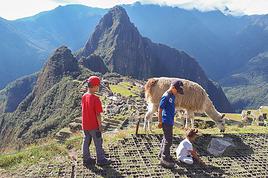
I’ve got some questions about the Machu Picchu excursion.
we’re in our 60s and 70s, and while we’re pretty fit at European altitudes, I’m a bit worried about hiking above 2,500 m!
that’s why we didn’t hesitate to skip the 4-day Inca Trail trek.
but I’m wondering about the 2-day "short Inca Trail" offered by some agencies—basically one day of hiking with visits to a few sites, and the second day, the classic Machu Picchu visit.
has anyone done it? do you need to be in top shape?
thanks for your tips
Hi Alain,
I didn’t do this trek during our trip to Peru in 2017 (if you’re curious, I recount everything in my travel journal here: https://voyageforum.com/v.f?post=7776366;#7776366).
The main issue you might face is altitude sickness (or *Soroche* there), which often kicks in above 3,000m. Everyone reacts differently, though…
The best way to prevent it is acclimatization. If you fly straight from France to Cusco (which is already at 3,000m!) and tackle the Inca Trail right away, it *can* be problematic—even dangerous. But if you take the time to acclimate by gradually ascending from Lima, your body will adjust. Slowly but surely.
Personally, I struggled with it in Puno, but that’s at 3,800m…
Local tip: use Coca tea and *Mounia*—it’s a game-changer! !
"Le véritable voyage de découverte ne consiste pas à chercher de nouveaux paysages, mais à avoir de nouveaux yeux."
Marcel Proust
Thanks for your reply.
We’ll already be acclimatized since we’ll have been in Peru for two weeks.
Plus, last year we were on the Tibetan plateau at over 3,000 m (10,000 ft) without too many issues.
Best regards
Thanks for your reply.
We’ll be acclimatized since we’ll have been in Peru for two weeks.
Plus, last year we were on the Tibetan plateau at over 3,000 m without too many issues.
Best regards
So I think the trek won’t be a problem for you. Just double-check in the many agency descriptions that the elevation changes aren’t beyond your limits.
Have a great trip—you’re going to love it!!
"Le véritable voyage de découverte ne consiste pas à chercher de nouveaux paysages, mais à avoir de nouveaux yeux."
Marcel Proust
Access via the Inca Trail lets you discover the site from above. The trail isn't too difficult, and if you're able to handle 4 days of hiking with 800m of elevation gain per day in the Alps, you should be fine. Anyway, you'll arrive first in Cusco (airport) where you'll need to acclimatize to the altitude at 3,400m (there's plenty to see there), which means 800m lower should be manageable. Very few people have altitude issues below 3,000m.
In short, it all depends on the time you spend in Peru and how you organize your trip. If you have some time, I'd recommend starting your trip with 2-3 days in Arequipa at 2,400m before heading to Cusco at 3,400m (between the two, the Colca Canyon is also a classic spot to see the great condor). If you're worried about altitude, avoid Vinicunca, or do like we did—save those magical landscapes for the end of your stay when you're well acclimatized, because hiking between 4,500m and 5,100m can be tough. (We did 3 weeks in Peru-Bolivia 5 years ago)
Our route was: Arequipa (2,400m) – Colca Canyon (3,200m-2,200m) – Titicaca (3,800m) – La Paz (3,200m-3,700m) – Uyuni – Sud-Lípez (around 4,000m) – La Paz – Cusco and Machu Picchu.
Thanks for your reply.
We’ll be acclimatized since we’ll have been in Peru for two weeks.
Plus, last year we were on the Tibetan plateau at over 3,000 m without too many issues.
Best regards
Hi,
So there shouldn’t be any problem. AMS (acute mountain sickness) doesn’t seem to change with age. (Though it *can* be unpredictable.)
We did the Salkantay trek, which at the time didn’t require any special permit.
I talk about it on my blog if you’re interested.
Hello.
I spent a month in Peru.
I arrived from San Sebastián to Lima, then connected to Arequipa to acclimatize since the city is at about 2,300m. I stayed eight days, then took a 45-minute flight to Cusco.
The city is at 3,300m–3,700m.
Perfect acclimatization in the first city.
I always do it this way with an intermediate altitude.
One day of sightseeing in Cusco, visiting the Inca temple I’d already seen 20 years ago.
Then headed to Palcooyo and Vinicunca, which is at 5,200m, with no problems despite my age (77). Visited all the high-altitude sites I hadn’t seen before.
Took a little walk to Laguna Huamentay. Gorgeous.
In short, I recommend all travelers start with an intermediate altitude, and Arequipa is a great choice.
When I visited Bolivia, I opted for progressive acclimatization, which allowed me to go up to over 6,000m.
If you have issues, don’t hesitate to turn back—it’s happened to me before.
Enjoy this country and CUSCO!
PS: Always been into mountains, often solo. Visited volcanoes in Ecuador.
Gérard
Then heading to Palcooyo and then Vinicunca, which is at 5,200 m, without any issues despite my age (77). Visited all the high-altitude sites I hadn’t seen before.
Hi,
We all react differently to altitude. It seems, in fact, that the effects of AMS (Acute Mountain Sickness) aren’t directly linked to fitness levels or age. As you mentioned, the most important thing is to acclimatize properly by taking it step by step.
Personally, I struggled a bit with it when I was younger above 4,000 m, and surprisingly, as I’ve gotten older, I don’t suffer from it anymore—even above 5,000 m. I attribute this to the fact that when you’re young, you tend to push yourself harder and manage your efforts less effectively. With age, you walk more slowly and always stay within your physical limits.
@AlainHP: If you have persistent AMS issues, don’t continue ascending. Just descend 300 m, and everything will be okay again.
Hi there.
Whether you're young or old, you should always acclimatize and ascend gradually.
Altitude sickness can strike when you least expect it.
In Bolivia, on a summit over 6,000m, I felt the effects of altitude at the top.
One minute later, I was descending.
We’re not all affected the same way.
I’ll definitely head back to the cordillera in 2025 if my health allows it.
Gérard
Hi Alain, I’m jumping on this post because, like you, we’re heading to Peru for three weeks in May.
We’ve already got our flight tickets and booked all our accommodations for the trip.
But today, when we tried to buy entry tickets for Machu Picchu, we found out that the access road to the site entrance collapsed over an 8-meter stretch, taking trees with it… which led to the road and site being closed indefinitely.
We’ll be there on May 20th, so in two months. For now, online ticket purchases are blocked. Do you know any other trick to make sure we get two spots for circuit 2B on the day?
Aller jusqu'au bout de ses rêves est la plus belle des destinations
Well, we finally managed to buy 2 entry tickets online for the Machu Picchu site.
There were no spots left for May 20th or the following days. There were 2 spots left for May 19th at 3 PM, which we immediately took by adjusting our schedule a bit.
All this to say it’s good news because it means the access road has been repaired and everything is back to normal. Safe travels to you all!
Danielle
Aller jusqu'au bout de ses rêves est la plus belle des destinations
J'ai entendu dire que le trek au machu picchu était fermer au tourist?? j ai de la misére a le croire.. mais est ce que quel'un pourrait me le confirmer????…
Pouvez vous me confirmer, ou me dementir, que l inca trail est ferme pour tout le mois de fevrier chaque annee? reponse urgente!!! si c est le cas, il faut que…
Pour la petite histoire, une copine chilienne qui vit en France depuis 3 mois m'a dit que des amis à elle ont voulu aller au Machu Pichu dernièrement mais que…
Hi there,
We’re planning an 8-day backpacking trip on the island of São Nicolau. We’re torn between taking the boat from São Vicente or an inter-island flight. I’ve heard the boats don’t always run?
We’d like to make three homestay stops to travel in a star pattern from each of the three points.
First stop around Juncalinho, second stop near Cachaco, and finally a third leg near Tarrafal. We’re looking for simple but authentic guesthouses (no hotels). Any suggestions?
Thanks
Hi there! We’re a couple setting off to walk the Porto to Fisterra trail on September 15th… We’re torn between the coastal route and the inland path—apparently, the latter has a lot of roadside sections. We’d love to hear about your experiences if you’ve done either! Thanks…
Hello,
In mid-November, we’ll be in Mindelo and Santo Antão.
We’ve booked transportation with Kapverden Tours.
One trip is from Porto Novo to Ponta do Sol, including the hike from Corda to Coculi.
What’s the trail like?
Then we’ll be staying in Ponta do Sol,
Here’s what we’re planning:
A hike to Fontainhas—what’s the best direction, considering we’re not great with climbs? No problem with flat terrain or descents.
Take an aluguer to Ribeira Grande and continue along the coastal road.
With the agency:
An excursion to Cruzinha with a short walk.
Return to Porto Novo via the path from Cova to… I’m not sure where yet, to pick up the car for Porto Novo, since we’ll be taking the ferry that evening.
We’ll have a guide for this hike.
We’d love to spend a day in Tarrafal, but getting back requires a boat or taxi, and it’s really expensive!
We’re a couple, 78 and 76 years old.
What do you think of this itinerary?
I’m planning to do the Mercantour crossing following the Randoxygène route in mid-July.
I’m used to hiking in the mountains, but I sometimes get vertigo, for example on ridges with drops on both sides. I wanted to check if there are any T4 or T3-T4 sections and find out if there are any very exposed passages—and if so, where—so I can plan an alternative route.
Can anyone give me some info on this?
Thanks!
hi how can I get internet when I arrive at Haneda? I mean in areas without free wifi. Is it more interesting to buy a SIM card? If so, at the airport? thanks for your help
We're planning to go at the end of November/beginning of December to visit (with a rental car) and hike on La Palma and El Hierro for 15 full days, including 1 day for inter-island ferry transfers. What’s the best split between the two islands—8 days on La Palma and 6 on El Hierro, or even more time for La Palma? Should we have one or two home bases on La Palma? Thanks for your tips!
Annie
Hi there,
I’m planning to cross the Gourgs Blancs Pass at the end of the month, from La Soula Refuge to Portillon Refuge. On this section near the pass, I don’t have any trail marked on my IGN map. Is the path well signposted, or should I use a compass?
Also, beyond the physical effort, are there any technical, exposed, or vertigo-inducing sections on this part?
Since I’m finding very little info, I’m being thorough with my questions.
I'm developing a free and open-source web app for planning walking and cycling trips (and even car trips). You can create a route by clicking directly on the map to add waypoints, and it can consist of multiple stages. The app provides tools to edit the stages and the overall route, and to display useful information (distances, altitudes, and elevation changes). A relief profile can be shown as a graph for a specific stage or the entire route.
Once the route is ready, it can be exported as a GPX file, which can then be used with a GPS or a mobile navigation app.
The app is built in JavaScript and runs entirely in the web browser. It uses the Leaflet library and several OpenStreetMap-based services. Initially developed for my personal needs (I enjoy hiking and cycle touring), I’d be happy to share it with anyone who might find it useful. It’s free to use, doesn’t require an account, and the source code is available.
Not very well known: Hokkaido Island has national parks that rival those in North America. Hiking there is free (even many mountain huts) and requires no formalities. These treks are described in the LP *Hiking in Japan* guide—you can just buy the Hokkaido PDF. It’s way better than Mount Fuji. Of course, everything depends on the weather, which is very unstable in the Japanese mountains (frequent strong winds). The trails are often obstacle courses.
The Daisetsu Zan traverse is a stunning hike through volcanic terrain with a remote section in the middle that requires at least one night of camping (there are basic huts for the rest, which is popular with Japanese hikers): 4 to 6 days.
The Shiretoko traverse takes 2 days with views including an island in Russia, but the ridge is brown bear territory—there are even more here than in Denali National Park in Alaska (brown bears and grizzlies are the same). I ran into 7 in just 6 hours of hiking!
Hi everyone,
I’m leaving on Monday, August 3rd for my very first long-distance trek: the GR223 from Coutances to Mont Saint-Michel, over 6-7 days (~11-14 miles/day), solo.
I’m looking for tips from people who know this section well (Coutances → Regnéville-sur-Mer → Hauteville-sur-Mer → Bréhal → Granville → Genêts → bay crossing):
Budget-friendly accommodations: I’m struggling to find affordable stopover lodgings (a lot of what I find online are expensive vacation rentals, not really suited for a solo hiker). If you have any great spots (hostels, hiker-friendly B&Bs, nice campgrounds), I’d love to hear them!
Bay crossing: Any feedback on guides/providers leaving from Genêts for the final crossing?
General tips for a first long-distance trek: What you wish you’d known before your first time, pitfalls to avoid, etc.
Hi,
We’re planning to do the 4-day trek from Mestia to Ushguli without an agency. The descriptions mention that there are accommodations at each stop, but we can’t find any details about them. Has anyone got info or feedback on this route?
New to this forum, I’m planning a pretty big project for 2028.
I’m heading to Nepal to do a trek from Kathmandu all the way to Everest Base Camp (a cool 5,300 m 😄).
This trek is a bit special because even though I’ll be part of a group, I’m going solo (so far, no problem—I’m used to it). But it’s my first real trek, and it’s also a humanitarian one: once I reach base camp, I’ll stay an extra week to help clean up the waste left by tens of thousands of climbers! Since I’m originally from South America, from two countries that share the Andes, I have a deep respect for mountains—they fascinate me. So Everest… it’s kind of the trip of a lifetime!
So, a little question for those who’ve done treks to Everest before… any tips for good mental preparation (I’m already working on the physical side)?
We're planning to trek in Peru and Bolivia and would love to find some local agencies.
If you know any, could you share details on prices and, of course, the names of the agencies?
Which trek would you recommend?
Elocine
I'm heading out on a fully self-sufficient trek in Morocco (10 days) from Imilchil to Aghbalou.
Can I find screw-on gas canisters (Coleman, Primus) in Marrakech (any addresses?) or in villages between Imilchil and Aghbalou?
If not, are Butagaz canisters for camping gas (small 230g size) available?
Thanks in advance for your tips!
Hello, I’d like to embark on a little trip in my home country, Switzerland. I’ll start walking from La Cure, heading toward Le Noirmont first, then I’ll improvise my route—but it’ll probably follow the French border... at least as far as Lac de Joux.
I’ll decide day by day how much farther to go after that. My goal is to stay in nature as much as possible, wander around for as long as I can, and restock food in villages or towns along the way.
I’m thinking of mostly camping, but we’ll see if I end up in a hotel or another campsite depending on my route.
I’d love to reach La Chaux-de-Fonds on foot... maybe even Delémont.
The whole thing should take about a week, give or take.
I’ll be bringing my dog, and I’m preparing for this as soon as I’m ready.
Any tips to make sure everything goes smoothly for us? Things I should know—or avoid? What about shepherds with their flocks of sheep? And isn’t hunting season open right now?
I’m not sure if what I’m planning is even doable, which is why I’m asking around.
This’ll be my first time doing something like this—wandering in nature *and* with a dog. I’m really excited for this adventure... and I need it. Thanks!
We’re really keen on ecosystems and want to hike in "natural" ancient forests—not planted woods or areas heavily degraded by human activity. Travel guides (like Lonely Planet) don’t provide much info on this. Could you point us to the most interesting spots?
Thanks in advance for your tips.
We wish you happy holidays and a fantastic 2026, full of discoveries!
Claire and Albert
Hi, this might not be the right section, but I’d like to know if it’s possible to start mountaineering with another person without necessarily hiring a guide. We’ve done quite a bit of hiking but not mountaineering—we’ll just do a half-day glacier course. After that, we were thinking of starting with La Grande Motte and the Pointe de la Traversière, which were recommended to us. Honestly, for things like roping up and knots, I’ll learn at home with lots of videos and a book.
I’d love to know if anyone has done treks in the Rwenzori Mountains and how much it costs on average, what the infrastructure is like, the landscapes, and safety in the area. Thanks so much! I’m really looking forward to your replies.
We’re leaving in 9 days for a two-week trip to Madeira, mainly to hike.
From my research, I’ve found that since last year, access to most trails—and systematically for the most popular ones—is now paid. You have to pay an access fee of 4.50 € per person per classified hike in 2026, and even 10.50 € for the most iconic hike: Pico Arieiro to Pico Ruivo. When paying, you also have to choose a day and a 30-minute time slot for your start time. Of course, this reservation is neither changeable nor refundable, even if the weather that day is terrible.
Personally, given the massive influx of tourists to the island in recent years, I don’t mind paying a fee to help maintain the trails. Similarly, setting a limit on the number of people who can hike them per day is certainly preferable to preserve this priceless heritage.
However, what’s much less fair is that in reality, most of the available spots are reserved: 1/ for Madeira residents (which is normal); 2/ for "economic operators" (meaning local tour operators). For example, if you’re a non-resident (independent tourist), no booking is possible for the Pico Arieiro hike for an early morning start before September! So, unfortunately, we’ll have to skip this hike.
It’s the same issue for Ponta de São Lourenço, the 25 Fontes, Pico Ruivo... in short, all the most popular hikes. Oh well, we’ll skip those too!
So my question is: which hikes do you recommend where we won’t face the huge crowds that the others get? And where we can book the day before for the next day, taking the weather into account?
Finally, a quick accommodation question: we’ve booked the first week in Funchal, but I haven’t decided yet for the second week. Do you have any advice on where to stay in the south or north, preferably avoiding overly concrete-heavy and touristy spots?
I’m reposting about the logistics for Samaria Gorge.
I’d love to get recent info, especially about whether it’s possible to park my car in Omalos, do the hike, and then catch a bus back to my vehicle.
In theory, it’s doable, but when you check the KTEL website, there aren’t any feasible schedules listed. If anyone has recently organized this with reliable, verified details, I’d really appreciate it. Thanks in advance!
Hi there,
We’re flying from Montreal to Lyon this August to go hiking in the French Alps. We’ve rented a car and will be staying at campgrounds. We’re planning to do day hikes and want to stay a few days in one spot, do a few hikes, then move on to our next camping spot. Could you share your favorite spots or any recommendations for places to spend a few days with great hikes?
A few details:
We arrive in early August and leave in early September.
We’re looking for day hikes (or shorter), moderate difficulty, with a cumulative elevation gain of no more than 1000m, and of course, beautiful scenery!
We’d prefer not to drive too much—maybe it’s best not to head too far south and deal with unnecessary heat?
Along the same lines, if you know of any great campgrounds where we can start our hike directly without needing the car, we’d love to hear your suggestions!
Hi there,
I’m planning to go hiking on this island and would like to know the best time to do it. I visited for a few days in November 2018—not for hiking but just to explore—and the weather wasn’t great, especially in the mountains. So, is a star-shaped itinerary doable if I rent a car and maybe use two different accommodations?
I’m not planning to join an organized group—just traveling with one other person and organizing things ourselves—unless you’d recommend a local agency or guide. Finally, even though I’ll be getting maps, a topo guide, and a GPS, I’d really appreciate your top hiking recommendations.
Thanks so much for your tips!
I’m planning a trip around Cap Corse and the AGRIATES in 2026, from May 8th to 15th (there are still 2 spots left, by the way! Just DM me if you're interested).
I’d love to know which hikes are worth prioritizing in the AGRIATES. We’ll be staying in SALECCIA for two days as our base—what should we focus on from there?
A round trip to IGNHU beach? Any other suggestions?
For Ostricano, I think it’s too far for a round trip...
Thanks for your tips!
Have a great day,
Anie, Toulouse
I’d like to get some info about the GR10 Pyrenees traverse. I need help planning the daily stages and accommodations—my wife isn’t an experienced hiker but walks a lot, so I’d like to schedule shorter walking days and thus a longer overall trip in terms of number of days.
Could anyone give me some help and advice?
Best regards,
Hi there, I’m planning the Annapurna Circuit for March 2027 and I’m looking for a local agency with a local guide—preferably French-speaking—to arrange this trek for us. Any suggestions? Thanks
Hello!
We’re spending a few days in Toraja country at the end of May. We’d love to do a day trek—taking our time—on a route that’s stunning in terms of scenery, but not a level 5 in difficulty!
Any suggestions you can share, please?
Thanks in advance
I’d like to do the Mare a Mare Sud in May over 4 days. I’ve found quite a few places to stay along the route, but I’m stuck on the start and finish.
I’ll be arriving by plane on Sunday evening and would like to start pretty early on Monday morning. Ideally, accommodation right at the trailhead (Alzu di Gallina) would be amazing, but I can’t find anything. Any tips?
Also, for the transfer from Figari Airport to Porto Vecchio or Alzu di Gallina?
At the end, I’d like to pick up a rental car—any advice on that too?