“Slow travel” is a concept that some tout as a philosophical revolution in travel. But on closer inspection, it’s nothing more than a marketing repackaging of an age-old practice.
This term is wrapped in an aura of intellectualism. It promises to reinvent the experience of travel by valuing slowness, contemplation, and cultural immersion.
The term “slow travel” claims to bring depth to travel, but it often relies on clichés.
Taking your time, meeting locals, avoiding quick visits—these practices have always existed and are nothing revolutionary.
Before the era of airplanes, high-speed trains, and express stays, traveling necessarily meant taking your time. Pilgrims, merchants, and explorers already practiced a form of “slow travel,” without hashtags or self-proclaimed spiritual guides.
Crossing lands on foot or by horse required total immersion in the landscapes, cultures, and unpredictability of the journey. Yet, no one attributed philosophical intentions to them: it was a necessity.
Slow travel, in its current version, may be less a philosophy than a reflection of the contradictions of an affluent class searching for meaning in a world they help overload.
So-called “slow” travel is presented as a privileged way to understand a culture, but this claim is debatable. A region never represents an entire country.
Immersing yourself in a community doesn’t guarantee a complete or more authentic understanding than any other way of traveling.
Slowness in itself doesn’t guarantee depth or ethics. You can immerse yourself in a place over a weekend, just as you can spend months in a country without grasping its subtleties.
By positioning itself as an antidote to “fast” tourism, slow travel fetishizes a temporality that only makes sense if it’s accompanied by real openness and an effort to integrate.
But this over-intellectualization often masks a desire to belong to a trend or a need to stand out socially.
Behind this posture sometimes lies a whim: the urge to reinvent one’s life elsewhere in an idealized form. But this quest for elsewhere remains fundamentally a way to escape or respond to unease, rather than a true commitment to the cultures visited.
When we talk about “encounters” while traveling, we often forget that these exchanges are facilitated by biased contexts. As a traveler, you’re seen as a temporary visitor, unattached, and that changes the dynamic.
Locals, whether curious or used to tourists, adopt a different stance than they would with a neighbor they see daily.
This interaction is also tinged with asymmetry: the traveler has the luxury of time and availability, while in daily life, personal concerns often take precedence over the desire to connect.
The flip side is that the openness displayed while traveling is often a facade. We boast about chatting with a fisherman or sharing a meal with a local family, but how many of these encounters lead to a real understanding of cultural differences or sincere reflection?
Once home, these moments become anecdotes, social trophies to show off, without fundamentally changing our relationship with others in our daily lives.
By imposing a definition, we push people to adapt their practices to fit an idealized model. This can lead to a paradoxical standardization: “slow travel” becomes a checklist of behaviors (meetings, immersion, slowness).
The “bobos” (bourgeois-bohemians), often in search of meaning in a world saturated with options, believe that giving a name to a practice grants it legitimacy or moral value. But this obsession with framing and theorizing travel only drains it of its spontaneity.
Someone who grew up at the crossroads of multiple cultures, on the other hand, doesn’t feel this need. For them, traveling isn’t a philosophical project but an intrinsic part of their life.
The very concept of “slow travel” can seem absurd: why glorify what’s simply natural?
Why try to turn into an ideology what should be a personal, intimate experience, free from semantic constraints?
Ultimately, this need for labeling, this frantic quest to name every gesture, reveals a society craving simplicity.
Travel, in its purest form, doesn’t need justification or slogans. It doesn’t need slowness or speed: it’s simply lived.
Perhaps the real challenge is to unlearn this Western habit of conceptualizing everything that should simply be felt.
For many, travel is a parenthesis, a temporary break from daily life. But if we reject this distinction between “home” and “elsewhere,” every human life becomes a continuous journey through varied environments.
From this perspective, “slow travel” loses all meaning, because living somewhere—whether for a week or five years—is part of the same experience of adaptation.
So, we ask the fans of marketing slogans: is travel a parenthesis or a journey?
“Slow travel” is often driven by a Western eco-bobo ideology, tinged with post-colonial guilt. This discourse promotes a supposedly virtuous way of traveling while forgetting that these practices remain a privilege.
Far from deconstructing power dynamics, it sometimes reinforces them by glorifying a different kind of consumption, still centered on comfort.
There’s also a condescending side to this rhetoric. By idealizing slowness, slow travel advocates imply that those who travel quickly or on a budget are less “authentic” in their approach.
Yet, isn’t that a form of contempt? Do those who leave for a well-deserved week after months of hard work deserve less consideration?
Concepts like “slow travel” or “sustainable tourism” seem hollow when reduced to marketing slogans or standardized behaviors. They confine travel to preconceived frameworks, stripping it of its spontaneous and unpredictable dimension.
Instead of categorizing, it would be more relevant to recognize the plurality of human experiences without trying to define them.
Slow travel doesn’t invent anything. It simply puts into words—and often slogans—what travel has always been for those who practice it with intention.
Maybe we should stop trying to theorize every movement and simply rediscover travel for what it is: a human experience, sometimes slow, sometimes fast, but always personal.
Here at VF, we mostly practice Show Travel by publishing our travel journals.
What’s also quite popular is the Bald Travel, given the age of many participants.
« Tout le monde s'interroge sur comment laisser une meilleure planète à nos enfants, mais on devrait plutôt penser à laisser de meilleurs enfants pour notre planète. » Clint Eastwood
First off, “slow travel” is just another anglicism! The Québécois, always keen on preserving their linguistic heritage, came up with the concept of “ralentourisme.” Not much of an improvement, if you ask me! Why not just say “slow travel” or “gentle tourism”?
Then there’s the fact that it’s a bit of a pleonasm, because as you so rightly put it:
these practices have always existed and aren’t revolutionary at all.
To me, travel is slow by nature.
Nowadays, we complain about a 12-hour flight to Mexico, but back in Cortés’ time, it took three months to sail from Seville.
On forums, just reading some itinerary plans leaves me out of breath. For example, here: Greece in 11 days, stopwatch in hand!
I love traveling slowly, but I don’t think I’m some eco-hipster or weighed down by post-colonial guilt. Though I *am* retired—just not (yet) bald! !
thanks for the text but I’ve got a question—what *really* sets a "bobo" apart from any other traveler?
I’m convinced I’ve seen this question at least once on VF, but honestly, it’s pointless because deep down, everyone knows what it’s about.
« Tout le monde s'interroge sur comment laisser une meilleure planète à nos enfants, mais on devrait plutôt penser à laisser de meilleurs enfants pour notre planète. » Clint Eastwood
Yeah, but I still don’t know what makes the difference... are there distinctive signs?
In other words, this is such a French thing—to put people into social boxes.
I read your review—harsh and sometimes repetitive—but I didn’t understand what this “slow travel” is that I’m hearing about for the first time.
Is it a travel concept on foot or by animal-drawn transport pitched by agencies or staged on social media?
Catherine
By this, and this only, we have existed. Which is not to be found in our obituaries. (T.S. Eliot)
I read your critique—harsh and sometimes repetitive—but I didn’t understand what this "slow travel" is that I’m hearing about for the first time.
Is it a travel concept on foot or with animal traction promoted by agencies or staged on social media?
Catherine
The idea is to travel more serenely, with fewer destinations in a trip and taking more time than before to explore and soak in the experience.
It’s a sort of reaction to those express trips where you try to see as much as possible but end up not really seeing anything properly because you never slow down.
I think a whole bunch of concepts, including this one, are initially developed by authors or columnists who’ve observed, understood, or *thought* they understood something. Then, newspapers or magazines spread and sprinkle these ideas around freely.
Sneakily, they seep into culture and popular trends.
Once again, we see ideas spreading across the planet that wouldn’t exist without the media. To me, it feels artificial.
Anyway, it’s like rediscovering the wheel—while the sheep who were convinced by the last trend blindly charge into this one, utterly satisfied and completely unaware.
« Tout le monde s'interroge sur comment laisser une meilleure planète à nos enfants, mais on devrait plutôt penser à laisser de meilleurs enfants pour notre planète. » Clint Eastwood
It’s a kind of reaction to those whirlwind trips where you try to see as much as possible, but in the end, you don’t really see anything properly because you never slow down.
The very idea that when traveling you *have* to "see things"—without even getting into whether you should "see them properly"—is pretty debatable in itself.
The very idea that when traveling one must "see things," without even going so far as to say they must be "seen correctly," is debatable in itself.
Sorry if I’m being a pain, but what does "seeing things correctly" even mean?
Faced with the Disneyland that Venice, Paris and its neighborhoods like Montmartre, Times Square in NY, Florence, and so on have become, don’t travelers all end up seeing the same thing anyway?
In short, the same clichéd images...
Thanks for the text, but I have a question—what really differentiates a "bobo" from any other traveler?
I’m convinced I’ve seen this question at least once on VF, but honestly, it’s pointless because deep down, everyone knows what it’s about.
Nope, Joël, I still don’t get it either!
Personally, I travel four times a year. So, I’m a bourgeois for some,
but I have to work the rest of the year to afford those trips. I’m "poor" for others.
I love eating in little local joints with the locals... AND in gourmet restaurants.
I get just as much joy from a fancy hotel as I do from a bamboo hut by the water.
I have a blast haggling with locals, but sometimes I just want peace and quiet.
Basically, aren’t we all a bit bobo here 😜?
As for the topic (sorry for the digression above), to me "slow travel" is just an anglicism overused by the media and, honestly, a way to show off by stepping outside the "tourist crowd."
Now that I think about it, I’m "slow traveling" more and more, but I think that’s true for everyone as we get older (now I stay 2/3 nights or more, which I never did at 30).
And whenever possible, I "micro-explore" (anyone got an anglicism for this so I can impress everyone? 😏): like, I’ve been to India seven times, visiting only one state each time (so I’ve still got plenty left to see—yay! 😄).
I’m running out of inspiration to wrap this up, so I’ll just wish you all a great evening! 😊
Christelle
Le monde est comme un miroir, si tu lui souris, il te sourit aussi!
I can tell you that no one could blame you for traveling or doing it at your own pace, for taking these trips with honestly earned money, for knowing how to organize yourself well, for having a sense of discovery, for wanting to enjoy life, for sharing it all when you return, for informing participants, for being simple and friendly—plus your own unique style—and for creating well-made travel journals that bring pleasure and a great pastime to many readers.
Is that all, or did I forget something? 😉
« Tout le monde s'interroge sur comment laisser une meilleure planète à nos enfants, mais on devrait plutôt penser à laisser de meilleurs enfants pour notre planète. » Clint Eastwood
The article is dense, and since I’m a bit slow on the uptake, I decided to do a little decoding exercise.
What you don’t like (what you say characterizes slow travel): marketing fluff; the whiff of intellectualism; clichés; the affluent class; hashtags; (self-proclaimed spiritual) guides; whims; hipsters; Western quirks; Western eco-hipster ideology; condescension; over-theorizing...
What you *do* like (what you say slow travel deprives us of): authenticity; ethics; subtlety; openness; commitment; sincere reflection; spontaneity; simplicity; purity...
You come across as a positive and inspiring guy—do you manage, during your travels, to avoid what you dislike and practice what you value?
You should also write an editorial about those who criticize the bourgeoisie while featuring nearly thirty different destinations on their travel blog. 😛
That said, I really enjoyed your post—it’s packed with well-stated truths.
« Tout le monde s'interroge sur comment laisser une meilleure planète à nos enfants, mais on devrait plutôt penser à laisser de meilleurs enfants pour notre planète. » Clint Eastwood
Oh my gosh, I’m gonna frame your comment in my living room, Joël 😂😍!
After a week in the Balearics, I’m about to head back into the winter fog, and you’re encouraging me to share another travel journal. But I’m torn between two: Rajasthan or Kenya. Can you help me decide? (Sorry, I’ve got nothing on Thailand 😅)
Le monde est comme un miroir, si tu lui souris, il te sourit aussi!
If several of your recent trips were in Africa, why not try India to mix things up?
« Tout le monde s'interroge sur comment laisser une meilleure planète à nos enfants, mais on devrait plutôt penser à laisser de meilleurs enfants pour notre planète. » Clint Eastwood
You're right, Agnès, but it did let me exchange some nice words with Joël, so that’s something at least 😄.
And I usually don’t click on that kind of link, so I don’t feel scammed 😉 (I thought blogs didn’t even exist anymore, by the way!).
Have a great day
Le monde est comme un miroir, si tu lui souris, il te sourit aussi!
The real subject of this message is "Come visit my blog"...
Hasn’t it always been like this?
If some folks come here to promote their blogs, push their faces, or whatever, no one’s fooled. And in those cases, indifference is a perfectly honorable response.
In short, we’re not here for an exchange...
A topic offered publicly for reflection invites anyone who wants to, who feels concerned, to contribute... and honestly, the intention of the person who posted it doesn’t really matter.
From a single post where the author never showed up again, this section has seen some fascinating discussions, high-quality exchanges, and well-mannered debates (you should remember that ;)).
If the original poster isn’t here for an exchange... can’t the next contributors change the game?
Instagram for sure (TikTok, I’m way too old to have even glanced at it 😂), but I’ve never really gotten into it. I’d even say those stunning images really get on my nerves:
- especially the ones taken with drones that have nothing to do with what *you* actually see at ground level 😆,
- and those with girls in gala outfits in front of a photogenic landscape (sooo natural 😂),
not to mention it really fuels mass tourism!
But hey, that leaves more room for the rest of the planet—that’s the upside 😌
Le monde est comme un miroir, si tu lui souris, il te sourit aussi!
It’s been bugging me for a while—people who post short messages just to redirect to their site, blog, or vlog. If they’re going to do that, they might as well publish those stories and photos here to properly contribute to VoyageForum.
That said, if I put myself in their shoes, I get their approach. It’s just harder to swallow when you’ve spent a ton of time designing and publishing your own travel journals.
At least, usually, the person comes back to reply to messages.
« Tout le monde s'interroge sur comment laisser une meilleure planète à nos enfants, mais on devrait plutôt penser à laisser de meilleurs enfants pour notre planète. » Clint Eastwood
Thanks, Kola, for this reflection that, without mincing words, highlights a pervasive paradox: responding in this forum’s bustling space often feels like opening Pandora’s box of endless exchanges, where the conversation, far from reaching a conclusion, dissolves into a whirlpool of repetitive arguments.
My article’s intent isn’t to harshly criticize the bourgeoisie or the ease with which some Westerners travel to the far corners of the globe. It’s really about questioning this compulsion to categorize, to slap labels on practices that, under the sway of trends, turn into hollow marketing tools. These are the concerns of the privileged, one might say with a touch of irony.
In this sea of blogs overflowing with tales praising concepts like "slow travel" or "responsible travel," it seems crucial to remind ourselves of a simple but often overlooked truth: not every human practice needs to be systematically named or institutionalized. A label doesn’t inherently add virtue to the act it describes.
The idea that you’d become a "better" traveler just because you chat with a local, take part in an eco-volunteering project, or extend your stay in an exotic place is nothing more than a fantasy. Personality doesn’t magically transform at the crossing of a border, and the "responsibility" touted by some travelers doesn’t become an inherent virtue simply by setting foot on foreign soil.
These travel trends—whether called "ethical," "responsible," or "slow"—are often just will-o’-the-wisps, constructs designed to seduce an audience searching for meaning but ultimately participating in the same consumerist logic they claim to reject. My point isn’t to decree an absolute truth but to spark a sincere question: to what extent do we, sometimes naively, buy into these alluring yet empty narratives?
The discussion raised by Attila illustrates an equally recurring phenomenon: in travel, as in digital exchanges, a certain posture is tacitly imposed. There are unspoken rules, codes to follow, or risk being stigmatized. Posting an opinion becomes an invitation for debate. Sharing a link to your blog feels like confessing a personal interest.
It’s precisely this mechanism—the tyranny of implicit norms—that leads me to step back after sharing a reflection, especially in a section titled "Reflection." It seems wiser to let others shape the discussion as they see fit, without stamping it with a definitive seal.
You’ve probably all noticed how a discussion, often stimulating at first, inevitably tends to devolve into personal attacks. The argument gives way to sweeping judgments: "They’re just promoting their blog, so they lack sincerity," or "They criticize the bourgeoisie, but aren’t they bourgeois themselves since they travel?" And just like that, the debate withers, stuck in a spiral of *ad hominem* attacks—both sterile and exhausting.
This phenomenon, so common in this space, isn’t lost on anyone. Maybe it’d be wiser to adopt a simpler, more serene approach: respond if you feel like it, and refrain if you don’t. Perhaps we should also question that almost reflexive urge to "correct" or criticize not the ideas themselves, but the person expressing them.
Why, when someone shares an opinion—whether positive or negative, and without it having any real impact—do we so often feel the need to shift our focus from the message to the messenger?
Isn’t this a glaring and unsettling illustration of our inability to tolerate the mere existence of a differing perspective without seeing it as a threat to our own coherence or the stability of our beliefs? Maybe it’s time to recognize that expressing an opinion, no matter how debatable, doesn’t demand immediate approval or relentless refutation. At best, it calls for respectful silence or a thoughtful response; at worst, polite indifference.
That way, discussions might—just once—avoid turning into a battlefield of egos and return to their original purpose: a free and fruitful exchange of ideas.
Unfortunately, Attila embodies one of the main reasons I left this forum. His behavior, which you’ve all witnessed, follows a pattern of systematic provocation, an endless quest for confrontation. Such an attitude likely reveals a latent neurosis, or at least a mind inclined toward malice. This relentless need to find flaws, to impose his views as an unquestionable norm, reflects a compulsive desire for dominance in the discursive space.
All I did was raise a topic, an open reflection for discussion, without pretending to set a framework or dictate behavior. Wouldn’t it be more constructive—even more elegant—to refrain from intervening if the subject doesn’t spark interest or agreement?
I wonder about this visceral need some people have to jump in not to enrich the debate, but to derail it into ego-driven quarrels. If we can’t avoid this dynamic, maybe it’d be wiser to let everyone choose their battles and stay silent when the exchange promises nothing but sterile conflict.
With that, thank you to the other contributors for taking the time to read and share your perspectives.
What I’m mostly saying is that I’d love to read more posts here as well-developed and well-argued as yours.
You know what this site is about—don’t hesitate to bring it to life. In doing so, you’ll naturally attract new readers.
Regarding your latest points, while they’re certainly well-supported, just as you spot contradictions in others’ opinions, they could just as easily challenge your conclusions.
It’s all well and good not to want to suspect someone of self-interest or to refuse to categorize people. But those people and categories still exist.
What makes me smile is that, in the end, once all the arguments are laid out, it always reminds me of the ending of Patrice Leconte’s film *Ridicule*: if you can prove through a highly convincing intellectual construct that God exists, you can just as easily prove the opposite with the same methods.
You see what I mean?
« Tout le monde s'interroge sur comment laisser une meilleure planète à nos enfants, mais on devrait plutôt penser à laisser de meilleurs enfants pour notre planète. » Clint Eastwood
You’ve probably all noticed how a discussion, often stimulating at first, inevitably tends to devolve into personal attacks. The argument then gives way to sweeping judgments: "He’s just promoting his blog, so he lacks sincerity," or "He criticizes the bourgeoisie, but isn’t he bourgeois himself since he travels?"
Without any personal attacks and just out of intellectual curiosity, how do you justify some of your hostile messages toward what you call the bourgeoisie, given your many trips around the world? Don’t you see the contradiction in that?
And a little observation: when I asked you this question earlier, it was partly in a playful spirit but mostly because I was surprised to notice this apparent contradiction and couldn’t quite figure it out. So, if we assume off the cuff that it’s automatically a form of attack, isn’t that precisely one of those very French reactions you yourself criticize?
« Tout le monde s'interroge sur comment laisser une meilleure planète à nos enfants, mais on devrait plutôt penser à laisser de meilleurs enfants pour notre planète. » Clint Eastwood
Jojoone has a point when he talks about "Chauve Travel" because I find this discussion a bit far-fetched.
We’re not really sure where this conversation is headed—probably straight to the hall of cliché discussions...😛
I don’t mean to be contradictory, but get this—I recently stumbled upon and read through an old discussion spanning nearly 30 pages in the "Humanitarian Aid and Volunteering Abroad" section under Other Topics. It gave off that vibe, and I came across some interesting perspectives and picked up bits of info and knowledge I didn’t have before. Sure, it was buried among a ton of frustrating or low-effort posts (the topic had attracted its fair share of teens and nonsense).
Clearly, as the thread went on, it became obvious that some folks would’ve done well to at least read the earlier, more sensible comments.
The Traveler Reflections section acts like a pressure valve, on top of letting people discuss all sorts of general travel-related topics—some more loosely connected than others.
It took an unpleasant turn around 2017–2019 because of people with genuinely noble ideals but who weren’t exactly open to opposing views and were quick to label others as reactionaries or fascists. One of the plagues of our time.
« Tout le monde s'interroge sur comment laisser une meilleure planète à nos enfants, mais on devrait plutôt penser à laisser de meilleurs enfants pour notre planète. » Clint Eastwood
I’ll answer this question as soon as you’ve apologized to Blogob. This isn’t the first time he’s caught you doing this 😛
« Tout le monde s'interroge sur comment laisser une meilleure planète à nos enfants, mais on devrait plutôt penser à laisser de meilleurs enfants pour notre planète. » Clint Eastwood
Yes, Jojoone1, when we venture into the delicate exercise of criticism—whether it’s directed at a person, an idea, or a school of thought—it’s illusory to think we can escape the reciprocity of judgment ourselves. By criticizing, we insidiously tend to adopt the flaws, attitudes, or even the thought patterns of what or whom we condemn. A tragic irony emerges here: in our intrinsic fallibility, humans inevitably reflect the very object of their disapproval. Though this observation may seem banal, it remains a universal and timeless truth.
So, Jolonne, I’m not claiming to be above criticism. I readily admit that my own positions can be subjected to rigorous examination and may well reveal a certain degree of contradiction.
Otherwise, yes, I do occasionally sprinkle affiliate links here and there on my site—after all, why not earn a modest compensation for the time spent writing all these articles?
That said, I don’t intend to make a living from it. That would require adopting a stance that’s foreign to me.
This reflection deserves a deeper dive, but the format here is too limited to delve into it. Attila, forgive me, but I actually wrote an article on this very topic. Those who are interested and have the time can dive in at their leisure. 😉
“Slow travel” is a concept some tout as a philosophical revolution in travel. But when you look closer, it’s nothing more than marketing spin on an age-old practice.
I wasn’t familiar with this “label,” so I looked into it and read the rest of your post. I can say I mostly agree with what you wrote. It could be summed up as:
Slow travel doesn’t invent anything. It just puts into words—and often into slogans—what travel has always been for those who practice it with intention.
But that doesn’t really move the conversation forward!
What first came to mind is this idea of “slow travel” as a concept set against another type of travel we’d call “fast travel,” right? A bit like how “fast food” is opposed to a traditional meal that takes longer to prepare, with more varied ingredients, and is supposedly better for your health and (so they say) more respectful of “the environment”—what we’d call slow food.
To me, it’s just a matter of taste, no doubt shaped by many factors, including upbringing. Personally, I’m more of a slow-food kind of person, but I’m not really bothered by those who regularly eat fries and burgers.
Are we going to see a “philosophical revolution” emerge for travel the same way it did for food? I don’t think so, because it’s already how most households and restaurants operate.
So why has this “slow” concept appeared in travel?
I see a few reasons, but there are probably many more.
First, it’s a way to react to the rise of trips that are just a series of stops where you barely have time to settle in. From my own experience, this kind of travel has existed for decades. What’s changed (just my opinion) among young travelers is this fear of having gaps in their schedules. There’s this anxiety about having nothing to do (you *have* to fill every moment with activities) and this eagerness to see as many sites as possible and come back with tons of photos.
With ecological issues like pollution and climate change, there’s also a sense of guilt among some travelers about using transportation known for its environmental impact—so they travel less and end up falling for the slow travel marketing slogan.
So, what about “adventure travel” as the next marketing slogan—not invented yet?
Truth emerges from discussion. I get the approach.
At its core, I inherited a simple common sense from my family that keeps me from jumping on certain trends or groundless theories. So it’s a matter of upbringing, but more often, it’s about personality.
And many here love travel too much to be swayed by dubious ideas.
After a year of work, we all need to unwind—vacations require planning, they cost a significant sum, you have to decide what to pack, and you weigh the costs to make the most of those weeks. There’s just no time to get into slow travel, which often only exists in magazines.
It’s a bit like people trying to convince us to boycott this or that airline, this or that destination, or even to avoid flying altogether.
There’s some truth to it, but the rest of their reasoning is questionable. It’s up to each of us to make our own choices in good conscience.
« Tout le monde s'interroge sur comment laisser une meilleure planète à nos enfants, mais on devrait plutôt penser à laisser de meilleurs enfants pour notre planète. » Clint Eastwood
That’s exactly where the problems start for me, Joël, when "people try to convince us"!!
I’ve had it for ages with "eat 5 fruits and vegetables a day," "smoking is baaaad," "walk 10,000 steps a day," "drink in moderation," and now "stop flying because climate change is your fault." Help!! Enough with the constant guilt-tripping!!
It pisses me off so much that I do the exact opposite: I hate sports, I smoke, I booze, and I get the hell out of here as soon as I can (but thanks to this discussion, I’ll now say that to offset my carbon footprint, I slow travel once I’m there 😄).
When the "decision-makers/guilt-trippers" of all stripes put trucks on rails and ban plastic production worldwide, they can lecture me—but definitely not before 😜
Le monde est comme un miroir, si tu lui souris, il te sourit aussi!
Yes, in Kenya too, plastic bags are strictly banned, Agnès. But does that mean they don’t have a single factory left making plastic? I hope so!
And of course, if I get lung cancer tomorrow, I’ll tell myself, "Ah, if only I’d known!" But I’m definitely part of the hedonist club because I believe in destiny, not so much in a healthy lifestyle (I know so many people who lived perfectly healthy lives and still died from some nasty disease!).
But I think we’re getting off topic here 😅
Le monde est comme un miroir, si tu lui souris, il te sourit aussi!
Maybe we’re drifting apart, but I’ve noticed you’ve got quite a strong personality lately.
In this thread, you’ve written a lot of things I see eye to eye with, and it seems like you’ve got your head screwed on right, as they say.
« Tout le monde s'interroge sur comment laisser une meilleure planète à nos enfants, mais on devrait plutôt penser à laisser de meilleurs enfants pour notre planète. » Clint Eastwood
“Slow travel” is a concept that some tout as a philosophical revolution in travel. But on closer inspection, it’s nothing more than a marketing spin on an age-old practice.
The term is wrapped in an aura of intellectualism. It promises to reinvent the experience of travel by valuing slowness, contemplation, and cultural immersion.
The idea of “slow travel” claims to add depth to travel, but it often relies on clichés.
Beyond the interest of the debate, attempting to define or compartmentalize ways of being—isn’t that just tying useless knots with rhetoric, semantics, and psychology? Knots that will only tighten the threads of the human tangle even further... and dig trenches instead of building bridges.
Don’t we experience every shade of the palette when we’re somewhere else, far from our usual bearings? Don’t we approach the unknown first with superficiality, speed, and a kind of hunger (wonder?) before deepening, refining, and nuancing... before slowing down and taking our time?
Beyond the fun of playing with words 😛, why go to absurd lengths to submit to a label—or to label others, just to differentiate ourselves—by picking descriptors from a value scale that runs from “authentic” to “superficial”?
We travel the way we live. Some people show off, get lost in self-satisfaction, while others travel without watching themselves travel, without adopting an attitude or posture, without wondering what their status is or comparing themselves to others.
If words determined how we exist, then we’d need to invent a neologism to define exactly what we all are—alternately or simultaneously—whenever time and space open up and we decide to go see what’s out there.
This section is a bit like a Christmas family dinner.
It starts at point A and ends at point B, having taken all sorts of detours along the way...
And like at a family meal, there are arguments, some leave the table, others make up.
(I don’t know any hygiene enthusiasts. I tend to avoid sectarian types!)
Édifices religieux : concours de photos amical d'août 2026
Rubrique Jeux Voyages
C'est le moment de poster vos meilleurs clichés !
Beyond the pleasure of crossing paths with... the words "Stick out your tongue," why go to absurd lengths to submit to a label, or try to label others—to better differentiate ourselves—by picking descriptors from a value scale that ranges from authentic to superficial?
Why spend time, in a life that’s scandalously short, reading a "sea of blogs"? Why not explore the production of the human spirit outside the vast online ramblings of the world we’ve ended up in?
That said, suddenly discovering that by hiking in the mountains, I wasn’t engaging in a physical and mental activity (which can be painful!) outdoors in stunning landscapes but was actually *slow traveling* gave me a good laugh.
As for choosing the train as often as available time and the political situation of the territories to cross allow, that has nothing to do with ecology, authenticity, or whatever else. It’s very prosaically linked to some difficulties with flying corned beef, and also to a mindset that prefers visual continuity and perceiving something of the intermediate changes rather than fragments (splash, I fall from the sky here and there).
Catherine
By this, and this only, we have existed. Which is not to be found in our obituaries. (T.S. Eliot)
Why dedicate time, in a life so scandalously brief, to reading a "sea of blogs"? Why not explore the production of the human mind beyond the oceanic online rambling of the world we’ve ended up living in?
... Because curiosity. A small, light flame that gently pushes aside blinders and invites us to step off the main boulevards and take the side roads...
These new platforms for mental creations (yes, those too. It’s not just about The influencers-the-airbrushed-photos-the-selfies-the-ads-the-influencers-with-full-lips-and-curves...) are vast playgrounds where, like here, the worst rubs shoulders with the best.
Nervous snapshots in sounds and lights of the best and worst of the world as it is—sometimes heavy pills to swallow that make your teeth grind, sadden the soul, afflict the heart, delight the neurons, and focus on tiny initiatives that don’t interest the media but mark the future with little glowing pebbles, small flames of hope.
A sky dotted with ephemeral flashes streaking by in an unbroken thread. Dark or bright, trivial or profound, annoying, moving, surprising, instructive, or utterly pointless.
You don’t pin down shooting stars, and they don’t disrupt the world we’ve ended up living in... but forbidding their light—or observing them through a distorting prism—might risk letting insidious nostalgia too quickly wrap our lives in a cozy good-old-days hum that shields us from difficulty, discomfort, and what unsettles us, but also closes us off to wonder, delight, and awe.
Why always criticize other people’s choices? Some people do slow travel and you don’t like it? So what? It doesn’t stop you from traveling the way you like, does it?
It’s crazy this very French tendency to always feel attacked, to always think someone’s trying to impose something, to always criticize when people do things differently. It seriously wears me out.
It’s crazy this very French-French tendency to always feel attacked, to always think someone’s trying to impose something, to always criticize when people do things differently. It seriously wears me out.
If I may, a few words on this topic this morning, though I don’t have time to expand on it right now.
I think you’ve been living in Japan for a long time, and I suspect you’re not fully aware of some of the changes over the past ten years or so in France—and a bit in Europe too.
Of course, many people feel their freedom to do what they love and want is under threat.
The media today—and in France, the media *is* the state—no longer informs free and responsible citizens or appeals to their free will: it points out threats and feeds us commands: alerts of every color at the slightest breeze... Moralistic and puritanical injunctions not to smoke, not to drink, not to eat this or that, to bike, to get screened for this or that.
Have you noticed in France the "prevention" messages after every ad? Have you seen how low-income drivers are being pushed out of cities? Have you observed the "clarifications" in the form of copy-pasted responses under every article or news piece that might—oh, the scandal—make people question the accepted narrative? Have you noticed the recurring emphasis on promoting "good practices" and "virtuous behaviors" in official speeches, corporate communication, and public messaging?
So when you write: "Doesn’t that stop you from traveling the way you like?"
Yes, of course, there’s an intention to impose a way of traveling, to ban others, in the name of goodness and virtue. And we shouldn’t overlook the influence strategies of radical ecology or its origins.
You’re right to point out that Japan has very strong normative pressure; that’s true. But it’s in the name of ethnicity and nation—it’s imposed because it’s fundamental to Japanese identity, it’s self-evident.
In France, it’s very different.
Le titre est un peu long mais j'espère tout à fait compréhensible! A l'heure de choisir votre prochain voyage, qu'est ce qui fera pencher la balance pour…
Quand on attrape le virus du voyage, on vois la vie autrement. Tout ce que nos parents ainsi que la société à pu nous apprendre perd son sens au profit d'une…
Je suis à la recherche de personnes qui aiment voyager lentement, qui ont l'habitude de pratiquer ce qu'on pourrait qualifier de Slow-Tourisme. Je suis en…
Je me suis inscrit voici 3 mois à ce forum dans l'optique de me renseigner quant à mon projet de Tour du Monde. J'ai d'abord été surpris de constater la…
13 ans déjà que je traîne mes savates sur ce site et je le pensais un site destiné aux voyageurs indépendants... On s’échange bons plans et astuces, on vient…
Bonjour à tous et à toutes qui se retrouvent sur ce forum !
Je sais d’avance que ce que je vais dire ici ne va pas plaire à tout le monde, mais la franchise est une qualité, n‘est-ce pas ?
Voilà, cela fait moultes années que je retrouve une manie dans les postes francophones de plaquer des abréviations à tout bout de champ, comme une manière de montrer qu‘on est ‘introduit dans le sujet‘. Je m‘explique en donnant quelques exemples :
- - Dans des discussions sur le Pérou, je trouve ‘Aguas‘ pour ‘Aguas Calientes‘. Et s‘il s‘agit du Mexique, allez, ce sera ‘Aguas‘ pour ‘Aguascalientes‘ !
- - Pour le Guatemala, les ‘voyageurs‘ diront ‘Guaté‘ . Allez donc, dire ‘Guatemalas‘, ce serait peut-être le signe indiscutable de ne rien y connaitre sur le pays en question ???
- - De retour de l‘Indonésie, beaucoup diront à quel degré ils se sont familiarisés avec la langue du pays : le ‘bahasa‘. Bien sur, tout un chacun saura de quoi on parle, mais ça me hérisse tout de même, car la langue (l‘une des multiples langues) de l‘Indonésie, c‘est le ‘bahasa Indonesia‘. ‘Bahasa‘ veut d‘ailleurs dire ‘langue‘, et on retrouve ce mot d’origine Indienne ‘Bhāṣā‘ (c‘est du sanskrit au départ) ailleurs qu‘en Indonésie : en Thaïlande par exemple, toute langue sera ‘phasǎa‘ comme dans ‘phasǎa thaï‘ (le Thai officiel), ‘phasǎa iisǎan‘ (ce qu‘on parle dans le nord-est de la Thaïlande, ‘phasǎa angkrit‘ = l‘Anglais etc.
Suis-je un incorrigible pinailleur ? Peut-être. Mais je trouverais ridicule également si un étranger venait me dire qu‘il/elle a visité ‘Monte‘ pendant son voyage en France, cela ayant été Monte Carlo.
Je lis beaucoup en Anglais et je ne crois pas avoir rencontré une telle manie chez les anglophones.
Who’d like to share their best and worst travel memories in a few lines?
For me, it’s watching the TAJ MAHAL at sunrise and getting chased by dogs at the top of a mountain pass in GREECE on the way back from ISTANBUL.
THANKS GUYS
This is my 15,000th post, and it's a message I would have preferred never to write.
Patrick—Yangguizi—won’t be returning from his trek in Uganda. His health betrayed him in the mountains.
Like many of you, I laughed until I couldn’t anymore at his travel stories. I met him in Shanghai, then in Istanbul... We scoured restaurants—he was an incredible expert on world cuisines. We relived Korea, China. Always brilliant, so sharp, so funny, so down-to-earth. Being even a little bit his friend was something to be proud of. I think I envied him.
Patrick is still out there, of course...
He found his happiness running across the world. He’s on his path. He never doubted that "the traveler doesn’t even know if he’ll return one day."
Not sure this would’ve suited him, but his departure devastates me.
Alright,
Farewell, you foreign devil. Safe travels.
hello to all travelers with their eyes wide open to the desert...
I’ve always wondered what I was "doing" on this earth. And why my father, who died a few months after I was born—a former youngest French resistance fighter—joined the First Saharan Motorized Company in Atar and spent the rest of his life repairing army engines in Algeria, Mauritania, Senegal, Mali (which didn’t exist under that name back then), Morocco, and finally Algeria, where my mother was born and raised. (Believe me, it’s not "cool" being the child of a soldier in a country occupied by France, and even less so the child of a "pied-noir.")
Of course, I never got an answer: the dead don’t talk, and the army doesn’t either.
But here’s the thing—I had photos...
So naturally, one day I hit the road. I wanted to see, to understand.
It’s thanks to VF that I was able to do a little research on crossing the Morocco-Mauritania border, and I’m grateful to its members, just as I’m grateful to all those who welcomed me on the road for 14 years.
For the past few weeks, I’ve been wondering if I should talk about this or not...
It turns out the Mauritanians changed my life by asking for my help... And that started as early as February 2012... (Did I owe them something? No answer to that question.)
Ah, the irony—they saw me coming. But when you’re handed sick children and begged to do something, what would you have done? I’d worked in a hospital, so I knew a bit about the rules to follow. I didn’t hesitate.
And well, over all these years, I met doctors, surgeons, and together we organized care, evacuations of children, training for surgeons—even trying to stop children from having to travel outside their country. It was never easy. I’d like to thank those who supported us, as well as *La Chaîne de l’Espoir*, *La Fondation Face au Monde*, and everyone who built bridges between our two countries.
Unfortunately, despite the constant efforts of Mauritanian doctors and surgeons, some children couldn’t be helped in time. Today, I want to talk about four siblings—orphans of their mother—suffering from congenital glaucoma causing irreversible blindness. Their case was entrusted to me in 2020, just weeks before the big lockdown. We couldn’t do anything for them then, but when their father asked me for a gift, I rushed to my computer and wrote a story.
Through a tale, the children take a great journey, explore their country, and fulfill a dream. I never thought this book would be published—it was, in 2023.
This book pays tribute to Mauritania. It’s a message for those who know nothing about the hardships of life there, carrying both the harshness and beauty of an immense desert where you can travel by 4x4, bike, on foot, or by camel in complete safety. It bears witness to the kindness of Mauritanians toward travelers.
As a woman traveling alone in my vehicle—a now-rusted old Mercedes that no longer runs—I had the most beautiful encounters of my life there (I’ve seen other parts of the world...). The blind children of Choum, Atar, Nouadhibou, and Nouakchott will forever be in my heart.
Volunteer readers transcribed the book into a free audio version for the visually impaired. It’s available in sound libraries in France, the *Fondation Valentin Haüy*, and the Swiss Romande library.
I made my last trip to Mauritania in my old 4x4 to distribute the book everywhere, especially to its heroes and the school for the visually impaired in Nouakchott.
After that, I thought it was time to close the chapter because I no longer have the means or the strength to travel.
My publishers chose this title for it: *The Blue Eyes of the Desert*.
This publication helped a mission of Swiss volunteer ophthalmologists come to operate on glaucomas in Mauritania. I’m thrilled because they come back every year!
This adventure is ending, yes—everything must come to an end—but ultimately, it was born here, on the VF site!! So yes, I had to say it: THANK YOU!!!!!
Hi everyone,
I’m Loulou, a French expat who’s been living in Southeast Asia for about fifteen years, currently in Phnom Penh, Cambodia. A passionate walker at heart, I’ve trekked in Nepal (Thorung La, Mardi Himal), India, Vietnam, and I’m still planning new hikes (Char Dham, Langtang, Annapurna).
I’ve just published my first travel journal, recounting three months of walking and encounters across India. A portion of the sales goes to an educational center I support in Kep, for children whose parents work in the salt marshes.
I’m also working on a second book about Nepal with a musician friend, focusing on the Mardi Himal trek—two independent perspectives on the same journey.
Happy to swap stories with you about the Himalayas, India, Southeast Asia, or just the urge to hit the road and walk far from home.
Safe travels,
Loulou
Hi! It was totally by chance that I stumbled upon VoyageForum (an ad online and a story lol), and I’ve been reading some really old posts from 2011 about Thai massage schools—discussions on how to get by, accommodation, prices, etc. It reminded me of my own experience: I kept things simple by staying with a local family during my entire trip. I only shared all the expenses with them, which, I’ll admit, was super cheap… and I often traveled with them, which naturally opened a lot of doors for me. To start, at the school in Salaya, my Thai friend immediately connected me with Teacher Phong (the school’s mentor and teacher of teachers, a former monk). I was supposed to join a group session with other foreigners, but for some reason I don’t know, I got two days of private lessons for free with this expert… incredible! And on top of that, he loved France! It was an amazing experience. I "discovered" massage by chance—the Thai family just told me: "Try it, you’ll see!" (I’d had a pretty intense massage in the capital before 😅… but the next day, I felt unbelievably great!))
Every morning, I’d take a taxi (chosen by the Thai family at prices that beat all the competition) to this school—I’ve forgotten the name of the little village now… right in the heart of the countryside. Then, in the evenings, I’d keep practicing massage on all the family members… and they’d teach me Thai at the same time!))
Since then, I’ve practiced a bit, with lots of positive feedback. Following Teacher Phong’s advice—he thought my pressure was deep, firm, and precise—he strongly encouraged me to take this seriously.
I love Thailand so much. It’s a whole different way of living… and it’s a real blessing, even if I couldn’t live there full-time. Anyway, that was an unforgettable memory, and sometimes the Thai family and I still say hi—from 2011, 2013… right up to today!
"It seems to me that poverty would be less painful in the sun" wrote Aznavour...
Not sure...😕 Who can prove that people in hot countries are happier than others?
What do you think?
Is it better to live in Montpellier than in Lille?
Are the Pygmies happier than the Inuit?
Are Canadians less happy than the people of Louisiana?
Are there more French expats in hot countries?
And your travels? Do you choose your destinations based on the climate?
Do you rejoice when a bit of sunshine appears?
Hi everyone, just this once I’m not posting for a travel story, but to share a thought for Venezuela.
If you didn’t know—since it’s not making headlines—the country was hit by two 7.5-magnitude earthquakes last week. Over 2,200 people have died, more than 50,000 are missing, and some coastal towns have been completely destroyed.
Maybe when the scale of the humanitarian crisis becomes clear, our media will cover it a bit more... especially since earthquakes with this many casualties usually make the front page, but there’s been nothing in France.
So here’s a thought for this country, which, whatever you think of its politics, is a true jewel of South America, both for its landscapes and its people.
hi there
I’d like to invite you to discover my coastal province in central Vietnam: Quang Ngai.
This year, my province has really improved its infrastructure—mountains, countryside, and sea are all authentic here.
No harassers or thieves, and no Russians either.
A local lunch costs around 1 €.
A *** hotel room is about 25 €, and you can find hotels right on My Khe Beach.
We have a specialty: *banh xeo*—10 crepes for just 1.5 €.
You can rent motorbikes to explore the province and maybe visit the many ethnic minorities.
I live here—I’m not selling anything, but I can help if needed (my father-in-law is a traditional Vietnamese doctor and he’s very skilled).
Hi everyone! 😉
I’m Typhaine, 35 years old. Five years ago, I left France for a solo round-the-world trip—no planes, just a van, hitchhiking, cycling, and even a canoe in the Amazon! Today, I work as a naturalist guide in Argentine Patagonia.
Wherever I go, my compass stays the same: observing and photographing wildlife, which I deeply admire and respect.
My project: I’d love to share this experience through a sustainable, authentic, and immersive nature tourism initiative. But to build something meaningful, I need to understand how other nature enthusiasts experience their own adventures.
If you:
Are over 20 years old
Have a true passion for Nature
Have already taken at least one trip lasting more than 3 nights (in your country or abroad) in your life
Promise: I’m not selling anything, this isn’t marketing. Your answers are 100% anonymous and will only help me shape this wild project.
A huge thank you to everyone for your help and kindness! Looking forward to chatting in this thread 😛
(Dear admins, this is purely a collaborative effort for my project study, with no commercial purpose. Thank you so much for your support!)
Photo: Grizzly Bear (Ursus arctos horribilis), female on the left and her cub on the right. Photo taken by me in Alaska, Denali National Park.
It’s something we often notice in this forum—and many others—this behavioral shift.
A long-time member, or even a new one, asks a question.
They get one or more answers, some brief, some detailed, and then... nothing???
Not even a simple thank you!!!
From what I’ve gathered, if the answers don’t align with what they wanted to hear, it seems natural for the asker to just disappear!! 😕
Unless—(and I fear this is the case)—basic politeness is no longer part of our society????
I spent 3 weeks in Bali last summer (+ 3 nights on Gili Meno and a day trip to Kawah Ijen in Java). So I wanted to see what ChatGPT could suggest for comparison...
Here’s the prompt I gave:
"You’re a local expert guide for Bali.
- Plan a 20-day itinerary for Bali with a side trip to Gili Meno and a day trip to Kawah Ijen in Java without staying overnight.
- I’m traveling with my wife, and I love visiting historical sites, hiking, relaxing at the beach, snorkeling, and exploring rice terraces...
- For the duration of the stay, I don’t want more than 8 places to sleep, and I’d like to stay at least 2 days at each stop to avoid unpacking too often. Except for the last night, where I’m okay with just one night near the airport.
- I prefer neighborhoods that are walkable and try to avoid typical tourist traps, though I don’t want to miss the must-see spots. So suggest a mix of iconic sites and hidden gems.
- Recommend hotels or guesthouses with a budget of 50 to 100 € per night, including breakfast. Make suggestions in areas popular with travelers, specifying the vibe (I prefer quiet), and consider safety and proximity to attractions.
- For lunch and dinner, suggest two to three restaurants that are well-rated by customers.
- Give me a day-by-day program with details on travel times, visiting times for each point of interest, and recommendations for transportation (taxi, train, bike, etc.).
Estimate the total cost of the trip, including accommodations, food, transportation, and activities, and suggest two tips for saving money in each category.
- Don’t make anything up—be realistic about travel times, take into account the opening dates and hours of sites, and give me the entry fees for places to visit.
- Ask me all the questions until you’re 95% sure you understand what’s being asked. Don’t generate your response until you’ve understood."
The AI asked for a few clarifications:
"Great request—I can build you a really optimized and enjoyable itinerary, but to be 95% sure I hit the mark, I need a few key clarifications (this will really influence the pace, areas, and accommodations)."
In the end, it proposed a program very close to what we actually did.
I’ll skip its accommodation and restaurant suggestions...
Its proposal:
"Ubud (4 nights) => we did 5 nights
Sidemen (2 nights)
Amed (3 nights) => we’d planned 2 nights
Gili Meno (3 nights) => we did Gili between Sidemen and Amed
Munduk (3 nights) => we did 2 nights before Pemuteran
Pemuteran (3 nights) with Ijen => we did 4 nights
Sanur (2 nights + 1 last night) => we chose Jatiluwih instead of Sanur
It suggested "activities" (and accommodations too):
IN UBUD:
- Walk around central Ubud (1–2h)
- Campuhan Ridge Walk
- Tegalalang Rice Terrace
- Tirta Empul
- Gunung Kawi
- Massage / market / slow café
IN SIDEMEN:
- Rice terrace hike (2–3h)
- Cooking class
IN AMED:
- Snorkeling
- Japanese Shipwreck
- Beach + relaxation
- Volcano sunset
ON GILI:
- Snorkeling at Gili Meno Turtle Point, Nest Underwater Statues
IN MUNDUK:
- Jungle & waterfall hike - Munduk Waterfall + Melanting Waterfall
- Loop: 3–4h (perfect for your level)
- Ulun Danu Bratan Temple
- Twin Lakes
IN PEMUTERAN
- Snorkeling: Menjangan Island
For Kawah Ijen, it detailed the day well:
👍 from Pemuteran = best possible option
12 PM: leave hotel (we left at 10 PM)
1 PM: ferry
3 PM: arrival in Java + transfer
11 PM: start ascent
2 AM–6 AM: volcano
Return to Bali around 11 AM–12 PM (we got back at 4 PM)
👍 still very intense, but doable with an agency
💰 ~80–120 €/person all-inclusive
IN SANUR:
- Relaxation
- Quiet beach
- Proximity to airport (30 min)"
I’ve kept the habit of blowing my nose in the sink and then washing my hands—a custom I picked up in India. Sometimes, non-travelers are shocked when they catch me in the act... 🤪
Also, when I run out of toilet paper, it doesn’t bother me—unless I’ve got company over... 🤪
Just got back from walking a friend’s dog (while they’re on vacation), wearing a djellaba and Tibetan boots... 😏😏😏 Oh, for sure, if I’d run into locals, I probably would’ve shocked them? 😏
Anyway, as long as I’m not spitting on the floor at a restaurant or squatting on the side of a highway with a water bottle in hand...
After taking a little trip around the world, I came back a few months ago with an idea in mind.
I mostly do diving, and I love observing animals in their natural habitat without disturbing them.
During the trip, I realized it was quite complicated to know where and when to see certain species.
For example:
where to dive with sharks or manta rays
where you might get a chance to swim with whales
I even discovered thresher sharks during my trip… I didn’t even know this species existed before, even though they’re incredible to see.
We spent a ton of time searching for info all over the place, especially on social media, without ever getting a clear picture.
So I started putting all this together on my own, in the form of a map, to make it easier to visualize where to go depending on the seasons.
I recently put a first version online (it’s called Fauneya).
There are probably mistakes, inconsistencies, or things to improve, and that’s partly why I’m posting here.
I’d really love to know how you all go about planning this kind of trip.
As part of my Master’s thesis, I’m currently conducting a public survey on a topic that concerns all of us when planning a trip: artificial intelligence and the role of human contact in travel planning.
These days, we’re using more and more digital tools to find ideas, compare options, and book trips... but is the role of human advisors still essential? At what moments? And for what types of trips?
The survey is anonymous and takes about 7 minutes.
It’s aimed at anyone who travels (or has traveled) for leisure, whether you plan everything yourself or go through an agency.
While browsing the forum to gather info for my upcoming trip to Thailand, I often see the terms "traveler," "great traveler," and also "tourist"—so what’s the nuance for you?
I've traveled quite a bit in Vietnam over the past few years—from the southern delta to bustling cities and even some small islands—but what really sticks with me is the north, the high mountains.
Up there, there's something different—maybe slower, more raw. The morning markets with ethnic groups, women in traditional clothes, the colors...
The stilt houses, kids following you and laughing for no reason, the terraced rice fields—it almost feels unreal at times, so vast and quiet, yet so human and simple.
You often hear that Sapa has become too touristy, and that's partly true, especially in the center. But as soon as you move a little farther away, everything changes quickly. The landscapes open up, encounters feel more natural, and you rediscover something truly authentic.
I think it's that contrast that struck me—the difference between what you imagine before going and what you actually discover when you take the time.
And you—what memory do you hold onto from Vietnam? A particular place that touched you more than others?
Hello,
We’re finalizing the plans for our upcoming trip to China in May 2025. The second-to-last stop will be in Zhangjiajie, where we’ve planned to stay for 2 full days before heading to Shanghai.
We’re traveling solo using local transport and have arranged to stay in the city of Zhangjiajie.
We’ve seen that there’s a lot to see:
Tianmen Mountain, the Grand Canyon and the glass bridge, Zhangjiajie National Park, and that the sites are quite far apart with fairly expensive entry fees.
We’re thinking of dedicating one day to the national park and the Grand Canyon (glass bridge) and one day to Tianmen Mountain.
But we’re not sure if this plan is realistic—any thoughts would be much appreciated!
I should be serving a warming drink to the participants in the discussion about gardens and parks that provide us with beautiful photos, I could mention the delicious buttery scent wafting from bakeries in the thread about returning to France, but my heart, its powerful pulse that nourishes my entire being, is elsewhere.
Dasht-e Lut, Yazd, Esfahan, Bam, Kerman, Qeshm, Hormuz—a melody, a prayer at the heart of desire.
A dream, an unattainable fantasy? No. Not anymore.
A very serious Italian travel agency is organizing this trip for 6 people this winter. I’m signed up, I’m going, I’m living. Maybe.
"But you’re completely crazy!!!!"
I know... I know that every civilization, every society has a vital need to create scapegoats to define and justify itself, pathetically. And Iran is one of them, top of the list. I laugh or sigh, and it doesn’t bother me.
But that unchanging red, deep red and garnet, so beautiful in itself, in all the Western chancelleries repeats, whispers, shouts: don’t go, don’t go, don’t go, you’re putting yourself in danger and we can’t do anything for you. You’ll be turned into mere bargaining chips, into arguments for endless negotiations. Fear must be instilled, its power absolutely preserved, no concessions made to the enemy. The information (how many French hostages, real or fake, compared to the number of travelers?) is always lacking.
Traveling becomes a merciless confrontation between desire, the vital pulse, and anxiety, its ghosts.
Hi everyone, here’s our itinerary. Arriving on the evening of December 13th. Departing on January 7th.
Thanks in advance for your tips and valuable feedback.
Manila – 1 night
Coron – 4 nights
Coron to El Nido cruise – 2 nights
El Nido – 4 nights
Port Barton – 5 nights
Flight from Puerto Princesa to Vigan
Vigan – 2 nights
Sagada – 2 nights
Banaue – 2 nights
Bagabag – 1 night
Manila – 1 night
I’ve only booked the flight to Manila and the Manila/Coron flight so far. Is it possible to book boat trips, accommodations, and the Puerto Princesa flight last-minute?
Really disappointed with Costa Rica! Pura vida? The scam of the century!
(Costa Rica pure emptiness).
The country where animals are free and people are in cages.
3 weeks in December in this country and never again. Imagine the trailer of a movie that seems interesting, and when you go see it, you realize it’s a flop and the best moments were in the trailer.
Well, that’s exactly how we felt with Costa Rica pure emptiness.
My wife and I have traveled quite a bit and didn’t expect to be so wrong about a place.
On the main routes, we visited:
San José
Alajuela
Limón, Cahuita, Puerto Viejo, Manzanillo (Caribbean side)
Jaco, Quepos, Manuel Antonio (Pacific side)
And a few short stops in intermediate towns.
Our dissatisfaction grew gradually like this:
When we arrived at the hotel, the taxi dropped us off on a small street in front of a white metal gate with ground-floor windows barred. We looked at it skeptically, but the sign matched.
He approached the gate, rang the bell, the buzzer sounded, and the door opened slightly. The hotel wasn’t bad for the price, a 10-minute walk from downtown, but with a "Fleury-Mérogis" vibe guaranteed.
So far, so good.
After showering and regaining our bearings, we headed downtown.
What started to unsettle us on the way was seeing houses with bars on the ground-floor windows and even on the second floor.
At first, we thought the hotel’s neighborhood wasn’t great.
Downtown San José:
It’s a generic city, not very exotic, with a pedestrian street and a small mercado where you can eat local food without frills. Very few tourists—if any—which let you blend in with the locals. We had lunch and struggled to make ourselves understood because, aside from one or two shops, English wasn’t spoken.
On the way back to the hotel, we took a different route, and while chatting and strolling, my wife pointed out a beautiful two-story white house completely barricaded like Fort Knox.
From that moment, we started noticing the facades of houses and buildings, and wow, it was creepy—most looked like prisons, some even with barbed wire.
Though put off, we told ourselves it was probably a big-city thing and the rest of the country couldn’t be like this.
So far, so good.
We relaxed at the hotel and had a drink at the bar. Night falls early, around 5:30 PM. By 7:30 PM, we headed back downtown for dinner. A bit unsettling for a capital—downtown was almost deserted, and aside from fast-food chains, very few restaurants were open, with hardly anyone on the streets.
Bars with security guards out front.
I won’t say we felt unsafe that night, but once it got dark, we realized the bars on the windows weren’t for nothing. First day in, and our impression was already mixed.
The next day, we explored the city and surroundings, and our feelings didn’t change.
So far, so good.
Off to Cahuita by bus—4 hours of travel.
The landscapes are very green but quickly become monotonous. The road runs alongside the forest and passes through a few towns and villages, and even in the countryside, there were just as many prison-like houses.
The bus dropped us off at Cahuita’s terminal station—only four of us got off. It’s a village, or rather, a small town. Cahuita is basically one straight road and a perpendicular one, and honestly, doubt started to creep in.
A few restaurants that add 13% tax and 10% service charge—so 23% extra. We dropped our stuff at the hotel and went to explore. In 20 minutes, we’d seen it all. We had lunch and planned to check out the famous park.
Entry is by donation—well, the "entry" is a joke. There’s a path along the forest by the sea, and that’s it.
Nothing’s going right anymore.
We thought it was a total scam, but since we hadn’t gone far, we decided to come back the next day to explore further.
We returned to the hotel, relaxed, and around 8:00 PM, we went out for dinner. Only two restaurants were open, and the streets were deserted.
Creepy!
The next day, we explored the so-called park more thoroughly and really got it.
A path along the forest by the sea—2 hours there and 2 hours back, where you see animals that feel like showing their faces.
A total joke—"all that for this?"
The beach was full of wood debris and coconut husks. We wondered if the photos online were edited because the sea, very rough, wasn’t the azure blue we’d seen in pictures.
But calling this a park is a joke—it’s like a new concept.
When we thought about the reviews online, we started to suspect that professionals with interests in the country were monitoring and countering any negative feedback that could harm their business.
Too bad we didn’t check the negative reviews beforehand—we did while we were there, and it helped. We wondered if we’d become too demanding after all our travels, but no—when something’s bad, it’s bad.
Manuel Antonio’s park is even more ridiculous—there’s a short path along the sea for about 500 meters, and then nothing. You have to climb through mud and hack your way through the forest. We ended up barefoot because the mud was up to our calves. All that to see a raccoon and a few parrots flying overhead.
We didn’t expect Noah’s Ark, but we’ve seen more animals in Bali, Mexico, and Thailand while visiting temples or just walking around than in these so-called parks!
Puerto Viejo, not far from Cahuita and supposedly livelier—well, it couldn’t be worse!
According to Lonely Planet, it had a Caribbean vibe and wild nights, but maybe that was a long time ago. The good reggae music playing everywhere isn’t enough.
In the evening, Puerto Viejo was a bit livelier than Cahuita, but that’s not saying much. Very few tourists—if any—no night market, just two or three shops open selling $20 T-shirts. Same vibe as San José.
No big deal—we enjoyed the beach and the sun, which was reliable.
Our itinerary was supposed to include Tortuguero Park, but after talking to other travelers who’d just been, we changed our minds, knowing we’d be visiting Manuel Antonio Park on the Pacific side.
To get back to the Pacific side, you have to take the bus and go through San José again—5 hours this time—then switch bus terminals and another 4.5 hours to Quepos.
A stopover town to get to Manuel Antonio’s beach and park!
A town just like the others we’d seen—deserted as soon as the sun sets, and not exactly bustling during the day either. (Where are all the tourists?)
Still as many bars on the windows and that feeling of being in the wrong place.
7 km later: Manuel Antonio beach and park.
The beach is very beautiful and quite large, but don’t expect turquoise blue water—the waves stir up the sand, giving the water a brownish color.
Along the beach, shops and restaurants for about 300 meters, and then nothing. At night, after sunset, the town shuts down too.
Manuel Antonio Park is highly praised for its wildlife, so we were eager to see it. When you express dissatisfaction with Cahuita or Manzanillo parks, the response is always, "But you should’ve gone to Monteverde or Manuel Antonio!" No matter what you do or say, they’ll tell you, "You should’ve gone there or here."
Back to our famous park—entry was about $16, and contrary to what we’d heard, it wasn’t crowded!
Guides at the entrance with spotting scopes offered their services for about $30.
The park: a mix of boardwalk and dirt paths through the forest, sometimes running alongside beautiful coves and beaches.
As soon as we entered, a crowd was taking photos of a deer eating leaves.
A little further on, a guide with a group of five stopped. The guide raised his arm and set up his spotting scope! He showed them, about 100 meters away, a hummingbird perched on a branch. Some, looking through the scope, exclaimed, "Oh my God! Amazing! Incredible!"
For a moment, we thought they’d discovered a unicorn or were in Jurassic Park and had just crossed paths with a T-Rex!
The concept is comical—looking at a bird or another animal through a spotting scope because it’s too far away. Isn’t that what TV is for?
For our part, we saw monkeys, ants, an armadillo, an iguana, and the backside of a sloth climbing a tree. Amazing, incredible!
We stayed a few days in Manuel Antonio to enjoy the beach, changing hotels often because prices varied wildly from one day to the next for shameful services. On top of that, they’d quote a price in dollars and convert it at their discretion—thieves!
Alajuela, a city near the airport, has a two-story mall and a local market downtown! No interest except its proximity to the airport.
What we liked:
The climate and, in hindsight, San José—the most authentic city we visited.
What we didn’t like, in addition to what we’ve already mentioned:
Costa Ricans aren’t very friendly or communicative. English is barely spoken, not even by doctors at Quepos Hospital, where my wife ended up with food poisoning (thanks, Google Translate). The widespread obesity among Costa Ricans, who eat like Americans. The insecurity. The eco-hipsters who leave their $150 lodges in minivans with guides to visit parks and other sites, then return to barricade themselves in their fortresses at nightfall (oh my God, amazing, incredible). The blue signs at the entrance of towns that accept this payment method: "We accept American Express." Parking lots that become paid just because a guy is watching your car. Prices displayed in dollars. The cost of living (hotels, restaurants, taxes). Landscapes that are too green and not flowery enough. Beaches—nothing exceptional. Pollution in cities where big American trucks rule. Sewage dumped directly into the sea. Aside from the jungle, there’s nothing to visit—no ruins, monuments, or anything worth seeing.
In short, my wife and I think the hype about this supposedly eco-friendly country is overrated. It’s just the trendy destination of the moment. There are much better, cheaper, and more authentic places.
In hindsight, we keep the good memories and our beautiful photos, but if we had to do it over...
Before signing off, a little message to those who don’t like hearing opinions different from theirs:
Well, some things aren’t up for debate. And to those who’d have us believe that in 3 weeks, we don’t have the right to criticize a country or express our feelings—how can you praise it in so little time? What a scam. Costa Rica is a money pit. Pura vida? Pure cosmic emptiness.
If you like spending your evenings barricaded in your cozy hotel after dark, this country is for you.
For everyone else: run!
Hello,
Since the war between Russia and Ukraine, nothing is simple anymore for traveling to Belarus due to sanctions.
No more direct flights from the EU to Minsk.
Driving is a huge hassle, especially crossing through Poland at the only open border in Brest—you can wait 2, 3, or even 4 days just to get through by car.
The least painful driving option is to come via Lithuania and cross at the only open border, with a minimum wait time of 8 hours, sometimes up to 20 hours or more!!
Controls are very strict and annoying on both the Lithuanian and Belarusian sides. Avoid bringing alcohol, food, or cigarettes—everything will end up in the trash, especially when leaving Belarus for Vilnius, where the Lithuanians are tough, even with EU citizens.
The joy I once knew when visiting my wife in Minsk is sadly over—it’s now a real ordeal.
The fastest solution is to fly. My wife travels to France by taking a bus to Kaunas in Lithuania, where you can catch a flight (though not daily) to Paris Beauvais or Charleroi in Belgium with Ryanair, for example.
For the return trip, it’s the same: a flight to Kaunas and then a direct bus from the airport to Minsk.
The bus crossing is quicker than driving—the 250 km journey, including border checks, takes about 6 to 8 hours for buses leaving Lithuania around midnight, but controls are still strict at the border.
The biggest challenge is finding flight schedules that align with the bus routes between the two countries, given the unpredictable border crossing times.
Now, my wife travels via Charleroi in Belgium (near Brussels), and you can take a train to Paris. Alternatively, you can fly into Beauvais and take a bus to Paris (Porte Maillot).
For those driving, note that EU insurance and assistance policies no longer work in Belarus or Russia. You’ll need to get local insurance, usually limited to third-party liability (I don’t think full coverage exists?), as well as mandatory medical insurance. This is available at the border.
You now have to pay highway tolls—no more BELTOLL boxes. Instead, you pay a flat fee for the duration of your stay. Stop at the first gas station after crossing from Lithuania to fill up on fuel and cigarettes.
From what I know, Lithuania bans carrying more than 60 € in cash, but there’s no limit for USD (though it’s capped at $10,000??).
With a Visa card, you can now withdraw 1,000 rubles per week (about 270 €)—two months ago, it was only 500 rubles!!
For now, you can still pay by card in shops and gas stations.
However, major retailers like KORONA (which may be Russian-owned??) no longer accept foreign Visa cards.
Unfortunately, the additional sanctions announced by the U.S. on August 5, 2025, against Russia—and possibly Belarus—aren’t promising for the future.
After 20 years of visiting Belarus, I’m truly saddened to see the joy of living in this country with my wonderful wife turn into such a bleak situation, all because of human folly.
Hi everyone!
I’m putting together our travel itinerary for Veneto at the end of April. And the more I look and research potential sites to visit, the more I find!
We’ll only be there for a week—my family and I—including 3 days in Venice. So we have to make some choices...
I plan to rent a car when we arrive in Venice and head straight to Bergamo, which would be our first stop. We’d leave the car at the airport when we return to Venice so we can explore the city at our leisure.
What do you think:
1 night in Bergamo (a 2h15 drive from Venice airport),
1 night in Garda,
1 night in Verona,
1 in Padua, and
3 in Venice—would that be doable?
Thanks in advance for your tips and experiences! :)
Now that the curtain has fallen on the past year, it’s time to see what’s happening around here.
It seems pretty quiet, but I’ll read more in detail later.
First, I need to tell you all an anecdote.
My eldest little girl, in her third year of law school, was really scared she wouldn’t pass the year.
I told her:
“Trust yourself, you’ve worked so hard, and worst case, if you fail, you’ll just redo the year.”
“But I don’t think I’ll make it—they changed the rules, and if I mess up even one unit, I have to start all over.”
I knew her grades weren’t exactly stellar, and with what I was about to say, I wasn’t taking much of a risk.
“Here’s the deal, sweetheart: if you pass, I promise I’ll take you to India, just the two of us.”
I have to admit, India is a country I’ve talked about so much to all my grandchildren that in their minds, it’s become a magical, mythical place (hmm).
July had barely begun when my phone rang, her name flashing on the screen.
“Mamido, I did it!”
My promise came rushing back—oh no, oh no, oh no!
“Congratulations, sweetheart!”
A little shyly, she said:
“Is the India trip still on?”
And me, replying:
“Of course it is!”
And that’s that—a promise is a promise, or you risk losing that precious trust that keeps hearts warm and at peace.
We’re leaving in February. Only 8 days—yikes, the carbon footprint!
But we can’t miss her tutorials, or she’ll be kicked out.
Personally, that works just fine for me.
Going to India has become a challenge for me. It’s far, it’s exhausting, I sweat, I hate mosquitoes, the spices bother my mouth when I used to love them. There’s noise all the time—at night, the dogs bark nonstop, and we almost get run over. I’ll get lost in the streets because my sense of direction has vanished. I don’t like rice anymore. All that chaos and those cultural differences that once enchanted me now just overwhelm me.
But I promised.
The upside—and it’s a big one—Raman, the same driver I’ve had forever, will be at the airport with a sign with our names. We’ll stop at the same little shop for chai (or tea, plain and simple) with that aroma that intoxicates me, halfway through the trip.
It’ll be a tiny trip—staying with friends, I’ll show her a few places I love: Chidambaram, Mamallapuram, and the clinic where I worked. Then we’ll head back.
My little girl will go home to her parents.
As for me, I’ll leave right away for our Scottish island with Homme for our chilly winter.
How can you love a country so much you want to live there, then suddenly reject it, no longer able to appreciate what once made it special?
That’s the mystery of love, I guess.
I’ve visited the U.S. four times myself, including two long road trips. The last one was just this past August...
I won’t be going back. I already felt guilty last August, but recent policies have finally convinced me: the humiliation of Zelensky, authoritarian excesses, Gestapo-like methods for detaining people of foreign origin, the murder of innocent people (a mother shot dead), corruption, insane "tariffs," skyrocketing healthcare costs for Americans, the abduction of foreign figures to secure oil, the requirement to disclose social media accounts, and now... threats and blackmail to forcibly take Greenland—a region that belongs to Denmark and thus the European Union!
The reality is that simply posting this could get me denied entry to the U.S.!
In this context, I just can’t keep spending money there. I loved my trips, but there are so many other countries with stunning landscapes to explore.
So I get why you’d want to travel there. I did, and I loved it. But once a country no longer respects any of the values that made us love it, why go?
How can we even consider traveling to a country that threatens to take one of our territories by force?
Hello everyone,
Controversial topic? Not necessarily—maybe just a reflection on a world to come.
I spent the last 15 days of August on a cruise in Greenland, from Kangerlussuaq to Tasiilaq.
I was utterly amazed by this unique world of rock and ice, the little houses in every color, a simple life that’s also complicated by isolation and climate, among other things...
I carry in my heart the kindness of the people I met, the raw and gentle majesty of the icebergs, the colors of the sky...
So, I can’t even imagine a massive presence of raw material prospectors, heavy machinery requiring roads to be built—if that’s even possible—changing their way of life... putting sled dogs out to pasture!
Do fast food and Greenland’s northern lights really mix?
I wouldn’t trade my memories for an ESTA!
All opinions are respectable, which is why this isn’t a controversy—but I’m sorry, I have a soft spot for *my* Greenland.








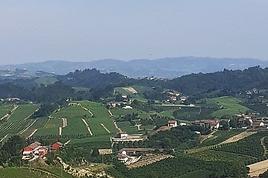
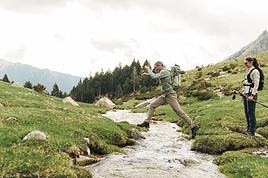
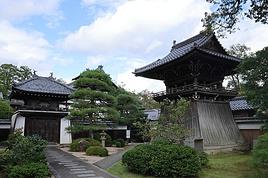





 .
.
.
.