Skip to content
Tuscany: Arezzo province and the Siena area
Italy › Travel journals Valmichel86

Tuscany: Arezzo province and the Siena area

Translated into English.
Add a reply…

Sign in to reply

Your reply to “Tuscany: Arezzo province and the Siena area” is one step away. We’ll bring you right back to it.

Create a free account

Why become a member?

60 replies

Valmichel86OP· 2 years ago
DAY 13: Sunday, September 8, 2024 (continued)

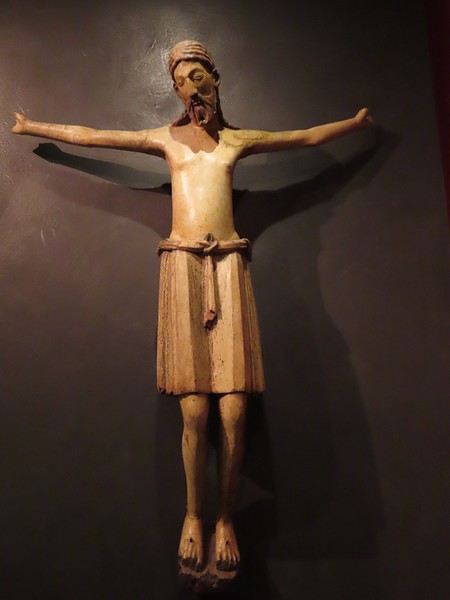
Right at the foot of the steps in front of the cathedral’s façade, the episcopal palace (a beautiful 13th-century building) is open for visits, with a museum on the ground floor and the reception rooms upstairs. From the same period as the cathedral’s *Virgin and Child* (13th century), several polychrome wooden crucifixes are on display.


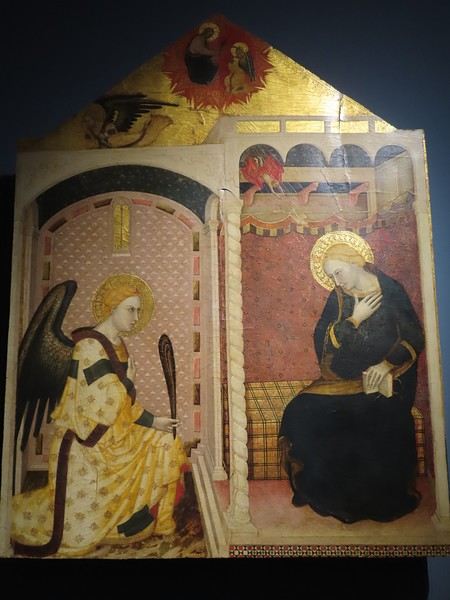
Among the paintings, I was struck by an *Annunciation* (Andrea di Nerio; around 1350). I often choose this subject to compare different periods and painters on a common theme.


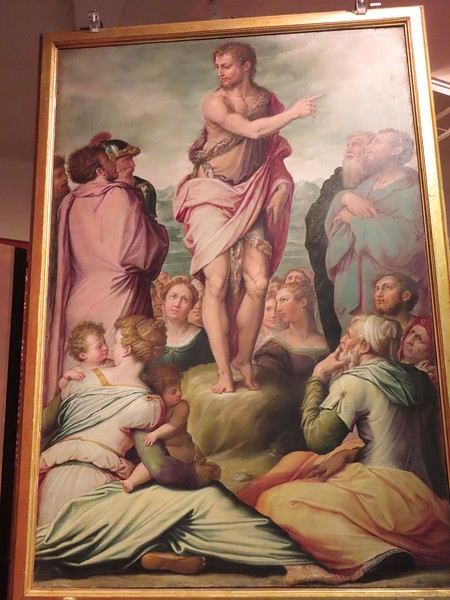
To wrap up the museum, Giorgio Vasari, who was very attached to his hometown, painted a processional banner for the "Peducci" company (1549). On one side, the chosen subject is the preaching of Saint John the Baptist.


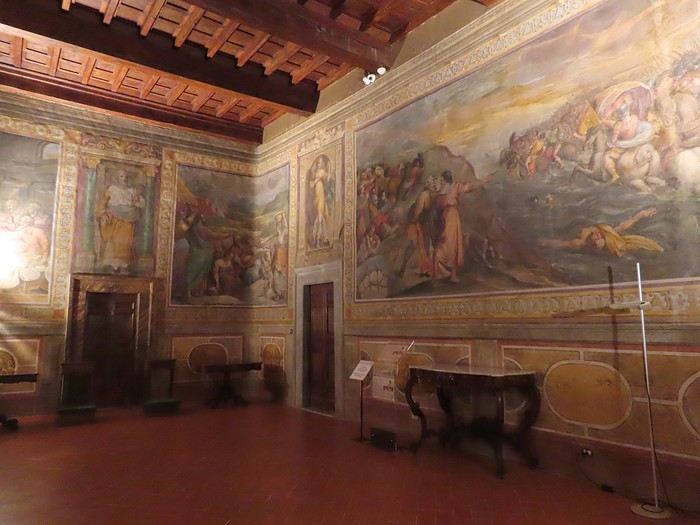
The reception rooms were frescoed in the early 17th century by Teofilo Torri. The one below (whose name and function I don’t recall) is adjacent to the grand Hall of Justice.


End of day 13.
Valmichel86OP· 2 years ago
Day 14: Monday, September 9, 2024

A beautiful day, not too hot, in Arezzo. I park near Pescaiola station and then get around by bike and on foot. The most famous and influential personality from Arezzo is Giorgio Vasari (1511-1574)—painter, architect, and the man who "invented" art history. He regularly returned to stay in his hometown and bought a house there, which he decorated himself (likely with some help, as was common at the time). "Casa Vasari" is therefore an artist’s home from the Renaissance, a rather rare testament to that era.

My photo choices (for the rest of the post) will be very selective and arbitrary; I’ll skip parts of monuments, or even entire monuments, to show only what remains most vivid in my memory when I write with several months of hindsight.

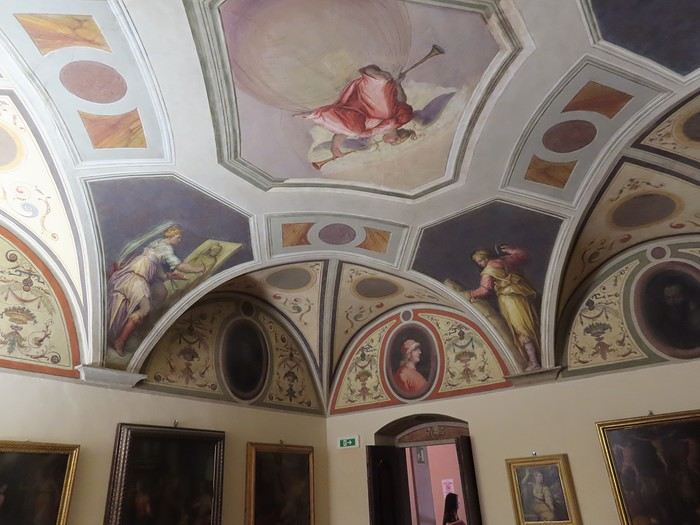
The Chamber of Fame and the Arts is worth seeing for its architecture and paintings (overview below).


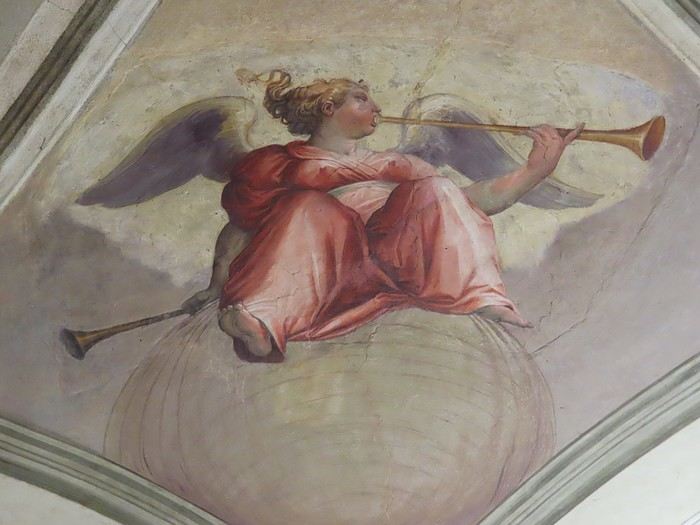
On the ceiling, Fame, seated on a globe, blows a trumpet.


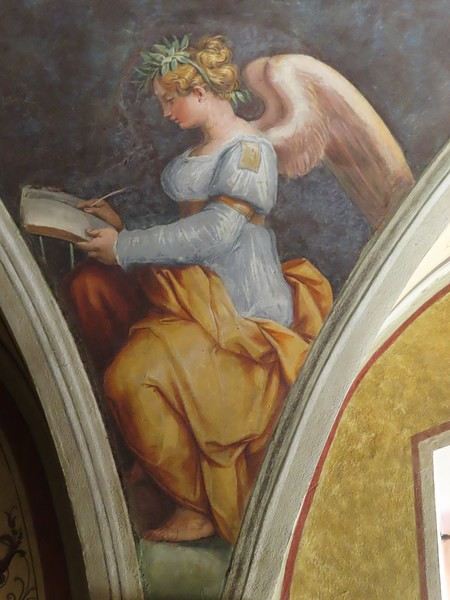
Between two lunettes decorated with portraits of painters, Poetry is absorbed in her creation.


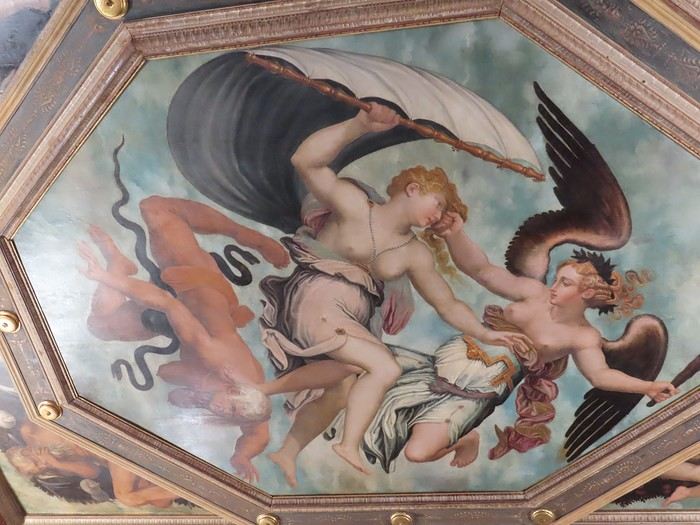
The largest room, entirely decorated with frescoes, is the Hall of the Triumph of Virtue. At the center of the coffered ceiling, allegories of Virtue, Fortune, and Envy.


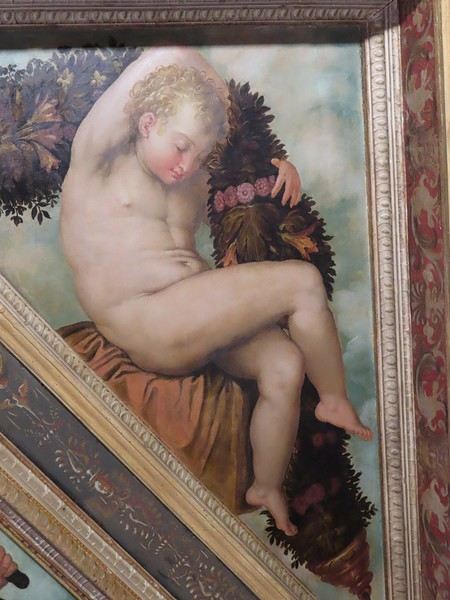
Surrounding the fresco above to complete the ceiling’s decoration, four paintings represent the four ages of life, including childhood.


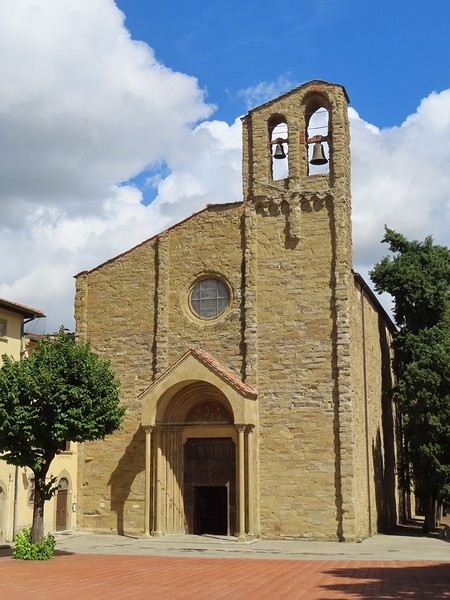
Leaving "Casa Vasari," I head up toward the cathedral and quickly arrive at a square where the Church of Saint Dominic (Chiesa di San Domenico) stands. Gothic in style, it has an elegant façade, with the bell tower adding an asymmetrical touch. Inside, besides numerous frescoes, there’s a large painted crucifix by Cimabue.


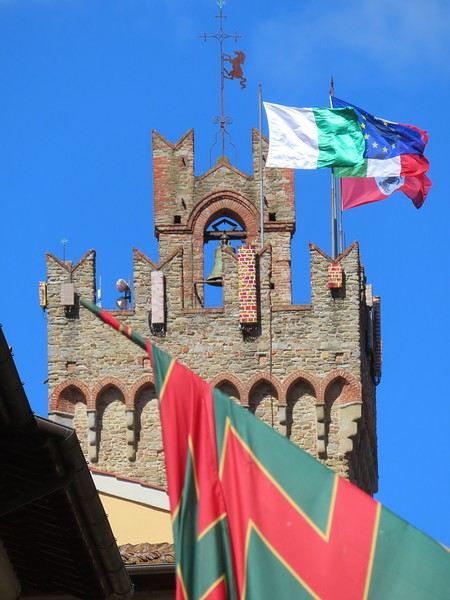
In the afternoon, the flags on the tower of the Palazzo dei Priori (now the town hall) flutter in the wind (photo taken on Via Andrea Cesalpino).


More from the day in the next message.
Valmichel86OP· 2 years ago
Day 14: Monday, September 9, 2024 (continued)

A few meters further down, I’m standing in front of the Basilica of San Francesco. This church, the most famous in Arezzo, is also a national museum and houses an exceptional work: the frescoes by Piero della Francesca in the "Cappella Bacci." This chapel is named after the wealthy family who commissioned the frescoes.


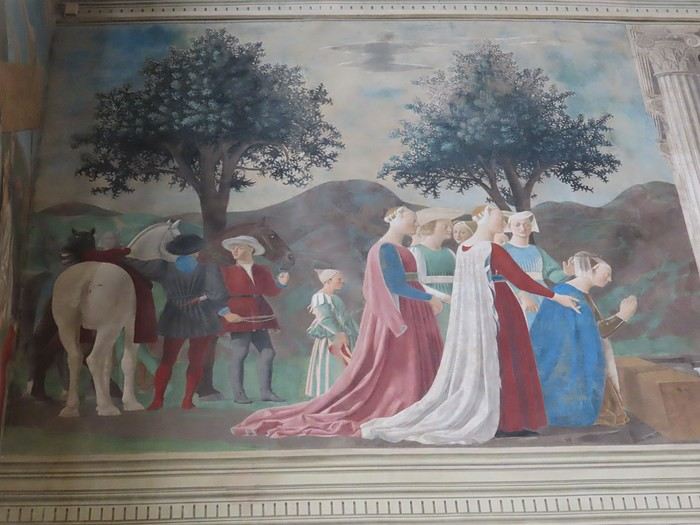
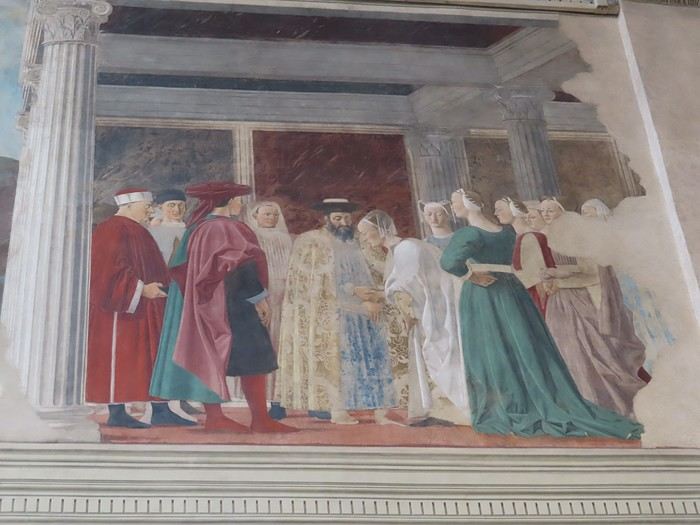
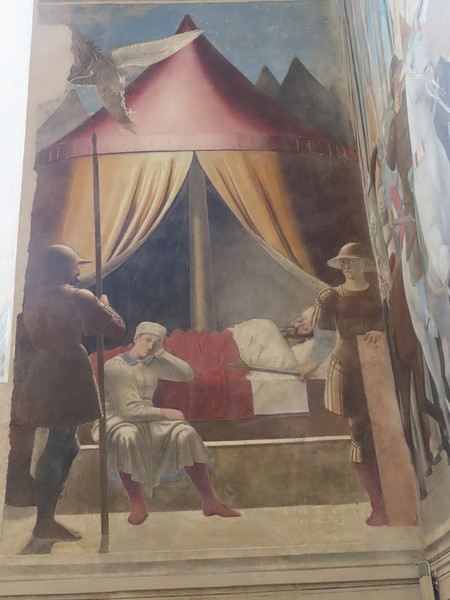
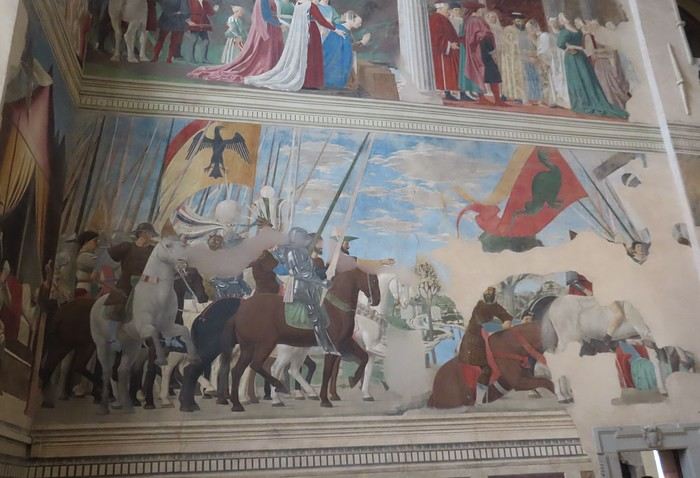
The chapel’s vaults were painted by Bicci di Lorenzo, who passed away shortly after. That’s when Piero della Francesca was called in. He created a pictorial cycle illustrating the "Legend of the True Cross," the story of the cross on which Jesus was crucified. Piero della Francesca didn’t arrange the scenes in chronological order; instead, he used the chapel’s symmetry to place them. For example, there are two large battle scenes, positioned symmetrically along the chapel’s axis. I’ve picked 5 frescoes and will stick to chronological order.

Adoration of the Sacred Wood and the meeting between the Queen of Sheba and King Solomon.

The Queen of Sheba arrives at a wooden bridge and kneels, sensing the prophecy tied to this wood.


The Queen of Sheba meets Solomon and shares the prophecy with him; all the figures in the scene are richly dressed in Quattrocento fashion.


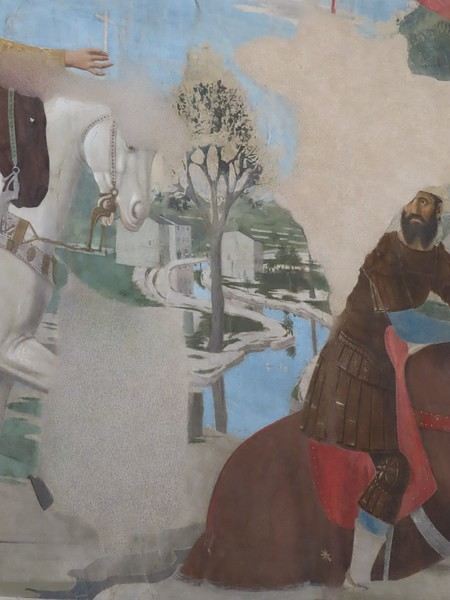
The Dream of Constantine.

On the eve of the battle against Maxentius, Constantine has a dream and hears a voice telling him to fight under the protection of the Cross. A night scene that made history in the art world.


Constantine’s Victory over Maxentius at the Battle of the Milvian Bridge.

On the right (damaged fresco), Maxentius is already fleeing. On the left, Constantine’s army looks more like they’re parading than fighting—a spiritual victory without bloodshed?


Between the two armies, the Tiber River, where the battle takes place, is depicted in detail (houses, trees, reflections, ducks). The background landscape (with more relief) led some experts to suggest that Piero replaced the Roman countryside (the actual location) with Tuscany: the upper Tiber Valley where he was born. It’s not entirely convincing when you look at the fresco.


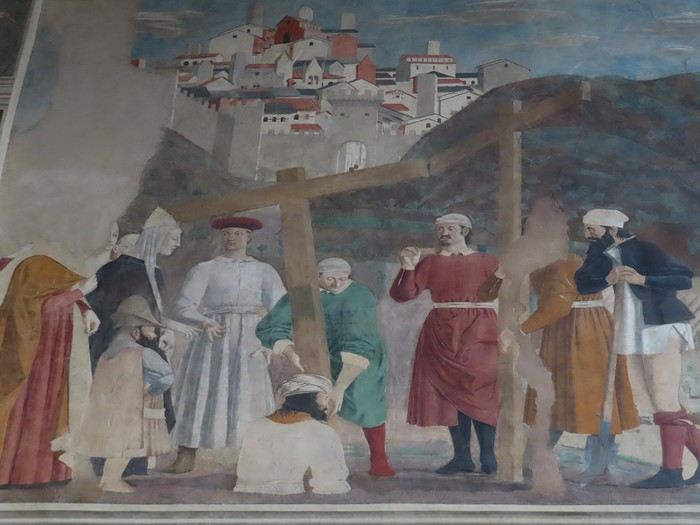
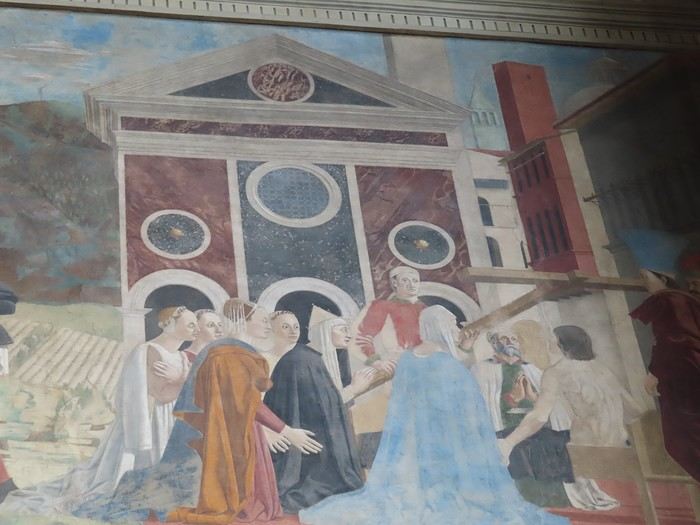
Discovery of the True Cross

I photographed the left half of the fresco, then the right half; the two halves depict different scenes (same principle as the first fresco I chose, Queen of Sheba and Solomon). Three crosses are unearthed in a field (I only see two); they’re presented to Helena, Constantine’s mother. The setting is the countryside with Jerusalem’s walls in the distance, but the landscape is Tuscan, and the hilltop town is Arezzo. The figure to the right of Helena and her court dwarf, dressed in white and facing the viewer, is believed to be Piero della Francesca (a self-portrait within the pictorial ensemble).


A dead man rises from his coffin, a miracle that identifies the True Cross. Now we’re in a city (architectural construction); the figures are dressed in Quattrocento fashion, as in the other scenes.


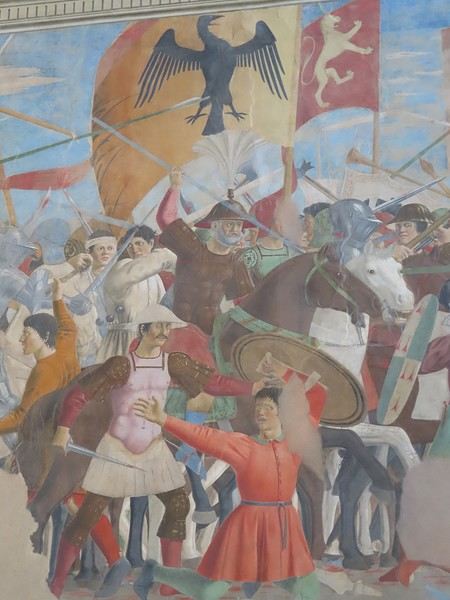
Battle Between Heraclius and Khosrow.

I’ve focused on part of this large fresco, where Christian cavalry intervene decisively in the battle.


This series of frescoes is world-renowned as an absolute masterpiece of Renaissance painting.

In the late afternoon, I cycled a stretch of the "sentiero della bonifica," which runs alongside the Valdichiana’s main drainage canal (from Chiani to I Ponti).
Valmichel86OP· 2 years ago
Day 15: Tuesday, September 10, 2024

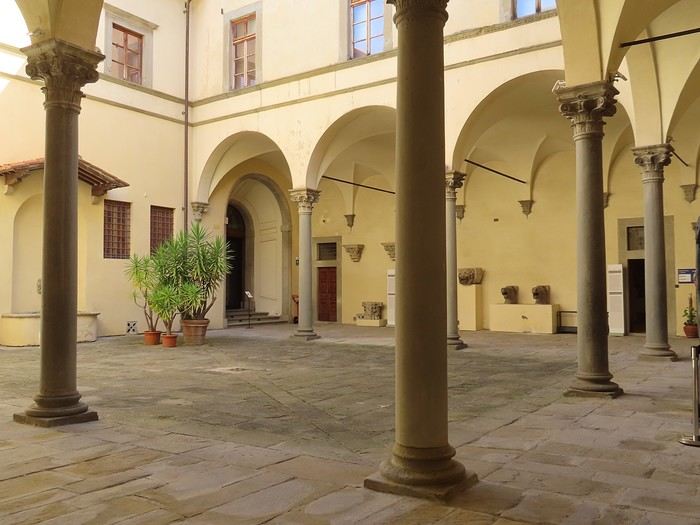
For this new day in Arezzo, I’m visiting the MAMM (Museum of Medieval and Modern Art), housed in a 15th-century palace, the "Palazzo Bruni Ciocchi" (courtyard with portico below).


The museum has around twenty rooms organized in chronological order; the selected photos follow this sequence.

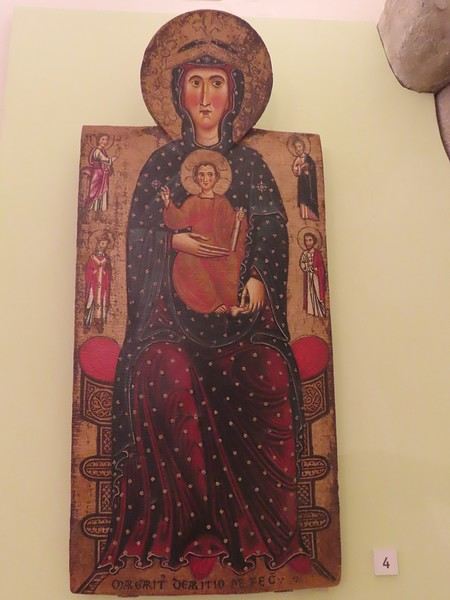
The *Madonna di Montelungo* (circa 1250) was painted by Margarito d'Arezzo, born in Arezzo around 1220, one of the first known Tuscan artists. He signed his paintings (see the bottom of the photo).


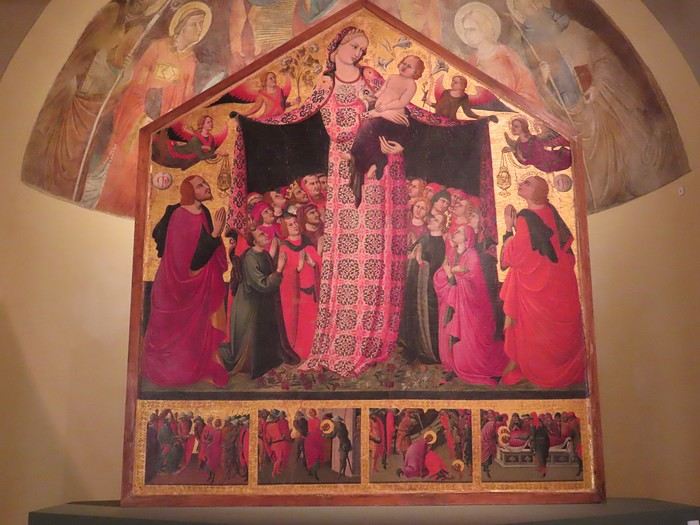
Two centuries later, Parri di Spinello painted a *"Madonna della Misericordia"* with a predella (1435–1437). He was the most prominent painter in Arezzo between 1420 and 1450.


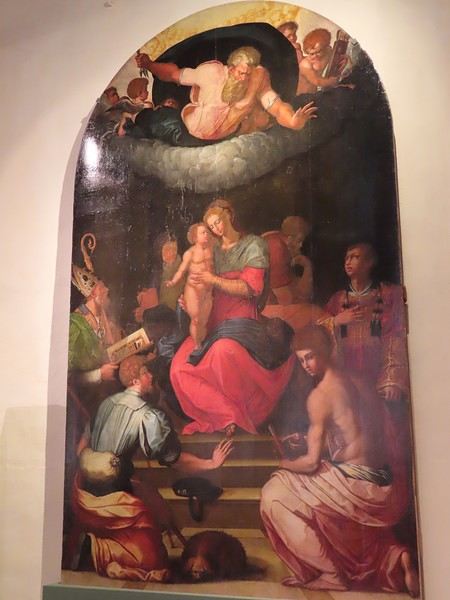
Giorgio Vasari also created a *"Madonna col Bambino"*, rendered in a very different style (1536–1537). The painting is known as the *"Pala di San Rocco"* because it was commissioned by the *"Compagnia di San Rocco"* (a confraternity).


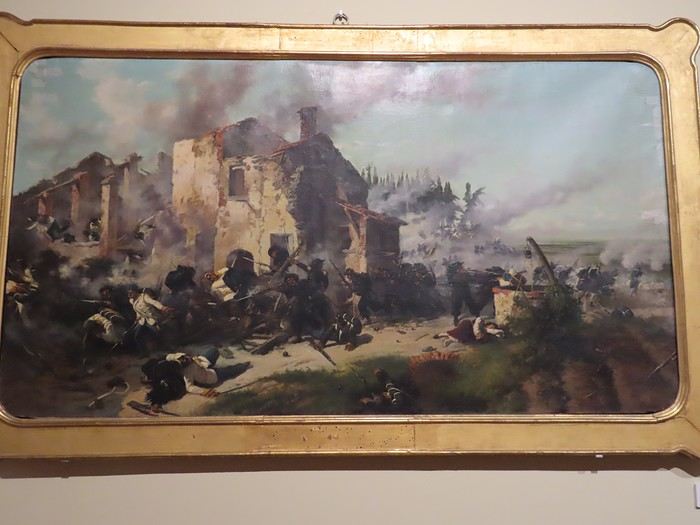
19th-century painting reflects the Italian Unification with Carlo Ademollo’s work: *The Battle of San Martino* (1861). The painting was completed two years after the battle (1859), which is known in France as *Solférino*. San Martino is where the Sardinian troops fought, while the French troops were closer to Solférino (two neighboring villages in Lombardy).


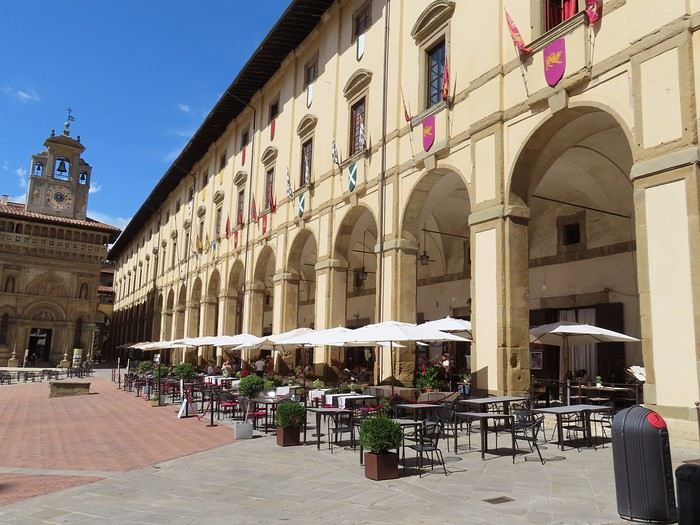
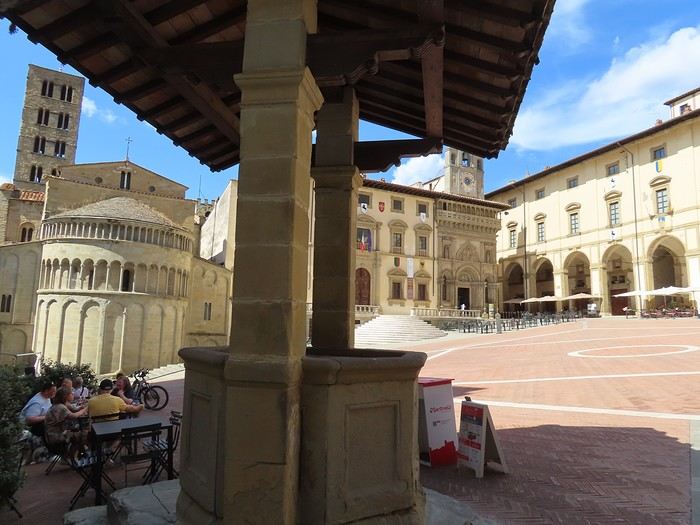
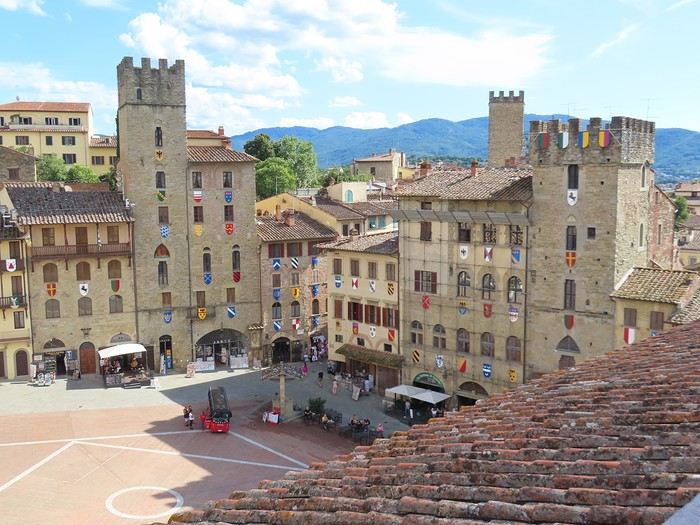
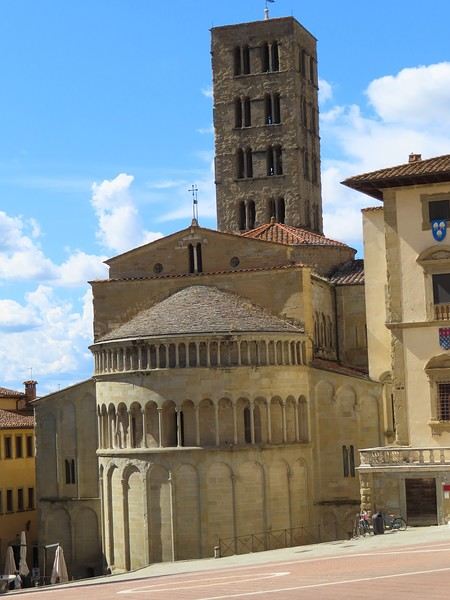
In the afternoon, I return to *Piazza Grande* (different photos from Day 13, taken under a bluer sky). The apse of the parish church, *Santa Maria*, overlooks one corner of the square.


The *"Logge Vasari"* face south, forming a lovely arcade with café and restaurant terraces that weren’t too crowded this afternoon.


More from the day in the next post.
Gaura· 2 years ago
This detailed report makes me want to go discover Arezzo and this part of Tuscany that I don’t know yet.
Valmichel86OP· 2 years ago
Day 15: Tuesday, September 10, 2024 (continued)

Here are the "Logge" and the Santa Maria church in the same photo; between them is the Palazzo della Fraternità dei Laici, which I’m going to visit.


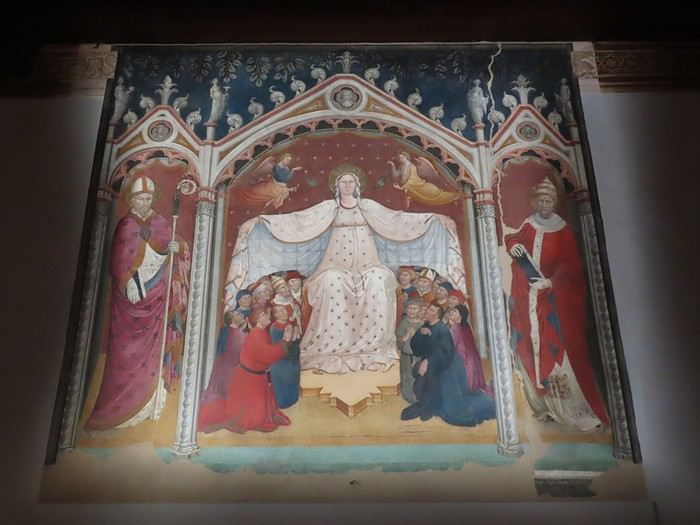
The visit starts in the palace’s audience hall, where the fresco of the "Madonna della Misericordia" (1448) is located. The painter, Parri di Spinello, is the same artist behind the painting on the same subject in the museum. Since the commission was paid for by the Fraternità (we know the amount), the people under the Virgin’s cloak (there’s quite a crowd) are Aretine benefactors and/or members (of the Fraternità). Many of them, according to the provided details, have been identified.


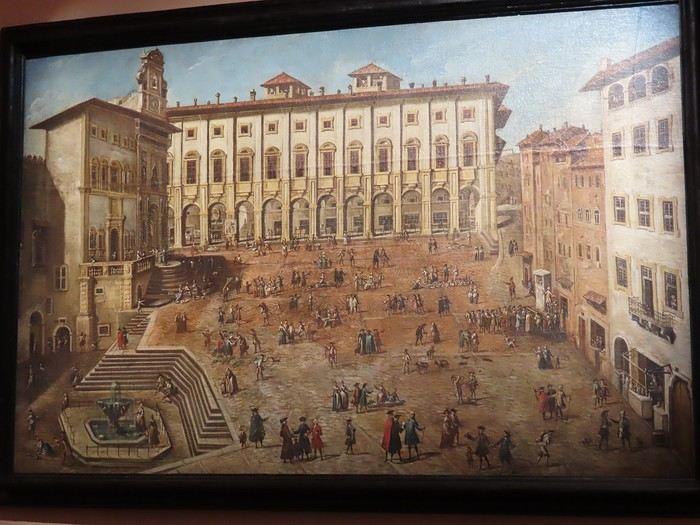
Some of the paintings on display are historical testimonies, like this view of Piazza Grande, signed by Cristoforo di Donato Conti. It dates back to the Settecento, a century when "vedute" were all the rage. The square hasn’t changed much since then.


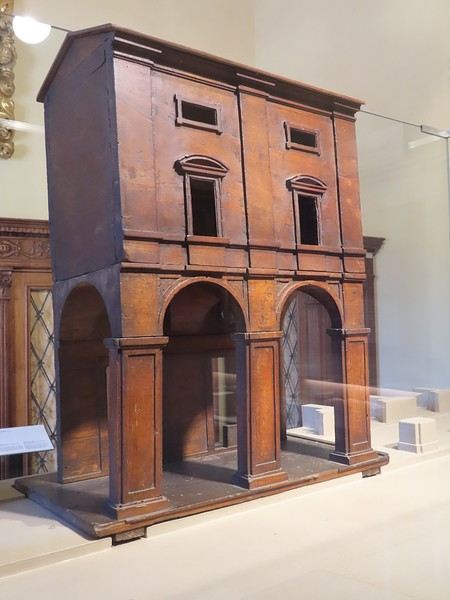
I’m looking at this model as another historical record—the oldest architect’s model I’ve ever seen. Vasari had it made in 1572, the year he was commissioned for the project. The model, limited to two arches, may have been used to convince the city officials of the project’s modular nature. After Vasari’s death (1574), construction continued on this principle (completed in 1595), with the ground-floor shops being sold in modules as work progressed.


The view from the panoramic terrace is a sweeping one over Piazza Grande and a circular one over the city of Arezzo.


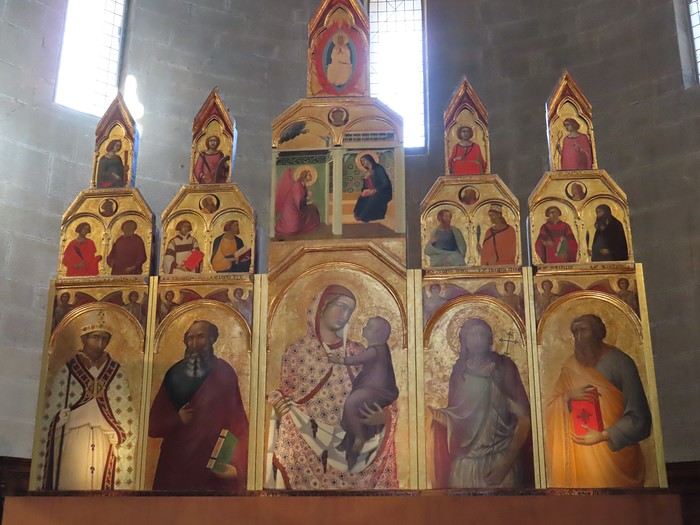
The parish church "Santa Maria della Pieve" is located very close to the square (access via Corso Italia). It houses the large polyptych by Pietro Lorenzetti (1320), known as the Tarlati Polyptych, as it was commissioned by the Bishop of Arezzo. The painter wasn’t from Arezzo but from Siena. The Virgin’s cloak is very unusual, as the painter depicted parts of it as fur (but what kind of fur?).


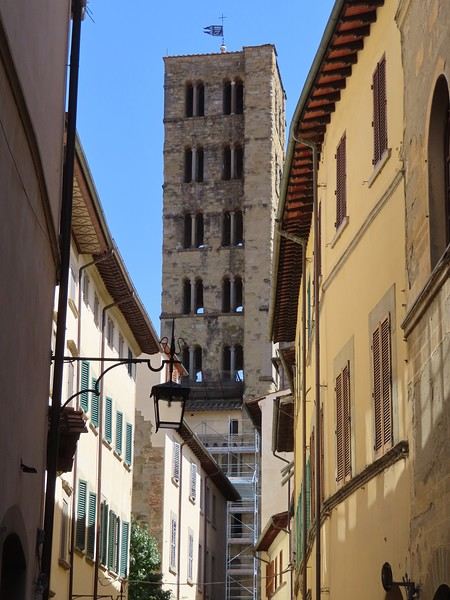
I end the day with this church and its bell tower. A symbol of Arezzo, it’s called the "bell tower of a hundred holes" because of its twin windows on all four sides. Photo taken on Via Bicchieraia (facade under renovation; the bell tower is also clearly visible from the panoramic terrace, as mentioned above).

Valmichel86OP· 2 years ago
Day 16: Wednesday, September 11, 2024

This morning in Arezzo, there’s a very busy market in the streets at the foot of the hill; you have to weave between the stalls to reach the archaeological museum (Museo Gaio Cilnio Mecenate in Italian). This Roman, originally from Arezzo and advisor to Emperor Augustus—named Gaius Cilnius Maecenas in Latin—is the origin of the words "patron" and "patronage" through his actions. The museum is next to the Roman amphitheater, with its arena clearly visible, though nothing remains above ground.

The collections are divided between the Etruscan era (the Etruscans were very present in what is now Tuscany, especially to the east and south) and the Roman era. Taking photos in archaeology is always tricky (display cases, reflections).

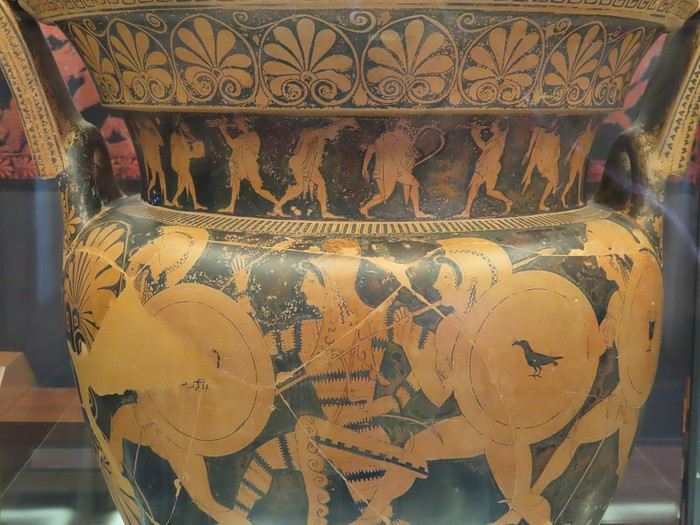
During the Etruscan era, the finest ceramic pieces were imported from Greece. Here’s the Euphronios krater (Attic origin, around 510 BC) depicting a battle between Hercules and the Amazons.


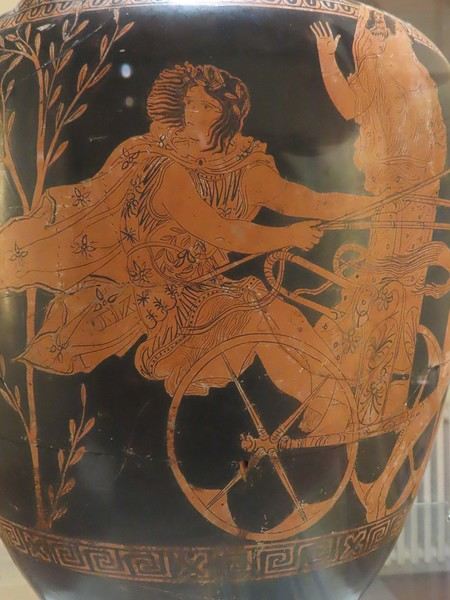
A red-figure amphora, also of Attic origin (dated around 415 BC), is decorated with "Pelops and Hippodamia on a quadriga." Here are the figures on the chariot.


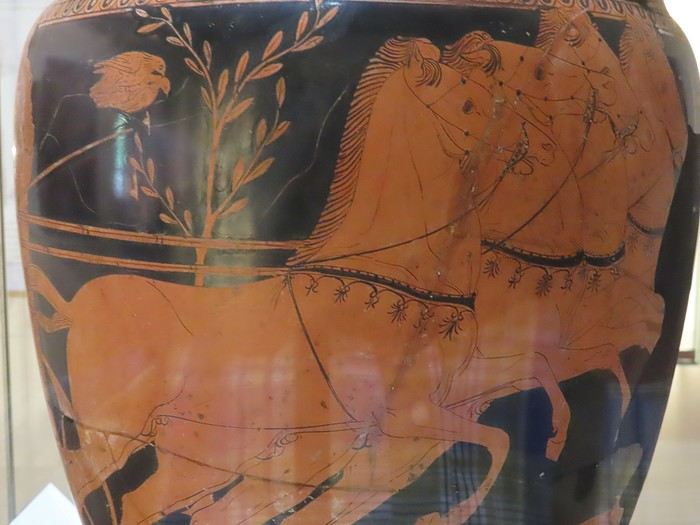
And now, the four horses.


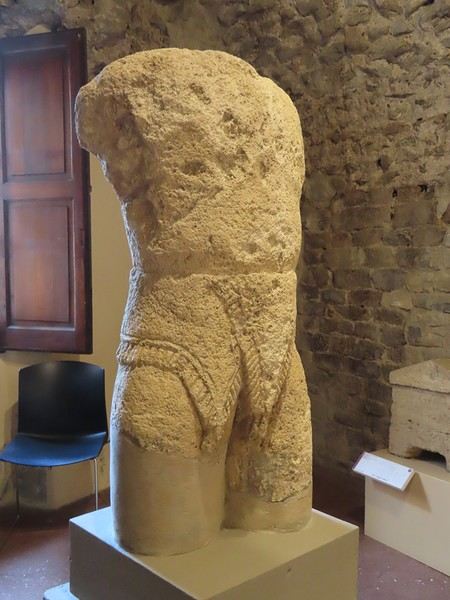
Still from the Etruscan era (around 600 BC), the torso from Marciano (a village in the Valdichiana) is sculpted from *pietra fetida*, a soft limestone often used by the Etruscans for funerary monuments.


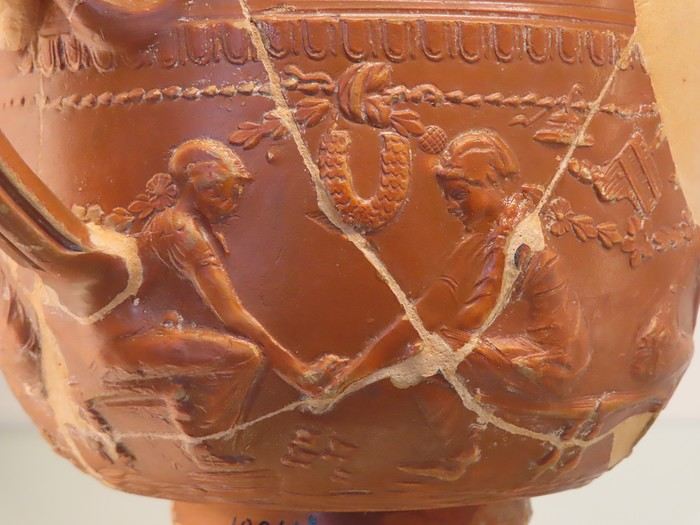
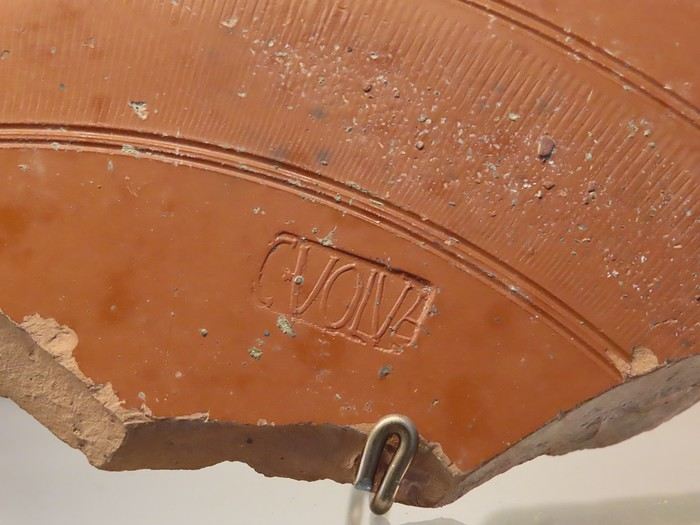
Moving on to the Roman period and Arezzo’s splendor: from the 1st century AD, for over 100 years, Arezzo was the largest production center of *terra sigillata* (a fine red-glazed tableware) in the empire. Here’s an example of a two-handled cup featuring knucklebones players.


This was mass-produced in workshops that signed their work (over a hundred workshops). Example with the signature of C. Volusenus (1st or 2nd century AD).


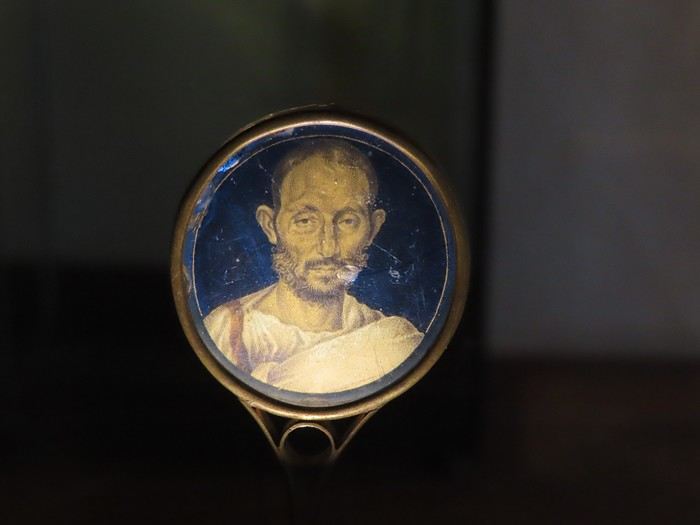
The Arezzo medallion is a curiosity made using *chrysography* (engraving and painting on gold leaf between two glass plates—don’t ask me for more details!). It dates from the imperial era, 3rd or 4th century AD. There are only about ten such medallions in the world produced with this technique.


More from the day in the next post.
Valmichel86OP· 2 years ago
Day 16: Wednesday, September 11, 2024 (continued)

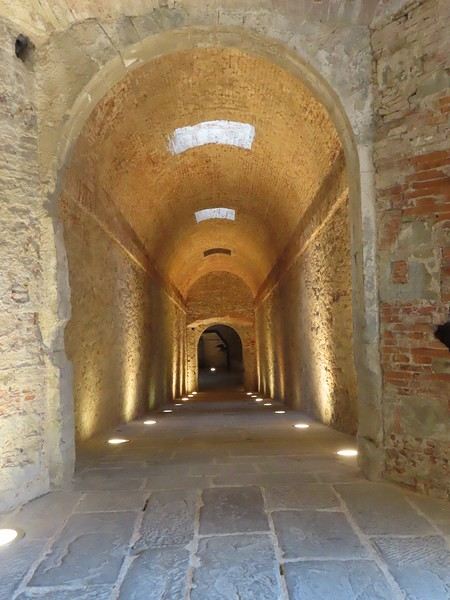
In the afternoon, I head to the very top of San Donato Hill (Arezzo’s hill), where the Medici Fortress (16th century) was built. Coming from the city, you access it through a gate leading to a long interior corridor within the thickness of the fortification. Since it’s military architecture, all the walls are bare in these spaces. Don’t expect anything more than a walk along the ramparts.


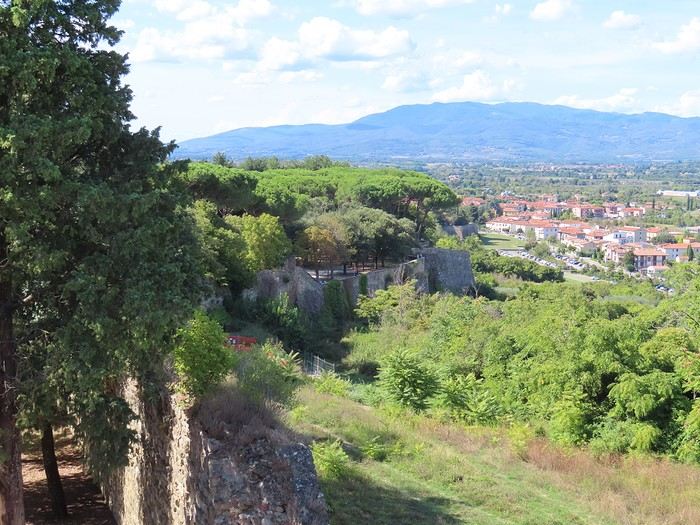
The views from the ramparts aren’t directed toward the city (to the southwest) but toward the other directions. The photo gives an idea of the Arezzo surroundings, with the mountain called "alpe di Catenaia" in the background to the north. The terrace planted with umbrella pines visible a few hundred meters away is a large public garden: "parco il prato".


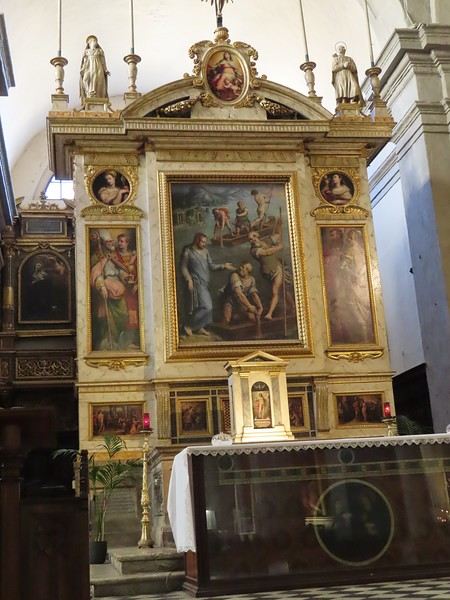
I head back down to the city and visit the "Badia di Santa Flora e Lucilla", a church located not far from San Francesco. Vasari transformed it architecturally; in the 19th century, a monumental altar created by Vasari for his family’s chapel in the "Pieve di Santa Maria" (see yesterday’s post) was moved here, where it now serves as the main altar.


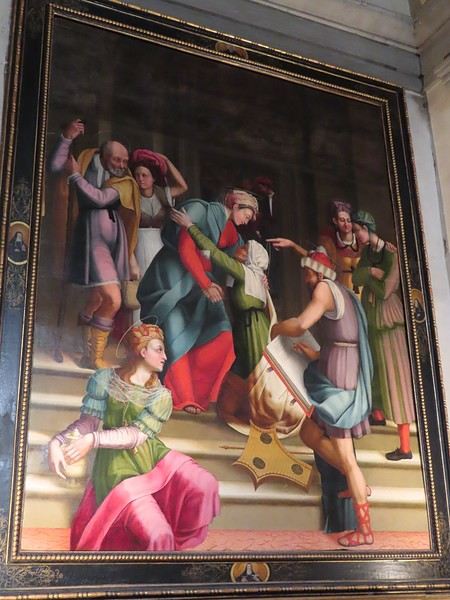
In this church, you can see a "Visitation" by Giovanni Antonio Lappoli (1524). The information I read—either on-site or in documentation given in Arezzo (I can’t remember)—described the painter as mediocre, a better musician (and more interested in music) than painter, and cited the following criticisms: 1-stereotyped, inexpressive faces 2-drapery that reveals a clear lack of technique. I’d never encountered such a harsh presentation of what’s on display, but I have to admit, upon observation, there’s some truth to those two points.


Back to Ruscello.
Valmichel86OP· 2 years ago
Day 17: Thursday, September 12, 2024

The weather is uncertain in the early morning; I leave fairly late, hoping for an improvement that never comes. The day turns out rainy (showers) and really cold for September. I’m heading to the Arno Valley and had planned an outdoor activity.
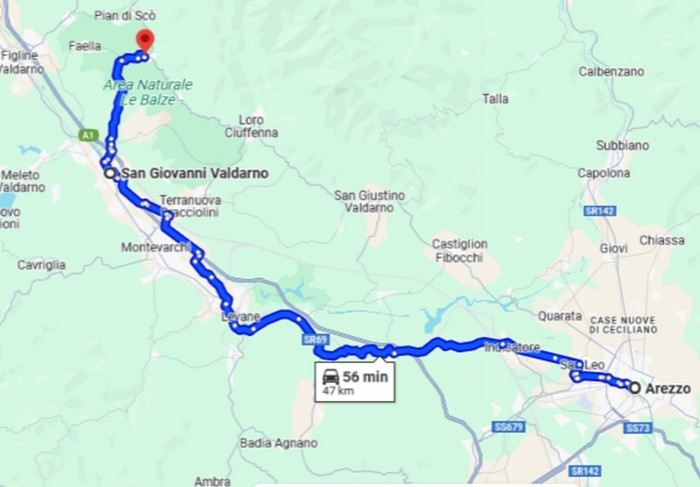


I make my way to San Giovanni Valdarno. I pick up some brochures late in the morning, then head up to Castelfranco di Sopra, which will be the starting point for a hike in the "Balze"—"area naturale le Balze" on the map. The red dot marks Castelfranco di Sopra. The route takes me past the ravines and characteristic cliffs of this area. I also have to take shelter from the rain for quite a while.
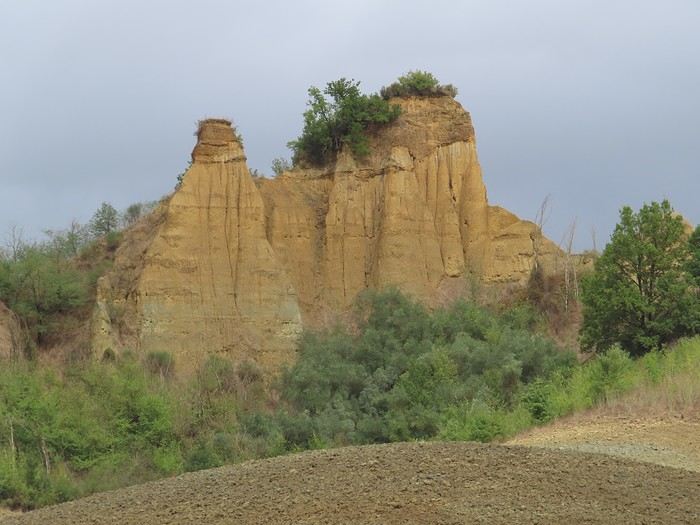


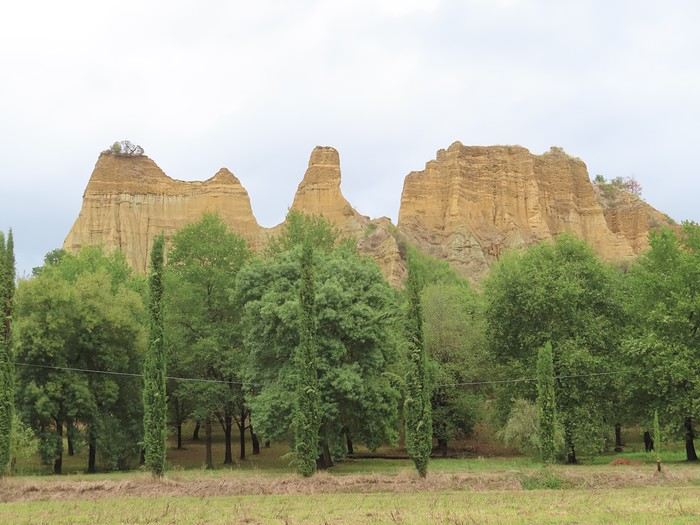
Among these distinctive formations, there are erosion pillars like the one in the center of the photo below. I only saw what’s on the loop starting from Castelfranco di Sopra, but there are other sites if you head toward Loro Ciuffenna.


Now, here’s Leonardo da Vinci’s world-famous painting: the *Mona Lisa*.
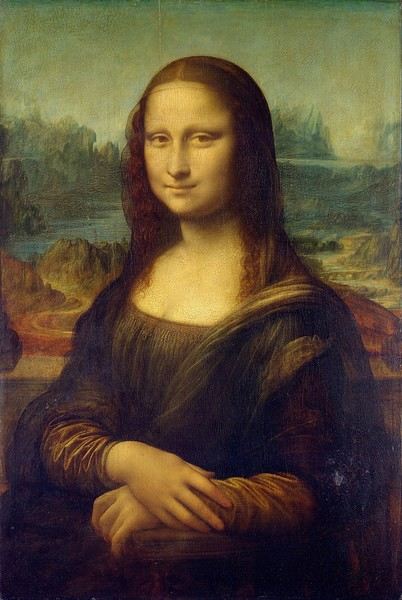


When you look at the landscape behind the model’s right shoulder, you’ll notice it looks a lot like what I just saw—the "Balze" of the Upper Valdarno (I find the resemblance really convincing). Experts have suggested that Leonardo painted this landscape (which he knew) as the background for his painting. But given how famous the *Mona Lisa* is, there are countless theories about the background (both in Tuscany and other regions of Italy). Leonardo may have combined several landscapes from different places or even painted an entirely imaginary one.

As for the other parts of the landscape, the multi-arched bridge near Mona Lisa’s left shoulder can’t be found exactly in the "Balze." However, there’s apparently one about 20 kilometers away that might fit. The lake surrounded by jagged peaks, near the model’s face, simply doesn’t exist in this part of Tuscany.

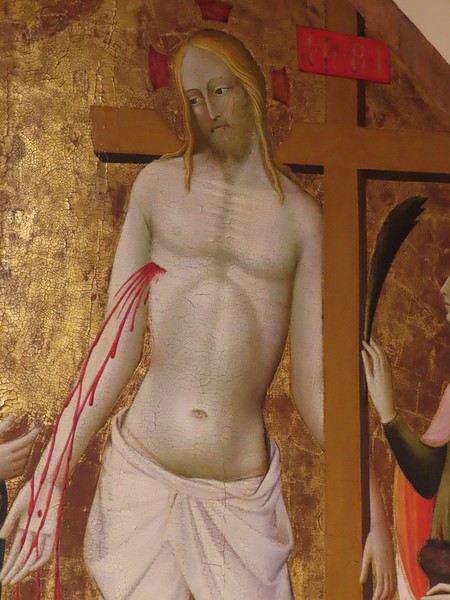
Back in San Giovanni Valdarno, I visit the "Museo della Basilica di Santa Maria delle Grazie." I pick out two works before moving on to what the museum is really known for. Mariotto di Cristofano was born in San Giovanni. Here’s a detail from a *Christus patiens between the Madonna and St. Lucy* (around 1420).


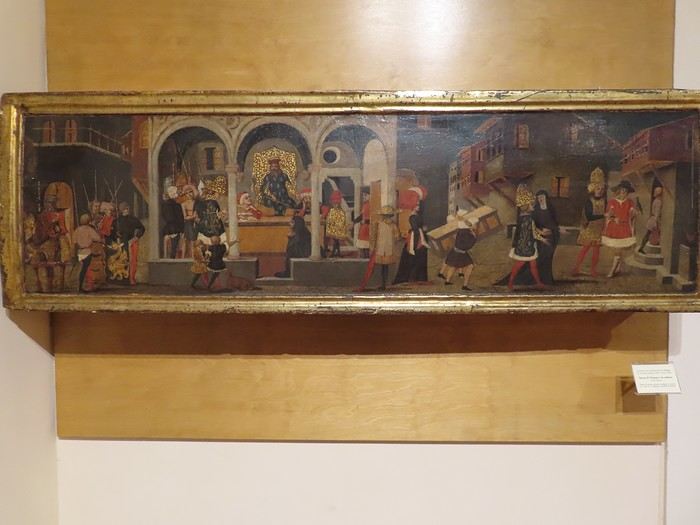
He’s not the only painter born in San Giovanni. Masaccio was born here too, along with his brother, nicknamed "Lo Scheggia." The latter, also a painter, specialized in furniture painting for the upper classes. The museum displays a side of a wedding chest, a typical example of this work: the story of *Trajan and the Widow* (around 1430–1440).


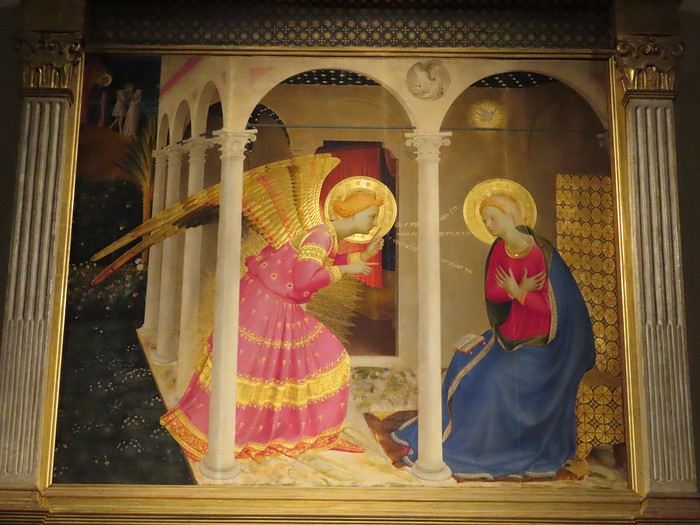
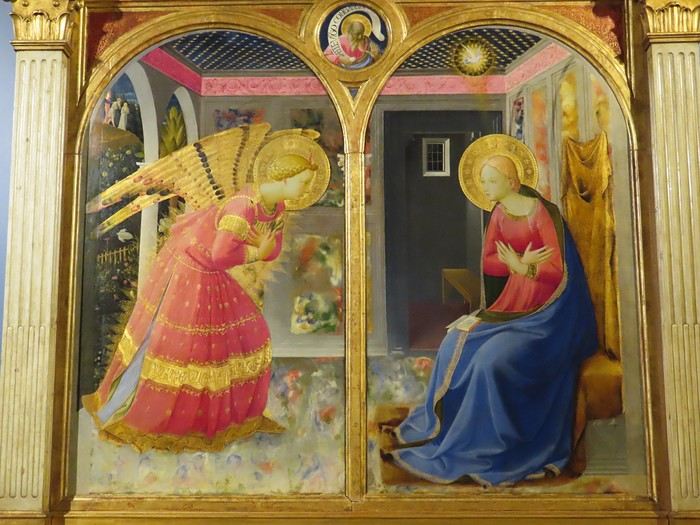
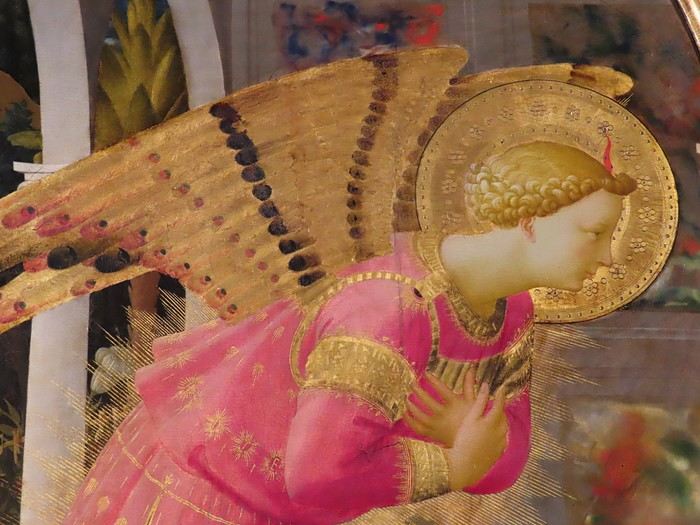
But people come to this museum for one specific reason: it houses one of the three *Annunciations* painted by Fra Angelico (Guido di Pietro, Fra Giovanni da Fiesole, Fra Angelico, or Beato Angelico) around 1430–1440.


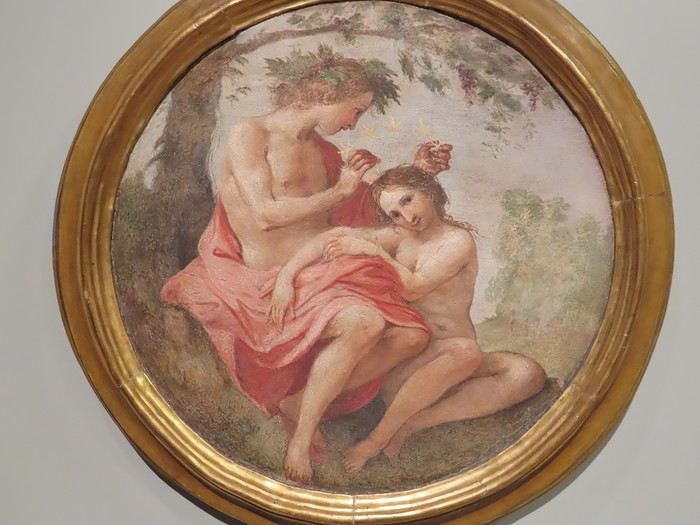
Next, I visit another small museum, the "Museo delle Terre Nuove," located in the Palazzo d’Arnolfo. There, I learn why San Giovanni has a rectangular plan within its walls—a layout I’d noticed when arriving in the center. San Giovanni was built from scratch by the Florentines for political reasons. They distrusted the local nobility (feudal lords) and wanted to attract part of the population to new towns to reduce the nobility’s influence. Many of these "new lands" (or towns) were designed with a rectangular plan. In one of the palace’s rooms, there are round paintings intended for a Medici villa, by a painter born here: Giovanni Manozzi, known as Giovanni da San Giovanni (early 17th century). *Bacchus and Ariadne.*


When I leave, I find myself in the square facing the basilica.
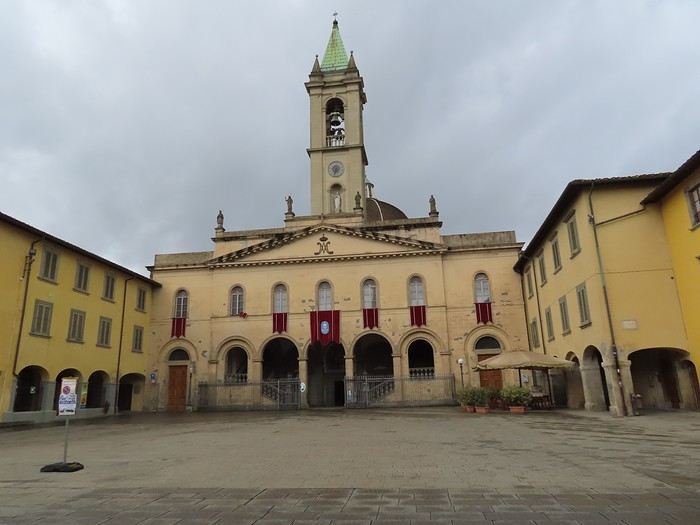


And after seeing San Giovanni’s plan in the museum, you immediately realize that at the far end of the square (the middle of one side of the rectangular enclosure), there should be a gate (the layout seems odd anyway). In fact, there *was* a gate. Then a miracle happened. In 1478, a 75-year-old woman (Monna Tancia) knelt under the gate in front of an image of the Madonna. Her infant grandson was an orphan (his parents had died of the plague), and she was then able to nurse him, saving him from certain death. An oratory was built, then a chapel (or vice versa), and later a church, which became a basilica… and now there’s no gate at the far end of the square.

Late return to Ruscello.
Show 10 more replies
Valmichel86OP· 2 years ago
Day 18: Friday, September 13, 2024

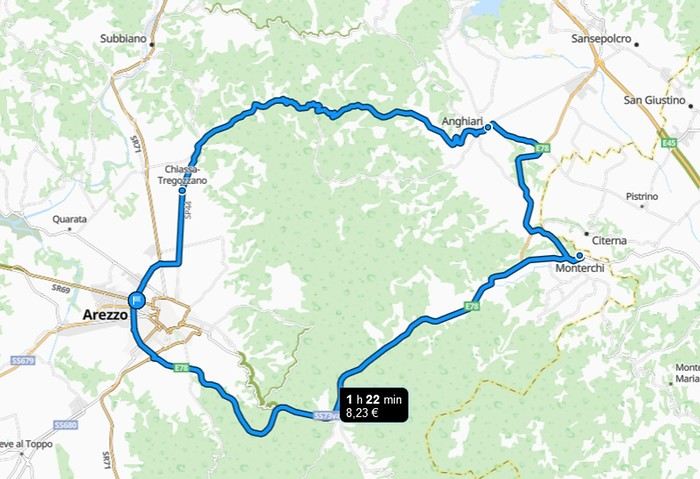
Cold, windy day, but quite sunny. I’m visiting two medieval villages in the Valtiberina: Monterchi and Anghiari. Here’s a little map of the loop I did (and no, it’s not from Google).


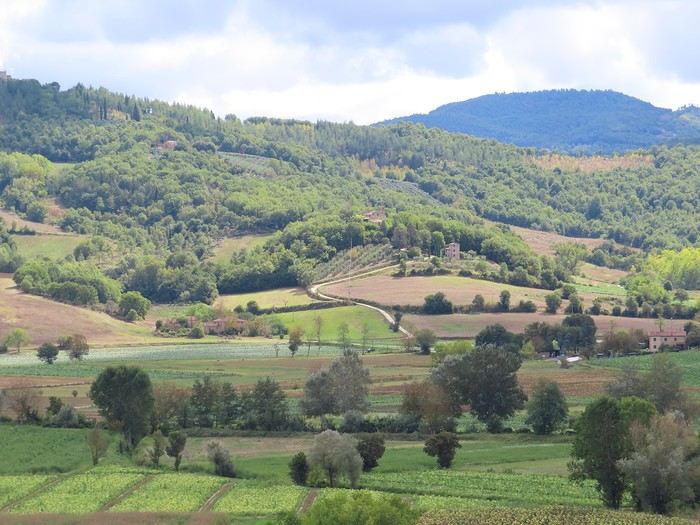
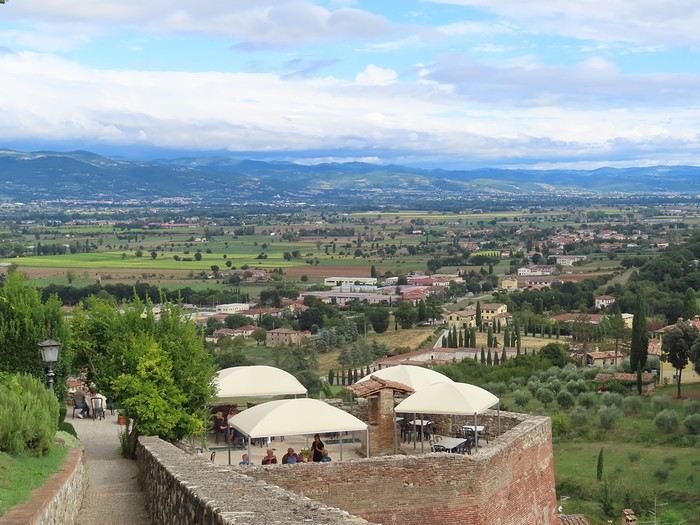
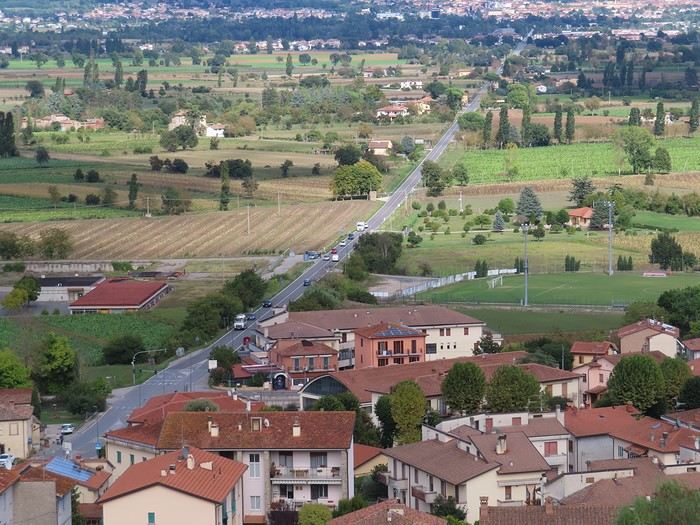
Monterchi is perched on an isolated hill, and the view over the surrounding countryside is lovely. It also gives a pretty accurate idea of this part of Tuscany.


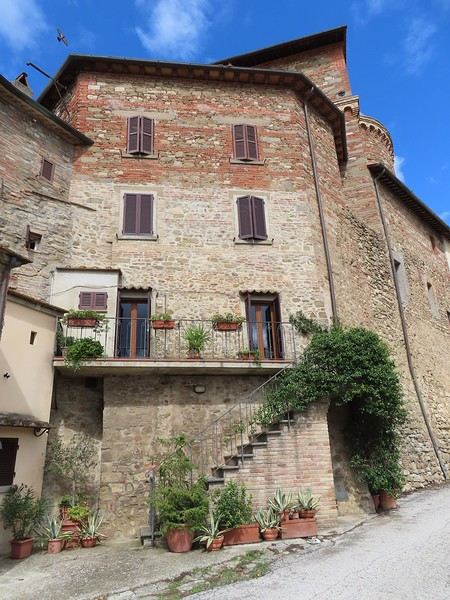
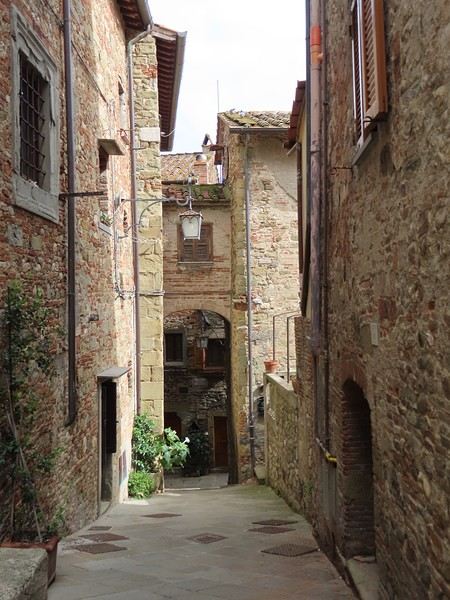
Monterchi is enclosed within walls and has a strong medieval character. Here’s a house inside the walls.


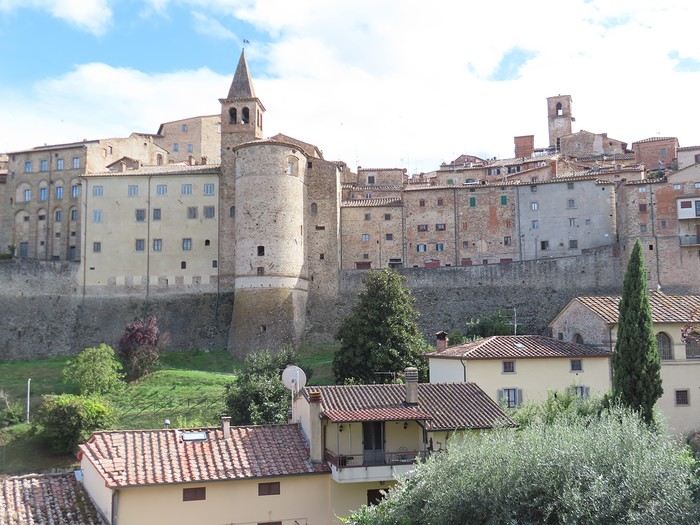
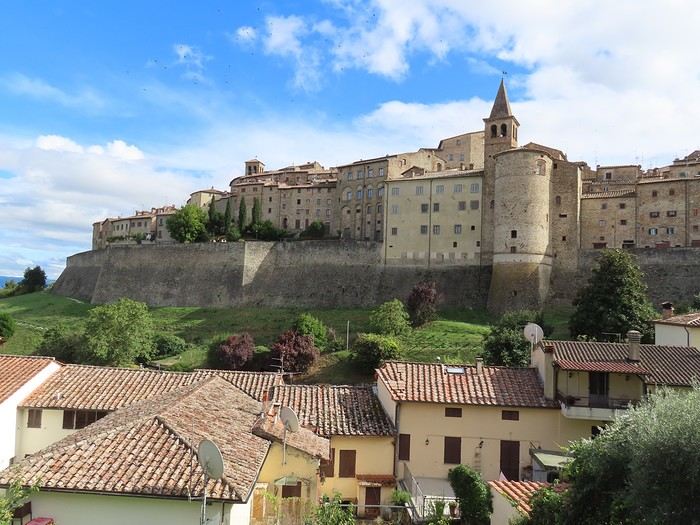
Next, I head to Anghiari. This village overlooks the Valtiberina; it’s larger than Monterchi and belongs to the "I borghi più belli d'Italia" (Italy’s most beautiful villages) club. Ramparts, café terraces, and views over the Tiber Valley.


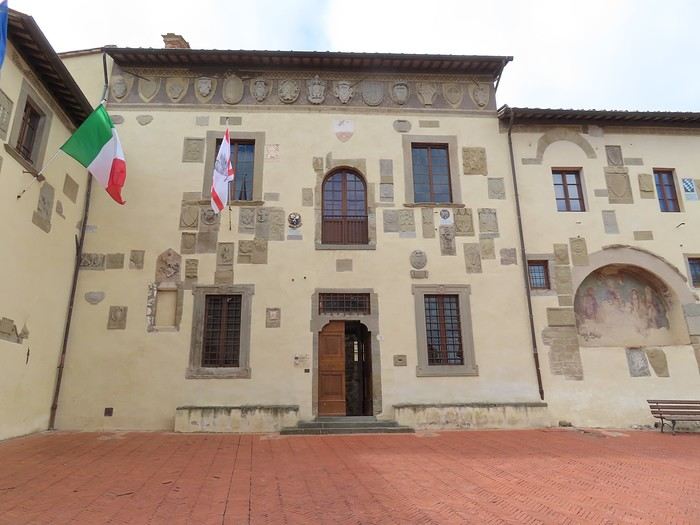
At one of the village’s high points, the Palazzo Pretorio (or Vicar’s Palace) is now the town hall. It’s a 14th-century palace with an L-shaped plan, and its façade is decorated with the coats of arms of the vicars and podestàs appointed by Florence.


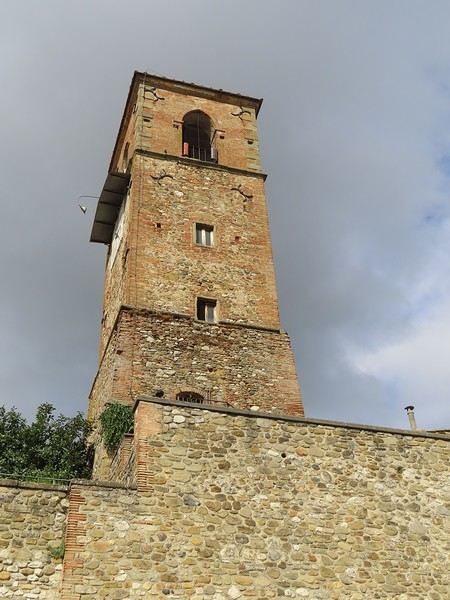
Anghiari also has gates, staircases, sloping alleys, and towers...


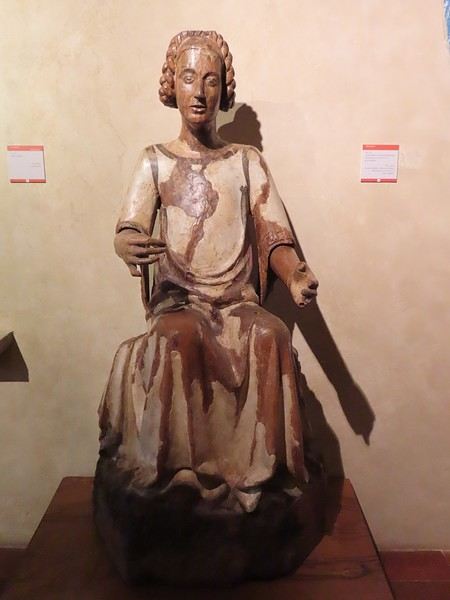
There are also churches and at least two museums. The Palazzo Taglieschi houses the national museum in a maze of medieval houses; it’s an art museum, but there’s also ethnography. Here’s a Madonna from the 14th century, originating from the Valtiberina. The Virgin’s frontal position and braided hair tie her to a popular tradition.


I won’t show anything else from inside a church or museum.

More from the day in the next post.
Valmichel86OP· 2 years ago
Day 18: Friday, September 13 (continued)

There’s another museum in the village, the Museum of the Battle of Anghiari (1440). This battle saw the Florentines defeat the Milanese; it’s famous because of a lost painting commissioned from Leonardo da Vinci as a commemorative piece to adorn the Palazzo Vecchio in Florence. From the rampart walk, you can see the battle site. According to the information provided, it took place in the plain a little farther than the last car visible on the road. There’s also a walk (not done) on the actual battle site. In the distance, you can make out the town of Sansepolcro.


Finally, there’s still the matter of finding an overall viewpoint of the village by switching hills. The Sant'Agostino church is built on the rampart with an apse resembling a tower.


A wider shot shows the entire rampart and the oldest part of the village, called "Il Borghetto."


Return to Arezzo via the Scheggia Pass.
Gaura· 2 years ago
For anyone passing through your itinerary, I’ve noted the site for Italy’s most beautiful villages. It’s saved in my favorites. Thanks!
Valmichel86OP· 2 years ago
Day 19: Saturday, September 14, 2024

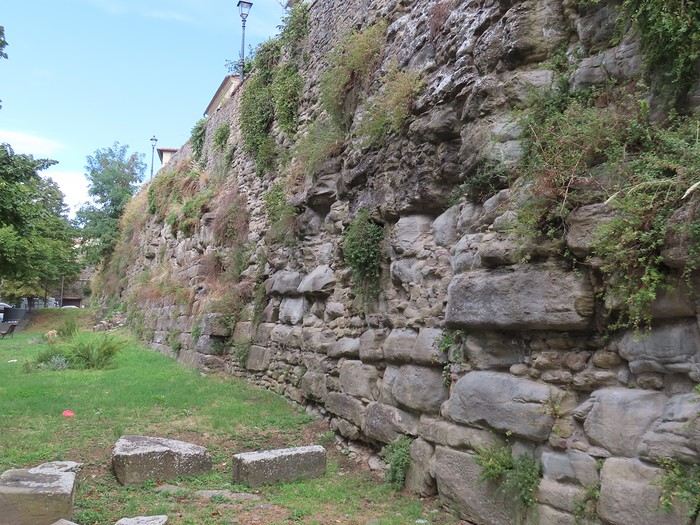
I’ll be spending the day in Cortona. Since there’s so much to see there (at my visiting pace), the day will be pretty packed—early start, late return. The weather is still cool, but the wind has died down and the sun is out, so it feels much better. Cortona’s site is exceptional. The town sits on a hillside, but the plain at its foot is 400 meters above sea level, and the Girifalco fortress at the top is at 650 meters. So it’s not just a small hill—it’s a remarkable vantage point over the region, used and fortified since Etruscan times (likely one of the most important Etruscan centers). I manage to park near the Etruscan wall (5th century BC), which stretches about 4 km and runs all the way to the top of the hill. It surrounds the historic town and is really impressive when you think about how old it is.


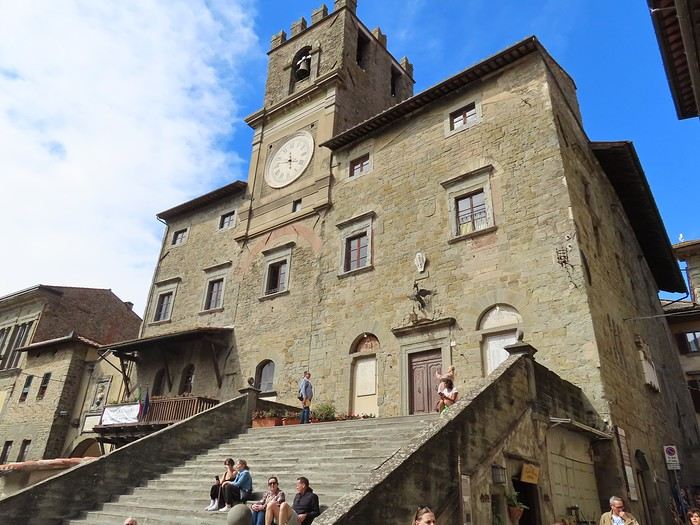
In Cortona, there are two types of streets: the first follow the contour lines, and the second connect them, running steeply uphill. I enter the town through the "Porta Bifora," a gate in the wall, and climb a steep street up to Piazza della Repubblica, the central square. The "Palazzo Comunale" dominates the square: a clock tower and a grand Renaissance staircase built on medieval foundations.


Nearby, "Piazza Signorelli" is the town’s second square. This morning, both squares host a market that draws a big crowd—locals and tourists alike. It’s the only place on this trip where I’ve seen so many foreign visitors. I continue to "Piazza Duomo" (a viewpoint over the Valdichiana), where the diocesan museum sits across from the cathedral. It’s relatively small but features some major works.

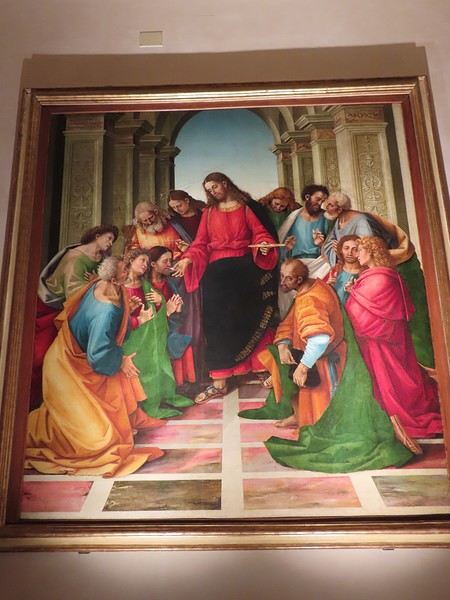
Luca Signorelli (1450–1524), born and died in Cortona, is the town’s pride. He’s one of the great painters of the Italian Renaissance. *Communion of the Apostles* (1512) includes a close-up of Judas.


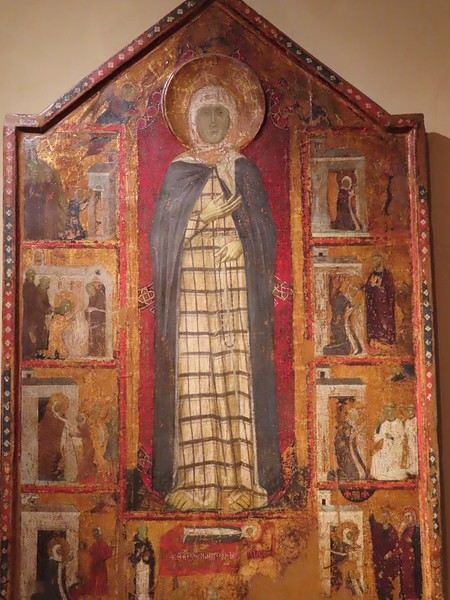
Another painting depicts Santa Margherita da Cortona, who died in 1297, and scenes from her life. The artist is anonymous but believed to be Sienese, from the Trecento. The saint wears a halo long before her canonization in the 18th century—proof that popular devotion moved much faster than the official Church...


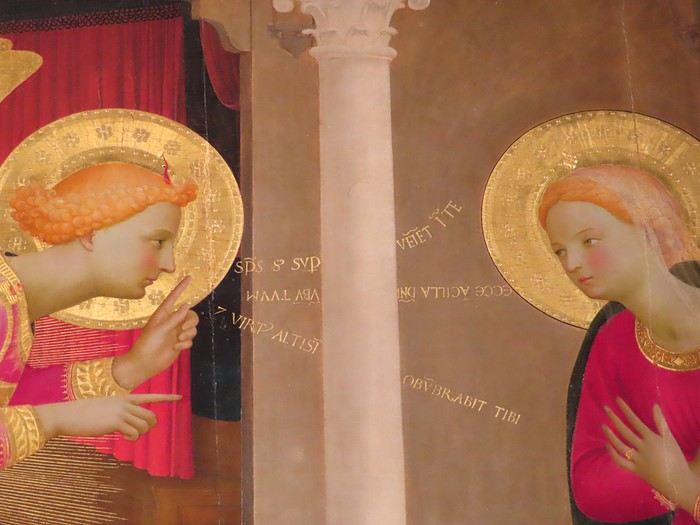
This museum also has a second *Annunciation* painted by Beato Angelico (see San Giovanni Valdarno, Day 17, for the first one).


I prefer this one because of these differences: - The architecture where the scene takes place - The angel’s wings - The angel is static in the first one; here, he’s (almost) still in motion - The angel’s hands emphasize his words in this version.

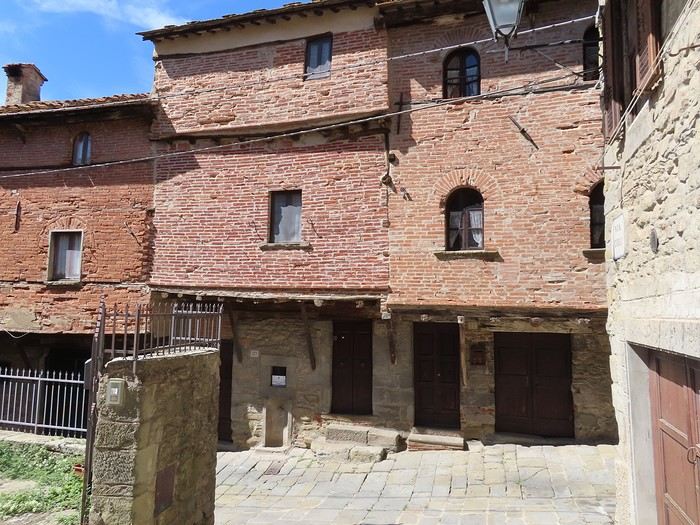
Along the wall below the museum, "Via Janelli" is lined with medieval houses (I don’t have any documents dating them). I notice that they’re built in brick from the first floor up, while the "palazzi" are made of stone throughout.


More from the day in the next post.
Valmichel86OP· 2 years ago
Day 19: Saturday, September 14 (continued)

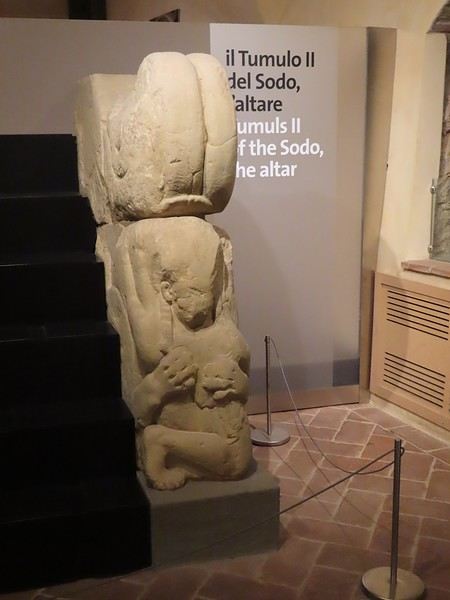
In the afternoon, I visit the MAEC (Museum of the Etruscan Academy and the City of Cortona), where I’m particularly drawn to the Etruscan section. This statue comes from the Sodo tumulus, an Etruscan burial mound at the foot of Cortona’s hill; it was part of the entrance to a podium-altar.


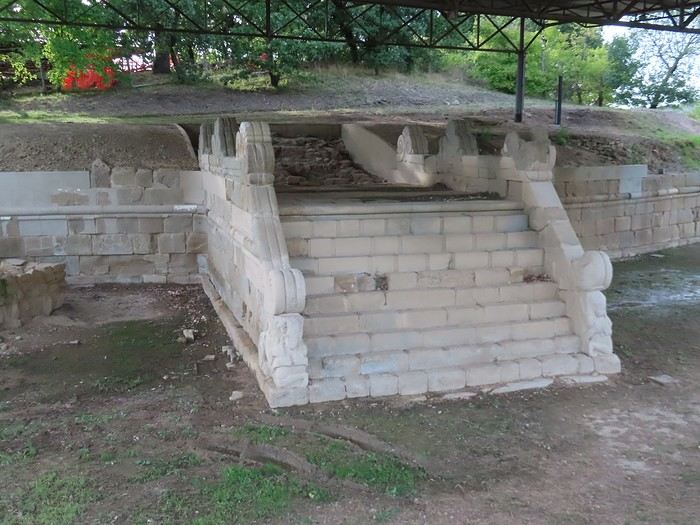
To better understand what this statue represents, I’ll describe what I saw later in the day when I visited the tumulus site at Sodo. You accessed the tumulus via a stone staircase, where the sculpture was part of the side ramps; at the top of the stairs was the podium-altar. This staircase has been reconstructed using some original blocks, but not the statues (originals are in the museum, reproductions at the tumulus).


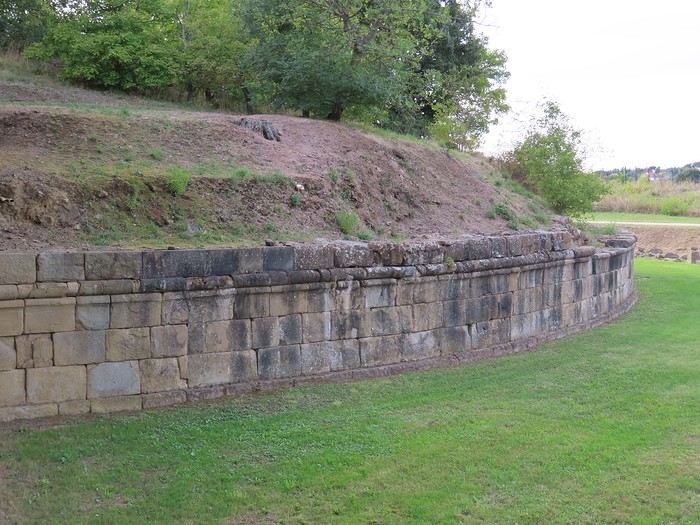
Around much of the tumulus’s circumference, the retaining wall is original (6th–5th century BCE); the tumulus contains two tombs from that period.


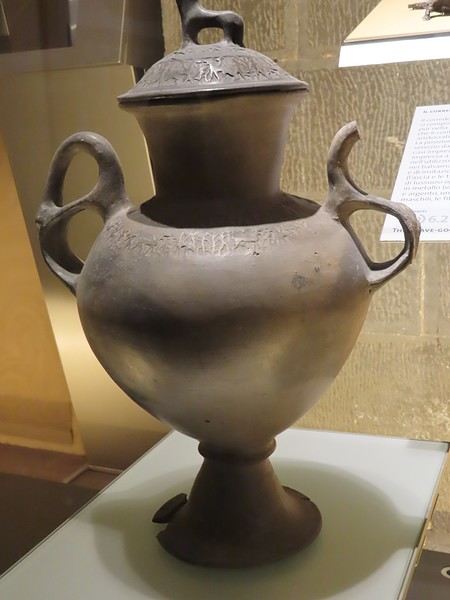
Back at the MAEC, which displays many Etruscan artifacts, here’s an amphora made of "bucchero" (late 7th, early 6th century BCE)—a black, shiny, monochrome ceramic.


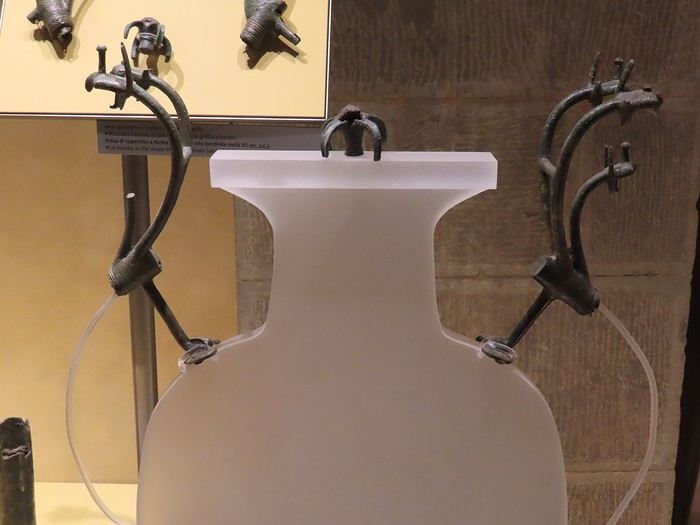
The funerary amphorae are decorated with small bronze pieces, like these dragon heads.


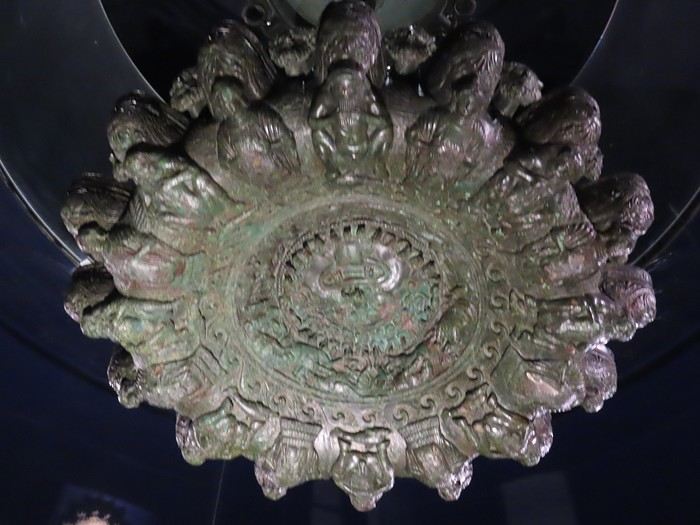
I end the visit with an impressive piece: a large bronze candelabrum. The photo doesn’t do justice to its size or the extreme complexity of the work—it’s definitely very heavy (16 burners, numerous figures). Archaeologists believe it may have been used to illuminate a place of worship.


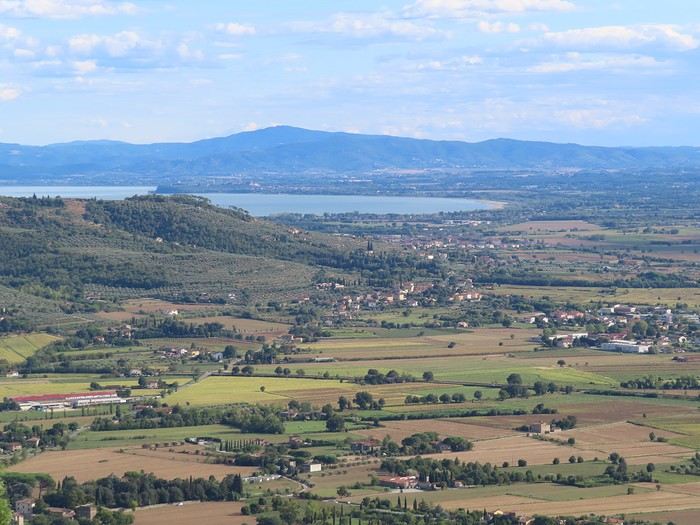
Afterward, I take a walk around town in search of viewpoints, which are bound to exist given Cortona’s hilltop position. "Via Santa Margherita" runs along the city walls, and the view opens up when I reach the start of the Via Crucis. I’m on the southern slope of the hill, with Lake Trasimeno (Lago Trasimeno) in the distance, in Umbria.


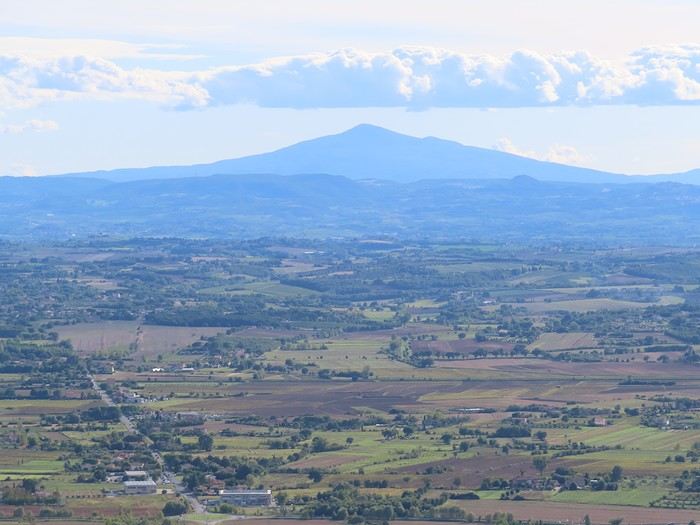
Further south, in Tuscany, is Monte Amiata with its volcanic shape—still 1,700 meters high. In the foreground, the Valdichiana.

Valmichel86OP· 2 years ago
Day 20: Sunday, September 15, 2024

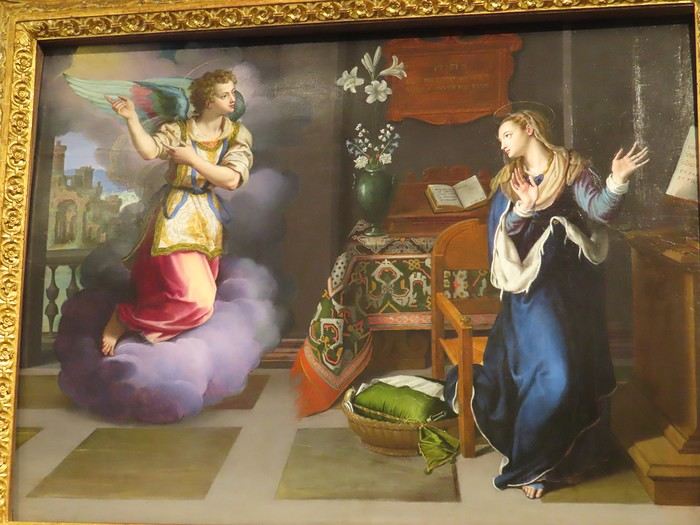
I’m heading back to Arezzo one last time to visit the Ivan Bruschi house-museum. It’s housed in a beautiful building, the "Palazzo del Capitano" (Palace of the Captain of the People), located on Corso Italia, right across from the "Pieve di Santa Maria." I’m a bit reserved about the interior—there’s a lot of stuff, but it’s not well showcased, and it feels like a real mess. A bank foundation (I can’t remember which one) put together a collection of paintings displayed in the house, which are better than the other objects. Here’s a way of depicting the Annunciation from the very end of the 16th century: Alessandro Allori (1591), a painter from the late Mannerist period.


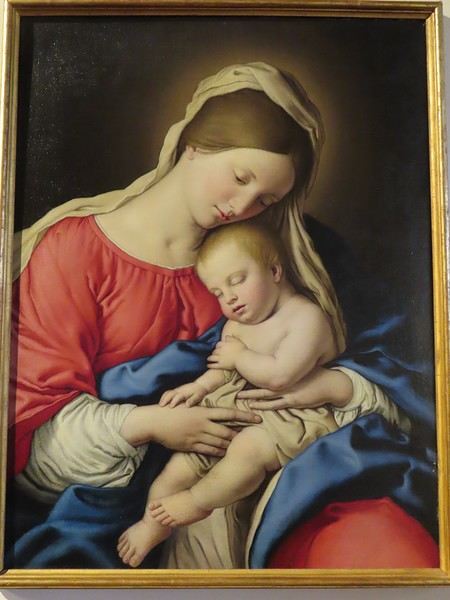
Moving forward in time, we reach the middle of the 17th century with Giovanni Battista Salvi, known as "il Sassoferrato" after his birthplace. He’s famous as the painter of Madonnas, specializing in the subject, which he depicted hundreds of times—likely because he lived during the Counter-Reformation. His style is classical, with a lot of softness, balance, and serenity, which comes through in the painting on display.


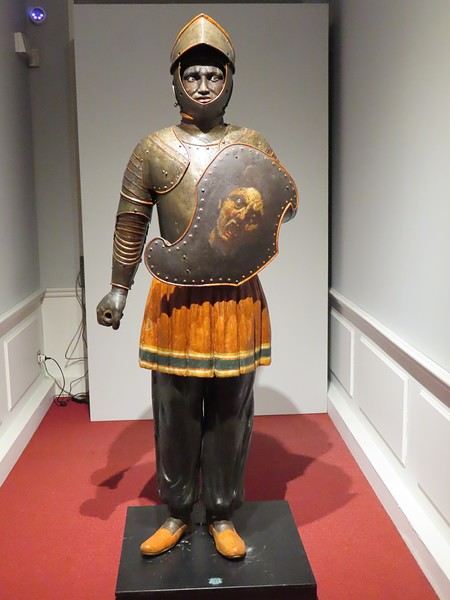
A temporary exhibition has been open for a few days, dedicated to jousts and tournaments in Tuscany. I picked out a mannequin (Florentine-made, 1579).


In the city center, I also notice small signs marking the filming locations of the movie "Life Is Beautiful" (Roberto Benigni, 1998). I leave the city via "Piazza Sant'Agostino," a spot I hadn’t visited yet.

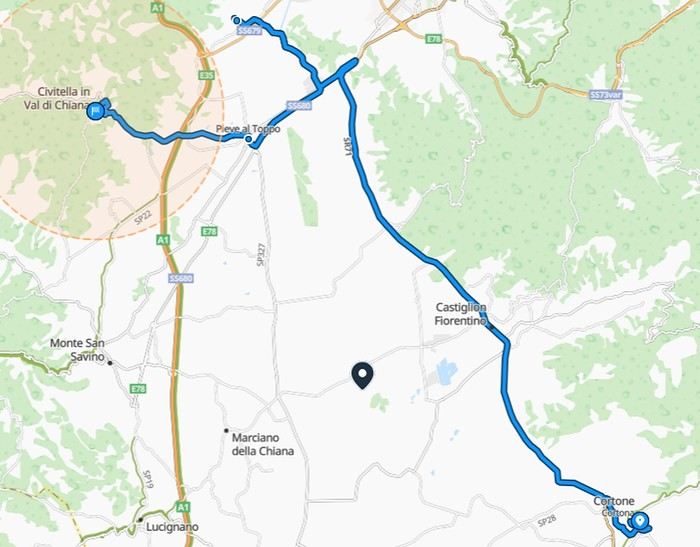
Time to insert a little map.


Yesterday’s route went from Ruscello (the end of the blue line at the top of the map) to Cortona (bottom right). This afternoon, I’m taking a bike ride on the "Sentiero della Bonifica"—the Pieve al Toppo to Frassineto section, which extends the ride I did on Day 14. "Bonifica" means land reclamation. This plain, the Valdichiana, where water used to stagnate, was the focus of drainage and agricultural development work in the 18th century (if I remember correctly). The main canal (Canale Maestro) directs water toward the Arno, and the "Sentiero della Bonifica" runs alongside it, creating a flat path of about 60 km starting near Arezzo and heading south (toward Chiusi). The route I took isn’t on the map (you can see Pieve al Toppo, the starting point, then it heads toward the black dot), because it’s a bike trail with sections of gravel, others on dirt roads (strada bianca), and some on grass (less common).

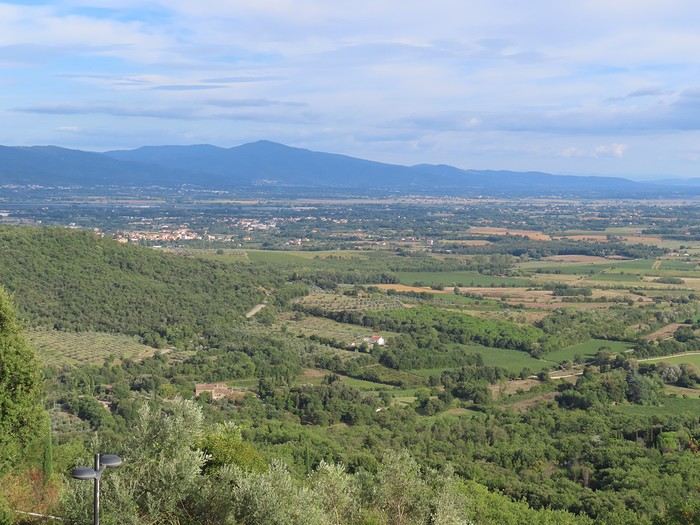
Next, I visit a village overlooking the Valdichiana: Civitella in Val di Chiana. See its location on the map. View of the Valdichiana.


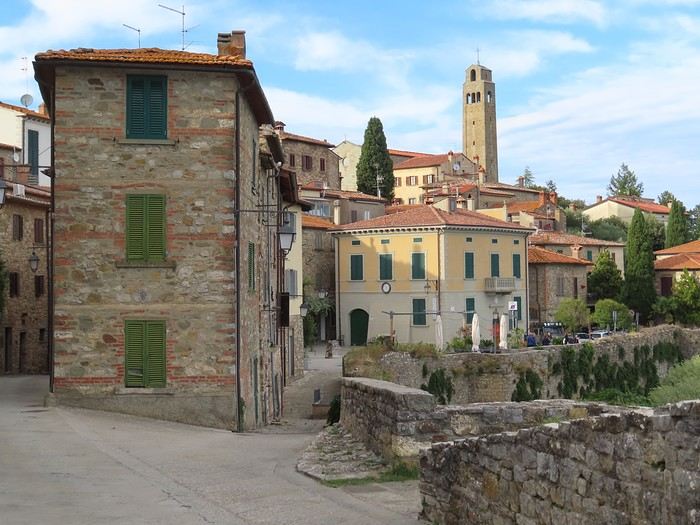
The village is surrounded by walls, with a church and a "rocca" (fortress). The main street runs from the church to the "rocca." Below is the lower part of the village, along the walls.


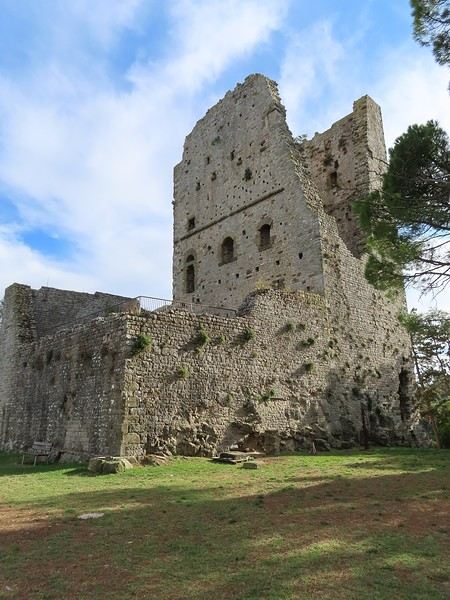
The fortress is Lombard, dating back to the 600–800 period. This photo shows the keep, which was damaged by German troops in 1944.


This village is a "martyr village." German troops executed over 200 people here on June 29, 1944—one of the mass massacres of the war in Italy. A memorial site is set up under the arcades of the main street.


Back to Ruscello.
Valmichel86OP· 2 years ago
Day 21: Monday, September 16, 2024

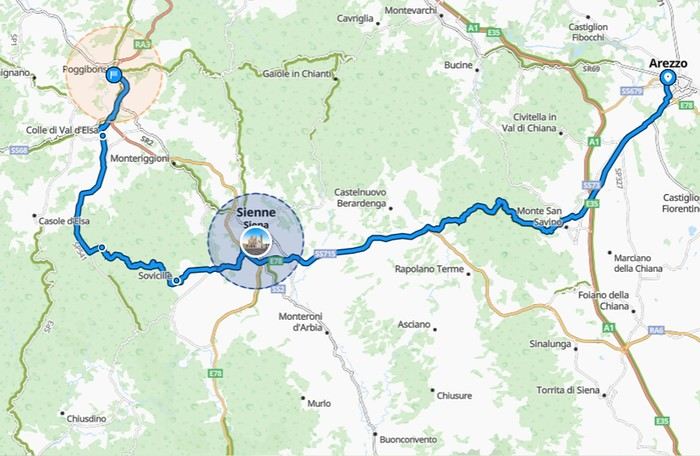
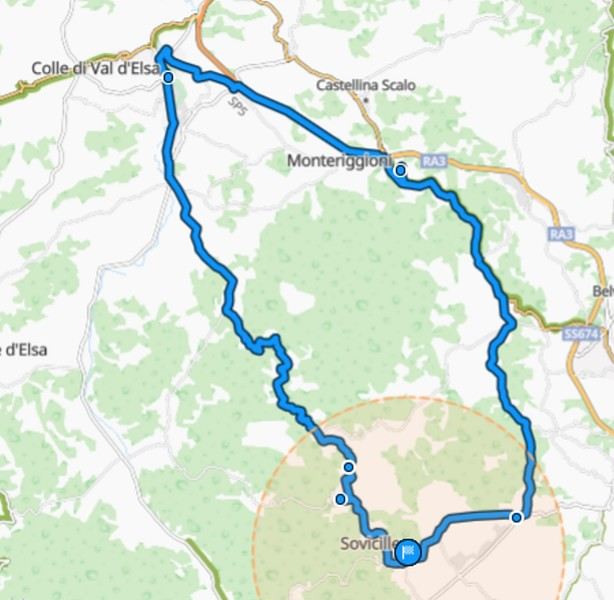
I’m heading to the last campsite of the trip, near Siena, specifically in Sovicille. Since it’s about 60 km away, I’ve got plenty of time to make the journey, settle in, eat, and get ready to head to Poggibonsi in the afternoon.


The final part of the trip (the Siena area) is beginning, and it’ll revolve around the "Via Francigena" (the walking route), which I’ll follow—mostly by mountain bike, with a bit of walking—starting from Colle di Val d'Elsa. I’ll also do quite a few visits while staying in the left half of the map above. The "Via Francigena" is a pilgrimage route that runs from Canterbury to Rome. Since I’m not a pilgrim, I see it as a long-distance trail (GR). In Tuscany, I’ve traveled it from the north of the region up to Colle di Val d'Elsa, the town from which I’ll pick up the route again heading south. The stages as listed on the "Via Francigena" website: Stage 32: From San Gimignano to Monteriggioni (starting from Colle di Val d'Elsa) Stage 33: From Monteriggioni to Siena Stage 34: From Siena to Ponte d'Arbia Stage 35: From Ponte d'Arbia to San Quirico (as far as Buonconvento)

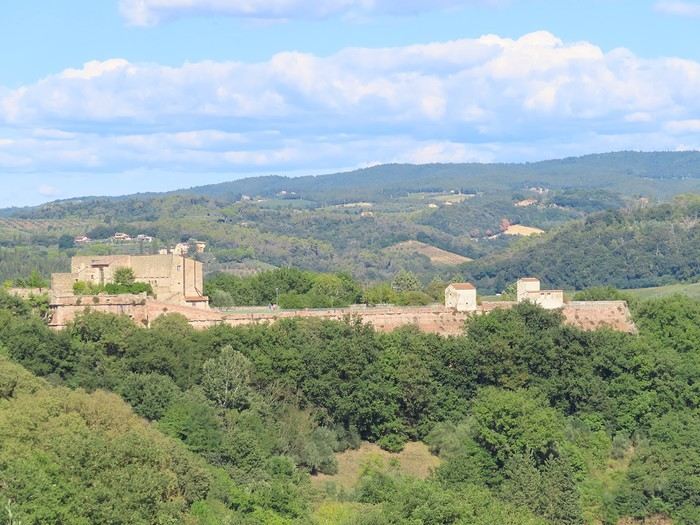
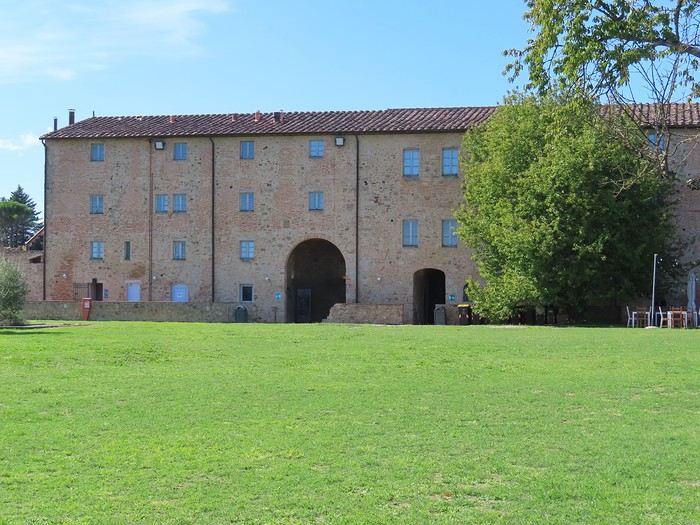
I decided to check out the Poggio Imperiale fortress in Poggibonsi. This fortress is the first major (unfinished) fortification project of the Florentine possessions by the Medici at the very beginning of the 16th century. I couldn’t quite picture the shape of the fortress with its walls due to the complexity of the terrain. Inside, the pentagonal-plan citadel (cassero) is built on a spur, and that’s what I’ll be visiting. I took the photo from the San Lucchese monastery, located on a slightly higher hill.


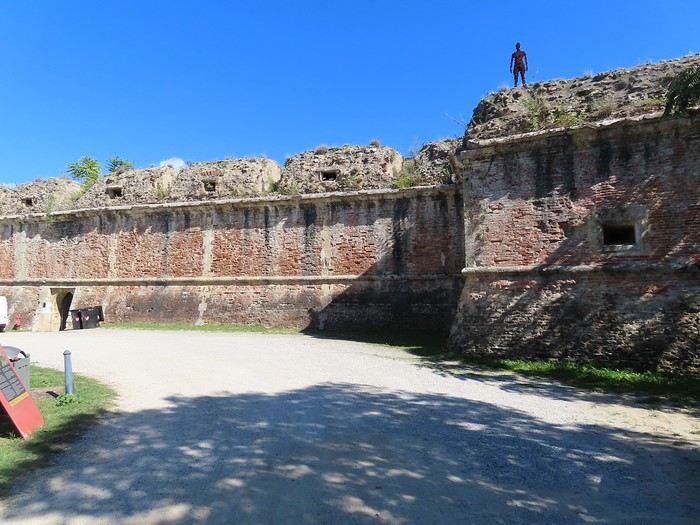
The spur is completely blocked by this wall, and the only entrance to the citadel is the gate you see in the background (photo below). You then pass through a long tunnel to reach a barracks area and emerge onto the parade ground. In the photo above, the wall and barracks area are on the left; the parade ground, on the right, extends to the end of the spur.


I’m now on the parade ground, looking toward the barracks.


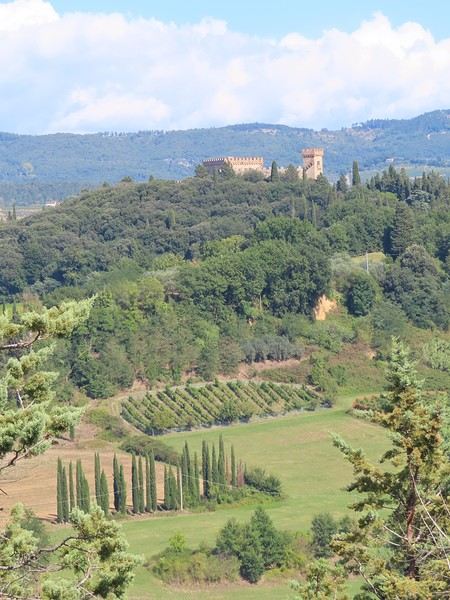
From the end of the spur, the view over Poggibonsi and its surroundings is expansive, here looking toward the Strozzavolpe castle.


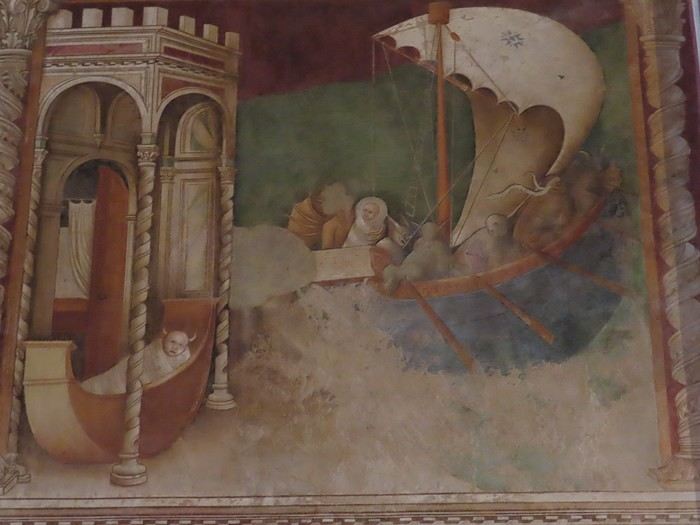
Next, I head to the San Lucchese monastery. The church, preceded by a portico, has a single nave. At the entrance to a chapel, there’s a series of frescoes illustrating the story of Saint Stephen. The saint is taken in his cradle by devils who carry him away by boat; they place a little devil in the cradle to trick his nurse, who might not notice the horns and think the child is still there (Cennino Cennini, 1388). It’s like a graphic novel before the genre was even invented (or a fictionalized life, if you prefer).


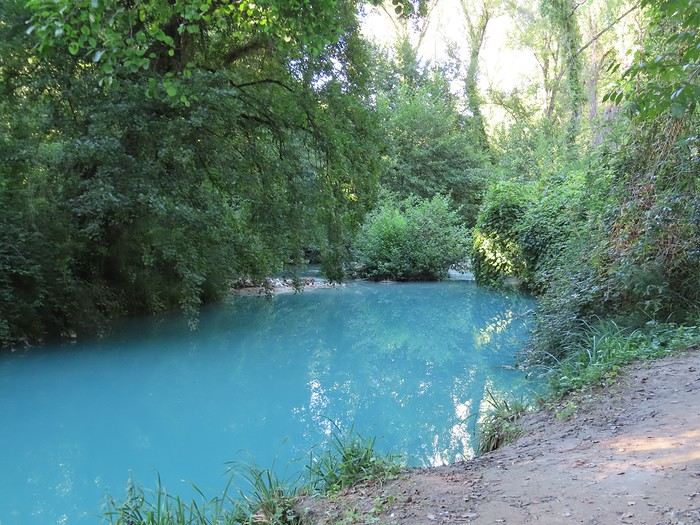
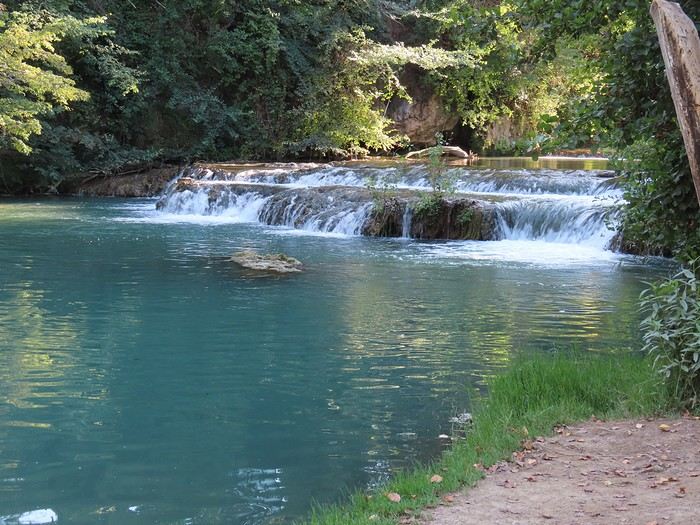
I end the day in Colle di Val d'Elsa by covering a short section of the "Via Francigena" (which can only be done on foot). It’s the crossing of the river park; the trail follows the river from the swimming pool to the southern exit of the town (frazione di Gracciano).


A refreshing route, perfect for a swim in some spots, all just steps away from the city.
Valmichel86OP· 2 years ago
Day 22: Tuesday, September 17, 2024

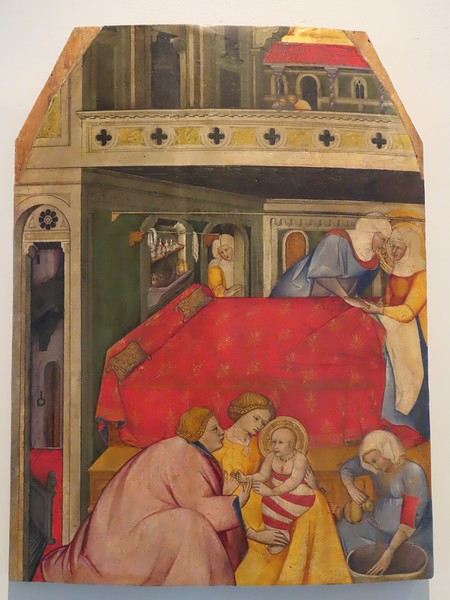
I’m spending the day in Colle di Val d'Elsa (see yesterday’s map), with a visit planned in the morning and mountain biking along the "Via Francigena" in the afternoon—all under mediocre and quite chilly weather (a sweatshirt was necessary). The San Pietro complex occupies the premises of the former eponymous monastery in the upper town; it recently opened, and the presentation is meticulous. Here’s a painting titled "Birth of the Virgin" (late Trecento); if you look at it as a testimony, Cennino Cennini painted a Tuscan interior from that era.


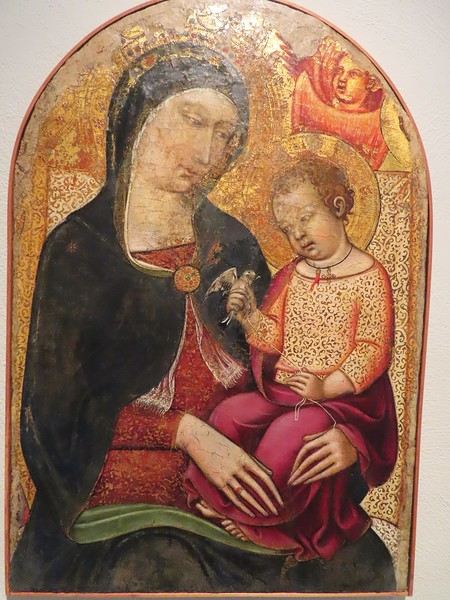
From the same period (second half of the Trecento), a Sienese painter, Luca di Tommé, painted numerous Madonnas, including this one, which comes from the church of Pernina, a rural church lost in the Montagnola on the municipality of Sovicille (see the day after tomorrow). He wasn’t an innovator but a painter inspired by Duccio di Buoninsegna, who lived 70 years before him.


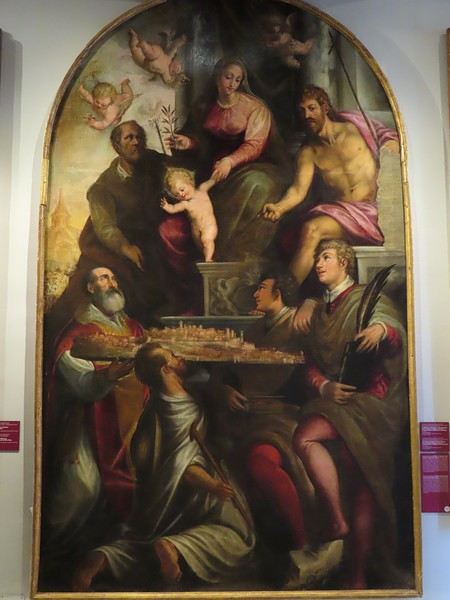
Two centuries later (1581, Simone Ferri da Poggibonsi), this painting has almost purely utilitarian value, featuring a model of the city on a tray. The patrons hoped that by offering it to an ecclesiastical dignitary, Colle would become the seat of a bishopric.


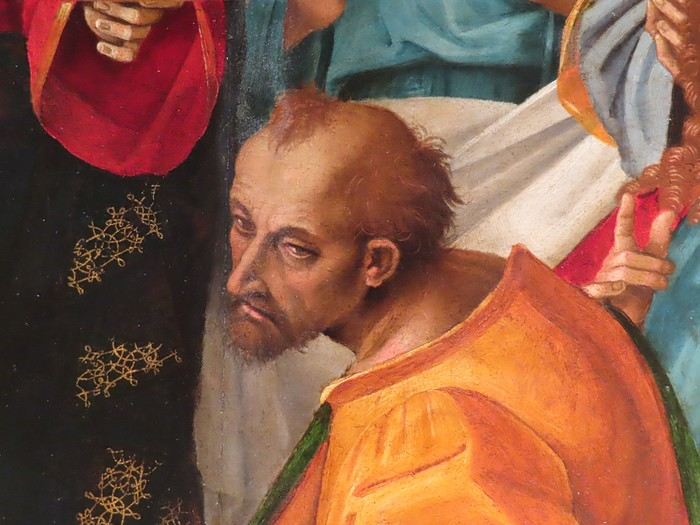
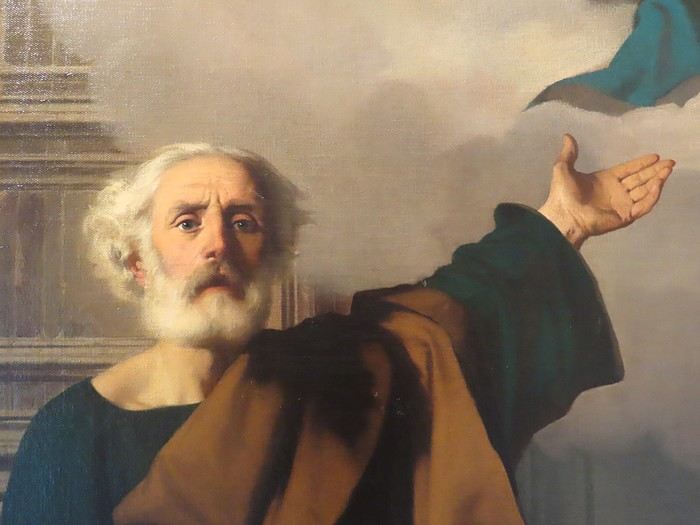
A leap of a few centuries brings us to Antonio Puccinelli, who, in 1859, painted a man with stunning realism. But who is this man? It’s Saint Peter... and I’ve cropped a detail from an Assumption with 2 Saints.


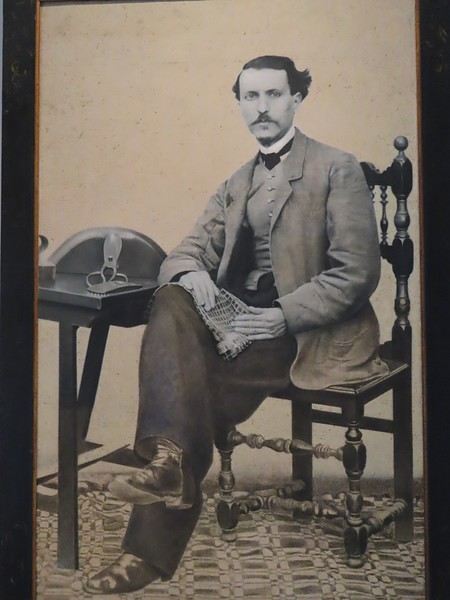
There’s no doubt this artist was interested in photography. But he wasn’t a photographer—he was a painter: Adamo Lucherini. I photographed an oil on canvas exhibited in 1915: "portrait of my father." Amazing!


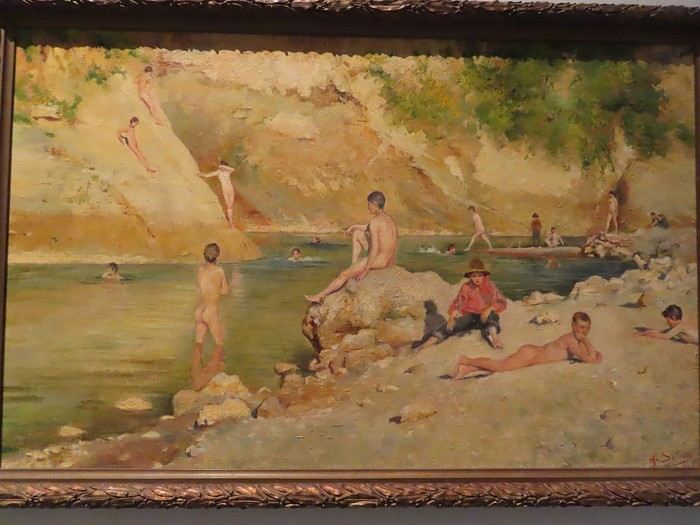
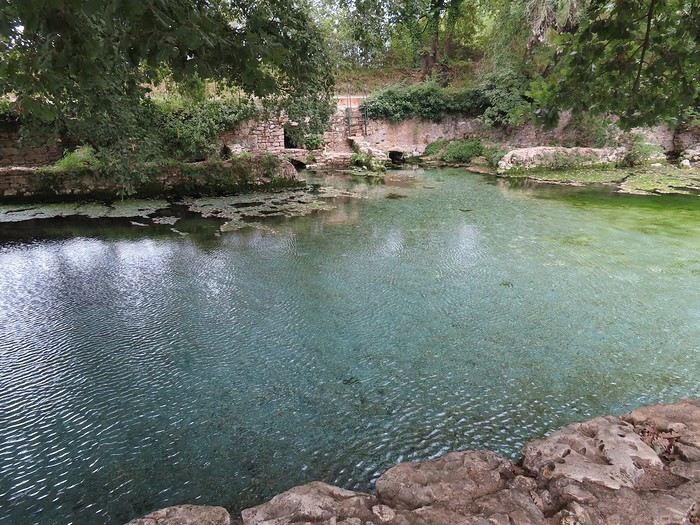
To wrap up the visit, let’s return to the riverside in what is now the river park. Antonio Salvetti (who was a painter, architect, and mayor of Colle) painted in 1895 "the niche, summer on the banks of the Elsa"; I recognized a place I passed through, with a much sunnier atmosphere in the painting than during yesterday’s walk.


In the afternoon, shortly after leaving by mountain bike from the "frazione" of Gracciano, I arrive at the place called "Le Caldane," a spring feeding the Elsa that has been known since antiquity. It was developed into thermal baths during the Etruscan, Roman, and medieval periods; a few parts of the pools remain, which are masonry (probably a reconstruction, I think).


The trail crosses the countryside and arrives in the village of Strove on a well-restored square, set back from the road.


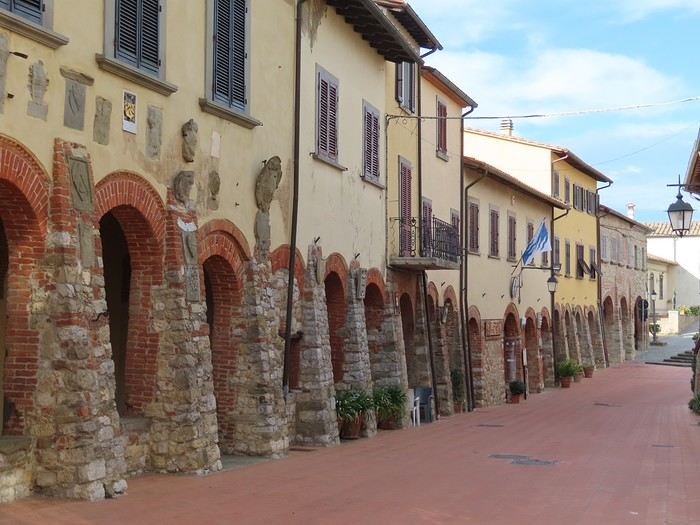
We don’t follow this road for long; a network of paths and, finally, a very small road lead to Badia a Isola, a former abbey built on a height that once gave the impression of being on an island. It’s a Romanesque construction from the 12th century, with an entire village surrounding the abbey.


The last part of the trail leads to Monteriggioni, to the hamlet at the foot of the hill crowned by the famous walls. I return to Colle di Val d'Elsa by road.
Valmichel86OP· 2 years ago
Day 23: Wednesday, September 18, 2024

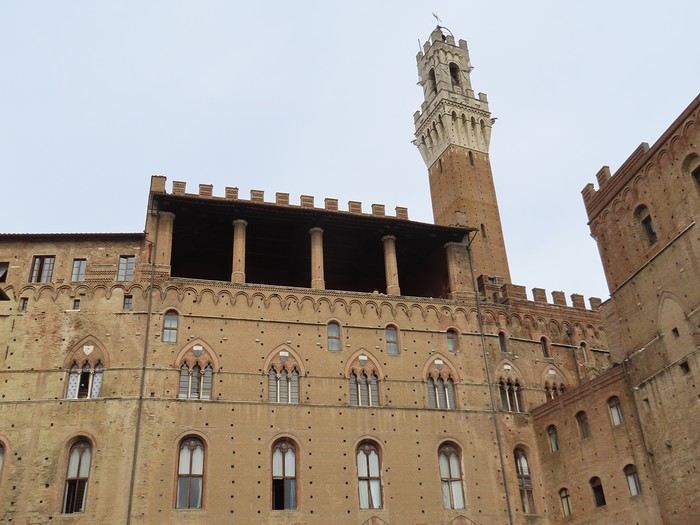
Cool, overcast weather all day with the threat of showers. It’ll be a transition day; since planning a long mountain-bike ride is risky, I won’t leave Monteriggioni. Instead, I’ll walk across Siena following the "Via Francigena" route, from "porta Camollia" in the north to "porta Romana" in the south. This isn’t a visit to Siena—I’ve already been there. A quick detour to see the "palazzo pubblico" from the side you never see—the back (photo taken in "piazza del mercato").


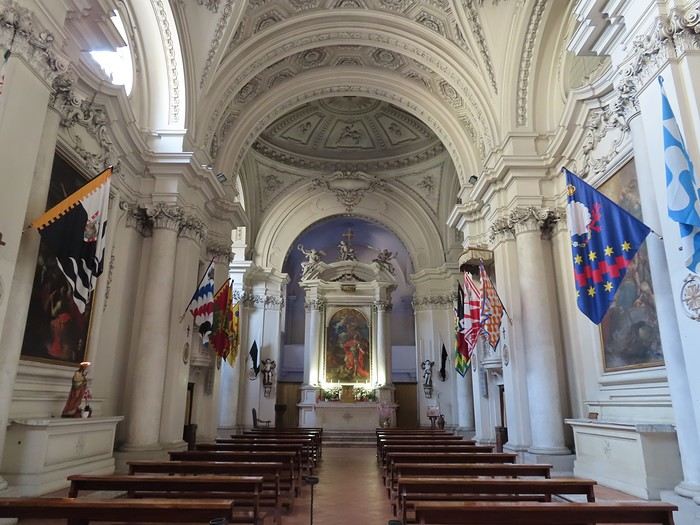
Then, to get to "porta Romana", I take "Via di Pantaneto", then "Via Roma". Along the way, I pass the church of San Giorgio. The interior was completely redone in the 18th century (appearance after the 1731–1738 renovation).


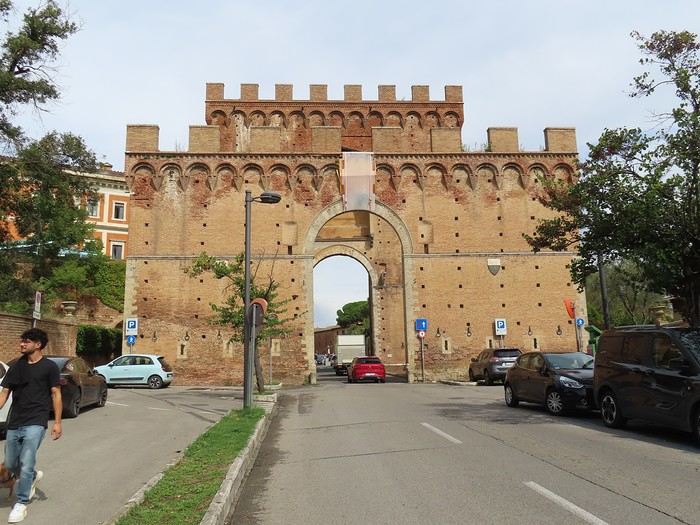
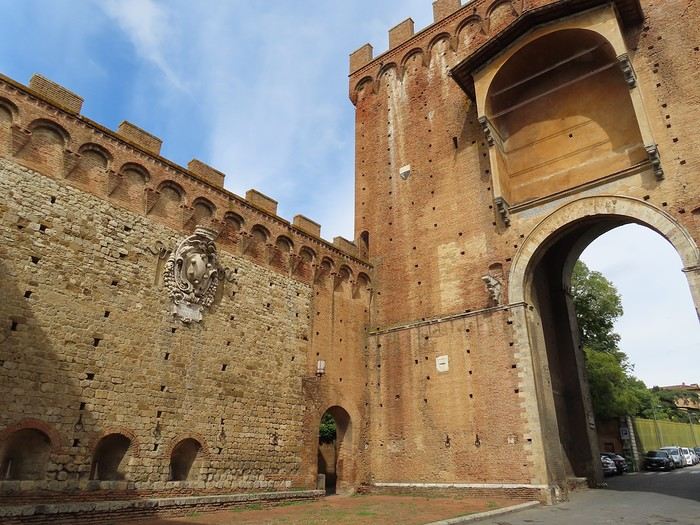
Once outside "Porta Romana", I see it as a traveler arriving from Rome via the "Via Cassia". Built in the 1320s, it was a monumental entrance.


The structure consists of two arches (visible in a row in the photo above). Between the arches is a space enclosed by side walls—this entire ensemble forms "Porta Romana".


The day after tomorrow, I’ll leave from "Porta Romana" to continue south along the "Via Francigena".

In the afternoon, a temporary break in the weather gives me time to do a short stretch of the "Via Francigena" northwest of Siena. Starting from a spot on the SP101 (near a rural guesthouse), the trail crosses a wood frequented by locals mushroom hunting (the season must be right). It’s followed by a rough section on small roads (around Le Querce, Le Coste, Poderuccio) that leads to "Viale Cavour", the avenue leading to "Porta Camollia", the northern entrance to the old city. The end of the day is spent in steady rain (luckily, I finished my route). It feels like night falls much earlier than usual because of the lack of light. Persistent rain for most of the night.
Valmichel86OP· 2 years ago
Day 24: Thursday, September 19, 2024

I’m heading back to Colle di Val d'Elsa one last time, but this time I take tiny roads—some of them unpaved—that wind through the Montagnola.


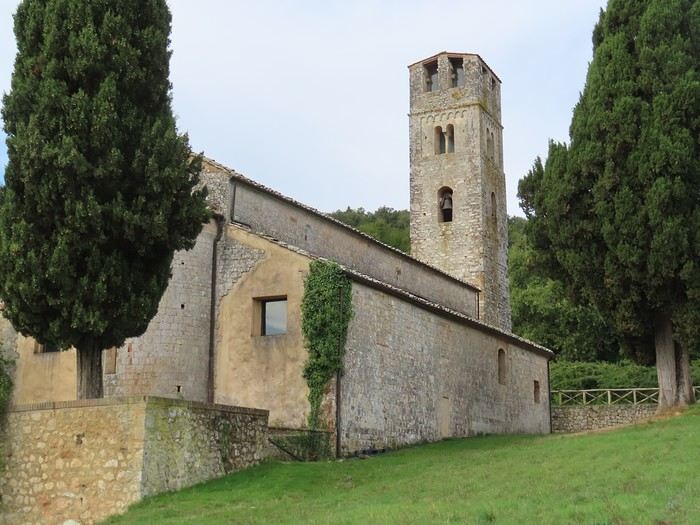
Rural churches are scattered across villages (like Ancaiano) and even out in the countryside, like the Church of Pernina (San Giovanni Battista Church, mentioned in 1078, Romanesque). There was probably a hamlet here back then. One of the paintings I saw the day before yesterday came from this church (Luca di Tommè’s *Madonna and Child*).


I’m checking out what makes Colle so prosperous today: crystal (95% of Italy’s production, 15% of the world’s). The region originally produced glass, and in the 19th and 20th centuries, Colle was a major glassmaking hub. The brand-new Crystal Museum is on an old production site, where a furnace and its chimney have been preserved and integrated into the surrounding area (lower town).


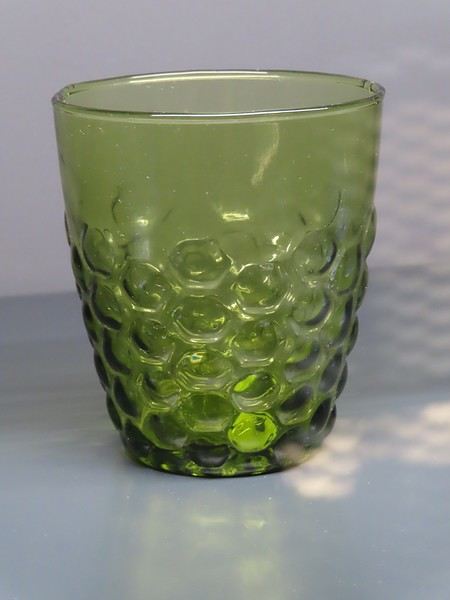
From the Trecento onward, glass was produced in the Valdelsa, especially in Gambassi Terme (about 30 km from Colle). This town "invented" a glass model that’s stood the test of time: the Gambassi. Here’s a modern reproduction of it (based on the info provided, you can still buy this glass today).


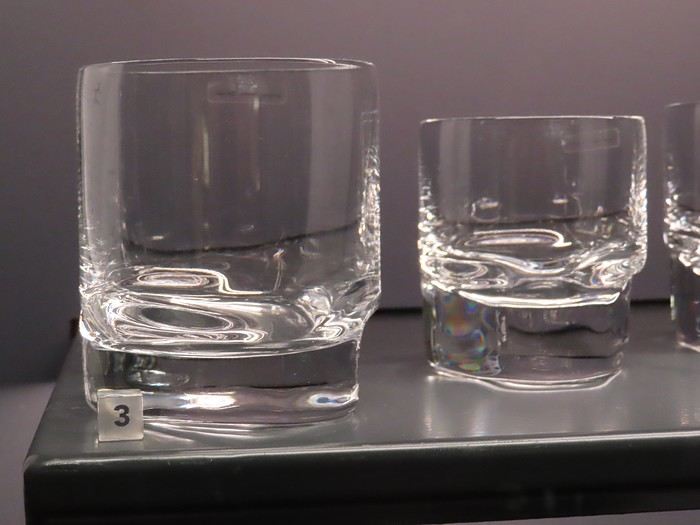
After strict crystal standards were adopted (in the 1950s or 1960s, if I remember correctly—so take that with a grain of salt), manufacturers took a major turn. They brought in "designers," and the models produced changed completely. Here’s the "Pitagora" glass, designed by Marco Zanusso (1969)—a triangle-circle combo, with a transition from base to container.


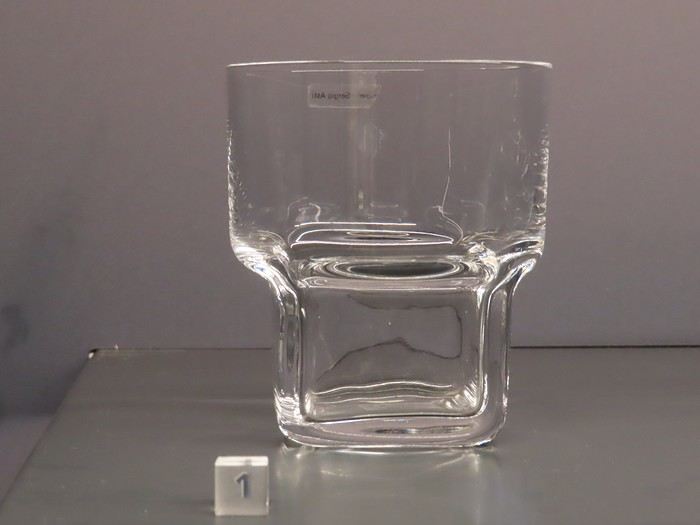
In the same vein, here’s the "Mapan" glass, designed by Sergio Asti (1970)—a square-circle combo, with the same base-to-container transition. Though it came after the previous one, this glass was more successful: it’s part of the MOMA’s permanent collection in New York.


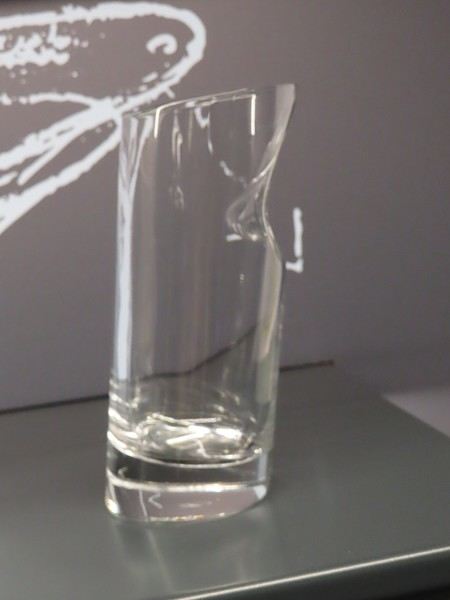
A few more years later… 1986. Angelo Mangiarotti created "Ice Stopper" (sorry for the poor photo quality). This glass is a sloped cylinder (but not *too* sloped—it still needs to stay upright). It’s not quite a perfect cylinder, though, because it has an inner protrusion (an outer indentation) with a smooth shape. Its purpose? To keep ice cubes from reaching the drinker’s lips. Now *that’s* peak futility.


That’s all for the Crystal Museum (you can tour some of the factories—I didn’t).

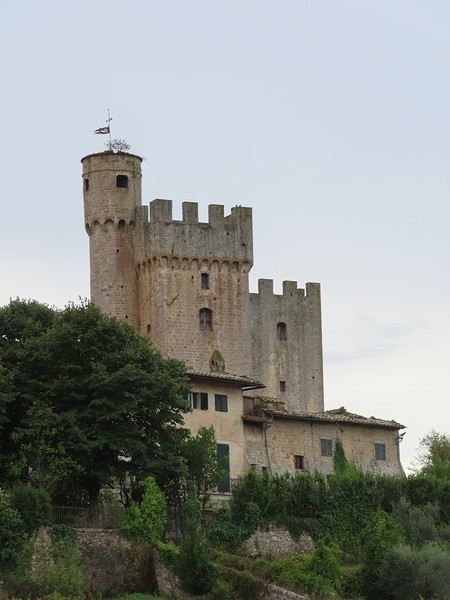
The afternoon was spent in the countryside between Monteriggioni and Siena, with scattered showers. The "Via Francigena" winds along the foothills of the Montagnola, roughly at the border between farmland and wooded areas (so parts are in the forest, others at the edge). I remember one stretch (about 800 meters) where the wheels were completely caked in sticky mud, making it nearly impossible to move. That was a result of yesterday’s rain and last night’s downpour. Castello della Chiocciola, a private castle along the "Via Francigena."


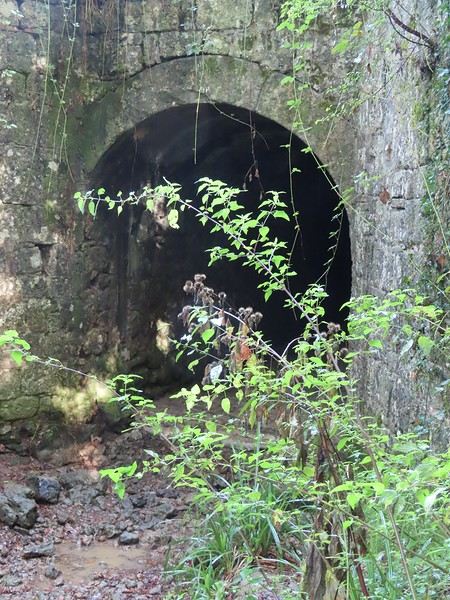
The last part of the route skirts the "Pian del Lago" area, a former lake drained in the 18th century to create farmland. A monument commemorates the project, which required major work—including the construction of a drainage tunnel. Here’s the entrance (the tunnel goes under a hill to reach a valley where the water could flow out).


I linked up with yesterday’s route just past the structures (monument, tunnel) in the "Pian del Lago" area.

You might also like