Skip to content
From Southern Shikoku, between land and sea, to the blue waters of Miyakojima and finally the Tokyo metropolis
Japan › Travel journals Nathalie971

From Southern Shikoku, between land and sea, to the blue waters of Miyakojima and finally the Tokyo metropolis

Translated into English.
Add a reply…

Sign in to reply

Your reply to “From Southern Shikoku, between land and sea, to the blue waters of Miyakojima and finally the Tokyo metropolis” is one step away. We’ll bring you right back to it.

Create a free account

Why become a member?

74 replies

Nathalie971OP· 4 months ago
Day 22 - A Tokyo stroll

Today we’re off to wander through a neighborhood we haven’t explored yet. Kagurazaka is known for being a "French" district. We get off at the subway station with the same name as the neighborhood.

After heading in the wrong direction at first, we start our aimless meander. We just want to "soak in" the vibe. We begin in very quiet streets. A few nice restaurants seem to hide behind wooden sliding doors, and there’s a bakery with a more French feel than usual that seems to have a loyal clientele. Then we take the main street of the neighborhood, Kagurazaki Hill, heading down toward the Iidabashi subway station. The street gets livelier as we go.
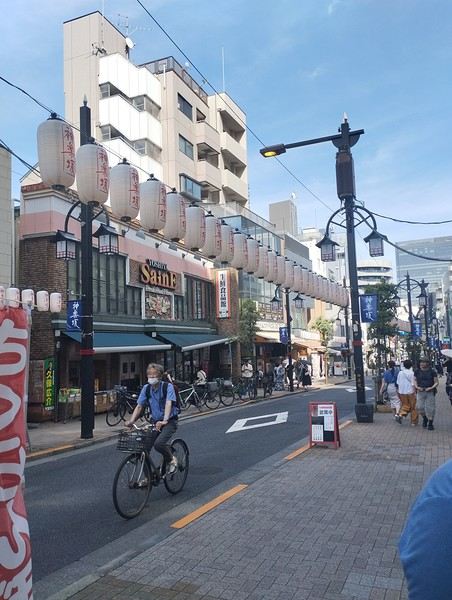


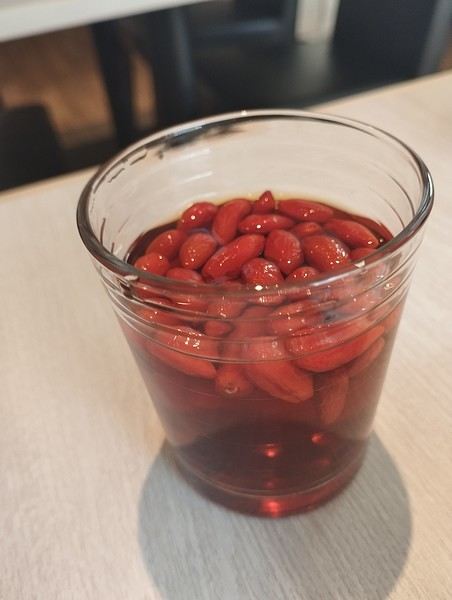
And it’s true—we really felt a French vibe with all these shops; for a moment, we could’ve imagined ourselves shopping like Parisians (though it’s still different). At lunchtime, go figure our logic, we ended up in a Chinese restaurant where we particularly enjoyed the goji berry-infused alcohol. In the neighborhood, we loved watching family life at the little Shirogane Park, where parents chat together while the kids run and jump in the sandbox, for example. We visited the Akagi Shrine, which has the unique feature of having been renovated in 2010 by Kengo Kuma. The shrine is made of wood and glass—modern, bright, and warm. The little café next door is pretty busy.
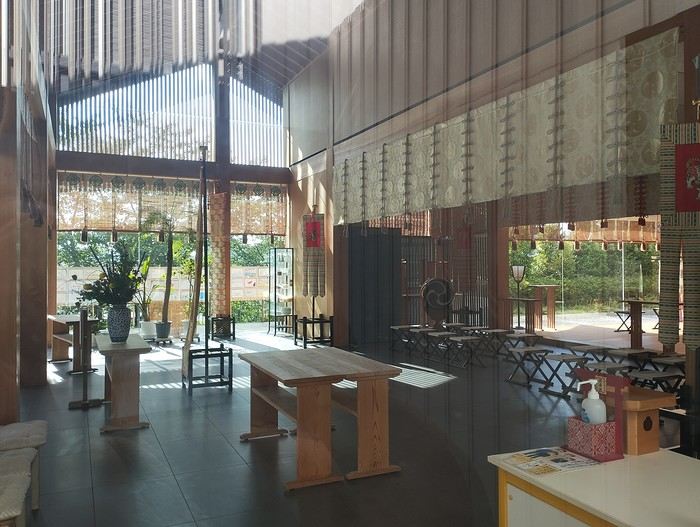


We also passed by the more traditional Zenkoku Temple. The alleys are lined with low-rise buildings or pretty houses. The neighborhood is residential but lively.
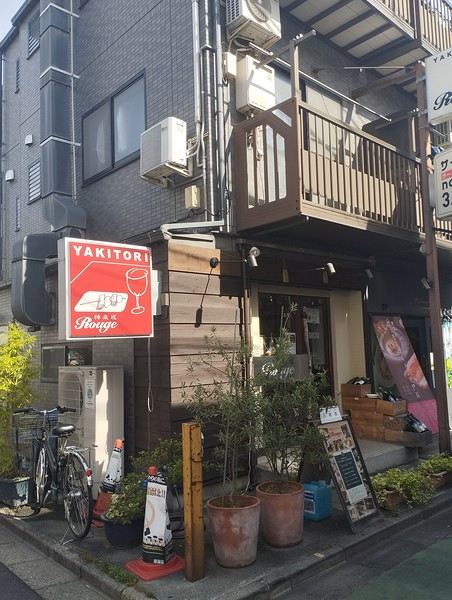


Every now and then, a terrace pops up, like this one with the pastry shop "Bon Rivière."

The heat was making us thirsty, so we couldn’t resist the pleasure of a nice cold fruit juice from Hapimaru Fruits. The strawberry juice was an absolute delight!! The green melon juice was good, but it would’ve been even better if it had been colder.

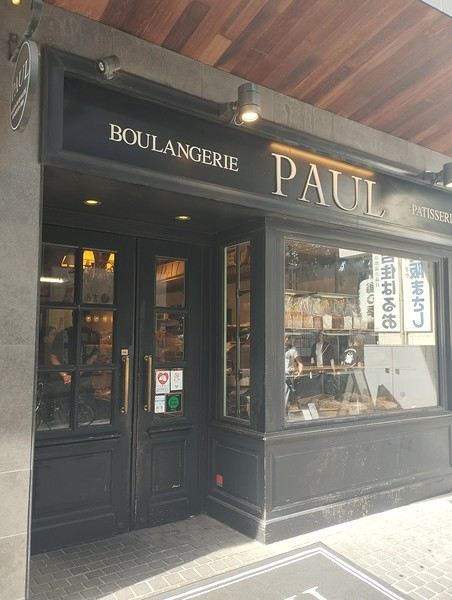
Famous French brands like Paul and Picard are around. There’s quite a crowd at Paul.... And to think that in France, this chain serves frozen food.....


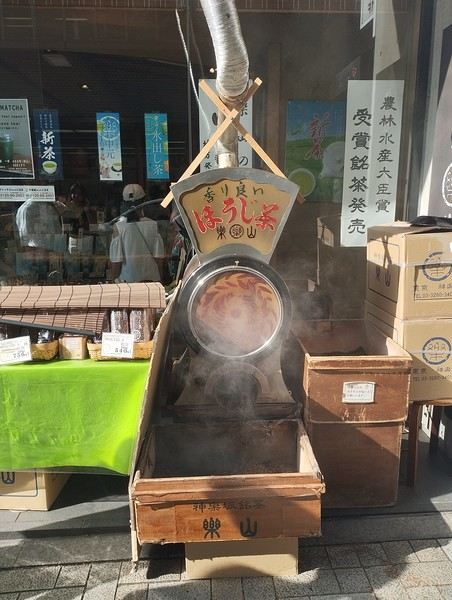
A warm scent fills the air. What’s that smoking machine in the distance that’s perfuming the street? It’s a machine for roasting tea. And when you get closer, the taste of roasted tea (hojicha) is unmistakable.


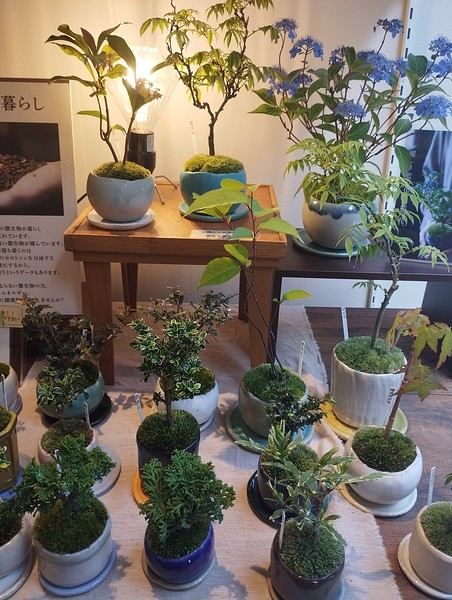
The side streets perpendicular to the main avenue are almost deserted. We pop into a shop selling pretty floral pots, among other things.


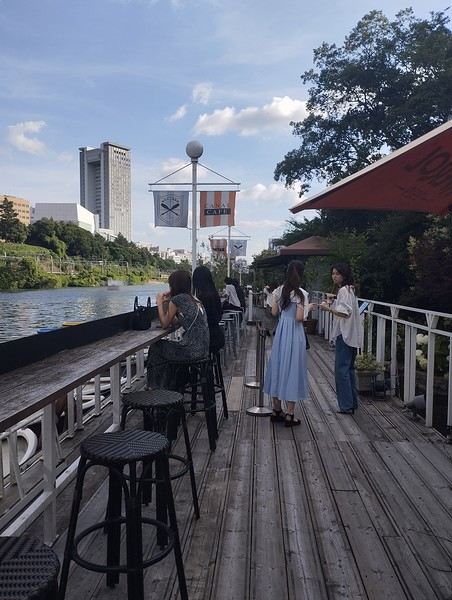
Finally, we reach the bottom of the street that leads us to the Japanese Canal Saint-Martin—the Canal Café. A few steps down, and you’re by the canal with a long terrace. It’s pretty unexpected for Japan and very picturesque.


Continuing straight ahead, we move into a different neighborhood. An arcade catches our eye. RAMIA is written in big letters. We discover a completely retro but peaceful shopping center with several terraces.

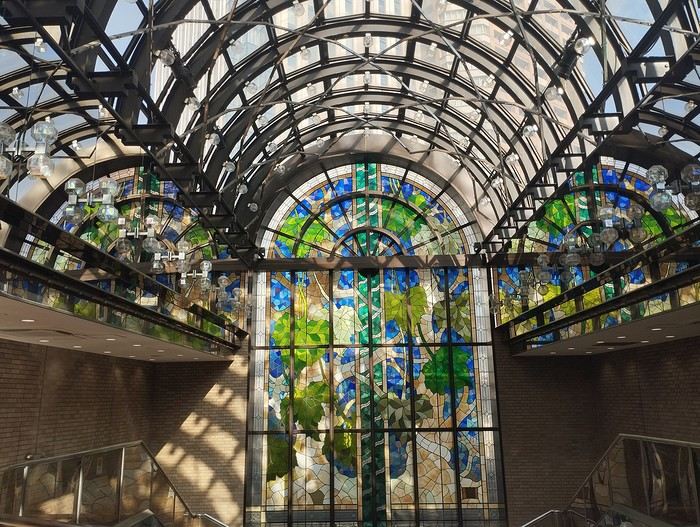
We decide to leave the semi-covered alley to enter a building. A magnificent glass roof with a green and blue stained-glass window at the back decorates the structure.


The center is connected to the station. We love wandering through supermarkets, and here we find shikwasa juice—the Okinawan lemon.

Further on, a kitschy alley unfolds with restaurants serving Chinese, Thai, or Italian cuisine, with old-school decor but still pretty authentic—you really feel like you’re in each of those countries in their respective restaurants. And as a bonus, there’s a fortune-teller. You can get your palm read. We leave the RAMIA shopping center right next to the modern Iidabashi station.

We’re above the bridge, which gives us a high view of the canal below. Then we continue our wanderings in a straight line, but this time in the neighboring Chiyoda district. It’s bigger, the streets are wider, the buildings are more modern and taller, and the atmosphere is less bustling—there are fewer people.

We pass by the gigantic first torii of the Yasuni Shrine but don’t visit it. We reach Kitanomaru Park by going through the Tayasu-mon gate. In front of a building, there’s a small crowd—fans of a singer. We spot a homeless person collecting coins from drink vending machines when there are any.

We enjoyed the park quietly before leaving the neighborhood. We had planned to stop by Ginza Six to have some really good matcha ice cream with a pastry cone, but a problem with the subway changed our plans. Instead, we went to a Thai restaurant we’d enjoyed on a previous trip. A good Thai curry—spicy, fresh, and creamy—is always a safe bet.

From the restaurant terrace, we head to the subway station near the sea. A huge Norwegian cruise ship, I think, is docked in the distance.
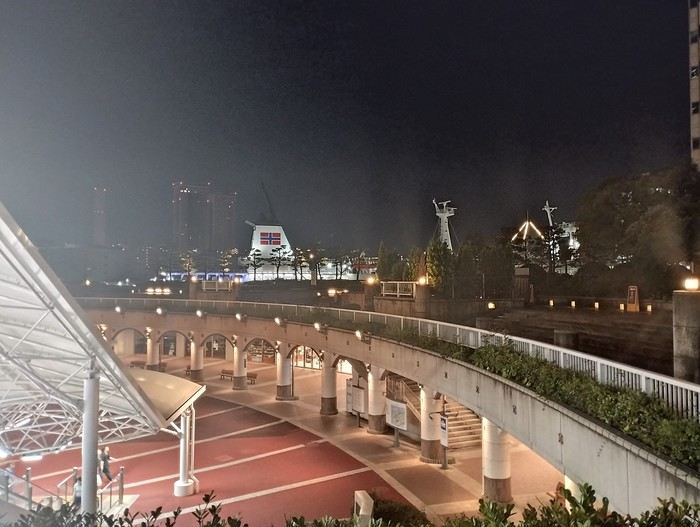


We head back to the hotel quietly.
Nathalie971OP· 4 months ago
Day 23 - West of Tokyo This 3rd installment in Tokyo has no tourist pretensions other than to "capture" the city's vibe by wandering through different neighborhoods. So today, we opted for a stroll in Kichijōji, a supposedly popular district west of Tokyo, in the suburbs. The sun and its scorching heat are still in full force... From Akasaka, which is central, we reach Kichijōji Station in about 30 minutes. The station is large, with multiple exits and lots of passersby. The crowd moves at a brisk pace, creating a certain liveliness that can sometimes be a bit challenging when your eyes need to find a landmark to figure out where to go, but at the same time, you don’t want to disrupt the flow of people who know exactly where they’re headed. In the end, we go where we can and find ourselves in the station’s basement (or at least, I think it’s the basement), which is packed with all sorts of shops where our eyes land...

I appreciate how every square meter is optimized and how the various products—whether they interest me or not—are displayed. There’s a certain aesthetic in the colors and the harmonious order. No doubt, marketing works even on minds that aren’t particularly shopping-oriented!

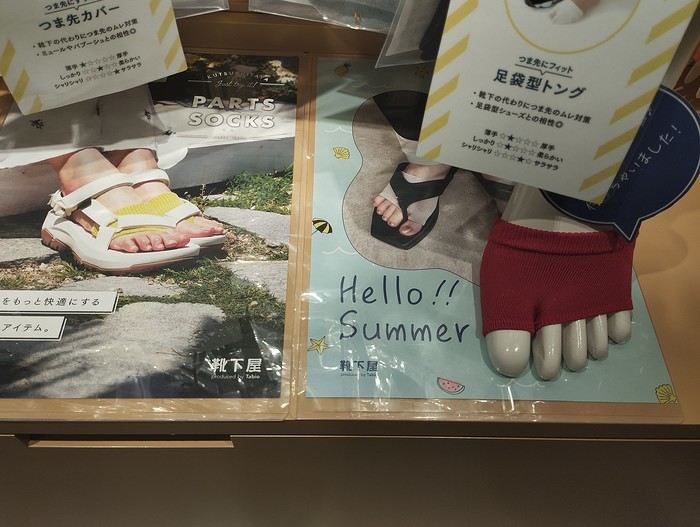
But it’s also interesting to observe the products sold, which reflect Japanese fashion, like these summer socks.


We managed to navigate this maze without spending a single yen and made it to the dreaded underground food market in the station. A paradise for the eyes, nose, and taste buds. Many stalls offer various Japanese culinary specialties, but not only that.


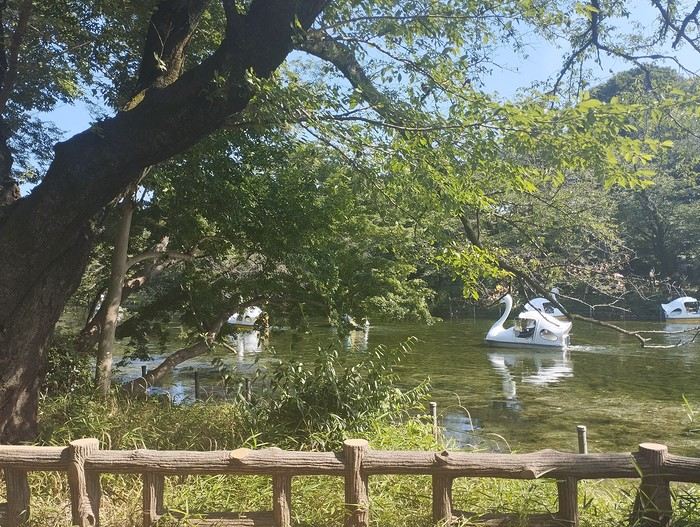
At many stalls, you can taste the food, making the choice even harder because everything is absolutely delicious (at least what we were able to nibble on). All these colorful, ultra-fresh foods really whet our appetite. We hadn’t planned anything, but it led us to decide to grab some takeout. We then headed to Inokashira Park, about a 5-minute walk away. It’s Sunday, a day for walks for both Japanese locals and tourists. The streets and the park are quite busy. All the spots with even a little shade are taken. We had to walk deeper into the park to find a bench by the lake near a small playground for kids. We had lunch with the food we bought—fish salad, ginger chicken with eggplant, and some Chinese steamed buns.

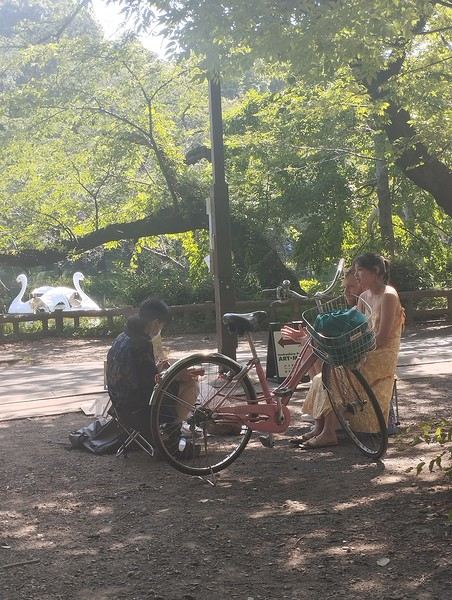
We enjoyed our meal while watching the activity in the park. Near our bench, an artist had set up to offer portrait drawings. Families with kids or couples stopped to capture the moment. A mixed couple sat on the bench to our left. The woman lay down with her head on her partner’s lap, each reading a book. A Korean family, seemingly on vacation, took a break with their baby in a stroller; the perfect opportunity to enjoy a burger and take some photos. Japanese grandmas and grandpas, alone or with friends, passed by chatting and laughing or admiring the surrounding nature.


After this meal break, we continued our walk in the park, which is quite large. You can rent a pedal boat on the lake, pray at a shrine, or visit the zoo, among other things. Everyone can find something to enjoy. The walk is pleasant.


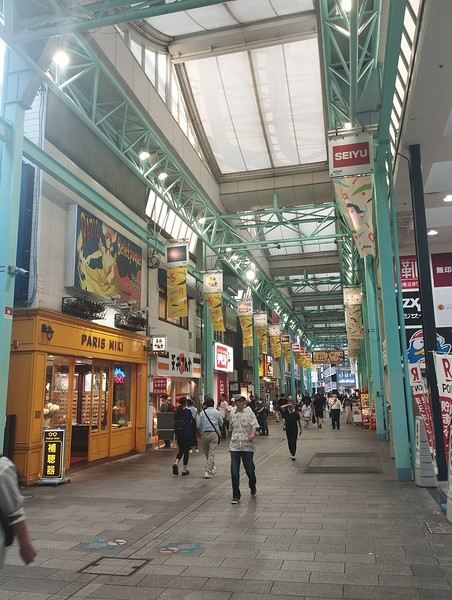
We also wanted to throw away our trash. Naively, we hoped that in such a park there would be "Gomibako" (trash cans), but no—absolutely none! Not in the restrooms, not at the stall selling salty or sweet snacks, which just directed us back to where we bought the products. So we returned to the underground food market, but there too, it was impossible to find a trash can, even when asking the vendors, who didn’t even understand the question! I’m not talking about the meaning of the question but the very idea of looking for a trash can. Their surprised faces were priceless—you’d think we were filming a hidden-camera prank. We resumed our walk, this time in the adjacent shopping streets. The neighborhood is full of various shops. We took Sunroad shotengai. It was packed with people, but we managed to move further along.


A search for a specific product led us to BIC CAMERA, an electronics store where we spent quite some time. The store is huge, and we had to make ourselves understood to the staff. Even inside the store, you can find drink vending machines and a few tables to sit down. We then continued our leisurely stroll through the streets. You really have to go beyond the first few streets to find quieter but equally charming streets, as well as temples and shrines.

We took a break in a slightly retro shopping center to enjoy a fruit juice.

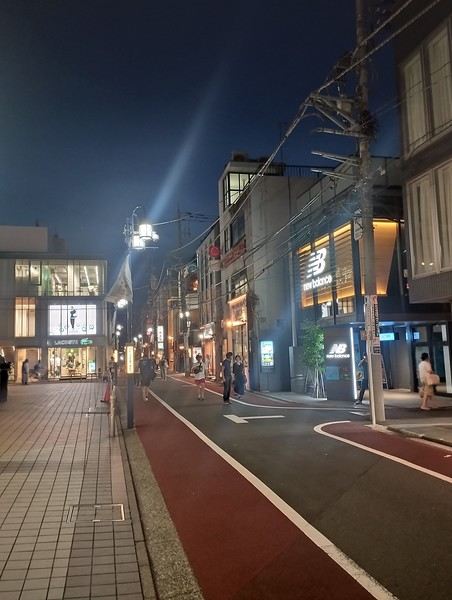
By the time we left, night had fallen, and the atmosphere was different with the various lights.


Ichiban Japan actually talks about the nightlife in this neighborhood. Here’s the link for those interested: https://ichiban-japan.com/errance-nocturne-a-kichijoji/?srsltid=AfmBOoo0Eyx3hxA19eTK2QRZvBjlc8NAUxnXcyUOjrXd4co0CBSTrBcM

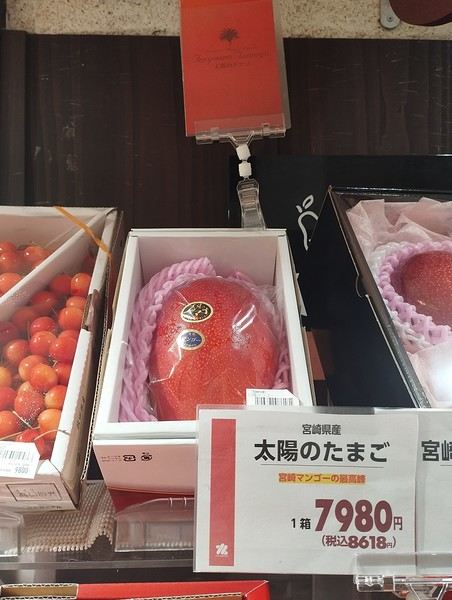
It was time for us to move on. We returned to the station and made some purchases for later, including a Miyazaki mango that’s worth its weight in gold. We tasted it later, and I have to admit, the flavor is incredible! I don’t usually like this fruit, but one like this, I’d gladly eat more. First, the texture is soft and dense, with an exotic coconut taste and a slightly tangy touch. Mango lovers, don’t hesitate! 13 € (at the 2026 exchange rate of 1 € = 160 yen) is expensive, but once in a lifetime, for an unforgettable memory, it’s worth more than thousands of clothes or shoes in your closet. What do you think? Give it a try—this fruit is amazing. The one on the right, the most expensive, wasn’t tested.


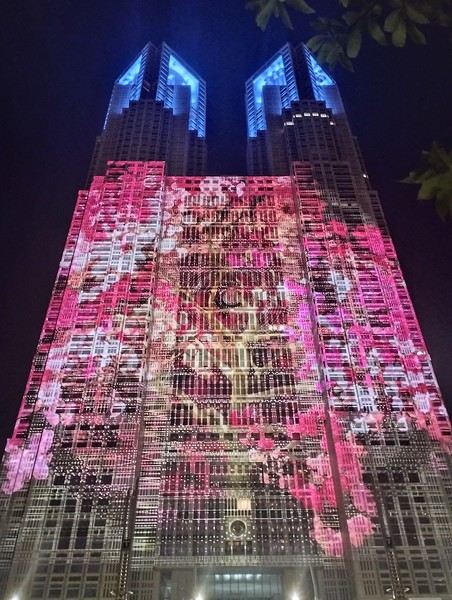
We took the subway to Shinjuku to see the Tokyo Metropolitan Government Building towers. There’s a free sound and light show (Tokyo Night & Light) every evening. We expected a crowd, but to our surprise, there were only about 15-20 people at most. Some were sitting, others lying on the small patches of grass. We arrived a little early, just enough time to settle in comfortably. Then the show started—30 minutes of music and images projected onto the towers on different themes. It’s worth coming for; it’s really well done.


The show is always accessible and changes depending on the day. For more info, check here: https://tokyoprojectionmappingproject.jp/en/
And that’s how another day in Tokyo comes to an end.
Nathalie971OP· 3 months ago
Day 23 – A little trip to southern Tokyo, in Togoshiginza

The day starts quietly with brunch at our sushi "canteen," which we’ve mentioned before. But today, we’re sitting in the restaurant section.

Mr. went all out again! Since the service is super fast, our little table—Japanese-sized, of course—quickly fills up. The waitress even laughs, moving the sauces aside and setting up a second table next to ours so we have a bit more space.

For a change, I try some white fish sushi seasoned with lemon. A combo I’m discovering and really enjoying.

Off to Togoshiginza

After that, we head to Togoshiginza with the idea of exploring a lesser-known part of Tokyo, just wandering wherever we feel like.

During our last trip, we’d already done this kind of stroll, and it ended up being one of my best Tokyo memories. So today, we’re doing it again!

Getting around in Japan is usually pretty easy... except when the subway suddenly turns into a train without warning!

We’re standing in the carriage, calmly watching the scenery go by. As we move along, the surroundings become less urban. I check the stations: everything’s fine.

Then, all of a sudden, I notice we’re passing the station that was supposed to be next... without stopping.

Hmm... weird.

I look at the signs again and realize: the subway has turned into a train and won’t stop at the scheduled station!

So we get off at the next stop, which is pretty far from our destination. We have to cross over to the opposite platform to head back the other way.

We wait about twenty minutes because, apparently, we’re now in the "outer" suburbs. We take the train back in the other direction, get off, and finally find the subway again—which, this time, stays a subway and doesn’t turn into a train!

We eventually arrive at our stop, A-04 Togoshi on the A line, the Toei Asakusa line.

All that for a little relaxed stroll in Tokyo!

Togoshi Street, everyday Tokyo

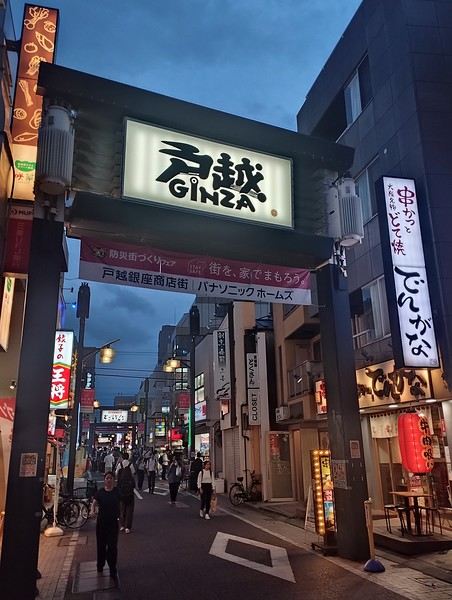
Togoshi Street is just a few steps from the subway exit. It’s easy to spot thanks to its pole-shaped gates marking the street name.


Togoshi Street is said to be one of Tokyo’s longest *shōtengai*, with about 1.3 kilometers of shops. This shopping arcade developed after the Great Kantō Earthquake of 1923, which hit central Tokyo hard.

Merchants from Tokyo—and even from around Yokohama—reportedly settled here, taking advantage of the neighborhood’s growth and the opening of Togoshi-Ginza Station on the Ikegami Line.

Even though the area obviously doesn’t have the luxury of Ginza, it does share a connection with it. Stones and bricks from the earthquake’s destruction were apparently reused in the neighborhood. That’s partly what gave it the name Togoshi-Ginza.

But here, there’s nothing fancy or sophisticated.

And that’s exactly what we like.

You’ll mostly find everyday shops—places where locals have their routines. The vibe is relaxed, simple, and authentic. Not really hipster, just a neighborhood where people live.

It’s a Monday afternoon, and for now, it’s not crowded. On weekends, the atmosphere must be way livelier.

There are all kinds of shops: florists, butchers, supermarkets, restaurants, secondhand clothing stores, laundromats...


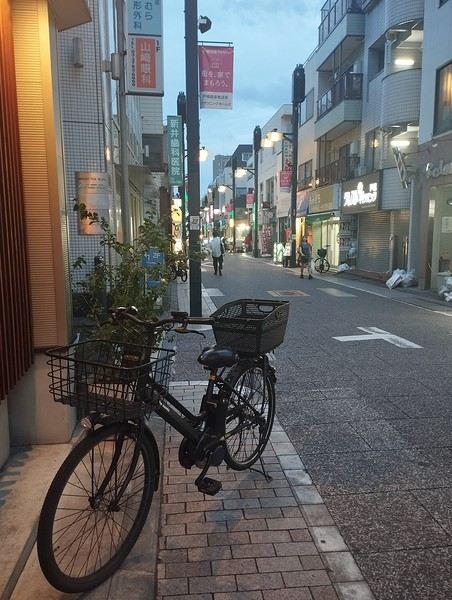
And above all, you see all those little everyday scenes I love observing in Japan: bikes parked on the street, laundry drying on balconies, grandpas and grandmas doing their shopping, shopkeepers who smile but aren’t pushy...

In short, ordinary life. And it’s this ordinary life that draws us in so much.

Not to mention the famous vending machines, often customized and seemingly a key part of the Japanese landscape. Around a tiny alley, we even discover a small shrine tucked between buildings. One of those spots that could easily go unnoticed if you don’t take the time to look around.

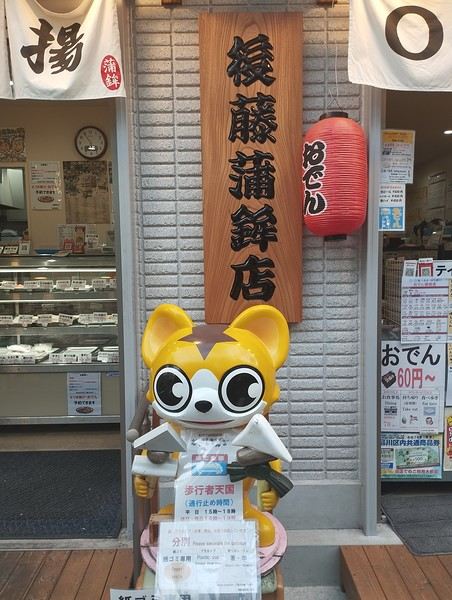
And here’s Gin-Chan, the neighborhood mascot! Togoshi Ginjiro, affectionately called Gi-Chan, was created to help the area compete with big shopping malls. You’ll spot him in several places along the street.


And apparently, if you rub the colored ball he’s holding, your wish will come true. Depending on the color, it’ll bring health, success, or even love.

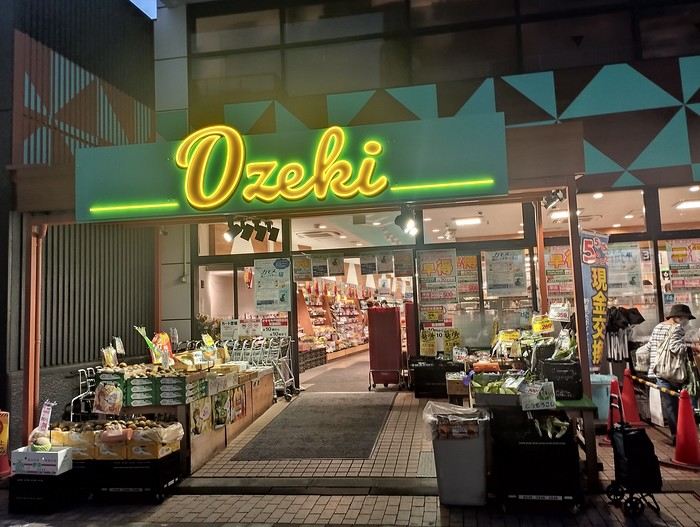
The neighborhood also has several little shops where you can grab a quick snack or just pick up something for dinner.

As the afternoon goes on, the atmosphere starts to shift.

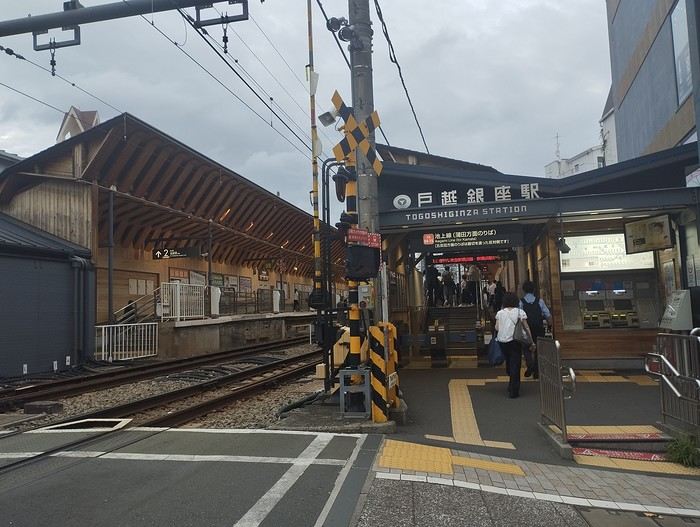
By the end of the day, especially around Togoshi-Ginza Station, the street comes alive with locals finishing their workday, I imagine.


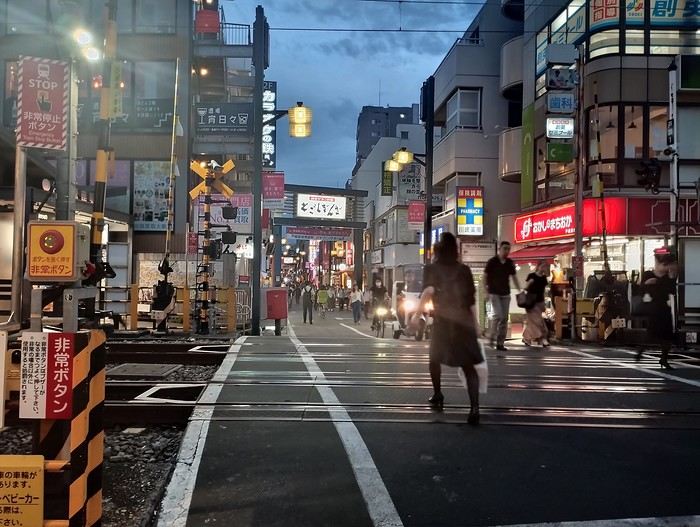
Their comings and goings are punctuated by the barrier lifting when trains stop running. A tiny slice of everyday life, but one that suddenly gives the street so much energy.

Togoshiginza at nightfall

Then night falls. And the neighborhood changes again. The shop lights make the streets especially nice to photograph. As just a tourist photographer with no gear suited for night shots, I’m not sure my pictures do the atmosphere justice.


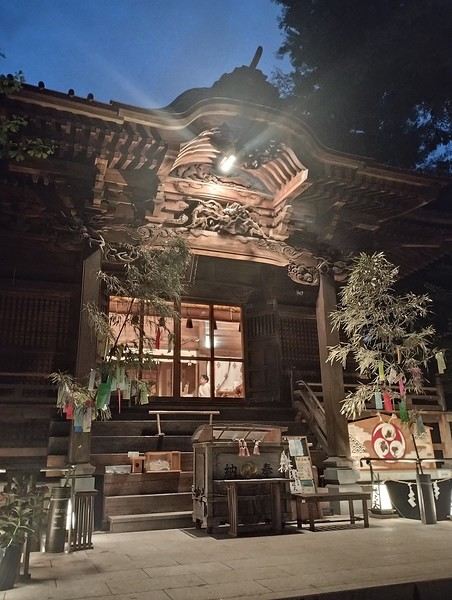
But in person, it’s really pretty. We take a little break at a café for yuzu and brown sugar ice cream before continuing our walk. Then we decide to visit the Togoshi Hachiman-gu shrine, even though it’s already dark.


Maybe it’s even better this way. The lights give the shrine a completely different atmosphere, and we’re lucky enough to see a small group of boys practicing taiko drums inside. A lovely, totally unexpected moment—just like the kind that happens when you wander without a set plan.

A nighttime stroll in the park

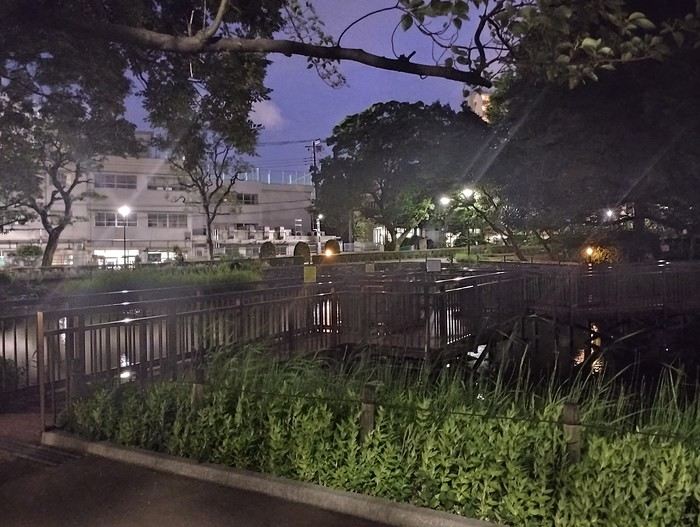
We keep walking toward Togoshi Koen park. On the way, we pass a soccer field where kids are still training. Another simple scene from the neighborhood. The park itself is peaceful.


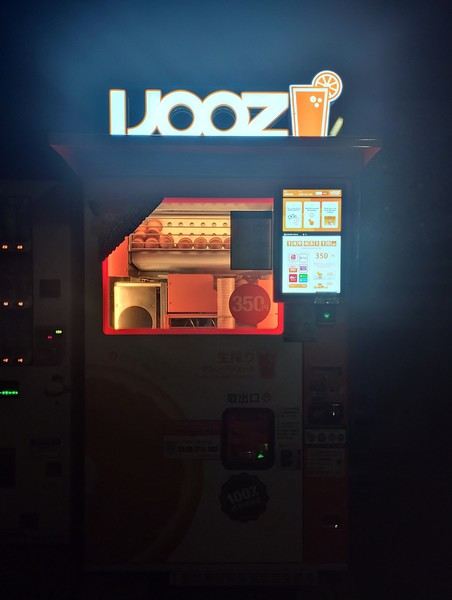
It has a pond, a small waterfall, and some bamboo. It’s a nice little neighborhood park, part of which is lit up at night. The walk stays pleasant even after dark. And Tokyo still has a few surprises in store for us. Like this fresh orange juice vending machine that squeezes the oranges right in front of you.


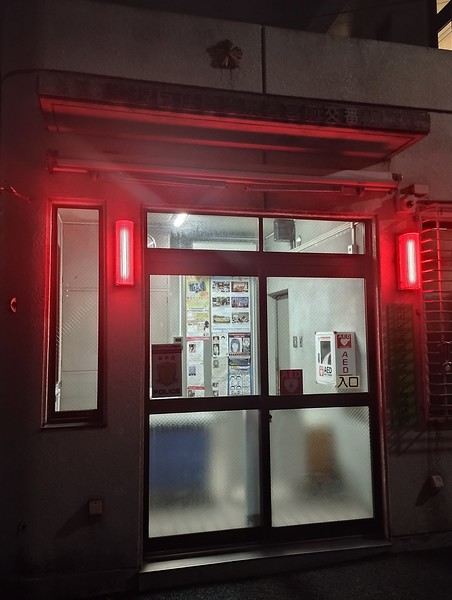
Even the *koban*—those little neighborhood police boxes—look pretty under the night lights.


Everything’s an excuse to stop, look, take pictures, and pause for a few minutes.

A simple day, but exactly how we like them

Given the time, we eventually decide to head back. There’s still plenty to discover in Togoshiginza, but we’ve already enjoyed this walk a lot. We return to our hotel’s neighborhood, Akasaka, and end the day at a Vietnamese restaurant.

A pretty simple day overall: brunch, a subway mix-up, a long shopping street, a few shrines, a park, kids training, locals coming home from work, and lights slowly turning on. But that’s exactly what we came for.

After the big neighborhoods and must-see spots in Tokyo, Togoshiginza let us see another side of the city: the kind of area you don’t necessarily visit to "sightsee," but just to watch Tokyo live. And in the end, those unplanned days—just wandering around an ordinary neighborhood—often become some of the best travel memories.
Nathalie971OP· 3 months ago
Good evening,

These Tokyo walks are really nice! Thanks.


Hello,

Thanks for following along!

Exploring these less touristy neighborhoods is really enjoyable. Tokyo has so many different vibes—it's great.
Nathalie971OP· 3 months ago
Day 24 - From Gardens in Old Tokyo to a Garden in Modern Tokyo

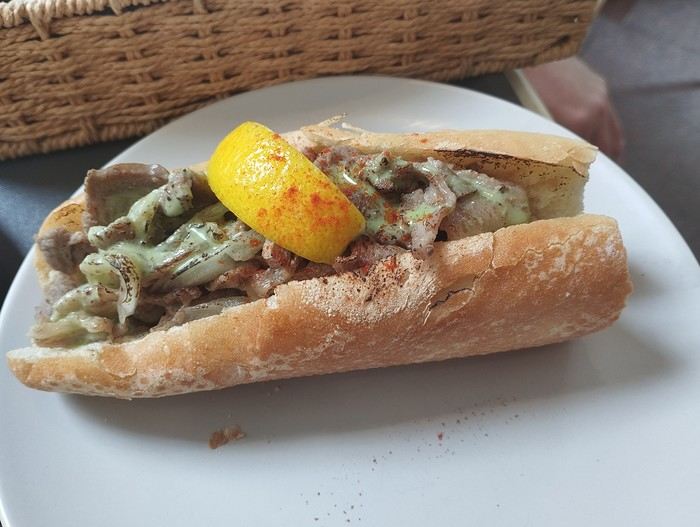
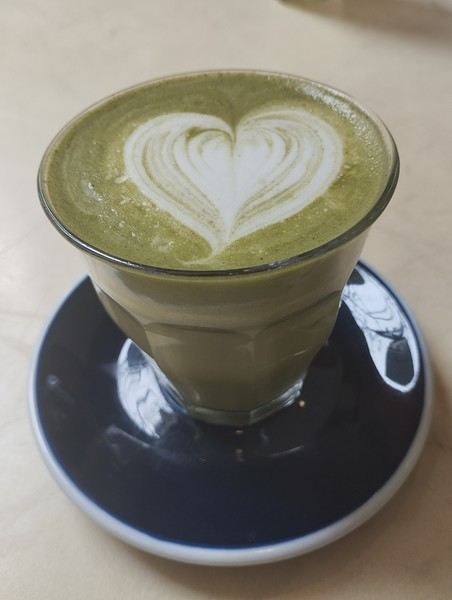
Let’s start by fueling up for another day of wandering. To switch things up from konbini and fried chicken, we opted for breakfast in our hotel’s neighborhood (Akasaka, just to remind you) with a menu that was half New Zealand, half Japanese. The result? A lamb and onion sandwich with a matcha latte topped with its decorative milk heart. It was pretty good, though not exceptional. Rare in Japan, the café had a covered terrace facing the street—but not right on the sidewalk—so it was a nice way to kick off the day.


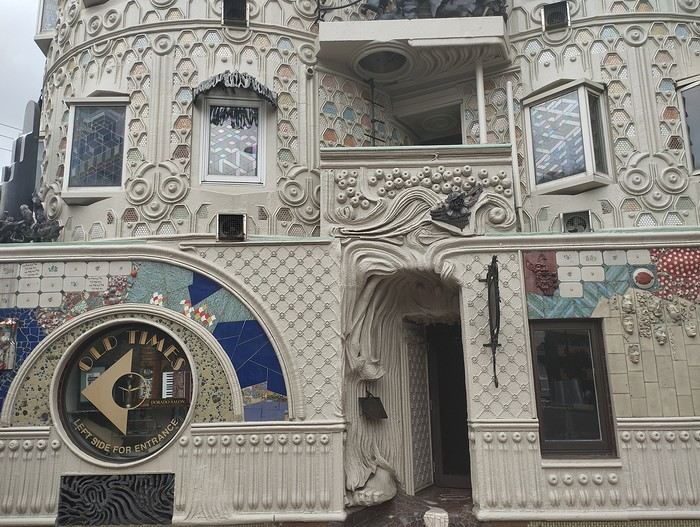
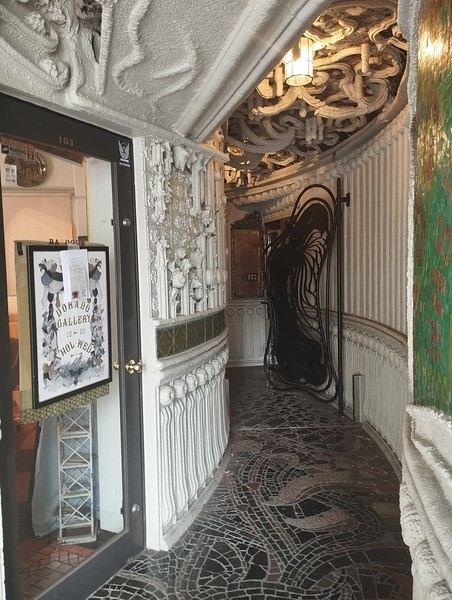
Despite the heat, a gray sky followed us. We took the subway to Bunkyo. I *think* we got off at Waseda station, but I’m not entirely sure. Either way, it’s a student-heavy area thanks to Waseda University being right nearby. You can tell without even seeing the campus—just look at all the young students filling the streets. On the way to the first garden, we passed a wildly unique and quirky building: Waseda El Dorado, designed by Japan’s Gaudí, Von Jour Caux. It’s a residential building and the only one in this style, totally unlike typical Japanese architecture.


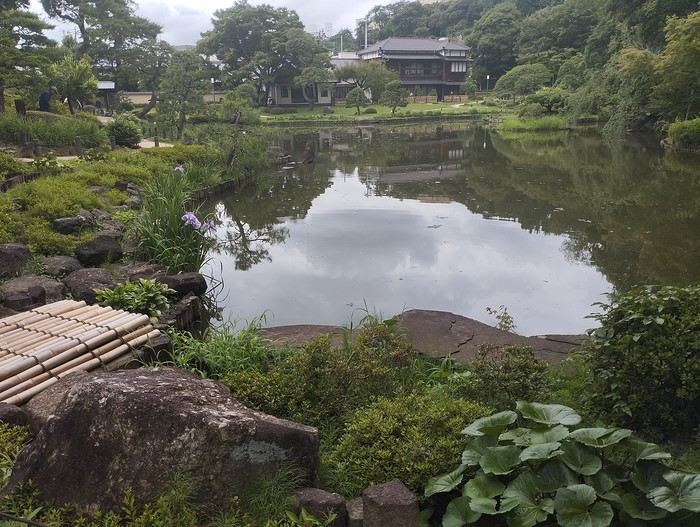
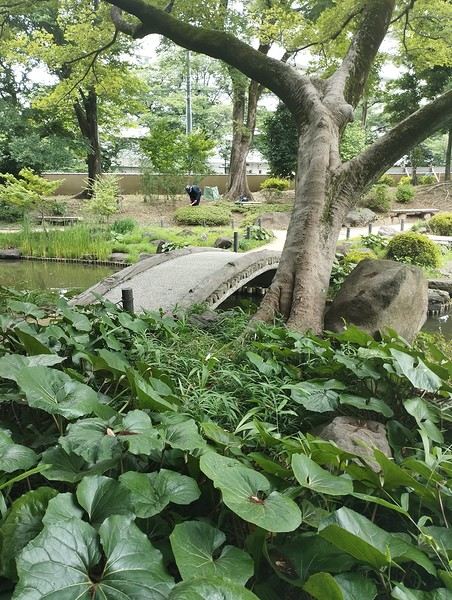
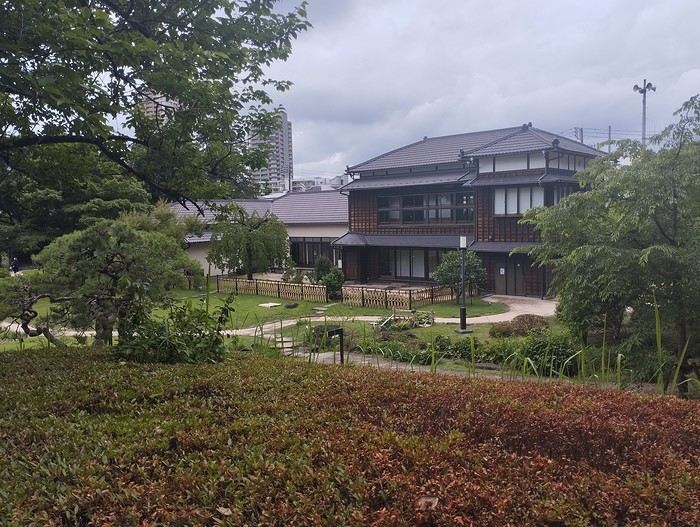
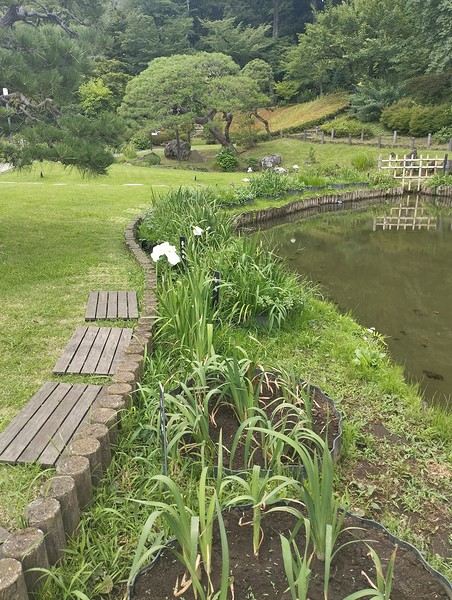
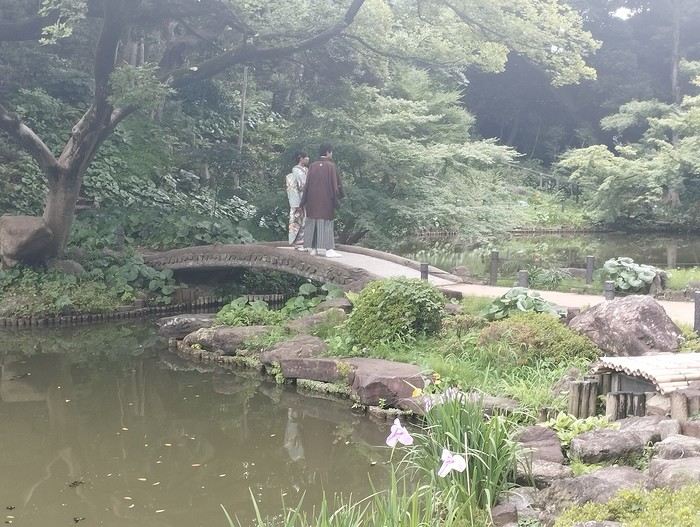
The garden is tucked away in a quiet neighborhood near the Kanda River. It’s called Higo Hosokawa Teien. We entered through its south gate. Since 1961, the garden has belonged to Bunkyo Ward, but historically, it was the secondary residence garden of the Hosokawa feudal lord family, who ruled part of what’s now Kumamoto Prefecture. It was founded during the Edo period (17th century). The garden follows classic Japanese garden design: a pond, a bridge, stepping stones, waterfalls, and various paths to explore, including some leading up a hill for a higher vantage point. As expected, there were barely any visitors when we stopped by—just four Japanese people. The zen vibes were in full effect in this stunningly beautiful garden.


Among those four Japanese visitors, we spotted a young couple in traditional attire taking their wedding photos. We didn’t photograph them head-on to let them enjoy their moment.


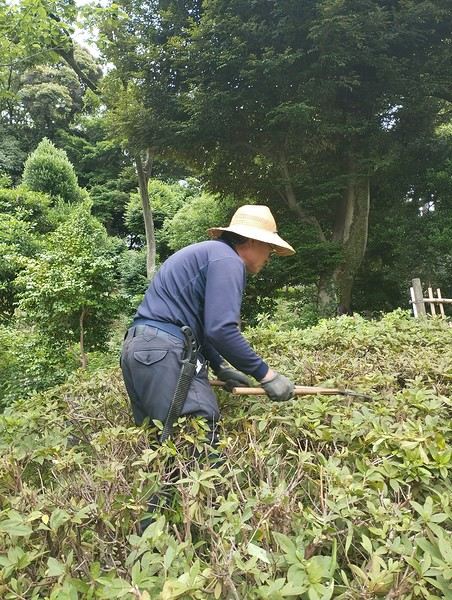
On the other hand, we *did* want to highlight the unsung heroes who keep these places so beautifully zen with their daily work: the gardeners. There were three of them tending to the garden while we were there. One agreed to be photographed after first thinking we wanted him to take *our* picture—then, once he realized we wanted *him* in the shot, he seemed puzzled about why we’d want that.


We wandered and soaked in the scenery, sometimes taking the winding paths through the garden, other times sitting on one of the scattered benches to enjoy the different views of this lush, relaxing green oasis.
Nathalie971OP· 3 months ago
Day 24 - From Garden to Garden

We exit through the same entrance, the south gate of the garden. We follow the Kanda River as we head toward another garden right next door. However, the entrance is on another street behind and well above our current spot.

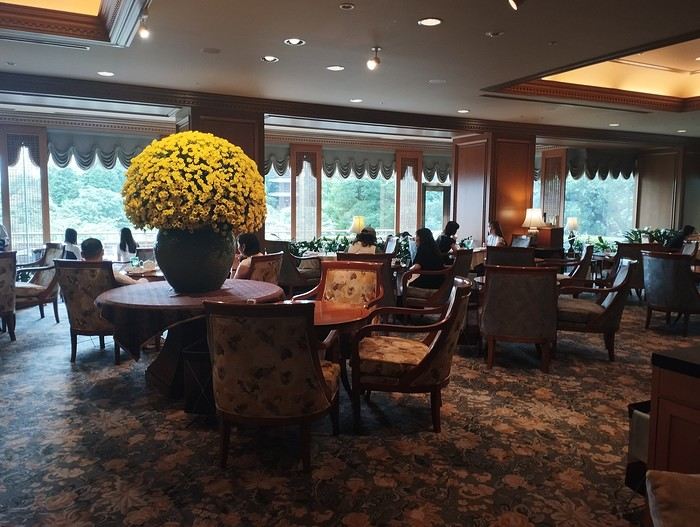
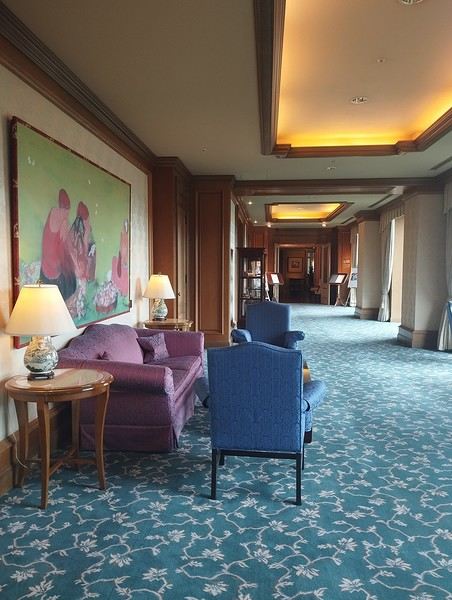
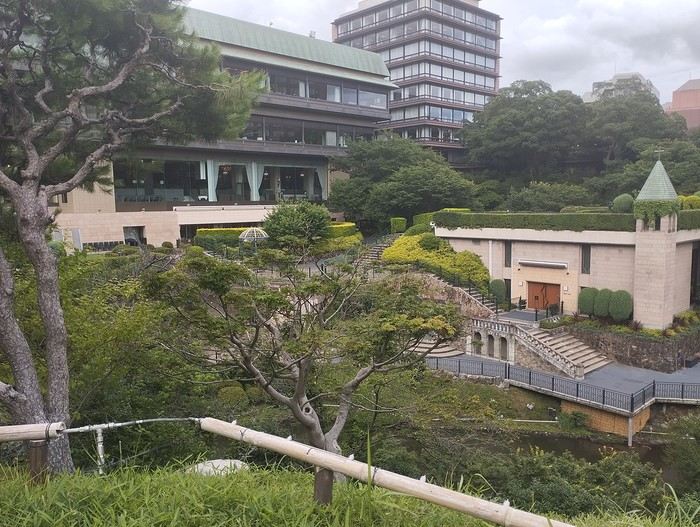
As we walk along a small "park," a local hangout (jogging, homeless people, kids playing), we notice a steep path that’ll probably take us to the street we’re looking for. We climb up. Success! Then, a few hundred meters later, we find ourselves in front of what seems to be the entrance to the Chizanso Hotel. It’s a large, rather old luxury hotel right in the heart of Tokyo. This used to be the residence of Aritomo Yamagata, a former samurai and military leader who became a key figure in power during the Meiji era (1868–1912). He bought this land in 1878 to establish his private residence in the capital. A huge garden enthusiast, he personally helped design the Chinzan-so as it can still be admired today. And it turns out this garden is open to the public for free. The hotel is grand, with lots of staff. The staff cater to their luxury clientele—and even to those who aren’t, like us that day. They open doors for us, rush to meet our needs. We were planning to have a cocktail at the bar, but it only opens in the evening. They suggest we sit in the lounge/restaurant facing the garden. We give in. They even pull out chairs for us to sit.


It’s hot today, and I want to freshen up in the restroom before ordering. When I ask where it is, a woman accompanies me. She recognized my French accent and, as it turns out, she speaks French. When I return to the table, the young woman has become our dedicated waitress. Explaining that we’d initially wanted a cocktail, she offers to have the bartender make us one. I’ve forgotten the name, but it referenced fireflies at night in the garden. We order that. The cocktails arrive with three little treats: candied cherry tomatoes, candied yuzu, and green olives. The candied yuzu was divine.

We have fun people-watching around us. The clientele is clearly upscale, judging by their outfits, posture, and mannerisms. The women were especially elegant. We chatted with our dedicated waitress in French. She went to Paris, Bordeaux, and Dijon 20 years ago for 15 days. She keeps up her French by speaking with the few clients who come here. She explains that the garden is free except after 6 PM. Plus, every hour or so, mist appears over the pond, giving the garden a mystical vibe. We enjoyed our pleasant cocktail. When our glasses were cleared, they asked for our room number to charge us... We appreciated the staff treating us like any other guests, despite our casual, non-chic outfits (and definitely not underdressed). Afterward, we took the chance to explore the hotel, which is huge. To our surprise, you can wander around freely even if you’re not a guest. And let me tell you, it’s worth the detour—the hotel is old, with an equally old-fashioned style, but it’s absolutely stunning inside. The furniture, art objects displayed here and there, even the restrooms are gorgeous. The hallways with their lounges, the carpets on the floor, and that view of the garden and its pagoda... A simple immersion in beauty.


We then went to visit the garden, which had very few visitors—just four other people besides us.


We stayed for a while, soaking in the place before leaving. The staff rushed to open the automatic doors for us as we went.
Nathalie971OP· 3 months ago
Day 24 continued

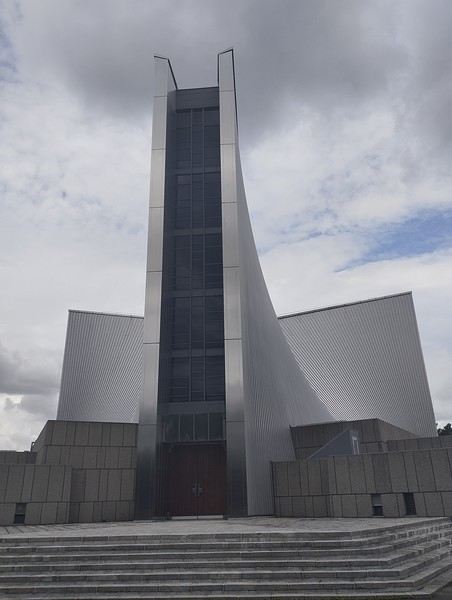
The hotel is right across from St. Mary's Cathedral in Tokyo, designed by Kenzō Tange—the same Kenzō Tange behind the city hall...

This very modern, even futuristic Catholic building dates back to 1964, as it was destroyed in 1945. However, the original structure was built in 1899 in a more traditional Gothic style. We wanted to visit the interior, but unfortunately, we arrived just as the staff was stepping out to close the cathedral. And in Japan, time is time—no chance of getting in, even for five minutes. We settled for admiring this surprising architectural work from the outside. It stands 39 meters tall, with a 60-meter bell tower and a length of 55 meters. A mix of gray tones in concrete and steel.


The street just behind features a few religious mosaics.


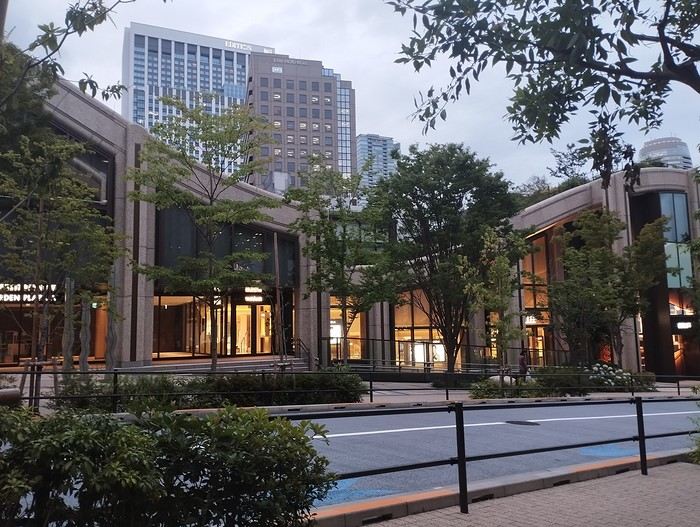
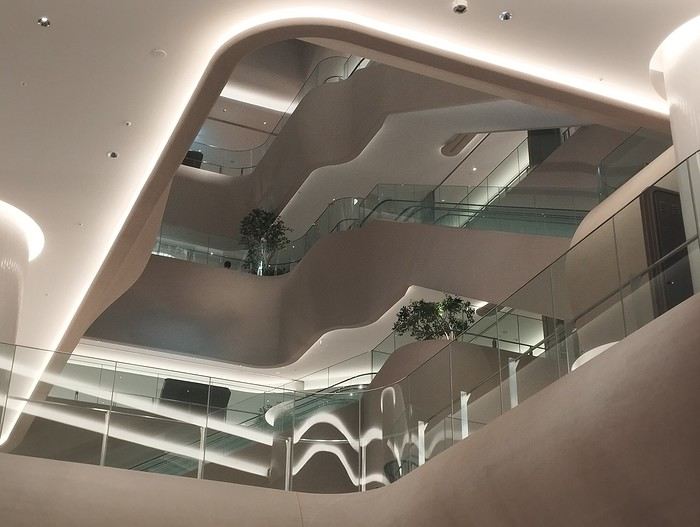
After this surprising blend of spiritual and contemporary architecture, we found ourselves transported to another place, another neighborhood—just as astonishing. Welcome to Azabudai Hills! Right at the subway exit, Azabudai Hills makes its ambitions clear: immaculate white, soaring ceilings, and staff everywhere. The luxury starts before you even set foot in the district. I knew this place was all about opulence. A dedicated article in the specialized *Japan Magazine* about this eco-urban village, inaugurated in November 2023, described it well. But seeing the photos of the buildings—all curves and ultra-modern design—piqued my curiosity enough to bring us here today. That said, reading about it and experiencing it are two very different things. Azabudai Hills is a city within a city, a labyrinth of steel and gentle curves. Our eyes and senses struggled to make sense of it. We moved from one building to another but would’ve been lost trying to retrace our steps. Navigating it is an adventure in itself.

We entered the sprawling commercial zone wherever we could. The massive corridors allowed for easy movement despite the crowd, their hurried steps reflecting the neighborhood’s buzzing energy. From clothing stores to gourmet boutiques, no matter what you choose, a heavier wallet is a must here. A little hungry and armed with konbini snacks, we searched for a place to eat but got lost in the maze. We didn’t spot any accessible indoor seating, so we had to resort to something not exactly typical in Japan... I could almost read the judgment in the eyes of passing locals as we grabbed a quick bite sitting on something in the street. Our setting? A street lined with contemporary, greenery-covered buildings. The gardens seemed to flow along with the street—surprising and beautiful at the same time. Still, we ate quickly, feeling out of place eating on the street. It’s not the norm in Japan, or at least not in well-defined areas where it’s allowed.


Back to our chic stroll through the shopping gallery.

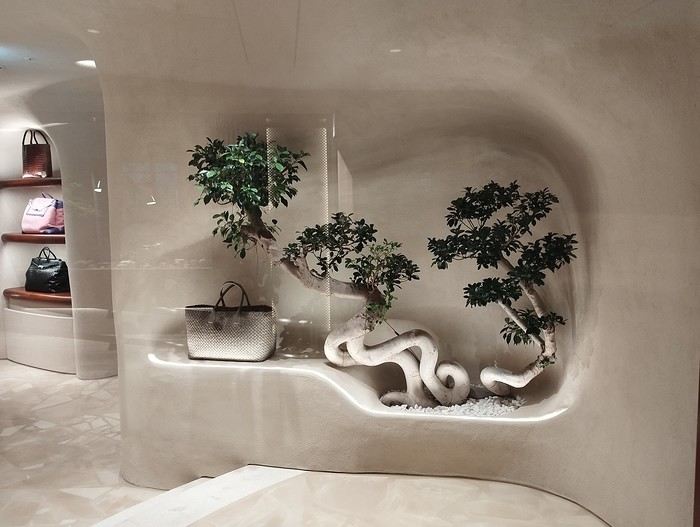
This boutique’s decor is original—I’ll let the picture speak for itself.


Since we love viewpoints, we set off in search of the panoramic view from Mori Tower. Labyrinthine, you said? That’s an understatement. Finding the observatory felt like a scavenger hunt. The signs were subtle, and the elevators were scattered across different buildings. Thankfully, the reviews we read beforehand saved us from going in circles. But first, check out this architectural staircase space where escalators flow. All volume and curves.


At the top of these escalators on the first floor, you have to go to the end of a hallway leading to more elevators. Hidden on the right, a transparent panel with white lettering finally points to the panoramic view. Hallelujah! A quick, silent ride took us up to the 33rd floor. However, we didn’t realize access to the space was reserved only for those who ordered something at the bar up there. After all that effort, we weren’t about to leave, so we gave in. That said, don’t expect a proper cocktail bar—it’s more like a snack bar on a TGV train, with basic drinks and overpriced snacks that aren’t terrible but aren’t great either. As for the panoramic view, it didn’t offer an unobstructed cityscape like the one at Tokyo City Hall but a nice view of Tokyo Tower. And since it was evening, the tower was lit up in its signature red, as I’ve mentioned before in this travel journal.

After grabbing a drink, you can sit on the large staircase facing the huge windows, letting Tokyo’s urban lights shine through.

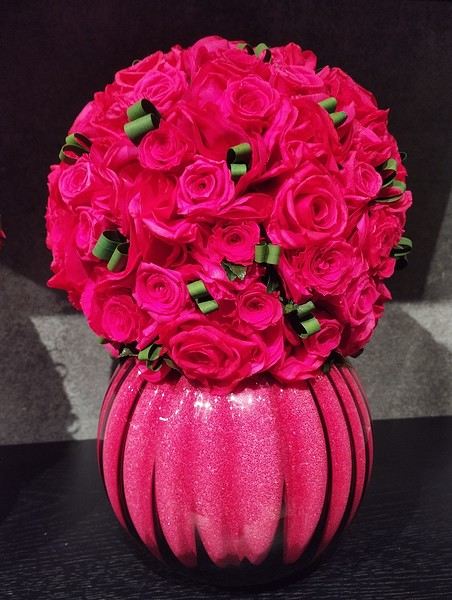
I mentioned the upscale boutiques—one in particular blew me away. What’s so special about it? Elegant, colorful, and delicate floral bouquets that supposedly last up to one or two years without watering. I’ll share a few of these stunning arrangements. Unsurprisingly, the price matches the vibrancy of the flowers. Way more than I imagined, but let’s keep in mind the artistry behind it.


There’s also a popular burger chain here—SHOGUN BURGERS. We had dinner there. It was good, but nothing compared to Bocca Burgers in Miyakojima. Still, it was nice to experience those little practical touches the Japanese excel at, like the paper wrap to keep your burger from falling apart while eating.

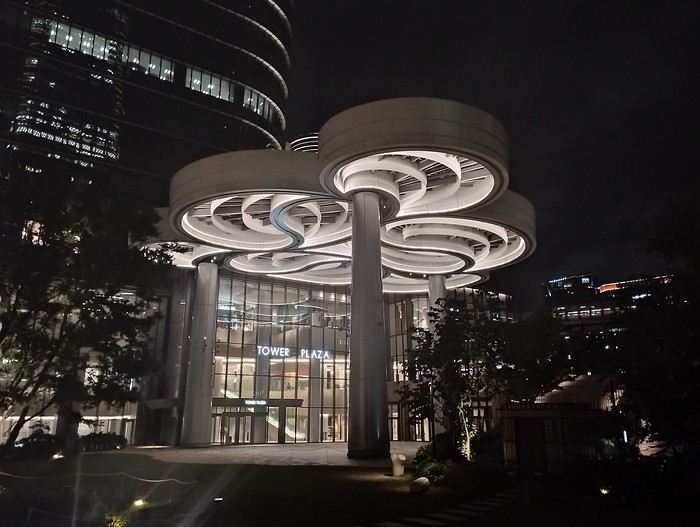
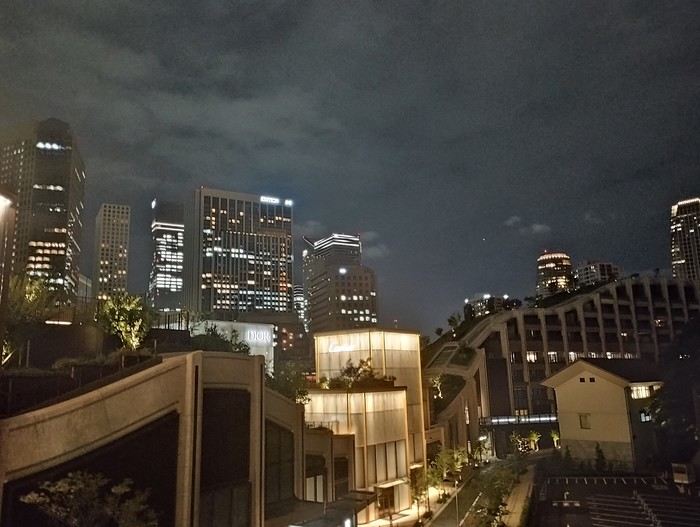
Finally, we ended with a nighttime view of the urban garden, Tokyo Tower, and the glowing storefronts—Hermès among them. Honestly, the design is impressive. It’s a pleasant place to walk around, full of life. A brand had organized a sneaker-testing run, joggers were returning from their workout, and another group was doing yoga under the giant rose-shaped archway. The result is sculptural. You can really feel the blend of functions—residential, commercial, and green spaces.

Nathalie971OP· 3 months ago
Day 25 - Strolling and souvenir shopping

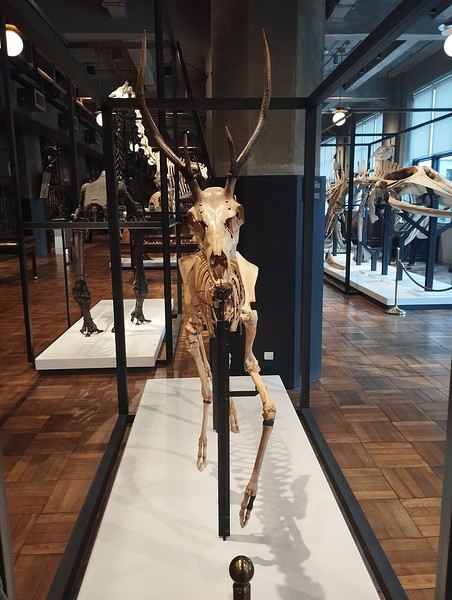
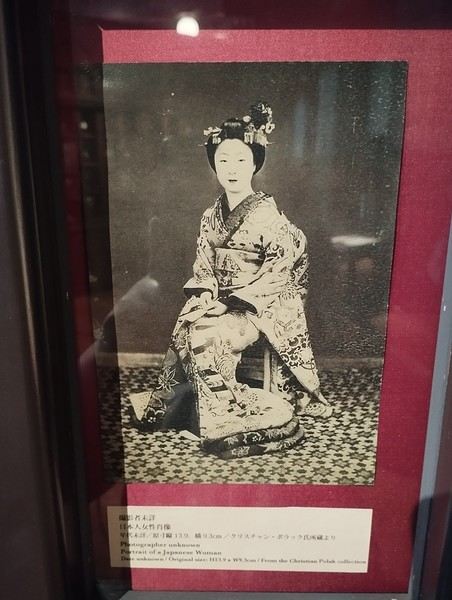
This day will be mainly dedicated to shopping for our return to France. We start the day leisurely at the KITTE shopping center, right across from Tokyo Station. Our goal is to visit the Intermediatheque, a free museum. Without any particular expectations, it surprises us with its diverse exhibits. It covers disciplines like anatomy, modern art, archaeology, and engineering. There are plenty of interesting curiosities: gramophones, very old photos of Japanese people who were quite short, medicinal Chinese herbs and plants, dinosaur skeletons, stuffed animals, etc.—all in a spacious area where you can wander freely, just making sure to carry your backpack in front so you don’t knock anything over.


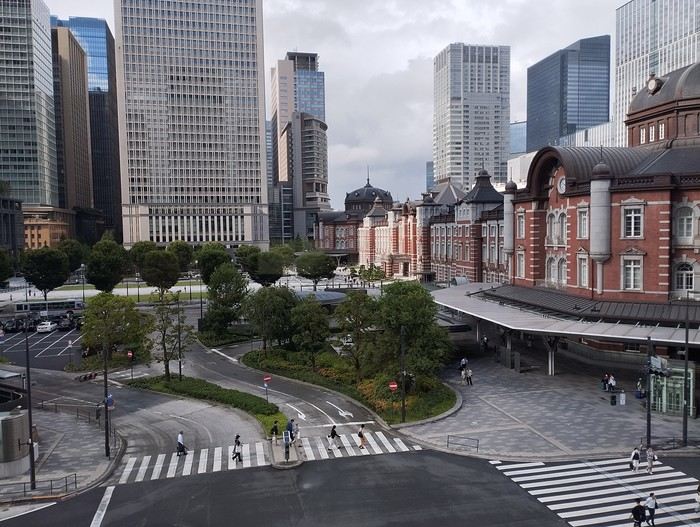
The place also offers a beautiful view of Tokyo Station, which is always stunning.


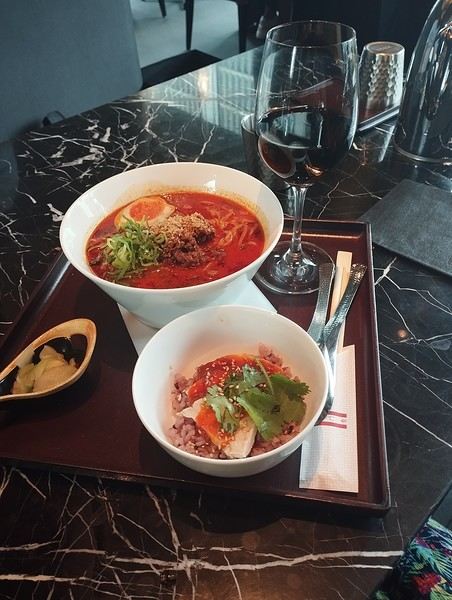
For lunch, we end up at a Chinese restaurant on the top floor by default. The service is quick and efficient, and to our surprise, the food is really good. Cold noodles with peanuts, spicy noodles.


A quick stop on the terrace, which also offers a view of Tokyo Station, its tracks, and the surrounding buildings.

We take a little stroll through the shopping gallery. I was tempted by some socks with a typical Japanese style, but they stayed in the shop. There were so many choices that it would’ve taken too long to decide. The floral displays in the flower shops are eye-catching.

Of course, we admired the beautiful modern architecture of the shopping center before heading to the main goal of the day.

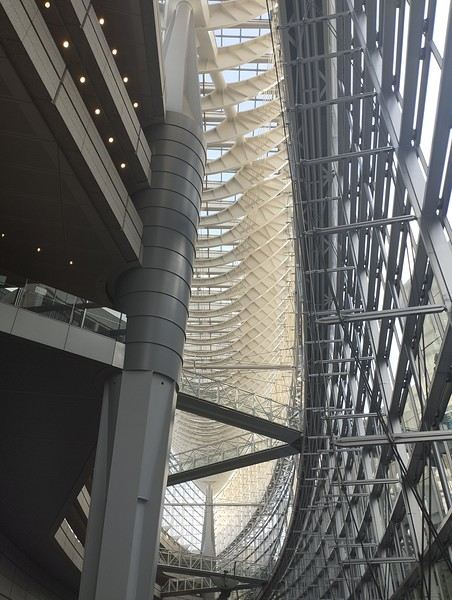
On the way, we passed through the Tokyo International Forum, a venue for performances and conferences, among other things. The architecture there is also magnificent.


We wanted to buy some typical souvenirs from the regions we visited, especially food items. Since we didn’t have much time to shop during our trip, Tokyo has these incredibly convenient stores called "Antenna shops." We went to the Antenna shop for the Shikoku region and the one for Okinawa. We also discovered products we hadn’t seen during our road trip, like yuzu chili paste, which is amazing in broth or as a condiment with meat and fish. By the time we left, we were more loaded down than we’d imagined, and carrying the rather heavy bags was tough given all the walking required in Tokyo’s public transport. To make things easier, we decided to hail a taxi—the space, air conditioning, and quiet were a welcome relief, and we couldn’t help but think about the hassle we would’ve faced without it. In the evening, we kept it simple and went back to the yakitori place near our hotel. This time, we sat at the bar. It’s always nice to watch the cooking. The owner is a quiet, reserved person, but by the end, we still managed to chat a bit with him and his wife. They gave us a little gift—some scented towels—and of course, walked us to the door. When you go back to the same place a few times, it’s easier to create connections, even if they’re just small ones.
Nathalie971OP· 3 months ago
Day 27 - Return to France (There's still one more post, the conclusion is right after)

The next morning, it was time to leave. The handle of my suitcase was broken, and yesterday’s taxi experience convinced us to take a taxi to the airport this morning—no reservation, just a 10-minute wait at 6:45 AM. It was convenient and really comfortable.

At the airport, the Japanese service was on full display. There was a woman holding a sign right at the foot of an escalator to indicate you needed to go upstairs for departures, even though a fixed sign right next to it said the same thing. Just in case you couldn’t read, who knows.

With the broken suitcase handle, we couldn’t use the "automatic" baggage drop-off. We had to go to the staffed counters, which seemed complicated after being redirected multiple times, but we eventually made it to the departure area. Final purchases at the airport with the remaining balance on our ICOCA card (prepaid card) for one last taste of Japanese gastronomy. Then, the return to France began in the departure lounge, where European cultural behaviors—louder, more rushed, speaking French—reminded us that this Japanese journey had come to an end. A few more interactions with the Japanese flight attendants on the plane kept a little sweetness going until the very end.
Show 5 more replies
Bluequark· 3 months ago
Thanks again for this travel journal—I found it really interesting and full of charm.
Nathalie971OP· 3 months ago
CONCLUSION: Japan remains incredible! (in my eyes, of course)

- 4th trip and still not tired of this country (luckily or unluckily, I’m not quite sure)

- The island of Shikoku is a wonder for its nature, cities, mountains, coasts, gastronomy, and tranquility.

What I saw and visited during this second trip to Shikoku was different from what I had seen before, in the prefectures of Kagawa and Tokushima (see the travel journalhere).

I thought I’d like Ehime Prefecture less than the rest, but it turned out to be a very pleasant surprise, with the lovely city of Matsuyama, charming and lively villages, and the rugged coastline.

- My highlights in Shikoku: I loved everything, so I won’t list it all. Here are just the 5 things that come to mind:

Nakatsu Gorge, in Kochi Prefecture The beauty of the rivers, especially the Shimanto River, stunningly framed by the surrounding plains and mountains, Ehime’s coastline, particularly the village of Sotodomari Ishigaki no Sato and Cape Koumo, Matsuyama Castle at night And the city of Kochi for its retro and peaceful vibe.

I’ll add a sixth, off the list: Japanese cuisine, always as tempting, delicious, and varied as ever.

And one last thing—so obvious to me that I almost forgot—but the Japanese people for their savoir-vivre and kindness, which lead to wonderful encounters every trip! Without them, our travels wouldn’t be nearly as memorable!

Does this make you want to discover Shikoku someday? What did you enjoy from this travel journal or other readings/experiences?

- If I were to do it again, still in Shikoku:

If I had to change something while keeping the same duration (13 days) and route, I wouldn’t necessarily go to Tobe (not essential) or Aki, and I’d stay longer around Kochi for logistical reasons.

If I changed the itinerary without extending the trip but prioritized a slower, more immersive experience, I’d probably spend all 13 days in either Kochi or Ehime Prefecture—they’re both so vast, and there are so many things I’d have loved to do but didn’t have time for, like visiting Kasturahama Beach in Kochi, the Tosa Washi Paper Museum in Ino near Kochi, whale and dolphin watching on a boat tour in Tosa Bay, Cape Muroto, the retro town of Susaki, the yuzu fields in Umaji, visiting a pearl farm and buying some, snorkeling on Kashima Island, or exploring one of the Kutsuna Islands... the list goes on!

-Miyakojima, now that we’ve been there three times, I think it’s clear we love it. Such beautiful, uncrowded beaches, snorkeling, endless foodie spots, and pure relaxation—what more could you ask for?

-And Tokyo, our third visit with new discoveries. This city is captivating and full of possibilities. I’ll admit, though, it took me a while to adjust to the "crowds" after three weeks in the quiet landscapes of Shikoku and Miyakojima. It was quite an energy shock! If I were to do it again and the itinerary allowed, I’d recommend splitting it into two 3-4 day stays rather than one 7-8 day stretch.

- Budget breakdown: Reminder: rainy season (tsuyu) in June 2025, with an exchange rate of 1 euro = 160 yen

Total accommodation = 1939 € for 27 nights Type of accommodation: mostly business hotels, 1 house, 1 slightly upscale hotel, 1 resort-style hotel/apartment Average of 70 € per night for 2. However, accommodation in Shikoku and Miyakojima was more like 45 to 60 € per night for 2. We paid around 115 € per night in Tokyo, but you can find cheaper options. Plus, we chose a slightly larger room in a central neighborhood.

Flights: 1465 € per person for international and domestic flights—4 flights total with Japan’s national airline, ANA, tickets purchased 2 weeks before departure.

Paris - Tokyo - Kochi Matsuyama - Naha - Miyakojima Miyakojima - Tokyo Tokyo - Paris

Car rental:

Total budget: 750 € for 19 days, averaging 39.50 € per day

In Shikoku: Via the Tocoo website, 600 € for 12 full days, or 50 € per day. That’s a bit more than the usual rate of around 40 € per day based on my past experiences. The extra cost came from picking up the car in Kochi (Kochi Prefecture) and dropping it off in Matsuyama (Ehime Prefecture). Returning it to the same location is cheaper.

In Miyakojima: 150 € for 7 days, or 22 € per day

And here I am, finally at the end of this 4th travel journal, albeit with some delays in writing and getting lost in the details. But I’d like to thank the readers who reached out and the silent ones who read part or all of it, hoping you traveled with us through Japan, enjoyed the new and revisited spots from previous journals, and maybe even felt inspired to visit this corner of the world.
Nathalie971OP· 3 months ago
Thanks again for this travel journal—I found it really interesting and full of charm.


Thanks so much for keeping up with my irregular posts! And thank you for the comment on the journal. Beyond the selfish pleasure of sharing my Japan trip, I hope to modestly help others discover the other wonders Japan has to offer beyond the usual classics, which are also great.
Nathalie971OP· 3 months ago
And thanks for this info too!


Just for reference, of course—everyone travels with different needs and interests.

You might also like