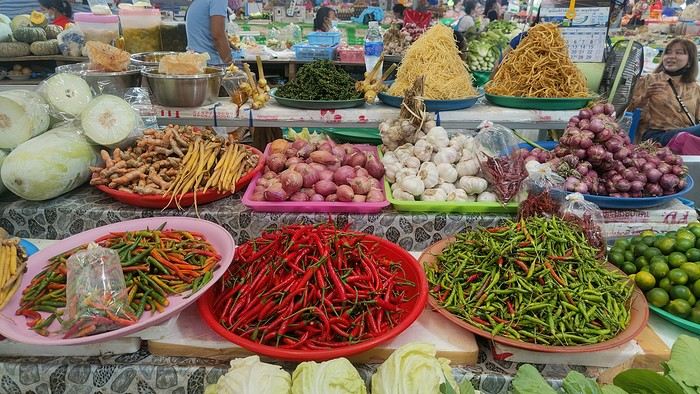
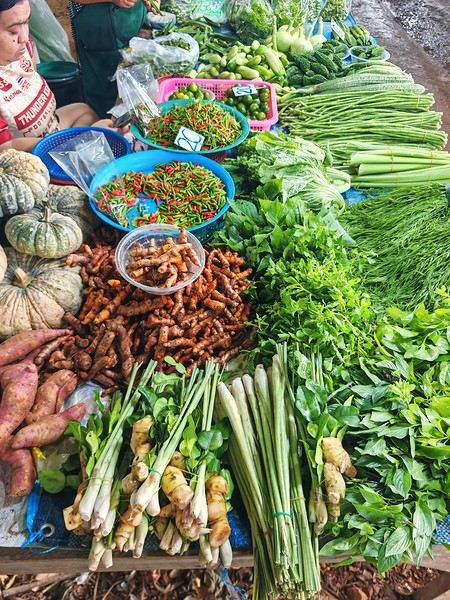
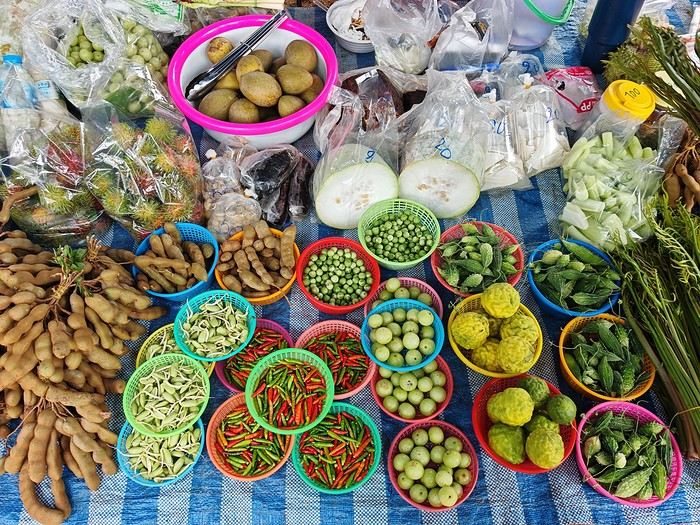
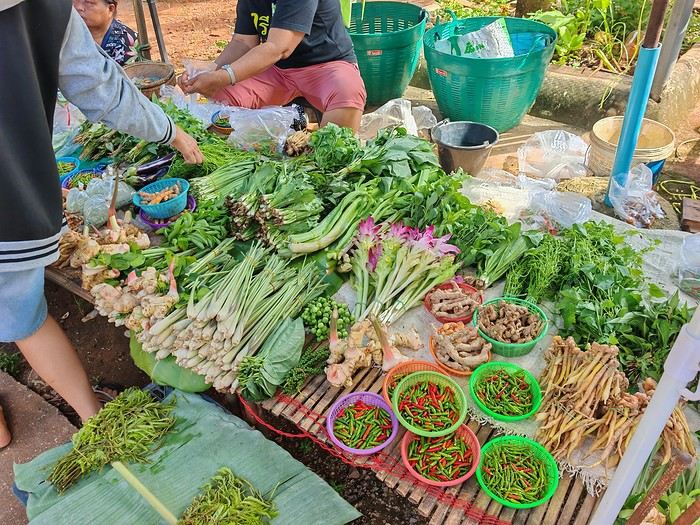
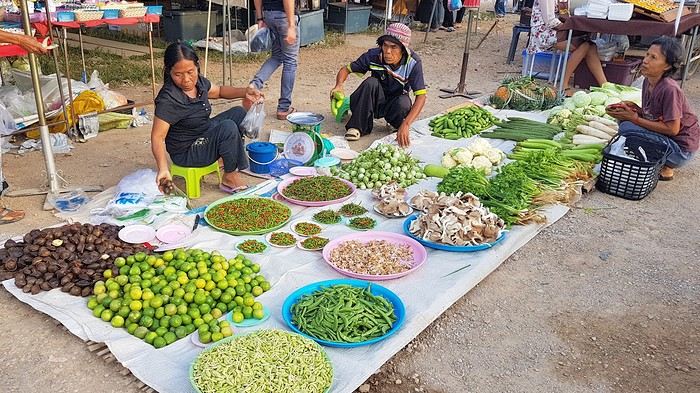
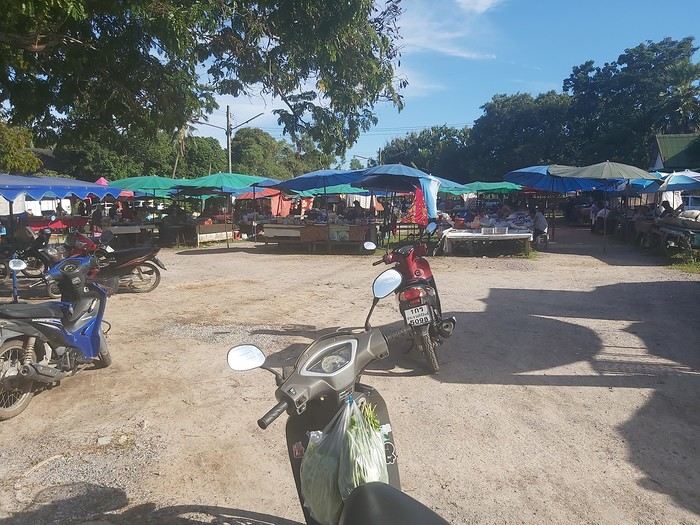
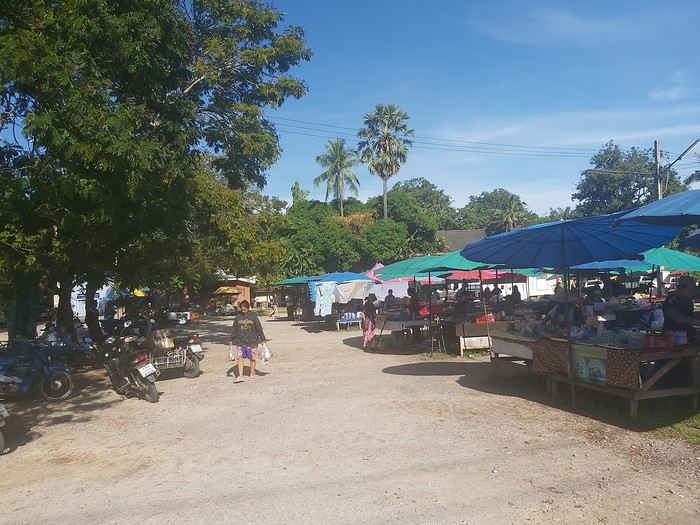
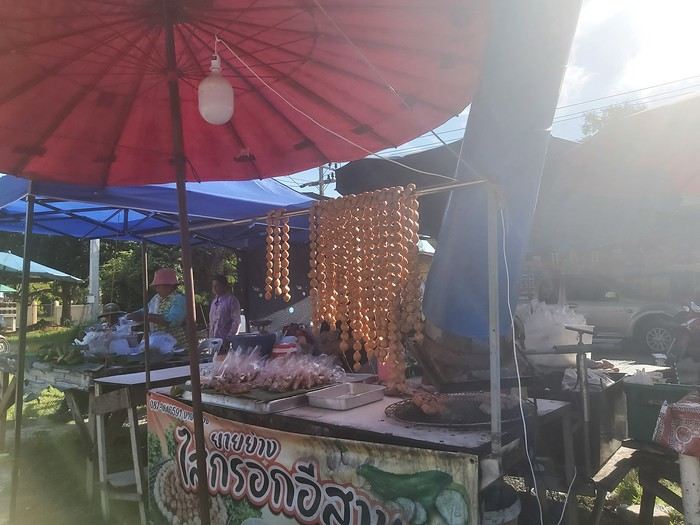
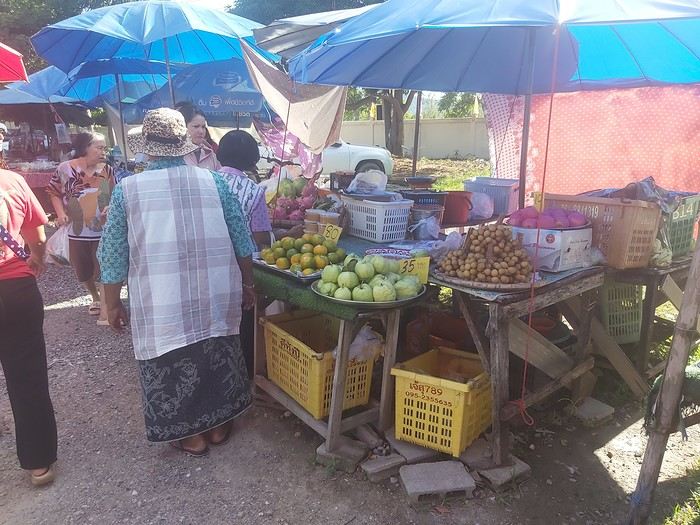
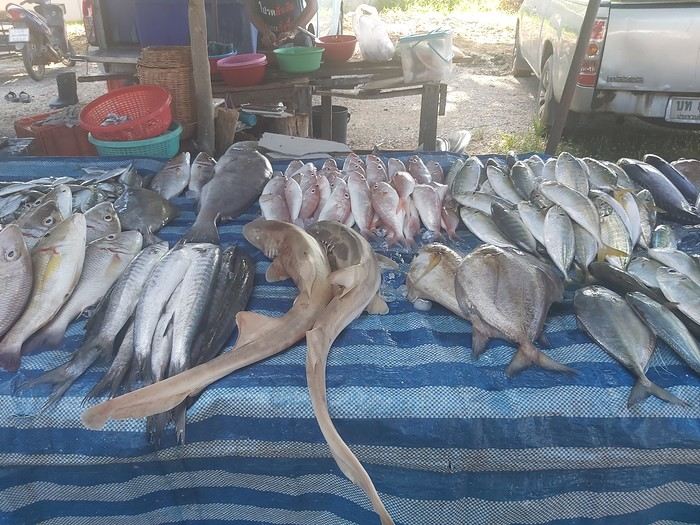
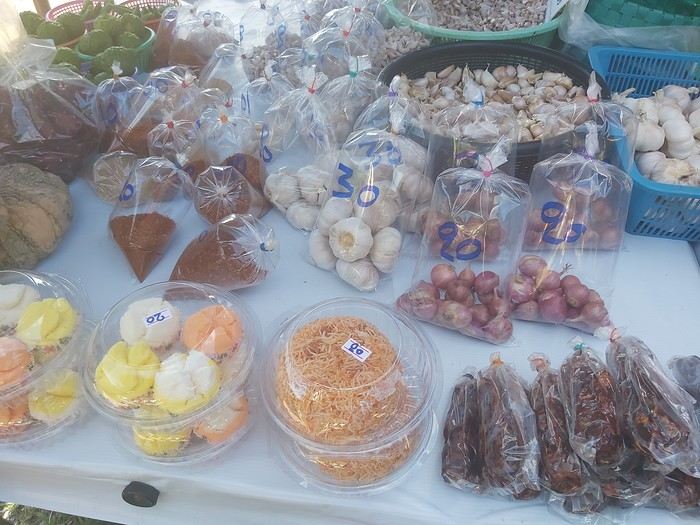
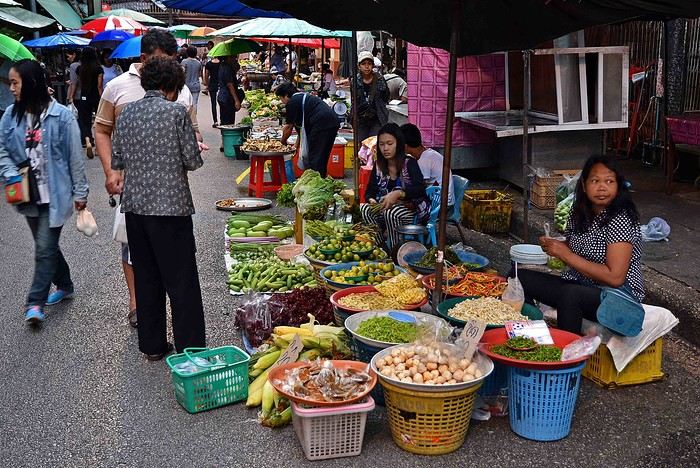
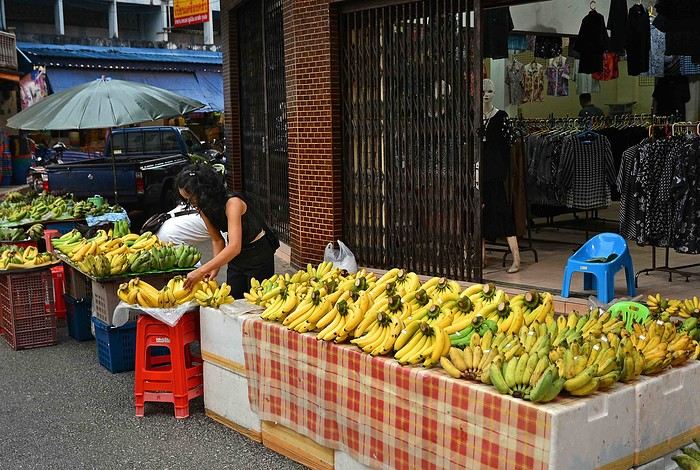
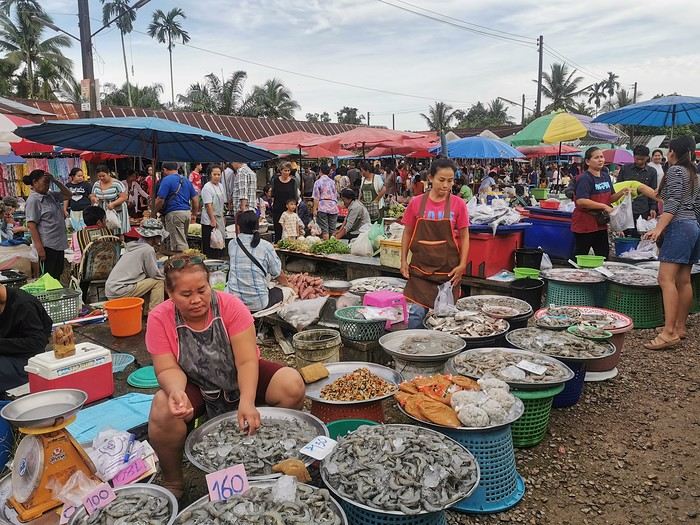
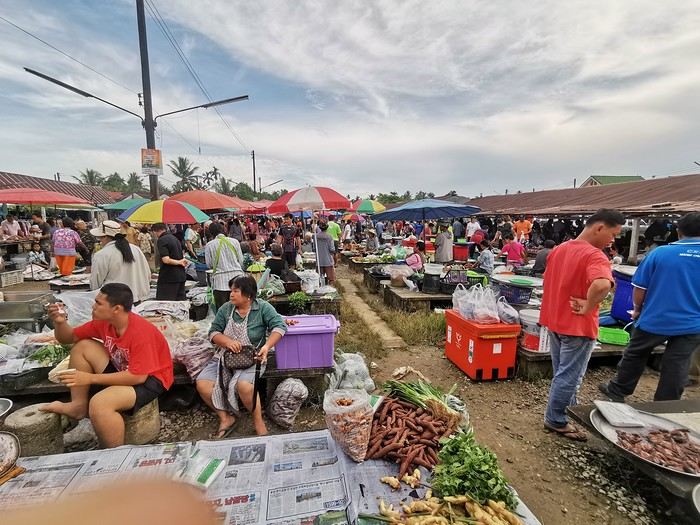
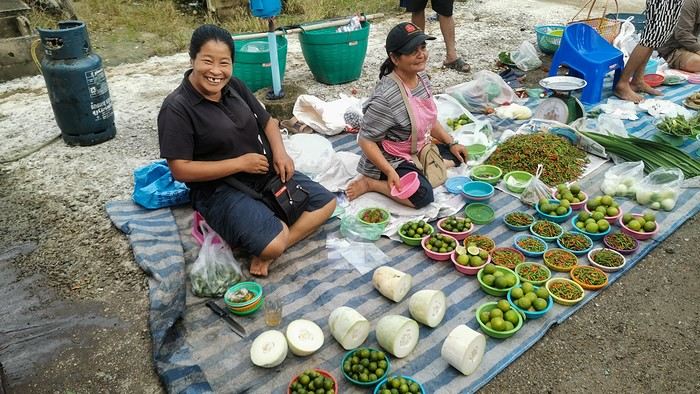
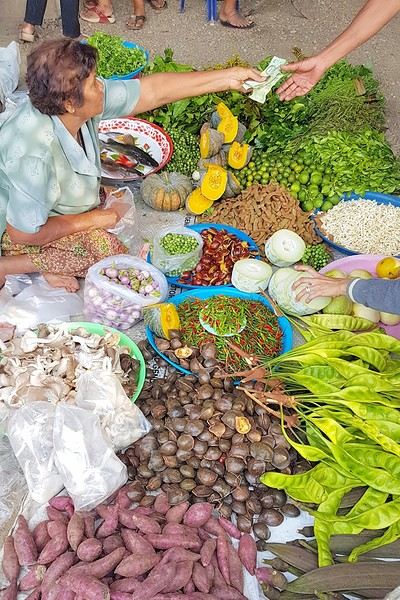
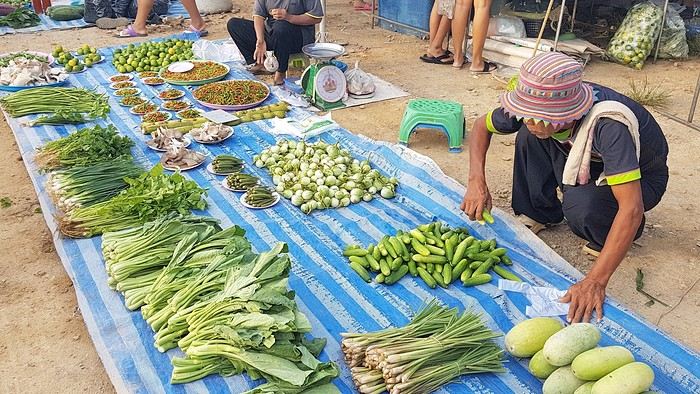
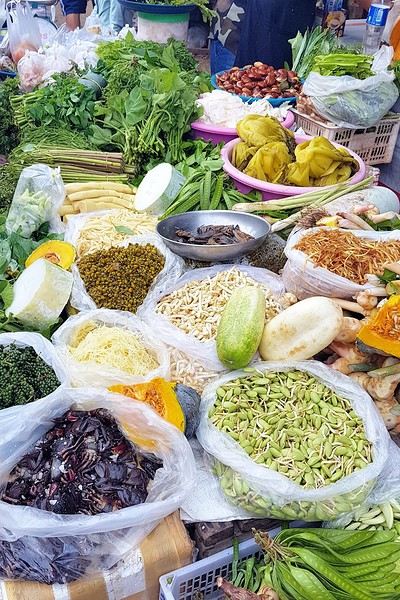
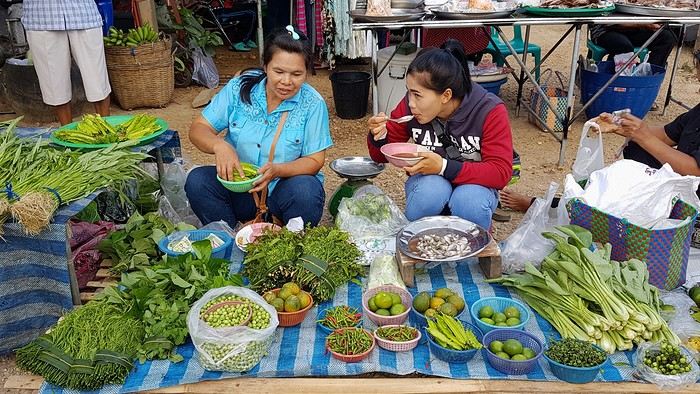
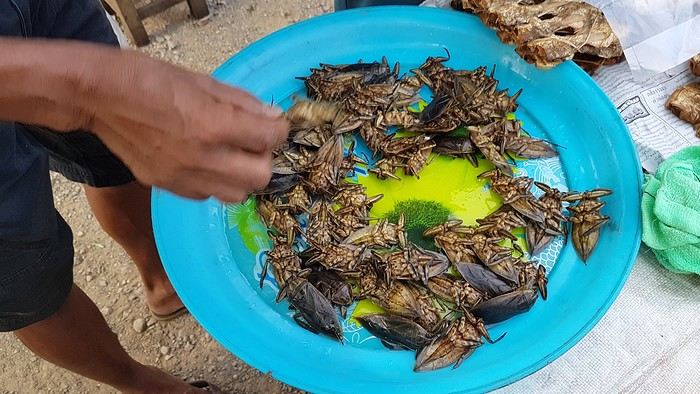
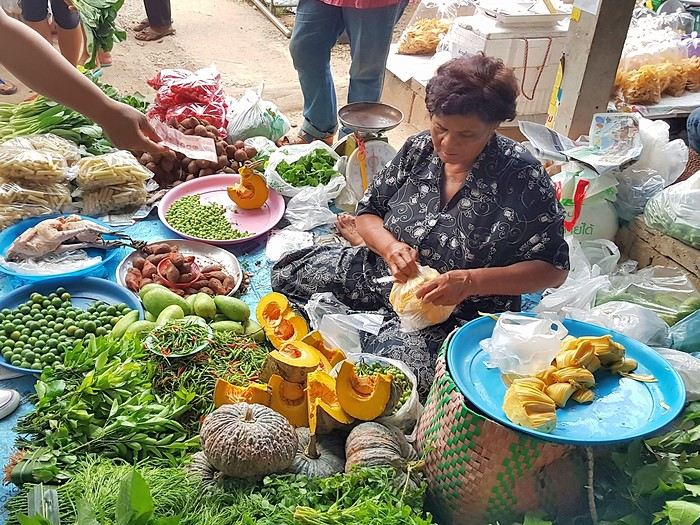
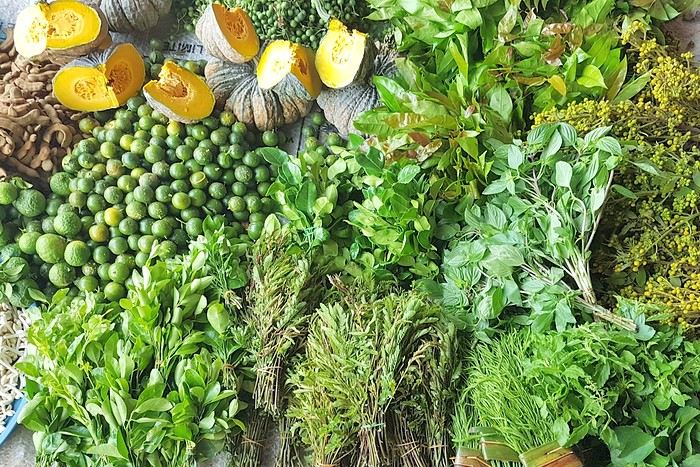
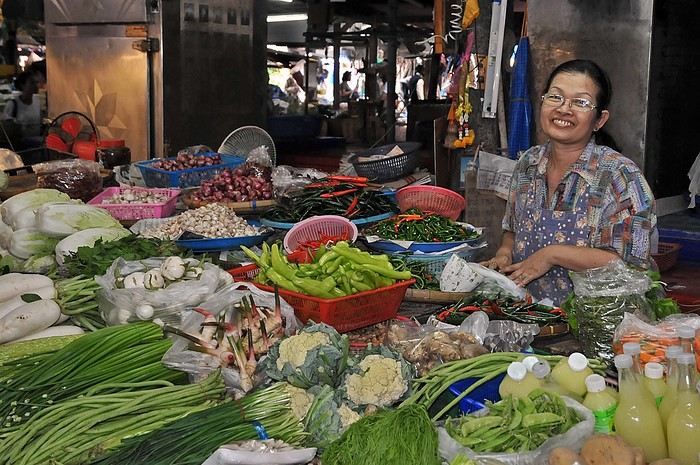
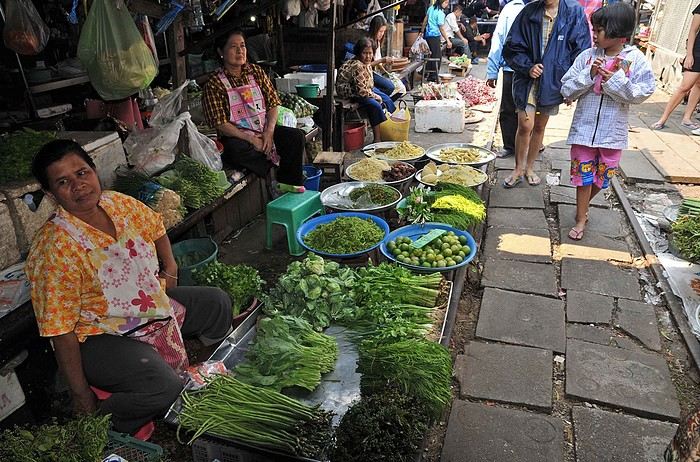
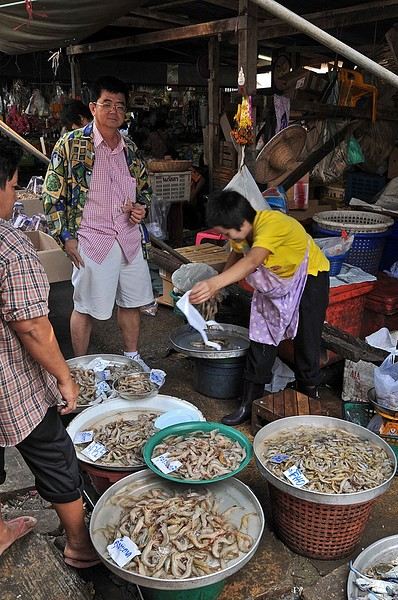
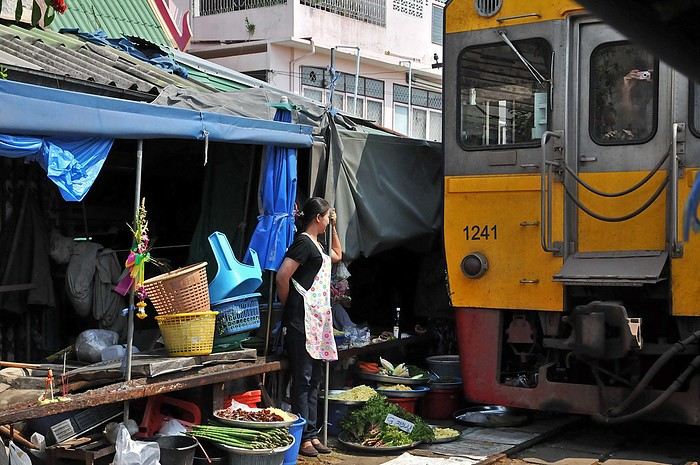
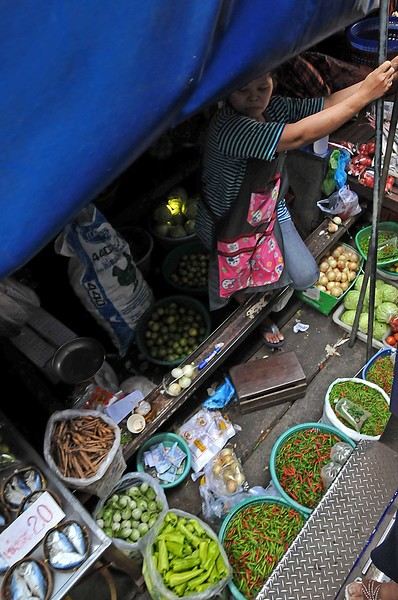
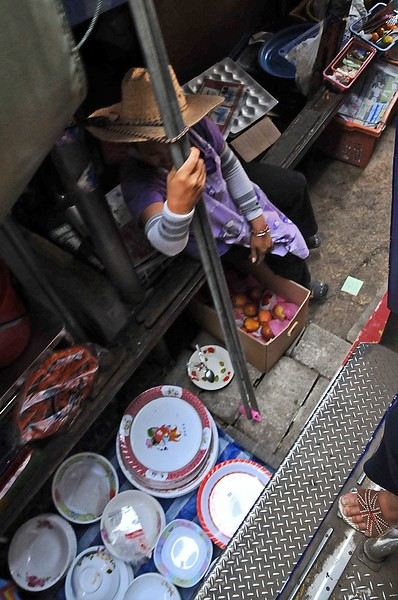
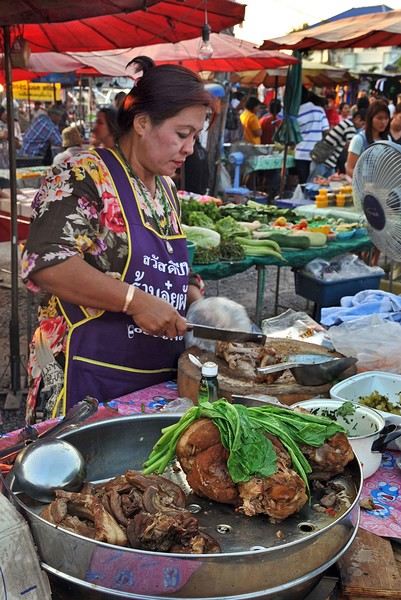
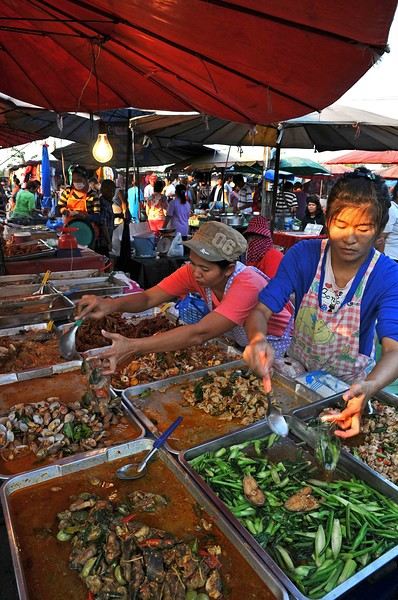
Hi, here are a few photos from this morning’s market near my place in Saigon.
Fresh meat—the animals were alive yesterday, so it’s still best to avoid making steak tartare
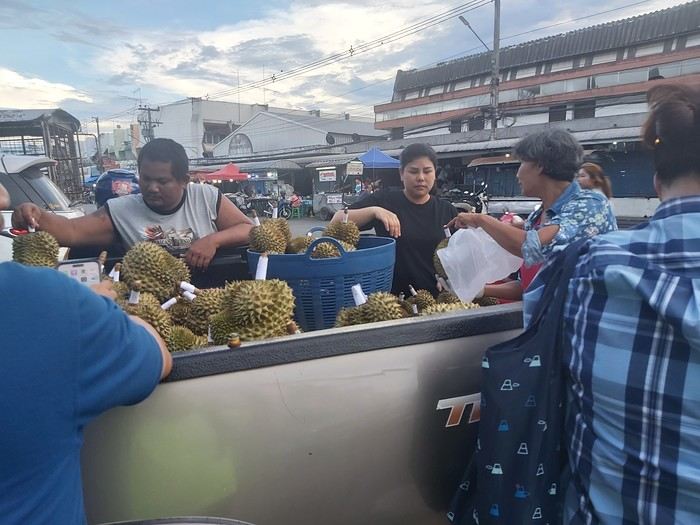
You can also shop at the back of a pickup truck. Lots of fans of stinky stuff here in central Tak.
Apart from that, I completely agree with your thoughts on seafood. It’s a disaster in several Asian countries—everything’s rinsed with water.
I suspect they’re not into the salty taste and prefer replacing it with their mouth-burning concoctions.
Besides, take the sugar out of Thai dishes, and it’s not nearly as delicious anymore...
We’re pretty picky, but we have an excuse: we’re French...😏
You have no idea how many market photos I’ve got stored on my PC... My problem is I don’t know which ones to post—after looking at them so much, they all start to look the same.
Alright, let’s dive in...
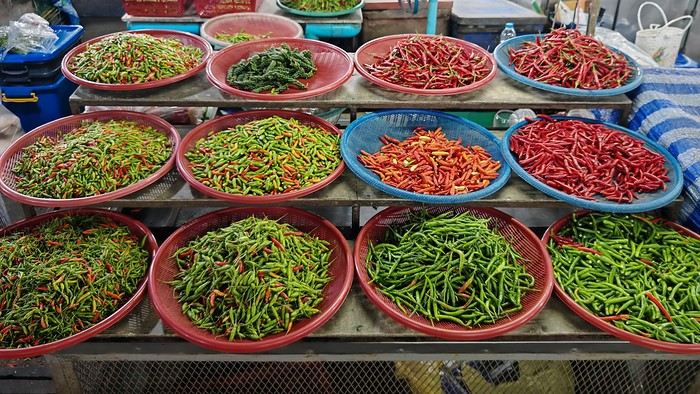
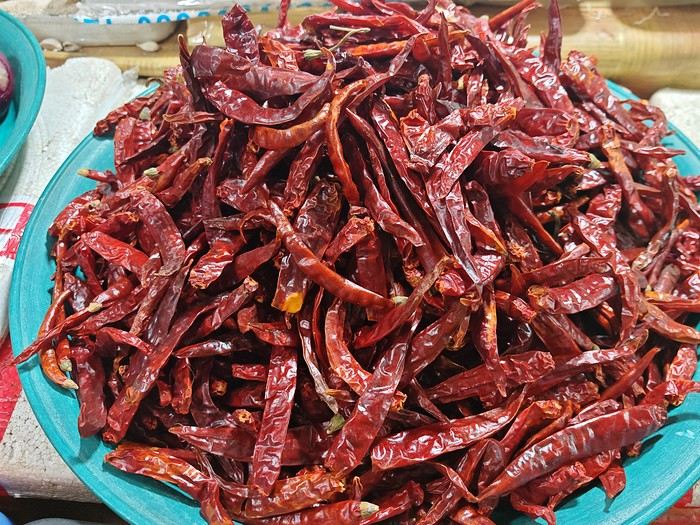
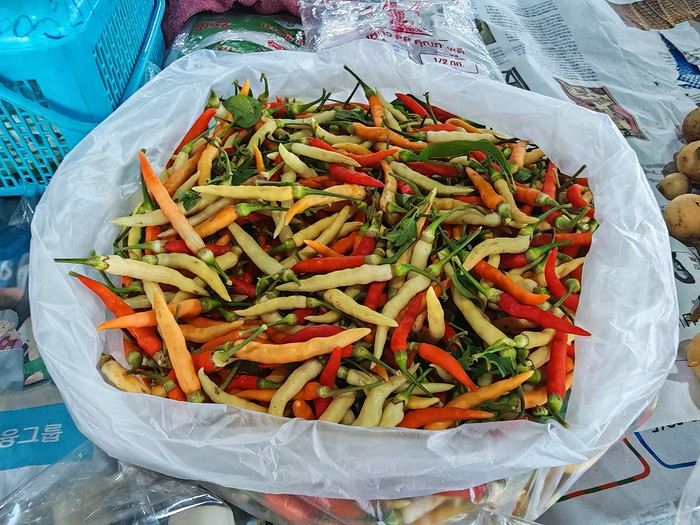
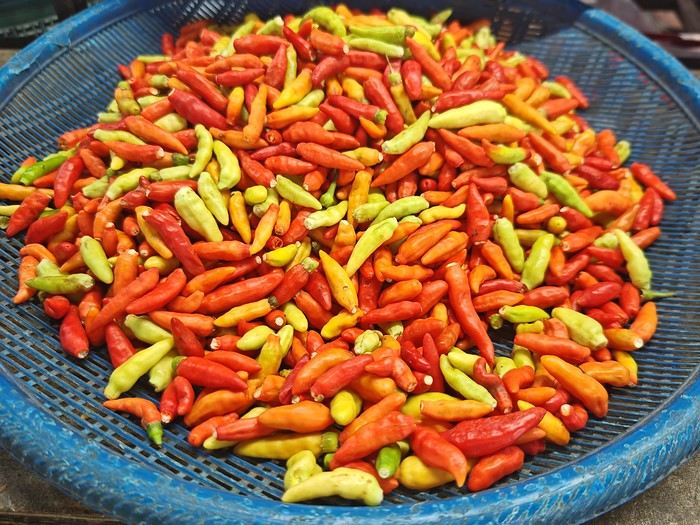
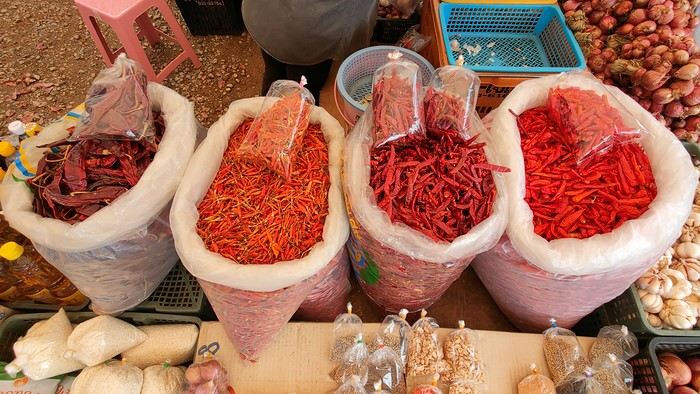
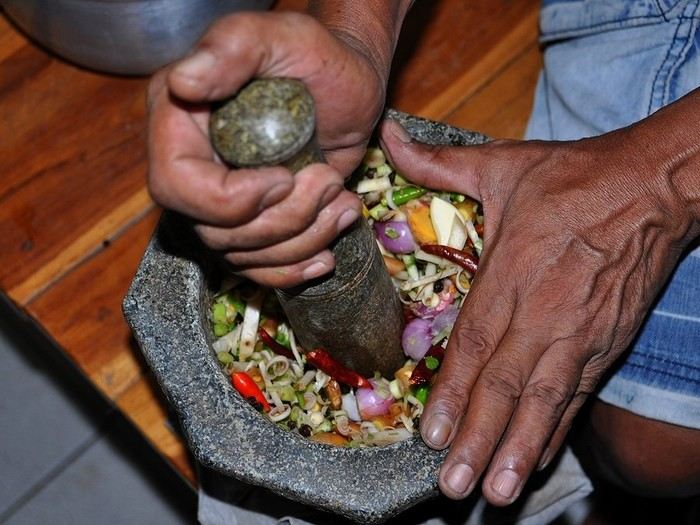
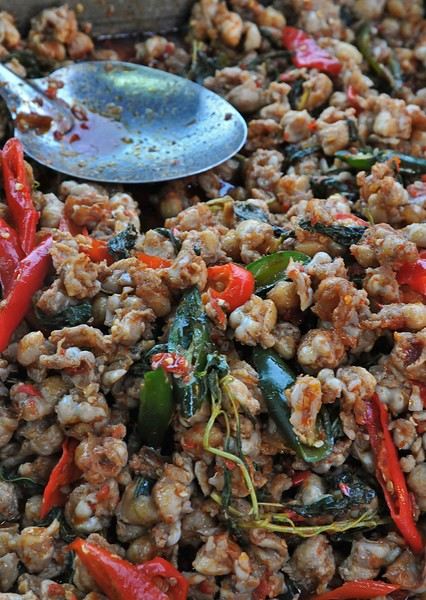
What about talking chili? It’s everywhere... The butcher sells it, the fishmonger too—you can’t walk 10 meters in a Thai market without spotting the fruit, whether it’s mild or spicy, fresh or dried, green or red. It sneaks into everything. The most common and widely used is the "Prik kee noo" (mouse-dropping chili). It’s the Thai equivalent of bird’s eye chili. You’ll find it in all its forms in 90% of dishes.
Alright, to make the original poster happy—maybe I’ll run into them one day under the hills of Chumphon...
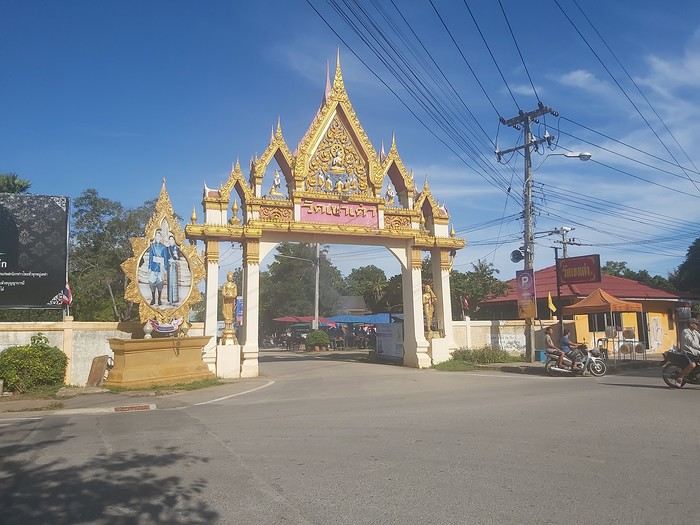
The little market that smells of tradition and authenticity is the one set up inside the local temple grounds.
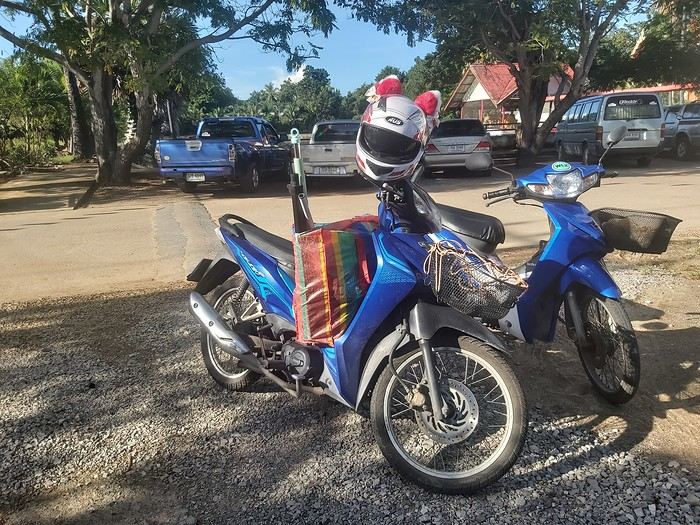
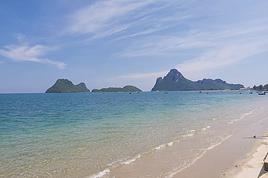
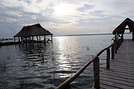
It’s here on a Sunday, in Kao Tao, just steps from the sea. I’ll give you a bit of the surroundings for context.
It’s pretty quiet in the afternoon because it gets hot, and after 4 PM, there’ll obviously be more people.
Alright, to please the post’s initiator—maybe I’ll run into you one day under the hills of Chumphon...
Under the hills or in a market—that’s where you’re most likely to spot me. 😏
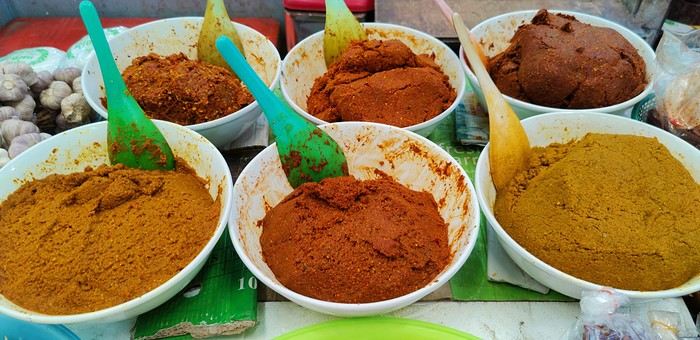
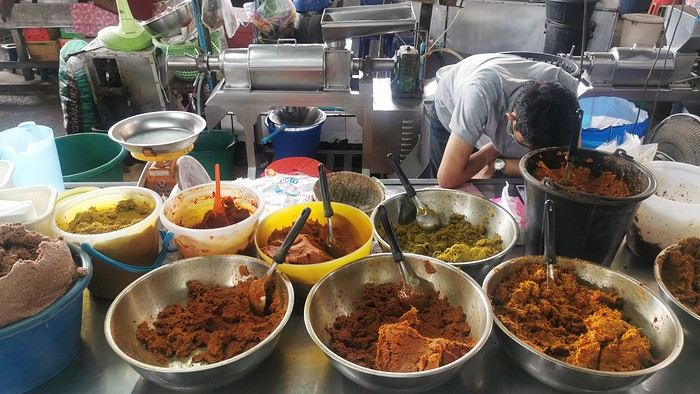
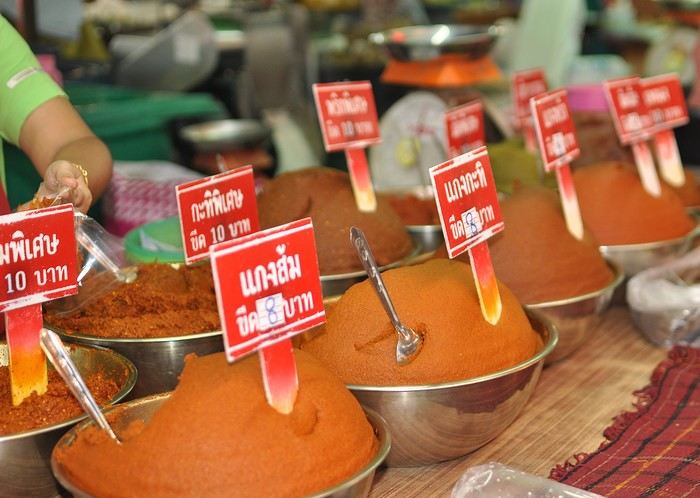
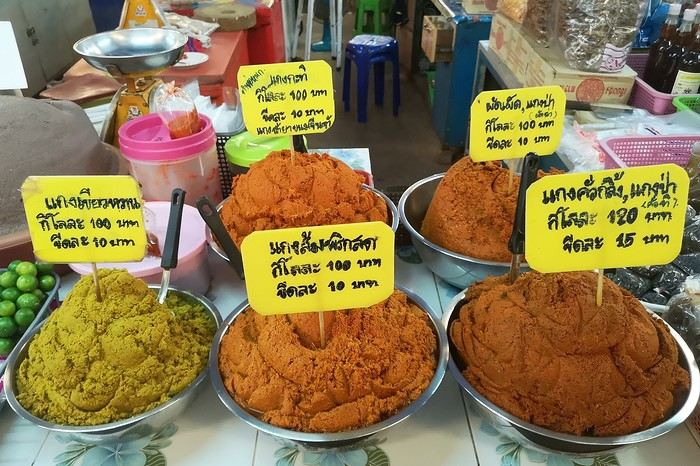
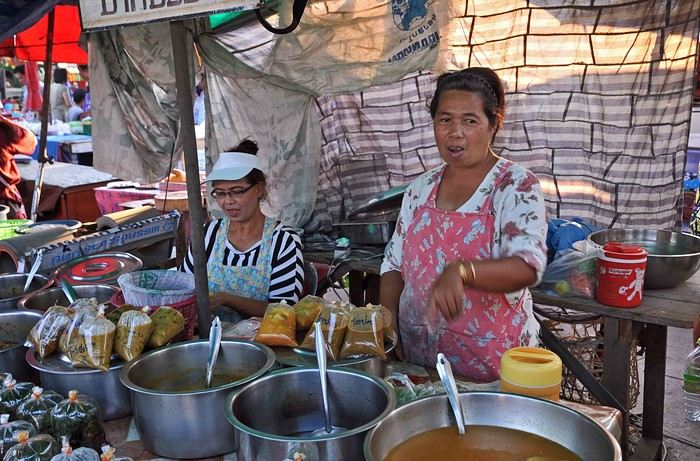
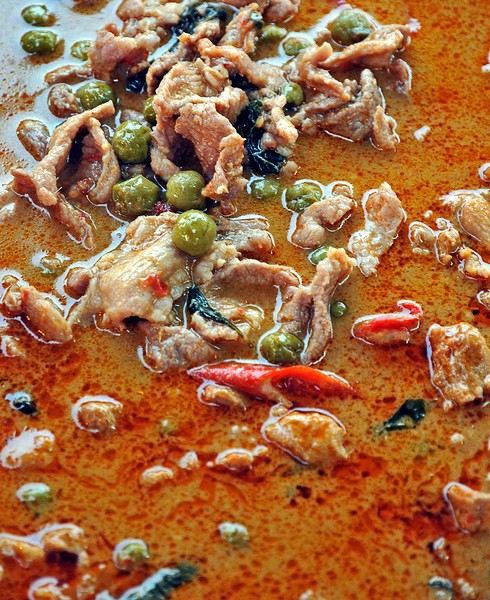
Otherwise, you’ve probably seen these products at the markets, but what are they? They’re obviously curry pastes, used to whip up those famous curry dishes.
I don’t know if, since moving to Thailand, I’ve gone two days in a row without eating one... At least not down south where I live. Fun fact: in Thailand, when greeting someone you know, we don’t always say "Sawadee"; instead, we ask, "What are you eating?" or "Have you eaten rice yet?" That translates to "Kin kao yang" or "Kin ray yang." And here, to show how central curry is to Thai culture, we even say "Kaeng ray," meaning "Which curry did you cook/eat?" Almost like a meal without curry isn’t really a meal... It’s the warmest way to say hello.
Here are a few stalls selling curry pastes (Krueng kaeng). Green curry paste is named after its color, but that’s not the case for red curry pastes—those are named after the dish you want to make. There are at least five different "red" curry pastes, each unique, so you don’t just ask for "a red curry paste" here... Not sure if that’s clear...😕
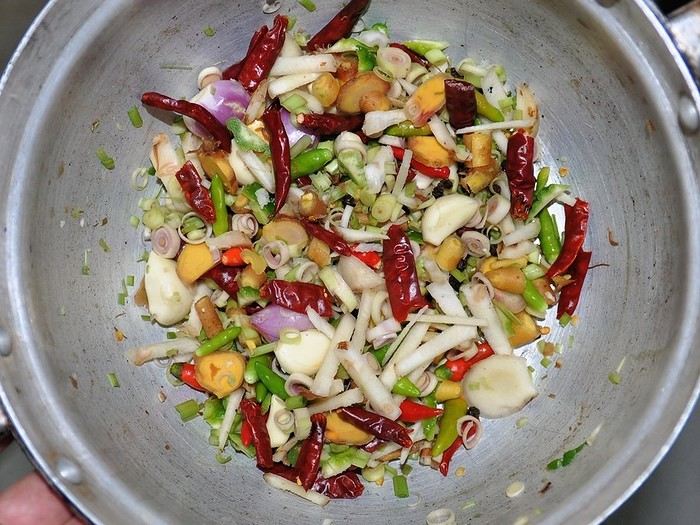
Thai curry pastes are incredibly complex. Most share common ingredients like chili, galangal, lemongrass, garlic, onion, and kaffir lime zest. Then, depending on the curry type, there are variations in the chili and dried spices (coriander, cumin, pepper, cinnamon, star anise, cardamom...). On top of that, each region adds its own twist. For example, in the south, turmeric is almost always included.
Some families still make their own curry paste, but let’s be honest—it’s way easier to buy it at the market, given the effort involved and the price.
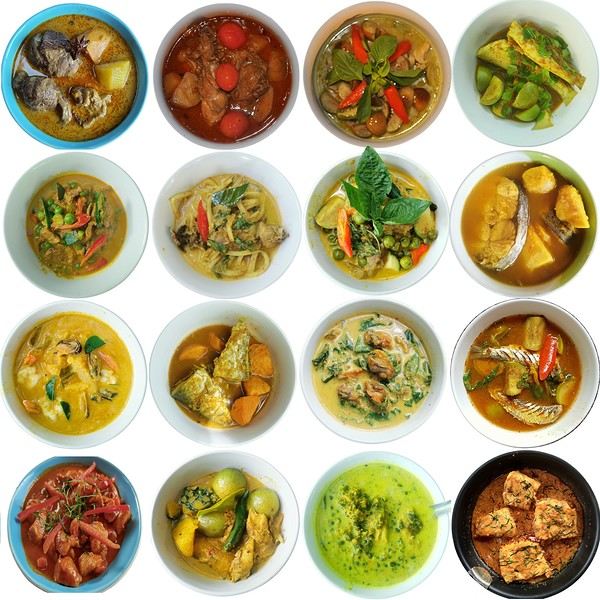
Seriously... As much as I love khao soi, I couldn’t eat it at every meal. That goes for any dish, really. At least with curries, even if it’s almost daily, there’s variety. There are at least 15 types of Thai curries, and you can cook them with chicken, beef, pork, fish, or seafood—that’s a lot of options!
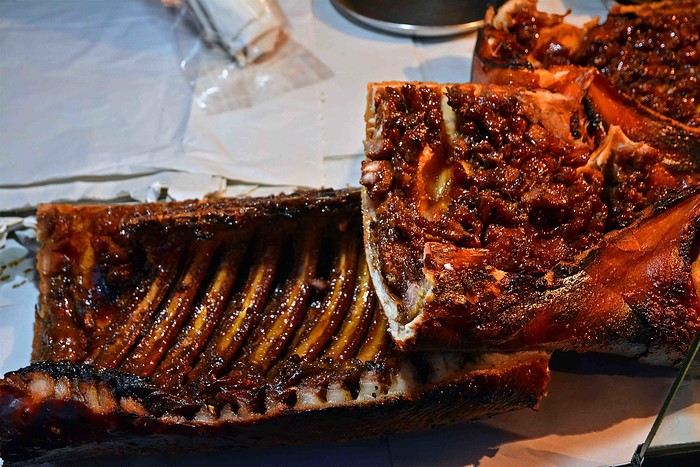
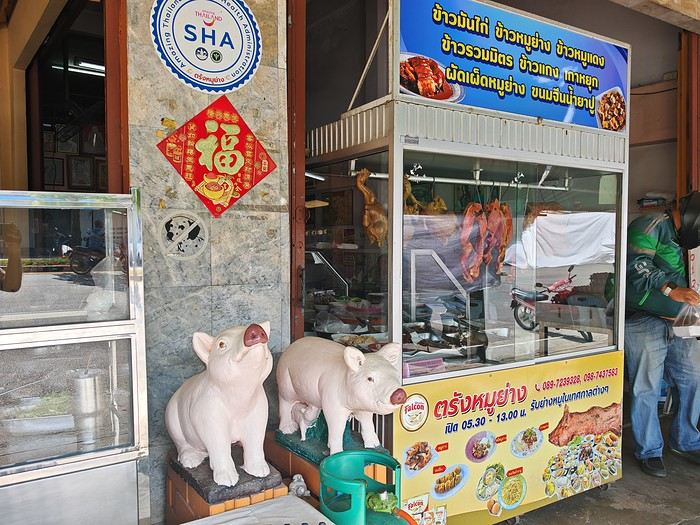
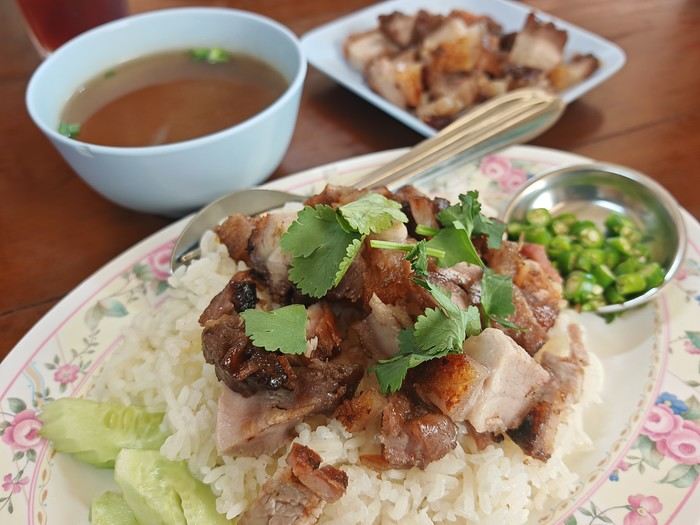
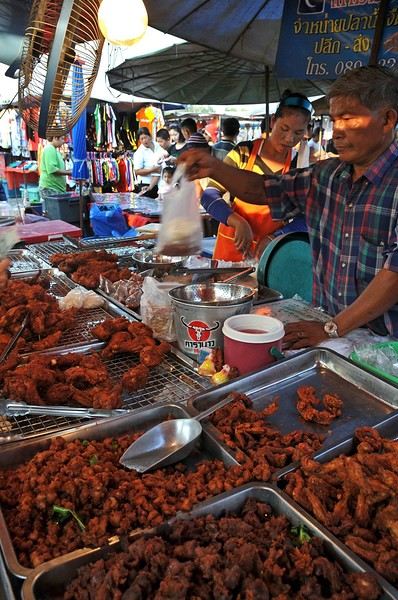
Oh yes...! Trang's moo yang is a wonder—crispy and tender just right, with a unique flavor.
Every time I pass through the province, I stock up on some...
Moo yang from Trang is a marvel—crispy and tender just the way you want it, with a unique flavor.
Every time I pass through the province, I stock up on it...
Personally, I wouldn’t have been able to stock up because as soon as I bought it at the market, I’d eat it still warm right there in the street. I do the same with moo klop, by the way—impossible to wait until I get home.
Another market I really love is the Sunday morning one at the intersection of Prachuap and Ranong roads. That said, you’ll have to get up early... It starts at 6 AM and wraps up by 9 AM, so you can kiss that Sunday lie-in goodbye 😕 But the atmosphere is just incredible... and don’t even get me started on the products—there’s everything under the sun!
Not translated into English yet. Original French text:
Par contre il faut se lever tôt... Il débute à 6 heures et se termine à 9 heures... On fera donc une croix sur la grasse matinée
J'en connais des qui vont au marché du matin de chez eux très tôt pour être sûrs d'encore y trouver du moo klop encore tiède puis retournent à la maison en le grignotant et se recouchent.
J'en connais encore des qui à Mae Salong vont au marché "ethnique" qui à lieu de 5 à 7h situé juste à côté des 2 guesthouses les + connus juste après avoir passé un pantalon et un pull* par-dessus leur pyjama puis eux aussi se recouchent au retour.
Mais y'a que les fainéants qui font ça, pas moi... 😊 😊
* qu'il ne faut surtout pas oublier de porter à Mae Salong à ces heures...
Not translated into English yet. Original French text:
Ce qu'il y a de bien avec le marché qui suit, c'est qu'on peut en poster des photos aussi bien dans un sujet consacré aux trains que dans un sujet sur les marchés, alors, hop , c'est reparti pour une visite du talat lotfai Maeklong!
Marché sur les rails de Maeklong, 1ère partie.
Voir ce marché quand un train passe dessus (3 à 4x/jour dans chaque sens) c'est mieux. Les vendeuses relèvent alors leurs stores:
Arriver par le train, c'est encore mieux et assez logique à mon avis de voyageur jamais pressé. 2 vues depuis le marchepied du train:
We’re heading to Vietnam in February as a family (2 adults and 2 kids) for 9 full days, and I was thinking of this itinerary:
Day 1: Hanoi
Day 2: Halong Bay (Lan Ha)
Day 3: Halong Bay (Lan Ha)
Day 4: Hue
Day 5: Danang
Day 6: Danang
Day 7: Hoi An
Day 8: Hoi An/My Son
Day 9: Hanoi
After reading almost all the discussions about Vietnam, I don’t see anything about transportation options for getting from Hue to Danang, then from Danang to Hoi An. Any ideas (train, bus)?
From the map, it looks like Danang is close to Hoi An—easily accessible by taxi, right?
Also, after reading lots of comments and websites, I’ve noticed that Danang, aside from being a big developing city, seems to be more about hotels for relaxing on the beach—very laid-back, isn’t it? Not really a place to visit like Hanoi or Hoi An.
Generally speaking, if you have any recommendations for the itinerary or tips, I’d love to hear them.
I’m planning an 18-day trip to Bali between June 12th and 30th. I’ve been to Bali twice before, in 1981 and 1982, but I know it’s changed a lot since then. I have a rough itinerary in mind but I’m open to tweaking it based on any advice I can get:
- Arriving the evening of June 12th, 2 nights in Sanur. Not because I’m particularly attached to Sanur, but just to rest a bit before heading further;
- 3 nights in Lovina;
- 3 nights in Ubud;
- 2 nights in Kintamani (I remember being blown away by the view of the giant caldera!);
- 2 nights in Besakih;
- 1 night in Sidemen;
- 3 nights in Candi Dasa;
- 2 nights back in Ubud to wrap up, in case we’ve made any purchases or have shopping plans. By shopping, I mean handicrafts (fabrics, batik, etc.), and I think Ubud is the perfect place for that.
I’m a bit unsure about public transport, especially for getting from Kintamani down to Candi Dasa via Besakih and Sidemen.
We’re traveling as a couple—I forgot to mention that! We’re seasoned travelers and used to packing light. Also, I speak pretty good Bahasa Indonesia, having lived in Indonesia a long time ago!
Hi there,
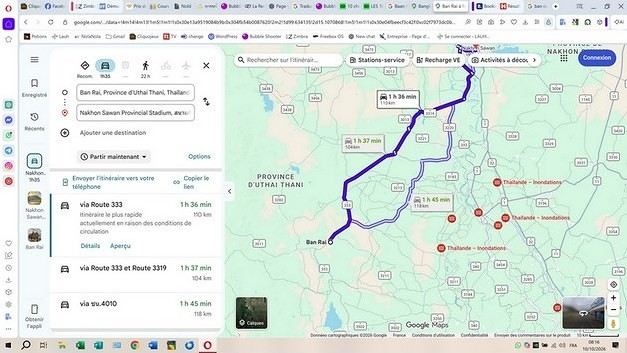
After a stay in Hua Hin and before another in Chiang Mai, I’d like to break up the trip from Bangkok to Chiang Mai into several stops. I’ve found bus and train routes on Maps, but I’m stuck on the connection between Ban Rai / Uthai Thani and then Nakhon Sawan (bus for the latter).
Does anyone have any idea where I could find info, maybe via Route 333?
I know my question isn’t super general or exciting, but if you can help, thanks!
We’re planning a two-week trip to the Philippines in August (unfortunately, we don’t have a choice on the dates...) and we’ve seen, especially through many posts here, that a large part of the Philippines is advised against visiting. However, some areas might still be okay for this month.
Based on that, we’re considering the following itinerary:
• D1–D2: Flight from France to Manila, overnight transit in Manila.
• D3–D5: Camiguin — beaches, Mantigue, White Island, and a volcanic tour (staying at Balai sa Baibai)
• D6–D9: Anda — beach, snorkeling, rice terraces, Can-Umantad Falls, Chocolate Hills, tarsiers, waterfalls, and adventure activities (staying at Anda White Beach Resort)
• D10–D14: Siquijor — snorkeling, whale shark excursion in Oslob if possible, Apo Island, and sunset fishing (staying at Coco Grove Beach Resort)
• D15–D16: Return via Cebu and Manila, then international flight back to France.
We’ll be two families of four with kids over 20...
I’d love to hear your thoughts on whether this itinerary is feasible, and I’m open to suggestions for other islands or activities from those who know the destination well.
Thanks for your help! :slight_smile:
I work for a small local agency based in Da Nang, and this is THE question I get asked the most about the northern part of a trip. I’m sharing what we see on the ground here—no sugarcoating—because the answer isn’t always Lan Ha.
Geologically, it’s the same limestone massif. Lan Ha is its southern extension, off Cat Ba Island. The difference is the crowds.
Halong Bay: hundreds of junks on a few marked routes. The landscape is iconic, access from Hanoi is shorter (about 2.5 hours by highway), and there’s a much wider choice of boats, from comfortable to luxurious.
Lan Ha Bay: only a few dozen boats over a comparable area. Result: around a hundred small beaches where you can swim—which is very limited in most of Halong Bay—and free kayaking between islets and caves, instead of guided kayaking in restricted zones. The floating villages are still active, not just visited.
When to choose Halong? In two cases: you have less than three days in the North (boarding for Lan Ha is in Cat Ba, which adds a connection and about 40 minutes each way), or you’re looking for a specific boat—the Lan Ha fleet is smaller and often fully booked two to three months in advance during peak season.
When to choose Lan Ha? Nine times out of ten, for everything else: first cruise, family trip, honeymoon, or if you just want fewer boats around you at sunrise.
Season-wise: March to May and September to November are the best windows—clear skies, calm sea. From December to February, it’s 15 to 18 °C with dense fog: no swimming, but an atmosphere many travelers prefer to full sun. One night on board is enough in most cases: the bay is best experienced in 24 hours, from sunset on deck to morning kayaking.
For boats in the same price range, the cost difference between the two bays is negligible—the real difference comes down to the boat you choose, not the destination.
I’ve broken down the comparison point by point (landscape, swimming, kayaking, floating villages, access, boat options) and the seasons here: full details
Which bay did you choose—and why? I’d love to hear your feedback, especially if you’ve done both.
Hi,
We're planning to visit this region as a couple for a few days during our trip to Vietnam.
What should we do with 3 to 4 days there, and how can we get around to the different spots?
Should we return to Sapa every day or stay in different places each night?
Any tips on accommodations, dining, and must-see sites?
Also, advice on traveling from Hanoi to Sapa.
Thanks so much for helping us prepare for this autumn 2027 trip!
Hello everyone!
It’s been a while since I last posted here.
My partner and I are seasoned travelers, and we’re planning a one-month road trip in Thailand between mid-February and mid-March.
Here are a few details:
- There will be three of us, including our 3-year-old child,
- We hate mass tourism (but love the Land of Smiles, which we already know a little),
- We’ll start from Bangkok (without visiting it) heading south to drop off the rental car in Phuket (without visiting Phuket) and fly out from there.
We’re thinking of an itinerary like Bangkok - Khao Sam Roi Yot - Khao Sok, and maybe exploring in a loop toward Surat Thani, Khanom Beach, and Khao Tong / Phang Nga Bay (if there are parts still untouched by mass tourism).
Do you have any recommendations for places to discover? We love meeting locals and don’t have any preconceived ideas, except avoiding crowds—I know it’s possible!
Thanks for your valuable tips!
Best regards,
Claire
Hi,
We're heading out at the end of the year to join family in Cebu. We're planning to spend a week in the area but are struggling to choose between these 3 islands... Ideally, we'd like to have 2 bases to explore two of them. Have any of you visited all three, and which would you recommend? We're into snorkeling, beautiful excursions, and would also love to connect with locals. And ideally, do all that without too much logistical hassle 😅
Thanks for your experiences/tips!
Hi,
Is it useful to rent a car from Puerto Princesa to get to El Nido? Are there any nice stops along the way?
I read that once you arrive in El Nido, most of the beaches and sights are accessed by boat, so I'm wondering if this rental is really worth it...
Thanks for your help
Hi there,
We’re planning a backpacking trip to Northern Malaysia and northern Sumatra in February/March 2027. It’ll be our first time in these areas (we’re pretty familiar with the rest of Asia). Thanks in advance for your favorite spots and diving recommendations! It’s still very open-ended—we haven’t set anything in stone yet.
Thanks,
Hi there,
We’re thinking of spending a month in the Philippines at the end of February and the beginning of March. What’s the tourist crowd like during that time—is it super busy? We’re not really used to booking accommodations, transport, etc., in advance.
Thanks in advance!
I’m starting a discussion about guides in the Mekong Delta because we’ve just finished our trip in this region and had a hard time finding a French-speaking guide. We had Thanh—she speaks French really well and travels all over the delta region, including Ho Chi Minh City. She’s super friendly and flexible. I recommend her wholeheartedly. If it can help someone...
Feel free to contact us for her number.
I’m planning to go to Koh Lipe.
Do you know a good site to book a boat ticket from Phuket?
And if you’ve visited any nice islands around Koh Lipe, I’d love to hear about them.
I’d like to go diving.
Thanks
Hi, I’ve read that these two volcanoes are super popular and that there are *tons* of people for sunrise, especially in July. I’m looking for firsthand accounts from anyone who’s done it later, around 9–10 a.m.
Thanks for your help!
Laëtitia
We’re planning to spend two full days in Phnom Penh next January.
We really love markets, and I’d love to know which one you think is the most interesting in the capital? The Central Market (Psar Thmei) and the Russian Market are often mentioned.
Thanks in advance for your tips.
Have a great day,
I’m planning our summer vacation for August 2027.
We’re a family of 4, and here’s what I had in mind:
- Arrival in Surabaya (one or two stops, including Jakarta). 6 nights on Java Island (private driver, nights split between Bromo and Yogyakarta)
Budget airline.
- 7 nights in Bali: 4 in Ubud, 3 in Amed (with a rental car)
- And a 3-night stopover in Singapore.
During my trip to Thailand, I’ll be spending 2 nights at Tonsai Beach, near Ao Nang Beach, close to Krabi. Tonsai Beach is only accessible by boat, so I was wondering where I could safely leave my car at Ao Nang Beach for 48 hours?
Alternatively, at Ao Nam Mao Beach (on the other side), if there are shuttles to Tonsai Beach.
Hi everyone.
I’m heading to Malaysia for five weeks over the holiday season.
I just found out that tourists can pay by QR code like locals (street food, small shops) to avoid using cash.
This works with apps like Wise or TNG eWallet.
Has anyone tried this system before?
Hi,
On September 1st, we're heading to Kalimantan for six weeks, probably from Pontianak to the Derawan Islands.
I've scoured this site, which is usually my go-to 😉, and others like VoyageForum, but recent info is pretty scarce.
I'd love any tips on places you've visited—our itinerary is still a work in progress.
We're two couples traveling with backpacks, using buses, boats, guesthouses, and homestays.
Thanks in advance!
Hello fellow travelers, and thanks to everyone for keeping this blog alive!
It’s my turn to ask a question.
For our trip to Laos next year, I’m torn between using a local agency or organizing everything myself with the Lonely Planet guide and tips from VoyageForum.
If I plan it myself, will I still be able to find French-speaking guides on the spot or book excursions in advance?
Thanks for sharing your experiences, and if you have any recommendations for local agencies—just for excursions or even transportation—that’d be great!
Sylvie
Cinefil67
Hello,
I’m planning a trip to Vietnam with my partner, and we’re considering Ha Giang in October-November for 4 days on-site to do the loop by bus, since we’re not old enough to ride motorbikes.
I see there are sleeper buses—how does that work for sleeping at night, meals, etc.? And what are the rates per person for these 4 days and nights?
Then there’s Sapa—what’s the most practical way to travel between the two, or should we return to Hanoi?
I’d love recommendations for simple but decent hotels and any other tips you have.
Thanks so much! !
We’re 49 years old, love beautiful landscapes, meeting locals, discovering local food and traditions, and we avoid overly touristy places.
We enjoy hiking, cycling, running, and diving.
This is our first time in Thailand (my husband knows Bangkok).
We arrive on Friday, November 13th in Bangkok (city visit) and return on Friday, November 27th.
We’re considering heading south (possibly toward Krabi) from the 14th to the 18th to enjoy the beautiful beaches, go diving, and see Khao Sok...
Then back to Bangkok and on to Kanchanaburi to see the Sai Yok Noi waterfalls, followed by a bike visit to Ayutthaya.
From there, we’d take an overnight train to the north: Chiang Mai, Chiang Rai, and the Lantern Festival from November 21st to 25th.
On the 26th, we’d take a flight from Chiang Mai to Bangkok (city visit), and on the 27th, we have our flight back to France.
Does this itinerary seem too packed?
Should we remove some things to avoid feeling rushed and fully enjoy the trip?
Do you recommend anything other than Krabi?
Hello.
We’re joining our daughter in Ho Chi Minh City for Christmas—she’s studying there. There’ll be five of us adults, and we couldn’t choose our travel dates, so some flights are fixed. I’ve sketched out the following route, but I’m not sure if it all makes sense. This is our fourth trip to Asia (Thailand twice, Lombok, Kuala Lumpur, and Singapore). We often travel on a budget, love authentic spots, and enjoy meeting locals (we’ve done volunteer work and homestays).
18/12: Two of us arrive in HCMC
20/12: Head to Hanoi, where the boys land
20/12 to 23 or 24: Hanoi and day trips around—still deciding
23 or 24 to 26: Phu Quoc, so we can head south and spend Christmas by the beach (one son is crazy about the sea and fishing)
27 to 30: Mekong Delta, stopping in Ha Tien, Chau Doc, and another spot to get back to Ho Chi Minh City
1/1: Return flight to France.
What do you think of this plan—is it doable or totally unrealistic? Any recommendations for a one- or two-day trip from Hanoi (Phu Long, Mai Chau), or is it better to stick around the city?
Thanks in advance for your insights.
I’m planning a 28-day trip to the Philippines starting in the second half of April, and I’m skipping all the super touristy spots.
I’ve got some ideas, but they’re still a bit vague and scattered, and I’d love your help and tips to finalize my itinerary.
For this trip, I’m mostly looking for architecture, ancestral homes, cultural discoveries, local crafts, exceptional natural sites, and islands with beautiful, less crowded beaches—especially avoiding international tourists.
So here are my ideas, and I’d really appreciate your advice:
1- Surigao del Sur, if security allows: the Enchanted River in Hinatuan and Tinuy-an Falls in Bislig City.
2- Iloilo City, Bacolod, Silay
3- The Heritage Town of Taal
4- Banaue and Batad
5- Romblon Island (Bonbon Beach and the marble workshops in Romblon town)
6- Bolinao Falls and Hundred Islands in Pangasinan
7- Baguio, Vigan, Laoag, and Pagudpud (Saud Beach and/or Blue Lagoon)
8- Guimaras Island, Samal Island, and Dinagat Island
I know logistically it’s impossible to cover all the spots I’ve listed in 28 days, which is why I’m counting on your advice to drop a few destinations that might not be worth the detour and highlight the must-sees.
Thanks in advance
Hi there,
We're planning a little trip along the west side, visiting KL, Malacca, then heading up to Penang and ending with a few days at the beach.
The most common option would be to finish the stay in Langkawi. My question: are there other spots with beautiful beaches on this coast where we could spend 4 to 5 days?
Thanks in advance for your replies.
hi everyone,
I want to travel in the north for 3 weeks in September-October 2026 to meet ethnic minorities, photograph mountain rice terraces and their harvest, and revisit Halong Bay—but maybe Lan Ha Bay instead. Can you recommend one or more local agencies?
Thanks, and happy holidays!
I’d like to know if it’s possible (and reasonable) to travel directly between Battambang and Kampot?
From what I’ve gathered, all the buses between these two destinations go back through Phnom Penh, which means we’d have to spend an extra night there in the middle of our trip. That’s not ideal for us.
Hi there,
I’ve found so many tips and reviews on this forum, so it’s my turn to contribute a little.
We spent just over two weeks with our family, with the following itinerary:
- Hanoi: 5 days
- Halong Bay: 3 days and 2 nights
- Tam Coc: 3 days
- Mai Chau: 2 days
- Sapa: 3 days
We got around by bike, scooter, Grab, and bus.
Our main accommodations were homestays and hotels in Hanoi.
We visited lots of museums, temples, and neighborhoods in Hanoi.
We did a 2-day, 1-night trek in Sapa with May, a Hmong local, without going through an agency.
A few small regrets: the weather was overcast, and we couldn’t make it to Fansipan, but nothing major 😅. We also couldn’t find transport to get from Sapa to Mu Cang Chai.
Other than that, this trip will stay in our memories for the kindness of the Vietnamese people, the connections we made, the food (street food, homestays...), the coffee 😋, the landscapes, and how easy it was to get around...
Our goal was to take our time and focus only on a small part of northern Vietnam.
If you need any tips or recommendations, don’t hesitate to ask.
Looking forward to hearing from you.
Cédric.
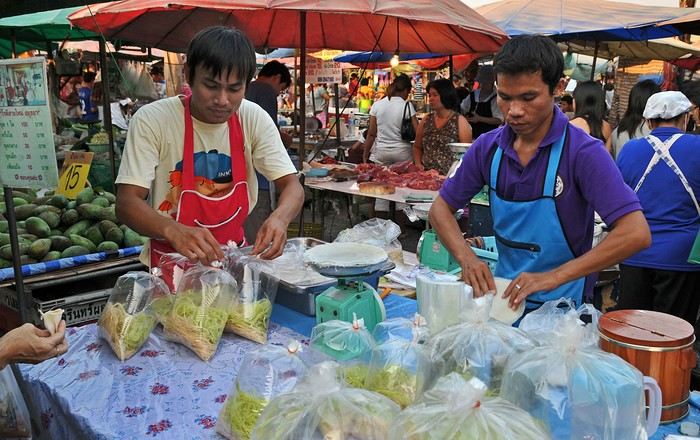
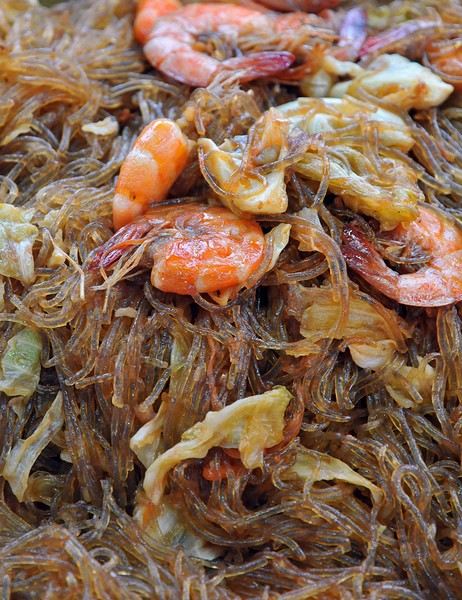
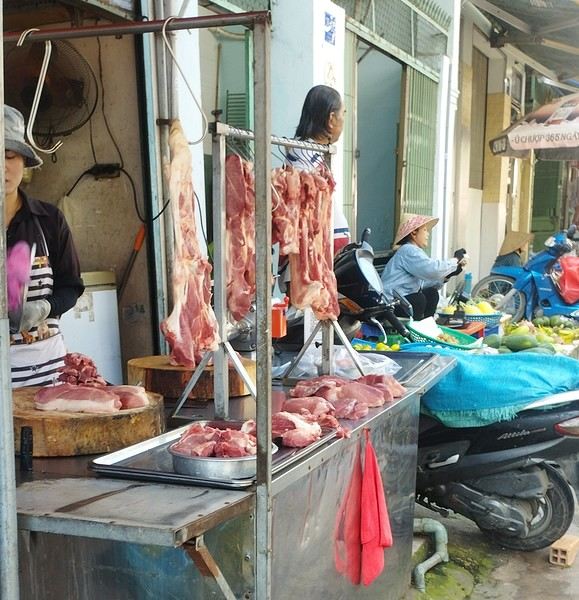
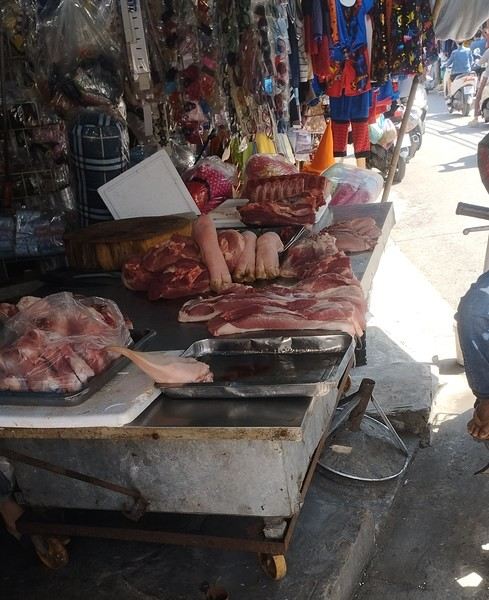
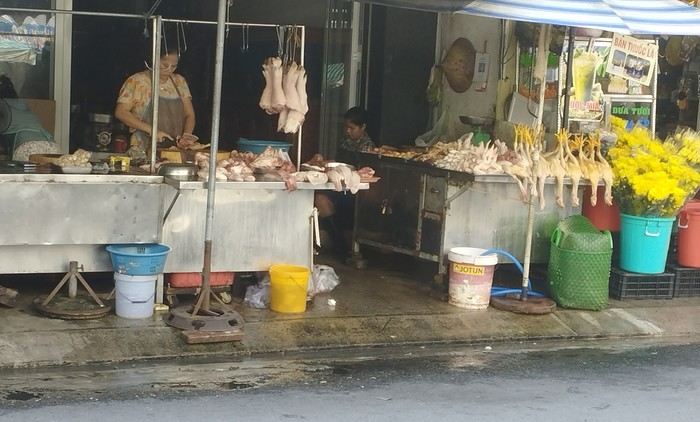 Hi, here are a few photos from this morning’s market near my place in Saigon.
Fresh meat—the animals were alive yesterday, so it’s still best to avoid making steak tartare