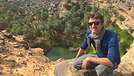
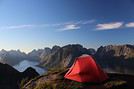
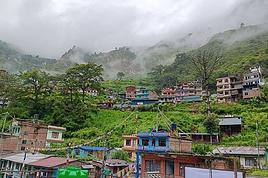
Completed the trek in 6 days from October 23 to October 28, 2026, fully self-sufficient (pack around 18 kg at the start), starting from Phalyagaon and ending in Marpha. Approximately 90 km and 5,000 m of elevation gain.
For transportation, take a bus from Pokhara to Beni (400 NRP), then a bus or shared jeep from Beni to Phaliyagaon (700 NRP by bus or 1,000 NRP by jeep after negotiating...). Allow a full day for the journey.
Homestay in Phaliyagaon at the village entrance and before the suspension bridge to reach Mauri.
Most agencies start from Mauri, but it's hard to find public transport...
The trail currently extends to Boghan because of a massive hydroelectric project under construction, which is altering the valley.
Phaliyagaon to Boghan is 27 km with quite a bit of elevation gain, but doable in one long day for an experienced hiker.
From Boghan, the real trail begins under forest cover up to the Sallagari lodge, then the high mountain starts. Camping is possible at Italien Campsite, but it's a real factory. If you've got the energy, you can continue to Swiss Campsite in about 2 hours, but with a steep climb. Plan for water.
Above the Swiss camp, the glacial moraine and then the snow cover begin.
Base camp at 4,600 m before crossing the French Pass, often crowded but plenty of space (on the snow!). Freezing temperatures at night. I was lucky with little wind, which isn’t always the case!
The ascent of the French Pass is fairly steady, with a trail easy to follow in the snow unless there’s been recent snowfall! Beautiful views of Dhaulagiri...
Polar temperatures and freezing nights in the Hidden Valley with violent winds that make it even colder. Impossible to heat water in the morning because it was frozen and the wind was too strong. This wind continued during the entire ascent of the Dhampus Pass, then the long traverse of a plateau descending but still around 5,000 m (8 to 10 km), always in the snow, before finally starting the final descent to Marpha.
Last night recommended at Alu Bari at 3,800 m rather than Yak Karka, with a stunning view of the Annapurna range if the weather is clear, of course! From Alu Bari, an easy trail leads to Marpha, 1,000 m lower and about 5 km away...
Note that at the various camps, you can get hot water from the agency cooks if you ask politely, of course! It’s a great help, especially since the available water is usually freezing and takes a long time to heat with just a stove...
The trek doesn’t present any technical difficulties if you’re well-acclimatized and in good physical condition to handle high-mountain conditions. Perfect weather is imperative, which was the case for me.
The trek is doable without agencies or mandatory guides; only the ACAP permit is required for the Dhampus Pass (3,000 NRP), but no one ever asked me for it. Issued in 10 minutes in Pokhara.
An interesting trek, far from the crowds of the Annapurnas or Everest Base Camp.